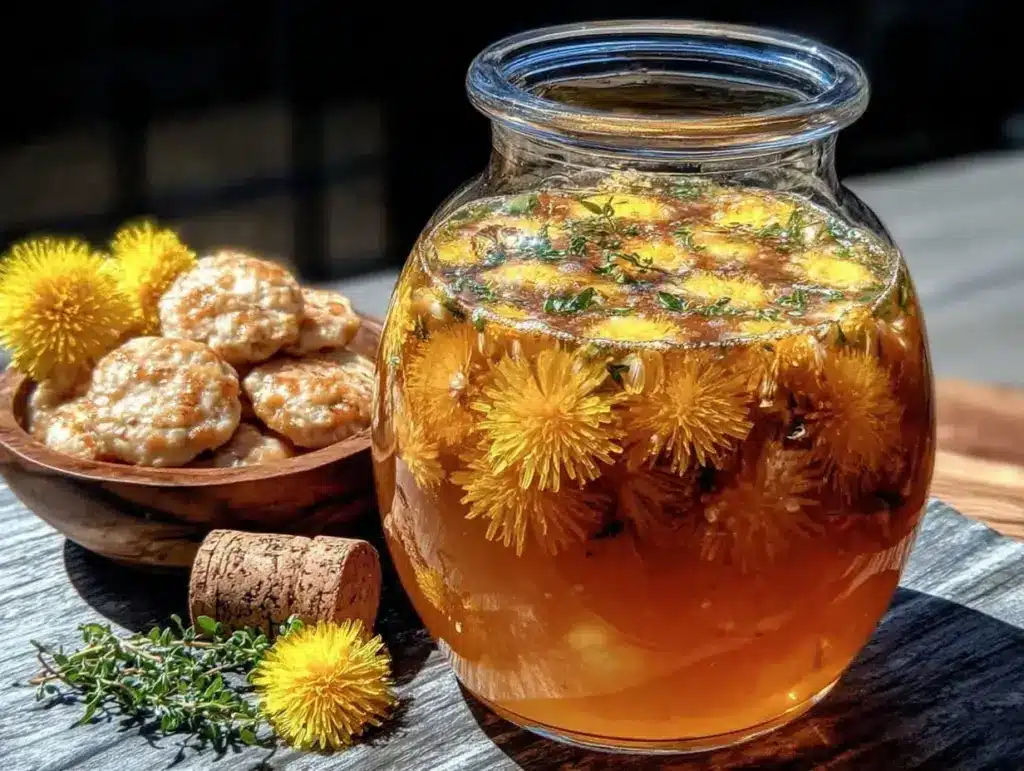
Let me tell you, the scent of fresh dandelions mingling with citrus and honey as it simmers gently in the kitchen is enough to make anyone’s mouth water and heart flutter with a bit of old-fashioned charm. The first time I brewed this easy homemade dandelion wine recipe for beginners, I was instantly hooked — the kind of moment where you pause, take a deep breath, and just smile because you know you’re onto something truly special. Years ago, when I was knee-high to a grasshopper, my grandma used to tell stories while tending her garden, and now, making this wine feels like reconnecting with those warm, sunlit afternoons.
Honestly, you know what’s magical? How a simple flower that most folks consider a pesky weed can transform into a golden nectar that tastes like sunshine in a glass. My family couldn’t stop sneaking sips off the fermentation jar while it was aging (and I can’t really blame them). This homemade dandelion wine is dangerously easy, packed with pure, nostalgic comfort, and perfect for brightening up your next backyard gathering or making a sweet, thoughtful gift.
Whether you’re a curious beginner or someone who loves a little DIY kitchen fun, this easy homemade dandelion wine recipe for beginners is going to become a staple in your home. I’ve tested it multiple times (in the name of research, of course), and it’s always a winner — the kind of recipe you’re going to want to bookmark, share, and revisit season after season.
Why You’ll Love This Recipe
This easy homemade dandelion wine recipe for beginners isn’t just a fun project, it’s a delightful way to connect with nature and your kitchen. Here’s why it stands out:
- Quick & Easy: Comes together in just 5 simple steps, perfect for busy weeknights or last-minute batch brewing.
- Simple Ingredients: No fancy trips to specialty stores — dandelions, sugar, and a handful of pantry staples are all you need.
- Perfect for Spring & Summer: Great for garden parties, potlucks, or cozy evenings sipping something homemade and heartwarming.
- Crowd-Pleaser: Always gets rave reviews, even from folks who usually shy away from homemade brews.
- Unbelievably Delicious: The floral, honeyed notes combined with a gentle fizz make this wine a unique treat that tastes like a warm, golden hug.
What makes this recipe different? Well, it’s tailored specifically for beginners — no special equipment or confusing jargon. I use a straightforward fermentation method that anyone can master. The balance of lemon zest and dandelion petals creates a fresh, inviting flavor, and the honey adds a smooth sweetness that makes each sip a little celebration. This isn’t just another homemade wine; it’s a soul-soothing, time-tested classic you’re going to want to perfect.
Honestly, this recipe feels like comfort food for your senses. Whether you’re impressing guests or treating yourself after a long day, it’s the kind of drink that makes you close your eyes and savor every drop.
What Ingredients You Will Need
This recipe uses simple, wholesome ingredients to deliver bold flavor and satisfying texture without the fuss. Most are pantry staples or fresh seasonal finds, so you can get started without a special grocery run.
- Dandelion petals (about 6 cups, freshly picked and cleaned) — the heart of the wine, bringing that floral magic
- Granulated sugar (4 cups) — for sweetness and fermentation fuel
- Water (1 gallon / 3.8 liters) — the base liquid
- Lemons (2 large, zest and juice) — adds bright citrus notes and balances sweetness
- Oranges (1 medium, zest and juice) — for extra depth and aroma
- Yeast (wine yeast or champagne yeast, 1 packet) — essential for fermentation (I recommend Lalvin EC-1118 for best results)
- Cider vinegar (1/4 cup) — helps with acidity and preservation
- Honey (optional, 1/2 cup) — adds complexity and smoothness (substitute with maple syrup for a vegan-friendly option)
- Campden tablets (optional, 1-2 tablets) — to sterilize and prevent unwanted bacteria (skip if you prefer natural fermentation)
Some tips on ingredients: Look for bright yellow dandelion petals, avoiding any that are wilted or have green parts (the green bits can add bitterness). If you’re picking in urban areas, be sure the flowers are from pesticide-free zones. For lemons and oranges, organic is best, especially since you’ll be using the zest.
If you want a gluten-free version, avoid any yeast blends with additives. And if fresh dandelions aren’t plentiful, you can dry petals ahead of time or try a small batch with dandelion tea bags for a creative twist.
Equipment Needed
- Large pot (at least 2 gallons / 7.5 liters) — for boiling water and steeping petals
- Fermentation vessel (glass carboy or food-grade bucket, 1-gallon / 3.8 liters) — where the magic happens
- Airlock and bung — to let gases escape while keeping air out (you can find affordable kits online or at homebrew shops)
- Fine mesh strainer or cheesecloth — to separate petals from liquid
- Siphoning tube — for transferring wine without disturbing sediment
- Hydrometer (optional) — handy for checking fermentation progress, but not required for beginners
- Measuring cups and spoons — for precise ingredient amounts
- Clean bottles with corks or caps — for storing your finished wine
If you don’t have a glass carboy, a food-grade plastic bucket with a lid can work just fine, but glass is better for long-term aging. I learned the hard way that sanitizing every piece thoroughly is key — any leftover residue can spoil your batch. Budget-friendly airlock kits are widely available, and investing in a good strainer makes the process smoother.
Preparation Method
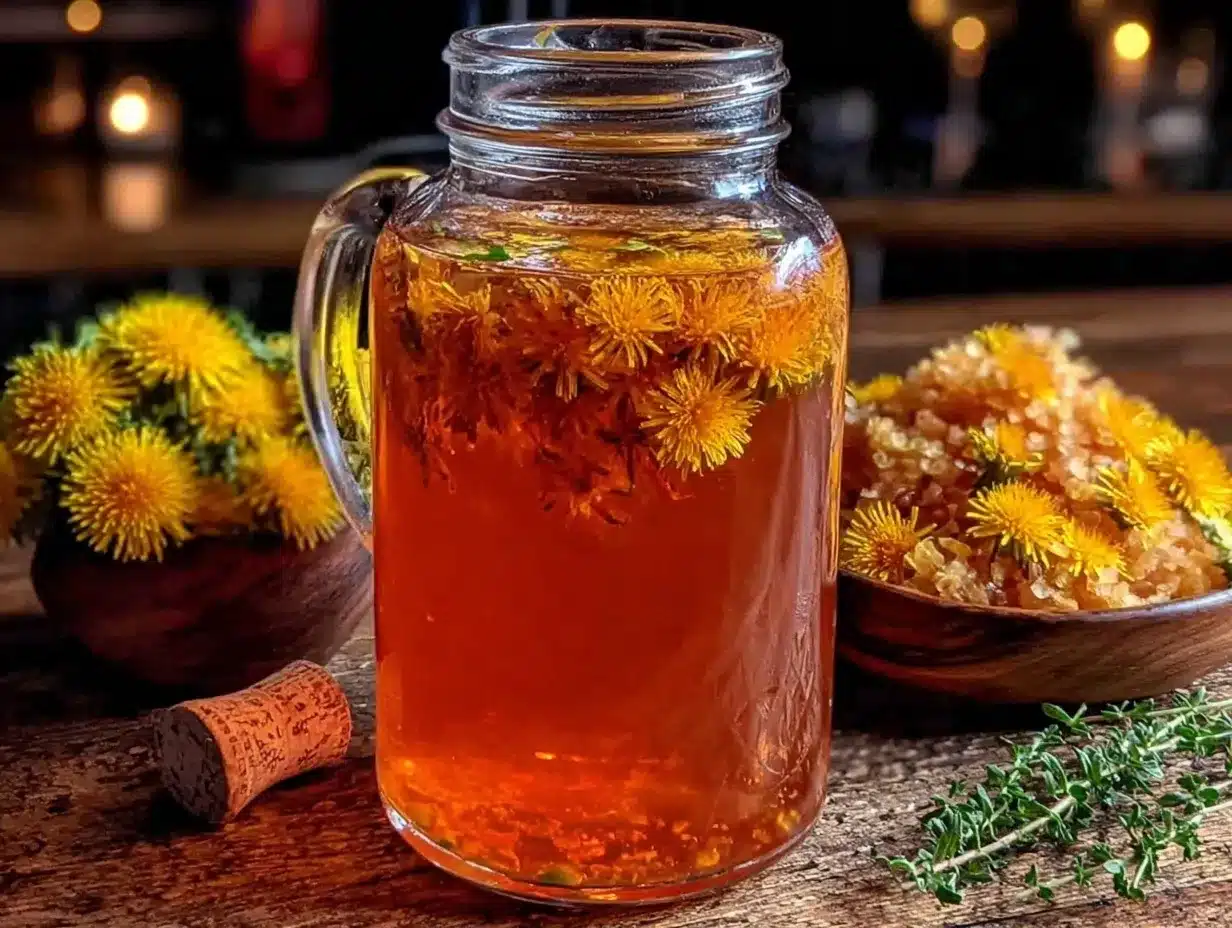
- Gather and prep your dandelion petals: Pick fresh dandelions on a dry day, away from roads and chemicals. Pluck off the yellow petals only (about 6 cups) and rinse gently in cold water to remove dirt and tiny critters. This step usually takes 15-20 minutes.
- Boil water and steep petals: Bring 1 gallon (3.8 liters) of water to a boil in your large pot. Remove from heat and add the dandelion petals. Cover and let steep for 24 hours at room temperature. You’ll notice a lovely golden color developing — that’s your wine’s soul!
- Strain and mix: After steeping, strain the liquid through a fine mesh strainer or cheesecloth into the fermentation vessel to remove petals and debris. Add 4 cups (800 g) of granulated sugar, stirring until dissolved. Then, add the zest and juice of 2 lemons and 1 orange, ¼ cup (60 ml) cider vinegar, and optional ½ cup (120 ml) honey for extra smoothness. This step takes about 15 minutes.
- Add yeast and start fermentation: Once the mixture cools to room temperature (around 70°F / 21°C), sprinkle in the packet of wine yeast. Give it a gentle stir, cover with the airlock and bung, and place in a dark, cool spot (around 65-75°F / 18-24°C). Fermentation should start within 24-48 hours — you’ll see bubbles forming through the airlock.
- Ferment and bottle: Allow the wine to ferment for 4-6 weeks. When bubbling slows significantly, siphon the wine into clean bottles, leaving sediment behind. Seal bottles and age for at least 3 months for best flavor. Patience is key — this wine gets better with time!
Quick tip: If you see any mold or off smells during fermentation, don’t panic. Sometimes a little surface foam is normal, but if it looks suspicious, carefully skim it off. Keep everything sanitized, and your batch should turn out fine. Also, avoid stirring after fermentation starts to keep sediment settled.
Cooking Tips & Techniques
Making this easy homemade dandelion wine recipe for beginners is straightforward, but a few little tricks can make your brew shine. First, be patient — rushing the fermentation or bottling too early can make your wine taste harsh or cloudy. Let the yeast do its thing at its own pace.
Use fresh, bright petals — the bitterness from older or green parts can spoil the flavor. Also, don’t skip the citrus zest; it adds brightness that balances the floral sweetness perfectly. When you add yeast, make sure your liquid isn’t too hot — yeast dislikes temperatures over 80°F (27°C) and can die off, halting fermentation.
One thing I learned the hard way is that sanitation is king. Clean all your equipment thoroughly with hot soapy water, and if you have Campden tablets, use them before adding yeast to zap any wild bacteria. This keeps your batch tasting fresh and crisp.
Timing is another thing — I like to start brewing on a weekend so I can monitor the first few days closely. You can multitask by prepping your bottles and cleaning equipment while waiting for fermentation to kick off. And when it’s time to siphon, go slow to avoid stirring up sediment, which can muddy your wine.
Variations & Adaptations
Want to mix things up? Here are a few easy ways to customize your easy homemade dandelion wine recipe for beginners:
- Herbal Twist: Add a handful of fresh mint or lavender during the steeping phase for an aromatic kick. I tried mint once and it gave the wine a bright, refreshing edge that was a real crowd-pleaser.
- Fruit Infusion: Swap out the oranges for berries or peaches in summer. Frozen berries work well too and add a lovely color and flavor complexity.
- Vegan Friendly: Skip the honey and use maple syrup or agave nectar instead. This changes the sweetness profile slightly but keeps things smooth and delicious.
- Low Sugar Option: Reduce the sugar by 1 cup and add a little extra honey or natural sweetener after fermentation if desired. Just remember fermentation depends on sugar, so too little may result in a weaker brew.
- Fizzy Variation: Bottle with a teaspoon of sugar and allow secondary fermentation for a few days to get a natural sparkle. Watch the bottles closely to avoid explosions!
Feel free to experiment — I’ve found that small tweaks can make this recipe feel new every time while keeping that signature dandelion charm.
Serving & Storage Suggestions
This homemade dandelion wine is best served slightly chilled, around 50-60°F (10-15°C), to bring out its delicate floral aromas without muting the sweetness. Pour into clear glasses to admire that gorgeous golden hue — it’s almost too pretty to drink (almost!).
Pair it with light cheeses, fresh fruit, or even a simple roast chicken for an elegant yet easy meal. For a casual afternoon, it goes beautifully with sparkling water and a sprig of mint as a refreshing spritzer.
Store bottles upright in a cool, dark place. Properly sealed, your wine will keep for up to a year or more, and flavors tend to mellow and deepen over time. Once opened, keep it refrigerated and drink within a week for best freshness.
When reheating for winter sips, gently warm the wine with a cinnamon stick and a slice of orange for a cozy twist — just don’t boil it, or you’ll lose the delicate flavors.
Nutritional Information & Benefits
This easy homemade dandelion wine is a low-calorie, naturally fermented beverage. A typical 5-ounce (150 ml) serving contains approximately 120-140 calories, depending on sugar and honey content. It’s gluten-free and vegan-friendly if honey is swapped.
Dandelions themselves are rich in vitamins A, C, and K, and have antioxidant properties. While most nutrients reduce during fermentation, some beneficial compounds remain, making this wine a gentle, natural treat. The citrus adds vitamin C boost and bright flavor.
Keep in mind, homemade wine still contains alcohol, so enjoy responsibly. For anyone with allergies to yeast or citrus, consult before trying this recipe.
Conclusion
This easy homemade dandelion wine recipe for beginners is a wonderful way to bring a bit of magic from the garden into your glass. It’s simple, satisfying, and full of personality — a recipe that invites you to slow down, savor, and enjoy the little pleasures of homemade craft.
Feel free to customize it to your taste, and don’t be afraid to experiment with flavors and techniques. I love this recipe because it connects me to nature, tradition, and family — a true labor of love that always brings smiles around the table.
If you give it a try, please share your experience in the comments! I’d love to hear your tweaks, questions, or stories. Here’s to your next batch of golden, floral delight — cheers!
FAQs About Easy Homemade Dandelion Wine Recipe for Beginners
1. Can I use dandelions from my lawn?
Yes, but make sure they haven’t been treated with pesticides or herbicides. Pick from clean, chemical-free areas for the safest, best-tasting wine.
2. How long does the fermentation process take?
Primary fermentation typically takes 4-6 weeks, but it can vary with temperature. You’ll know it’s done when bubbling slows significantly.
3. Do I need special yeast for dandelion wine?
Wine or champagne yeast is best for consistent results. Bread yeast works but may produce off flavors or weaker fermentation.
4. Can I make this wine without citrus?
Citrus adds brightness and balances sweetness, so it’s highly recommended. You could try with just vinegar, but the flavor won’t be as lively.
5. How should I store leftover wine?
Keep opened bottles refrigerated and consume within one week. Unopened bottles store best in a cool, dark place for up to a year.
Pin This Recipe!
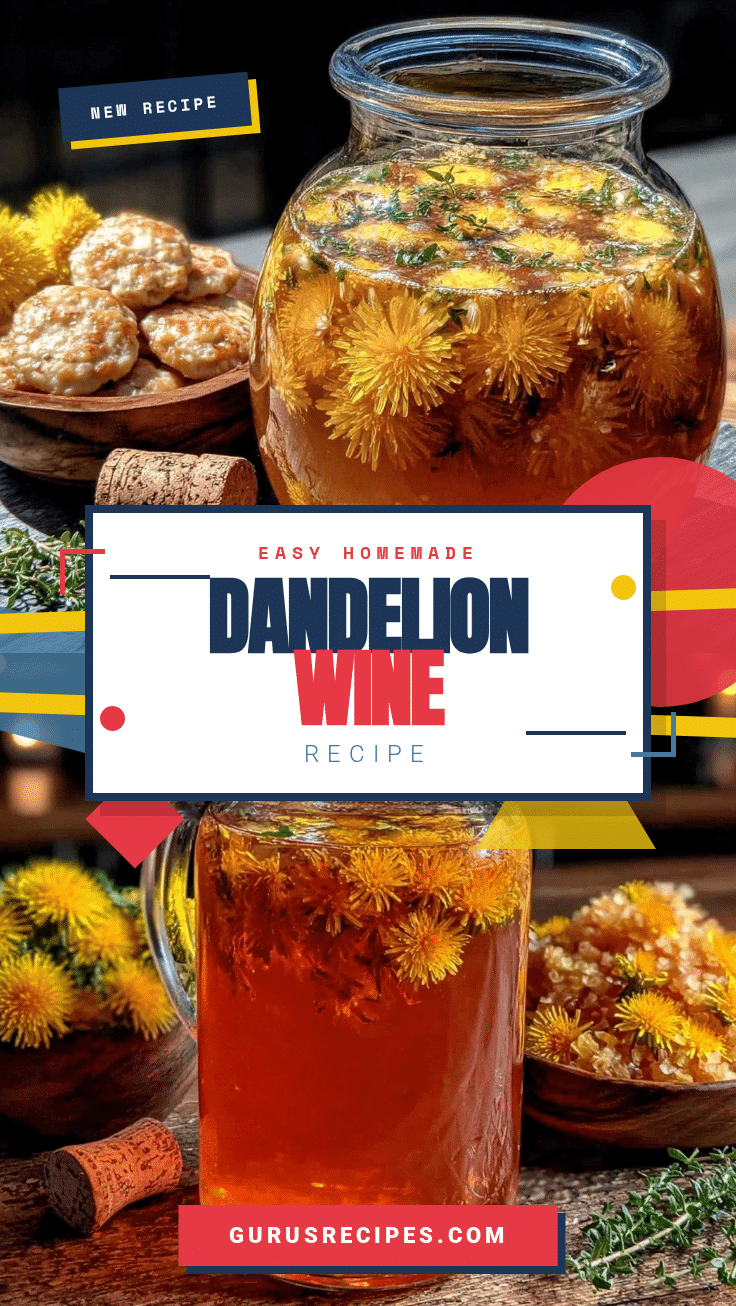

Easy Homemade Dandelion Wine Recipe for Beginners
A simple and nostalgic homemade dandelion wine recipe perfect for beginners, using fresh dandelion petals, citrus, and honey to create a delightful floral wine.
- Total Time: Approximately 5-7 weeks (including fermentation and aging)
- Yield: About 1 gallon (3.8 liters) of dandelion wine 1x
Ingredients
- 6 cups fresh dandelion petals, cleaned
- 4 cups granulated sugar
- 1 gallon (3.8 liters) water
- Zest and juice of 2 large lemons
- Zest and juice of 1 medium orange
- 1 packet wine yeast or champagne yeast (e.g., Lalvin EC-1118)
- 1/4 cup cider vinegar
- 1/2 cup honey (optional, can substitute with maple syrup for vegan option)
- 1–2 Campden tablets (optional)
Instructions
- Pick fresh dandelions on a dry day, away from roads and chemicals. Pluck off the yellow petals only (about 6 cups) and rinse gently in cold water to remove dirt and tiny critters. This takes about 15-20 minutes.
- Bring 1 gallon (3.8 liters) of water to a boil in a large pot. Remove from heat and add the dandelion petals. Cover and let steep for 24 hours at room temperature until the liquid turns a golden color.
- Strain the liquid through a fine mesh strainer or cheesecloth into the fermentation vessel to remove petals and debris. Add 4 cups (800 g) of granulated sugar and stir until dissolved. Add the zest and juice of 2 lemons and 1 orange, 1/4 cup (60 ml) cider vinegar, and optional 1/2 cup (120 ml) honey. This step takes about 15 minutes.
- Once the mixture cools to room temperature (around 70°F / 21°C), sprinkle in the packet of wine yeast. Stir gently, cover with an airlock and bung, and place in a dark, cool spot (65-75°F / 18-24°C). Fermentation should start within 24-48 hours.
- Allow the wine to ferment for 4-6 weeks. When bubbling slows significantly, siphon the wine into clean bottles, leaving sediment behind. Seal bottles and age for at least 3 months for best flavor.
Notes
Use bright yellow dandelion petals avoiding green parts to prevent bitterness. Sanitize all equipment thoroughly to avoid spoilage. Be patient with fermentation and aging for best flavor. If mold or off smells appear, skim off surface foam carefully. Avoid stirring after fermentation starts to keep sediment settled. For vegan option, substitute honey with maple syrup or agave nectar. Campden tablets can be used to sterilize but are optional.
- Prep Time: 30 minutes
- Cook Time: 24 hours steeping + 4-6 weeks fermentation
- Category: Beverage
- Cuisine: Homemade / Traditional
Nutrition
- Serving Size: 5 ounces (150 ml)
- Calories: 130
- Sugar: 14
- Sodium: 5
- Carbohydrates: 15
Keywords: dandelion wine, homemade wine, beginner wine recipe, floral wine, fermentation, DIY wine, natural wine, spring wine