
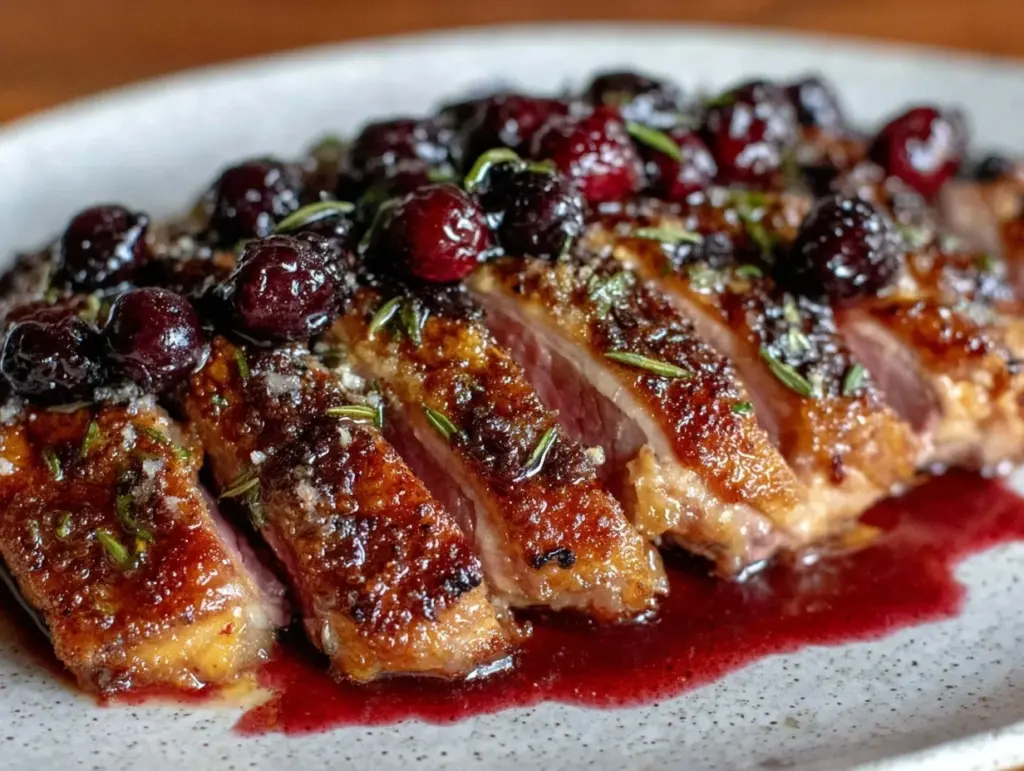
“You can’t rush duck,” my friend whispered as I anxiously poked the skin with a fork, trying to speed things along. That afternoon, the kitchen was filled with the heady scent of roasting poultry and something unexpectedly sweet simmering on the stove. Honestly, I had been a bit intimidated by the idea of making crispy roasted duck with cherry port wine sauce—duck always seemed like the kind of dish reserved for fancy dinners or holiday feasts, not a random Tuesday. But after a long day juggling work and a cranky toddler, this recipe became my quiet victory.
The first time I made this recipe, I was skeptical about getting that perfect crisp skin without drying out the tender meat beneath. Yet, as the timer ticked down and the house filled with the rich aroma of caramelizing cherries and wine, I realized I might have stumbled on something special. The sauce was a happy accident, too—what started as a quick reduction to use up leftover port wine turned into a luscious glaze that balanced the duck’s richness beautifully. Since then, this dish has quietly become my go-to for impressing friends without the fuss, a little win when life feels chaotic.
There’s something about the way the crunchy skin cracks under your fork and the deep, fruity sauce coats every bite that makes you pause—like a small celebration in the middle of the week. If you’ve never tried roasting duck or thought it was beyond your reach, this recipe might just change your mind. It’s not about fancy techniques or rare ingredients; it’s about patience, simple flavors, and that moment when everything comes together just right.
Why You’ll Love This Recipe
Over the years, I’ve tested and tweaked this crispy roasted duck recipe until it hits that sweet spot of flavor and texture every single time. Here’s why it’s such a favorite in my kitchen:
- Quick & Easy: The duck roasts in under 1 hour and the sauce takes just 15 minutes, perfect for a weekend dinner that feels special without being stressful.
- Simple Ingredients: You don’t need a fancy butcher or exotic spices—just fresh duck, cherries, port wine, and a few pantry staples.
- Perfect for Special Occasions: Whether it’s a romantic dinner or a holiday gathering, this dish feels elegant but remains approachable.
- Crowd-Pleaser: The crispy skin wins over skeptics every time, and the sauce adds a fruity richness that even picky eaters enjoy.
- Unbelievably Delicious: The contrast between the crunchy skin, tender meat, and silky cherry port wine sauce is pure comfort food magic.
What sets this recipe apart is the technique for rendering the duck fat slowly, which results in skin so crisp it practically melts in your mouth. Plus, the cherry port wine sauce is a subtle twist—fresh cherries bring brightness while the port adds depth, making this more than just your average roasted duck. It’s the kind of meal that invites you to linger over the plate and savor every bite, whether you’re cooking alone or sharing with loved ones.
After making it a handful of times in a row (not kidding—I cooked it three nights in a week once), I realized it’s not just about the duck; it’s about the ritual of slowing down and treating yourself to something really satisfying. If you’re ready to try a recipe that’s both impressive and surprisingly doable, this one is worth your time.
What Ingredients You Will Need
This recipe uses simple, wholesome ingredients to give you bold flavor and that irresistible crispy skin without too much fuss. Most of these are pantry staples or easy to find at your local market.
- Whole duck (about 4-5 pounds / 1.8-2.3 kg): Look for fresh or thawed duck with the skin on, preferably not pre-seasoned. I usually buy from a trusted local butcher for the best quality.
- Salt and freshly ground black pepper: Essential for seasoning and drawing out moisture from the skin.
- Fresh cherries (1 cup / 150 g, pitted): Tart cherries work best for that perfect balance in the sauce. If fresh aren’t available, frozen are fine—just thaw before using.
- Port wine (1/2 cup / 120 ml): The base of the sauce, it adds a rich sweetness and complexity. I prefer a ruby port for its fruity notes.
- Shallots (2 small, finely chopped): Adds a mild onion sweetness to the sauce.
- Balsamic vinegar (1 tablespoon / 15 ml): Just a touch to brighten the sauce and balance the sweetness.
- Honey (1 tablespoon / 15 ml): Helps to glaze the cherries and add a subtle floral sweetness.
- Unsalted butter (2 tablespoons / 28 g): Stirred in at the end of the sauce for richness and shine.
- Fresh thyme (a few sprigs): Optional, but adds a lovely herbal note—great if you want to tuck some inside the duck cavity.
If you want to experiment, you can swap out cherries for fresh cranberries in winter, which gives a similar tartness. For a gluten-free version, double-check your port wine label, as some brands may use additives. Also, if you prefer a non-alcoholic sauce, try substituting port wine with grape juice and a splash of balsamic vinegar.
Equipment Needed
- Roasting pan with a rack: Essential for elevating the duck so the fat drips away and the skin crisps evenly. If you don’t have a rack, use a sturdy wire cooling rack on a baking sheet.
- Sharp kitchen knife: For scoring the duck skin and prepping the shallots and cherries.
- Saucepan: Needed to reduce the cherry port wine sauce gently without burning.
- Meat thermometer: Optional but really helpful for checking the duck’s internal temperature, aiming for about 165°F (74°C) in the thickest part.
- Basting brush: Useful for glazing the duck skin during roasting if you want an extra layer of crispness.
Personally, I’ve used a cast iron roasting pan for this recipe, which holds heat beautifully and helps with even browning. If you’re on a budget, a heavy-duty baking sheet with a rack works just as well. For the sauce, a non-stick saucepan saves you from scrubbing off any stuck bits. And while you can roast without a thermometer, it’s a game-changer for not overcooking the duck.
Preparation Method

- Prep the duck (15 minutes): Remove the duck from the fridge about 30 minutes before roasting to come to room temperature. Pat the skin dry thoroughly with paper towels. Using a sharp knife, score the skin in a crisscross pattern, about 1/4 inch (6 mm) deep—just through the skin, not into the meat. This helps the fat render out and the skin crisp up beautifully. Season generously with salt and pepper, rubbing it into the skin and inside the cavity. If you like, tuck fresh thyme sprigs inside the cavity for subtle flavor.
- Render the fat & roast (50-60 minutes): Place the duck breast-side up on the rack in your roasting pan. Roast in a preheated oven at 375°F (190°C). Start by roasting for 30 minutes, then carefully drain the fat from the pan (save it for roasting potatoes later, trust me). Flip the duck breast-side down and roast for another 20 minutes to render more fat. Finally, flip it breast-side up again and roast for 10-15 minutes until the skin is deeply golden and crispy. A meat thermometer inserted into the thickest part of the thigh should read 165°F (74°C). If the skin isn’t quite crispy, finish under the broiler for 2-3 minutes, watching closely.
- Make the cherry port wine sauce (15 minutes): While the duck roasts, heat a saucepan over medium heat. Melt 1 tablespoon (14 g) of unsalted butter and sauté the chopped shallots until translucent and fragrant, about 3 minutes. Add the pitted cherries, port wine, balsamic vinegar, and honey. Bring to a gentle boil, then reduce heat and simmer until the sauce thickens slightly and the cherries are soft, about 10 minutes. Remove from heat and stir in the remaining butter to give the sauce a glossy finish. Taste and adjust sweetness or acidity as needed.
- Rest and carve (10 minutes): When the duck is done, transfer it to a cutting board and let it rest for at least 10 minutes before carving. This helps the juices redistribute and keeps the meat moist. Carve the duck into slices, serving each portion with a generous spoonful of the cherry port wine sauce.
Pro tip: Don’t rush drying the skin or scoring it carefully—the crispiness depends on those little details. Also, keep that rendered duck fat; it’s pure gold for roasting vegetables or making crispy potatoes, a perfect side to pair with this dish.
Cooking Tips & Techniques
Getting crispy roasted duck just right can feel tricky, but a few kitchen tricks make all the difference:
- Dry skin is key: Moisture is the enemy of crispiness. Pat the duck skin completely dry before seasoning, and if you have time, leave it uncovered in the fridge for a few hours or overnight to dry out further.
- Score carefully: Don’t cut too deep into the meat, or you’ll lose juices. Just the skin and fat layer need those shallow scores to render fat properly.
- Render the fat slowly: Turning the duck during roasting helps melt the fat evenly and prevents burning. Drain the excess fat midway to avoid soggy skin and keep your kitchen safe from splatters.
- Use a meat thermometer: It’s the best way to avoid undercooking or drying out duck. Aim for 165°F (74°C) in the thigh, but if you prefer medium-rare, 135-140°F (57-60°C) is an option for more tender meat—just be cautious with food safety.
- Rest the meat: Always rest your duck to lock in juices. Cutting too soon leads to dry slices.
- Don’t skip the sauce: That cherry port wine sauce brings balance and a touch of sweetness that cuts through the richness of the duck beautifully.
I’ve learned the hard way that rushing any step leads to chewy skin or dry meat. Also, save the duck fat—it’s incredibly flavorful and perfect for roasting potatoes or drizzling on steamed veggies. If you want an easy homemade bread to soak up the sauce, try pairing this dish with a simple no-knead rosemary sea salt bread—the crispy crust and soft crumb complement the duck perfectly.
Variations & Adaptations
If you want to switch things up or cater to different dietary needs, here are some ideas that work well with this crispy roasted duck recipe:
- Fruit Sauce Variations: Swap cherries for fresh blackberries or blueberries in summer, or cranberries in winter to give the port wine sauce a different fruity twist.
- Herb Infusions: Add rosemary or sage alongside thyme inside the duck cavity for a more aromatic roast. These herbs also pair nicely with the cherry sauce.
- Cooking Method: If you don’t have an oven, you can try roasting the duck in a heavy skillet on the stovetop, starting skin-side down to render fat, then finishing in a covered pan on low heat. It won’t be as crispy but still delicious.
- Allergen-Friendly: For those avoiding dairy, simply omit the butter in the sauce and finish with a splash of olive oil instead.
- Personal Twist: I once added a splash of orange liqueur to the sauce for a bright citrus note that paired beautifully with the richness of the duck—definitely worth a try if you like a little zest.
Serving & Storage Suggestions
Serve your crispy roasted duck warm with generous spoonfuls of the cherry port wine sauce drizzled over. This dish pairs wonderfully with simple sides like roasted root vegetables or a fresh green salad to balance the richness.
For a comforting meal, serve alongside creamy mashed potatoes or a crusty bread like the crispy garlic parmesan focaccia bread, which soaks up every drop of sauce.
Leftovers store well in an airtight container in the fridge for up to 3 days. Reheat gently in a low oven (about 300°F / 150°C) to help maintain the crisp skin. The sauce can be warmed separately on the stovetop. Duck meat also freezes nicely if you want to save some for later—just thaw overnight in the fridge before reheating.
Interestingly, the sauce tastes even better the next day as the flavors meld, so don’t hesitate to make extra. This makes the recipe perfect for entertaining or meal prepping for an indulgent treat during the week.
Nutritional Information & Benefits
This crispy roasted duck recipe provides a rich source of protein and essential nutrients like iron and zinc from the duck meat. While duck is higher in fat than chicken, the method of rendering out much of the fat during roasting helps keep it lighter. The cherry port wine sauce adds antioxidants from the fresh fruit and moderate amounts of sugar, balanced by the acidity of balsamic vinegar.
For those on a gluten-free diet, this recipe fits perfectly as it contains no wheat or gluten ingredients. The inclusion of fresh herbs and natural sweeteners like honey makes it a more wholesome option compared to heavy cream sauces.
From a wellness perspective, this dish is a satisfying way to enjoy a luxurious meal without feeling overly heavy or greasy. Using the rendered duck fat for roasting vegetables can replace less healthy fats, making it a clever way to add flavor and nutrition.
Conclusion
Making perfect crispy roasted duck with cherry port wine sauce isn’t as daunting as it seems once you understand the simple steps to get that skin crackling and the sauce silky. It’s a recipe that invites you to slow down, savor the process, and enjoy the rewarding flavors that come from patience and care. Whether you’re cooking for a special occasion or just treating yourself to a comforting dinner, this dish holds a special place in my heart for its balance of elegance and ease.
Feel free to play around with the sauce or herbs to make it your own—it’s a recipe that welcomes your personal touch. And if you’re curious about other ways to bring rich, homemade flavors into your kitchen, you might enjoy the cozy Dublin coddle Irish sausage stew or the creamy colcannon mashed potatoes that pair wonderfully with roasted meats.
So, next time you’re ready to impress without the stress, give this recipe a try—you might just find your new favorite go-to for a meal that feels like a celebration.
FAQs
- Can I use duck breasts instead of a whole duck?
Yes, duck breasts work well but require a different cooking time and method. They’re best pan-seared to render the fat and crisp the skin, then finished in the oven for a few minutes. - How do I know when the duck is fully cooked?
Using a meat thermometer is the safest method. The internal temperature should reach 165°F (74°C) in the thickest part of the thigh for fully cooked duck. - Can I prepare the cherry port wine sauce ahead of time?
Absolutely! The sauce can be made a day ahead and gently reheated before serving. Flavors often deepen overnight. - What should I do with the rendered duck fat?
Don’t throw it away! Strain and store it in the fridge to use for roasting potatoes or vegetables—it adds amazing flavor and crispiness. - Is there a non-alcoholic alternative to port wine in the sauce?
Yes, substitute port wine with grape juice mixed with a splash of balsamic vinegar or lemon juice to mimic acidity and sweetness.
Pin This Recipe!
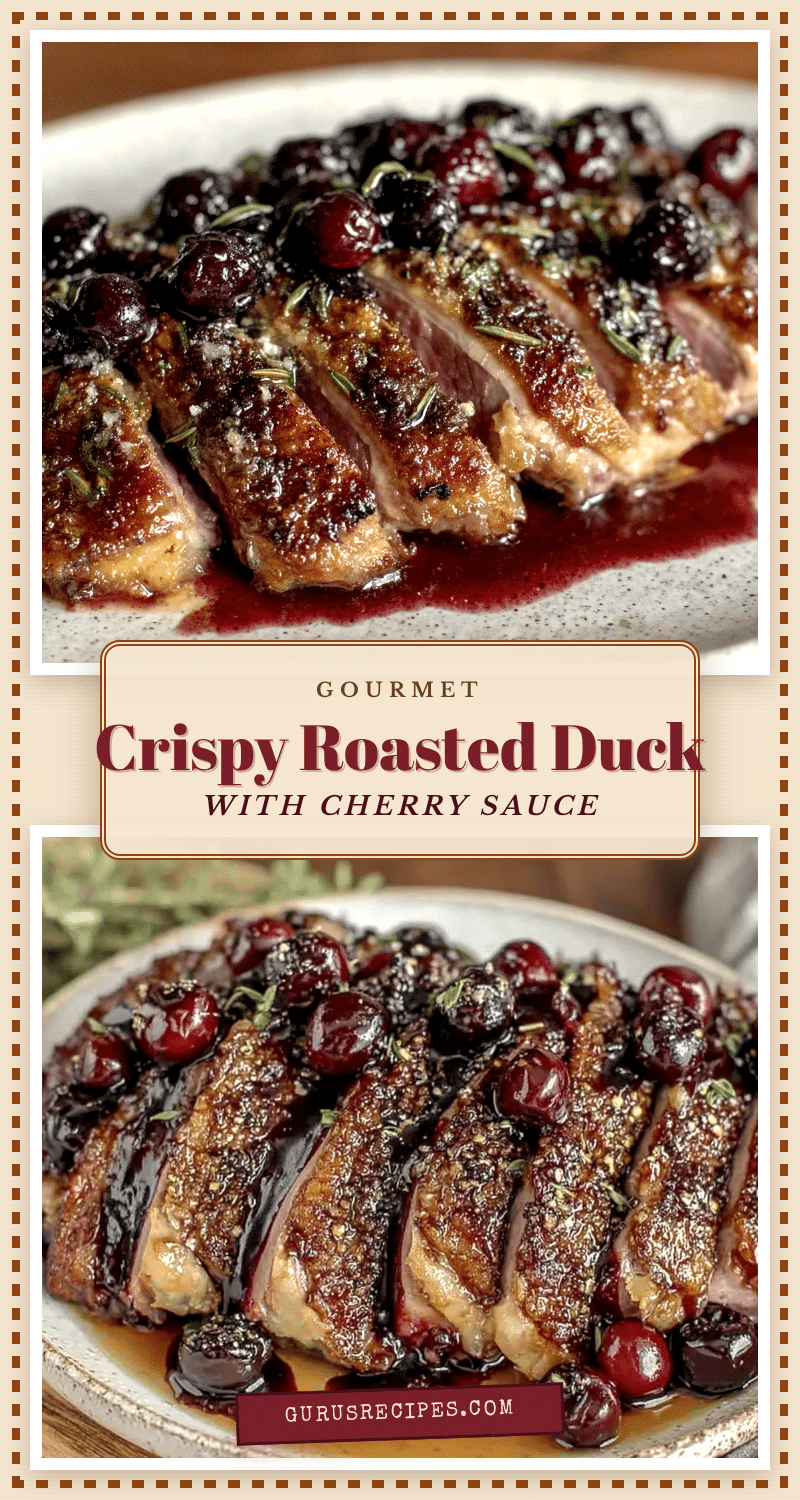

Perfect Crispy Roasted Duck Recipe with Easy Cherry Port Wine Sauce
A simple yet elegant recipe for crispy roasted duck paired with a luscious cherry port wine sauce, perfect for special occasions or a comforting weeknight meal.
- Total Time: 1 hour 10-15 minutes
- Yield: 4 servings
Ingredients
- Whole duck (about 4-5 pounds / 1.8-2.3 kg)
- Salt and freshly ground black pepper
- Fresh cherries (1 cup / 150 g, pitted)
- Port wine (1/2 cup / 120 ml)
- Shallots (2 small, finely chopped)
- Balsamic vinegar (1 tablespoon / 15 ml)
- Honey (1 tablespoon / 15 ml)
- Unsalted butter (2 tablespoons / 28 g)
- Fresh thyme (a few sprigs, optional)
Instructions
- Remove the duck from the fridge about 30 minutes before roasting to come to room temperature. Pat the skin dry thoroughly with paper towels. Using a sharp knife, score the skin in a crisscross pattern, about 1/4 inch (6 mm) deep—just through the skin, not into the meat. Season generously with salt and pepper, rubbing it into the skin and inside the cavity. Optionally, tuck fresh thyme sprigs inside the cavity.
- Place the duck breast-side up on the rack in your roasting pan. Roast in a preheated oven at 375°F (190°C). Roast for 30 minutes, then carefully drain the fat from the pan (save it for roasting potatoes). Flip the duck breast-side down and roast for another 20 minutes. Flip it breast-side up again and roast for 10-15 minutes until the skin is deeply golden and crispy. Use a meat thermometer to check for 165°F (74°C) in the thickest part of the thigh. If needed, finish under the broiler for 2-3 m…
- While the duck roasts, heat a saucepan over medium heat. Melt 1 tablespoon (14 g) of unsalted butter and sauté the chopped shallots until translucent, about 3 minutes. Add the pitted cherries, port wine, balsamic vinegar, and honey. Bring to a gentle boil, then reduce heat and simmer until the sauce thickens slightly and cherries are soft, about 10 minutes. Remove from heat and stir in the remaining butter for a glossy finish. Adjust sweetness or acidity as needed.
- When the duck is done, transfer it to a cutting board and let it rest for at least 10 minutes before carving. Carve into slices and serve with a generous spoonful of cherry port wine sauce.
Notes
Pat the duck skin dry thoroughly and score carefully to ensure crispy skin. Render the fat slowly by turning the duck during roasting and drain excess fat midway. Use a meat thermometer to avoid overcooking. Rest the duck before carving to keep meat moist. Save rendered duck fat for roasting vegetables or potatoes. The cherry port wine sauce can be made ahead and reheated. For a non-alcoholic sauce, substitute port wine with grape juice and a splash of balsamic vinegar.
- Prep Time: 15 minutes
- Cook Time: 50-60 minutes
- Category: Main Course
- Cuisine: European
Nutrition
- Serving Size: 1/4 of a whole duck
- Calories: 650
- Sugar: 10
- Sodium: 600
- Fat: 45
- Saturated Fat: 15
- Carbohydrates: 15
- Fiber: 2
- Protein: 45
Keywords: roasted duck, crispy duck, cherry port wine sauce, easy duck recipe, holiday duck, special occasion dinner