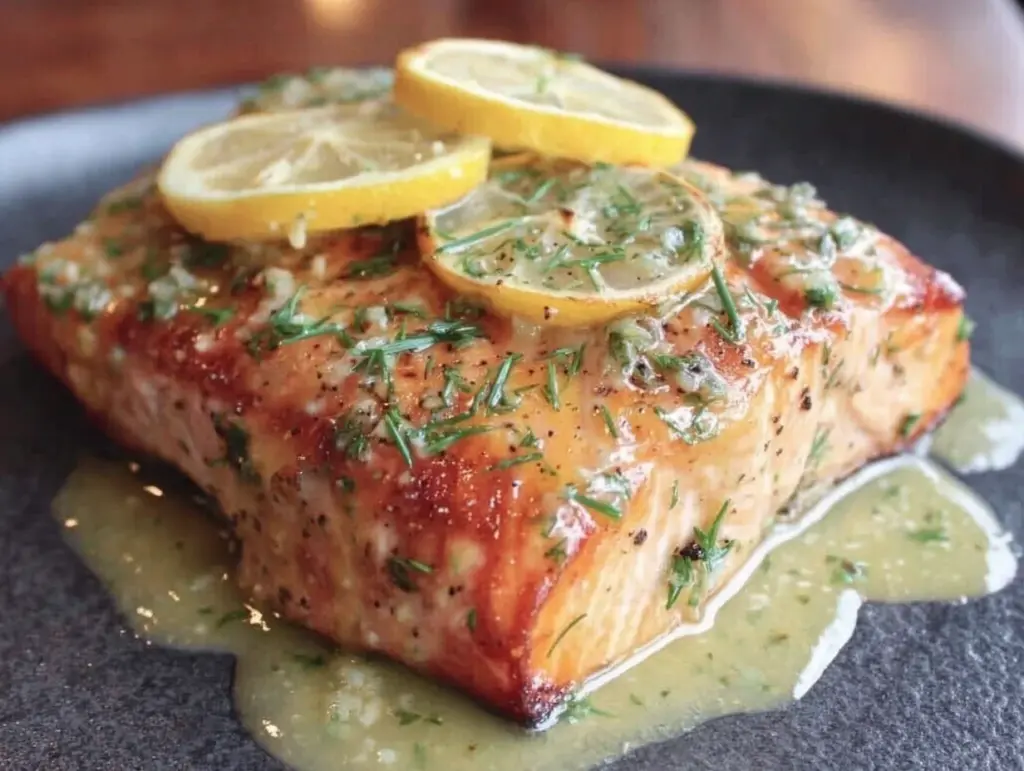
My husband did not trust salmon in the oven. He had this thing about fishy smells lingering for days and dry, flaky disappointments that needed a gallon of tartar sauce to choke down. Honestly, I could not blame him. I had ruined enough fillets myself—overcooked, under-seasoned, rubbery things that made you wonder why anyone bothered. So when I told him I was testing a buttery lemon dill baked salmon recipe for the blog, he gave me that look. You know the one. The “I’ll eat it but I’m not happy about it” look.
The thing is, I had been watching a friend in her tiny apartment kitchen throw together a salmon dinner in what felt like ten minutes. No fuss. No complicated marinades. Just butter, lemons, dill, and heat. She pulled it out of the oven, and the smell—bright, buttery, herbaceous—made me forget I was supposed to be helping her fold laundry. I took one bite and immediately texted my husband: “I figured out the salmon thing.”
That night, I came home and recreated it. He watched me slice lemons and sprinkle dried dill over the fillets with this skeptical squint. Twenty minutes later, he took a bite, chewed slowly, and said, “Okay. This is actually good.” Coming from him, that was a standing ovation. Now this buttery lemon dill baked salmon is our Wednesday night staple—the meal that turned a skeptic into someone who actually requests fish. It is simple enough for a tired Tuesday and elegant enough for company. No fishy smells, no dry flakes, just honest comfort food that works.
Why You’ll Love This Recipe
This buttery lemon dill baked salmon is the kind of recipe that makes you look like you tried really hard when you actually barely broke a sweat. I have tested this method at least a dozen times—through busy weeks, lazy Sundays, and even a chaotic Thanksgiving Eve when I needed something quick that still felt special. It works every single time.
- Quick & Easy: From fridge to table in under 20 minutes. No marinating, no complicated steps. Just season, bake, and eat.
- Simple Ingredients: You probably already have butter, lemons, garlic, and dill in your kitchen. The salmon is the only thing you might need to grab at the store.
- Perfect for Weeknights or Dinner Parties: This dish looks gorgeous on a plate with roasted veggies or a simple salad. It is fancy enough for guests but easy enough for a solo dinner.
- Crowd-Pleaser: Even people who “don’t like fish” have asked me for seconds. The butter and lemon do all the heavy lifting.
- Unbelievably Delicious: The salmon comes out tender and flaky, with a buttery lemon sauce that you will want to spoon over everything on your plate.
What makes this version different from all the other salmon recipes out there? It is the ratio. Most recipes drown salmon in oil or skip the butter entirely. I spent weeks tweaking the butter-to-lemon ratio until the sauce was rich but not greasy, bright but not sour. The dill gets a chance to bloom in the warm butter instead of just sitting on top of the fish. It is a small thing, but it changes everything.
This recipe is the one that made my husband stop ordering salmon at restaurants. He says mine is better now. I am not going to argue with him.
What Ingredients You Will Need
This recipe uses simple, honest ingredients that come together to create something genuinely delicious. No weird specialty items, no obscure spices. Just good food that tastes like you put thought into it.
- Salmon Fillets (4 fillets, about 6 ounces each): Look for fillets that are similar in thickness so they cook evenly. I prefer wild-caught when I can find it, but farm-raised Atlantic salmon works beautifully here too—it has a higher fat content that stays extra tender. If the skin is on, that is fine; you can bake it skin-side down and it will peel right off after cooking.
- Unsalted Butter (4 tablespoons, softened): This is non-negotiable for me. Salted butter can make the dish too salty once you add the seasoning. Let it come to room temperature so it spreads easily over the salmon. I use Kerrygold when I want something extra creamy, but any good unsalted butter works.
- Fresh Lemons (2 medium): You will use both the zest and the juice. One lemon for the butter mixture and one for slicing and laying on top of the fillets. Roll them on the counter before juicing to get every last drop.
- Fresh Garlic (3 cloves, minced): Fresh garlic makes a difference here. The jarred stuff has a sharper, almost bitter taste that does not mellow the same way. Take the extra minute to mince fresh cloves—your kitchen will thank you.
- Fresh Dill (2 tablespoons, chopped): Fresh dill is best for that bright, grassy flavor, but I have made this with dried dill in a pinch (use 1 teaspoon). If you have never cooked with fresh dill before, you are in for a treat. It smells like spring in a jar.
- Dried Dill (1 teaspoon): I actually use both fresh and dried here. The dried dill gets mixed into the butter for a more concentrated flavor, while the fresh goes on top for brightness. It sounds fussy, but it takes ten seconds and makes a real difference.
- Salt (1 teaspoon, preferably kosher): Diamond Crystal kosher salt is my go-to. It is less salty by volume than table salt, so you get better control. If you are using table salt, start with half a teaspoon and adjust.
- Black Pepper (½ teaspoon, freshly ground): Freshly ground pepper has more aroma and warmth. Pre-ground pepper works, but it will not give you the same pop.
- Olive Oil (1 tablespoon): Just a little to grease the baking dish. Use a neutral one—save your fancy extra-virgin for salads.
- Optional Garnishes: Extra fresh dill sprigs, lemon wedges, flaky sea salt (like Maldon), and cracked black pepper for serving. These are not necessary, but they make the dish look like it came from a restaurant.
Equipment Needed
You do not need a fancy kitchen to make this buttery lemon dill baked salmon. I have made it in rental apartments with mismatched pans and it still turned out perfectly.
- Baking Dish (9×13-inch or similar): Glass, ceramic, or metal all work. Just make sure it is large enough to hold the fillets in a single layer without crowding. If the fillets are touching, they will steam instead of bake.
- Small Mixing Bowl: For combining the butter, lemon zest, garlic, and dill. Any small bowl works—even a cereal bowl.
- Microplane or Fine Zester: A microplane makes zesting lemons effortless. If you do not have one, you can use the fine side of a box grater. Just be careful not to get the white pith—it is bitter.
- Chef’s Knife: A sharp knife makes mincing garlic and chopping dill so much easier. Dull knives are more dangerous than sharp ones—they slip.
- Cutting Board: Any board works. I prefer wood because it is gentler on knives, but plastic is fine for fish.
- Measuring Spoons: For accuracy. I have learned the hard way that eyeballing salt and dill leads to inconsistent results.
- Instant-Read Thermometer (Optional but Recommended): Salmon is perfectly cooked at 125°F to 130°F in the center. A thermometer takes the guesswork out of it. They are cheap and worth every penny.
- Fish Spatula (Optional): A thin, slotted spatula makes lifting the cooked fillets easier without breaking them. A regular spatula works too—just be gentle.
Preparation Method
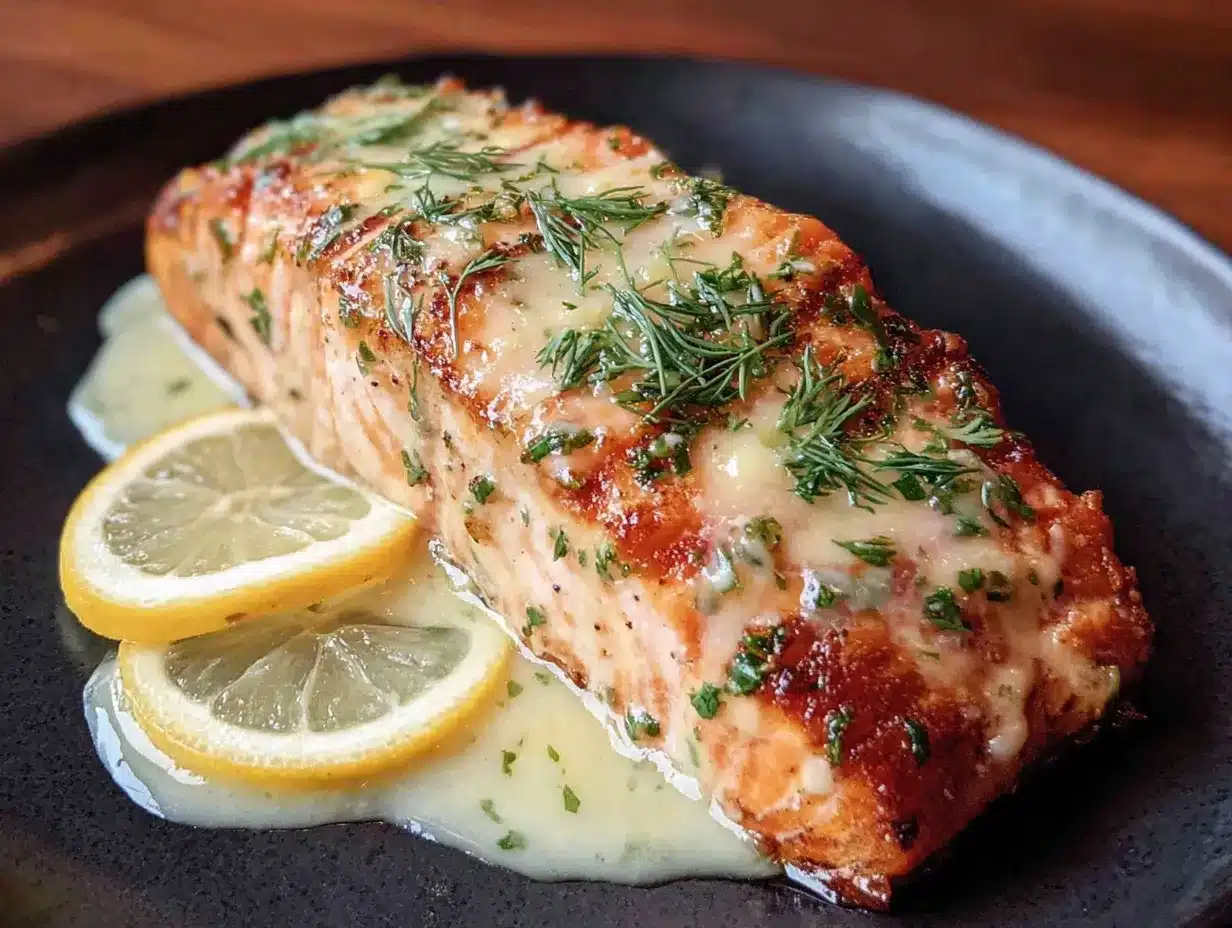
Alright, let me walk you through this. I have made this buttery lemon dill baked salmon so many times that I could do it in my sleep, but I still follow these steps every time. They work.
- Preheat your oven to 375°F (190°C). Give it a full 15 minutes to come to temperature. A properly preheated oven ensures even cooking. While it heats, take your salmon out of the fridge. Let it sit at room temperature for about 10 minutes—this helps it cook more evenly.
- Prepare your baking dish. Drizzle the olive oil into your 9×13-inch baking dish and spread it around with a paper towel or pastry brush. You just want a thin, even coating to prevent sticking.
- Make the compound butter. In a small bowl, combine the softened unsalted butter, lemon zest (from one lemon), minced garlic, dried dill, salt, and black pepper. Mash it together with a fork until everything is evenly distributed. Taste a tiny bit—it should taste bright and savory. If it needs more salt, add a pinch. This butter is the heart of the recipe, so do not rush it.
- Pat the salmon dry. Use paper towels to gently pat each fillet dry. This is important—excess moisture will steam the fish and prevent that beautiful buttery coating from adhering. Place the fillets skin-side down (if they have skin) in the prepared baking dish, leaving a little space between each one.
- Spread the butter mixture. Using a spoon or your fingers (clean hands are fine!), spread the compound butter evenly over the top of each fillet. Do not be shy—really coat the surface. The butter will melt and create a sauce as it bakes.
- Add lemon slices and fresh dill. Slice the second lemon into thin rounds. Place one or two slices on top of each fillet. Sprinkle the chopped fresh dill over everything. If you have extra lemon slices, tuck them around the fillets in the dish—they will infuse the butter sauce as it bakes.
- Bake for 12 to 15 minutes. The exact time depends on the thickness of your fillets. For 1-inch thick fillets, start checking at 12 minutes. The salmon is done when it flakes easily with a fork and the center is just barely opaque. If you are using a thermometer, 125°F to 130°F is your sweet spot. Remember, the salmon will continue cooking for a minute or two after you pull it out.
- Let it rest. Remove the baking dish from the oven and let the salmon rest for 2 to 3 minutes. This allows the juices to redistribute. Do not skip this step—I have ruined perfectly good salmon by cutting into it too soon.
- Spoon the pan sauce over the fillets. There will be a glorious pool of buttery lemon sauce in the bottom of the dish. Spoon it generously over each fillet before serving. This is the best part.
- Garnish and serve. Sprinkle with flaky sea salt, a few cracks of black pepper, and extra fresh dill sprigs if you have them. Serve immediately with lemon wedges on the side.
A quick note on timing: The total active time here is about 10 minutes. The oven does the rest. This is why I make this buttery lemon dill baked salmon on nights when I have zero energy but still want something that feels like a real meal.
Cooking Tips & Techniques
I have made every mistake in the book with this recipe so you do not have to. Here is what I have learned the hard way.
Do not overcook the salmon. This is the number one mistake people make. Salmon continues to cook after it leaves the oven, so pull it out when it is just barely opaque in the center. If you wait until it flakes easily while still in the oven, it will be dry by the time you sit down to eat. Trust the thermometer if you have one.
Room temperature butter is crucial. Cold butter will not spread evenly over the salmon. You will end up with clumps that melt unevenly, and some parts of the fish will be swimming in butter while others stay dry. Leave the butter out for at least 30 minutes before you start cooking.
Use a mix of fresh and dried dill. I know it sounds like extra work, but hear me out. Dried dill has a more concentrated, almost earthy flavor that holds up well to baking. Fresh dill is delicate and bright. Using both gives you layers of flavor—the dried dill infuses the butter while the fresh dill adds a pop of herbaceousness at the end.
Watch your lemon placement. Lemon slices on top of the salmon look beautiful, but they can also trap steam and prevent the top of the fish from browning. If you want a slightly more caramelized top, place the lemon slices around the fillets instead of directly on top. I usually do a mix—some on, some around.
Multitask wisely. While the salmon bakes, you have 12 to 15 minutes to make a side dish. I often throw together a quick salad or steam some green beans. If you are making rice or quinoa, start it before you put the salmon in the oven so everything finishes at the same time.
One thing I learned the hard way: I once used salted butter AND added the full teaspoon of salt. The result was inedible—a salt lick disguised as salmon. If you only have salted butter, reduce the added salt by half and taste the butter mixture before spreading it.
Variations & Adaptations
This buttery lemon dill baked salmon is forgiving. I have tweaked it for different diets, seasons, and cravings. Here are some of my favorite variations.
Garlic Herb Butter Salmon: Swap the dill for a mix of fresh parsley, thyme, and chives. Add an extra clove of garlic. This version is perfect for when you want something a little more savory and less floral. I make this version in the fall when fresh dill is harder to find.
Spicy Lemon Salmon: Add ½ teaspoon of red pepper flakes or a pinch of cayenne to the butter mixture. The heat cuts through the richness of the butter beautifully. My husband loves this version—he says it wakes up the dish.
Dairy-Free Version: Substitute the butter with a high-quality vegan butter or ghee (if you can tolerate clarified butter). I have also used olive oil mixed with a little nutritional yeast for a buttery flavor without the dairy. It is not exactly the same, but it is still delicious.
Air Fryer Method: This recipe adapts beautifully to an air fryer. Preheat the air fryer to 375°F (190°C). Place the seasoned fillets in the basket in a single layer (you may need to work in batches). Cook for 8 to 10 minutes, depending on thickness. The top gets slightly crispier than the oven version, which I actually prefer.
Lemon Dill Salmon with Capers: Sprinkle 1 tablespoon of drained capers over the fillets before baking. The briny little bursts of flavor are incredible with the buttery lemon sauce. This is my go-to version when I want something that feels a little more elevated.
One thing I tried that surprised me: I once added a tablespoon of honey to the butter mixture. It was good—sweet and savory—but it changed the character of the dish completely. If you want a honey lemon salmon, go for it. But for the classic buttery lemon dill flavor, skip the sweetener.
Serving & Storage Suggestions
This buttery lemon dill baked salmon is versatile enough to pair with almost anything. Here is how I like to serve it and what to do with leftovers.
Serving Temperature: Serve the salmon warm, straight from the oven. The butter sauce will be beautifully liquid and ready to soak into whatever side dish you choose. Leftovers are also good cold, flaked over a salad the next day.
What to Serve With It: I love this salmon with a simple side of roasted asparagus or green beans. The bright, lemony flavors complement each other. For a heartier meal, serve it over a bed of fluffy rice or quinoa to catch all that buttery sauce. A crisp green salad with a light vinaigrette is another favorite—the acidity cuts through the richness. If you are in the mood for something starchy, try it with creamy colcannon mashed potatoes with crispy cabbage—the combination is unexpectedly perfect.
Beverage Pairing: A crisp white wine like Sauvignon Blanc or a dry Pinot Grigio is lovely with this dish. For a non-alcoholic option, sparkling water with a lemon wedge works beautifully.
Storage: Store leftover salmon in an airtight container in the refrigerator for up to 3 days. The flavors actually meld together overnight, so leftovers can be even more delicious the next day. I do not recommend freezing cooked salmon—the texture becomes watery and mushy when thawed.
Reheating: The best way to reheat salmon is in a low oven. Place the fillets on a baking sheet and warm them at 275°F (135°C) for about 10 minutes. You can also reheat them gently in a skillet with a splash of water or lemon juice, covered, over low heat. Avoid the microwave—it will dry out the fish and make the butter sauce separate.
How Flavors Develop: The lemon and dill flavors mellow and meld together after a day in the fridge. The butter sauce thickens slightly and becomes almost like a spread. I have been known to eat cold leftover salmon straight from the container with a fork—do not judge me.
Nutritional Information & Benefits
This buttery lemon dill baked salmon is not just delicious—it is genuinely good for you. Here is what you are getting in each serving.
Estimated Nutritional Values (per serving, based on 4 servings):
| Nutrient | Amount |
|---|---|
| Calories | 380 |
| Protein | 35g |
| Fat | 24g |
| Saturated Fat | 10g |
| Carbohydrates | 2g |
| Fiber | 1g |
| Sugar | 1g |
| Sodium | 520mg |
Health Benefits: Salmon is packed with omega-3 fatty acids, which are great for heart and brain health. It is also an excellent source of high-quality protein and vitamin D. The lemon provides a good dose of vitamin C, and garlic has been shown to support immune function. Dill is rich in antioxidants and has been used for centuries to aid digestion.
Dietary Considerations: This recipe is naturally gluten-free, low-carb, and keto-friendly. It is also suitable for pescatarian diets. If you are watching your sodium, reduce the added salt to ½ teaspoon and use unsalted butter. For dairy-free, substitute the butter as mentioned in the variations section.
Potential Allergens: This recipe contains dairy (butter) and fish. It is free from nuts, eggs, soy, and gluten.
I am not a nutritionist, but I have done enough research to feel good about serving this to my family. It is one of those rare meals that tastes indulgent but is actually packed with nutrients. That is my favorite kind of cooking.
Conclusion
This buttery lemon dill baked salmon has become a staple in my kitchen for a reason. It is fast, forgiving, and genuinely delicious. The first time I made it, I was skeptical that something so simple could be so good. Now I know better. Sometimes the best recipes are the ones that let the ingredients speak for themselves.
I love that this recipe works for a quiet dinner alone or for feeding a crowd. I love that it makes my kitchen smell like a fancy restaurant without the stress. And I really love that my husband—the original salmon skeptic—now asks for it at least once a week.
Try it with easy crusty artisan bread on the side to soak up every drop of that buttery lemon sauce. Or keep it light with a simple green salad. However you serve it, I hope this recipe becomes a favorite in your kitchen too.
If you make this buttery lemon dill baked salmon, I would love to hear about it. Leave a comment below and let me know how it turned out—did you add any twists? Serve it with something unexpected? Share your version. And if you loved it, share this recipe with a friend who needs a quick, reliable dinner in their back pocket.
Happy cooking, friends. You have got this.
Frequently Asked Questions
Can I use frozen salmon for this recipe?
Yes, but you need to thaw it completely first. Place the frozen fillets in the refrigerator overnight, or for a quicker method, submerge them in cold water for about 30 minutes. Pat them very dry before seasoning—frozen salmon tends to hold more moisture, which can make the final dish watery.
How do I know when the salmon is done without a thermometer?
Look for visual cues. The salmon will change from translucent to opaque, and the flesh will flake easily when gently pressed with a fork. The center should still be slightly translucent when you pull it out—it will finish cooking as it rests. If the white protein (albumin) is oozing out of the sides, it is likely overcooked.
Can I make this recipe with other types of fish?
Absolutely. This butter and dill mixture works beautifully with trout, arctic char, halibut, or even thick white fish like cod or haddock. Adjust the baking time based on the thickness of the fillet. Thinner fish will cook faster, so start checking at 8 to 10 minutes.
What if I don’t have fresh dill?
Use 1 teaspoon of dried dill in the butter mixture and skip the fresh garnish. You can also substitute fresh parsley, tarragon, or chives. Each herb will give the dish a slightly different personality, but they all work well with lemon and butter.
How can I prevent the salmon from sticking to the baking dish?
Grease the dish well with olive oil before adding the salmon. You can also line the dish with parchment paper for easy cleanup. If the salmon does stick, let it rest for a minute or two after baking—it will release more easily as it cools slightly.
Pin This Recipe!
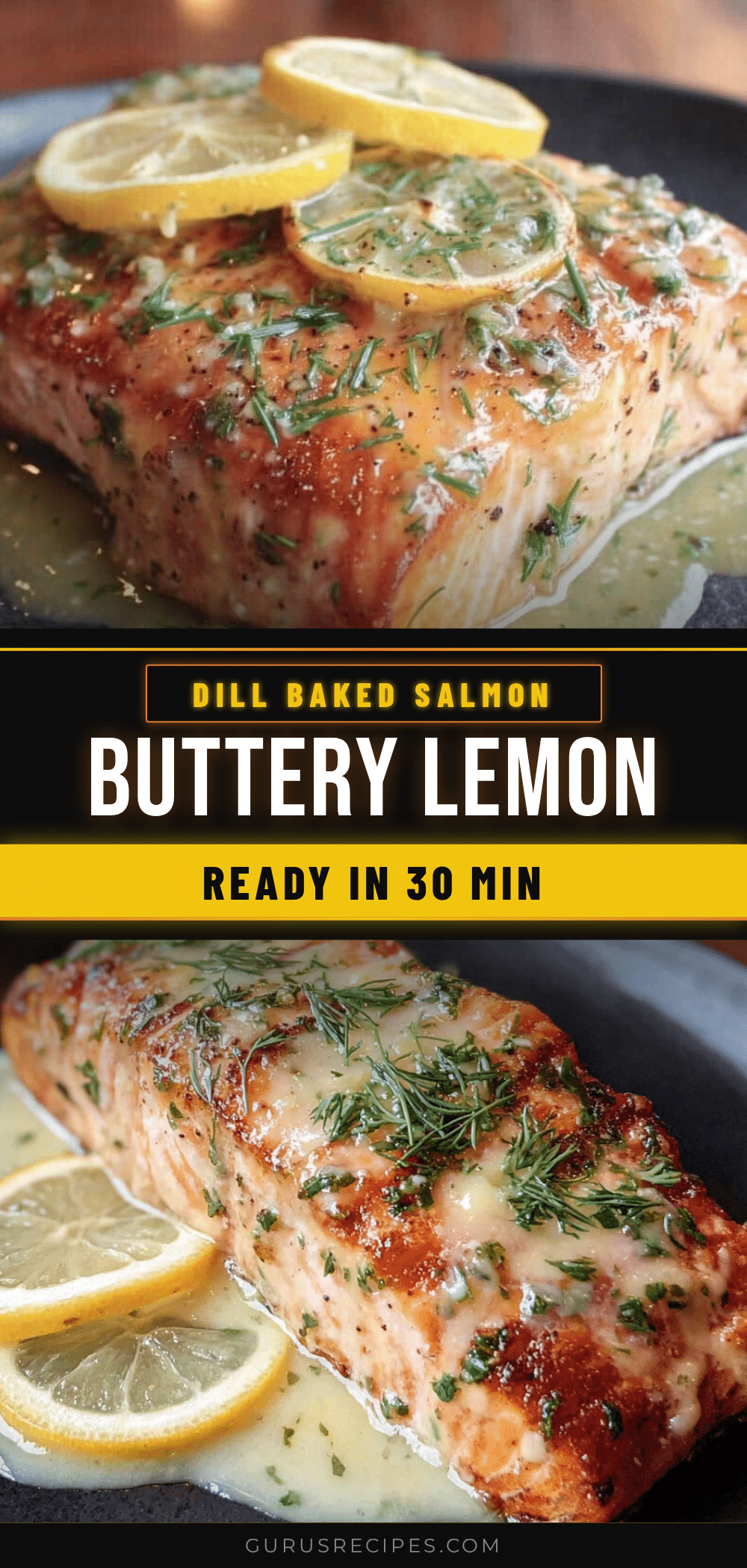

Buttery Lemon Dill Baked Salmon: Easy 20-Minute Dinner
This buttery lemon dill baked salmon is a quick and easy 20-minute dinner that turns even skeptics into fans. With simple ingredients and a perfect butter-to-lemon ratio, it’s tender, flaky, and full of bright, herbaceous flavor.
- Total Time: 25 minutes
- Yield: 4 servings 1x
Ingredients
- 4 salmon fillets (about 6 ounces each)
- 4 tablespoons unsalted butter, softened
- 2 medium lemons (zest and juice)
- 3 cloves garlic, minced
- 2 tablespoons fresh dill, chopped
- 1 teaspoon dried dill
- 1 teaspoon kosher salt
- ½ teaspoon freshly ground black pepper
- 1 tablespoon olive oil
- Optional: extra fresh dill sprigs, lemon wedges, flaky sea salt, cracked black pepper for serving
Instructions
- Preheat your oven to 375°F (190°C). Let the salmon sit at room temperature for about 10 minutes.
- Drizzle olive oil into a 9×13-inch baking dish and spread it around to coat evenly.
- In a small bowl, combine softened butter, lemon zest (from one lemon), minced garlic, dried dill, salt, and black pepper. Mash together with a fork until evenly distributed.
- Pat the salmon fillets dry with paper towels. Place them skin-side down in the prepared baking dish, leaving space between each.
- Spread the compound butter evenly over the top of each fillet.
- Slice the second lemon into thin rounds. Place one or two slices on top of each fillet. Sprinkle chopped fresh dill over everything.
- Bake for 12 to 15 minutes, until the salmon flakes easily with a fork and the center is just barely opaque (internal temperature of 125°F to 130°F).
- Remove from the oven and let rest for 2 to 3 minutes.
- Spoon the pan sauce over the fillets before serving.
- Garnish with flaky sea salt, black pepper, and extra fresh dill sprigs. Serve immediately with lemon wedges.
Notes
Do not overcook the salmon; it continues cooking after removal from the oven. Use room temperature butter for even spreading. A mix of fresh and dried dill adds layers of flavor. If using salted butter, reduce added salt by half. For dairy-free, substitute with vegan butter or ghee.
- Prep Time: 10 minutes
- Cook Time: 15 minutes
- Category: Main Course
- Cuisine: American
Nutrition
- Serving Size: 1 fillet
- Calories: 380
- Sugar: 1
- Sodium: 520
- Fat: 24
- Saturated Fat: 10
- Carbohydrates: 2
- Fiber: 1
- Protein: 35
Keywords: baked salmon, lemon dill salmon, easy salmon recipe, 20-minute dinner, buttery salmon, healthy salmon, weeknight dinner