My grandmother had a rule about apple cider donuts. You had to eat them the day you bought them, preferably still warm, with the cinnamon sugar dusted so thick it left orange fingerprints on your napkin. For years, I just accepted that homemade versions weren’t going to taste like the ones from the orchard stand. The cake versions were too dense. The baked donut pans gave you that weird rubbery ring. And honestly, who wants to deal with deep frying at home on a Tuesday morning?
I had been looking for a way to get that same spiced, tender crumb and crackly cinnamon-sugar coating without the fryer or the special pan. Something that actually tasted like autumn in a bakery case, not a sad coffee cake pretending to be a donut. I tried reducing cider on the stove. I tried swapping in apple butter. I even attempted a baked donut recipe that required three different pans and a piping bag (never again).
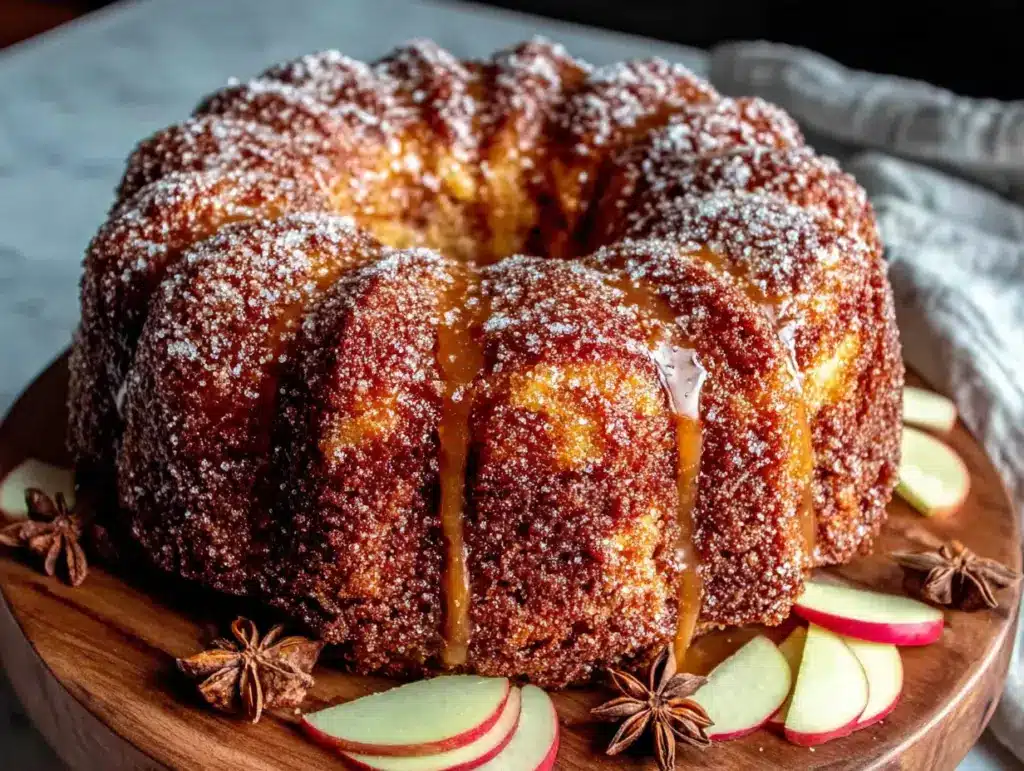
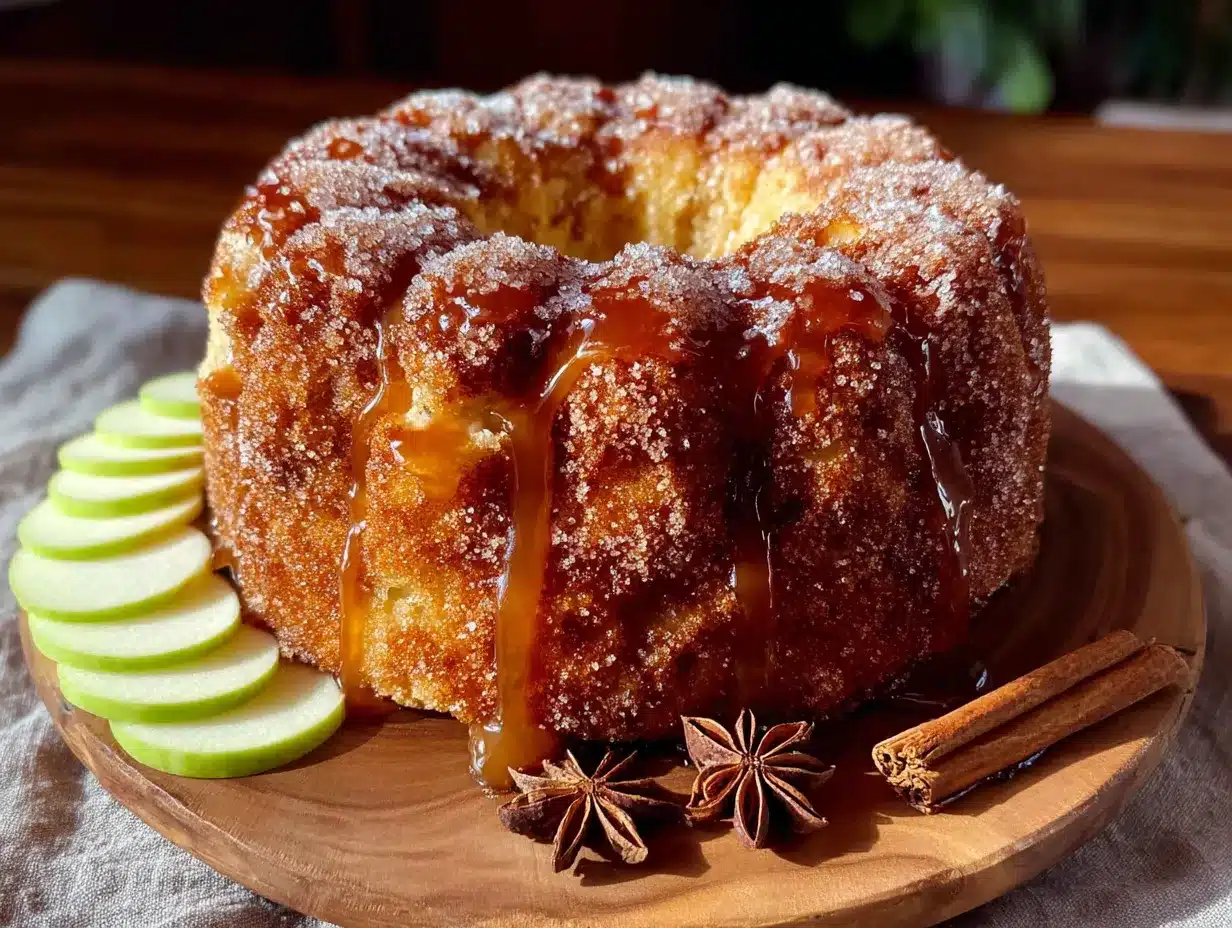
The answer came from a Bundt pan, of all things. One afternoon, staring at a half-gallon of fresh cider that was about to turn, I poured it into a saucepan and let it simmer down to a syrup. I folded that concentrated apple flavor into a simple butter cake batter, poured it into my dusty Bundt pan, and waited. When I flipped it out and brushed it with butter and rolled it in cinnamon sugar, I knew. This was the one. It had the texture of a donut—dense but tender, with that slightly crisp edge—and the flavor of a perfect fall afternoon. No fryer. No special equipment. Just a cake that tastes like a dozen orchard donuts in one beautiful ring.
Why You’ll Love This Recipe
This Easy Apple Cider Donut Bundt Cake with Cinnamon Sugar isn’t just another fall dessert. It is the one you will make every single season, year after year. Here is why it works:
- One Pan Wonder : No donut pans, no cookie sheets, no piping bags. Just a standard Bundt pan and a bowl. Cleanup takes about four minutes.
- Real Apple Cider Flavor : We reduce the cider on the stove to concentrate the apple taste. This isn’t a cake that whispers “apple.” It shouts it, in the best way possible.
- That Donut Texture : The crumb is tight and tender, just like a real cake donut. It has that satisfying density without being heavy or greasy.
- Crackly Cinnamon Sugar Coating : Brushing the warm cake with melted butter and rolling it in cinnamon sugar creates that signature crusty-sweet coating we all fight over.
- Crowd-Pleaser : I have brought this to brunches, potlucks, and holiday dinners. It disappears. Kids love the sugar coating. Adults love the sophisticated apple flavor.
- Make-Ahead Friendly : This cake actually tastes better the next day. The flavors meld and the texture stays perfect for days.
This recipe is the kind that makes you close your eyes after the first bite. It is comfort food reimagined—simpler, faster, but with the same soul-soothing satisfaction as a trip to the orchard. Perfect for impressing guests without stress, or turning a quiet Sunday morning into something memorable.
What Ingredients You Will Need
This recipe uses simple, wholesome ingredients to deliver bold apple flavor and that perfect donut texture without any fuss. Most of these are pantry staples, with the star being fresh apple cider.
For the Cake
- 1 cup apple cider (the fresh, refrigerated kind, not the shelf-stable juice—it has more flavor)
- 2 ½ cups all-purpose flour (spoon and level it; don’t scoop straight from the bag)
- 1 teaspoon baking powder
- ½ teaspoon baking soda
- 1 teaspoon ground cinnamon
- ½ teaspoon ground nutmeg (freshly grated if you have it—it makes a difference)
- ¼ teaspoon ground cloves
- ½ teaspoon salt
- ½ cup unsalted butter, softened (1 stick)
- 1 cup granulated sugar
- ½ cup packed light brown sugar
- 2 large eggs, room temperature
- 1 teaspoon vanilla extract
- ½ cup buttermilk, room temperature (or make your own with ½ cup milk + ½ tablespoon lemon juice, let sit 5 minutes)
For the Cinnamon Sugar Coating
- ¼ cup unsalted butter, melted
- ½ cup granulated sugar
- 1 tablespoon ground cinnamon
Ingredient Notes: I recommend using a good-quality apple cider from a local orchard or the refrigerated section of your grocery store. The flavor is more concentrated and authentic. For the buttermilk, if you don’t have it on hand, the milk-and-lemon-juice hack works perfectly here. I have also used full-fat Greek yogurt thinned with a splash of milk in a pinch, and it worked beautifully.
Equipment Needed
You do not need a specialty donut pan or a deep fryer for this recipe. Here is what you will need:
- 10 to 12-cup Bundt pan (the standard size; do not use a mini Bundt pan unless you adjust baking time)
- Small saucepan (for reducing the cider)
- Large mixing bowls (one for dry ingredients, one for wet)
- Electric hand mixer or stand mixer (a whisk and some elbow grease works too, but a mixer makes it easier)
- Rubber spatula
- Cooling rack
- Pastry brush (for brushing the melted butter onto the cake)
- Wire mesh strainer (optional, for sifting the cinnamon sugar onto the cake)
If you do not have a pastry brush, you can simply pour the melted butter over the cake and let it soak in before coating with sugar. It works, though it is a bit messier. I have used a cheap silicone brush for years, and it is one of my most-used tools.
Preparation Method
Let us get to the good part. Follow these steps carefully, and you will have a cake that tastes like it came from a fancy bakery.
- Reduce the apple cider. Pour the 1 cup of apple cider into a small saucepan. Bring it to a boil over medium-high heat, then reduce the heat to a simmer. Let it bubble away until it reduces to about ¼ cup. This takes about 12 to 15 minutes. It will look syrupy and smell intensely of apples. Set it aside to cool completely. Do not skip this step—it is the secret to the concentrated flavor.
- Preheat and prepare the pan. Preheat your oven to 350°F (175°C). Generously grease your Bundt pan with butter or non-stick baking spray that contains flour. Do not skimp here. A well-greased pan is the difference between a beautiful cake and a crumbled mess.
- Whisk the dry ingredients. In a large bowl, whisk together the 2 ½ cups flour, 1 teaspoon baking powder, ½ teaspoon baking soda, 1 teaspoon cinnamon, ½ teaspoon nutmeg, ¼ teaspoon cloves, and ½ teaspoon salt. Set aside.
- Cream the butter and sugars. In a separate large bowl (or the bowl of a stand mixer), beat the ½ cup softened butter, 1 cup granulated sugar, and ½ cup brown sugar together until light and fluffy, about 3 to 4 minutes. Scrape down the sides of the bowl once or twice.
- Add the eggs and vanilla. Beat in the 2 large eggs one at a time, making sure each is fully incorporated before adding the next. Add the 1 teaspoon vanilla extract and beat until combined.
- Combine the wet ingredients. In a small bowl or measuring cup, whisk together the cooled reduced cider and the ½ cup buttermilk.
- Alternate adding dry and wet ingredients. With the mixer on low speed, add about one-third of the flour mixture to the butter mixture, mixing until just combined. Add half of the cider-buttermilk mixture, mixing until combined. Repeat with another third of flour, the remaining cider mixture, and finally the last third of flour. Mix until just combined—do not overmix. A few streaks of flour are okay; they will disappear when you fold the batter.
- Fold the batter. Use a rubber spatula to give the batter a few gentle folds from the bottom up. This ensures everything is evenly mixed without overworking the gluten.
- Bake the cake. Pour the batter into the prepared Bundt pan and spread it evenly. Bake for 45 to 55 minutes, or until a toothpick inserted into the center comes out clean or with a few moist crumbs. The top should be golden brown and spring back when lightly touched.
- Cool in the pan. Let the cake cool in the pan on a wire rack for exactly 10 minutes. Do not let it cool longer, or it may stick. After 10 minutes, invert the cake onto the rack and let it cool completely, about 1 hour.
- Make the coating. While the cake cools, melt the ¼ cup butter in a small bowl. In a separate shallow dish, whisk together the ½ cup sugar and 1 tablespoon cinnamon.
- Coat the cake. Once the cake is completely cool, use a pastry brush to brush the entire surface of the cake with the melted butter. Then, using your hands or a spoon, sprinkle the cinnamon sugar mixture all over the cake, pressing gently so it sticks. Work over a sheet of parchment paper to catch the excess sugar—you can reuse it for another layer.
Sensory Cue: When you reduce the cider, your kitchen will smell like a fall candle exploded. That is the goal. When you cream the butter and sugar, it should look pale and fluffy, like a cloud. The batter will be thick and slightly glossy, with a beautiful golden color.
Cooking Tips & Techniques
I have made this cake more times than I can count, and I have learned a few things the hard way. Let me save you the trouble.
Do not skip reducing the cider. I tried once, thinking I could just use regular cider and save time. The cake was bland. It tasted like a regular vanilla cake with a hint of apple. Reducing the cider concentrates the sugars and the flavor, giving you that intense apple taste that makes this cake special. It is a non-negotiable step.
Room temperature ingredients matter. Cold eggs and cold buttermilk will seize the butter in your batter, giving you a dense, tough cake. Take them out of the fridge 30 minutes before you start baking. If you forget, place the eggs in a bowl of warm water for 5 minutes and microwave the buttermilk for 10 seconds.
Grease the Bundt pan like your life depends on it. I use a pastry brush to coat every nook and cranny with softened butter, then dust it lightly with flour. Non-stick spray with flour works too. I once thought I had greased it well enough, and half the cake stayed in the pan. It was a sad, crumbly mess.
Let the cake cool completely before coating. If you brush the butter onto a warm cake, it will soak in and disappear, leaving you with a dry surface that won’t hold the sugar. Let it cool fully, then brush and coat. The butter will sit on the surface, creating that perfect sticky base for the cinnamon sugar.
Use a wire mesh strainer for the sugar. If you want an even, professional-looking coating, sift the cinnamon sugar through a fine-mesh strainer directly over the cake. It gives you a delicate, even dusting instead of clumps.
Variations & Adaptations
This recipe is wonderfully adaptable. Here are a few ways to make it your own:
- Gluten-Free Version : Swap the all-purpose flour for a good 1-to-1 gluten-free baking flour blend. I have used Bob’s Red Mill with great results. The texture will be slightly more tender, but the flavor is spot on.
- Dairy-Free Version : Use vegan butter (I like Miyoko’s) and substitute the buttermilk with ½ cup unsweetened almond milk mixed with ½ tablespoon apple cider vinegar. The cake will be a bit less tender, but still delicious.
- Spice It Up : Add ¼ teaspoon of cardamom or ginger to the dry ingredients for a more complex spice profile. I have done this for holiday gatherings, and it adds a lovely warmth.
- Apple Cider Glaze : Instead of the cinnamon sugar coating, make a simple glaze by whisking together 1 cup powdered sugar, 2 tablespoons reduced apple cider, and ½ teaspoon vanilla. Drizzle it over the cooled cake for a different look and texture.
- Add Mix-Ins : Fold in ½ cup of finely chopped pecans or walnuts into the batter before baking. The crunch adds a lovely contrast to the tender crumb. I have also added ½ cup of dried cranberries for a festive touch.
- Mini Bundt Cake Version : Use mini Bundt pans and reduce the baking time to 20 to 25 minutes. Watch them closely, as they can overbake quickly.
I once made a version with a brown butter glaze instead of the cinnamon sugar, and it was incredible. The nutty flavor of the brown butter paired perfectly with the apple. Just be careful not to burn the butter—it goes from golden to black in seconds.
Serving & Storage Suggestions
This cake is best served at room temperature, but it is also wonderful slightly warm. If you want to warm individual slices, pop them in the microwave for 10 to 15 seconds. The cinnamon sugar will get slightly melty, and the cake will taste fresh from the oven.
Serving Ideas:
- Serve with a dollop of lightly sweetened whipped cream or a scoop of vanilla ice cream. The cold creaminess against the spiced cake is a perfect contrast.
- Pair with a hot cup of coffee, spiced chai, or a glass of cold apple cider for the ultimate fall experience.
- For brunch, serve alongside a creamy strawberry cheesecake stuffed French toast for a stunning spread.
Storage:
- Store the cake in an airtight container at room temperature for up to 4 days. The cinnamon sugar may soften slightly over time, but the flavor will deepen.
- To freeze, wrap the uncoated cake tightly in plastic wrap, then in aluminum foil. Freeze for up to 3 months. When ready to serve, thaw overnight at room temperature, then brush with butter and coat with cinnamon sugar.
- If you have already coated the cake, you can still freeze it. The sugar will become less crunchy, but it will still taste delicious.
Flavor Development: This cake actually tastes better on day two. The spices meld with the apple flavor, and the texture becomes even more tender. If you can resist eating it all on day one, you are in for a treat.
Nutritional Information & Benefits
Here is an approximate nutritional breakdown for one slice (based on 12 servings):
- Calories: 380
- Fat: 16g
- Carbohydrates: 55g
- Protein: 5g
- Fiber: 1g
- Sugar: 38g
Health Benefits: Apple cider is rich in antioxidants and polyphenols, which can support gut health and reduce inflammation. Cinnamon is known for its anti-inflammatory properties and may help regulate blood sugar. While this is an indulgent treat, it does offer some nutritional value from its key ingredients.
Dietary Considerations: This recipe contains gluten, dairy, and eggs. For gluten-free and dairy-free options, see the variations section above. It is not suitable for vegan diets in its current form.
My Take: This cake is a celebration, not an everyday breakfast. But I love that it uses real, whole ingredients—no artificial flavors or preservatives. It is the kind of treat that feels special but honest.
Conclusion
This Easy Apple Cider Donut Bundt Cake with Cinnamon Sugar is more than just a recipe. It is a way to bring the taste of autumn into your kitchen without the hassle of deep frying or specialty pans. It is the cake you will make for fall birthdays, Thanksgiving brunches, and cozy Sunday mornings when you want something that feels like a hug.
I have made this cake for friends who swore they did not like apple desserts, and they asked for seconds. I have brought it to potlucks where it disappeared before the main course. It is reliably delicious, beautifully simple, and endlessly adaptable.
I encourage you to make it your own. Add extra spices. Try the glaze version. Fold in some nuts. The beauty of this recipe is that it is forgiving and flexible. And if you make it, I would love to hear about it. Leave a comment below and let me know how it turned out, or share your own twist. Honestly, your version might be even better than mine.
Happy baking, friends. May your kitchen smell like apples and cinnamon, and may your cake flip out of the pan perfectly every time.
Frequently Asked Questions
Can I use apple juice instead of apple cider?
You can, but the flavor will be much milder. Apple cider has a deeper, more complex taste because it is less filtered. If you use juice, you may want to reduce it a bit longer to concentrate the flavor. It will still be good, just not as intensely apple-y.
Why did my cake stick to the Bundt pan?
This happens when the pan is not greased well enough, or when you let the cake cool in the pan for too long. Use a generous amount of butter or non-stick spray, and make sure to get into all the crevices. Also, do not let the cake cool in the pan for more than 10 minutes. Invert it while it is still warm.
Can I make this cake ahead of time?
Absolutely. In fact, it tastes better the next day. Bake the cake, let it cool completely, and store it in an airtight container at room temperature. Wait to brush it with butter and coat it with cinnamon sugar until just before serving. This keeps the coating crunchy.
How do I know when the cake is done baking?
Insert a toothpick or a thin skewer into the center of the cake. If it comes out clean or with just a few moist crumbs, it is done. The top should be golden brown and spring back when you lightly press it with your finger. If the toothpick comes out wet with batter, bake for another 5 minutes and check again.
Can I use a different pan if I don’t have a Bundt pan?
Yes. You can bake this batter in a 9×13 inch baking dish. Grease the dish well and bake at 350°F for 30 to 35 minutes. The baking time will be shorter because the batter is spread thinner. You can also use two 9-inch round cake pans, baking for 25 to 30 minutes. The texture will be slightly different, but the flavor will still be wonderful.
Pin This Recipe!
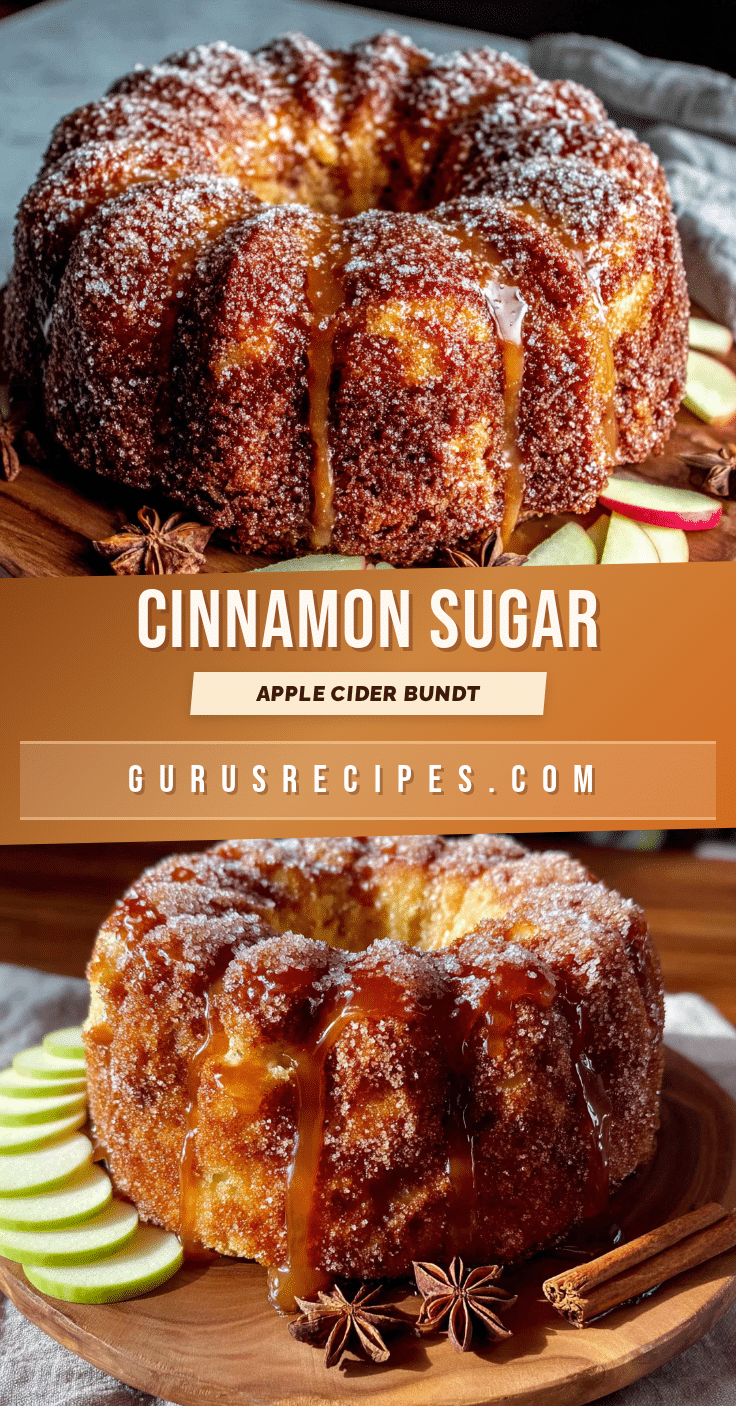

Easy Apple Cider Donut Bundt Cake with Cinnamon Sugar
This Easy Apple Cider Donut Bundt Cake with Cinnamon Sugar delivers the spiced, tender crumb and crackly cinnamon-sugar coating of a classic apple cider donut without the need for a fryer or specialty pan. Made with reduced apple cider for intense flavor, this one-pan wonder is perfect for fall gatherings, brunches, or cozy mornings.
- Total Time: 1 hour 10 minutes
- Yield: 12 servings 1x
Ingredients
- 1 cup apple cider (fresh, refrigerated kind)
- 2 ½ cups all-purpose flour (spooned and leveled)
- 1 teaspoon baking powder
- ½ teaspoon baking soda
- 1 teaspoon ground cinnamon
- ½ teaspoon ground nutmeg (freshly grated if possible)
- ¼ teaspoon ground cloves
- ½ teaspoon salt
- ½ cup unsalted butter, softened (1 stick)
- 1 cup granulated sugar
- ½ cup packed light brown sugar
- 2 large eggs, room temperature
- 1 teaspoon vanilla extract
- ½ cup buttermilk, room temperature (or ½ cup milk + ½ tablespoon lemon juice, let sit 5 minutes)
- ¼ cup unsalted butter, melted (for coating)
- ½ cup granulated sugar (for coating)
- 1 tablespoon ground cinnamon (for coating)
Instructions
- Reduce the apple cider: Pour 1 cup apple cider into a small saucepan. Bring to a boil over medium-high heat, then reduce to a simmer. Let it reduce to about ¼ cup (12-15 minutes). Set aside to cool completely.
- Preheat and prepare the pan: Preheat oven to 350°F (175°C). Generously grease a 10 to 12-cup Bundt pan with butter or non-stick baking spray containing flour.
- Whisk the dry ingredients: In a large bowl, whisk together 2 ½ cups flour, 1 teaspoon baking powder, ½ teaspoon baking soda, 1 teaspoon cinnamon, ½ teaspoon nutmeg, ¼ teaspoon cloves, and ½ teaspoon salt. Set aside.
- Cream the butter and sugars: In a separate large bowl, beat ½ cup softened butter, 1 cup granulated sugar, and ½ cup brown sugar together until light and fluffy (3-4 minutes). Scrape down sides as needed.
- Add the eggs and vanilla: Beat in 2 large eggs one at a time, ensuring each is fully incorporated. Add 1 teaspoon vanilla extract and beat until combined.
- Combine the wet ingredients: In a small bowl, whisk together the cooled reduced cider and ½ cup buttermilk.
- Alternate adding dry and wet ingredients: With mixer on low, add about one-third of the flour mixture to the butter mixture, mixing until just combined. Add half of the cider-buttermilk mixture, mixing until combined. Repeat with another third of flour, remaining cider mixture, and final third of flour. Mix until just combined—do not overmix.
- Fold the batter: Use a rubber spatula to gently fold the batter a few times from the bottom up to ensure even mixing.
- Bake the cake: Pour batter into prepared Bundt pan and spread evenly. Bake for 45-55 minutes, or until a toothpick inserted into the center comes out clean or with a few moist crumbs. The top should be golden brown and spring back when lightly touched.
- Cool in the pan: Let cake cool in the pan on a wire rack for exactly 10 minutes. Invert onto the rack and let cool completely (about 1 hour).
- Make the coating: While cake cools, melt ¼ cup butter in a small bowl. In a separate shallow dish, whisk together ½ cup sugar and 1 tablespoon cinnamon.
- Coat the cake: Once cake is completely cool, use a pastry brush to brush the entire surface with melted butter. Then sprinkle the cinnamon sugar mixture all over the cake, pressing gently to adhere. Work over parchment paper to catch excess sugar.
Notes
Do not skip reducing the cider—it concentrates the apple flavor. Room temperature ingredients are crucial for a tender crumb. Grease the Bundt pan thoroughly to prevent sticking. Let the cake cool completely before coating to ensure the cinnamon sugar adheres. The cake tastes even better the next day.
- Prep Time: 20 minutes
- Cook Time: 50 minutes
- Category: Dessert
- Cuisine: American
Nutrition
- Serving Size: 1 slice
- Calories: 380
- Sugar: 38
- Sodium: 280
- Fat: 16
- Saturated Fat: 10
- Carbohydrates: 55
- Fiber: 1
- Protein: 5
Keywords: apple cider donut bundt cake, cinnamon sugar bundt cake, fall bundt cake, apple cider cake, easy bundt cake, one pan dessert