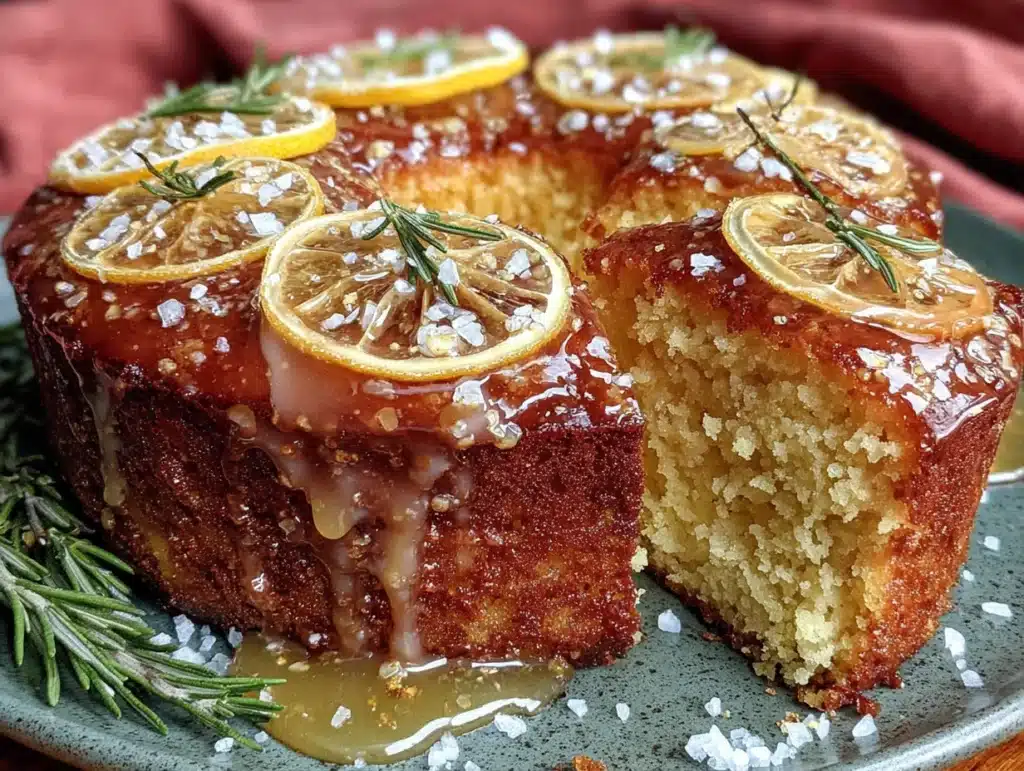
The neighborhood spring potluck was in six hours and I’d completely forgotten. Everyone else would be bringing their signature dishes—the kind that take two days and involve obscure spices from a specialty shop. My neighbor Sarah was famous for her triple-layer berry tart. Across the street, the Johnsons always brought a slow-braised lamb that smelled like heaven. I had a bag of Meyer lemons, a bottle of decent olive oil, and a sinking feeling in my stomach.
I rummaged through my pantry like a woman possessed. Flour? Check. Sugar? Barely enough. Eggs? Three, which is exactly how many you need for this cake. I’d made a version of this quick Meyer lemon olive oil cake before, but never under this kind of pressure. Honestly, I was just hoping for something edible. I threw it together in about ten minutes—no mixer, no fuss, just a whisk and a bowl. The honey glaze was an afterthought, drizzled on while the cake was still warm because I was already late.
Here’s the thing about showing up to a potluck with a simple cake when everyone else has brought showstoppers: you feel a little sheepish. I set it on the table next to Sarah’s perfect tart and mentally apologized to my cake. But then something happened. People started cutting slices. Then they went back for seconds. Sarah herself came over and asked for the recipe, which is the culinary equivalent of a standing ovation. The cake was gone before the lamb was even carved. Maybe you’ve been in that spot—scrambling, panicking, and somehow stumbling onto something that works better than anything you planned. That’s this cake. It’s the underdog that wins every time, and I’ve been making it on purpose ever since.
Why You’ll Love This Recipe
Let me tell you why this quick Meyer lemon olive oil cake has become my weeknight hero. I’ve tested it at least a dozen times—with different oils, different citrus, different glazes—and this version is the one that never fails. It’s the kind of recipe that makes you look like you spent hours in the kitchen when you really didn’t.
- Quick & Easy: From start to finish, this cake is on your table in under 45 minutes. The active prep time is maybe ten minutes. No stand mixer required, no complicated techniques. Just whisk, pour, and bake.
- Simple Ingredients: You probably have everything already. Olive oil, flour, sugar, eggs, lemons. No buttermilk to buy, no butter to soften. It’s practically a pantry raid recipe.
- Perfect for Weeknights: Need a dessert for a Tuesday dinner? This is it. It’s not too heavy, not too sweet, and it pairs beautifully with a cup of tea or a scoop of ice cream.
- Crowd-Pleaser: I’ve brought this to book clubs, birthday parties, and casual dinners. It gets devoured every single time. People love the bright lemon flavor and the tender, moist crumb.
- Unbelievably Delicious: The olive oil gives it this incredible richness without being greasy. The honey glaze adds just enough sweetness. The texture is almost velvety, with a slightly crisp edge. It’s comfort food, but lighter and brighter.
What makes this version different from every other lemon cake out there? It’s the Meyer lemons, for one thing. They’re sweeter and less acidic than regular lemons, with a floral note you just don’t get from the standard kind. And the olive oil—good quality extra virgin—adds a fruity depth that butter simply can’t match. This isn’t just another lemon cake. It’s the one that makes you close your eyes after the first bite, wondering why you don’t make it every single week.
What Ingredients You Will Need
This recipe uses simple, wholesome ingredients that come together to create something genuinely special. Most of these are pantry staples, which is exactly what you want on a busy weeknight when you’re craving something homemade.
For the Cake
- 1 ½ cups (188g) all-purpose flour — Spoon and level for accuracy. Too much flour makes the cake dense.
- 1 cup (200g) granulated sugar — Regular white sugar works perfectly. You could use cane sugar if you prefer.
- ½ teaspoon baking powder — Make sure it’s fresh. Old baking powder won’t give you the lift you need.
- ½ teaspoon baking soda — Helps the cake brown and rise.
- ¼ teaspoon salt — Balances the sweetness and enhances the lemon flavor.
- 3 large eggs, room temperature — Cold eggs can seize the batter. Let them sit out for 20 minutes if you can.
- ¾ cup (180ml) good quality extra virgin olive oil — This is important. Use one you actually like the taste of, because it comes through. I recommend California Olive Ranch for a mild, fruity flavor.
- ½ cup (120ml) fresh Meyer lemon juice — That’s about 3 to 4 Meyer lemons. Roll them on the counter before juicing for maximum yield.
- Zest of 2 Meyer lemons — Only the yellow part. The white pith is bitter.
- 1 teaspoon vanilla extract — Adds warmth and rounds out the citrus.
For the Honey Glaze
- ½ cup (60g) powdered sugar, sifted — Sifting prevents lumps in your glaze.
- 2 tablespoons honey — Use a mild honey like clover or orange blossom. Strong honey can overpower the lemon.
- 1 to 2 tablespoons fresh Meyer lemon juice — Adjust for consistency. You want it pourable but not watery.
- Pinch of salt — Trust me on this. It makes the glaze taste brighter.
Ingredient Tips
Look for Meyer lemons that feel heavy for their size—that means they’re juicy. If you can’t find Meyer lemons, use regular lemons and add an extra tablespoon of honey to the cake batter to balance the tartness. For the olive oil, you don’t need the most expensive bottle, but don’t use the cheap stuff you’d cook eggs in either. A medium-priced extra virgin with a pleasant flavor is perfect. I’ve also made this with blood oranges in winter, and it’s fantastic.
Equipment Needed
You don’t need a fancy kitchen for this cake. Here’s what you’ll need:
- 9-inch round cake pan — A springform pan works beautifully here. If you don’t have one, a regular cake pan lined with parchment paper is fine.
- Large mixing bowl — Any bowl big enough to whisk everything without splashing.
- Whisk — A balloon whisk is ideal. A fork in a pinch, but you’ll work harder.
- Microplane or fine grater — For zesting the lemons. A vegetable peeler works too, but you’ll need to mince the zest finely.
- Citrus juicer — A handheld reamer is my favorite. Electric juicers are overkill here.
- Measuring cups and spoons — Liquid measuring cups for the oil and juice, dry measures for the flour and sugar.
- Cooling rack — Lets air circulate so the cake doesn’t get soggy on the bottom.
- Small saucepan or microwave-safe bowl — For warming the honey if it’s too thick to mix.
I’ve made this cake with a hand mixer, and honestly, it doesn’t make much difference. A whisk gives you more control and less cleanup. My favorite pan for this is a ceramic-coated springform—it releases the cake perfectly every time. If you’re on a budget, a basic metal cake pan lined with parchment works just as well.
Preparation Method
Let’s get baking. This is straightforward, but I’ll walk you through every step so you feel confident.
- Preheat your oven to 350°F (175°C). Position the rack in the center. While it’s heating, grease your 9-inch cake pan with a little olive oil or butter. Line the bottom with a circle of parchment paper for easy release.
- Zest and juice your Meyer lemons. Zest two lemons directly into your large mixing bowl. Then juice them until you have ½ cup. Set the juice aside. You’ll use some for the glaze later, so juice a third lemon if you need extra.
- Whisk the dry ingredients together. In a separate medium bowl, whisk together the flour, baking powder, baking soda, and salt. This ensures the leavening agents are evenly distributed. You don’t need to sift—just whisk thoroughly.
- Combine the wet ingredients. To the bowl with the lemon zest, add the sugar. Rub the zest into the sugar with your fingertips for about 30 seconds. This releases the oils and makes the cake incredibly fragrant. Then add the eggs, olive oil, lemon juice, and vanilla extract. Whisk until smooth and well combined. It should look emulsified—a little thicker than when you started.
- Add the dry ingredients to the wet. Pour the flour mixture into the wet ingredients. Fold gently with a rubber spatula or whisk until just combined. A few streaks of flour are fine. Overmixing will make the cake tough. Trust me—I’ve done it, and the result is a rubbery disappointment.
- Pour the batter into the prepared pan. Use your spatula to spread it evenly. Tap the pan gently on the counter a couple of times to release any air bubbles.
- Bake for 30 to 35 minutes. Start checking at 28 minutes if your oven runs hot. The cake is done when a toothpick inserted into the center comes out clean or with a few moist crumbs. The top should be golden brown and spring back when lightly touched.
- Cool in the pan for 10 minutes. This lets the cake set. Then run a knife around the edge and invert onto a cooling rack. Remove the parchment paper and let it cool completely—or at least until warm, if you’re impatient like me.
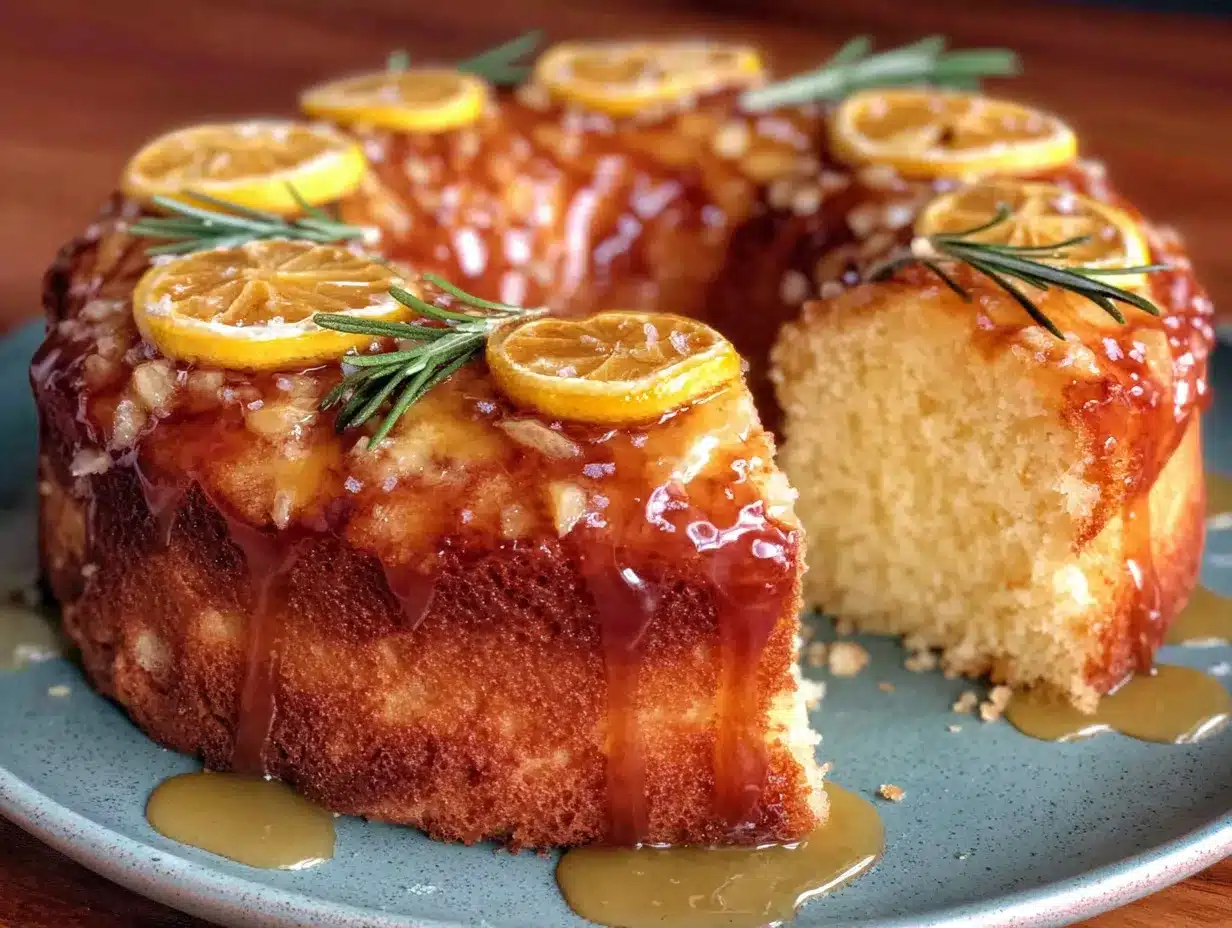
- Make the honey glaze. While the cake cools, whisk together the powdered sugar, honey, 1 tablespoon of lemon juice, and a pinch of salt. If it’s too thick, add another tablespoon of lemon juice. If it’s too thin, add a little more powdered sugar. You want it to flow slowly off the whisk.
- Glaze the cake. Place the cooled cake on a serving plate. Drizzle the glaze over the top, letting it cascade down the sides. Use the back of a spoon to help it along if needed. Let the glaze set for about 10 minutes before slicing.
A quick note: If you’re in a hurry, you can skip the glaze entirely. The cake is delicious on its own, dusted with a little powdered sugar. But the glaze really does take it over the top, so I recommend making it if you have five extra minutes.
Cooking Tips & Techniques
I’ve made this quick Meyer lemon olive oil cake more times than I can count, and I’ve learned a few things along the way. Here are my best tips for getting it right every time.
Room temperature eggs matter. Cold eggs can cause the olive oil to seize up, making the batter look curdled. If you forgot to take them out ahead of time, place them in a bowl of warm water for 5 minutes. It works like a charm.
Don’t overmix the batter. This is the most common mistake I see. Once you add the flour, mix only until it disappears. Overmixing develops gluten, which gives you a dense, tough cake instead of a tender one. I learned this the hard way when I made a brick of a cake for my sister’s birthday. She was kind about it, but I knew.
Use a kitchen scale for accuracy. Measuring flour by volume can be inconsistent—a cup can vary by 20 grams depending on how you scoop. If you have a scale, use it. 188 grams is your target. If you don’t have one, spoon the flour into your measuring cup and level it off with a knife. Never scoop directly from the bag.
Let the cake cool before glazing. I know it’s tempting to pour that honey glaze on a warm cake, but it will just soak in and disappear. A slightly warm cake is okay—the glaze will set with a nice sheen. A hot cake will leave you with a puddle.
Multitask like a pro. While the cake bakes, wash your dishes. While it cools, make the glaze. This way, by the time you’re ready to serve, your kitchen is clean and you’re relaxed. That’s the weeknight magic right there.
Variations & Adaptations
This recipe is incredibly forgiving. Here are some ways to make it your own.
- Gluten-Free Version: Substitute the all-purpose flour with a 1:1 gluten-free baking blend. I’ve used Bob’s Red Mill with great results. Add ¼ teaspoon of xanthan gum if your blend doesn’t include it. The texture will be slightly more delicate, but still delicious.
- Dairy-Free: This cake is already dairy-free! The olive oil replaces butter perfectly. Just make sure your honey glaze ingredients are dairy-free, which they naturally are.
- Different Citrus: Swap Meyer lemons for regular lemons, limes, or oranges. Each gives a different personality. Lime and honey is a fantastic combination—bright and tropical. Blood oranges make a stunning pink glaze.
- Add Herbs: Add a teaspoon of fresh thyme or rosemary leaves to the batter along with the zest. It sounds unusual, but the herbal notes play beautifully with the olive oil and lemon. I tried this on a whim one afternoon and it became my secret weapon for dinner parties.
- Nutty Crunch: Sprinkle ¼ cup of toasted pistachios or sliced almonds over the glaze while it’s still wet. It adds texture and a savory contrast that’s absolutely lovely.
- Bake as Muffins: This batter makes about 12 muffins. Bake at 350°F for 18 to 22 minutes. The glaze can be drizzled on top or skipped for a portable breakfast treat.
One of my favorite variations is using half olive oil and half melted coconut oil. It gives the cake a subtle tropical flavor that pairs wonderfully with the honey glaze. Try it if you’re feeling adventurous.
Serving & Storage Suggestions
This cake is versatile when it comes to serving. Here’s how to make the most of it.
Serving Temperature: I prefer this cake at room temperature. The flavors are more pronounced, and the texture is at its best—tender and moist. If you’ve stored it in the fridge, let it sit out for 20 minutes before serving.
Presentation: A simple dusting of powdered sugar and a few thin lemon slices on top make it look elegant. For a more decadent presentation, serve each slice with a dollop of lightly sweetened whipped cream or a scoop of vanilla ice cream. The creaminess balances the bright lemon perfectly.
Complementary Dishes: This cake is lovely alongside a cup of Earl Grey tea or a strong espresso. For a dessert spread, pair it with fresh berries and a glass of Prosecco. It’s also wonderful for brunch—serve it next to a frittata and some fresh fruit.
Storage: Store the cake in an airtight container at room temperature for up to 3 days. The glaze may soften slightly, but that’s fine. For longer storage, refrigerate for up to a week. Bring to room temperature before serving.
Freezing: This cake freezes beautifully. Wrap the unglazed cake tightly in plastic wrap, then in foil. Freeze for up to 3 months. Thaw overnight in the refrigerator, then bring to room temperature and glaze before serving. I often bake two and freeze one for emergencies.
Flavor Development: Here’s a little secret—this cake actually tastes better the next day. The olive oil and lemon flavors meld together overnight, creating a more harmonious taste. So if you can, make it a day ahead. Your future self will thank you.
Nutritional Information & Benefits
While this is definitely a treat, it has some redeeming qualities worth noting. Here’s an approximate breakdown per slice (based on 8 servings).
- Calories: 380
- Fat: 22g
- Saturated Fat: 3g
- Carbohydrates: 44g
- Fiber: 1g
- Sugar: 30g
- Protein: 5g
Health Benefits: Olive oil is rich in monounsaturated fats and antioxidants, which are great for heart health. Meyer lemons provide a good dose of vitamin C and flavonoids. Honey offers natural antibacterial properties and a lower glycemic impact than refined sugar (though it’s still sugar, so moderation is key).
Dietary Considerations: This recipe is naturally dairy-free and nut-free (unless you add nuts as a variation). It can easily be made gluten-free with a blend. It is not low-carb or keto-friendly due to the sugar and flour.
Allergens: Contains eggs and gluten. If using a gluten-free blend, check that it doesn’t contain any allergens you’re avoiding.
I like to think of this cake as a reasonable indulgence. It’s not health food, but it’s made with real ingredients you can feel good about. And honestly, a slice of this with a cup of tea is one of life’s simple pleasures.
Conclusion
This quick Meyer lemon olive oil cake with honey glaze has become my go-to for so many reasons. It’s fast, it’s forgiving, and it never fails to impress. Whether you’re scrambling for a potluck contribution, need a last-minute dessert for dinner guests, or just want something sweet to brighten a Tuesday, this cake delivers.
I love that it uses simple ingredients I almost always have on hand. I love that it comes together in one bowl with a whisk. And I love that every time I make it, someone asks for the recipe. It’s the kind of cake that feels special without being fussy—and that’s exactly what weeknight cooking should be.
Now I’d love to hear from you. Have you tried this cake? Did you put your own spin on it? Drop a comment below and let me know how it turned out. And if you’re looking for another quick and easy dessert, you might enjoy my simple berry crumble or this no-churn vanilla ice cream—both perfect for busy nights. Happy baking, friends!
Frequently Asked Questions
Can I use regular lemons instead of Meyer lemons?
Absolutely. Regular lemons are more tart and acidic, so I recommend adding an extra tablespoon of honey to the batter to balance the flavor. The cake will still be delicious, just a bit brighter in taste.
Can I use a different oil?
Yes, but the flavor will change. Olive oil is key to this recipe’s character. If you must substitute, use a neutral oil like avocado or grapeseed. Avoid coconut oil unless you want a coconut flavor, and avoid vegetable oil if you can—it lacks the richness olive oil provides.
Why did my cake sink in the middle?
This usually happens if the oven door was opened too early or if the cake was underbaked. Make sure your oven is fully preheated, and don’t open the door for the first 25 minutes. Also, check that your baking powder and baking soda are fresh—old leavening agents lose their power.
Can I make this cake ahead of time?
Yes! In fact, it tastes even better the next day. Bake the cake, let it cool completely, and store it wrapped tightly at room temperature. Glaze it just before serving for the best presentation. You can also freeze the unglazed cake for up to 3 months.
How do I know when the cake is done?
The best test is a toothpick inserted into the center. It should come out clean or with a few moist crumbs attached. The top should be golden brown and spring back when lightly pressed. If the toothpick has wet batter on it, bake for another 3 to 5 minutes and test again.
Pin This Recipe!
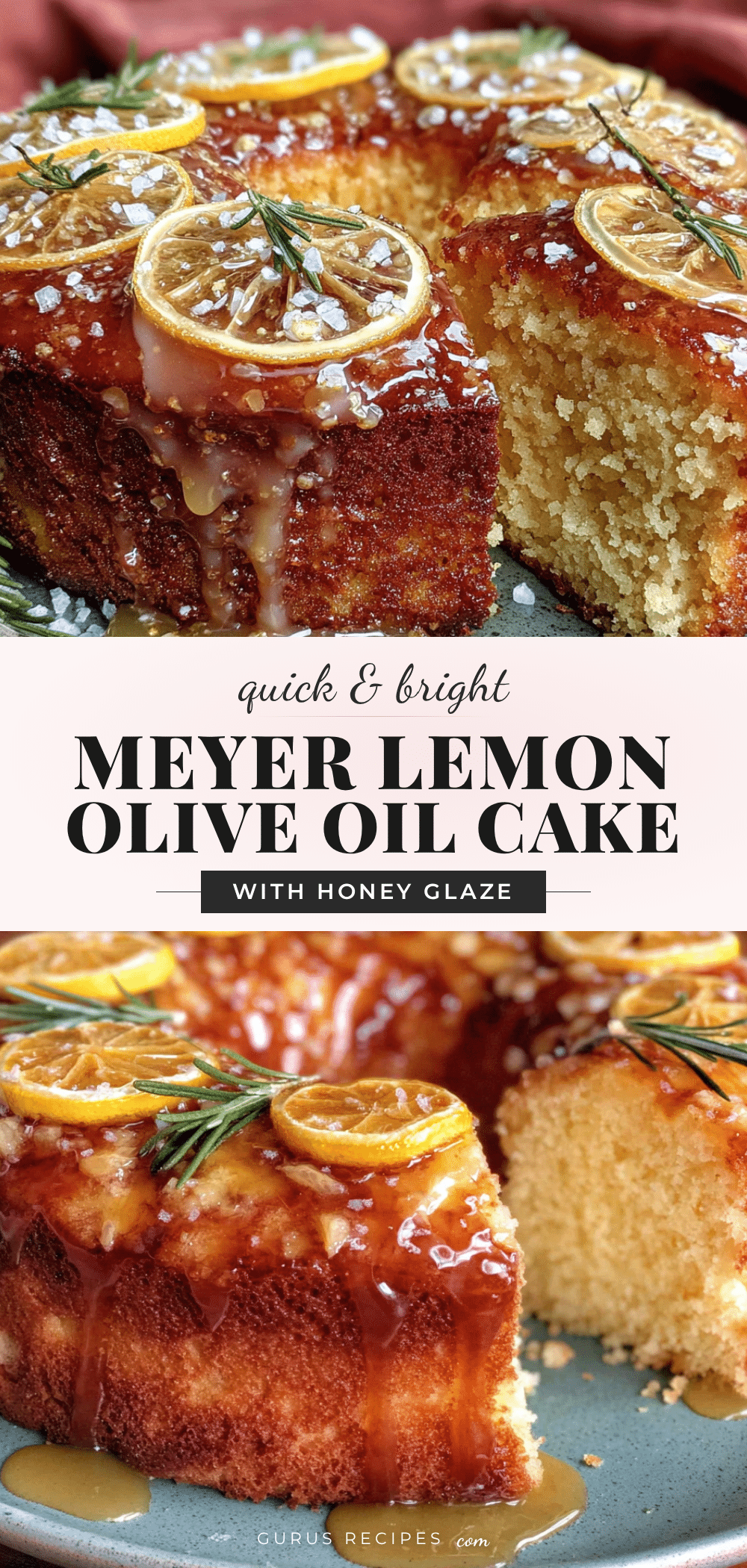

Quick Meyer Lemon Olive Oil Cake with Easy Honey Glaze
A quick and easy Meyer lemon olive oil cake with a simple honey glaze, perfect for weeknights or last-minute gatherings. This tender, moist cake comes together in one bowl with a whisk and uses simple pantry ingredients.
- Total Time: 40 minutes
- Yield: 8 servings 1x
Ingredients
- 1 ½ cups (188g) all-purpose flour
- 1 cup (200g) granulated sugar
- ½ teaspoon baking powder
- ½ teaspoon baking soda
- ¼ teaspoon salt
- 3 large eggs, room temperature
- ¾ cup (180ml) good quality extra virgin olive oil
- ½ cup (120ml) fresh Meyer lemon juice (about 3–4 Meyer lemons)
- Zest of 2 Meyer lemons
- 1 teaspoon vanilla extract
- ½ cup (60g) powdered sugar, sifted
- 2 tablespoons honey (mild, like clover or orange blossom)
- 1 to 2 tablespoons fresh Meyer lemon juice (for glaze)
- Pinch of salt (for glaze)
Instructions
- Preheat your oven to 350°F (175°C). Grease a 9-inch cake pan with olive oil or butter and line the bottom with parchment paper.
- Zest two Meyer lemons directly into a large mixing bowl. Juice the lemons to get ½ cup of juice; set aside.
- In a separate medium bowl, whisk together the flour, baking powder, baking soda, and salt.
- To the bowl with the lemon zest, add the sugar and rub the zest into the sugar with your fingertips for about 30 seconds. Then add the eggs, olive oil, lemon juice, and vanilla extract. Whisk until smooth and well combined.
- Pour the flour mixture into the wet ingredients and fold gently with a rubber spatula or whisk until just combined. Do not overmix.
- Pour the batter into the prepared pan and spread evenly. Tap the pan gently on the counter to release air bubbles.
- Bake for 30 to 35 minutes, or until a toothpick inserted into the center comes out clean or with a few moist crumbs. The top should be golden brown and spring back when lightly touched.
- Cool the cake in the pan for 10 minutes, then run a knife around the edge and invert onto a cooling rack. Remove the parchment paper and let cool completely (or until warm).
- While the cake cools, make the honey glaze: whisk together the powdered sugar, honey, 1 tablespoon of lemon juice, and a pinch of salt. Add more lemon juice if needed to reach a pourable consistency.
- Place the cooled cake on a serving plate and drizzle the glaze over the top, letting it cascade down the sides. Let the glaze set for about 10 minutes before slicing.
Notes
Room temperature eggs are important to prevent the olive oil from seizing. Do not overmix the batter. For best results, use a kitchen scale to measure flour. The cake tastes even better the next day. If using regular lemons, add an extra tablespoon of honey to the batter. The cake can be frozen unglazed for up to 3 months.
- Prep Time: 10 minutes
- Cook Time: 30 minutes
- Category: Dessert
- Cuisine: American
Nutrition
- Serving Size: 1 slice
- Calories: 380
- Sugar: 30
- Sodium: 200
- Fat: 22
- Saturated Fat: 3
- Carbohydrates: 44
- Fiber: 1
- Protein: 5
Keywords: Meyer lemon olive oil cake, honey glaze, quick cake, easy dessert, weeknight dessert, one bowl cake, dairy-free cake