
There used to be a tiny ramen shop tucked behind the old laundromat on Elm Street that made the most incredible soy sauce eggs. When they closed two summers ago—the owner finally retired after forty years—I actually felt a little lost. I mean, I’d drag my kids there on tired Tuesday nights just so I could have those eggs, and they’d happily munch on plain noodles while I savored every single bite. After nine tries—some where the yolks were basically hard-boiled rubber, others where they were so runny they made a mess of everything—I finally cracked the code. Let me tell you, when I pulled that first perfect jammy egg out of the soy bath and saw the golden center, I nearly cried in my kitchen. Honestly, maybe you’ve been there too, chasing a food memory that just won’t let go. This recipe is that memory, perfected.
These Easy Soy Sauce Eggs with Jammy 6-Minute Yolks have become a staple in our house, and not just for me. My kids, who used to turn their noses up at anything “fancy,” now ask for them by name. There’s something about that glossy, salty-sweet exterior and the creamy, almost buttery yolk that even picky eaters can’t resist. I’ve made them for breakfast on rushed school mornings, packed them in lunchboxes for a protein punch, and served them alongside simple rice bowls for a dinner that feels special without breaking the bank. And the best part? They cost pennies to make. You don’t need any weird ingredients or special skills—just eggs, soy sauce, a few pantry staples, and six minutes of your time. Let me show you how to get that perfect jammy yolk every single time.
Why You’ll Love This Recipe
I’ve tested this recipe more times than I care to admit, and I can tell you with confidence—this is the one. Here’s why these soy sauce eggs deserve a permanent spot in your weekly rotation:
- Quick & Easy: From start to finish, you’re looking at about 15 minutes of active time. The hardest part is waiting for the eggs to marinate, and honestly, that’s just patience.
- Simple Ingredients: You probably have everything in your fridge and pantry right now. Eggs, soy sauce, mirin, a little sugar—that’s it. No fancy grocery trips required.
- Perfect for Family Meals: These eggs work for breakfast, lunch, dinner, or snacks. I’ve thrown them on top of instant ramen for a quick dinner, sliced them over salads for lunch, and served them with rice and steamed veggies for a complete meal that pleases everyone.
- Crowd-Pleaser: My kids went from “what’s that weird egg?” to “can we have the soy sauce eggs again?” in one sitting. Even my husband, who claims he doesn’t like eggs, reaches for them straight from the jar.
- Unbelievably Delicious: The texture is everything—firm whites, creamy jammy yolks, and that savory-sweet soy marinade that seeps into every bite. It’s comfort food that feels a little fancy but costs almost nothing.
What makes this recipe different from all the others I tried? It’s the timing and the marinade ratio. I spent weeks tweaking the soy sauce mixture until it was salty enough to flavor the eggs but not so strong that it overpowered them. And the six-minute boil? That’s the sweet spot for yolks that are set on the outside but still liquid and jammy in the center. No more guessing, no more over or undercooked eggs. This is the version I wish I’d had when I was chasing that ramen shop memory.
What Ingredients You Will Need
This recipe keeps things simple with ingredients you likely already have on hand. Each one plays a specific role in creating that perfect balance of flavor and texture.
- Large eggs (6-8): Use the freshest eggs you can find for the best texture. Room temperature eggs cook more evenly, so take them out of the fridge about 15 minutes before you start. I prefer pasture-raised eggs for their richer yolks and better flavor, but any large eggs work fine.
- Soy sauce (½ cup): This is the backbone of the marinade. I recommend using a good-quality soy sauce like Kikkoman or San-J for the best balance of salty and savory. Low-sodium soy sauce works too, but you’ll want to add a pinch more salt to the marinade.
- Mirin (¼ cup): Mirin adds a subtle sweetness and a bit of shine to the marinade. It’s a Japanese rice wine that gives the eggs that restaurant-quality finish. If you don’t have mirin, you can substitute with 2 tablespoons of sake or dry sherry mixed with 1 teaspoon of sugar.
- Sugar (1 tablespoon): A little sugar balances the saltiness of the soy sauce and helps create that glossy coating on the eggs. You can use white sugar, brown sugar, or even honey in a pinch.
- Water (½ cup): Water dilutes the marinade just enough so the eggs don’t become too salty. It also helps the marinade cover the eggs completely without needing a huge amount of soy sauce.
- Optional aromatics: A clove of garlic (smashed), a slice of fresh ginger, or a star anise can add extra depth to the marinade. I sometimes throw in a piece of kombu (dried kelp) for a subtle umami boost. These are totally optional but worth trying if you have them on hand.
For the ice bath, you’ll need a bowl of ice water. This stops the cooking process immediately and makes peeling the eggs much easier. Don’t skip this step—it’s the difference between perfect jammy yolks and sad, overcooked ones.
If you’re feeding a crowd, you can easily double or triple the recipe. Just make sure you have a container big enough to hold all the eggs in a single layer so they marinate evenly. I’ve also made these with duck eggs, which have larger yolks and a richer flavor—just add an extra minute to the boiling time.
Equipment Needed
You don’t need any fancy equipment for these soy sauce eggs, which is part of their charm. Here’s what you’ll need:
- Medium saucepan: Big enough to hold your eggs in a single layer without crowding them. I use a 2-quart saucepan, but anything similar works.
- Slotted spoon: For gently lowering the eggs into the boiling water and fishing them out again. A regular spoon works too, but a slotted one makes it easier to drain the water.
- Bowl of ice water: Any bowl big enough to hold the eggs and ice cubes. This is crucial for stopping the cooking process.
- Small bowl or jar: For mixing the marinade. I use a glass measuring cup, but any small bowl works.
- Container for marinating: A glass or plastic container with a lid, just big enough to hold the eggs in a single layer. I use a wide-mouth mason jar or a small rectangular food storage container.
- Timer: Don’t rely on guessing—use your phone or a kitchen timer. Six minutes is precise, and even 30 seconds can change the yolk texture.
If you don’t have a slotted spoon, you can use a regular spoon and just be gentle. And if you don’t have a container with a lid, you can use a bowl covered with plastic wrap. The eggs just need to be fully submerged in the marinade. I’ve made these in a pinch with a cereal bowl and some plastic wrap, and they turned out great. Don’t let missing equipment stop you from trying this recipe.
Preparation Method
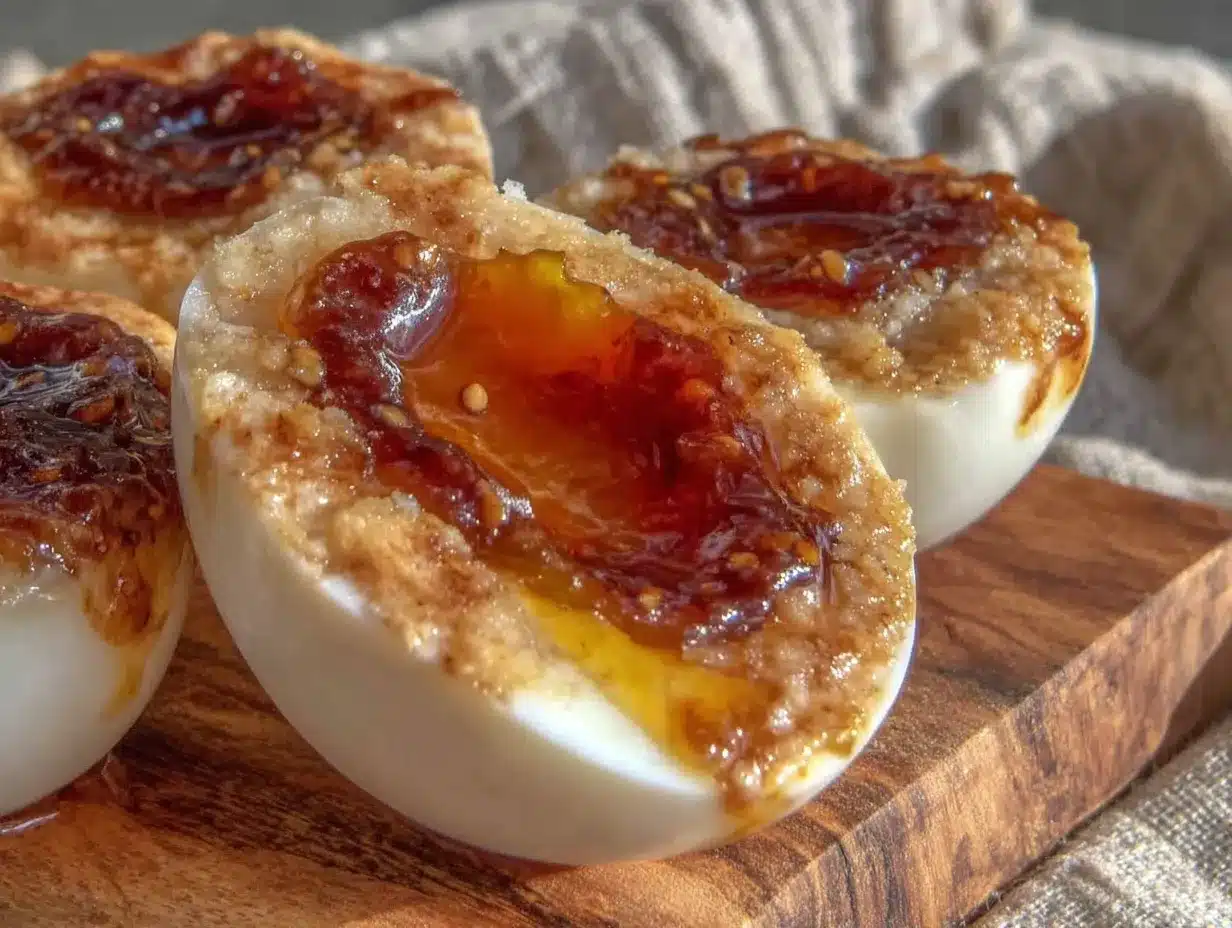
Getting perfect jammy yolks is all about timing and technique. Follow these steps closely, and you’ll have restaurant-quality soy sauce eggs at home.
- Bring the water to a rolling boil: Fill your saucepan with enough water to cover the eggs by about an inch. Bring it to a full, rolling boil over high heat. Don’t add the eggs until the water is vigorously boiling—this ensures the cooking time is accurate.
- Gently lower the eggs into the water: Using your slotted spoon, carefully lower each egg into the boiling water. Do this gently to avoid cracking the shells. I usually do 6 eggs at a time, but you can do up to 8 if your pot is big enough. Set your timer for exactly 6 minutes.
- Boil for 6 minutes: Keep the water at a steady boil. Don’t reduce the heat—the eggs need consistent high heat to cook properly. At 6 minutes, the whites will be fully set, and the yolks will be jammy—creamy and slightly liquid in the center.
- Immediately transfer to ice water: When the timer goes off, use your slotted spoon to quickly move the eggs to the bowl of ice water. This stops the cooking process instantly. Let them sit in the ice water for at least 5 minutes. You’ll hear a slight sizzle as the eggs hit the cold water—that’s a good sign.
- Carefully peel the eggs: Gently tap each egg on a hard surface to crack the shell, then roll it between your hands to loosen the shell. Start peeling from the wider end, where there’s usually an air pocket. Run the egg under cold water if the shell sticks—this helps separate the membrane from the egg white. Be gentle; the whites are tender and can tear easily.
- Prepare the marinade: While the eggs are cooling, mix together the soy sauce, mirin, sugar, and water in your small bowl or jar. Stir until the sugar is completely dissolved. If you’re using aromatics like garlic or ginger, add them now.
- Submerge the eggs in the marinade: Place the peeled eggs in your container in a single layer. Pour the marinade over them until they’re completely covered. If the marinade doesn’t quite cover them, add a little more water or gently shake the container to redistribute the liquid.
- Marinate for at least 2 hours: Cover the container and refrigerate for at least 2 hours. For the best flavor, let them marinate overnight. The longer they sit, the deeper the soy flavor penetrates. I usually make these the night before I plan to serve them.
- Serve and enjoy: Remove the eggs from the marinade with a slotted spoon. Slice them in half lengthwise to reveal the beautiful jammy yolk. Serve immediately or store in the refrigerator for up to 5 days.
One thing I learned the hard way—don’t marinate the eggs for more than 24 hours if you want to keep that jammy texture. After that, the salt starts to firm up the yolks, and they lose that creamy quality. Trust me, I left a batch in the marinade for two days once, and the yolks turned into a weird, rubbery paste. Learn from my mistake.
Cooking Tips & Techniques
After more failed attempts than I care to count, I’ve gathered some tips that make all the difference. Here’s what I wish someone had told me before I started:
Use a timer, not your instincts. I cannot stress this enough. Six minutes is exactly six minutes. Not five minutes and forty-five seconds, not six minutes and fifteen seconds. Set your timer and don’t touch it. The difference between a perfect jammy yolk and a slightly overcooked one is literally seconds. I learned this after ruining three batches because I got distracted by my kids asking for snacks.
Don’t skip the ice bath. I know it’s tempting to just run the eggs under cold water and call it a day, but the ice bath is non-negotiable. The eggs continue cooking from residual heat even after you take them out of the boiling water. The ice bath stops that process immediately, locking in that jammy texture. Plus, it makes peeling so much easier—the cold water shrinks the egg slightly, pulling the shell away from the white.
Peel under running water. If you’re struggling with stubborn shells, try peeling the eggs under a gentle stream of cold water. The water helps separate the membrane from the egg white, making the shell slide off more easily. This is especially helpful with very fresh eggs, which are notoriously hard to peel.
Save the marinade. You can reuse the soy marinade for another batch of eggs within a week. Just strain out any bits of egg white or shell, bring it to a boil to kill any bacteria, let it cool, and use it again. The flavor will be slightly milder, but it still works great. I’ve gotten three batches out of one marinade before.
Multitask wisely. While the eggs are boiling and cooling, use that time to mix your marinade and prepare your container. This saves you a few minutes and keeps everything flowing smoothly. I’ve learned that having everything ready before I start makes the whole process feel effortless.
Variations & Adaptations
One of the best things about this recipe is how flexible it is. Here are some ways to make it your own:
Spicy Soy Sauce Eggs: Add a teaspoon of chili oil or a sliced fresh chili to the marinade. The heat pairs beautifully with the salty-sweet soy flavor. My husband loves these—he says they wake up his taste buds.
Garlic Ginger Eggs: Add two smashed garlic cloves and a few slices of fresh ginger to the marinade. Let them steep while the eggs marinate for a subtle, aromatic flavor. This is my go-to version when I’m feeling under the weather.
Sweet Soy Eggs: Increase the sugar to 2 tablespoons and add a tablespoon of honey. This creates a thicker, sweeter marinade that coats the eggs beautifully. My kids actually prefer this version—it’s less salty and more like a treat.
Gluten-Free Option: Use tamari or coconut aminos instead of soy sauce. Both are naturally gluten-free and have a similar flavor profile. Coconut aminos are slightly sweeter, so you might want to reduce the sugar slightly.
Different Cooking Methods: If you prefer hard-boiled eggs, boil them for 9 minutes instead of 6. For a softer, runnier yolk, try 5 minutes. The marinade works the same way regardless of how you cook the eggs. I’ve also made these with soft-boiled eggs for a truly luxurious breakfast situation.
Tea-Marinated Eggs: Add a tea bag (black tea or oolong) to the marinade for a subtle, earthy flavor. This is a classic Chinese technique that adds another layer of complexity. Let the tea steep in the warm marinade for 10 minutes before adding the eggs.
Serving & Storage Suggestions
These soy sauce eggs are incredibly versatile. Here’s how to serve and store them:
Serving Temperature: I prefer these eggs cold or at room temperature. Straight from the fridge, they’re firm and refreshing. If you let them sit out for 10-15 minutes, the yolk becomes creamier and more spreadable. Both ways are delicious—it just depends on your mood.
Presentation: Slice the eggs in half lengthwise and arrange them cut-side up on a plate. Drizzle a little of the marinade over the top for extra flavor and shine. Sprinkle with sesame seeds, chopped green onions, or a pinch of red pepper flakes for a beautiful finish. They look stunning on a simple rice bowl or alongside a bowl of noodles.
Complementary Dishes: These eggs are amazing on top of ramen, rice bowls, salads, or toast. They also pair beautifully with steamed vegetables, roasted potatoes, or a simple green salad. For a complete meal, serve them with steamed rice, sauteed spinach, and a drizzle of sesame oil. My kids love them sliced over buttered noodles with a sprinkle of parmesan.
Storage: Keep the eggs in their marinade in a covered container in the refrigerator. They’ll stay good for up to 5 days. The flavor actually deepens over time, so they’re even better on day two or three. Just make sure the eggs are always fully submerged in the marinade to prevent them from drying out.
Reheating: These eggs are best served cold or at room temperature, but you can gently warm them if you prefer. Place them in a bowl of warm water for 2-3 minutes, or microwave them on low power for 10-15 seconds. Don’t overheat them, or the yolk will become hard and crumbly. I usually just take them out of the fridge 15 minutes before serving to take the chill off.
Flavor Development: The eggs absorb the most flavor in the first 24 hours. After that, the salt continues to penetrate, and the texture of the yolk becomes slightly firmer. If you prefer a creamier yolk, eat them within 12 hours. If you like a more intense soy flavor, let them marinate for a full day. I personally love them after about 18 hours—that’s the sweet spot for me.
Nutritional Information & Benefits
These soy sauce eggs are packed with protein and healthy fats, making them a nutritious choice for any meal. Here’s the breakdown per egg (based on large eggs and the marinade):
| Nutrient | Amount per Egg |
|---|---|
| Calories | 70-80 |
| Protein | 6-7g |
| Fat | 5-6g |
| Saturated Fat | 1.5-2g |
| Cholesterol | 185-200mg |
| Sodium | 300-400mg (varies with marinade) |
| Carbohydrates | 1-2g |
| Sugar | 1-2g |
Eggs are a fantastic source of high-quality protein, vitamin B12, vitamin D, and choline, which is important for brain health. The soy sauce adds a small amount of sodium, so if you’re watching your salt intake, use low-sodium soy sauce and reduce the marinating time. These eggs are naturally gluten-free if you use tamari, and they’re low in carbs, making them perfect for keto or low-carb diets. They’re also a great way to add protein to a vegetarian meal (though they’re not vegan, obviously).
I love that these eggs are a budget-friendly way to get a nutrient-dense meal on the table. For less than a dollar, you can add a protein boost to any dish. Plus, they’re so satisfying that my kids actually eat less junk food when I serve these alongside their meals. It’s a win-win in my book.
Conclusion
These Easy Soy Sauce Eggs with Jammy 6-Minute Yolks are more than just a recipe—they’re a little piece of food memory that I can now recreate anytime I want. That ramen shop on Elm Street may be gone, but its legacy lives on in my kitchen, and now in yours too. This recipe is forgiving enough for beginners but impressive enough for seasoned cooks, and it costs almost nothing to make. Whether you’re meal-prepping for the week, looking for a quick protein boost, or just craving something delicious, these eggs deliver every single time.
I’d love to hear how these turn out for you! Did you try any variations? Did your kids gobble them up like mine do? Drop a comment below and let me know—your feedback helps other readers and inspires me to keep experimenting. And if you share a photo on Pinterest or Instagram, tag me so I can see your beautiful jammy yolks. Happy cooking, friend—you’ve got this.
Frequently Asked Questions
Can I use brown eggs instead of white eggs?
Absolutely! The color of the shell doesn’t affect the taste or texture at all. Brown eggs work just as well as white eggs. The only thing that matters is the size—use large eggs for the most consistent results.
How do I know when the eggs are done without cutting into them?
You can gently spin an egg on the counter. A raw egg wobbles, while a cooked egg spins smoothly. But honestly, the easiest way is to trust your timer. Six minutes at a rolling boil gives you perfect jammy yolks every time. If you’re nervous, do a test egg first.
Can I freeze these soy sauce eggs?
I don’t recommend freezing them. The texture of the egg white becomes watery and rubbery when thawed, and the yolk loses that creamy quality. These eggs are best made fresh and stored in the refrigerator for up to 5 days. If you need to make them ahead, they’re perfect for meal prep on Sunday for the week ahead.
What can I do with the leftover marinade?
You can reuse the marinade for another batch of eggs within a week. Just strain it, bring it to a boil, let it cool, and use it again. You can also use it as a dipping sauce for dumplings, a marinade for chicken or tofu, or a seasoning for stir-fried vegetables. It’s too flavorful to throw away!
Why did my eggs crack while boiling?
Eggs crack when they’re too cold when they hit the boiling water or when they bump into each other. To prevent cracking, bring your eggs to room temperature before boiling, and gently lower them into the water with a slotted spoon instead of dropping them in. Also, make sure your pot is big enough so the eggs aren’t crowded.
Pin This Recipe!


Easy Soy Sauce Eggs with Jammy 6-Minute Yolks
These Easy Soy Sauce Eggs with Jammy 6-Minute Yolks are a quick and simple recipe that yields perfectly creamy, salty-sweet eggs. Perfect for breakfast, lunch, or dinner, they cost pennies to make and are a crowd-pleaser for the whole family.
- Total Time: 2 hours 21 minutes (includes marinating time)
- Yield: 6-8 servings 1x
Ingredients
- 6–8 large eggs, room temperature
- ½ cup soy sauce (Kikkoman or San-J recommended)
- ¼ cup mirin
- 1 tablespoon sugar (white, brown, or honey)
- ½ cup water
- Optional: 1 clove garlic (smashed), 1 slice fresh ginger, 1 star anise, or 1 piece kombu
Instructions
- Bring a saucepan of water to a rolling boil (enough to cover eggs by 1 inch).
- Gently lower eggs into boiling water using a slotted spoon. Boil for exactly 6 minutes.
- Immediately transfer eggs to a bowl of ice water and let sit for at least 5 minutes.
- Carefully peel the eggs under cold running water.
- In a small bowl, mix soy sauce, mirin, sugar, and water until sugar dissolves. Add optional aromatics if desired.
- Place peeled eggs in a container in a single layer and pour marinade over them until fully submerged.
- Cover and refrigerate for at least 2 hours, preferably overnight (up to 24 hours for best texture).
- Remove eggs from marinade with a slotted spoon. Slice in half lengthwise and serve cold or at room temperature.
Notes
Don’t marinate for more than 24 hours to keep jammy texture. Use a timer for precise 6-minute boil. Ice bath is non-negotiable for perfect yolks. Reuse marinade within a week by straining, boiling, and cooling.
- Prep Time: 15 minutes
- Cook Time: 6 minutes
- Category: Appetizer
- Cuisine: Japanese
Nutrition
- Serving Size: 1 egg
- Calories: 7080
- Sugar: 12
- Sodium: 300400
- Fat: 56
- Saturated Fat: 1.52
- Carbohydrates: 12
- Protein: 67
Keywords: soy sauce eggs, jammy eggs, 6-minute eggs, Japanese eggs, easy eggs, marinated eggs