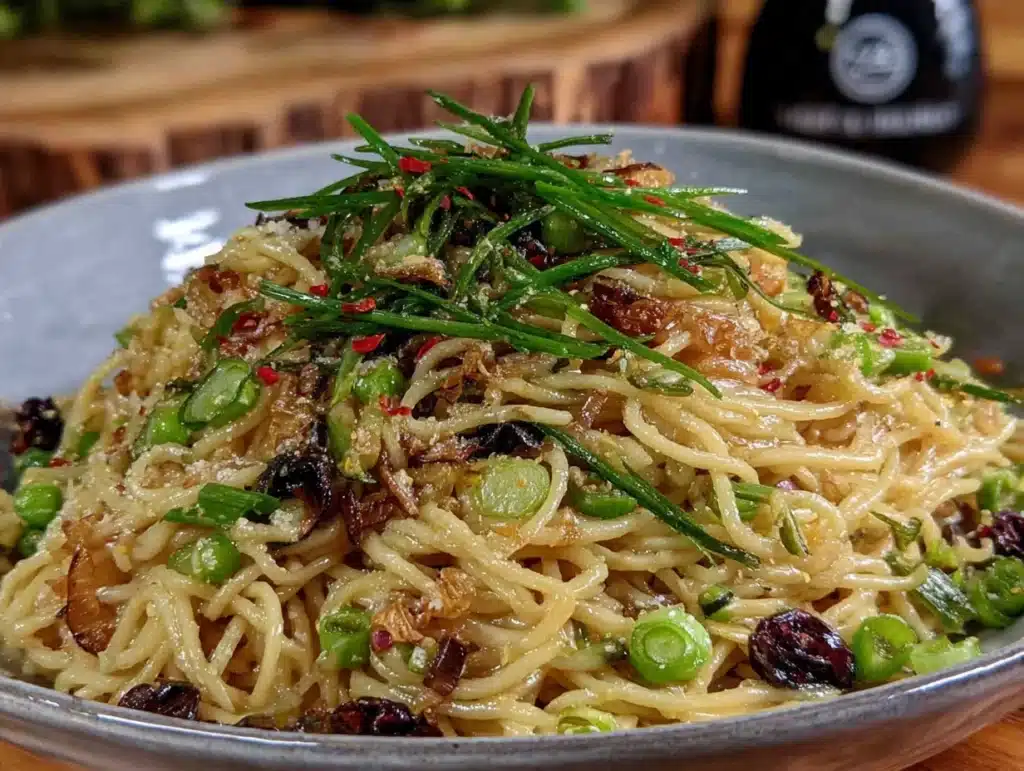
It was 11:47 PM on a random Tuesday, and I had a craving that hit me right in the soul. Not for anything fancy, mind you—just something warm, slurpy, and deeply comforting. I didn’t have the energy for a full stir-fry or the patience to wait for takeout, but I had a bundle of scallions wilting in the fridge and a pack of dried noodles staring at me from the pantry. That’s when the idea arrived, simple and stubborn: garlic scallion oil over noodles. I mean, honestly, it felt almost too easy to be dinner. But let me tell you, sometimes the best meals happen when you stop trying so hard. There I was, barefoot in my kitchen, chopping scallions with sleepy eyes, and the smell of garlic hitting hot oil snapped me right awake. The noodles tangled around my chopsticks, slick with that fragrant oil, and I knew I had stumbled onto something special. Maybe you’ve been there—that moment when a late-night experiment turns into a recipe you’ll make for years. That’s exactly what these Cozy Longevity Noodles became for me. They’re not just noodles; they’re a warm hug in a bowl, a little tradition born from a quiet Tuesday night.
Why You’ll Love This Recipe
Let me be real with you—I’ve tested this recipe more times than I can count, and it never gets old. It’s the kind of dish that feels like cheating because it’s so simple, yet it delivers flavor that tastes like you spent hours in the kitchen. Here’s why these Cozy Longevity Noodles deserve a permanent spot in your rotation:
- Quick & Easy: From fridge to bowl in under 20 minutes. Seriously, it’s faster than waiting for delivery.
- Simple Ingredients: You probably have everything already—noodles, scallions, garlic, soy sauce, and oil. No fancy grocery runs required.
- Perfect for Cozy Nights: Whether it’s a rainy evening, a lazy Sunday, or a late-night craving, these noodles hit the spot every single time.
- Crowd-Pleaser: I’ve served these at casual dinners and watched everyone go back for seconds. Kids love them, adults love them—it’s universal comfort food.
- Unbelievably Delicious: The magic is in the garlic scallion oil. It’s aromatic, savory, and just a little bit addictive. You’ll want to put it on everything.
What makes this recipe different? It’s not just another noodle dish. The technique of slowly infusing the oil with garlic and scallions creates a depth of flavor that feels luxurious without any effort. Plus, the noodles themselves—long and unbroken—carry that beautiful symbolism of longevity and good fortune. I’ve tweaked the proportions over dozens of batches to get that perfect balance where the oil clings to every strand without being greasy. This is my best version, the one I keep coming back to.
Honestly, this recipe is the kind that makes you close your eyes after the first bite. It’s comfort food reimagined—simple, soulful, and satisfying in a way that feels like a secret you want to share. Perfect for impressing guests without stress, or just treating yourself to something warm and wonderful.
What Ingredients You Will Need
This recipe uses simple, wholesome ingredients to deliver bold, comforting flavor without the fuss. Most of these are pantry staples, so you can whip up these noodles anytime the craving strikes. Here’s what you’ll need:
For the Noodles
- 8 ounces (225 g) dried thin wheat noodles – I prefer fresh Shanghai-style noodles or dried lo mein noodles, but any long noodle works. Look for noodles labeled “longevity noodles” at Asian markets for the full experience.
- 1 tablespoon (15 ml) sesame oil – This adds a nutty finish that ties everything together. I recommend Kadoya or Lee Kum Kee brands for quality.
For the Garlic Scallion Oil
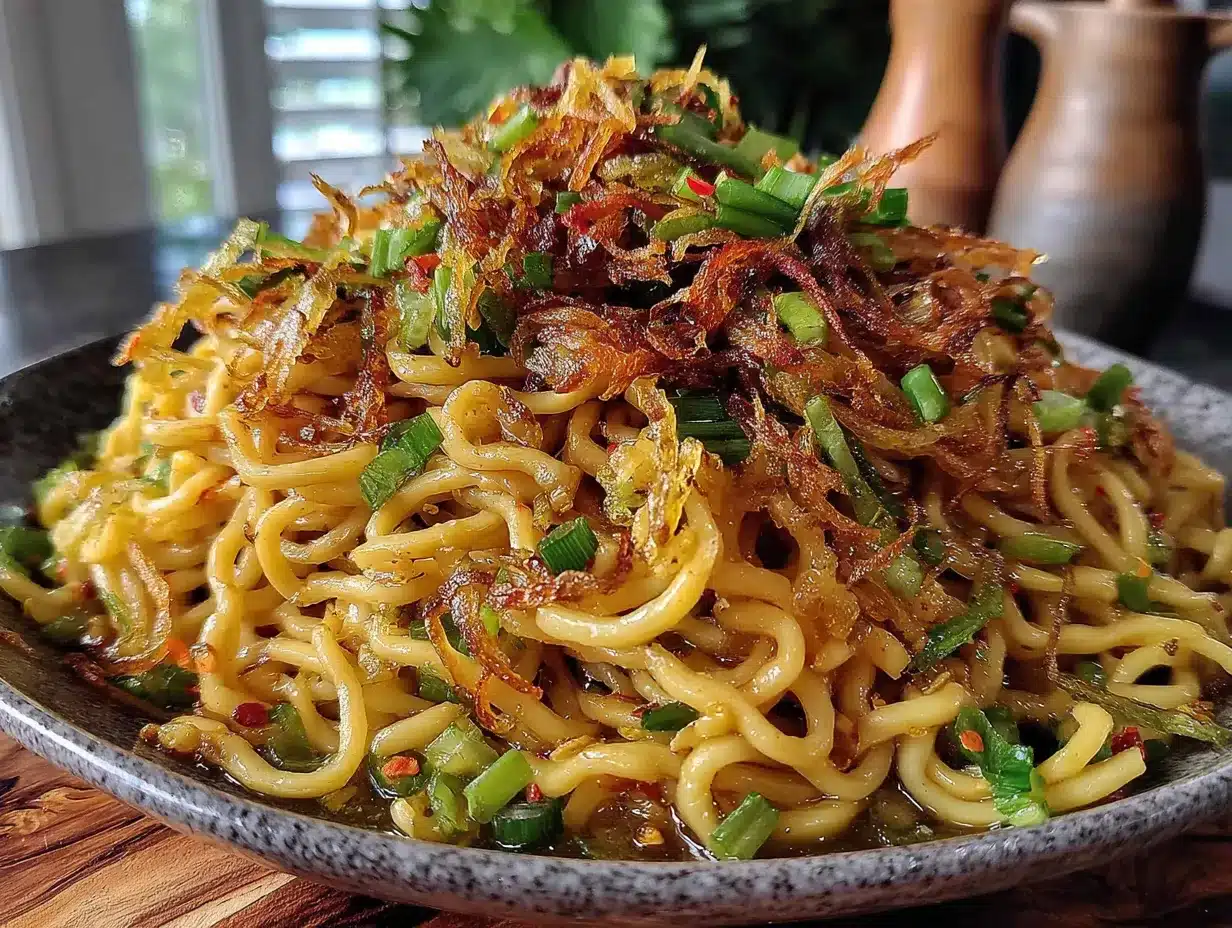
- 1/2 cup (120 ml) neutral oil – Grapeseed, avocado, or vegetable oil work beautifully. Avoid olive oil here—it’s too heavy and overpowers the garlic.
- 8 cloves garlic, thinly sliced – Fresh garlic is non-negotiable for that sweet, mellow flavor. Pre-minced jarred garlic won’t give you the same result.
- 1 bunch scallions (about 6-8), thinly sliced – Use both the white and green parts. The whites add bite, the greens bring freshness.
- 1 teaspoon (3 g) red pepper flakes – Optional, but I love the gentle heat. Adjust to your tolerance.
For the Sauce
- 3 tablespoons (45 ml) soy sauce – Use low-sodium if you prefer less salt. Tamari works for gluten-free needs.
- 1 tablespoon (15 ml) dark soy sauce – This adds color and a hint of sweetness. If you don’t have it, substitute with 1 tablespoon regular soy sauce plus 1 teaspoon brown sugar.
- 1 tablespoon (15 ml) rice vinegar – A touch of acidity balances the richness. Unseasoned rice vinegar is best.
- 1 teaspoon (5 g) sugar – Just a pinch to round out the flavors. You can skip it if you’re watching sugar.
- 1/4 teaspoon (1 g) white pepper – More aromatic than black pepper. It’s subtle but makes a difference.
Optional Garnishes
- Toasted sesame seeds – For crunch and visual appeal.
- Fresh cilantro or Thai basil – Adds a pop of color and herbal freshness.
- Soft-boiled egg – Because everything is better with a jammy egg on top.
Ingredient Selection Tip: When buying scallions, look for firm, bright green tops with no wilting. For garlic, choose firm cloves without green sprouts in the center—sprouted garlic can be bitter. If you’re using dried noodles, cook them al dente since they’ll continue cooking slightly in the hot oil.
Substitution Guidance: For a gluten-free version, use rice noodles or soba noodles (check labels for wheat content). For a low-carb option, try shirataki noodles or zucchini noodles, though the texture will be different. You can swap the neutral oil with coconut oil for a subtle tropical note, but I’d stick with neutral for authenticity.
Equipment Needed
You don’t need a lot of fancy gear for this recipe, which is part of its charm. Here’s what you’ll need:
- Large pot – For boiling noodles. A 4-quart pot works fine.
- Small saucepan or skillet – For making the garlic scallion oil. I use a 1-quart saucepan for even heating.
- Colander – For draining noodles. A fine-mesh strainer works too.
- Chef’s knife and cutting board – For slicing garlic and scallions. A sharp knife makes thin, even slices.
- Measuring spoons and cups – Precision matters for the sauce balance.
- Wooden spoon or spatula – For stirring the oil gently.
- Mixing bowl – For tossing everything together.
- Tongs or chopsticks – For handling and serving the noodles.
Budget-Friendly Tip: If you don’t have a small saucepan, use any skillet you have. Just watch the heat carefully—thin pans can burn garlic faster. I once used a cast iron skillet and it worked beautifully, though the garlic cooked a bit quicker. And honestly, you don’t need expensive knives; a sharp, affordable chef’s knife from a kitchen supply store will do the job perfectly.
Maintenance Note: After making this, wash your saucepan promptly—garlic oil can stick and become difficult to clean if left to dry. A quick soak in hot soapy water does the trick.
Preparation Method
Let’s make these noodles! I’ve broken it down step by step so you can follow along without any hiccups. The whole process takes about 20 minutes, and most of that is passive cooking time.
- Bring a large pot of water to a boil. Salt it generously—about 1 tablespoon per 4 quarts of water. The noodles need salty water to absorb flavor from the inside out. While the water heats, prepare your ingredients.
- Slice the garlic and scallions. Peel 8 cloves of garlic and slice them thinly crosswise. Don’t mince them—thin slices toast more evenly and won’t burn as quickly. Rinse the scallions, pat them dry, and slice them thinly, separating the white parts from the green tops. Keep them separate; they cook at different times.
- Make the sauce. In a small bowl, whisk together the soy sauce, dark soy sauce, rice vinegar, sugar, and white pepper. Set it aside. This takes 30 seconds and saves you from scrambling later.
- Cook the noodles. Drop the noodles into the boiling water and cook according to package directions, usually 3-5 minutes for thin noodles. Stir occasionally to prevent sticking. Taste one noodle a minute before the suggested time—you want them al dente, with a slight chew. Overcooked noodles get mushy and won’t hold the oil well.
- Drain and rinse. Drain the noodles in a colander and rinse briefly with cold water to stop the cooking. Shake off excess water, then drizzle with the sesame oil and toss gently. This prevents them from clumping while you finish the oil.
- Start the garlic scallion oil. Place a small saucepan over medium-low heat and add the neutral oil. Let it warm for about 30 seconds, then add the sliced garlic. Cook gently, stirring occasionally, until the garlic turns pale golden—about 3-4 minutes. Don’t rush this; high heat will burn the garlic and make it bitter.
- Add the scallion whites and red pepper flakes. Once the garlic is golden, add the white parts of the scallions and the red pepper flakes. Stir and cook for another 1-2 minutes until the scallions soften and the oil is fragrant. Your kitchen will smell incredible at this point.
- Finish with scallion greens. Remove the saucepan from heat and stir in the green parts of the scallions. They’ll wilt slightly from the residual heat, keeping their color and freshness. Let the oil sit for 30 seconds to cool slightly.
- Combine everything. Pour the hot garlic scallion oil over the noodles in the mixing bowl. Add the prepared sauce. Using tongs or chopsticks, toss everything together until every strand is coated. The oil should glisten on the noodles without pooling at the bottom.
- Taste and adjust. Take a bite. Need more soy sauce? Add a splash. Want more heat? Sprinkle extra red pepper flakes. This is your moment to dial in the flavors to your preference.
- Serve immediately. Divide the noodles into bowls and garnish with toasted sesame seeds, fresh herbs, or a soft-boiled egg if you’re feeling fancy. Eat while warm—these noodles don’t sit well once dressed.
Prep Note: If you’re making this for a crowd, you can prepare the garlic scallion oil and sauce up to 2 hours ahead. Keep the oil at room temperature and reheat it gently before tossing with freshly cooked noodles. The noodles themselves should always be cooked fresh for the best texture.
Cooking Tips & Techniques
After making these noodles at least two dozen times, I’ve learned a few things the hard way. Let me save you some trouble.
The garlic is the star, so treat it right. Slice it thinly and evenly. I learned this after a batch where my uneven slices meant some pieces were burnt while others were still raw. Burnt garlic is bitter and ruins the whole dish. Keep the heat medium-low and stir frequently. When the garlic turns pale gold, it’s done—don’t wait for deep brown.
Don’t skip the cold water rinse. I know, it feels like an extra step, but rinsing the noodles stops the cooking immediately and washes away excess starch. Starchy noodles get gummy and clumpy. A quick rinse keeps them separate and silky. Just make sure to drain well and toss with sesame oil right away.
Timing is everything. Start the garlic oil while the noodles cook. That way, everything finishes at the same time. I once made the oil first and let it sit while the noodles boiled, and the garlic continued cooking in the hot oil, turning darker than I wanted. Now I sync the two processes—noodles go in the water, garlic goes in the oil, and they finish together.
Multitasking strategy: While the noodles boil, slice your garlic and scallions if you haven’t already. While the garlic simmers in the oil, whisk the sauce. This recipe moves fast, so having everything prepped makes it stress-free.
Common mistake alert: Adding all the scallions at once. The white parts need more cooking time to soften and release flavor, while the green parts are delicate and best added off-heat. I made this mistake early on, and the greens turned limp and lost their vibrant color. Separating them makes a real difference.
For consistent results: Use a kitchen scale for the noodles if you have one. 8 ounces is the sweet spot—too few noodles and the oil overpowers them, too many and the dish feels dry. And always taste your soy sauce before using it; different brands vary in saltiness. Adjust accordingly.
Variations & Adaptations
One of the best things about this recipe is how flexible it is. Here are some variations I’ve tried and loved:
Spicy Sichuan Longevity Noodles
Add 1 tablespoon of chili crisp (like Lao Gan Ma) to the garlic scallion oil along with the scallion whites. The numbing heat pairs beautifully with the garlic. I stumbled on this version during a cold January night and haven’t looked back.
Protein-Packed Version
Top the noodles with shredded rotisserie chicken, pan-seared tofu, or a soft-boiled egg. For a heartier meal, stir-fry some sliced mushrooms with the garlic before adding the scallions. The mushrooms soak up the oil and become little flavor bombs.
Vegetable-Loaded Noodles
Blanch a handful of bok choy or spinach in the noodle water during the last minute of cooking. Drain them with the noodles and toss everything together. The greens add color and nutrients without extra effort.
Gluten-Free Adaptation
Use rice noodles or buckwheat soba noodles (check labels for 100% buckwheat). Cook them according to package directions—rice noodles typically need a shorter cook time. The garlic scallion oil works beautifully with both.
Low-Carb Option
Swap the noodles for spiralized zucchini or shirataki noodles. For zucchini, skip the boiling and just toss the raw noodles with the hot oil and sauce—the heat wilts them slightly. For shirataki, rinse thoroughly, boil for 2 minutes, then dry-fry in a pan before adding the oil.
Personal Variation: My favorite twist is adding a squeeze of lime juice and a handful of fresh cilantro right before serving. It brightens the whole dish and makes it feel like summer, even in the middle of winter. I discovered this by accident when I ran out of rice vinegar and used lime instead—now I do it on purpose.
Serving & Storage Suggestions
These noodles are best enjoyed fresh and warm, right after tossing. Serve them in deep bowls so the oil pools slightly at the bottom—perfect for dipping each forkful. I like to garnish with a sprinkle of toasted sesame seeds and a few extra sliced scallion greens for color contrast.
What to serve alongside: These noodles are substantial enough to be a meal on their own, but they pair beautifully with simple sides. Try them with steamed edamame sprinkled with sea salt, a quick cucumber salad with rice vinegar and sesame oil, or crispy spring rolls for a crunch contrast. For drinks, a cold glass of jasmine iced tea or a light lager complements the garlic notes perfectly.
Storage Instructions: If you have leftovers (unlikely, but possible), store the noodles in an airtight container in the refrigerator for up to 2 days. Keep in mind that the noodles will absorb the sauce and oil over time, becoming softer and less saucy. To reheat, microwave in 30-second bursts, stirring between each, or reheat in a hot skillet with a splash of water to loosen the noodles. Don’t reheat more than once—the texture degrades quickly.
Freezer Note: I don’t recommend freezing these noodles. The texture of the garlic and scallions becomes watery and sad upon thawing. If you want to prep ahead, make the garlic scallion oil and store it separately in a jar in the fridge for up to 1 week. Cook fresh noodles when you’re ready to eat.
Flavor Development: Honestly, these noodles are at their peak in the first 10 minutes after tossing. The oil clings to the noodles perfectly, and the garlic is still warm and fragrant. If you let them sit too long, the noodles start to clump and the sauce settles at the bottom. So eat them right away—that’s the whole point of a quick recipe like this.
Nutritional Information & Benefits
Here’s a rough estimate per serving (based on 2 servings, without optional toppings):
| Nutrient | Amount per Serving |
|---|---|
| Calories | |
| Total Fat | 22 g |
| Saturated Fat | 3 g |
| Carbohydrates | 48 g |
| Fiber | 2 g |
| Sugar | 4 g |
| Protein | 8 g |
| Sodium | 980 mg |
Health Benefits: Garlic is the real hero here—it contains allicin, a compound known for its immune-boosting and anti-inflammatory properties. Scallions are rich in vitamins A, C, and K, plus they add fiber without many calories. The sesame oil provides healthy fats and antioxidants. While this isn’t a low-calorie dish (it’s comfort food, after all), it’s made with whole ingredients you can feel good about.
Dietary Considerations: This recipe is naturally dairy-free and can be made gluten-free with the right noodle swap. It’s also vegetarian and can be made vegan by skipping the egg garnish. The main allergens are wheat (in the noodles) and sesame (in the oil). For a nut-free version, ensure your sesame oil is pure sesame and not blended with other oils.
Personal Perspective: I love that this dish feels indulgent without being heavy. It’s the kind of meal that satisfies a deep craving for something savory and warm, but it doesn’t leave you feeling sluggish. The garlic and scallions are packed with flavor and nutrition, so you’re getting a little goodness with every bite. It’s comfort food that works with your body, not against it.
Conclusion
These Cozy Longevity Noodles with Garlic Scallion Oil have become my go-to for those nights when I need something quick, comforting, and deeply satisfying. They’re proof that you don’t need a long ingredient list or complicated techniques to make something truly memorable. Just a few simple ingredients, a little patience with the garlic, and you’ve got a bowl of noodles that feels like a warm hug.
I’d love for you to try this recipe and make it your own. Maybe you’ll add extra chili crisp for heat, or toss in some leftover veggies from the fridge. That’s the beauty of a simple recipe—it leaves room for your creativity. When you make it, I’d love to hear how it turned out. Leave a comment below and share your twist on these noodles. Did you add something unexpected? Did it become a new family favorite? Let me know!
Thank you for stopping by and spending time in my little corner of the kitchen. I hope these noodles bring you the same comfort they’ve brought me, one slurpy bite at a time. Happy cooking, friend!
Frequently Asked Questions
Can I use pre-minced garlic from a jar?
I really don’t recommend it. Fresh garlic sliced thinly gives you that sweet, mellow flavor that makes this dish special. Jarred garlic is often packed in acid and can taste sharp or metallic when cooked. Take the extra minute to slice fresh cloves—it’s worth it.
What kind of noodles work best for longevity noodles?
Thin wheat noodles are traditional, but you can use any long noodle you like. Fresh Shanghai noodles, dried lo mein, or even spaghetti in a pinch work well. The key is keeping them long and unbroken for the symbolism of longevity. Just avoid short pasta shapes like macaroni—they don’t give you that satisfying slurp.
Can I make the garlic scallion oil ahead of time?
Absolutely! You can make the oil up to a week in advance and store it in a sealed jar in the refrigerator. When you’re ready to use it, gently reheat it in a small saucepan over low heat until it’s warm and liquid again. Then cook fresh noodles and toss everything together. It’s a great time-saver for busy weeknights.
How do I prevent the noodles from clumping together?
The secret is rinsing them with cold water after boiling and tossing them with a little sesame oil right away. This removes excess starch and coats the noodles, keeping them separate. Also, make sure you drain them well—excess water dilutes the sauce and makes the noodles sticky.
Is this recipe spicy?
As written, it has a very mild warmth from the red pepper flakes, but it’s not spicy. If you’re sensitive to heat, you can skip the red pepper flakes entirely. If you love spice, feel free to add more or include a spoonful of chili crisp. The base recipe is very forgiving and adaptable to your heat preference.
Pin This Recipe!
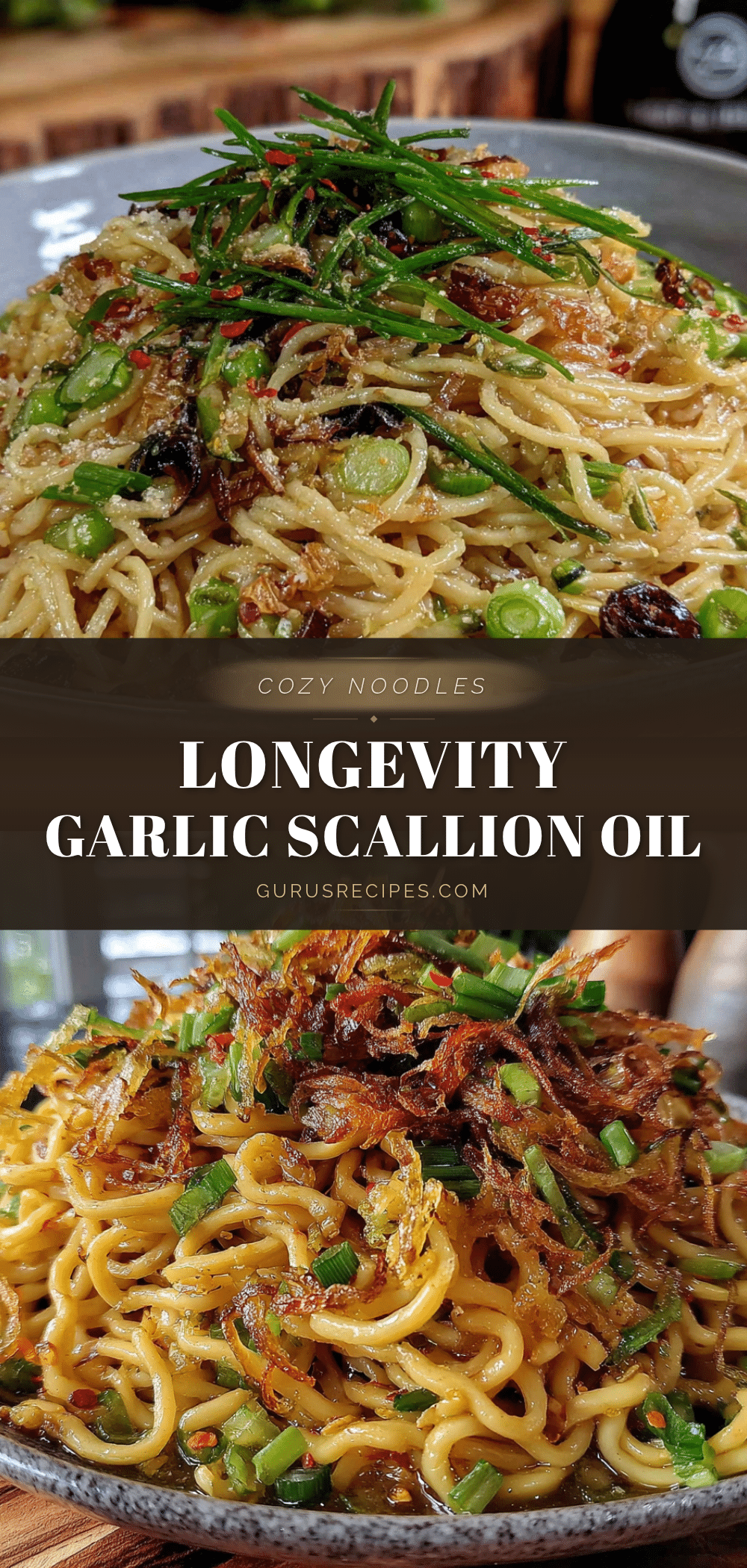

Cozy Longevity Noodles with Easy Garlic Scallion Oil
Quick and comforting noodles tossed in a fragrant garlic scallion oil, perfect for cozy nights or late-night cravings. Ready in under 20 minutes with simple pantry ingredients.
- Total Time: 20 minutes
- Yield: 2 servings 1x
Ingredients
- 8 ounces (225 g) dried thin wheat noodles
- 1 tablespoon (15 ml) sesame oil
- 1/2 cup (120 ml) neutral oil (grapeseed, avocado, or vegetable)
- 8 cloves garlic, thinly sliced
- 1 bunch scallions (about 6-8), thinly sliced, white and green parts separated
- 1 teaspoon (3 g) red pepper flakes (optional)
- 3 tablespoons (45 ml) soy sauce
- 1 tablespoon (15 ml) dark soy sauce
- 1 tablespoon (15 ml) rice vinegar
- 1 teaspoon (5 g) sugar
- 1/4 teaspoon (1 g) white pepper
- Toasted sesame seeds (optional garnish)
- Fresh cilantro or Thai basil (optional garnish)
- Soft-boiled egg (optional garnish)
Instructions
- Bring a large pot of salted water to a boil.
- Slice the garlic and scallions, keeping white and green parts separate.
- In a small bowl, whisk together soy sauce, dark soy sauce, rice vinegar, sugar, and white pepper. Set aside.
- Cook the noodles according to package directions until al dente (3-5 minutes). Stir occasionally.
- Drain noodles in a colander and rinse briefly with cold water. Shake off excess water, then toss with sesame oil to prevent clumping.
- Place a small saucepan over medium-low heat and add neutral oil. Warm for 30 seconds, then add sliced garlic. Cook gently, stirring occasionally, until pale golden (3-4 minutes).
- Add the white parts of the scallions and red pepper flakes. Cook for 1-2 minutes until scallions soften and oil is fragrant.
- Remove saucepan from heat and stir in the green parts of the scallions. Let sit for 30 seconds.
- Pour the hot garlic scallion oil over the noodles. Add the prepared sauce. Toss with tongs or chopsticks until every strand is coated.
- Taste and adjust seasoning if needed.
- Serve immediately, garnished with toasted sesame seeds, fresh herbs, or a soft-boiled egg if desired.
Notes
For best results, slice garlic thinly and evenly to prevent burning. Rinse noodles with cold water to remove excess starch and prevent clumping. The garlic scallion oil can be made up to a week ahead and stored in the refrigerator. Reheat gently before using. For a gluten-free version, use rice noodles or buckwheat soba noodles. For a low-carb option, try shirataki noodles or zucchini noodles.
- Prep Time: 10 minutes
- Cook Time: 10 minutes
- Category: Main Course
- Cuisine: Asian
Nutrition
- Serving Size: 1 serving
- Calories: 420
- Sugar: 4
- Sodium: 980
- Fat: 22
- Saturated Fat: 3
- Carbohydrates: 48
- Fiber: 2
- Protein: 8
Keywords: longevity noodles, garlic scallion oil, quick noodles, comfort food, easy dinner, Asian noodles