

It was one of those evenings when I accidentally left my sourdough starter too long on the counter, and well, it was past its prime. I’d planned on a quick sandwich, but the idea of running out to the store felt like too much effort. So, I rummaged through the pantry and found some flour, yeast, rosemary, and sea salt—the basics. Honestly, I wasn’t expecting much, but decided to throw together this easy crispy no-knead rosemary sea salt bread. To my surprise, the aroma filling the kitchen was nothing short of magical.
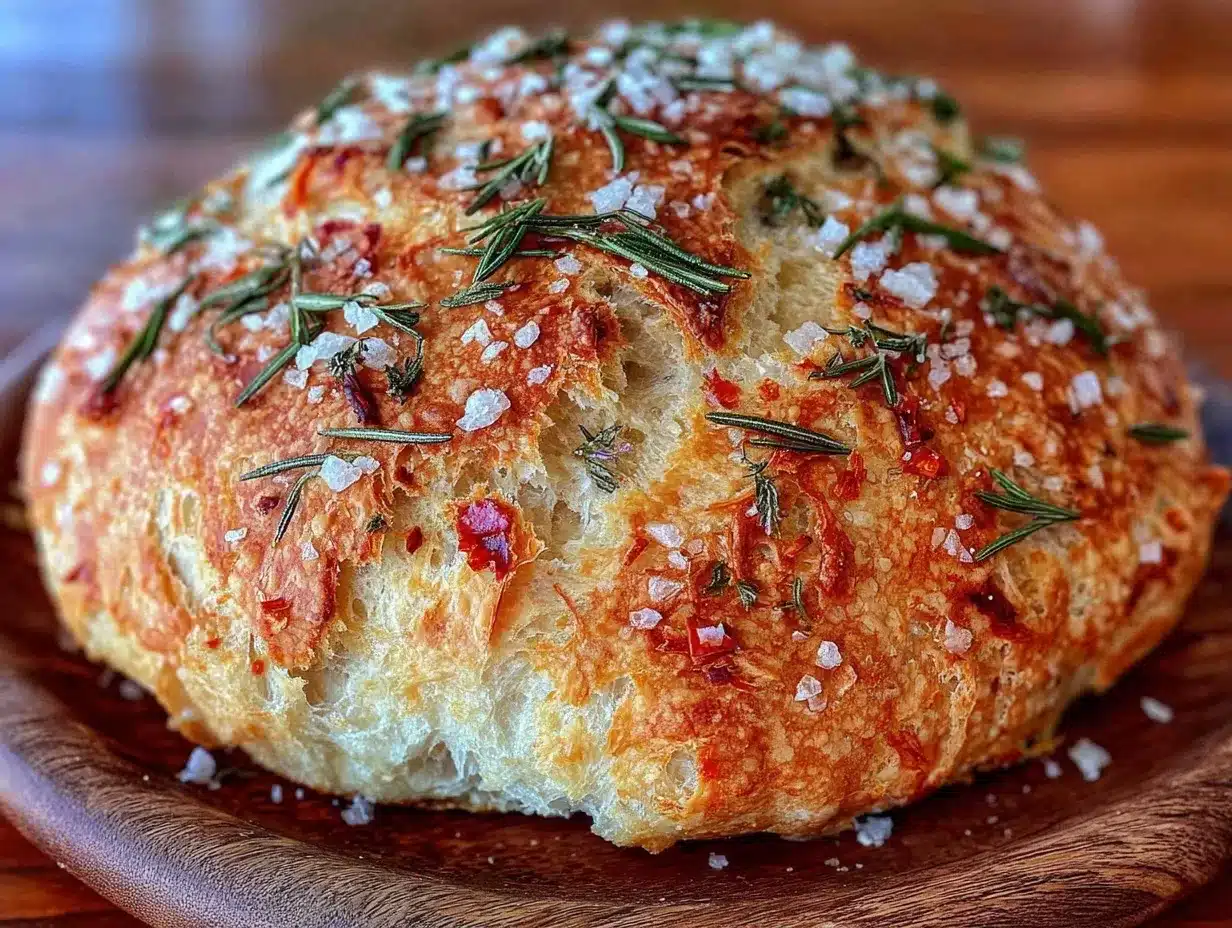
The crust crackled just right, with flakes of sea salt catching the light and the unmistakable earthy scent of fresh rosemary. It became one of those recipes I keep returning to, especially when life feels a bit hectic, and I want something homemade without the usual fuss. There’s something grounding about pulling a golden loaf out of the oven that’s both crunchy and tender inside—makes you pause and just appreciate the simple things.
What stuck with me wasn’t just the ease or the taste but that quiet confidence it gave me: homemade bread, zero kneading, and just a sprinkle of rosemary and sea salt to make it sing. It’s the kind of recipe that feels like a small celebration every time you make it, no matter how busy or tired you are.
Why You’ll Love This Recipe
- Quick & Easy: Ready to bake with minimal hands-on time—perfect for busy evenings or spontaneous baking cravings.
- Simple Ingredients: Uses pantry staples and fresh rosemary you can find at most grocery stores or grow on your windowsill.
- Perfect for Any Occasion: Whether it’s a casual dinner, a brunch spread, or just a comforting snack, this bread fits right in.
- Crowd-Pleaser: The crispy crust and soft interior get everyone asking for seconds, kids and adults alike.
- Unbelievably Delicious: The salty crunch of sea salt combined with aromatic rosemary makes this bread anything but ordinary.
This recipe isn’t just another no-knead bread—it’s my go-to when I want that perfect balance of crispy crust and tender crumb without fussing over dough. The secret lies in the light sprinkling of coarse sea salt on top and the fresh rosemary mixed into the dough, creating layers of flavor that feel both rustic and refined. I’ve made this loaf multiple times in a week, tweaking small things—sometimes adding a splash of olive oil or swapping fresh rosemary for thyme—but this version always wins out for its simplicity and punchy flavor. It’s comforting food that feels special, yet it’s so accessible you’ll find yourself making it again and again.
What Ingredients You Will Need
This recipe uses simple, wholesome ingredients to deliver bold flavor and satisfying texture without the fuss. Most are pantry staples, and fresh rosemary adds that fragrant touch that really makes this bread pop.
- All-purpose flour: 3 cups (360g), preferably unbleached for better texture.
- Instant yeast: 1/4 teaspoon (about 0.75g) – I like Fleischmann’s for consistent rise.
- Fine sea salt: 1 1/4 teaspoons (about 7g) mixed into the dough to balance flavors.
- Warm water: 1 1/2 cups (360ml), around 100°F (38°C) to activate the yeast gently.
- Fresh rosemary: 2 tablespoons, finely chopped – gives that unmistakable herbal aroma.
- Coarse sea salt: 1 teaspoon for sprinkling on top, adding crunch and bursts of flavor.
- Optional olive oil: 1 tablespoon (15ml) for a touch of richness and softer crumb.
If you can’t find fresh rosemary, dried works too—just reduce to about 1 teaspoon since it’s more concentrated. For a gluten-free twist, swapping the all-purpose flour with a trusted gluten-free blend works well, but expect a slightly different texture. I usually recommend sticking to the fresh rosemary for that bright herbal note, but thyme or sage are nice alternatives depending on what you have.
Equipment Needed
- Large mixing bowl: To combine ingredients easily.
- Dutch oven or heavy oven-safe pot with lid: This is key for that crispy crust—if you don’t have one, a baking stone or cast iron skillet with a metal bowl as a cover can work as a substitute.
- Measuring cups and spoons: For precise ingredient amounts.
- Wooden spoon or spatula: To mix the sticky dough without fuss.
- Kitchen towel or plastic wrap: For covering the dough during its rise.
Personally, I’ve used everything from a $20 Lodge Dutch oven to pricier enameled ones, and both give that lovely crust—just make sure it’s oven-safe and can hold heat well. Maintenance is simple: just hand wash and dry thoroughly to avoid rust if it’s cast iron. For those on a budget, even a heavy roasting pan covered with foil can work in a pinch.
Preparation Method
- Mix dry ingredients: In your large mixing bowl, combine 3 cups (360g) all-purpose flour, 1/4 teaspoon (0.75g) instant yeast, and 1 1/4 teaspoons (7g) fine sea salt. Stir gently to distribute everything evenly.
- Add water and rosemary: Pour in 1 1/2 cups (360ml) warm water (about 100°F/38°C) and 2 tablespoons finely chopped fresh rosemary. Use a wooden spoon or spatula to mix until all flour is moistened and you have a sticky, shaggy dough. It’ll be loose and wet—that’s perfect.
- First rise: Cover the bowl with a kitchen towel or plastic wrap and leave it at room temperature (around 70°F/21°C) for 12 to 18 hours. The dough should double in size and be bubbly on the surface. If it seems sluggish, a slightly warmer spot helps.
- Shape the dough: Lightly flour your work surface and scrape the dough out. Fold it over itself a couple of times—no kneading needed. Shape it into a ball by tucking edges underneath.
- Second rise: Place the dough seam-side down on a piece of parchment paper. Cover loosely with a towel and let it rest for 1 to 2 hours until it puffs up noticeably.
- Preheat the oven and pot: About 30 minutes before baking, place your Dutch oven with the lid on in the oven and preheat to 450°F (230°C). The pot needs to be very hot to get that crispy crust.
- Bake the bread: Carefully transfer the dough on the parchment paper into the hot pot. Sprinkle 1 teaspoon coarse sea salt on top. Cover with the lid and bake for 30 minutes.
- Finish baking: Remove the lid and bake for an additional 15 minutes to brown and crisp the crust further.
- Cool completely: Transfer bread to a wire rack and let cool fully (at least 1 hour) before slicing—this helps the crumb set perfectly.
Watch for the dough’s bubbly surface after the first rise—that’s your best sign it’s alive and ready. When shaping, wetting your hands lightly stops the dough from sticking too much. And please don’t rush the cooling step; cutting too soon leads to gummy bread (been there, done that!).
Cooking Tips & Techniques
Getting that crispy crust and tender crumb without kneading might sound tricky, but a few tricks make all the difference. First, the long, slow rise really develops flavor and texture—don’t skip or shorten it. Be patient; it’s worth it.
Using a Dutch oven traps steam, which is what gives the crust that satisfying crackle, so if you don’t have one, try improvising with a heavy pan and foil cover. I’ve learned the hard way that putting cold dough into a hot pot with steam helps the crust form fast, sealing in moisture.
When sprinkling coarse sea salt on top, do it just before baking to prevent it from dissolving into the dough. And fresh rosemary chopped finely distributes the flavor evenly—whole sprigs bake too intensely and can burn.
Common mistakes include adding too much yeast (which can lead to a yeasty, overpowering flavor) or not allowing enough rise time, resulting in a dense loaf. Also, keep an eye on oven temperature—it can vary, so an oven thermometer helps.
For multitasking, get the dough started in the morning or evening before bed. The hands-off nature means you can prep, forget, and come back to a ready-to-bake dough. I usually start mine right after breakfast on weekends.
Variations & Adaptations
- Herb Swaps: Try thyme, sage, or a mix of Italian herbs instead of rosemary for a slightly different flavor profile.
- Cheese Addition: Fold in 1/2 cup shredded sharp cheddar or parmesan for a savory twist—great with soups.
- Gluten-Free Version: Use a gluten-free all-purpose flour blend, but expect a softer crust and crumb. Adding xanthan gum helps with texture.
- Olive Oil Infusion: Add 1 tablespoon olive oil to the dough for a slightly richer crumb and a hint of Mediterranean flavor.
- Seed Topping: Sprinkle sesame or poppy seeds on top instead of sea salt for a nutty crunch.
One variation I love is folding in sun-dried tomatoes and fresh basil—reminds me of summer evenings. You can even bake this bread on a grill with the Dutch oven for a smoky aroma if you want to change things up.
Serving & Storage Suggestions
This bread is best served at room temperature, sliced thick with butter or dipped in olive oil and balsamic vinegar. It pairs beautifully with hearty soups, salads, or a simple cheese board. For brunch, try it toasted with smashed avocado and a sprinkle of chili flakes.
Store leftover bread wrapped loosely in a clean kitchen towel at room temperature for up to 2 days to preserve the crust. For longer storage, slice and freeze in airtight bags—toast slices straight from the freezer for a freshly baked taste.
When reheating, avoid microwaves which soften the crust; instead, pop slices in a toaster or warm the whole loaf in a 350°F (175°C) oven for 5-10 minutes wrapped in foil.
Flavors also seem to deepen slightly after a day—rosemary becomes more pronounced, and the sea salt’s crunch remains inviting.
Nutritional Information & Benefits
Each slice of this rosemary sea salt bread (about 60g) contains roughly 150 calories, with 28g carbohydrates, 4g protein, and 1g fat. The fresh rosemary adds antioxidants and anti-inflammatory compounds, making this more than just comfort food.
Using sea salt means you get trace minerals absent in regular table salt. Plus, homemade bread avoids preservatives and unnecessary additives found in store-bought loaves.
This recipe is naturally vegetarian and can be made vegan by skipping optional olive oil or substituting with plant-based oils. For those watching gluten intake, the gluten-free adaptations mentioned work well.
From my experience, baking this bread feels like a wholesome treat—not just for the taste but for the mindful process of making something simple yet satisfying from scratch.
Conclusion
This easy crispy no-knead rosemary sea salt bread recipe is one of those rare finds that balances simplicity with satisfying flavor and texture. Whether you’re a bread novice or a seasoned baker, it’s forgiving, straightforward, and delivers a beautiful loaf every time.
Feel free to play with herbs, toppings, or add-ins to make it your own—this recipe welcomes creativity without demanding perfection. Personally, it’s become my quiet kitchen companion, a way to connect with the joy of baking without the stress.
If you try it, I’d love to hear how you customize or serve your loaf. Baking bread at home can feel like magic, and this recipe is a lovely place to start.
Happy baking—and may your kitchen always smell like fresh rosemary and sea salt!
FAQs
Can I use dried rosemary instead of fresh?
Yes, you can substitute dried rosemary, but use about one-third the amount (around 1 teaspoon) since dried herbs are more concentrated. Fresh rosemary gives a brighter flavor, though.
Do I really need a Dutch oven for this recipe?
A Dutch oven helps create steam for a crispy crust, but if you don’t have one, try a heavy oven-safe pot with a lid or cover your baking dish tightly with foil to trap moisture.
How long can I store this bread after baking?
At room temperature, store wrapped in a towel for up to 2 days. For longer storage, slice and freeze; toast or warm slices directly from the freezer when needed.
What if my dough doesn’t rise enough?
Make sure your water temperature is warm (not hot) to activate yeast, and give the dough enough time in a warm spot. If your kitchen is cold, rising may take longer.
Can I add other flavors like garlic or cheese?
Absolutely! Adding minced garlic, shredded cheese, or even olives can add delicious variations. Just fold them into the dough during shaping to distribute evenly.
Pin This Recipe!


Easy Crispy No-Knead Rosemary Sea Salt Bread
A simple, no-knead bread recipe featuring fresh rosemary and sea salt for a crispy crust and tender crumb. Perfect for busy days when you want homemade bread without the fuss.
- Total Time: 13 hours
- Yield: 1 loaf (about 8 servings) 1x
Ingredients
- 3 cups (360g) all-purpose flour, preferably unbleached
- 1/4 teaspoon (0.75g) instant yeast
- 1 1/4 teaspoons (7g) fine sea salt
- 1 1/2 cups (360ml) warm water (about 100°F/38°C)
- 2 tablespoons fresh rosemary, finely chopped
- 1 teaspoon coarse sea salt for sprinkling on top
- Optional: 1 tablespoon (15ml) olive oil
Instructions
- In a large mixing bowl, combine 3 cups (360g) all-purpose flour, 1/4 teaspoon (0.75g) instant yeast, and 1 1/4 teaspoons (7g) fine sea salt. Stir gently to distribute evenly.
- Pour in 1 1/2 cups (360ml) warm water (about 100°F/38°C) and 2 tablespoons finely chopped fresh rosemary. Mix with a wooden spoon or spatula until all flour is moistened and you have a sticky, shaggy dough.
- Cover the bowl with a kitchen towel or plastic wrap and let the dough rise at room temperature (around 70°F/21°C) for 12 to 18 hours until doubled in size and bubbly.
- Lightly flour your work surface and scrape the dough out. Fold it over itself a couple of times and shape into a ball by tucking edges underneath. No kneading needed.
- Place the dough seam-side down on parchment paper. Cover loosely with a towel and let rest for 1 to 2 hours until puffed up.
- About 30 minutes before baking, preheat your oven to 450°F (230°C) with a Dutch oven or heavy oven-safe pot with lid inside.
- Carefully transfer the dough on the parchment paper into the hot pot. Sprinkle 1 teaspoon coarse sea salt on top. Cover with the lid and bake for 30 minutes.
- Remove the lid and bake for an additional 15 minutes to brown and crisp the crust.
- Transfer bread to a wire rack and cool completely (at least 1 hour) before slicing.
Notes
Use fresh rosemary for best flavor; dried rosemary can be substituted at one-third the amount. Do not rush the long rise times for best texture and flavor. Use a Dutch oven to trap steam for a crispy crust; if unavailable, use a heavy oven-safe pot or cover baking dish tightly with foil. Cool bread completely before slicing to avoid gummy texture.
- Prep Time: 15 minutes
- Cook Time: 45 minutes
- Category: Bread
- Cuisine: American
Nutrition
- Serving Size: 1 slice (about 60g)
- Calories: 150
- Fat: 1
- Carbohydrates: 28
- Protein: 4
Keywords: no-knead bread, rosemary bread, sea salt bread, easy homemade bread, crispy crust bread, no-knead rosemary bread