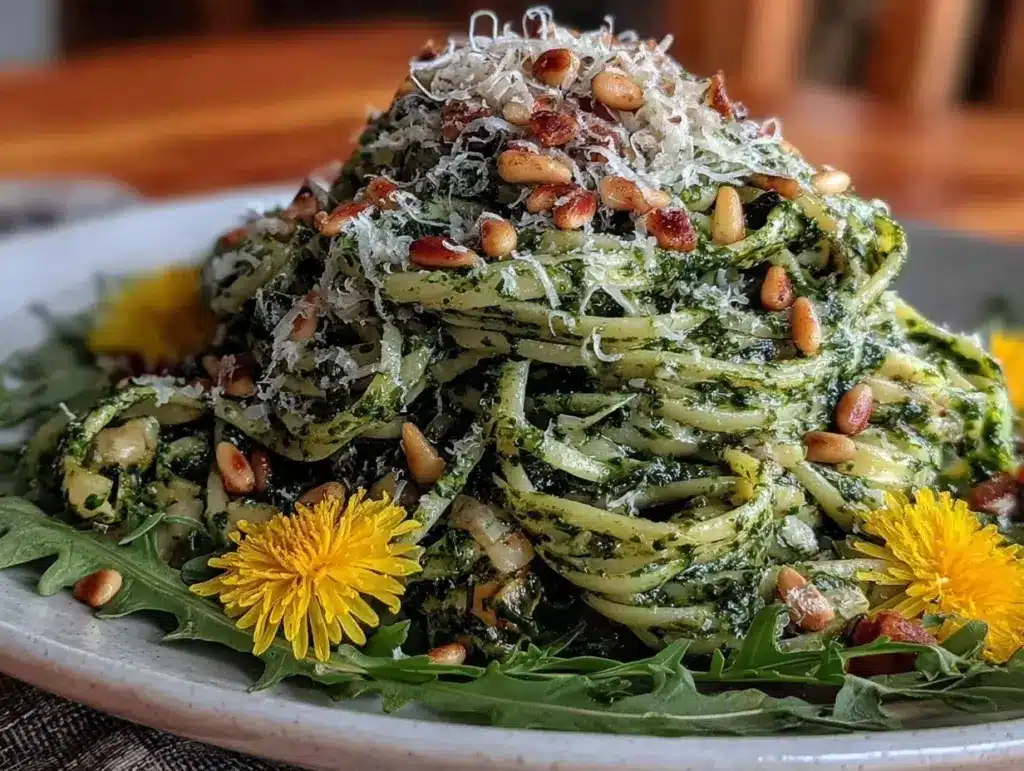
“Ever tried grabbing a quick bite after a chaotic day only to end up with something unexpectedly delightful?” That’s how this fresh dandelion pesto pasta with toasted pine nuts came into my kitchen story. I was wandering around the backyard, a bit frazzled, when I noticed the dandelion greens thriving in the corner patch. Honestly, I’d always passed on dandelions, thinking they were just pesky weeds. But that day, the idea of throwing together something fresh and vibrant hit me like a breeze.
I wasn’t exactly in the mood for a complex recipe—just something easy, wholesome, and kind of daring. So, I grabbed a handful of those bright green dandelion leaves, some garlic, and pine nuts from the pantry. I thought, “Why not toss these into a pesto and pair with some pasta?” The first taste surprised me—the bitterness of the dandelion paired with the nuttiness of toasted pine nuts was oddly comforting and fresh. It turned out to be one of those meals that made me pause mid-bite, realizing nature’s hidden flavors can be pretty incredible.
That afternoon, I discovered a new way to enjoy wild greens, and this recipe stuck because it’s quick, satisfying, and a bit unexpected. Plus, it’s a great reminder that good food doesn’t always need fuss—sometimes, it’s just about what’s right outside your door. So here’s the story behind my fresh dandelion pesto pasta with toasted pine nuts—a simple dish born from a moment of kitchen spontaneity and backyard inspiration.
Why You’ll Love This Fresh Dandelion Pesto Pasta Recipe
After making this fresh dandelion pesto pasta with toasted pine nuts several times over a couple of weeks (yes, I was hooked), I can honestly say it’s a keeper for busy days when you want something fast but full of flavor. It’s been tested and tweaked for balance and ease, so whether you’re a kitchen newbie or a seasoned cook, this recipe delivers.
- Quick & Easy: Comes together in about 25 minutes—perfect for busy weeknights or those sudden hunger pangs.
- Simple Ingredients: Most are pantry or garden staples, no need for fancy grocery runs.
- Perfect for Spring and Early Summer: When dandelion greens are at their peak, fresh and tender.
- Crowd-Pleaser: The toasted pine nuts add a rich crunch that everyone seems to love.
- Unbelievably Delicious: The slight bitterness of dandelion balances beautifully with garlic, lemon, and pine nuts for a unique, fresh flavor.
This isn’t your everyday pesto recipe. The dandelion leaves bring a wild, earthy note that you don’t get from basil alone. Toasted pine nuts add a toasty depth that elevates the whole dish without fuss. It’s a recipe that feels both rustic and refined—comfort food with a twist, if you will.
Honestly, the best part is how this dish feels like a little secret handshake with nature. It’s a treat for those who love fresh greens but want something different from the usual. Plus, it pairs beautifully with a warm, crusty bread like the easy no-knead rosemary sea salt bread, which I often serve alongside it.
What Ingredients You Will Need
This fresh dandelion pesto pasta with toasted pine nuts recipe uses simple, wholesome ingredients to deliver bold flavor and satisfying texture without the fuss. Most ingredients are pantry staples or easy to find at local markets, and you can easily swap a few to suit your taste or dietary needs.
- Dandelion greens: About 4 cups packed, washed thoroughly (young leaves work best for less bitterness)
- Toasted pine nuts: 1/3 cup (adds rich, toasty flavor; I prefer Italian pine nuts for their buttery notes)
- Garlic cloves: 2 large, peeled (fresh and pungent for depth)
- Parmesan cheese: 1/2 cup grated (I use Parmigiano-Reggiano for authentic flavor; omit for vegan version)
- Extra virgin olive oil: 1/2 cup (cold-pressed for best aroma and taste)
- Fresh lemon juice: From half a lemon (adds brightness and balances bitterness)
- Salt and freshly ground black pepper: To taste (season gradually)
- Pasta: 12 oz (340 g) of your choice—I often use spaghetti or linguine for this dish
Ingredient tips: If you can’t find fresh dandelion greens, baby kale or arugula make decent substitutes, but the unique flavor won’t be quite the same. For a nut-free option, swap the pine nuts with toasted sunflower seeds. And if you want to try a dairy-free pesto, replace parmesan with nutritional yeast or a vegan cheese alternative.
Equipment Needed
- Food processor or blender: Essential for making the pesto smooth and well blended. If you don’t have one, a sturdy mortar and pestle works too but takes more elbow grease.
- Large pot: For boiling pasta comfortably.
- Colander: To drain the pasta.
- Large skillet or saucepan: To gently warm the cooked pasta with pesto if desired.
- Wooden spoon or tongs: For mixing pasta and pesto without breaking the noodles.
- Measuring cups and spoons: For precise ingredient amounts.
Personally, I’ve found that a food processor with a sharp blade makes pesto prep lightning fast, but in a pinch, a blender will do—just pulse gently to avoid overheating the herbs. And if you love homemade bread, pairing this pasta with the crispy garlic parmesan focaccia bread is a total game-changer.
Preparation Method
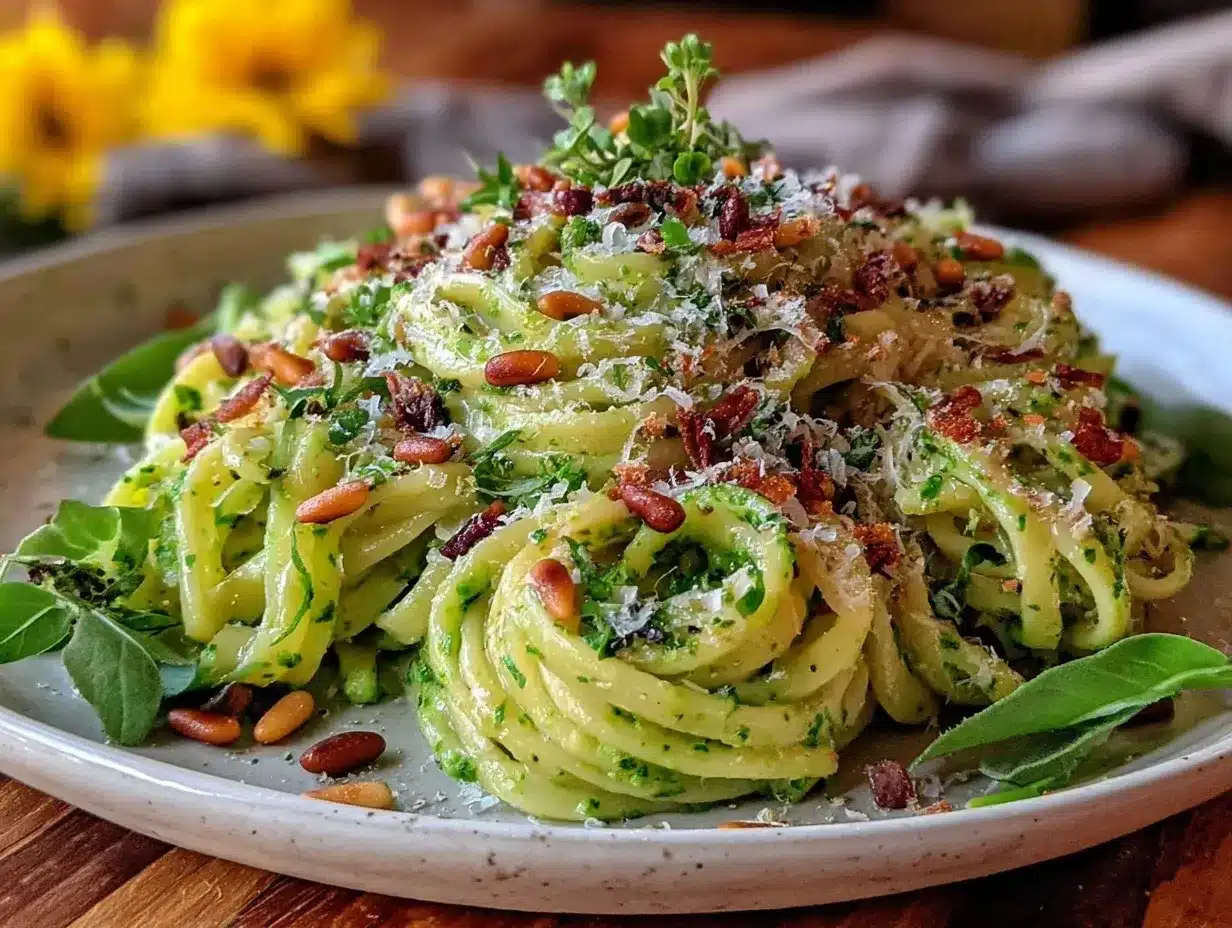
- Prepare the dandelion greens: Rinse about 4 cups of fresh dandelion greens under cold water to remove grit. Spin or pat dry thoroughly. If the leaves are large or tough, chop roughly into smaller pieces (about 1-inch pieces). This should take around 5 minutes.
- Toast the pine nuts: Heat a dry skillet over medium heat. Add 1/3 cup pine nuts and toast for 3-5 minutes, stirring frequently until golden and fragrant. Remove immediately to a plate to cool and prevent burning.
- Cook the pasta: Bring a large pot of salted water to a boil. Add 12 oz (340 g) pasta and cook until al dente, usually 8-10 minutes (check package instructions). Reserve 1/2 cup of pasta water before draining. Drain pasta in a colander.
- Make the pesto: In a food processor, combine the dandelion greens, toasted pine nuts (reserve a few for garnish), 2 cloves garlic, 1/2 cup grated Parmesan, and juice from half a lemon. Pulse to combine.
- Stream in olive oil: With the processor running, slowly drizzle in 1/2 cup extra virgin olive oil until you get a smooth, creamy pesto. If it’s too thick, add a tablespoon or two of reserved pasta water to loosen. Season with salt and freshly ground black pepper to taste.
- Combine pasta and pesto: Return the drained pasta to the pot or a large mixing bowl. Pour the pesto over the pasta, tossing gently to coat evenly. Add a splash of reserved pasta water if needed for a silky finish.
- Serve warm: Plate the pasta and sprinkle with the reserved toasted pine nuts and extra Parmesan if you like. A fresh grind of black pepper on top adds a nice touch.
Note: If you want to keep pesto vibrant and fresh-tasting, try not to over-blend the dandelion greens—they should still have some texture, not a puree. Cooking pasta slightly less than usual helps it hold up when mixed with pesto.
Cooking Tips & Techniques
Pesto making is all about balance and freshness. Here’s what I’ve learned after a few trial runs with this fresh dandelion pesto pasta with toasted pine nuts:
- Use young dandelion greens: Older leaves tend to be bitter and tough. Picking tender, smaller leaves gives you a pesto that’s bright, not harsh.
- Toast pine nuts carefully: They burn quickly and develop bitterness if left unattended. Keep the heat moderate and stir often.
- Don’t over-process the pesto: Pulse in short bursts to keep some texture and avoid a pasty consistency.
- Save some pasta water: The starchy water helps the pesto cling to the pasta and keeps the dish moist without adding oil.
- Season gradually: Salt enhances the pesto’s flavor but can overwhelm if added too early—add and taste as you go.
- Timing is everything: Cook pasta just before making pesto to keep everything fresh and warm for serving.
- Multitask: While pasta boils, toast pine nuts and prep greens to save time.
One lesson I learned the hard way: blending pesto too long turns it into a dull green paste, losing that fresh, lively flavor. Also, I once skipped the lemon juice and found the pesto too heavy—acid brightens it up marvelously.
Variations & Adaptations
This fresh dandelion pesto pasta with toasted pine nuts recipe is versatile, so feel free to switch it up based on what you have or prefer:
- Nut swaps: Instead of pine nuts, try toasted walnuts or toasted almonds for a different crunch and flavor profile.
- Vegan version: Skip the Parmesan and add nutritional yeast or vegan cheese; also, use a good quality olive oil to boost flavor.
- Seasonal greens: In early spring when dandelions are scarce, mix in spinach, arugula, or kale to bulk up the pesto.
- Spicy twist: Add a pinch of red pepper flakes to the pesto for a subtle heat that contrasts nicely with the bitterness.
- Alternative pasta: Use gluten-free pasta or spiralized zucchini noodles for a lighter, low-carb option.
One time, I added a splash of white wine vinegar instead of lemon juice—it gave the pesto a sharper tang that paired well with sautéed shrimp tossed in at the end. It’s fun to experiment and make this pesto your own.
Serving & Storage Suggestions
This fresh dandelion pesto pasta is best served warm, right after mixing, so the aroma and texture shine. Plate it with a sprinkle of toasted pine nuts and fresh Parmesan for a simple, elegant finish.
It pairs beautifully with crisp white wines or a light sparkling water with lemon to cut through the richness. For sides, I often bring out some crusty homemade bread like the crispy copycat Subway Italian herb and cheese bread—it’s perfect for mopping up any leftover pesto.
Leftover pesto can be stored in an airtight container in the fridge for up to 3 days—cover the surface with a thin layer of olive oil to prevent browning. You can also freeze pesto in ice cube trays for a quick flavor boost whenever you want.
If you have leftover pasta, keep it refrigerated for up to 2 days. Reheat gently in a skillet with a splash of water or olive oil to revive the sauce without drying it out. Flavors tend to mellow overnight, so the next day’s meal will taste more harmonious and less sharp.
Nutritional Information & Benefits
Each serving of fresh dandelion pesto pasta with toasted pine nuts provides roughly 400-450 calories depending on portion size and pasta choice. The dish offers a good balance of healthy fats, carbs, and protein from the nuts and cheese.
- Dandelion greens: Rich in vitamins A, C, and K plus antioxidants that support digestion and liver health.
- Pine nuts: Provide heart-healthy monounsaturated fats and magnesium.
- Olive oil: A staple of the Mediterranean diet, packed with anti-inflammatory properties.
- Garlic: Known for immune-boosting and anti-bacterial benefits.
This recipe is naturally gluten-free if you choose gluten-free pasta and can be dairy-free with simple swaps. It’s a wholesome way to enjoy wild greens and boost your veggie intake while indulging in a satisfying pasta dish.
Conclusion
Fresh dandelion pesto pasta with toasted pine nuts is one of those recipes that remind you home cooking can be adventurous and wholesome without being complicated. It’s a celebration of spring’s wild flavors and a gentle nudge to look for beauty and taste in unexpected places.
Whether you’re a pesto lover or a curious cook, this recipe will invite you to experiment with fresh greens and simple pantry staples. I love how it turns a common “weed” into a flavorful meal that’s both comforting and bright.
Give it a try, adjust it your way, and enjoy the little moments that come with making something fresh from scratch. And if you’re keen on breads to accompany your pasta, the cozy Dublin coddle Irish sausage stew also pairs beautifully with homemade rustic breads—just saying.
Feel free to share your tweaks or questions—I’m always excited to hear how this humble dish finds a place on your table.
FAQs About Fresh Dandelion Pesto Pasta with Toasted Pine Nuts
Can I use other greens instead of dandelion for this pesto?
Yes! Young kale, spinach, or arugula work well as substitutes, though the flavor will be milder and less bitter than dandelion.
How do I reduce the bitterness of dandelion greens in the pesto?
Using young, tender leaves helps. You can also blanch the greens briefly in boiling water for 1 minute, then shock in ice water before blending to mellow the bitterness.
Can I make this pesto ahead of time?
Absolutely. Store in an airtight container with olive oil on top in the fridge for up to 3 days or freeze in small portions for longer storage.
What type of pasta pairs best with dandelion pesto?
Long strands like spaghetti, linguine, or fettuccine work great, but short shapes like penne or fusilli are good too, especially if you want the pesto to cling nicely.
Are toasted pine nuts essential to the recipe?
They add a lovely nutty crunch, but you can substitute with walnuts, almonds, or even seeds like pumpkin or sunflower if preferred or if you have a nut allergy.
Pin This Recipe!
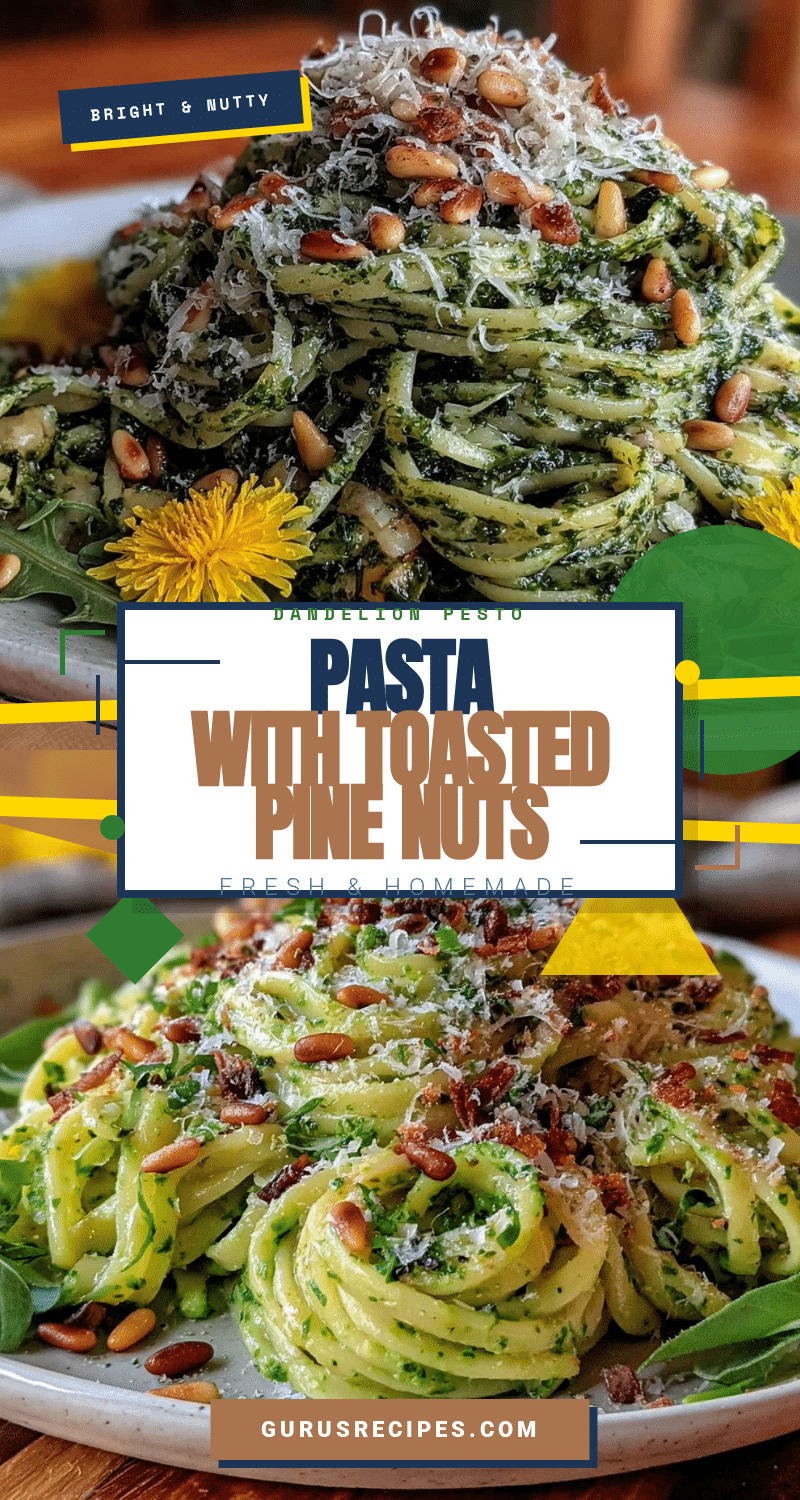

Fresh Dandelion Pesto Pasta Recipe Easy Homemade with Toasted Pine Nuts
A quick and easy pasta dish featuring fresh dandelion greens blended into a vibrant pesto with toasted pine nuts, garlic, and Parmesan cheese. This recipe offers a unique, fresh flavor that balances the slight bitterness of dandelion with nutty and bright notes.
- Total Time: 25 minutes
- Yield: 4 servings 1x
Ingredients
- 4 cups packed fresh dandelion greens, washed thoroughly (young leaves preferred)
- 1/3 cup toasted pine nuts
- 2 large garlic cloves, peeled
- 1/2 cup grated Parmesan cheese (Parmigiano-Reggiano recommended; omit for vegan version)
- 1/2 cup extra virgin olive oil, cold-pressed
- Juice from half a lemon
- Salt and freshly ground black pepper, to taste
- 12 oz (340 g) pasta of choice (spaghetti or linguine recommended)
Instructions
- Rinse about 4 cups of fresh dandelion greens under cold water to remove grit. Spin or pat dry thoroughly. Chop roughly into 1-inch pieces if leaves are large or tough. (About 5 minutes)
- Heat a dry skillet over medium heat. Add 1/3 cup pine nuts and toast for 3-5 minutes, stirring frequently until golden and fragrant. Remove immediately to a plate to cool.
- Bring a large pot of salted water to a boil. Add 12 oz pasta and cook until al dente, usually 8-10 minutes. Reserve 1/2 cup pasta water before draining. Drain pasta in a colander.
- In a food processor, combine dandelion greens, toasted pine nuts (reserve a few for garnish), 2 cloves garlic, 1/2 cup grated Parmesan, and juice from half a lemon. Pulse to combine.
- With the processor running, slowly drizzle in 1/2 cup extra virgin olive oil until smooth and creamy. Add reserved pasta water by tablespoon if pesto is too thick. Season with salt and freshly ground black pepper to taste.
- Return drained pasta to pot or large bowl. Pour pesto over pasta and toss gently to coat evenly. Add splash of reserved pasta water if needed for silky finish.
- Serve warm, garnished with reserved toasted pine nuts and extra Parmesan if desired. Finish with fresh ground black pepper.
Notes
Use young dandelion greens to reduce bitterness. Toast pine nuts carefully to avoid burning. Do not over-process pesto to keep some texture. Save pasta water to loosen pesto and help it cling to pasta. Season gradually and taste as you go. Cooking pasta slightly less than usual helps it hold up when mixed with pesto.
- Prep Time: 10 minutes
- Cook Time: 15 minutes
- Category: Main Course
- Cuisine: Italian-inspired
Nutrition
- Serving Size: 1 serving (approxima
- Calories: 425
- Sugar: 2
- Sodium: 350
- Fat: 28
- Saturated Fat: 5
- Carbohydrates: 35
- Fiber: 3
- Protein: 10
Keywords: dandelion pesto, pesto pasta, toasted pine nuts, fresh greens, easy pasta recipe, homemade pesto, spring recipe, vegetarian pasta