Introduction
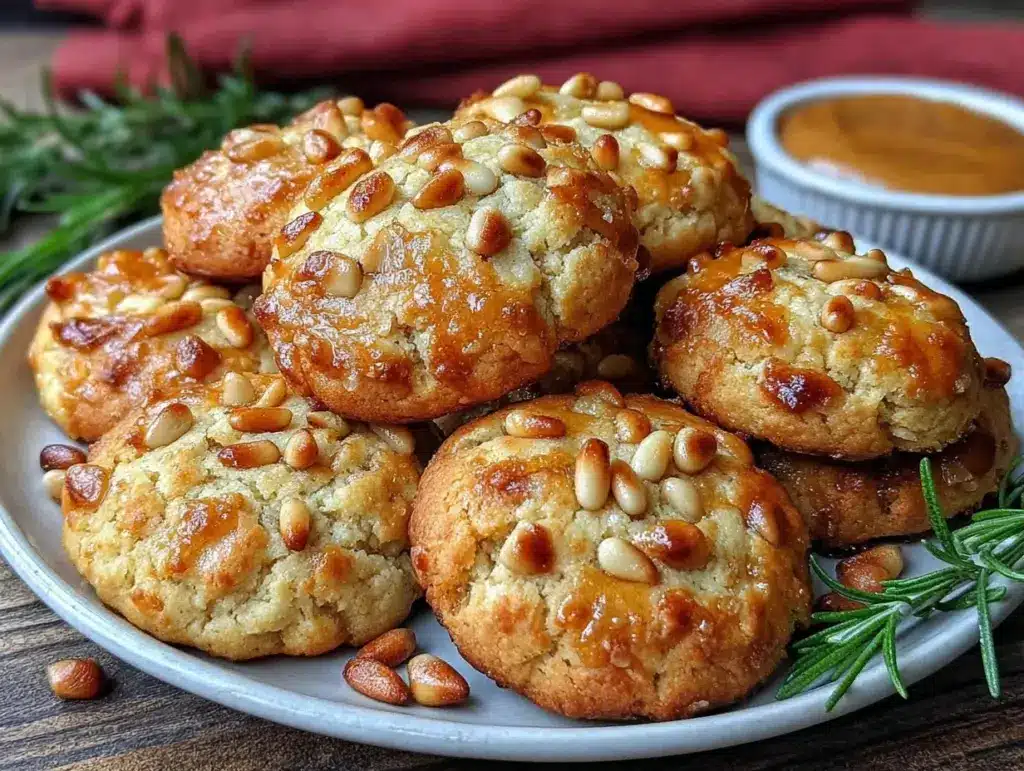
Let me just set the scene—you open your oven to a waft of toasted pine nuts and sweet almond, and it’s like stepping right into a cozy Italian bakery. The aroma is so inviting, you can practically hear Nonna bustling around, sneaking a few cookies off the tray before anyone else gets the chance. Honestly, these tender pignoli cookies are the kind of treat that makes you pause mid-bake, take a deep breath, and smile at the pure, nostalgic comfort wafting through your kitchen.
The first time I made this pignoli cookies recipe was on a rainy Sunday, when my family was craving something sweet but not overly fussy. I’d always admired those golden, pine nut-studded cookies in bakery windows but figured they were way out of my league. Turns out, they’re dangerously easy—with just a few simple ingredients and some classic almond paste, you can whip up a batch that rivals any pastry shop (and let’s face it, the smell alone will have people wandering into your kitchen).
When I was knee-high to a grasshopper, my grandmother would save a handful of pine nuts for “special occasion cookies”—these were always the first to disappear at family gatherings. My siblings, notorious for their sneaky cookie raids, couldn’t resist these chewy, nutty bites. If you’ve never tried homemade pignoli cookies, I wish I could’ve handed you one years ago. Whether you’re brightening up your Pinterest board or looking for a sweet treat for your kids, these almond paste pine nut cookies are a staple for gifting, family gatherings, and, honestly, just savoring with a good cup of coffee. After testing this recipe more times than I care to admit (in the name of research, of course), I can promise it’s going to feel like a warm hug—and you’re going to want to bookmark this one.
Why You’ll Love This Recipe
If you’re like me and have spent years searching for the perfect pignoli cookie recipe, let me tell you—this one hits all the right notes. These almond paste pine nut treats have been family-approved, neighbor-tested, and even given the thumbs up from picky eaters who “don’t like nuts” (until they tried these!). Here’s why you’ll love making them:
- Quick & Easy: Comes together in just about 25 minutes—no complicated techniques or endless chilling required. Perfect for last-minute cravings or a spontaneous bake.
- Simple Ingredients: You don’t need anything fancy, just pantry staples like almond paste, sugar, and eggs. Pine nuts are the star, but everything else is probably already in your kitchen.
- Perfect for Any Occasion: These cookies are ideal for holiday trays, potlucks, birthday parties, or cozy Sunday afternoons. They look gorgeous on a dessert table and taste even better.
- Crowd-Pleaser: The chewy texture and sweet almond flavor always get rave reviews. Kids love the crunch, grown-ups appreciate the elegance, and honestly, they disappear faster than you’d expect.
- Unbelievably Delicious: The combination of rich almond paste and buttery pine nuts is next-level comfort food. Each bite is soft, chewy, and just a little bit crispy around the edges.
What makes this recipe stand out? Well, I blend the almond paste with sugar and egg whites for an ultra-smooth, melt-in-your-mouth texture. The pine nuts toast up beautifully, adding crunch and a nutty aroma. I’ve tried other recipes that are too dry, too sweet, or just not chewy enough. This one strikes a perfect balance—thanks to a few tweaks learned from old family cookbooks and (let’s be honest) some failed batches along the way.
This isn’t just another classic Italian cookie—it’s my best version, with a texture so soft you’ll want to close your eyes after the first bite. It’s comfort food at its finest, but lighter and fresher than store-bought. Whether you’re impressing guests or just want a memorable treat for yourself, these pignoli cookies have all the soul-soothing satisfaction you crave.
What Ingredients You Will Need
This pignoli cookies recipe uses simple, wholesome ingredients to deliver bold almond flavor and that signature tender, chewy texture. Most are pantry staples, and you can swap a few things to suit your kitchen or dietary needs.
- Almond Paste (8 oz/225 g): The heart and soul of the recipe—look for good-quality paste, like Odense or Solo, for best results. (Don’t use marzipan, it’s sweeter and less rich.)
- Granulated Sugar (3/4 cup/150 g): Adds sweetness and helps the cookies brown.
- Egg Whites (2 large, at room temperature): Binds everything together and gives the classic chewy texture.
- Pine Nuts (1 cup/120 g): The star topping—fresh, untoasted pine nuts taste best. (If you only have roasted, those work too, just watch the baking time.)
- All-Purpose Flour (2 tbsp/16 g, optional): Helps with structure if your almond paste is very soft. Can be omitted for gluten-free cookies.
- Salt (1/8 tsp): Just a pinch to balance the sweetness and bring out the almond flavor.
- Powdered Sugar (for dusting, optional): Adds a bakery-style finish.
Ingredient Notes & Swaps:
- Use almond flour (same weight) for gluten-free adaptation—makes the cookies a bit more crumbly, but still delicious.
- Egg whites can be swapped for aquafaba (chickpea water) for a vegan version, though the texture will be slightly different.
- If you’re out of pine nuts, slivered almonds or chopped pistachios work as a tasty alternative (not traditional, but yummy!).
- Store-bought almond paste is usually perfect, but homemade is great if you want full control over sweetness.
- Fresh pine nuts can be pricey—buy in bulk if you bake these often, and keep extras in the freezer to stay fresh.
I recommend Odense almond paste for the smoothest texture, but Solo and Love ‘n Bake are solid picks too. If you can find small, uniform pine nuts, they toast up more evenly and look picture-perfect on your cookies. In summer, I sometimes swap half the pine nuts for chopped dried apricots for a fruity twist. These ingredients keep things simple but let you play around if you’re feeling adventurous.
Equipment Needed
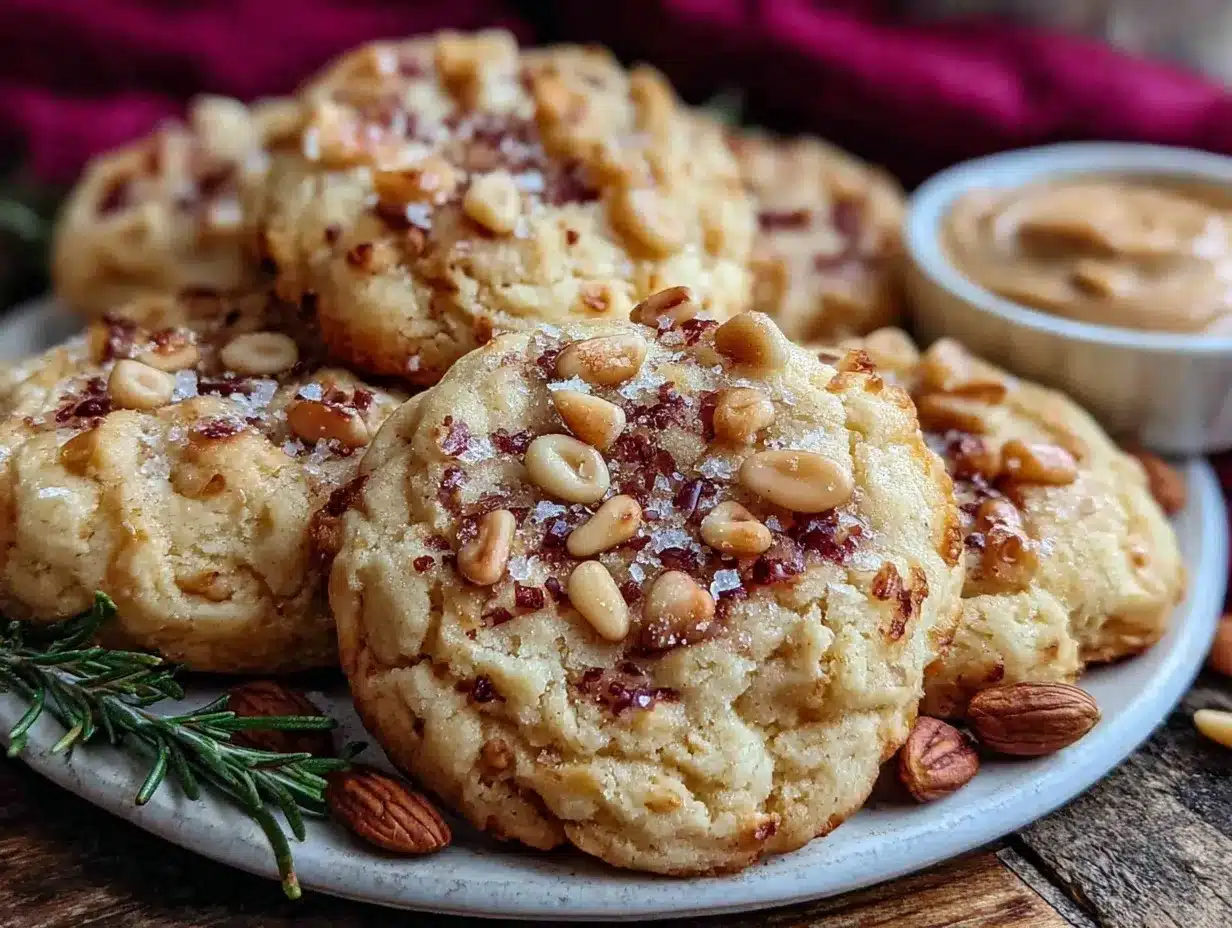
One of the best things about pignoli cookies is you don’t need fancy tools—just a few basics most home bakers already have. Here’s what you’ll need:
- Mixing Bowl: Any medium-sized bowl works. I use a glass bowl for easy cleanup.
- Electric Mixer or Food Processor: Makes blending the almond paste smooth and lump-free. A hand mixer works fine, but a food processor gives the best texture.
- Baking Sheet: Lined with parchment paper or a silicone baking mat for easy release and cleanup.
- Spatula: Silicone is best for scraping down sticky dough.
- Small Cookie Scoop or Spoon: For portioning out even cookies.
- Wire Cooling Rack: Helps cookies cool quickly and keeps them from getting soggy.
If you don’t have a mixer, you can mash the almond paste by hand (it’s a workout, but doable!). For budget-friendly options, a basic hand mixer and a $1 silicone spatula get the job done. I’ve tried using wax paper instead of parchment—don’t do it, the cookies stick like crazy! If you bake often, a reusable silicone mat is worth the splurge and makes cleanup a breeze.
Preparation Method
- Prep Your Baking Sheet: Line one large baking sheet with parchment paper or a silicone baking mat. Preheat your oven to 350°F (175°C). This helps the cookies spread evenly and prevents sticking (trust me, you don’t want to chisel pignoli cookies off your tray).
- Break Up Almond Paste: In your mixing bowl, crumble the almond paste (8 oz/225 g) into small pieces. If using a food processor, pulse a few times until it’s in pea-sized chunks.
- Mix Sugar and Almond Paste: Add granulated sugar (3/4 cup/150 g) and salt (1/8 tsp) to the bowl. Blend with an electric mixer or food processor on medium until the mixture looks like coarse sand. If you’re mixing by hand, use a fork and some elbow grease—it’ll come together, just takes a minute.
- Add Egg Whites: Pour in 2 large egg whites (room temperature). Beat on medium until the dough is smooth and sticky, about 2 minutes. It should look pale and creamy. If your almond paste is extra dry, add 1-2 tsp water or a splash of almond extract to loosen it up.
- Add Flour (Optional): If your dough seems runny, fold in 2 tbsp (16 g) all-purpose flour. This helps the cookies hold their shape, especially if you’re using a soft almond paste.
- Shape the Cookies: Use a small cookie scoop or spoon to scoop 1-inch (2.5 cm) balls of dough. Roll each ball gently between your palms (it’s sticky, so dampen your hands if needed).
- Roll in Pine Nuts: Place pine nuts (1 cup/120 g) in a shallow bowl. Roll each dough ball in pine nuts, pressing gently so they stick all over the surface. Set each ball on your prepared baking sheet, spaced about 2 inches (5 cm) apart.
- Bake: Bake at 350°F (175°C) for 18-22 minutes. Watch for golden pine nuts and lightly browned edges. If your oven runs hot, check at 16 minutes. They’re done when they feel set but still soft in the center.
- Cool: Let cookies cool on the baking sheet for 5 minutes, then transfer to a wire rack to cool completely. They’ll firm up as they cool, but stay chewy inside.
- Optional Finish: Dust cooled cookies with powdered sugar for a bakery-style touch. Honestly, I skip this unless I’m gifting or making for guests.
Preparation Notes: The dough is sticky—don’t worry, that’s normal! If your pine nuts keep falling off, press them in gently and roll each ball again. For extra crispy edges, bake a minute longer. If you see cracks on top, that’s a good sign—they’re supposed to look rustic and homemade.
Troubleshooting: If cookies flatten too much, chill dough for 15 minutes before baking. If they’re hard, try reducing bake time or lowering oven temp by 10 degrees. Every oven is a little different, so keep an eye on those first batches. My biggest tip? Don’t overcrowd the pan—these cookies love their personal space.
Cooking Tips & Techniques
After baking (and sometimes burning) more pignoli cookies than I care to admit, here’s what I’ve learned for perfect results every time:
- Use Fresh Pine Nuts: Old pine nuts can taste bitter. Buy small amounts or freeze extras to keep them fresh (trust me, learned this the hard way).
- Don’t Overmix: Blend the almond paste and sugar just until combined—overmixing can make the cookies tough.
- Sticky Dough Is Good: The dough should be tacky so pine nuts stick well. If it’s dry or crumbly, add a teaspoon of water or almond extract.
- Spacing Matters: Give cookies room to spread—don’t crowd the pan. I once jammed 20 on a tray and ended up with one giant, nutty pancake.
- Watch the Oven: Pine nuts burn fast! Check at the 16-minute mark and rotate the tray if your oven has hot spots.
- Multi-tasking Tip: While the first batch bakes, prep the second tray. It keeps the baking rhythm going and you’ll finish faster.
- Consistency: Use a cookie scoop for even sizes—makes for uniform baking and prettier Pinterest photos.
If your cookies come out dry, it’s probably too much flour or overbaking. For ultra-chewy centers, pull them out when the edges are just set—they’ll finish cooking as they cool. I’ve also learned to keep the dough covered between batches to prevent drying out. These little tricks make a big difference, especially when you want that soft, bakery-style texture every time.
Variations & Adaptations
Pignoli cookies are classic, but you can tweak the recipe to suit your tastes, dietary needs, or what’s in your pantry. Here are some favorite twists:
- Gluten-Free: Skip the flour and use almond flour for a naturally gluten-free cookie. The texture is a bit more delicate, but still chewy and rich.
- Vegan: Replace egg whites with aquafaba (about 2.5 tbsp per egg white) for a plant-based version. The cookies are slightly softer but still hold up beautifully.
- Nut Mix: Can’t find pine nuts? Try slivered almonds, chopped pistachios, or even sunflower seeds for a budget-friendly twist. Not traditional, but surprisingly tasty!
- Seasonal Flavor: Add 1/2 tsp lemon zest or orange zest to the dough for a fresh citrus note—perfect for spring and summer.
- Chocolate Dipped: Once cooled, dip half of each cookie in melted dark chocolate and let set. It’s a decadent version I make for holiday trays.
- Allergen Friendly: For nut allergies, swap almond paste for sunflower seed butter and use sunflower seeds instead of pine nuts. The flavor is different but still delicious.
My favorite personal variation? I add a handful of chopped dried cherries to the dough for a sweet-tart contrast. It may not be totally traditional, but my family loves the pop of color and flavor. Don’t be afraid to experiment—these cookies are forgiving and fun to customize!
Serving & Storage Suggestions
Pignoli cookies taste best slightly warm or at room temperature. Arrange them on a pretty plate or rustic wooden board for that bakery look—sprinkle with a little powdered sugar for extra charm. These cookies pair beautifully with espresso, cappuccino, or even a fruity herbal tea (if you’re feeling fancy).
For parties, serve alongside biscotti, amaretti, or other Italian sweets. They’re a hit on holiday dessert trays and perfect for gifting—stack in cellophane bags or decorative tins for instant cheer.
Storage is simple: keep cookies in an airtight container at room temperature for up to five days. For longer storage, freeze in layers separated by wax paper; thaw at room temp before serving. If you like them extra soft, tuck a slice of bread in the container—it keeps them moist. Reheat briefly in a low oven (300°F/150°C) for a fresh-from-the-oven feel, but watch closely so the pine nuts don’t burn.
Honestly, the flavors develop even more overnight, making these cookies perfect for make-ahead baking. They’re just as good on day three as they are fresh, which is rare for cookies!
Nutritional Information & Benefits
Each pignoli cookie (about 30 g) contains approximately:
- Calories: 110
- Fat: 7 g
- Carbohydrates: 11 g
- Protein: 2 g
- Sugar: 9 g
Pine nuts are rich in healthy fats and magnesium, while almond paste brings vitamin E, fiber, and plant protein. These cookies are gluten-free if you skip the flour, making them suitable for many diets. Just a heads up—they do contain nuts and eggs, so they’re not allergen-free unless you adapt the recipe.
Personally, I love that you get a sweet treat with a bit of wholesome fat and protein—makes for a more satisfying snack. They’re naturally lower in carbs than most cookies, and you can tweak sugar for a lighter version. Not health food, sure, but a little indulgence with real, simple ingredients!
Conclusion
If you’ve been craving a soft, chewy cookie that’s just a little bit fancy, this pignoli cookies recipe is absolutely worth trying. The almond paste and pine nuts make for a flavor combo that’s rich, nutty, and somehow both comforting and elegant. You’ll love how easy these are to whip up, and the way they disappear from the cookie tray is proof enough of their charm.
Don’t hesitate to tweak the recipe to suit your tastes or pantry—swap nuts, add citrus, or try the gluten-free version. Honestly, every batch has its own character and that’s what makes baking fun. These cookies have become a go-to for my family gatherings and holiday gifting, and I hope they’ll be a hit in your kitchen too.
If you give this recipe a try, drop a comment below or share your photos—nothing makes my day like seeing your creations! Save it, pin it, and keep it handy for every time you need a little sweet comfort. Happy baking, and may your kitchen always smell like toasted pine nuts and almond paste!
FAQs
Can I make pignoli cookies without almond paste?
Almond paste is essential for the classic flavor and chewy texture. If you don’t have it, you can try blending blanched almonds with sugar, but the result won’t be quite the same.
Why are my pine nuts falling off the cookies?
If the dough is too dry, the pine nuts won’t stick. Make sure it’s sticky, and press the nuts gently into the surface before baking.
How do I store pignoli cookies to keep them fresh?
Keep them in an airtight container at room temperature for up to five days. For longer storage, freeze in layers and thaw before serving.
Are pignoli cookies gluten-free?
Yes, if you skip the optional flour or use almond flour instead, these cookies are naturally gluten-free.
Can I use other nuts instead of pine nuts?
Absolutely! Slivered almonds, chopped pistachios, or sunflower seeds are tasty alternatives if pine nuts aren’t available or are too pricey.
Pin This Recipe!
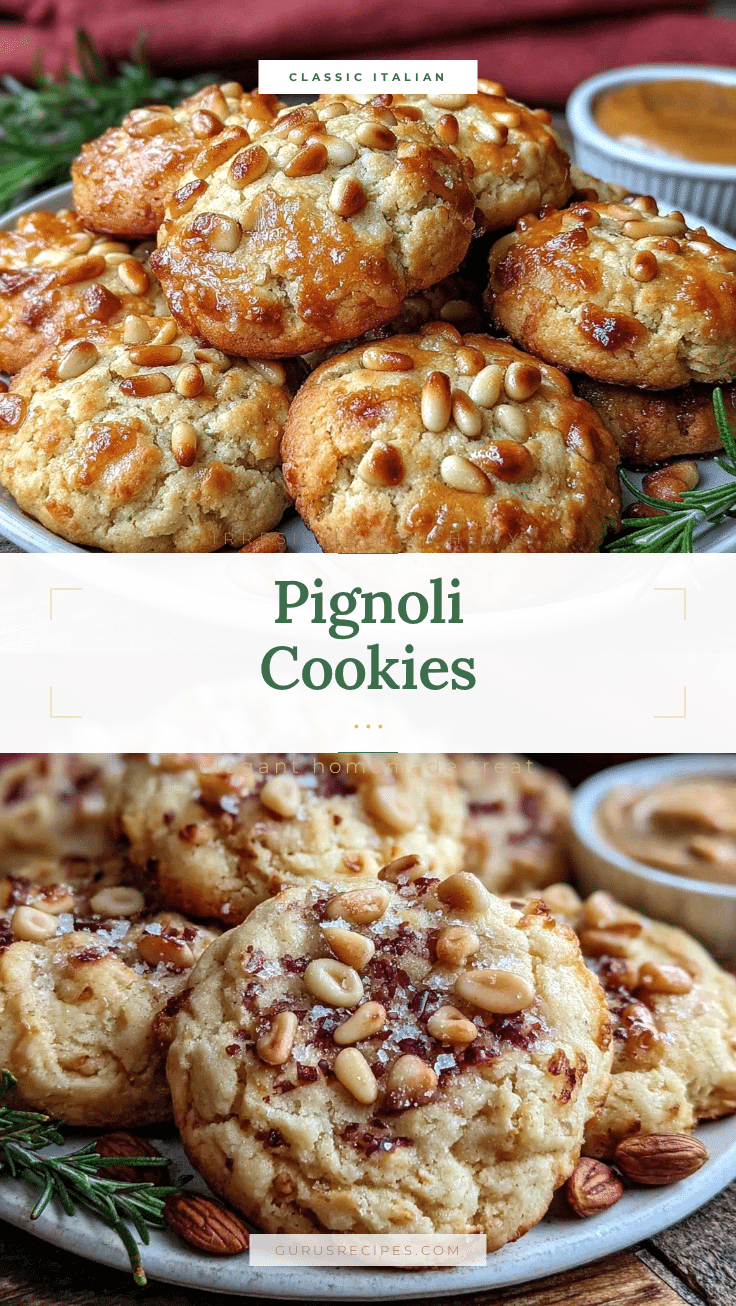

Pignoli Cookies Recipe: Easy Homemade Almond Paste Pine Nut Treats
Tender, chewy Italian pignoli cookies made with almond paste and topped with toasted pine nuts. These bakery-style treats are quick to make, naturally gluten-free, and perfect for gifting or enjoying with coffee.
- Total Time: 30-35 minutes
- Yield: 18-24 cookies 1x
Ingredients
- 8 oz almond paste (about 1 cup)
- 3/4 cup granulated sugar
- 2 large egg whites, at room temperature
- 1 cup pine nuts
- 2 tbsp all-purpose flour (optional, omit for gluten-free)
- 1/8 tsp salt
- Powdered sugar, for dusting (optional)
Instructions
- Line a large baking sheet with parchment paper or a silicone baking mat. Preheat oven to 350°F (175°C).
- Crumble almond paste into small pieces in a mixing bowl or pulse in a food processor until pea-sized.
- Add granulated sugar and salt. Blend with an electric mixer or food processor on medium until mixture resembles coarse sand.
- Add egg whites and beat on medium until dough is smooth and sticky, about 2 minutes. If almond paste is dry, add 1-2 tsp water or a splash of almond extract.
- If dough is runny, fold in all-purpose flour.
- Use a small cookie scoop or spoon to portion 1-inch balls of dough. Roll gently between palms (dampen hands if sticky).
- Place pine nuts in a shallow bowl. Roll each dough ball in pine nuts, pressing gently to coat. Arrange on baking sheet, spaced 2 inches apart.
- Bake for 18-22 minutes, until pine nuts are golden and edges are lightly browned. Check at 16 minutes if oven runs hot.
- Cool cookies on baking sheet for 5 minutes, then transfer to wire rack to cool completely.
- Optional: Dust cooled cookies with powdered sugar.
Notes
For gluten-free cookies, use almond flour instead of all-purpose flour or omit flour entirely. Dough should be sticky for pine nuts to adhere; add a teaspoon of water or almond extract if dry. Space cookies well to prevent merging. Pine nuts toast quickly, so watch closely near the end of baking. Store in an airtight container for up to 5 days or freeze for longer storage.
- Prep Time: 10 minutes
- Cook Time: 18-22 minutes
- Category: Dessert
- Cuisine: Italian
Nutrition
- Serving Size: 1 cookie (about 30 g
- Calories: 110
- Sugar: 9
- Sodium: 20
- Fat: 7
- Saturated Fat: 0.7
- Carbohydrates: 11
- Fiber: 1
- Protein: 2
Keywords: pignoli cookies, almond paste cookies, Italian cookies, pine nut cookies, gluten-free dessert, holiday cookies, bakery cookies, easy cookie recipe