Introduction
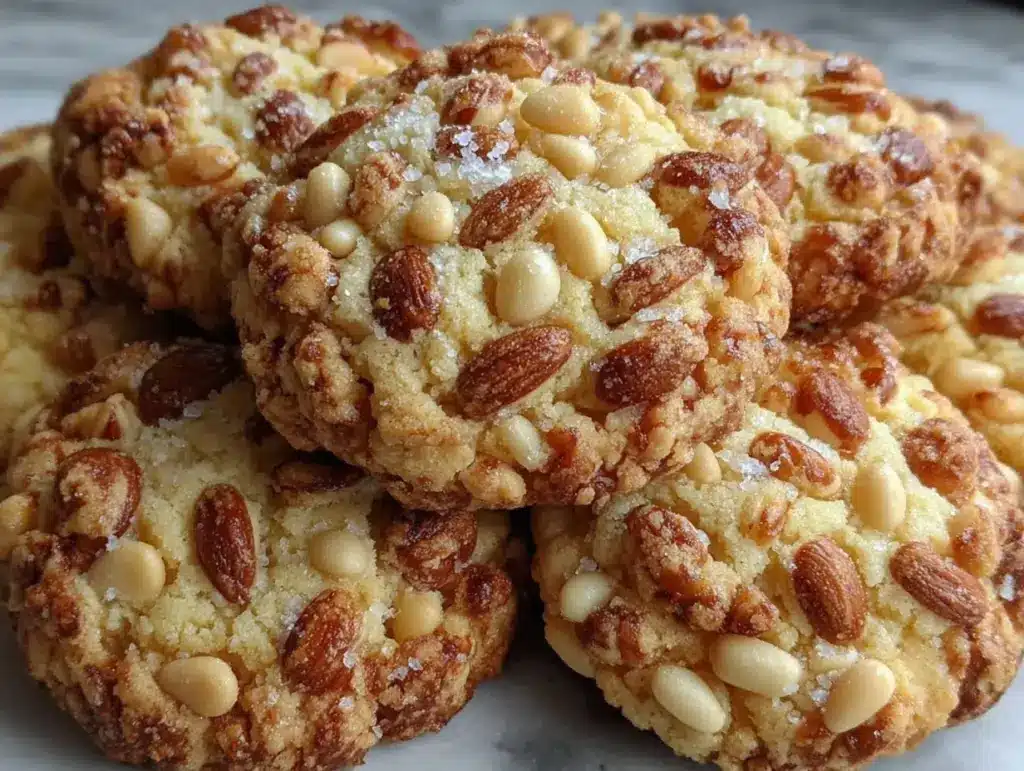
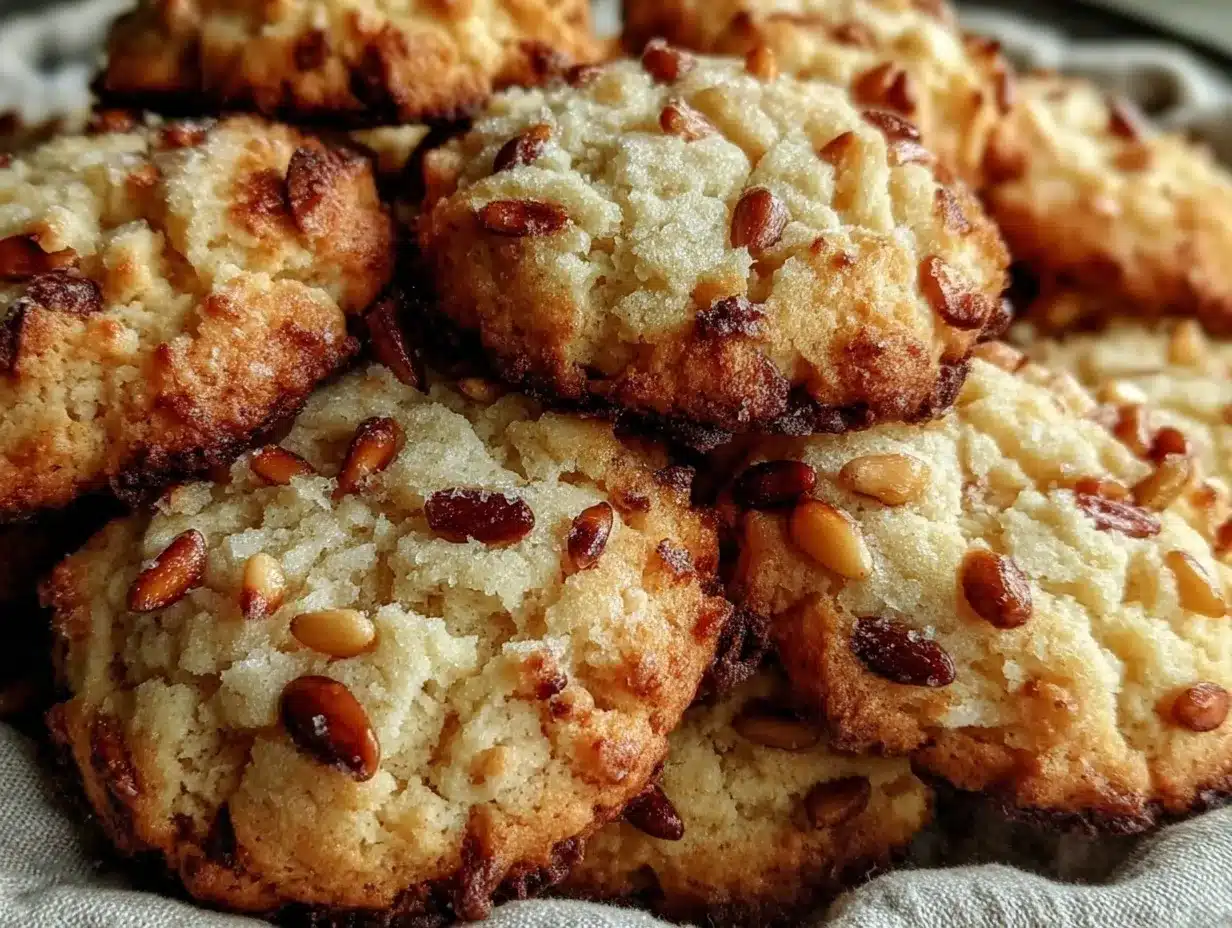
Let me tell you, the aroma of almond and pine nuts mingling in my kitchen as these pignoli cookies bake is pure magic. It’s like stepping into a bustling Italian bakery in the heart of Sicily—warm, sweet, and inviting. The first time I bit into a pignoli cookie, I remember feeling a soft crunch from those gorgeous golden pine nuts, followed by a chewy, marzipan-like center that just melts away. It was the kind of moment where you pause, take a deep breath, and just smile because you know you’re onto something truly special.
Years ago, when I was knee-high to a grasshopper, my grandmother would make these for the holidays. She’d enlist me to help roll the cookies in pine nuts (mostly because my little hands could handle the sticky dough without complaint!). I stumbled upon the recipe again on a rainy weekend, trying to recreate that nostalgic treat for my own family. Honestly, I wish I’d rediscovered these pignoli cookies years ago—they’re dangerously easy and deliver pure, nostalgic comfort.
My family couldn’t stop sneaking them off the cooling rack (and I can’t really blame them). You know what? There’s something about the way pignoli cookies bring people together—whether it’s for a potluck, a sweet treat for your kids after school, or just to brighten up your Pinterest cookie board. Every time I test this recipe (in the name of research, of course), it quickly becomes a staple for family gatherings, gifting, or those moments when you just need a warm hug in cookie form. You’re going to want to bookmark this one!
Why You’ll Love This Recipe
After countless batches and taste tests—some successful, some hilariously sticky—I can confidently say this pignoli cookies recipe is a keeper. It’s got that irresistible Italian flair, but with simple steps that even beginners can master. Here’s why you’ll fall for these cookies (just like I did):
- Quick & Easy: Comes together in under 30 minutes, perfect for busy weeknights or when you need a last-minute dessert.
- Simple Ingredients: No fancy grocery trips needed; you likely already have everything in your pantry except maybe the pine nuts.
- Perfect for Any Occasion: Great for brunch, potlucks, cozy dinners, holiday mornings, or simply a sweet treat to enjoy with coffee.
- Crowd-Pleaser: Always gets rave reviews from kids and adults alike—honestly, I’ve never seen them last more than a day.
- Unbelievably Delicious: The texture and flavor combo is next-level comfort food. Crisp pine nuts on the outside, tender almond inside.
What sets this pignoli cookies recipe apart? I blend the almond paste until it’s velvety smooth—no grainy bits—so every bite is melt-in-your-mouth perfection. I also use just a hint of salt to balance the sweetness, and let’s face it, the generous coating of golden pine nuts makes these cookies look straight out of a bakery window. It’s not just another version—it’s my best version, tested by my family and approved by friends who know their Italian treats.
This recipe isn’t just good—it’s the kind that makes you close your eyes after the first bite. It’s comfort food, but faster and lighter, with the same soul-soothing satisfaction. If you want to impress guests without stress, or turn a simple afternoon into something memorable, this pignoli cookies recipe is your answer.
What Ingredients You Will Need
This recipe uses simple, wholesome ingredients to deliver bold flavor and that classic chewy texture—no fuss required. Most of these are pantry staples, and the pine nuts are the only “specialty” ingredient, but they’re worth it for that signature crunch.
- For the dough:
- Almond paste – 8 oz (225g), crumbled (I recommend Odense or Solo brand for best flavor)
- Granulated sugar – 2/3 cup (135g)
- Egg whites – 2 large (about 60g, room temperature for best results)
- Salt – 1/8 teaspoon (balances the sweetness beautifully)
- Vanilla extract – 1/2 teaspoon (optional, but I love the subtle warmth it adds)
- For the topping:
- Pine nuts – 1 cup (120g), raw and freshest you can find (the golden color is key!)
- Powdered sugar – for dusting (optional, but gives a bakery-style finish)
A few ingredient notes from experience:
- Almond paste: Not marzipan! Almond paste is less sweet and has a higher almond content. If you’re in a pinch, you can make your own by blending blanched almonds and sugar with a splash of water.
- Pine nuts: Toast them lightly if you want extra flavor, but traditionally they’re used raw. Look for golden, plump pine nuts—avoid any that look shriveled.
- Egg whites: For a vegan twist, aquafaba (the liquid from canned chickpeas) works surprisingly well, though the texture is a tad softer.
- Substitution tips: If you need gluten-free, you’re already set! For nut allergies, sunflower seed paste and shelled sunflower seeds can be swapped in, though the flavor isn’t quite the same.
In summer, you can add a sprinkle of lemon zest for brightness. For a festive touch, a dash of orange blossom water is lovely. If you want a lower-sugar option, use coconut sugar (the color will be darker, but the taste is rich and caramel-like).
Equipment Needed
You don’t need much to make these pignoli cookies, which is honestly a relief. Here’s what I use every time:
- Mixing bowl – Medium size is perfect (any sturdy bowl will do)
- Electric mixer or food processor – For blending the almond paste and sugar together (I’ve tried both, and the food processor gives the smoothest texture)
- Baking sheet – Standard rimmed, lined with parchment paper (for easy cleanup)
- Small cookie scoop or tablespoon – Makes portioning the sticky dough way easier
- Spatula – For scraping the dough and transferring cookies
- Wire cooling rack – Helps the cookies firm up without getting soggy
If you don’t have a food processor, a hand mixer works fine, but expect a slightly chunkier dough. Parchment paper is your friend here—these cookies are sticky before baking. For budget-friendly options, I’ve used thrifted bowls and vintage baking sheets; just be sure they’re clean and non-reactive. Keep your mixer blades clean—almond paste is sticky and can clog up the works if you’re not careful!
Maintenance tip: If pine nuts get stuck on your baking sheet, soak in warm soapy water for ten minutes and they’ll wipe right off.
Preparation Method
-
Prep your baking sheet: Line a rimmed baking sheet with parchment paper. Preheat the oven to 350°F (175°C). Get your pine nuts ready in a shallow bowl.
Tip: Don’t skip the parchment—these cookies are sticky and can glue themselves to the pan! -
Make the dough: In a medium bowl (or food processor), crumble the almond paste. Add granulated sugar and salt. Blend on medium speed until the mixture is sandy and well combined—about 1 minute.
Note: If the almond paste clumps, break it up with your fingers first. -
Add egg whites: Pour in the egg whites and vanilla extract. Mix until a thick, sticky dough forms—another 1-2 minutes.
Sensory cue: The dough should look glossy and hold its shape but feel very sticky. -
Shape the cookies: Using a small cookie scoop or tablespoon, scoop out dough balls (about 1-inch/2.5cm wide). Drop each ball into the bowl of pine nuts and gently roll to coat.
Warning: Don’t overhandle—the dough is delicate and can get mushy if squeezed. -
Arrange on baking sheet: Place each pine nut-coated cookie on the prepared sheet, spacing about 2 inches (5cm) apart.
Efficiency tip: If the dough sticks to your hands, lightly wet your fingers. -
Bake: Bake for 18-20 minutes, until the pine nuts are golden and the cookies are just set but still soft.
Sensory cue: Watch for golden brown pine nuts and slightly cracked tops. -
Cool: Let cookies cool on the baking sheet for 5 minutes, then transfer to a wire rack to finish cooling.
Troubleshooting: If cookies spread too much, chill the dough for 10 minutes before baking. -
Dust with powdered sugar: Once fully cooled, sprinkle with powdered sugar for a classic finish.
Optional: Skip this if you prefer a less sweet cookie.
Personal tip: I always bake one test cookie first. If it spreads too much, I chill the dough for a bit. If it’s too dry, I add a teaspoon of egg white. Honestly, the dough is a little sticky—just work quickly and embrace the mess!
Cooking Tips & Techniques
Here’s what I’ve learned (sometimes the hard way) about making perfect pignoli cookies every time:
- Don’t overmix: The dough should be sticky, not runny. Overmixing leads to flat cookies that lose their chewy center.
- Chill the dough if needed: In warm kitchens, pop the dough in the fridge for 10 minutes. It makes shaping easier and helps the cookies hold their shape.
- Use fresh pine nuts: Old pine nuts can taste bitter. Taste one before using (trust me, I learned the hard way after a batch that tasted off!).
- Space cookies well: These do spread, so keep them at least 2 inches apart on the sheet.
- Watch the oven closely: Pine nuts toast fast. If your oven runs hot, check at 15 minutes.
- If cookies stick, use parchment: Wax paper doesn’t work as well (tried it, regretted it).
I’ve had failures—like cookies that merged into a single gooey blob (forgot to chill the dough!). Learned to work quickly and keep the dough cool. Timing matters: start prepping the pine nuts while the oven preheats to keep things moving. For consistency, always use the same scoop size and gently press the cookies into the pine nuts, don’t roll too hard.
If making a double batch, bake in separate trays or rotate halfway for even browning. The secret to success? Trust your senses—look for golden pine nuts and listen for that gentle crackle as they cool. The best pignoli cookies are the ones you make with patience (and maybe a little laughter when things get sticky).
Variations & Adaptations
The beauty of pignoli cookies is how easily they adapt to different tastes and dietary needs. Here are some favorite twists:
- Gluten-Free: These cookies are naturally gluten-free, but if you want to go grain-free too, swap powdered sugar for coconut sugar and use a dusting of almond flour instead.
- Vegan: Replace egg whites with 3 tablespoons aquafaba. The cookies come out a bit softer, but still delicious.
- Chocolate-Dipped: Once cooled, dip half of each cookie in melted dark chocolate, then set on parchment until firm. Adds a rich, bittersweet note.
- Seasonal flavors: Add lemon zest in spring, orange zest in winter, or a splash of almond liqueur for grown-up gatherings.
- Nut allergies: Use sunflower seed paste and shelled sunflower seeds. It’s not identical, but it’s a solid alternative for school treats.
I’ve tried swapping the pine nuts for slivered almonds when I was out of pine nuts—tasty, but missing that classic texture. For a festive look, mix in chopped dried cherries or cranberries. If you like extra crunch, sprinkle with turbinado sugar before baking. Honestly, the best variation is the one that fits your mood (or your pantry)!
Serving & Storage Suggestions
Pignoli cookies are best served fresh, at room temperature, when their centers are soft and the pine nuts are toasty. Arrange them on a pretty platter with a dusting of powdered sugar—they look gorgeous lined up for holiday trays or as an after-dinner treat.
Pair with espresso, strong coffee, or a glass of dessert wine for a classic Italian finish. These cookies also play well with a fruit salad or a scoop of vanilla gelato.
For storage, keep pignoli cookies in an airtight container at room temperature for up to 4 days. If you want to freeze them, layer between sheets of parchment and freeze for up to a month—thaw at room temperature before serving. To reheat, pop them in a 300°F (150°C) oven for 3-4 minutes to refresh the texture.
The flavor actually deepens after a day or two, with the almond notes becoming richer. Just don’t refrigerate—they’ll get chewy (in a bad way).
Nutritional Information & Benefits
Each pignoli cookie contains approximately 90 calories, 5g fat, 9g carbs, and 2g protein (based on a batch of 24 cookies). Pine nuts are a great source of healthy fats and vitamin E, while almond paste brings calcium and magnesium to the mix.
These are naturally gluten-free and lower in sugar than most bakery cookies. If you use coconut sugar, you’ll add a dose of minerals and lower the glycemic index. Watch out for nut allergies, though—pine nuts and almonds are both tree nuts.
Personally, I love that these cookies offer a satisfying treat with wholesome ingredients—no artificial flavors or preservatives. It’s comfort food, but with a little wellness boost, perfect for mindful snacking or sharing with friends.
Conclusion
There’s a reason why this pignoli cookies recipe is a favorite in my kitchen—it’s easy, memorable, and delivers that authentic Italian flavor every time. Whether you’re baking for family, friends, or just for yourself, these cookies always bring smiles and requests for seconds.
Customize them to suit your taste, swap ingredients as needed, and don’t be afraid to get a little messy—sometimes that’s where the best memories are made. Honestly, I love these cookies not just for the taste, but for the way they connect me to family and tradition.
If you try this pignoli cookies recipe, let me know how it goes—leave a comment, share your twist, or tag me with your Pinterest-worthy cookie boards! Happy baking, and here’s to sharing sweet moments (and even sweeter cookies).
FAQs
Can I use marzipan instead of almond paste for pignoli cookies?
No, marzipan is sweeter and has a different texture. Almond paste is less sweet and gives the classic chewy bite. If you use marzipan, your cookies may be too sugary and not hold together as well.
Do I need to toast the pine nuts before using them?
You can use raw pine nuts (that’s traditional), but toasting them lightly adds extra flavor. Just watch them closely—they burn fast!
Can I freeze pignoli cookies?
Absolutely! Layer them between parchment paper and freeze in an airtight container for up to a month. Let them thaw at room temperature before serving for best texture.
Are pignoli cookies gluten-free?
Yes, this recipe is naturally gluten-free since it uses almond paste and no flour. Just double-check your powdered sugar for any added starch if that’s a concern.
Why are my pignoli cookies spreading too much?
Usually, it’s due to warm dough or overmixing. Chill the dough for 10 minutes before baking, and make sure your measurements are precise. Using parchment paper also helps them hold their shape.
Pin This Recipe!

Pignoli Cookies Recipe: Easy Homemade Italian Treats with Golden Pine Nuts
These classic Italian pignoli cookies feature a chewy almond paste center and a crunchy pine nut coating. Quick to make and naturally gluten-free, they’re perfect for holidays, gifting, or a cozy coffee break.
- Total Time: 30 minutes
- Yield: 24 cookies 1x
Ingredients
- 8 oz almond paste (Odense or Solo brand recommended), crumbled
- 2/3 cup granulated sugar
- 2 large egg whites (about 60g), room temperature
- 1/8 teaspoon salt
- 1/2 teaspoon vanilla extract (optional)
- 1 cup raw pine nuts
- Powdered sugar, for dusting (optional)
Instructions
- Line a rimmed baking sheet with parchment paper. Preheat oven to 350°F (175°C). Place pine nuts in a shallow bowl.
- In a medium bowl or food processor, crumble almond paste. Add granulated sugar and salt. Blend on medium speed until sandy and well combined, about 1 minute.
- Add egg whites and vanilla extract. Mix until a thick, sticky dough forms, 1-2 minutes.
- Using a small cookie scoop or tablespoon, scoop 1-inch balls of dough. Drop each ball into the bowl of pine nuts and gently roll to coat.
- Place pine nut-coated cookies on the prepared baking sheet, spacing about 2 inches apart.
- Bake for 18-20 minutes, until pine nuts are golden and cookies are just set but still soft.
- Let cookies cool on the baking sheet for 5 minutes, then transfer to a wire rack to finish cooling.
- Once fully cooled, dust with powdered sugar if desired.
Notes
For best results, use fresh pine nuts and avoid overmixing the dough. If cookies spread too much, chill the dough for 10 minutes before baking. Almond paste is essential—do not substitute with marzipan. Cookies can be frozen for up to a month; thaw at room temperature before serving. For vegan adaptation, use 3 tablespoons aquafaba instead of egg whites.
- Prep Time: 10 minutes
- Cook Time: 18-20 minutes
- Category: Dessert
- Cuisine: Italian
Nutrition
- Serving Size: 1 cookie
- Calories: 90
- Sugar: 7
- Sodium: 20
- Fat: 5
- Saturated Fat: 0.5
- Carbohydrates: 9
- Fiber: 1
- Protein: 2
Keywords: pignoli cookies, Italian cookies, almond paste, pine nuts, gluten-free dessert, holiday cookies, easy cookie recipe