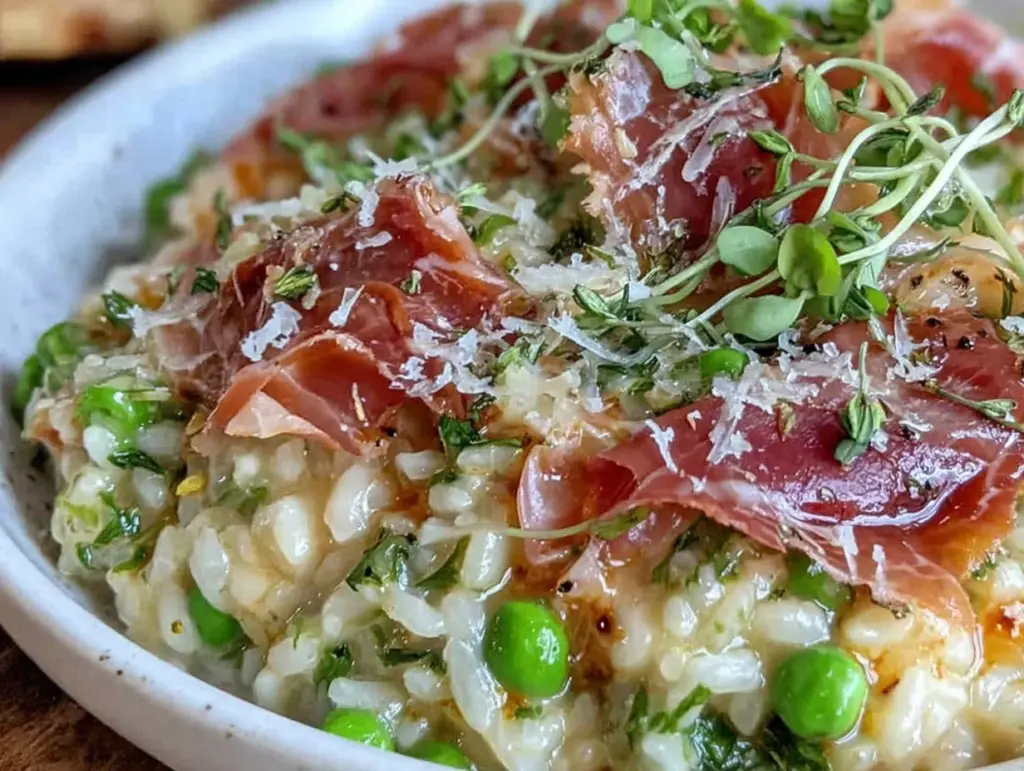
“Are you sure this is going to work?” my friend asked, eyeing the mound of Arborio rice and the handful of prosciutto slices on my counter. Honestly, I wasn’t that confident myself at first. I’d been in a rush, trying to throw together a dinner after a long day, and what started as a quick idea turned into something surprisingly delightful. The bright green spring peas caught my eye at the market earlier that day, begging to be used before their season slipped away. I thought, why not toss them into a risotto with the salty punch of prosciutto? Skeptical as I was, the creamy texture and the fresh burst of flavors made me pause—and then smile.
The kitchen smelled like spring itself, with the gentle hum of the stove and the soft stirring of the risotto. It wasn’t fancy, just real food made with what I had on hand. The prosciutto slices crisply browned, mingling with sweet peas and that luscious, almost buttery rice. It reminded me of those quiet nights when simple meals become little celebrations of the day’s small wins. Now, this creamy spring pea and prosciutto risotto is one of those dishes I keep coming back to—it’s comfort and freshness all wrapped in one bowl.
What stuck with me was how the risotto never felt heavy or overwhelming. It’s the kind of recipe that invites you to slow down, savor each bite, and maybe even close your eyes for a second or two. That balance of creamy, salty, and vibrant green flavors? Yeah, it’s a keeper.
Why You’ll Love This Recipe
This creamy spring pea and prosciutto risotto isn’t just another risotto recipe—it’s one that’s been tested and tweaked through multiple weeknight dinners and casual get-togethers. I promise, it’s worth the few extra minutes of stirring. Here’s why it should have a spot in your dinner rotation:
- Quick & Easy: Ready in about 35 minutes, it fits perfectly into busy evenings without feeling rushed.
- Simple Ingredients: No need for exotic items—Arborio rice, frozen or fresh peas, prosciutto, and a handful of pantry staples.
- Perfect for Spring & Early Summer: The fresh peas bring a seasonal brightness that feels like a mini celebration of the warmer months.
- Crowd-Pleaser: Whether for a family dinner or a casual dinner party, it always gets nods and requests for seconds.
- Unbelievably Delicious: The creamy texture combined with the salty prosciutto and fresh peas hits all the right notes.
What sets this risotto apart from the usual versions is the way the prosciutto crisps up just enough to add a delightful crunch and that smoky, savory depth. Plus, stirring in fresh lemon zest and a touch of Parmesan cheese gives this dish a brightness that makes you sit up and take notice. It’s comfort food reimagined—not heavy or greasy, but still deeply satisfying.
Honestly, after making this a handful of times, I’ve found it’s the kind of recipe that makes you close your eyes after the first bite and just savor the moment. It’s a simple dish that delivers a lot of joy.
What Ingredients You Will Need
This recipe uses simple, wholesome ingredients to deliver bold flavor and satisfying texture without the fuss. Most of these are pantry staples or easy to find in any grocery store, with fresh peas adding a seasonal pop. Here’s what you’ll gather:
- Arborio rice: 1 cup (200g) – the classic risotto rice, known for its creamy texture
- Chicken or vegetable broth: About 4 cups (1 liter), warmed – homemade or store-bought works fine
- Spring peas: 1 cup fresh or frozen – fresh is best in season, but frozen peas work beautifully too
- Prosciutto: 4 ounces (115g), thinly sliced – look for a good quality brand like San Daniele or Parma for authentic flavor
- Shallot: 1 small, finely chopped – adds a gentle sweetness
- Garlic: 2 cloves, minced – the subtle kick complements the peas and prosciutto
- Dry white wine: 1/2 cup (120ml) – optional but recommended for depth (like Pinot Grigio or Sauvignon Blanc)
- Parmesan cheese: 1/2 cup freshly grated (about 50g) – for that creamy finish and sharp flavor
- Butter: 2 tablespoons (about 28g), unsalted – for richness and silkiness
- Olive oil: 1 tablespoon – to sauté shallots and garlic
- Lemon zest: From 1 lemon – brightens the whole dish
- Fresh herbs (optional): A few sprigs of thyme or basil – adds fresh herbal notes
- Salt and black pepper: To taste
Substitutions? Use almond or oat milk mixed with broth for a dairy-free option, and swap Parmesan with a vegan cheese alternative if needed. If prosciutto isn’t your thing, pancetta or crispy bacon can be a nice twist. When fresh peas are out of season, frozen peas are a great stand-in and maintain that sweet pop.
Equipment Needed
- Heavy-bottomed saucepan or deep skillet: Ideal for even cooking and stirring risotto without burning.
- Wooden spoon or silicone spatula: Essential for stirring—the right tool makes all the difference to avoid scraping the pan.
- Measuring cups and spoons: For precise liquid and seasoning measurements.
- Fine grater or microplane: To zest the lemon and grate Parmesan finely.
- Ladle: Helpful for adding warm broth gradually.
- Small bowl: To keep warm broth ready for gradual addition.
If you don’t have a heavy-bottomed pan, a good-quality non-stick skillet can work, but keep an eye on temperature to prevent sticking. I’ve found that a wooden spoon is better than metal here because it’s gentler on both the rice and the pan surface, especially when you’re stirring for 20 minutes straight.
Preparation Method
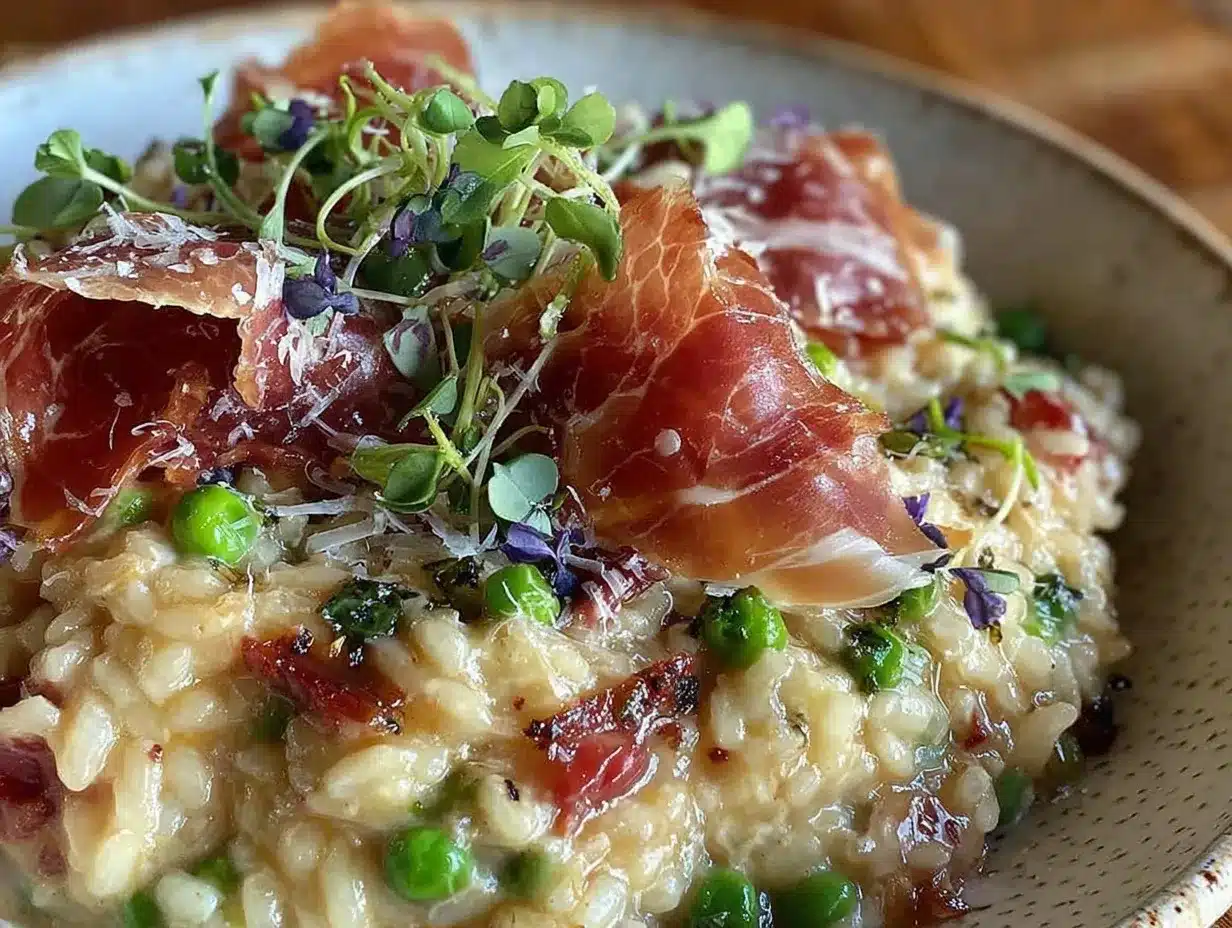
- Warm the broth: Pour 4 cups (1 liter) of chicken or vegetable broth into a saucepan and keep it simmering gently on low heat while you prepare the risotto. This helps the rice cook evenly and absorb flavors better. (About 5 minutes)
- Cook prosciutto: Heat 1 tablespoon olive oil in your main pan over medium heat. Add 4 ounces (115g) of sliced prosciutto and cook until crisp but not burnt, about 3-4 minutes. Remove with a slotted spoon and set aside on paper towels to drain. (Keep the oil and drippings in the pan.)
- Sauté aromatics: In the same pan, add 2 tablespoons unsalted butter. Once melted, add the finely chopped shallot (1 small) and sauté until translucent and fragrant, about 2-3 minutes. Toss in 2 minced garlic cloves and cook for another 30 seconds to release aroma.
- Toast rice: Add 1 cup (200g) Arborio rice to the pan, stirring constantly to coat each grain with butter and oil. Toast the rice for 2 minutes until slightly translucent at the edges but still opaque in the center. This step locks in the nutty flavor.
- Deglaze with wine: Pour in 1/2 cup (120ml) dry white wine and stir until mostly absorbed. This adds a subtle acidity and depth to balance the creaminess.
- Add broth gradually: Begin ladling warm broth, about 1/2 cup (120ml) at a time, stirring frequently. Wait until the liquid is nearly absorbed before adding more. This slow process releases the rice’s starch, creating that signature creamy texture. Continue for about 18-20 minutes until rice is tender but still has a slight bite.
- Incorporate peas: When the risotto is almost done (about 3-4 minutes before finishing), stir in 1 cup fresh or frozen peas. They’ll cook quickly and add bursts of sweetness and color.
- Finish with cheese and zest: Remove the pan from heat. Stir in the crispy prosciutto, 1/2 cup (50g) freshly grated Parmesan, and the zest of 1 lemon. Adjust salt and black pepper to taste. For extra freshness, add chopped thyme or basil if using.
- Rest and serve: Let the risotto rest for a minute or two to thicken slightly. Serve warm, garnished with a sprinkle of Parmesan and a drizzle of good olive oil if you like.
Keep an eye on the texture throughout—risotto should be creamy and flow gently on the plate, not dry or mushy. If it feels too thick, add a splash more broth or even a little warm water.
Cooking Tips & Techniques
Risotto can seem intimidating, but once you get the hang of it, it’s straightforward—and honestly kind of therapeutic. Here’s what I’ve learned through trial, error, and a few too many batches:
- Keep broth warm: Adding cold broth slows down cooking and can cause uneven texture. Always ladle in warm broth.
- Stir, but not constantly: You want to keep the rice moving enough to prevent sticking, but it’s okay to pause briefly between stirs to let the rice absorb liquid.
- Choose the right rice: Arborio is forgiving and widely available, but Carnaroli or Vialone Nano are great alternatives if you want a silkier finish.
- Don’t rush the liquid addition: Adding broth too fast leads to mushy rice. Patience is key for that perfect al dente bite.
- Use quality ingredients: Prosciutto and Parmesan make a big flavor difference. I like Parma prosciutto and freshly grated Parmigiano-Reggiano for authenticity.
- Adjust seasoning carefully: Remember prosciutto and Parmesan add saltiness, so taste before adding extra salt.
One time I was in a rush and dumped all the broth in at once—let’s just say it was more like pea porridge than risotto! These little lessons make all the difference.
Variations & Adaptations
This recipe is a flexible canvas, so feel free to make it your own:
- Vegetarian version: Skip the prosciutto and add more peas or swap in sautéed mushrooms or asparagus for extra texture and flavor.
- Vegan adaptation: Use vegetable broth, plant-based butter, and a vegan parmesan substitute or nutritional yeast for cheesy flavor.
- Herb twists: Try stirring in fresh mint or tarragon instead of thyme for a unique fresh herb note that pairs beautifully with peas.
- Seasonal swaps: In early summer, add fresh asparagus tips or fava beans alongside peas for a lovely seasonal medley.
- Alternative proteins: Replace prosciutto with crispy pancetta, bacon, or even grilled chicken strips for a different take.
I once tried this with a handful of fresh peas and dollops of ricotta stirred in at the end instead of Parmesan. It was luscious and creamy in a totally different way, and my dinner guests couldn’t get enough.
Serving & Storage Suggestions
Risotto is best enjoyed fresh, ideally right off the stove when it’s warm, creamy, and full of flavor. Serve it in shallow bowls for an inviting presentation, garnished with a bit more Parmesan and a few herb leaves for color.
This dish pairs beautifully with a crisp green salad or a simple side of roasted vegetables. For drinks, a chilled glass of Pinot Grigio or a sparkling water with lemon complements the flavors nicely.
If you have leftovers, store them in an airtight container in the refrigerator for up to 2 days. When reheating, add a splash of broth or water and gently warm on the stove while stirring to bring back the creamy texture. Microwave works too, but stir halfway through to heat evenly.
Keep in mind, risotto tends to thicken as it cools, so loosening it up with a little extra liquid during reheating is key. Flavors also mellow and blend, so leftovers can sometimes taste even better the next day.
Nutritional Information & Benefits
This creamy spring pea and prosciutto risotto offers a balanced mix of carbs, protein, and fats, making it a satisfying meal. A typical serving (about 1 1/2 cups or 350g) contains approximately:
| Nutrient | Amount per serving |
|---|---|
| Calories | 450-500 kcal |
| Protein | 18 g |
| Carbohydrates | 55 g |
| Fat | 15 g |
| Fiber | 4 g |
Peas bring a good dose of fiber, vitamin C, and antioxidants, while prosciutto adds protein and iron. The Parmesan cheese contributes calcium and flavor without overwhelming fat content. For those watching gluten, this recipe is naturally gluten-free as long as your broth is gluten-free.
I appreciate this dish as a real-food option that feels nourishing and delicious without overcomplicating ingredients or preparation. It’s a meal that satisfies hunger and mood alike.
Conclusion
For a dish that’s creamy, fresh, and packed with flavor, this creamy spring pea and prosciutto risotto hits the mark every time. It’s approachable enough for a weeknight but impressive enough to serve guests without stress. The combination of sweet peas, salty prosciutto, and zesty lemon makes it feel special, yet it’s made from simple, accessible ingredients.
Don’t hesitate to tweak it based on your pantry or taste buds—risotto is forgiving and flexible. Personally, I love how it brings a bit of spring into the kitchen, even on an ordinary day.
Give this recipe a whirl, and if you try variations or have tips of your own, I’d love to hear about them in the comments. There’s nothing better than swapping notes on a dish that feels like a warm hug on a plate.
FAQs about Creamy Spring Pea and Prosciutto Risotto
Can I make this risotto without wine?
Yes! If you prefer to skip the wine, just replace it with an equal amount of warm broth. The risotto will still be flavorful and creamy.
Is it okay to use frozen peas?
Absolutely. Frozen peas are actually great because they’re picked and frozen at peak freshness, so they retain their sweetness and texture well.
How do I know when the risotto is done?
The rice should be tender but still have a slight bite in the center—al dente. It should be creamy and flowing on the plate, not dry or mushy.
Can I prepare risotto ahead of time?
Risotto is best fresh, but you can make it a day ahead and gently reheat with a splash of broth. Avoid making it too far in advance, as texture changes.
What can I serve alongside this risotto?
A crisp green salad, roasted vegetables, or light grilled chicken pairs nicely. For drinks, a dry white wine or sparkling water with lemon complements the fresh flavors well.
For more cozy and creamy recipes, you might enjoy the creamy loaded baked potato soup or the easy no-knead rosemary sea salt bread which pairs beautifully with rich dishes like this risotto.
Pin This Recipe!
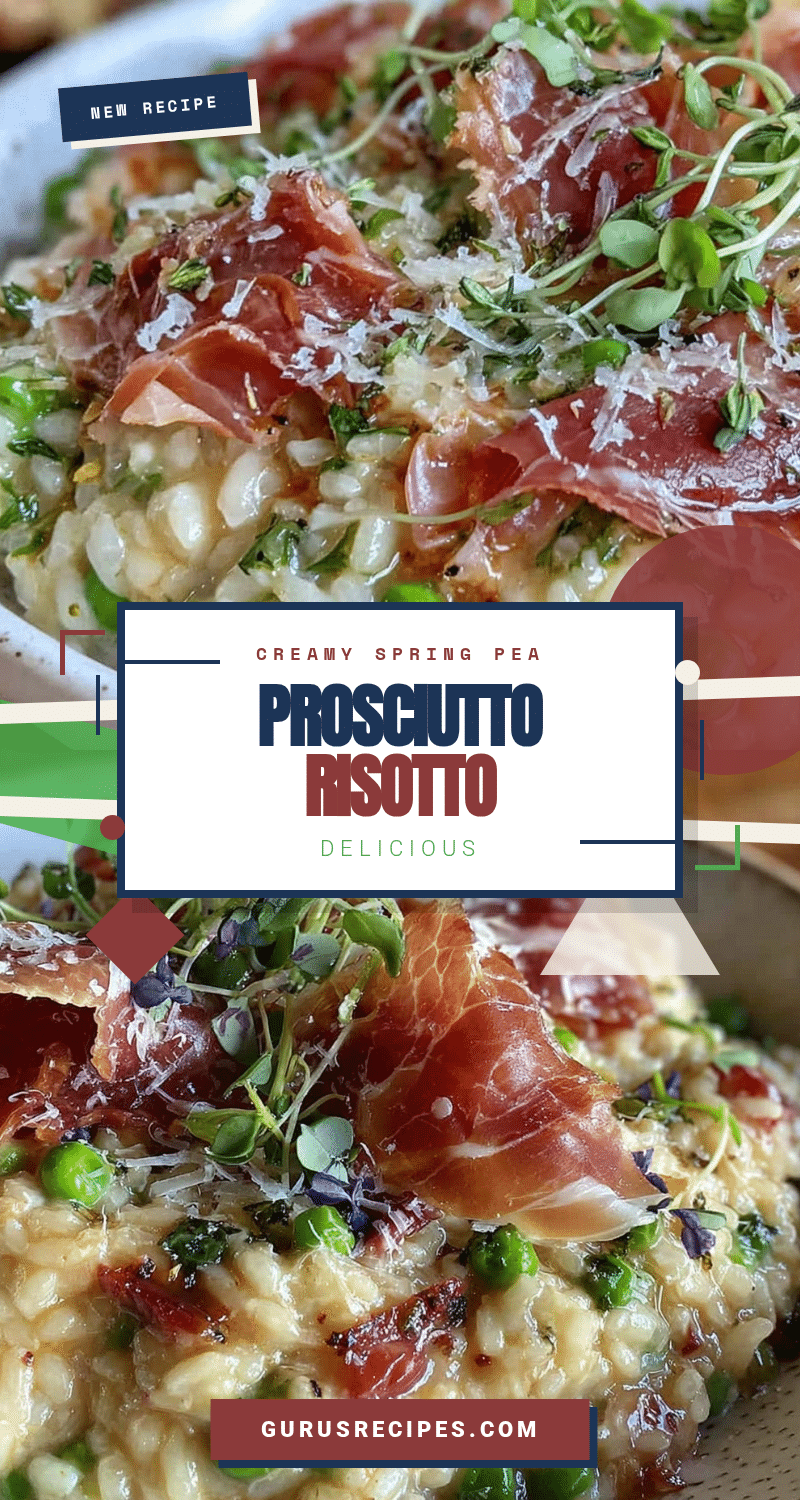

Creamy Spring Pea and Prosciutto Risotto
A creamy and fresh risotto featuring Arborio rice, spring peas, and crispy prosciutto, finished with lemon zest and Parmesan cheese. Perfect for a quick, flavorful weeknight dinner.
- Total Time: 35 minutes
- Yield: 4 servings 1x
Ingredients
- 1 cup (200g) Arborio rice
- 4 cups (1 liter) chicken or vegetable broth, warmed
- 1 cup fresh or frozen spring peas
- 4 ounces (115g) prosciutto, thinly sliced
- 1 small shallot, finely chopped
- 2 cloves garlic, minced
- 1/2 cup (120ml) dry white wine (optional)
- 1/2 cup (50g) freshly grated Parmesan cheese
- 2 tablespoons (28g) unsalted butter
- 1 tablespoon olive oil
- Zest of 1 lemon
- Fresh herbs (thyme or basil), optional
- Salt and black pepper to taste
Instructions
- Warm the broth in a saucepan and keep it simmering gently on low heat.
- Heat olive oil in a pan over medium heat. Add prosciutto and cook until crisp, about 3-4 minutes. Remove and drain on paper towels, keeping the oil in the pan.
- Add butter to the pan. Once melted, sauté shallot until translucent, about 2-3 minutes. Add garlic and cook for 30 seconds.
- Add Arborio rice and toast for 2 minutes, stirring constantly.
- Pour in white wine and stir until mostly absorbed.
- Add warm broth gradually, about 1/2 cup at a time, stirring frequently and waiting until liquid is nearly absorbed before adding more. Continue for 18-20 minutes until rice is tender but still slightly firm.
- Stir in peas about 3-4 minutes before the risotto is done.
- Remove from heat and stir in crispy prosciutto, Parmesan cheese, and lemon zest. Adjust seasoning with salt and pepper. Add fresh herbs if using.
- Let risotto rest for 1-2 minutes to thicken slightly. Serve warm, garnished with extra Parmesan and a drizzle of olive oil if desired.
Notes
Keep broth warm to ensure even cooking. Stir frequently but allow rice to absorb liquid between stirs. Use quality prosciutto and Parmesan for best flavor. Adjust salt carefully as prosciutto and Parmesan add saltiness. If risotto is too thick, add a splash of broth or warm water.
- Prep Time: 10 minutes
- Cook Time: 25 minutes
- Category: Main Course
- Cuisine: Italian
Nutrition
- Serving Size: About 1 1/2 cups (35
- Calories: 475
- Sugar: 4
- Sodium: 700
- Fat: 15
- Saturated Fat: 7
- Carbohydrates: 55
- Fiber: 4
- Protein: 18
Keywords: risotto, spring peas, prosciutto, creamy risotto, easy dinner, Arborio rice, Parmesan, lemon zest