
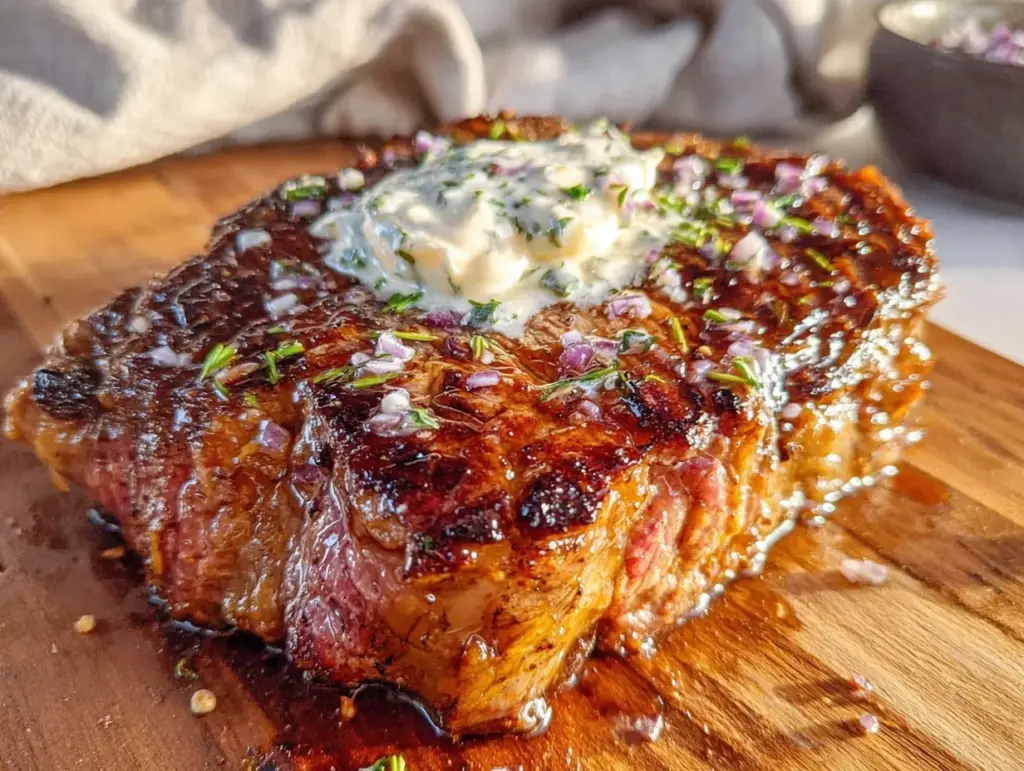
“You really can’t rush a good steak.” That’s what my friend Mark joked the night he swapped his usual fast pan-fry for the reverse sear method I’d been raving about. I remember the moment vividly—his skeptical gaze as he poked the thick ribeye with a meat thermometer, muttering something about “all this fuss for steak.” But then came the bite, the slow-melting warmth, the crust that whispered smoky secrets. Honestly, it was the kind of steak that makes you pause mid-chew and just nod silently, like you’ve discovered something quietly brilliant.
This perfect reverse seared ribeye steak with herb compound butter crept into my weekly rotation after that dinner. I couldn’t stop making it—not because it was complicated, but because it rewarded patience with every juicy, tender bite. The herb butter, a simple mix of fresh parsley, thyme, and garlic, melts over the steak like a soft blanket, tying everything together in a way that feels both rustic and fancy.
There’s something about the ritual of slow-cooking the steak first, then searing it hot and fast, that turns an ordinary cut into a centerpiece. It’s not just the flavor, but the way it fills the kitchen with that irresistible aroma—the kind that lingers long after the plate is empty. If you’ve ever wondered whether a ribeye could be better than your local steakhouse’s offering, this recipe might just be the quiet proof you need.
Why You’ll Love This Recipe
- Quick & Easy: With just about 45 minutes from start to finish, this method fits perfectly into busy weeknights or relaxed weekend dinners.
- Simple Ingredients: No exotic spices or mystery cuts—just a quality ribeye, fresh herbs, and pantry staples you likely have on hand.
- Perfect for Dinner Parties: The reverse sear ensures consistent doneness, so you can impress guests without hovering over the stove.
- Crowd-Pleaser: Even steak skeptics at my table ask for seconds—kids and adults alike love the rich, juicy texture.
- Unbelievably Delicious: The crust’s deep caramelization paired with the creamy, fragrant herb butter creates a flavor combo that’s downright addictive.
This isn’t just another steak recipe you bookmark and forget. The reverse sear technique guarantees even cooking edge-to-edge, avoiding that dreaded gray band you sometimes get with traditional pan-searing. Plus, the herb compound butter is a game-changer—it’s easy to whip up and adds layers of freshness and depth. I even found that pairing this steak with a simple side like my no-knead cheddar bread makes the meal feel like a special occasion without the stress.
In short, this recipe delivers steakhouse-worthy results at home, with a technique that’s more about patience than skill. It’s the kind of dish where you close your eyes after the first bite and just savor the moment—a little indulgence that feels totally deserved.
What Ingredients You Will Need
This recipe uses straightforward, quality ingredients that work together to highlight the steak’s natural flavor and the herb butter’s bright notes. Most are pantry staples, with fresh herbs adding that final pop.
- Ribeye Steak: 1 thick-cut ribeye (about 1.5 to 2 inches thick, 12-16 oz/340-450g). Look for well-marbled meat for the best juicy results. I prefer USDA Choice grade for balance of flavor and price.
- Salt & Pepper: Coarse kosher salt and freshly cracked black pepper are essential for seasoning. I recommend Maldon sea salt flakes for an even crust.
- Unsalted Butter: 4 tablespoons (about 60g), softened. Use a high-quality European-style butter if you can find it—for that creamy richness.
- Fresh Herbs:
- 1 tablespoon finely chopped fresh parsley (adds brightness)
- 1 teaspoon fresh thyme leaves (earthy depth)
- 1 teaspoon fresh rosemary, finely chopped (optional, for piney aroma)
- Garlic: 1 clove, minced (for the herb butter)
- Olive Oil or Neutral Oil: 1 tablespoon for the final sear (helps create that perfect crust)
For a little twist, I sometimes swap rosemary for tarragon or basil, depending on what’s fresh in my garden. And if you need a dairy-free option, coconut oil can replace butter in the compound mix, though it changes the flavor a bit. This recipe also pairs beautifully with a simple pan sauce made from deglazing the skillet with a splash of red wine or beef broth.
Equipment Needed
- Oven-Safe Wire Rack: Essential for evenly cooking the steak in the oven without it sitting in its own juices. If you don’t have one, a rimmed baking sheet lined with foil works.
- Meat Thermometer: A must-have to nail the internal temperature and avoid guesswork. I swear by my instant-read thermometer for accuracy.
- Cast Iron Skillet or Heavy-Bottomed Pan: For that intense, even sear that caramelizes the crust beautifully.
- Mixing Bowl: To whip up the herb compound butter quickly.
- Spatula or Butter Knife: For spreading the compound butter on the hot steak.
If you’re on a budget, you can find affordable cast iron skillets that perform well; just remember to season them properly to prevent sticking. The wire rack is often overlooked but really helps avoid steaming the steak during the oven phase, which is key for that perfect texture.
Preparation Method
- Preheat Oven and Prepare Steak (15 minutes): Preheat your oven to 275°F (135°C). Take the ribeye out of the fridge 30 minutes before cooking to reach room temperature. Pat the steak dry with paper towels—this helps the crust form later.
- Season the Steak (5 minutes): Generously season both sides of the ribeye with kosher salt and freshly cracked black pepper. Don’t be shy; the salt draws out moisture initially but then helps create a flavorful crust.
- Set Up for Oven Cooking (2 minutes): Place the steak on an oven-safe wire rack set over a baking sheet to catch drippings. Insert the meat thermometer probe into the thickest part of the steak to monitor temperature accurately.
- Slow Roast in Oven (20-30 minutes): Roast the steak until the internal temperature reaches about 120°F (49°C) for rare, 125°F (52°C) for medium-rare. This usually takes 20-30 minutes depending on steak thickness. Keep an eye on the thermometer; this is crucial for the reverse sear method.
- Make the Herb Compound Butter (while steak roasts): In a small bowl, combine softened butter, minced garlic, chopped parsley, thyme, and rosemary. Mix well and set aside. It’s best if it sits at room temperature so it spreads easily later.
- Heat the Skillet (5 minutes): Once the steak reaches the target temperature, heat your cast iron skillet over high heat with 1 tablespoon of oil until it’s smoking hot. This step creates that irresistible crust.
- Sear the Steak (2 minutes per side): Place the steak in the hot pan and sear each side for about 2 minutes until a deep brown crust forms. Don’t forget to sear the edges—hold the steak with tongs to get those sides too.
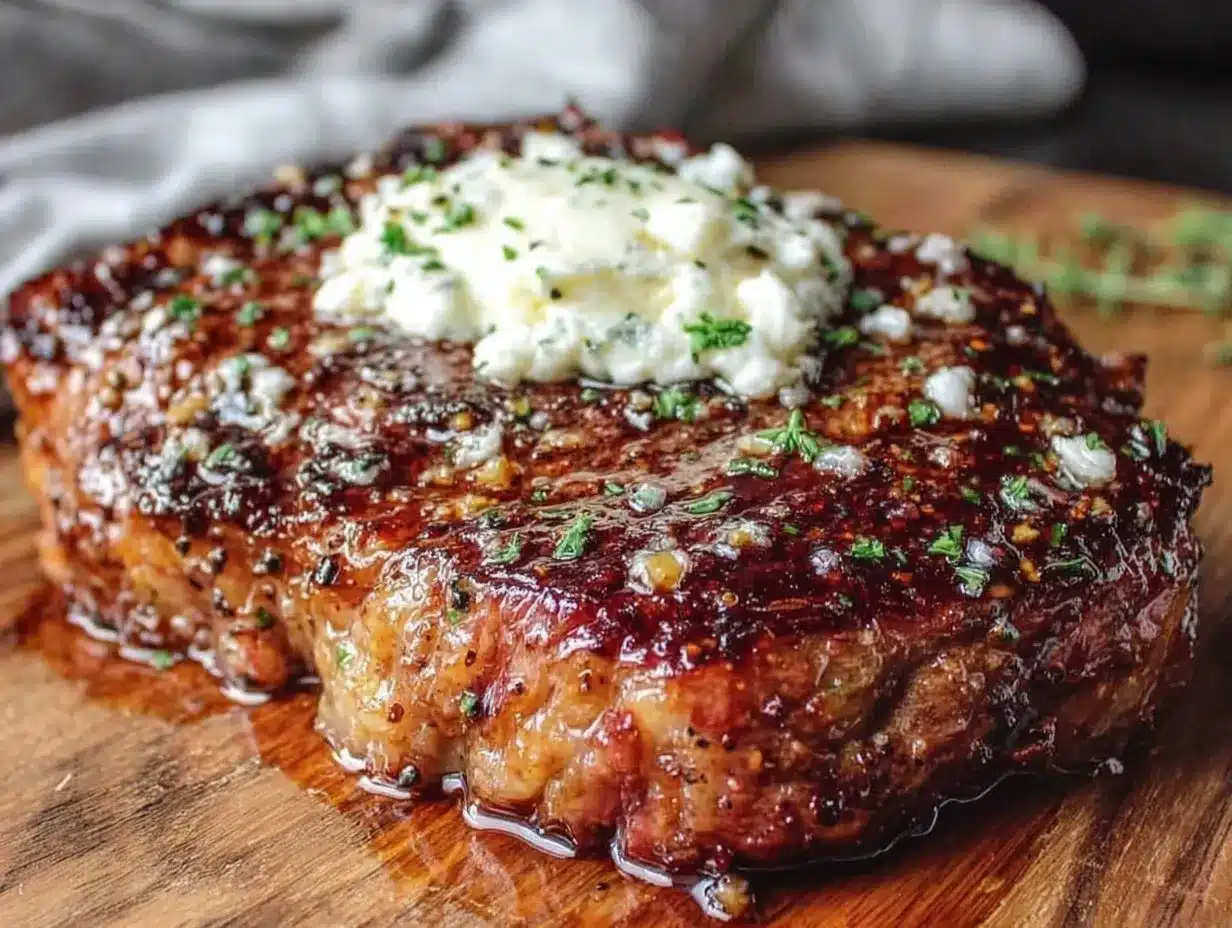
- Rest and Butter (5 minutes): Remove the steak from the skillet and let it rest on a cutting board for 5 minutes. Then, spread the herb compound butter generously over the top while the steak is still warm—the butter will melt luxuriously into every crevice.
- Slice and Serve: Cut against the grain into thick slices and serve immediately.
Pro tip: If the steak seems to brown too fast during searing, lower the heat slightly to avoid burning. Also, resting is non-negotiable—it lets the juices redistribute so every bite stays juicy. I once rushed this step and ended up with a dry steak, so trust me on this.
Cooking Tips & Techniques
One of the biggest errors with steak is overcooking the outer edges while trying to get the center just right. That’s where the reverse sear shines—you slowly bring the steak to temperature in the oven first, so the inside cooks evenly.
Using a reliable meat thermometer is the secret weapon. Guesswork? Forget it. I’ve learned the hard way that relying on time alone can lead to disappointment. Also, drying the steak thoroughly before seasoning helps get that crust crisp instead of soggy.
When searing, get your pan smoking hot and use an oil with a high smoke point like grapeseed or avocado oil. Butter alone burns too fast. I usually add the butter after the crust forms for flavor without scorching.
Timing-wise, multitask by prepping your compound butter while the steak roasts. It saves time and makes the process feel smooth rather than rushed. And remember, don’t poke or press the steak while searing—it squeezes out precious juices.
Variations & Adaptations
- Dietary Swap: For a dairy-free herb butter, substitute softened coconut oil or vegan margarine. The flavor changes but it still adds richness.
- Flavor Twist: Add a pinch of smoked paprika or cayenne to the butter for a smoky or spicy kick. I tried this once for a backyard BBQ and it was a hit.
- Cooking Method: If you prefer grilling, slow roast the steak in an oven bag at 275°F (135°C) then finish on a hot grill for searing.
- Herb Variations: Swap thyme and rosemary for fresh oregano and basil for a Mediterranean flair.
- Smaller Cuts: This method works beautifully for thick New York strip steaks or even bone-in pork chops—just adjust timing slightly.
Serving & Storage Suggestions
This ribeye shines best served hot, right after resting and buttering. I like to plate it with a rustic side like roasted garlic rosemary bread, which soaks up the buttery steak juices perfectly.
For beverages, a bold red wine like Cabernet Sauvignon pairs wonderfully, but a cold craft beer also works for a casual vibe.
Leftovers? Wrap the steak tightly in foil and refrigerate for up to 3 days. Reheat gently in a low oven (250°F/120°C) to avoid overcooking, then refresh the sear in a hot pan for a minute.
Flavor improves slightly after resting overnight as the herb butter infuses deeper, so don’t hesitate to prepare the butter a day ahead for extra punch.
Nutritional Information & Benefits
This ribeye steak recipe packs a solid protein punch—about 60 grams per serving—fueling muscle repair and satiety. The butter adds richness and fat, which helps absorb fat-soluble vitamins from the herbs.
Fresh herbs bring antioxidants and a touch of vitamin C, supporting overall health. While ribeye is higher in fat than leaner cuts, the reverse sear method avoids charring or burning, reducing harmful compounds.
If you’re mindful of carbs, this recipe fits perfectly into low-carb or ketogenic eating styles. Just pair it with a green veggie or side salad for balanced nutrition. Be aware that the butter contains dairy, so those with allergies should substitute accordingly.
Conclusion
The perfect reverse seared ribeye steak with herb compound butter is more than just a meal—it’s a small ceremony of patience, flavor, and simple pleasures. It’s the kind of recipe that sticks with you because it rewards care with every tender, juicy bite. Whether it’s a quiet dinner for one or a celebratory feast, this steak delivers dependable, crowd-pleasing excellence.
Feel free to tweak the herbs, seasoning, or sides to make it your own. For me, the ritual of slow-roasting and searing, crowned with that melting herb butter, is a reminder that great food doesn’t have to be complicated—it just needs time and love.
If you try this recipe, I’d love to hear how it goes or any twists you add. Sharing your experience is what keeps these recipes alive and evolving. Here’s to many happy steak nights ahead!
FAQs
- What is reverse searing and why is it better?
Reverse searing involves slow-cooking the steak in the oven first, then searing it hot for a crust. This method cooks the steak evenly and prevents overcooked edges. - Can I use a different cut of steak?
Yes, thick cuts like New York strip or porterhouse work well with reverse searing. Adjust timing based on thickness. - How do I know when the steak is done?
Use an instant-read thermometer and target 120°F (49°C) for rare, 125°F (52°C) for medium-rare before searing. - Can I prepare the herb compound butter ahead of time?
Absolutely! It can be made a day in advance and kept refrigerated. Bring to room temperature before spreading on the steak. - What sides go well with this steak?
Rustic breads like no-knead cheddar bread, roasted vegetables, or a fresh salad complement the richness nicely.
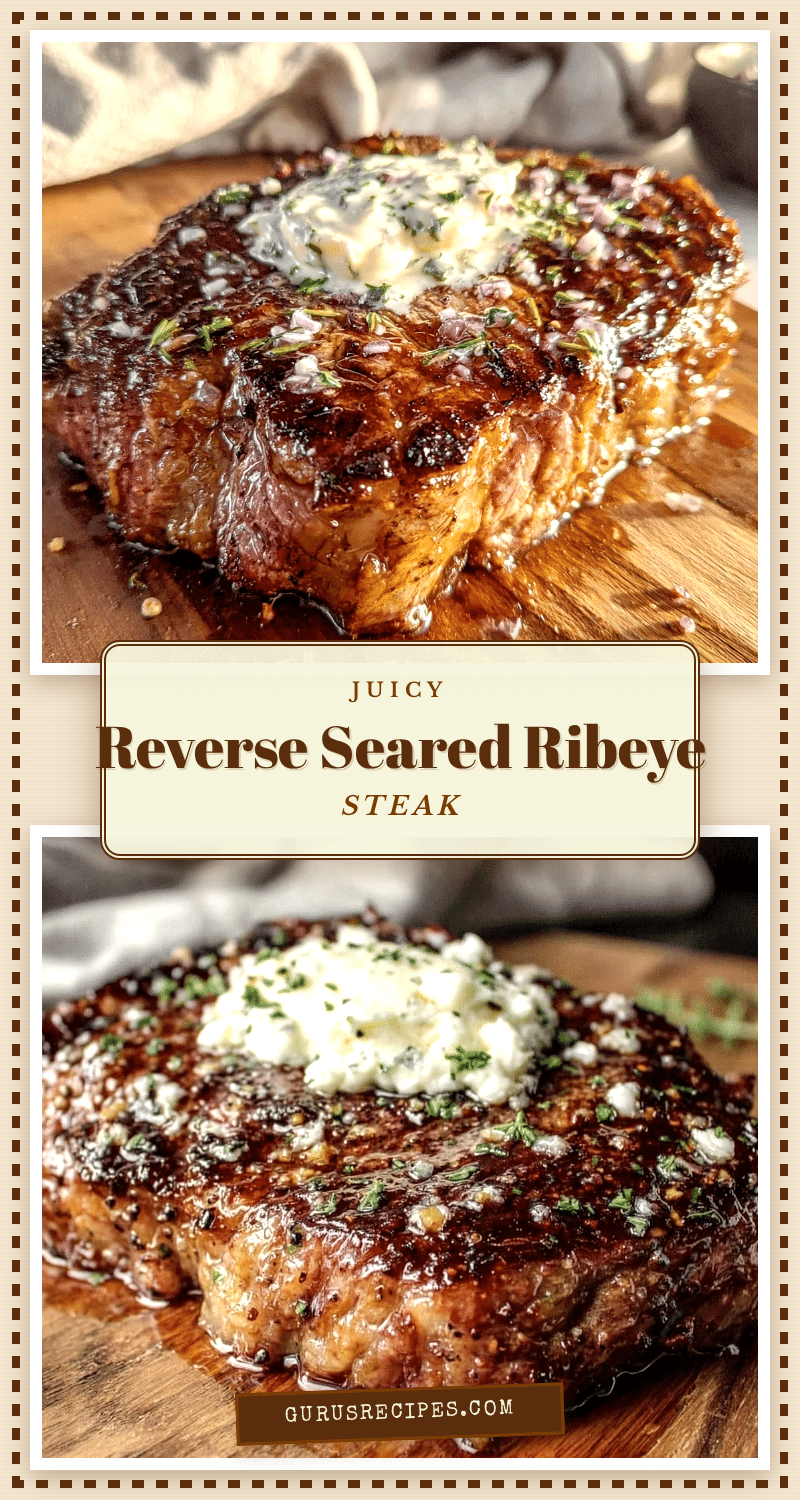
Pin This Recipe!
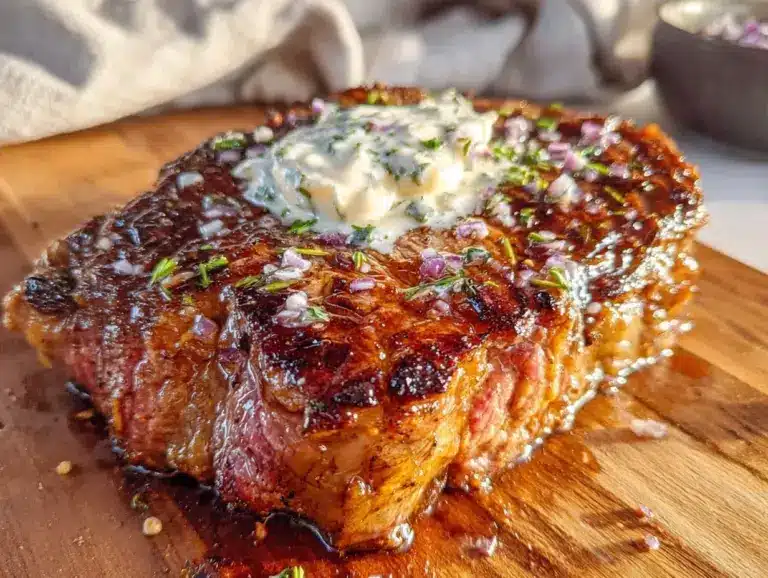
Perfect Reverse Seared Ribeye Steak Recipe with Easy Herb Compound Butter
A juicy, tender ribeye steak cooked using the reverse sear method and topped with a flavorful herb compound butter. This recipe delivers steakhouse-quality results with simple ingredients and a rewarding technique.
- Total Time: 45 minutes
- Yield: 1 steak (serves 1-2) 1x
Ingredients
- 1 thick-cut ribeye steak (1.5 to 2 inches thick, 12–16 oz / 340-450g), well-marbled, USDA Choice grade recommended
- Coarse kosher salt (such as Maldon sea salt flakes) for seasoning
- Freshly cracked black pepper for seasoning
- 4 tablespoons (about 60g) unsalted butter, softened (European-style butter preferred)
- 1 tablespoon finely chopped fresh parsley
- 1 teaspoon fresh thyme leaves
- 1 teaspoon fresh rosemary, finely chopped (optional)
- 1 clove garlic, minced
- 1 tablespoon olive oil or neutral oil (such as grapeseed or avocado oil) for searing
Instructions
- Preheat your oven to 275°F (135°C). Remove the ribeye from the fridge 30 minutes before cooking to reach room temperature. Pat the steak dry with paper towels.
- Generously season both sides of the ribeye with coarse kosher salt and freshly cracked black pepper.
- Place the steak on an oven-safe wire rack set over a baking sheet. Insert a meat thermometer probe into the thickest part of the steak.
- Slow roast the steak in the oven until the internal temperature reaches about 120°F (49°C) for rare or 125°F (52°C) for medium-rare, about 20-30 minutes depending on thickness.
- While the steak roasts, combine softened butter, minced garlic, chopped parsley, thyme, and rosemary in a small bowl. Mix well and set aside at room temperature.
- Heat a cast iron skillet over high heat with 1 tablespoon of oil until smoking hot.
- Sear the steak in the hot skillet for about 2 minutes per side until a deep brown crust forms. Sear the edges by holding the steak with tongs.
- Remove the steak from the skillet and let it rest on a cutting board for 5 minutes.
- Spread the herb compound butter generously over the warm steak so it melts into every crevice.
- Slice the steak against the grain into thick slices and serve immediately.
Notes
Use a reliable meat thermometer to avoid overcooking. Pat steak dry before seasoning for a better crust. Use oil with a high smoke point for searing. Rest steak after searing to redistribute juices. Herb butter can be made a day ahead and brought to room temperature before use. For dairy-free, substitute butter with coconut oil or vegan margarine. Adjust searing heat if steak browns too quickly.
- Prep Time: 15 minutes
- Cook Time: 30 minutes
- Category: Main Course
- Cuisine: American
Nutrition
- Serving Size: One thick ribeye ste
- Calories: 700
- Sodium: 600
- Fat: 55
- Saturated Fat: 25
- Carbohydrates: 1
- Protein: 60
Keywords: reverse sear, ribeye steak, herb compound butter, steak recipe, easy steak, dinner party, cast iron skillet, juicy steak