
I did not trust sauerkraut in a skillet dinner. That is the honest truth. For years, I associated that tangy, shredded cabbage with hot dog toppings at baseball games—something you piled on for texture, not something you built a whole meal around. So when my husband brought home a bag of bratwurst last September and suggested we skip the grill for a one-pan situation, I literally said, “You want me to cook the kraut with the sausage? That sounds like a science experiment gone wrong.” He just shrugged and started pulling out a cast iron pan, which is his way of saying “trust me.” I did not trust him. But I also did not have a better plan for dinner.
Forty minutes later, I was standing over the stove with a fork, picking at the pan before I even plated it. The bratwurst had browned beautifully, the sauerkraut had softened into something almost creamy, and there was this faint hint of caraway and apple that I could not stop sniffing. It smelled like a fall festival—the kind where you walk around with a warm pretzel and listen to an oompah band. I took one bite and felt genuinely annoyed that I had been wrong for so long. This Classic Oktoberfest Bratwurst and Sauerkraut Skillet is not just a weeknight dinner. It is the kind of meal that makes you second-guess every other quick dinner in your rotation. I have made it four times since that first reluctant night, and I am here to tell you—the skepticism is part of the journey.
Why You’ll Love This Recipe
Let me be real with you. I have tested this skillet more times than I care to admit, and each time, I find something new to love. It started as a simple “let’s use up what’s in the fridge” experiment and turned into the most-requested meal in our house during Oktoberfest season. Here is why it works:
- One-Pan Wonder : Everything cooks in a single skillet. That means less cleanup, fewer dishes, and more time actually enjoying your meal. You do not need to boil the brats first or dirty a separate pot for the sauerkraut.
- Pantry-Friendly Ingredients : Bratwurst, sauerkraut, apples, onions, and a few spices—that is it. No fancy trips to a specialty German market. You can find everything at a regular grocery store.
- Perfect for Oktoberfest Gatherings : Whether you are hosting a small party or just want to feel like you are at a beer hall, this skillet delivers that authentic, hearty flavor without the hassle of a grill or smoker.
- Crowd-Pleasing Flavor : Even people who “don’t like sauerkraut” have asked for seconds in my house. The apple and onion mellow out the tang, and the bratwurst juices infuse everything with savory goodness.
- Fast Enough for a Weeknight : From start to finish, you are looking at about 35 minutes. That is faster than delivery and ten times more satisfying.
What sets this recipe apart is the balance. I spent three rounds tweaking the ratio of apple to sauerkraut, testing different types of mustard, and figuring out the exact moment to add the broth so the brats stay juicy but the kraut does not get soggy. This is not just another sausage-and-kraut recipe thrown together. This is the version I would serve to my most skeptical friend—the one who rolls their eyes at German food—and watch them go back for a second helping.
What Ingredients You Will Need
This recipe relies on simple, honest ingredients that work together to create something greater than the sum of their parts. Here is everything you need and why each one matters:
- Bratwurst (4 links, about 1 pound) : Use fresh or pre-cooked bratwurst. I prefer fresh brats from the butcher counter because they have a better snap when seared. Johnsonville is a solid grocery store option if you do not have a local butcher. If using pre-cooked, reduce the initial searing time slightly.
- Sauerkraut (1 pound, drained but not rinsed) : Look for refrigerated sauerkraut in the deli section, not the canned stuff in the international aisle. The refrigerated kind has better texture and a more complex tang. Do not rinse it—you want some of that brine for flavor. My go-to brand is Bubbies, but any quality refrigerated brand works.
- Yellow Onion (1 large, thinly sliced) : The onion caramelizes as it cooks, adding sweetness that balances the sauerkraut’s acidity. A sweet onion like Vidalia works beautifully here too.
- Apple (1 medium, thinly sliced) : This is the secret ingredient that skeptics never see coming. A Granny Smith apple adds tartness and a slight crunch that cuts through the richness of the bratwurst. Honeycrisp works too if you prefer a sweeter profile.
- Chicken or Beef Broth (1/2 cup) : The broth deglazes the pan and creates a light braising liquid that keeps everything moist. Use low-sodium so you can control the salt level.
- Apple Cider Vinegar (1 tablespoon) : A splash at the end brightens the whole dish. Do not skip it—it wakes up all the other flavors.
- Caraway Seeds (1 teaspoon) : These little seeds are the backbone of traditional German cooking. They add an earthy, slightly anise-like flavor that pairs perfectly with pork and cabbage. Toast them in the pan for 30 seconds before adding other ingredients for maximum impact.
- Brown Sugar (1 tablespoon) : Just a touch to round out the acidity of the sauerkraut and vinegar. You can substitute maple syrup or honey if that is what you have on hand.
- Whole Grain Mustard (2 tablespoons) : Stirred in at the end, this adds a gentle heat and texture that ties everything together. I like Maille or Grey Poupon for their bold flavor.
- Butter or Oil (2 tablespoons) : For searing the brats and sautéing the onions. Butter gives better flavor, but oil works if you are dairy-free.
- Salt and Black Pepper : To taste. Go easy on the salt initially—the sauerkraut and bratwurst both bring salt to the party.
Equipment Needed
You do not need a fully stocked German kitchen to make this dish. Here is what you will actually use:
- Large Cast Iron Skillet (12-inch) : This is my skillet of choice for this recipe. Cast iron holds heat evenly and gives the bratwurst a beautiful sear. If you do not have one, a heavy-bottomed stainless steel skillet works just fine.
- Sharp Knife and Cutting Board : For slicing the onion and apple. A mandoline slicer makes quick work of thin, even slices, but a steady hand and a good chef’s knife do the job.
- Tongs : For turning the bratwurst without piercing the casings. Piercing them releases the juices, and you want those juices inside the sausage, not in the pan.
- Wooden Spoon or Spatula : For stirring the sauerkraut and scraping up any browned bits from the bottom of the pan.
- Lid or Foil : To cover the skillet during the final simmer. A tight-fitting lid traps steam and ensures the brats cook through without drying out.
If you are new to cast iron, do not stress. I burned my first few batches of onions before I learned to control the heat. Just keep the flame at medium and let the pan do the work. And remember—never soak a cast iron pan. A quick scrub with coarse salt and a paper towel is all it needs.
Preparation Method

This method is broken down into clear steps so you can follow along without guessing. Trust the process, and do not rush the searing step—that is where the magic starts.
- Prep Your Ingredients First : Slice the onion into thin half-moons. Core the apple and slice it into thin wedges—no need to peel it unless you want to. Drain the sauerkraut in a colander but do not rinse it. Measure out your broth, vinegar, and mustard so everything is ready to go. This dish moves fast once the pan gets hot.
- Sear the Bratwurst : Heat your cast iron skillet over medium-high heat. Add 1 tablespoon of butter or oil. Once it shimmers, place the bratwurst links in the pan in a single layer. Sear for 3-4 minutes per side, until the casings are deeply browned and slightly crisp. Do not poke or cut the brats. Use tongs to turn them gently. Remove the brats to a plate and set aside. They will finish cooking later.
- Cook the Onions and Apple : Reduce the heat to medium. Add the remaining 1 tablespoon of butter or oil to the pan. Toss in the sliced onions and a pinch of salt. Cook for 4-5 minutes, stirring occasionally, until the onions are soft and starting to turn golden at the edges. Add the sliced apple and cook for another 2 minutes. The apple should soften slightly but still hold its shape.
- Toast the Caraway Seeds : Push the onions and apple to one side of the pan. Add the caraway seeds to the empty space and let them toast for about 30 seconds until fragrant. Stir them into the onion-apple mixture. This little step makes a big difference—raw caraway seeds are harsh, but toasted ones are nutty and warm.
- Add the Sauerkraut : Add the drained sauerkraut to the pan. Sprinkle the brown sugar over the top and stir everything together. Let it cook for 2-3 minutes, allowing the sauerkraut to heat through and the sugar to dissolve. The pan might look dry at this point—that is okay.
- Deglaze and Braise : Pour in the chicken broth and apple cider vinegar. Stir well, scraping up any browned bits from the bottom of the pan. Nestle the seared bratwurst back into the sauerkraut mixture. Spoon some of the kraut over the tops of the brats. Bring the liquid to a gentle simmer, then cover the skillet with a lid or foil.
- Simmer Until Done : Reduce the heat to medium-low and let everything simmer for 12-15 minutes. The bratwurst should be cooked through (internal temperature of 160°F if using fresh pork brats) and the sauerkraut should be tender and flavorful. If the liquid evaporates too quickly, add a splash more broth or water.
- Finish with Mustard : Remove the lid. Stir in the whole grain mustard until it is fully incorporated. Taste the sauerkraut and adjust seasoning with salt and pepper. You might not need much salt—the sauerkraut and bratwurst are already salty.
- Rest and Serve : Let the skillet rest off the heat for 5 minutes before serving. This allows the juices to redistribute and the flavors to settle. Serve the bratwurst on a bed of the sauerkraut mixture, with extra mustard on the side.
One thing I learned the hard way—do not crank the heat too high during the simmer. I did that once and ended up with burnt kraut on the bottom of the pan and undercooked brats. Low and slow is the way to go here.
Cooking Tips & Techniques
After making this skillet more times than I can count, I have picked up a few tricks that make a real difference. Here is what I wish someone had told me the first time:
- Do Not Overcrowd the Pan : If you are doubling the recipe, use two skillets or cook in batches. Overcrowding lowers the pan temperature and steams the bratwurst instead of searing them. That deep brown crust is non-negotiable for the best flavor.
- Let the Bratwurst Rest : After searing, let the brats rest on a plate for a few minutes before adding them back to the pan. This prevents the casings from splitting when they hit the hot liquid.
- Toast Your Spices : I mentioned this in the method, but it bears repeating. Toasting caraway seeds (or any whole spice) in the hot pan for 30 seconds releases their essential oils and transforms their flavor from bitter to warm and aromatic.
- Use a Splash Guard : If you have one, use it. The sauerkraut and broth can sputter when you add the mustard, and nobody wants to scrub grease off the stovetop.
- Taste as You Go : Sauerkraut brands vary wildly in saltiness and tang. Taste the kraut before you add any salt, and adjust the vinegar and sugar to your preference. Some batches need a little more sweetness; others need a brighter acid kick.
I once forgot to add the brown sugar entirely and ended up with a skillet that was aggressively sour. My husband ate it without complaint, but I knew it was off. A teaspoon of honey stirred in at the end saved it. So if you make a mistake, do not panic—there is almost always a fix.
Variations & Adaptations
This recipe is forgiving, and I have tested several variations that work beautifully. Here are a few ways to make it your own:
- Beer-Braised Version : Replace the chicken broth with a dark German beer like a Dunkel or a Märzen. The beer adds depth and a subtle bitterness that pairs perfectly with the bratwurst. Simmer for an extra 5 minutes to cook off the alcohol. I tried this with a local Oktoberfest lager and it was phenomenal.
- Low-Carb Adaptation : Omit the apple and brown sugar, and add an extra tablespoon of apple cider vinegar and a pinch of stevia or monk fruit sweetener. The dish stays tangy and savory without the carbs. Serve it over cauliflower rice or roasted Brussels sprouts for a complete low-carb meal.
- Spicy Kick : Add 1/2 teaspoon of red pepper flakes along with the caraway seeds. Or swap the whole grain mustard for a spicy brown mustard. I made this version for a game day gathering and it disappeared in minutes.
- Vegetarian Option : Replace the bratwurst with a high-quality plant-based sausage (I like Beyond Meat brats or Field Roast apple sage sausages). Sear them the same way, and use vegetable broth instead of chicken broth. The cooking time stays the same.
- Smoked Sausage Swap : If you cannot find bratwurst, use smoked kielbasa or andouille sausage. These are already fully cooked, so skip the long simmer—just heat everything through for 5-7 minutes after adding the broth.
My personal favorite variation is the beer-braised version with an extra splash of vinegar at the end. It reminds me of the Guinness beef stew I make in winter—same rich, malty depth, but faster and lighter.
Serving & Storage Suggestions
This skillet is a meal in itself, but the right accompaniments can turn it into a full Oktoberfest spread. Here is how I like to serve it:
- Serving Temperature : Serve the bratwurst and sauerkraut hot, straight from the skillet. The mustard should be at room temperature so it does not cool down the dish.
- Classic Pairings : A warm pretzel with beer cheese, a side of German potato salad, or a simple cucumber salad with dill and vinegar. For bread, try a slice of no-knead rosemary sea salt bread to soak up the juices.
- Beverage Suggestions : A crisp German pilsner, a malty Märzen, or a dry Riesling. For non-alcoholic options, sparkling apple cider or a ginger beer with a squeeze of lime works beautifully.
- Storage : Store leftovers in an airtight container in the refrigerator for up to 4 days. The flavors actually deepen overnight as the sauerkraut continues to absorb the bratwurst juices.
- Reheating : Reheat in a skillet over medium-low heat with a splash of broth or water to loosen the sauerkraut. Microwave works in a pinch, but the stovetop method keeps the texture better. Freezing is not recommended—the sauerkraut becomes mushy and the bratwurst loses its snap.
I have found that this skillet tastes even better the next day. The bratwurst slices more cleanly when cold, and the sauerkraut takes on a deeper, more complex flavor. Leftovers make an excellent quick lunch or a topping for a Reuben sandwich if you are feeling creative.
Nutritional Information & Benefits
This dish is hearty and satisfying, but it also offers some surprising nutritional benefits. Here is an approximate breakdown per serving (one bratwurst with sauerkraut):
- Calories : 420-480
- Protein : 22-25 grams
- Fat : 28-32 grams
- Carbohydrates : 18-22 grams
- Fiber : 4-6 grams
- Sugar : 8-10 grams (mostly from the apple and brown sugar)
- Sodium : 900-1100 mg (varies by sauerkraut brand)
Health Benefits of Key Ingredients : Sauerkraut is a fermented food rich in probiotics that support gut health. It also contains vitamin C and vitamin K. Apples add fiber and antioxidants, while onions provide quercetin, a compound with anti-inflammatory properties. Bratwurst is high in protein and B vitamins, though it is also higher in saturated fat—so enjoy it in moderation as part of a balanced diet.
Dietary Considerations : This recipe is naturally gluten-free (check your bratwurst labels, as some brands add breadcrumbs). It is not low-fat, but you can reduce the butter to 1 tablespoon and use turkey bratwurst for a lighter version. The dish contains dairy if you use butter, but swapping to oil makes it dairy-free.
Conclusion
This Classic Oktoberfest Bratwurst and Sauerkraut Skillet is the recipe that changed my mind about sauerkraut. It is proof that a few simple ingredients, cooked with intention, can create something genuinely memorable. The bratwurst stays juicy, the sauerkraut becomes silky and balanced, and the whole thing comes together in one pan with minimal fuss. Whether you are hosting an Oktoberfest party or just want a cozy fall dinner that delivers on flavor without a ton of effort, this skillet delivers.
I would love to hear how it turns out for you. Did you try the beer-braised version? Did your picky eater go back for seconds? Drop a comment below and let me know. And if you tweak the recipe to make it your own, share that too—I am always looking for new ideas. Until next time, happy cooking, and do not be afraid to give sauerkraut a second chance.
Frequently Asked Questions
Can I use pre-cooked bratwurst for this recipe?
Yes, you can. Pre-cooked bratwurst will not need as long to cook through. Sear them for 2-3 minutes per side just to brown the casings, then reduce the simmering time to 8-10 minutes. They will still absorb plenty of flavor from the sauerkraut and broth.
How do I prevent the bratwurst from splitting open?
Do not pierce the casings with a fork or knife. Use tongs to turn them gently. Also, let the brats rest for a few minutes after searing before adding them to the liquid. A sudden temperature change can cause the casings to burst.
Can I make this recipe in a slow cooker?
You can, but the texture will be different. Sear the bratwurst and sauté the onions in a skillet first, then transfer everything to a slow cooker. Cook on low for 4-5 hours. The bratwurst will be very tender but will lose some of its snap. It is still delicious, just not as firm.
What is the best type of apple to use?
Granny Smith is my top choice because its tartness holds up against the sauerkraut. Honeycrisp and Fuji work well if you prefer a sweeter result. Avoid Red Delicious—they turn mushy and bland when cooked.
Can I freeze this dish?
I do not recommend freezing it. The sauerkraut becomes watery and mushy upon thawing, and the bratwurst loses its texture. This dish is best enjoyed fresh or within a few days of making it. If you have leftovers, store them in the fridge and reheat gently on the stovetop.
Pin This Recipe!
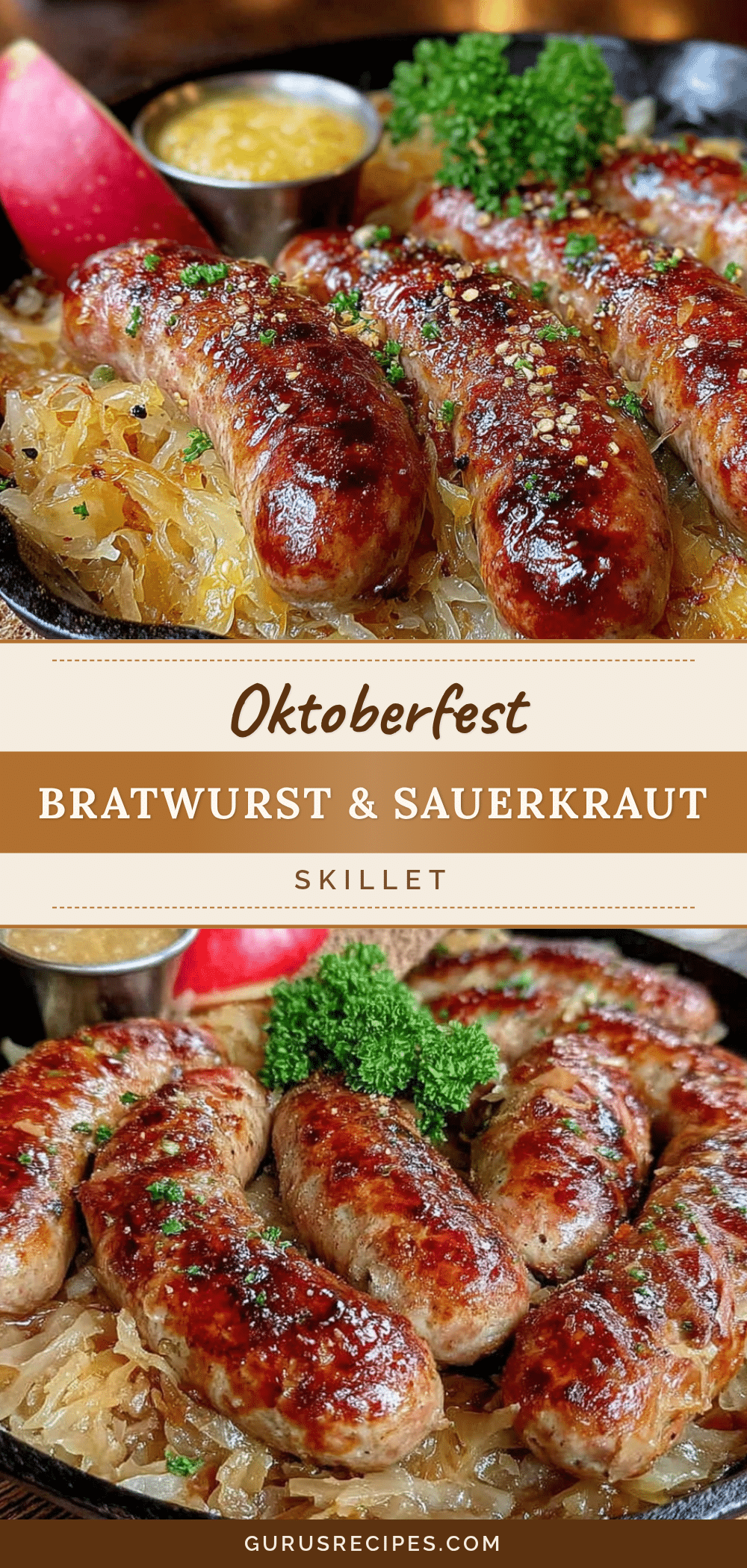

Best Oktoberfest Bratwurst and Sauerkraut Skillet
A one-pan wonder featuring juicy bratwurst, silky sauerkraut, sweet apples, and caramelized onions, all simmered together in a savory broth. This quick and easy skillet dinner delivers authentic Oktoberfest flavor in just 35 minutes, making it perfect for weeknight meals or festive gatherings.
- Total Time: 35 minutes
- Yield: 4 servings 1x
Ingredients
- 4 bratwurst links (about 1 pound), fresh or pre-cooked
- 1 pound sauerkraut, drained but not rinsed
- 1 large yellow onion, thinly sliced
- 1 medium apple (Granny Smith or Honeycrisp), thinly sliced
- 1/2 cup low-sodium chicken or beef broth
- 1 tablespoon apple cider vinegar
- 1 teaspoon caraway seeds
- 1 tablespoon brown sugar
- 2 tablespoons whole grain mustard
- 2 tablespoons butter or oil
- Salt and black pepper to taste
Instructions
- Prep your ingredients first: slice the onion into thin half-moons, core and slice the apple into thin wedges, drain the sauerkraut, and measure out the broth, vinegar, and mustard.
- Heat a large cast iron skillet over medium-high heat. Add 1 tablespoon of butter or oil. Once shimmering, place the bratwurst links in a single layer. Sear for 3-4 minutes per side until deeply browned. Use tongs to turn them gently; do not pierce the casings. Remove brats to a plate and set aside.
- Reduce heat to medium. Add remaining 1 tablespoon butter or oil. Add sliced onions and a pinch of salt. Cook for 4-5 minutes, stirring occasionally, until soft and golden at edges. Add sliced apple and cook for 2 more minutes until slightly softened.
- Push onions and apple to one side of the pan. Add caraway seeds to the empty space and toast for 30 seconds until fragrant. Stir into the onion-apple mixture.
- Add drained sauerkraut to the pan. Sprinkle brown sugar over top and stir. Cook for 2-3 minutes until heated through and sugar dissolves.
- Pour in chicken broth and apple cider vinegar. Stir well, scraping up any browned bits from the bottom. Nestle the seared bratwurst back into the sauerkraut mixture. Spoon some kraut over the tops. Bring to a gentle simmer, then cover the skillet with a lid or foil.
- Reduce heat to medium-low and simmer for 12-15 minutes until bratwurst is cooked through (internal temperature of 160°F for fresh pork brats) and sauerkraut is tender. Add more broth if liquid evaporates too quickly.
- Remove lid. Stir in whole grain mustard until fully incorporated. Taste and adjust seasoning with salt and pepper as needed.
- Let the skillet rest off heat for 5 minutes before serving. Serve bratwurst on a bed of sauerkraut mixture with extra mustard on the side.
Notes
Do not pierce the bratwurst casings during cooking to keep them juicy. Let the brats rest after searing before adding to the liquid to prevent splitting. Toast caraway seeds for 30 seconds to enhance their flavor. Taste sauerkraut before adding extra salt as brands vary in saltiness. For best results, use refrigerated sauerkraut from the deli section rather than canned.
- Prep Time: 10 minutes
- Cook Time: 25 minutes
- Category: Main Course
- Cuisine: German
Nutrition
- Serving Size: 1 bratwurst with sau
- Calories: 450
- Sugar: 9
- Sodium: 1000
- Fat: 30
- Saturated Fat: 10
- Carbohydrates: 20
- Fiber: 5
- Protein: 23
Keywords: bratwurst, sauerkraut, Oktoberfest, one-pan, skillet dinner, German recipe, fall dinner, quick dinner