

My husband took one spoonful, stopped mid-chew, and just looked at me. Then he took another spoonful. Still silent. That’s when I knew this butternut squash and apple soup was something special—not because he said anything, but because he didn’t have to. He just kept eating, and that quiet focus told me everything I needed to know.
I had been chasing that cozy, sweet-savory balance for weeks. You know how some recipes just feel like they’re missing that little something? The first few batches were fine, but fine wasn’t what I was after. Then one rainy Tuesday, I tossed a couple of Honeycrisp apples into the roasting pan alongside the squash, and something clicked. The caramelized edges, the way the apple softened and mingled with the squash—it was like they had been waiting to meet each other.
This soup has become our go-to for those chilly evenings when the air gets that crisp bite and all you want is something warm in your hands. It’s not complicated or fussy, but it tastes like you spent hours fussing. Honestly, that’s my favorite kind of recipe to share—the one that feels like a secret worth passing on.
Why You’ll Love This Recipe
After testing this soup about six times (someone had to eat all those batches), I can tell you exactly why it works. It’s one of those rare recipes that feels both indulgent and wholesome at the same time.
- Quick & Easy : From start to finish, you’re looking at about 45 minutes of active time. The oven does most of the heavy lifting while you put your feet up.
- Simple Ingredients : No hunting down obscure spices or specialty items. Everything on the list is something you can find at any grocery store, and you probably already have half of it.
- Perfect for Cozy Nights : This is the soup you want when the weather turns cold and you’re craving something that feels like a hug in a bowl.
- Crowd-Pleaser : I’ve served this to vegetable skeptics and soup lovers alike, and the bowl always comes back empty. Even my friend who claims she doesn’t like squash asked for seconds.
- Unbelievably Delicious : The roasting does something magical—it concentrates the natural sugars and adds this subtle caramelized depth that you just can’t get from boiling.
What makes this version different from the rest? It’s the roasted apples. Most squash soup recipes treat apple as an afterthought or skip it entirely. But that sweet-tart fruitiness, softened and browned in the oven, transforms the whole dish. It brightens the earthy squash without overpowering it, and the balance is just right.
This is the kind of soup that makes you close your eyes after the first bite. It’s comfort food reimagined—lighter than a cream-heavy version, but with the same soul-soothing satisfaction. Perfect for impressing dinner guests without the stress, or turning a simple Tuesday night into something memorable.
What Ingredients You Will Need
This recipe uses simple, wholesome ingredients that come together to create something truly comforting. The magic is in the roasting, which brings out the natural sweetness in everything.
- Butternut squash (1 medium, about 2-3 pounds) — peeled, seeded, and cubed into 1-inch pieces. Look for one that feels heavy for its size and has a solid, tan-colored skin without soft spots.
- Honeycrisp apples (2 medium) — cored and quartered. I prefer Honeycrisp for their perfect balance of sweet and tart, but Fuji or Gala work beautifully too. Avoid Granny Smith here—they’re too tart after roasting.
- Yellow onion (1 large) — roughly chopped. The onion adds a savory backbone that keeps the soup from tasting too sweet.
- Garlic cloves (4-5) — left whole with skins on. Roasting garlic whole mellows its sharpness into something buttery and sweet.
- Olive oil (3 tablespoons) — for roasting. Use a good quality extra virgin here since it coats the vegetables and helps them caramelize.
- Vegetable broth (4 cups) — use low-sodium so you can control the salt level. I like Pacific Foods brand for its clean flavor, but any good-quality broth works.
- Fresh thyme (4-5 sprigs) — for roasting and garnish. Dried thyme works in a pinch, but fresh really shines here.
- Ground cinnamon (1/2 teaspoon) — adds warmth without being overpowering.
- Ground nutmeg (1/4 teaspoon) — freshly grated if you have it. The difference is noticeable.
- Salt and black pepper (to taste) — I use about 1 teaspoon of salt and 1/4 teaspoon of pepper to start, then adjust at the end.
- Coconut milk (1/2 cup, full-fat) — for creaminess. Heavy cream works too, but coconut milk adds a subtle richness without dairy. (Use Thai Kitchen brand for the best consistency.)
- Maple syrup (1 tablespoon, optional) — only if your squash and apples aren’t sweet enough. I usually don’t need it, but it’s nice to have on hand.
Substitution note: For a dairy-free version, the coconut milk is already perfect. If you want a lower-carb option, swap the apple for an extra cup of roasted cauliflower—it won’t be as sweet, but it’ll still be delicious.
Equipment Needed
You don’t need a fancy kitchen to pull this off, which is one of the reasons I love this recipe. Here’s what you’ll need:
- Large baking sheet (half-sheet pan) — for roasting the squash, apples, and onion. A rimmed sheet is best to catch any juices.
- Parchment paper — optional but makes cleanup so much easier. I never skip it.
- Large pot or Dutch oven (5-6 quart) — for simmering the soup after roasting. I use my Lodge enameled Dutch oven, and it works like a dream.
- Immersion blender — my preferred tool for pureeing soup right in the pot. If you don’t have one, a regular blender works fine—just work in batches and be careful with the hot liquid.
- Chef’s knife and cutting board — for prepping the squash, apples, and onion.
- Vegetable peeler — for peeling the butternut squash. A Y-shaped peeler makes the job faster.
- Measuring cups and spoons — for accurate measurements.
If you don’t have an immersion blender, a standard countertop blender will do the job. Just let the soup cool slightly before blending, and never fill the blender more than halfway. Cover the lid with a kitchen towel while blending to avoid any splatters.
Preparation Method
Let me walk you through this step by step. Trust the process—the roasting is where the magic happens.
- Preheat your oven to 400°F (200°C). Line a large baking sheet with parchment paper for easy cleanup. While the oven heats up, prepare your vegetables.
- Prep the butternut squash. Using a sharp chef’s knife, cut off both ends of the squash, then slice it in half where the narrow neck meets the round bulb. Peel both pieces with a vegetable peeler, then cut them in half and scoop out the seeds with a spoon. Cube the flesh into 1-inch pieces—they should be roughly uniform so they roast evenly. This takes about 10 minutes the first time, but you’ll get faster.
- Prep the apples and onion. Core the apples and cut them into quarters (no need to peel—the skin softens during roasting and adds fiber). Roughly chop the onion into 1-inch chunks. Leave the garlic cloves whole with their skins on—they’ll roast into sweet, spreadable goodness.
- Toss everything with oil and seasonings. On your prepared baking sheet, combine the cubed squash, apple quarters, chopped onion, and whole garlic cloves. Drizzle with 3 tablespoons of olive oil, then sprinkle with salt, pepper, and the fresh thyme sprigs. Use your hands to toss everything until evenly coated. Spread everything in a single layer—crowding the pan will steam rather than roast the vegetables.
- Roast for 35-40 minutes. Place the baking sheet in the preheated oven and roast until the squash is tender when pierced with a fork and the edges are caramelized and golden brown. About halfway through, give the pan a good shake to redistribute everything. The apples should be soft and slightly wrinkled, and the garlic should feel soft when squeezed gently.
- Remove the garlic and thyme. Once the vegetables are done roasting, take the sheet out of the oven. Let the garlic cool for a minute, then squeeze the soft cloves out of their skins—they’ll slide right out. Discard the thyme sprigs (they’ve given all their flavor).
- Transfer to a pot. Scoop all the roasted vegetables and apples into your large pot or Dutch oven. Add the 4 cups of vegetable broth, the ground cinnamon, and the ground nutmeg. Bring everything to a gentle simmer over medium heat, then reduce the heat to low and let it cook for 5 minutes. This allows the flavors to meld together.
- Blend until smooth. Using an immersion blender, puree the soup directly in the pot until it’s silky smooth. If you’re using a regular blender, work in batches—fill the blender no more than halfway, hold the lid down with a kitchen towel, and blend until smooth. Return the pureed soup to the pot.
- Stir in the coconut milk. Add the 1/2 cup of full-fat coconut milk and stir until fully incorporated. Taste the soup and adjust the seasoning—you might want more salt, a pinch more cinnamon, or a drizzle of maple syrup if it needs extra sweetness. I usually add about 1/4 teaspoon more salt at this stage.
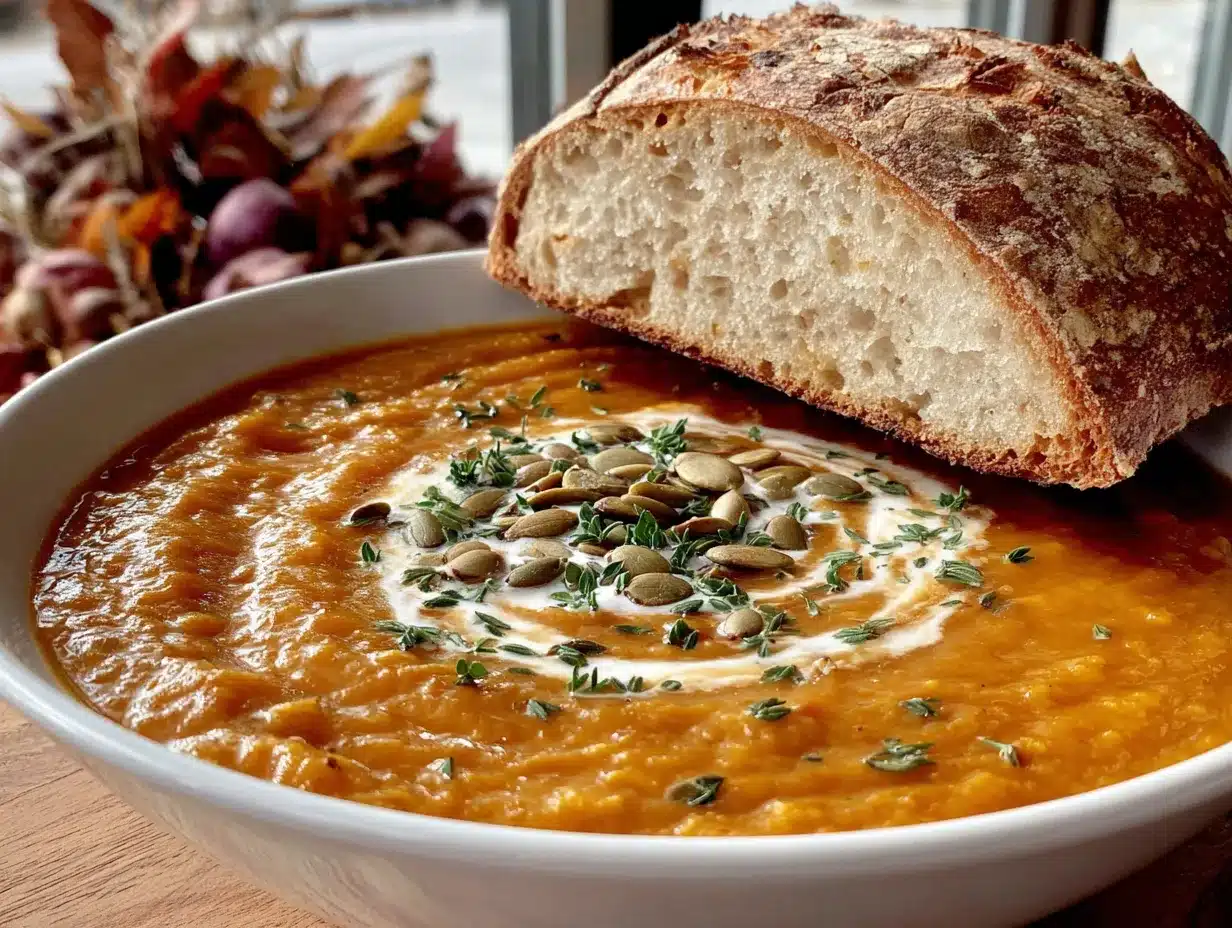
- Simmer and serve. Let the soup simmer on low for another 5 minutes to heat through. Ladle into bowls, garnish with a swirl of coconut milk and a few fresh thyme leaves, and serve warm. The soup should be thick enough to coat the back of a spoon but still pourable—if it’s too thick, add a splash more broth to reach your desired consistency.
Pro tip: The soup will thicken as it sits, so don’t panic if it seems thinner than you expected right after blending. It’ll settle into the perfect texture after a few minutes.
Cooking Tips & Techniques
I’ve made this soup enough times to know exactly where things can go wrong—and how to fix them. Here are the lessons I learned the hard way so you don’t have to.
Don’t skip the roasting. I know it’s tempting to just throw everything in a pot and boil it, but roasting is non-negotiable here. That caramelization adds a depth of flavor that boiling simply can’t replicate. The first time I made this soup, I was in a hurry and skipped the roasting step. It was fine, but it wasn’t this soup. The roasted version is richer, sweeter, and more complex.
Cut your squash evenly. Uneven pieces mean some will be undercooked while others turn to mush. Take the extra minute to make sure your cubes are roughly the same size—your future self will thank you.
Watch the garlic. Roasted garlic is one of life’s great pleasures, but it can go from golden to bitter in a flash. If your garlic cloves are small, check them at the 25-minute mark. They should be soft and golden, not dark brown.
Season gradually. I always start with less salt than I think I need and adjust at the end. Broths vary in saltiness, and the roasting process concentrates flavors, so what seems like a light hand at the beginning can end up perfectly seasoned at the end.
Blend with care. Hot soup in a blender is a recipe for disaster if you’re not careful. The steam builds up pressure and can blow the lid off. Always let the soup cool for a few minutes before blending, and never fill the blender more than halfway. Hold the lid down with a folded kitchen towel for extra safety.
Variations & Adaptations
One of the best things about this soup is how adaptable it is. Here are a few ways I’ve tweaked it over the years:
- Vegan version : This recipe is already vegan if you use vegetable broth and coconut milk. The coconut milk adds a lovely richness without any dairy. I’ve served this to non-vegans who had no idea it was plant-based.
- Spicy kick : Add 1/2 teaspoon of red pepper flakes or a small diced jalapeño to the roasting pan. The heat balances the sweetness beautifully and adds a whole new dimension.
- Herb swap : If you don’t have fresh thyme, try rosemary or sage. Rosemary adds a piney, aromatic note, while sage brings an earthy warmth that pairs perfectly with squash. Use about 2 sprigs of rosemary or 4-5 fresh sage leaves.
- Apple varieties : I’ve made this with Fuji, Gala, and even Pink Lady apples, and they all work. The key is to use a sweet-tart variety rather than a super-sweet one, which can make the soup cloying.
- Make it a meal : Stir in 1 cup of cooked quinoa or shredded rotisserie chicken at the end for extra protein. It turns the soup into a hearty dinner that’ll keep you full for hours.
Serving & Storage Suggestions
This soup is beautiful served warm in deep bowls with a swirl of coconut milk or cream on top. A sprinkle of fresh thyme leaves, a few toasted pumpkin seeds, or a drizzle of maple syrup adds a lovely finishing touch. I like to serve it with a side of crusty bread for dipping—try this easy crusty artisan bread for the perfect companion.
For a complete meal, pair it with a simple green salad dressed with lemon vinaigrette. The acidity cuts through the richness of the soup and keeps things balanced. If you’re feeling indulgent, a crispy Reuben sandwich on the side makes for an unforgettable lunch.
Storage: This soup keeps beautifully in the refrigerator for up to 5 days. Store it in an airtight container, and the flavors will actually deepen and meld together over time. I often make a double batch on Sunday and enjoy it throughout the week.
Freezing: This soup freezes like a dream. Let it cool completely, then transfer it to freezer-safe containers or zip-top bags. Leave about an inch of headspace for expansion. It’ll keep for up to 3 months. Thaw overnight in the refrigerator before reheating.
Reheating: Warm the soup gently on the stovetop over medium-low heat, stirring occasionally. If it’s thickened too much after storage, add a splash of broth or water to thin it out. You can also reheat individual portions in the microwave—just cover the bowl and heat in 30-second intervals, stirring between each.
One thing I love about this soup is that it tastes even better the next day. The flavors have time to settle and mingle, and that second-day bowl is always the best one.
Nutritional Information & Benefits
This soup is as good for you as it is delicious. Here’s a rough breakdown per serving (based on 6 servings):
- Calories: Approximately 220
- Fat: 12g (mostly from the olive oil and coconut milk)
- Carbohydrates: 28g
- Fiber: 6g
- Protein: 4g
- Sugar: 12g (natural from the squash and apples)
- Sodium: 480mg (varies based on broth and added salt)
Butternut squash is packed with vitamin A—one serving provides over 100% of your daily needs. It’s also rich in vitamin C, potassium, and fiber, which supports digestion and keeps you feeling full. Apples add antioxidants and more fiber, while the olive oil provides healthy monounsaturated fats. The coconut milk adds a touch of healthy medium-chain triglycerides (MCTs) that your body can use for quick energy.
This soup is naturally gluten-free, dairy-free (with the coconut milk option), and vegan. If you’re watching your sodium, use low-sodium broth and go easy on the added salt. The natural sweetness from the roasted vegetables means you won’t miss it.
Conclusion
This cozy roasted butternut squash and apple soup has become a staple in my kitchen for good reason. It’s the kind of recipe that feels like a warm blanket on a cold day—comforting without being heavy, simple without being boring. Every time I make it, I’m reminded that the best dishes don’t need complicated techniques or hard-to-find ingredients. They just need a little patience and the right combination of flavors.
I love that this soup works for so many occasions. It’s elegant enough for a dinner party, humble enough for a weeknight dinner, and forgiving enough for a beginner cook. You can dress it up with fancy garnishes or keep it simple with just a swirl of coconut milk. It’s your soup now—make it your own.
I’d love to hear how yours turns out. Did you add a pinch of cayenne for heat? Swap in rosemary for the thyme? Serve it with crispy Dutch oven no-knead bread for dipping? Drop a comment below and let me know—I read every single one, and your tweaks might inspire someone else’s next batch.
Until next time, happy cooking. And remember—the best soups are the ones made with a little love and a lot of roasted goodness.
Frequently Asked Questions
Can I use frozen butternut squash instead of fresh?
Yes, you can, but you’ll lose some of the caramelized flavor from roasting. Frozen squash releases a lot of water as it thaws, which prevents browning. If you’re in a pinch, roast the frozen squash on a higher heat (425°F) and spread it in a single layer without overcrowding the pan. It won’t be quite as sweet, but it’ll still make a good soup.
How can I make this soup thicker or thinner?
To thicken the soup, let it simmer uncovered for an extra 10-15 minutes after blending—the evaporation will concentrate it. You can also add a peeled and diced potato to the roasting pan; it blends into the soup and adds natural thickness. To thin it out, simply stir in more broth or water until it reaches your desired consistency.
Can I make this soup ahead of time for a party?
Absolutely. In fact, I recommend it. This soup tastes even better the next day after the flavors have had time to meld. Make it up to two days ahead, store it in the refrigerator, and reheat gently on the stovetop before serving. Garnish fresh just before bringing it to the table.
Is this soup freezer-friendly?
Yes, it freezes beautifully. Let the soup cool completely, then transfer it to freezer-safe containers or zip-top bags. Leave about an inch of headspace for expansion. It will keep for up to 3 months. Thaw overnight in the refrigerator before reheating on the stovetop. The texture remains smooth and creamy after thawing.
What can I use instead of coconut milk for creaminess?
Heavy cream is the most common substitute and adds a rich, velvety texture. For a lighter option, try half-and-half or whole milk—just add it at the end and don’t let it boil, or it might curdle. Cashew cream (soaked cashews blended with water) is another excellent dairy-free option that adds creaminess without altering the flavor much.
Pin This Recipe!
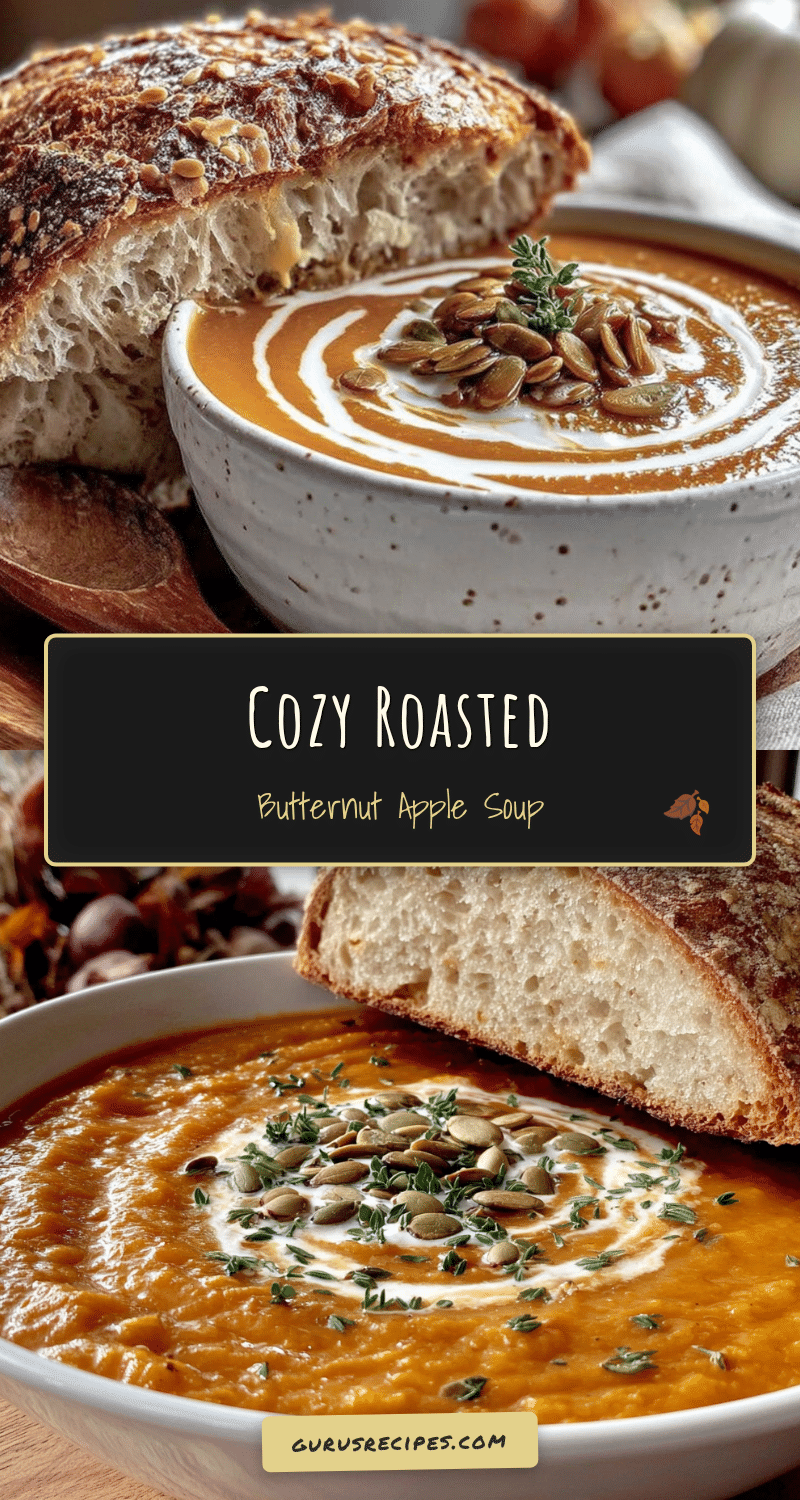

Cozy Roasted Butternut Squash and Apple Soup Recipe
A cozy, sweet-savory soup made with roasted butternut squash and Honeycrisp apples, perfect for chilly evenings. This easy, wholesome recipe delivers a caramelized depth of flavor that feels both indulgent and nourishing.
- Total Time: 55 minutes
- Yield: 6 servings 1x
Ingredients
- 1 medium butternut squash (about 2–3 pounds), peeled, seeded, and cubed into 1-inch pieces
- 2 medium Honeycrisp apples, cored and quartered
- 1 large yellow onion, roughly chopped
- 4–5 garlic cloves, left whole with skins on
- 3 tablespoons olive oil
- 4 cups low-sodium vegetable broth
- 4–5 sprigs fresh thyme
- 1/2 teaspoon ground cinnamon
- 1/4 teaspoon ground nutmeg
- Salt and black pepper to taste (about 1 teaspoon salt and 1/4 teaspoon pepper to start)
- 1/2 cup full-fat coconut milk
- 1 tablespoon maple syrup (optional)
Instructions
- Preheat your oven to 400°F (200°C). Line a large baking sheet with parchment paper.
- Prep the butternut squash: cut off both ends, slice in half where the narrow neck meets the round bulb, peel both pieces, cut in half, scoop out seeds, and cube into 1-inch pieces.
- Core the apples and cut into quarters. Roughly chop the onion into 1-inch chunks. Leave garlic cloves whole with skins on.
- On the prepared baking sheet, combine cubed squash, apple quarters, chopped onion, and whole garlic cloves. Drizzle with 3 tablespoons olive oil, sprinkle with salt, pepper, and fresh thyme sprigs. Toss to coat evenly and spread in a single layer.
- Roast for 35-40 minutes until squash is tender and edges are caramelized. Shake the pan halfway through.
- Remove from oven. Let garlic cool slightly, then squeeze soft cloves out of skins. Discard thyme sprigs.
- Transfer roasted vegetables and apples to a large pot or Dutch oven. Add 4 cups vegetable broth, ground cinnamon, and ground nutmeg. Bring to a gentle simmer over medium heat, then reduce heat to low and cook for 5 minutes.
- Using an immersion blender, puree the soup until smooth. If using a regular blender, work in batches, filling no more than halfway, and blend with a towel over the lid.
- Stir in 1/2 cup full-fat coconut milk. Taste and adjust seasoning, adding more salt, cinnamon, or maple syrup if desired.
- Simmer on low for another 5 minutes to heat through. Ladle into bowls, garnish with a swirl of coconut milk and fresh thyme leaves, and serve warm.
Notes
Don’t skip the roasting step—it adds essential caramelized depth. Cut squash evenly for uniform cooking. Watch garlic to prevent bitterness. Season gradually; adjust at the end. Blend hot soup carefully to avoid splatters. Soup thickens as it sits; add broth to thin if needed. Tastes even better the next day.
- Prep Time: 15 minutes
- Cook Time: 40 minutes
- Category: Soup
- Cuisine: American
Nutrition
- Serving Size: 1 serving (about 1.5
- Calories: 220
- Sugar: 12
- Sodium: 480
- Fat: 12
- Saturated Fat: 4
- Carbohydrates: 28
- Fiber: 6
- Protein: 4
Keywords: butternut squash soup, apple soup, roasted squash soup, fall soup, cozy soup, vegan soup, gluten-free soup