“Wait—you can cook salmon and veggies on the same pan and it actually tastes good?” My sister-in-law said this to me over the phone, skepticism dripping through the receiver. She’d just gotten home from work, staring into her fridge, and I’d casually mentioned my go-to weeknight dinner. And honestly? I didn’t blame her for doubting. Sheet-pan dinners have a reputation for being, well, sad. Soggy vegetables. Dry fish. Everything tasting vaguely like the same thing.
But this sheet-pan maple dijon salmon with crispy Brussels sprouts is different. It started on a random Tuesday when I had exactly one salmon fillet left in the freezer, a half-bag of Brussels sprouts that were starting to look sad, and a bottle of maple syrup I’d bought for pancakes and never finished. I needed dinner in under thirty minutes, and I needed it to not feel like a compromise. So I threw everything together on one pan, crossed my fingers, and hoped for the best.
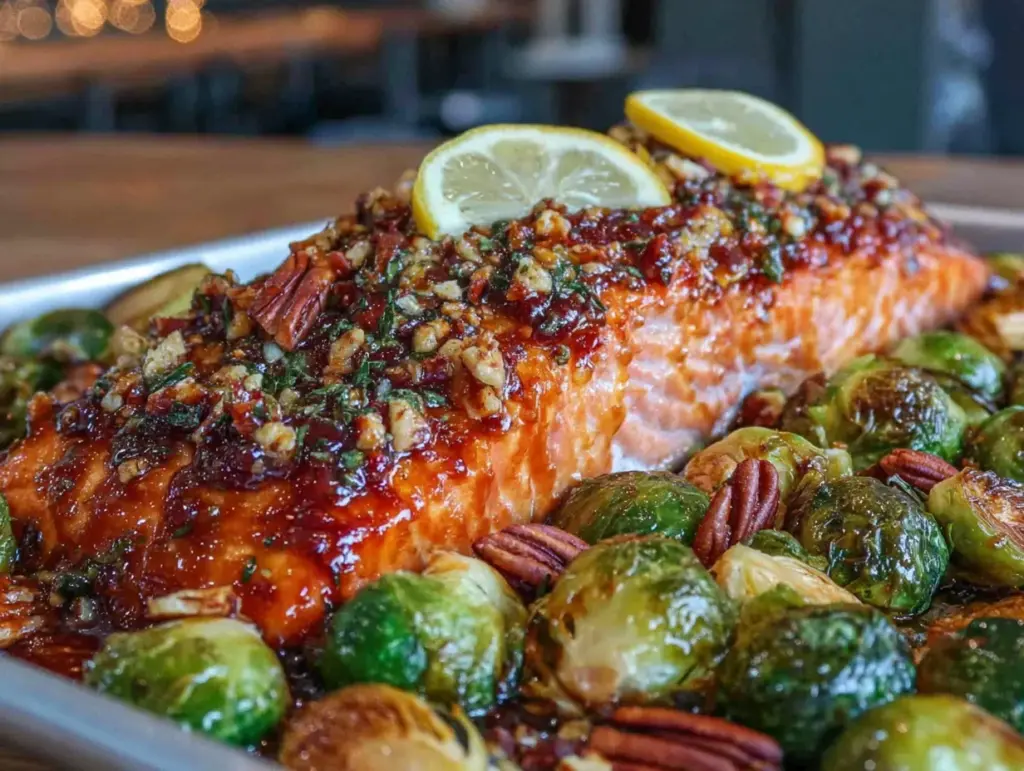
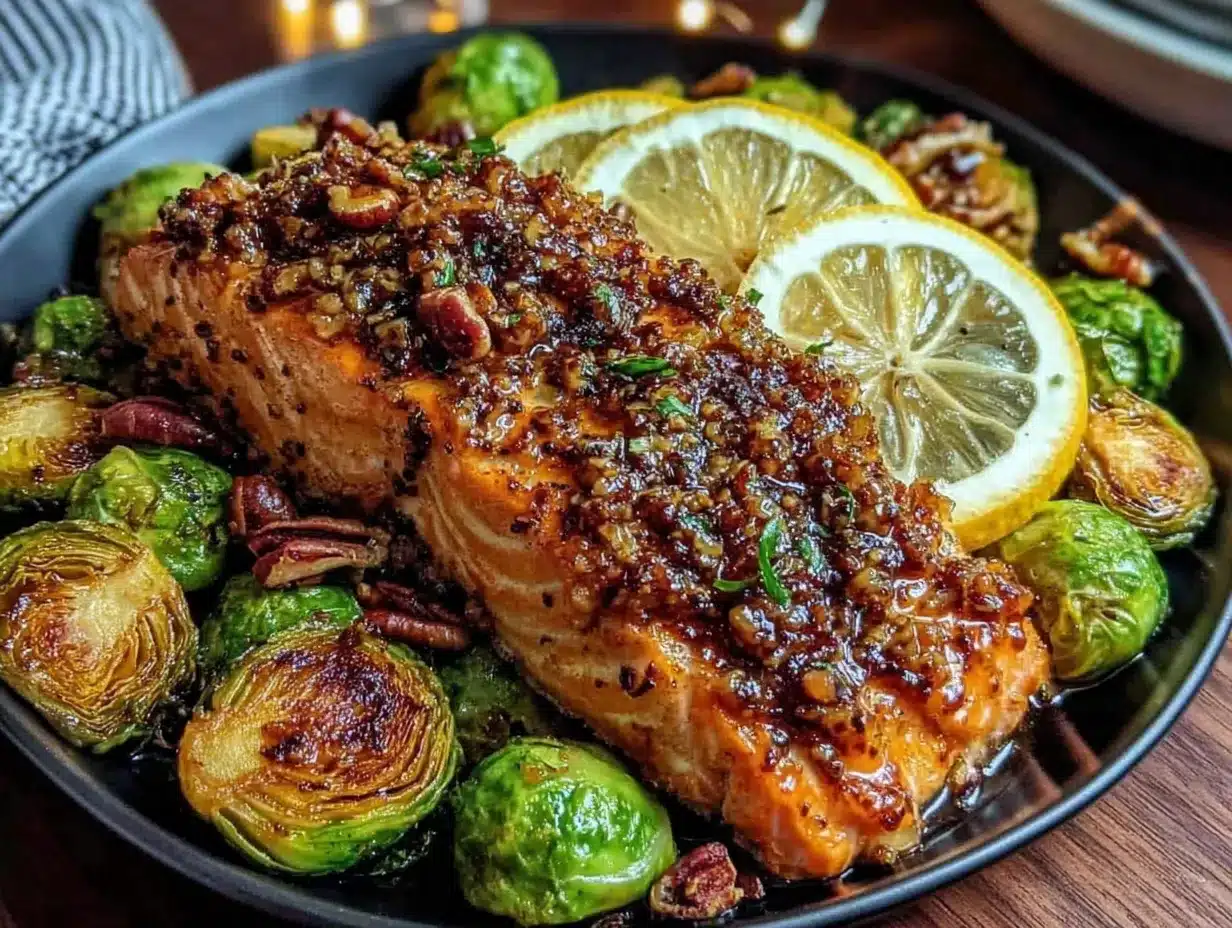
What came out of the oven was the kind of meal that makes you forget you’re eating something healthy. The salmon had this sticky, caramelized glaze—sweet from the maple syrup, tangy from the dijon, with just a hint of garlic and thyme. And the Brussels sprouts? They got all crispy and browned around the edges, almost like little roasted chips. I stood at the counter eating straight off the pan. No plate. No shame.
That night, I texted my sister-in-law the recipe. She made it the next day. And the day after that. Now she calls it her “emergency dinner.” I call it the reason I actually look forward to Wednesday nights. This isn’t just another sheet-pan recipe. It’s the one that proves you don’t need a dozen pots, a complicated marinade, or an hour of prep to eat something that feels special. You just need one pan, a little maple syrup, and a willingness to trust the process.
Why You’ll Love This Recipe
Let me tell you why this sheet-pan maple dijon salmon with crispy Brussels sprouts has become my most-requested recipe among friends and family. I’ve tested it at least a dozen times—changing the temperature, adjusting the glaze, trying different pan positions—and this version is the one that works every single time.
- Quick & Easy: From start to finish, this meal comes together in about 25 minutes. That’s less time than it takes to order takeout and wait for delivery. Perfect for those nights when you’re starving and tired and just want something good.
- Simple Ingredients: You probably already have maple syrup, dijon mustard, and garlic in your kitchen. The only thing you might need to grab is the salmon and Brussels sprouts. No fancy grocery store trips required.
- Perfect for Weeknights: This is the definition of a busy-day dinner. One pan means minimal cleanup, and the oven does all the work while you set the table or pour yourself a glass of wine.
- Crowd-Pleaser: I’ve served this to picky eaters, seafood skeptics, and even my uncle who “doesn’t eat vegetables.” Everyone goes back for seconds. The crispy Brussels sprouts convert even the most stubborn veggie-haters.
- Unbelievably Delicious: The glaze caramelizes on the salmon creating this sticky, slightly charred crust that’s sweet and tangy at the same time. The sprouts get crispy and almost nutty. It’s comfort food that happens to be good for you.
What makes this recipe different from all the other sheet-pan salmon recipes out there? It’s the ratio. I spent weeks tweaking the maple-to-dijon ratio until it was just right—not too sweet, not too sharp. And the trick of tossing the Brussels sprouts in a separate bowl with oil and seasoning before adding them to the pan? That’s the secret to getting them actually crispy instead of steamed and sad. I learned that the hard way after making them soggy three times in a row.
This isn’t just another version of salmon and vegetables. This is the version that makes you close your eyes after the first bite. It’s the kind of meal that feels fancy enough for a dinner party but easy enough for a Tuesday. And honestly? It’s the recipe that made me stop ordering salmon at restaurants. Why pay twenty bucks when I can make this at home in less than half an hour?
What Ingredients You Will Need
This recipe uses simple, wholesome ingredients to deliver bold flavor and satisfying texture without the fuss. Most of these are pantry staples, and the ones that aren’t are easy to find at any grocery store.
For the Maple Dijon Glaze:
- Pure maple syrup (⅓ cup) – Not the pancake syrup stuff. Real maple syrup makes a difference here. It’s less processed and has a deeper, more complex sweetness that caramelizes beautifully in the oven. I prefer Grade A dark amber for this recipe.
- Dijon mustard (2 tablespoons) – Adds that tangy kick that balances the sweetness. I use Grey Poupon, but any good dijon works. Don’t use yellow mustard here—it’s not the same.
- Whole grain mustard (1 tablespoon) – Optional but highly recommended. Those little mustard seeds add texture and a subtle pop of flavor. If you don’t have it, just use an extra tablespoon of dijon.
- Minced garlic (2 cloves, or 1 teaspoon jarred) – Fresh garlic gives the best flavor, but jarred works in a pinch. Don’t use garlic powder here—it won’t dissolve properly in the glaze.
- Olive oil (2 tablespoons) – Helps the glaze spread and keeps the salmon moist. Use a good quality extra virgin if you have it.
- Fresh thyme leaves (1 teaspoon, or ½ teaspoon dried) – Adds an earthy, slightly floral note that pairs perfectly with both the salmon and the Brussels sprouts. If using dried, crush it between your fingers before adding to release the oils.
- Salt and black pepper (to taste) – Don’t be shy with the salt. It helps balance the sweetness of the maple syrup.
For the Salmon:
- Salmon fillets (4 fillets, about 6 ounces each) – Look for fillets that are roughly the same thickness so they cook evenly. I prefer center-cut fillets for the best texture. Skin-on or skin-off both work, but skin-on helps keep the fish moist. If using frozen, thaw completely and pat dry before using.
For the Crispy Brussels Sprouts:
- Brussels sprouts (1 pound, trimmed and halved) – Look for bright green sprouts that feel firm and compact. Smaller sprouts tend to be sweeter and less bitter. If they’re huge, quarter them instead of halving so they cook through.
- Olive oil (2 tablespoons) – Enough to coat the sprouts without drowning them. You want them glistening, not swimming.
- Salt and black pepper (to taste) – Season generously. Brussels sprouts need salt to bring out their flavor.
- Garlic powder (½ teaspoon) – Optional, but adds a nice savory layer. Don’t use fresh garlic here—it’ll burn before the sprouts are done.
For Garnish (Optional):
- Fresh lemon wedges – A squeeze of lemon right before serving brightens everything up. Trust me on this one.
- Fresh parsley or more thyme – For a pop of color and freshness.
- Crushed red pepper flakes – If you like a little heat. I add these to my portion because I’m that person.
Ingredient Tips & Substitutions:
- No maple syrup? Use honey or brown sugar dissolved in a little warm water. The flavor will be different but still delicious.
- No dijon? Try stone-ground mustard or even spicy brown mustard. Just avoid yellow mustard—it’s too vinegary.
- Not a fan of Brussels sprouts? Swap them for asparagus, broccoli florets, or green beans. Adjust cooking time as needed.
- Need a dairy-free option? This recipe is naturally dairy-free, so you’re good to go.
- I recommend using wild-caught salmon if you can find it. The flavor is cleaner and the texture is firmer. But farm-raised works perfectly fine too—just watch the cooking time as it can be slightly more delicate.
Equipment Needed
One of the best things about this recipe is that you don’t need any fancy equipment. Here’s what you’ll need:
- Large rimmed baking sheet (18×13 inches or similar) – A rimmed sheet pan is essential so the glaze doesn’t drip everywhere. I use a half-sheet pan, which is the standard size you see in most kitchens. If you don’t have one, any large baking pan with sides will work.
- Parchment paper or aluminum foil – For easy cleanup. I prefer parchment paper because nothing sticks to it. Foil works too, but spray it lightly with cooking spray first.
- Mixing bowls (one medium, one small) – The small bowl is for whisking the glaze, and the medium bowl is for tossing the Brussels sprouts with oil and seasoning.
- Whisk or fork – For mixing the glaze ingredients together until smooth.
- Chef’s knife and cutting board – For trimming and halving the Brussels sprouts, mincing garlic, and cutting lemon wedges.
- Measuring spoons and cups – For accurate measurements. I know some people eyeball everything, but with the glaze ratio, precision matters.
- Fish spatula or regular spatula – For transferring the salmon to plates without it falling apart. A fish spatula is thin and angled, making it easier to slide under delicate fillets.
- Instant-read thermometer (optional but recommended) – Salmon is perfectly cooked at 125°F to 130°F for medium. This takes the guesswork out of it.
I’ve made this recipe with a cheap baking sheet from the dollar store and it worked fine. The key is making sure the pan isn’t overcrowded. If your pan is too small, the Brussels sprouts will steam instead of getting crispy. If you’re using a smaller pan, just spread everything out on two pans instead of one.
Preparation Method
Alright, let’s get cooking. This whole process takes about 25 minutes from start to finish, and most of that is hands-off oven time. Here’s exactly how to do it:
- Preheat your oven to 425°F (220°C). This high temperature is key for getting the Brussels sprouts crispy and the salmon caramelized. While the oven heats up, line a large rimmed baking sheet with parchment paper or foil for easy cleanup.
- Prepare the Brussels sprouts. Rinse 1 pound of Brussels sprouts and pat them completely dry with a clean kitchen towel or paper towels. This is important—wet sprouts won’t get crispy. Trim off the tough stem ends and remove any yellow or damaged outer leaves. Cut each sprout in half lengthwise. If any are huge (bigger than a golf ball), quarter them so they cook evenly. Place the halved sprouts in a medium mixing bowl.
- Season the sprouts. Drizzle 2 tablespoons of olive oil over the Brussels sprouts. Add ½ teaspoon salt, ¼ teaspoon black pepper, and ½ teaspoon garlic powder (if using). Toss everything together with your hands or a spoon until every sprout is evenly coated. Make sure the oil gets into the layers of the leaves—that’s where the crispy magic happens.
- Spread the sprouts on the baking sheet. Arrange them in a single layer on one half of the prepared baking sheet. Make sure they’re cut-side down as much as possible. This flat surface against the hot pan is what creates those beautiful caramelized, crispy edges. Don’t overcrowd them—if they’re piled on top of each other, they’ll steam instead of roast.
- Make the maple dijon glaze. In a small bowl, whisk together ⅓ cup pure maple syrup, 2 tablespoons dijon mustard, 1 tablespoon whole grain mustard (if using), 2 minced garlic cloves, 2 tablespoons olive oil, 1 teaspoon fresh thyme leaves (or ½ teaspoon dried), and a pinch of salt and pepper. Whisk until everything is combined and smooth. Taste it—it should be sweet, tangy, and slightly garlicky. Adjust the salt if needed.
- Prep the salmon. Pat your 4 salmon fillets dry with paper towels. This helps the glaze stick and promotes better browning. Season both sides lightly with salt and pepper. Place the fillets on the other half of the baking sheet, leaving a little space between each one. If your fillets have skin, place them skin-side down.
- Glaze the salmon. Spoon or brush about half of the maple dijon glaze over the top of each salmon fillet. Reserve the remaining glaze for later. Spread it evenly so every inch of the salmon is covered. Don’t worry if some drips onto the pan—it’ll caramelize and become delicious.
- Roast everything together. Place the baking sheet in the preheated oven on the middle rack. Roast for 12 to 15 minutes, depending on the thickness of your salmon fillets. At the 8-minute mark, quickly remove the pan and brush the remaining glaze over the salmon. This second layer of glaze creates that irresistible sticky, caramelized crust. Return to the oven to finish cooking.
- Check for doneness. The salmon is done when it flakes easily with a fork and the internal temperature reaches 125°F to 130°F (52°C to 54°C) for medium. The Brussels sprouts should be tender on the inside and crispy and browned on the outside, with some dark, caramelized edges. If the sprouts need more time but the salmon is done, transfer the salmon to a plate and return the sprouts to the oven for another 3-5 minutes.
- Rest and serve. Remove the pan from the oven and let everything rest for 2-3 minutes. This allows the juices in the salmon to redistribute. Squeeze fresh lemon juice over everything, sprinkle with fresh parsley or more thyme if desired, and serve immediately. I like to spoon any extra glaze from the pan over the salmon and sprouts.
Pro tip from my kitchen: If you want extra crispy Brussels sprouts, start them in the oven for 5 minutes before adding the salmon. This gives them a head start and ensures they’re perfectly tender-crisp by the time the salmon is done. I do this when I’m using larger sprouts that need more time.
Cooking Tips & Techniques
I’ve made this sheet-pan maple dijon salmon with crispy Brussels sprouts more times than I can count, and I’ve learned a few things along the way. Here are my best tips to help you nail it every time:
Dry your Brussels sprouts thoroughly. This is non-negotiable. I learned this the hard way after making a batch that turned out soggy and steamed instead of crispy. Moisture is the enemy of caramelization. After washing, spread them on a clean kitchen towel and let them air dry for a few minutes, or pat them dry with paper towels.
Don’t skip the cut-side down step. When you arrange the Brussels sprouts on the pan, take the extra few seconds to place them cut-side down. That flat surface against the hot pan creates the most beautiful golden-brown crust. It’s the difference between good Brussels sprouts and life-changing ones.
Use a meat thermometer for the salmon. I used to guess when my salmon was done, and I ended up with dry, overcooked fish more times than I’d like to admit. An instant-read thermometer takes the guesswork out. Salmon is perfectly cooked at 125°F to 130°F for medium. It’ll continue to cook a little after you take it out of the oven, so pull it at 125°F if you like it slightly rare in the center.
Don’t overcrowd the pan. This is the most common mistake people make with sheet-pan dinners. If everything is crammed together, the steam can’t escape and you’ll end up with soggy sprouts and steamed salmon. Give everything some breathing room. If you need to, use two pans.
Brush the glaze in layers. Applying half the glaze before roasting and the other half halfway through creates a thicker, more caramelized coating. It’s the same technique you’d use for glazing ham or barbecue chicken. The double layer makes a noticeable difference.
Let the salmon rest. I know you’re hungry, but letting the salmon rest for 2-3 minutes after it comes out of the oven allows the juices to redistribute throughout the fish. If you cut into it immediately, those juices will run out onto the pan and you’ll end up with drier salmon.
Timing is everything. If your salmon fillets are thinner (about 1 inch thick), start checking at 10 minutes. If they’re thicker (1.5 inches or more), they might need up to 18 minutes. The same goes for the Brussels sprouts—smaller sprouts cook faster, larger ones need more time. I’ve burned a batch of tiny sprouts before because I wasn’t paying attention. Learn from my mistakes.
Variations & Adaptations
One of the best things about this recipe is how adaptable it is. Here are some of my favorite variations:
Spicy Maple Dijon Salmon: Add ½ teaspoon of crushed red pepper flakes or a squeeze of sriracha to the glaze. The heat balances the sweetness beautifully. I make this version when I want a little kick.
Honey Garlic Version: Swap the maple syrup for honey and add an extra clove of garlic. The honey creates a slightly different caramelization—stickier and more golden. This is my husband’s favorite variation.
Lemon Herb Twist: Add the zest of one lemon to the glaze and swap the thyme for fresh dill or rosemary. The citrus brightens everything up and pairs perfectly with the salmon. Serve with extra lemon wedges on the side.
Vegetable Swaps: Not a Brussels sprouts fan? Try broccoli florets, asparagus spears (trimmed), green beans, or even cauliflower florets. Adjust the roasting time as needed—asparagus might only need 10 minutes, while cauliflower might need closer to 20. Just keep an eye on them.
Different Protein Options: This glaze works beautifully on chicken thighs or even firm tofu. For chicken, increase the cooking time to about 25-30 minutes or until the internal temperature reaches 165°F. For tofu, press it dry, cut into cubes, and toss with the glaze before roasting for 20 minutes.
Low-Carb/Keto Adaptation: This recipe is already pretty low-carb as written, but if you’re strict keto, just be mindful of the maple syrup. You can substitute it with a sugar-free maple syrup alternative or use a monk fruit sweetener mixed with a little water. The texture will be slightly different but still delicious.
Add Some Crunch: Sprinkle toasted sliced almonds or crushed pecans over the finished dish for extra texture. I did this on a whim one night and it was incredible—the nuttiness complements both the salmon and the Brussels sprouts perfectly.
Serving & Storage Suggestions
Serving Suggestions: This sheet-pan meal is pretty complete on its own, but if you want to round it out, here are some ideas. Serve the salmon and Brussels sprouts over a bed of fluffy rice, quinoa, or creamy mashed potatoes to soak up any extra glaze. A simple side salad with a lemon vinaigrette adds freshness and crunch. If you’re feeling fancy, a slice of crusty artisan bread is perfect for wiping up every last bit of the sticky glaze from the plate. For a cozy winter meal, pair it with a bowl of French onion soup on the side.
Storage Instructions: Store leftover salmon and Brussels sprouts in an airtight container in the refrigerator for up to 3 days. Keep them separate if possible, as the sprouts can make the salmon slightly soggy over time. The glaze will continue to flavor the salmon as it sits, so leftovers are often even more flavorful the next day.
Reheating Tips: The best way to reheat this dish is in the oven or an air fryer. Preheat to 350°F (175°C) and spread the salmon and sprouts on a baking sheet. Heat for 5-8 minutes until warmed through. The Brussels sprouts will crisp back up nicely. Avoid the microwave if you can—it’ll make the sprouts rubbery and the salmon dry. If you’re in a rush, a hot skillet with a little oil works too.
Freezer Instructions: I don’t recommend freezing the cooked dish, as the texture of both the salmon and the Brussels sprouts will suffer. However, you can freeze the maple dijon glaze in a small container for up to 3 months. Just thaw it in the refrigerator overnight and use it fresh.
Make-Ahead Tips: You can prep the Brussels sprouts (wash, trim, and halve) up to 2 days in advance and store them in an airtight container in the fridge. The glaze can also be made ahead and refrigerated for up to a week. When you’re ready to cook, just toss everything together and roast. This makes weeknight dinners even easier.
Nutritional Information & Benefits
Here’s the approximate nutritional breakdown for one serving (one salmon fillet plus about one-quarter of the Brussels sprouts):
- Calories: Approximately 420-450
- Protein: 35-38 grams
- Fat: 22-25 grams (mostly healthy fats from salmon and olive oil)
- Carbohydrates: 25-28 grams
- Fiber: 5-6 grams
- Sugar: 16-18 grams (mostly from maple syrup)
- Sodium: 450-500 mg (depending on how much salt you add)
This meal is packed with nutritional benefits. Salmon is rich in omega-3 fatty acids, which support heart and brain health. It’s also an excellent source of high-quality protein and vitamin D. Brussels sprouts are a cruciferous vegetable loaded with fiber, vitamin C, vitamin K, and antioxidants that help reduce inflammation. The olive oil provides healthy monounsaturated fats, and the garlic and thyme add their own immune-boosting properties.
This recipe is naturally gluten-free, dairy-free, and low in added sugars (the maple syrup is a natural sweetener). It’s also suitable for paleo and Mediterranean diet lifestyles. If you’re watching your sodium, feel free to reduce the salt or use a salt-free seasoning blend.
I love that this meal feels indulgent but is actually really good for you. It’s the kind of dinner that makes you feel energized afterward, not weighed down. And honestly, knowing I’m getting a solid dose of omega-3s and fiber while eating something this delicious? That’s a win in my book.
Conclusion
This sheet-pan maple dijon salmon with crispy Brussels sprouts has become a staple in my kitchen for a reason. It’s the perfect balance of sweet and tangy, crispy and tender, fancy and effortless. It’s the dinner I turn to when I need something reliable, something that always delivers, something that makes me feel like I have my life together even on the busiest of days.
What I love most about this recipe is how customizable it is. Play with the glaze ratio, swap in different vegetables, add some heat or extra herbs—make it your own. The first time I made it, I used honey instead of maple syrup and added a splash of soy sauce. It was a happy accident that taught me just how forgiving and versatile this dish is. Don’t be afraid to experiment and find your perfect version.
If you make this sheet-pan maple dijon salmon with crispy Brussels sprouts, I’d love to hear how it turns out. Leave a comment below and let me know if you tried any variations, or tag me in your photos on social media. Your feedback and creativity inspire me to keep experimenting and sharing new recipes. And if you’re looking for more easy, one-pan meals, check out this crockpot beef stew or this chicken and dumplings for those days when you want to set it and forget it.
Now go preheat that oven and grab your sheet pan. Dinner is about to get a whole lot easier—and a whole lot more delicious.
Frequently Asked Questions
Can I use frozen salmon for this recipe?
Yes, you can use frozen salmon, but make sure to thaw it completely in the refrigerator overnight before cooking. Pat it very dry with paper towels to remove excess moisture. Frozen salmon tends to release more water as it cooks, which can make the glaze watery and prevent caramelization. If you’re in a rush, you can thaw it under cold running water for about 30 minutes, but make sure it’s fully thawed and dried before adding the glaze.
How do I know when the salmon is done without a thermometer?
If you don’t have an instant-read thermometer, look for visual cues. The salmon will change from translucent to opaque as it cooks. Use a fork to gently flake the thickest part of the fillet—if it flakes easily and the center is no longer translucent, it’s done. The flesh should also feel firm but still have a little give when pressed gently. When in doubt, it’s better to undercook slightly than overcook, since salmon continues to cook from residual heat after it comes out of the oven.
Can I make this recipe ahead of time for meal prep?
Absolutely. This recipe works great for meal prep. Cook the salmon and Brussels sprouts as directed, then let everything cool completely before storing in separate airtight containers in the refrigerator. The salmon and sprouts will keep for up to 3 days. When you’re ready to eat, reheat in the oven or air fryer to restore crispiness. I often make a double batch on Sunday and enjoy it for lunches throughout the week. Just don’t add the lemon juice until right before serving.
Why are my Brussels sprouts not getting crispy?
There are a few common culprits. First, make sure your oven is fully preheated to 425°F—a cooler oven will steam the sprouts instead of roasting them. Second, dry the sprouts thoroughly before adding oil; moisture is the enemy of crispiness. Third, don’t overcrowd the pan. If the sprouts are piled on top of each other, they’ll steam. Give them space and arrange them cut-side down for maximum caramelization. Finally, make sure you’re using enough oil—the sprouts should be glistening, not dry.
Can I double this recipe for a crowd?
Yes, but you’ll need to use two baking sheets instead of one. Overcrowding the pan is the quickest way to end up with soggy results. Spread the Brussels sprouts on one pan and the salmon on another, or divide everything evenly between two pans. Rotate the pans halfway through cooking (swap the top and bottom racks) to ensure even browning. The cooking time should remain about the same, but start checking at the 10-minute mark since the extra pans can affect heat distribution.
Pin This Recipe!
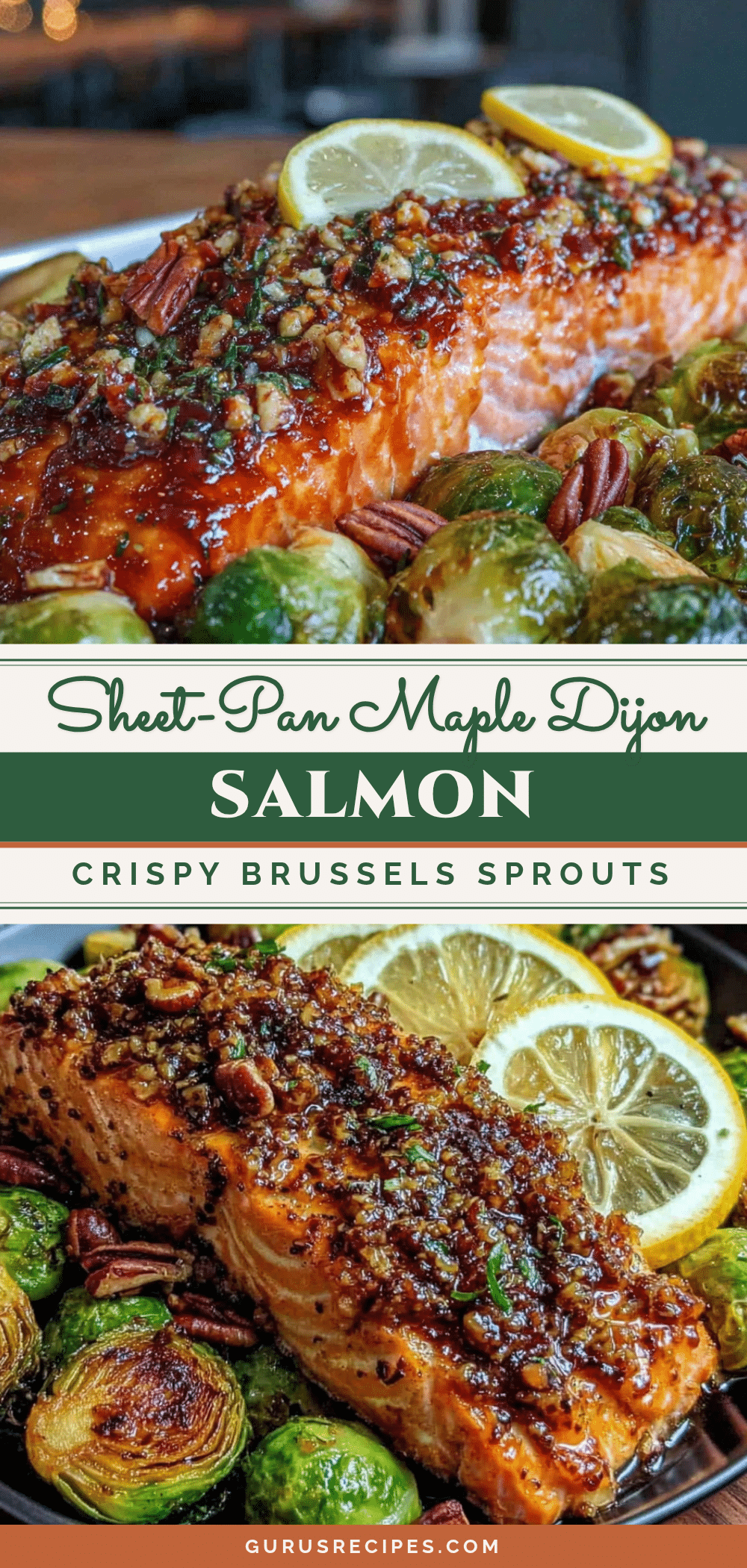

Sheet-Pan Maple Dijon Salmon with Crispy Brussels Sprouts
A quick and easy sheet-pan dinner featuring caramelized maple dijon salmon and crispy roasted Brussels sprouts. Ready in about 25 minutes, this one-pan meal is perfect for busy weeknights and is naturally gluten-free and dairy-free.
- Total Time: 25 minutes
- Yield: 4 servings 1x
Ingredients
- ⅓ cup pure maple syrup
- 2 tablespoons Dijon mustard
- 1 tablespoon whole grain mustard (optional)
- 2 cloves garlic, minced (or 1 teaspoon jarred)
- 2 tablespoons olive oil (for glaze)
- 1 teaspoon fresh thyme leaves (or ½ teaspoon dried)
- Salt and black pepper to taste
- 4 salmon fillets (about 6 ounces each)
- 1 pound Brussels sprouts, trimmed and halved
- 2 tablespoons olive oil (for sprouts)
- ½ teaspoon garlic powder (optional)
- Fresh lemon wedges for serving
- Fresh parsley or thyme for garnish (optional)
- Crushed red pepper flakes (optional)
Instructions
- Preheat your oven to 425°F (220°C). Line a large rimmed baking sheet with parchment paper or foil.
- Rinse 1 pound of Brussels sprouts and pat them completely dry. Trim off the tough stem ends and remove any yellow or damaged outer leaves. Cut each sprout in half lengthwise (quarter any huge ones). Place in a medium bowl.
- Drizzle 2 tablespoons of olive oil over the Brussels sprouts. Add ½ teaspoon salt, ¼ teaspoon black pepper, and ½ teaspoon garlic powder (if using). Toss until evenly coated.
- Spread the sprouts in a single layer on one half of the prepared baking sheet, cut-side down as much as possible.
- In a small bowl, whisk together ⅓ cup maple syrup, 2 tablespoons Dijon mustard, 1 tablespoon whole grain mustard (if using), 2 minced garlic cloves, 2 tablespoons olive oil, 1 teaspoon fresh thyme (or ½ teaspoon dried), and a pinch of salt and pepper.
- Pat 4 salmon fillets dry with paper towels. Season both sides lightly with salt and pepper. Place them on the other half of the baking sheet, skin-side down if they have skin.
- Spoon or brush about half of the glaze over the salmon fillets. Reserve the remaining glaze.
- Roast on the middle rack for 12 to 15 minutes. At the 8-minute mark, quickly remove the pan and brush the remaining glaze over the salmon. Return to the oven to finish cooking.
- The salmon is done when it flakes easily with a fork and the internal temperature reaches 125°F to 130°F (52°C to 54°C) for medium. The Brussels sprouts should be tender and crispy with browned edges. If the sprouts need more time, transfer the salmon to a plate and return the sprouts to the oven for 3-5 minutes.
- Remove the pan from the oven and let everything rest for 2-3 minutes. Squeeze fresh lemon juice over everything, garnish with parsley or thyme if desired, and serve immediately.
Notes
For extra crispy Brussels sprouts, start them in the oven for 5 minutes before adding the salmon. Pat salmon and sprouts very dry for best browning. Use a meat thermometer to avoid overcooking the salmon. Leftovers keep in the refrigerator for up to 3 days; reheat in the oven or air fryer.
- Prep Time: 10 minutes
- Cook Time: 15 minutes
- Category: Main Course
- Cuisine: American
Nutrition
- Serving Size: 1 salmon fillet plus
- Calories: 435
- Sugar: 17
- Sodium: 475
- Fat: 23
- Saturated Fat: 3.5
- Carbohydrates: 26
- Fiber: 5
- Protein: 36
Keywords: sheet-pan salmon, maple dijon salmon, crispy brussels sprouts, one-pan dinner, weeknight dinner, healthy salmon recipe, gluten-free, dairy-free