

There used to be a tiny farm-to-table cafe called The Rustic Spoon tucked away in a small town I used to pass through on road trips. They made this creamy roasted butternut squash soup with sage that was, honestly, life-changing. When they closed their doors after the owner retired, I felt a genuine pang of loss. After seven tries — some too watery, some too sweet, one that my husband politely called “interesting” — I finally cracked the code. This is it. The exact velvety, savory, soul-warming bowl I’d been chasing. And let me tell you, it’s even better when you make it in your own kitchen, filling every corner of the house with that earthy sage and roasted squash smell. You know that feeling when you take a first bite and everything just stops? That’s this soup. I’m so excited to share it with you, because honestly, every family deserves a recipe this good in their regular rotation.
Why You’ll Love This Recipe
This isn’t just another squash soup recipe. After testing this dozens of times for my own picky family, I can say with confidence that this version hits every single mark. It’s the one that gets requested for Thanksgiving, sick days, and random Tuesday nights when everyone needs a hug in a bowl.
- Quick & Easy: Ready in about 45 minutes, most of which is hands-off roasting time. Perfect for busy weeknights.
- Simple Ingredients: You probably already have onions, garlic, and broth on hand. No fancy trips to a specialty store.
- Perfect for Fall and Winter: This soup is the definition of cozy season comfort food. Great for chilly evenings or holiday gatherings.
- Crowd-Pleaser: Kids love the creamy texture, and adults appreciate the sophisticated sage flavor. It’s a total win-win.
- Unbelievably Delicious: The secret is roasting the squash until it caramelizes, then blending it with browned butter and fresh sage. It’s next-level good.
What makes this recipe different from the rest? It’s the browned butter and sage infusion. Most recipes just toss sage in at the end, but we’re building the flavor from the ground up. That little extra step transforms a simple soup into something that tastes like it came from that cute cafe I still dream about. It’s comfort food reimagined — healthier, faster, but with the same soul-soothing satisfaction. Perfect for impressing guests without stress, or turning a simple family meal into something memorable.
What Ingredients You Will Need
This recipe uses simple, wholesome ingredients to deliver bold flavor and satisfying texture without the fuss. Most of these are pantry staples, especially during fall. Here’s what you’ll need to grab:
- 1 medium butternut squash (about 2-3 pounds) — peeled, seeded, and cubed into 1-inch pieces (look for one that feels heavy for its size, with firm skin)
- 2 tablespoons olive oil — for roasting the squash and onions (a good quality extra virgin makes a difference)
- 1 medium yellow onion — roughly chopped (sweet onions work great here too)
- 3 cloves garlic — smashed (don’t bother mincing, it’ll all get blended smooth)
- 4 cups vegetable broth — or chicken broth if you’re not keeping it vegetarian (I prefer a low-sodium brand so I can control the salt)
- 3 tablespoons unsalted butter — for browning (salted butter works, just reduce the added salt later)
- 10-12 fresh sage leaves — plus a few extra for garnish (fresh is non-negotiable here, dried just won’t give the same magic)
- 1/2 cup heavy cream — or full-fat coconut milk for a dairy-free version (adds that silky richness)
- 1/2 teaspoon ground nutmeg — freshly grated if you have it (it wakes up the whole dish)
- Salt and freshly ground black pepper — to taste (don’t be shy, it needs a good pinch)
- Optional: 1 tablespoon maple syrup — if your squash isn’t super sweet (I only add this in early fall when squash is less ripe)
A quick note on the squash: peeling a butternut squash can be a workout. I’ve found that microwaving the whole squash for 2-3 minutes softens the skin just enough to make peeling easier. Also, look for squash with a long neck — it’s easier to handle and has fewer seeds. If you’re in a real pinch, pre-cubed squash from the store works, but it won’t roast quite as evenly.
Equipment Needed
You don’t need a fancy kitchen to pull this off. Here’s what you’ll need:
- Large baking sheet — rimmed, for roasting the squash (I use my old, slightly warped one and it works fine)
- Parchment paper — for easy cleanup (optional but highly recommended)
- Large soup pot or Dutch oven — at least 5 quarts (my enameled cast iron is my go-to, but any heavy-bottomed pot works)
- Immersion blender — or a regular blender (I prefer immersion for less cleanup, just be careful not to splatter hot soup)
- Chef’s knife and cutting board — a sharp knife makes squash prep way less scary
- Vegetable peeler — a sturdy Y-peeler is my favorite for squash
- Measuring cups and spoons
- Wooden spoon or spatula
If you don’t have an immersion blender, let the soup cool slightly before transferring it to a regular blender in batches. Fill it only halfway, hold the lid down with a towel, and blend carefully. I learned that lesson the hard way — hot soup explosions are no joke.
Preparation Method

- Preheat your oven to 400°F (200°C). Line a large baking sheet with parchment paper for easy cleanup.
- Prepare the squash. Peel the butternut squash with a vegetable peeler, cut it in half lengthwise, and scoop out the seeds with a spoon. Cut into 1-inch cubes. You should have about 4-5 cups of cubed squash.
- Roast the vegetables. Toss the cubed squash and chopped onion with 2 tablespoons olive oil, a generous pinch of salt, and a few cracks of black pepper. Spread in a single layer on the baking sheet. Roast for 25-30 minutes, flipping halfway through, until the squash is fork-tender and the edges are golden brown and caramelized. Add the smashed garlic cloves to the pan for the last 10 minutes of roasting so they soften without burning.
- Brown the butter and sage. While the squash roasts, melt the 3 tablespoons butter in your soup pot over medium heat. Swirl the pan occasionally. After about 3-4 minutes, the butter will start to foam and turn a nutty, golden brown color. Immediately add the fresh sage leaves and cook for 30 seconds until fragrant and slightly crispy. Remove the sage leaves with a slotted spoon and set them aside for garnish. Keep the browned butter in the pot.
- Sauté the aromatics. Add the roasted onions and garlic to the pot with the browned butter. Cook for 1 minute, stirring to coat them in that nutty goodness.
- Add the squash and broth. Add the roasted squash cubes and 4 cups of vegetable broth to the pot. Stir in the 1/2 teaspoon nutmeg. Bring to a gentle simmer over medium heat, then reduce heat to low and let it cook for 10 minutes. This allows all the flavors to meld together.
- Blend until smooth. Remove the pot from heat. Use an immersion blender to puree the soup directly in the pot until it’s completely smooth and velvety. If using a regular blender, work in batches and be careful with the hot liquid.
- Finish with cream and season. Stir in the 1/2 cup heavy cream. Taste and adjust seasoning with salt and pepper. If it needs a touch of sweetness, stir in the optional maple syrup. If the soup is too thick, add a little more broth or water until it reaches your desired consistency.
- Serve and garnish. Ladle the soup into bowls. Crumble the reserved crispy sage leaves on top and add a drizzle of cream or a small pat of butter if you’re feeling indulgent. Serve hot.
Pro tip from my kitchen: The soup will look a little thin right after blending, but don’t worry. As it sits for a few minutes, the starches from the squash will thicken it beautifully. If you’re serving it later, you might need to thin it with a splash of broth when reheating.
Cooking Tips & Techniques
I’ve made this soup so many times that I’ve collected a few hard-won lessons. Let me save you some trouble:
- Don’t skip the roasting step. I tried making this with boiled squash once when I was in a hurry. Big mistake. Roasting concentrates the natural sugars and gives that deep, caramelized flavor that makes this soup special. It’s worth the extra 20 minutes.
- Watch the butter like a hawk. Browned butter goes from perfect to burnt in about 15 seconds. When it starts to foam and you smell that nutty aroma, add the sage immediately. I’ve had to start over twice because I got distracted by my kids.
- Season in layers. Add salt at every stage — when roasting, when sautéing, and at the end. This builds depth of flavor that you can’t get from just seasoning at the end. I learned this from a chef friend and it changed my cooking.
- Blend with caution. Hot soup expands when blended. If using a regular blender, never fill it more than halfway, and remove the center cap from the lid to let steam escape. Cover the opening with a folded towel. Trust me on this one.
- Taste your squash. Not all butternut squash is created equal. Some are sweeter than others. If your soup tastes flat, a tiny splash of maple syrup or apple cider vinegar can fix it. It’s all about balance.
Variations & Adaptations
This recipe is wonderfully flexible. Here are some ways to make it your own:
- Make it vegan. Swap the butter for coconut oil or a high-quality vegan butter, and use full-fat coconut milk instead of heavy cream. The coconut flavor is subtle and actually pairs beautifully with the sage.
- Add some heat. Toss a pinch of red pepper flakes in with the sage when browning the butter. The warmth balances the sweetness perfectly. My husband loves this version.
- Go gluten-free. This recipe is naturally gluten-free as written, but if you’re serving it with bread, choose a good gluten-free sourdough or a crusty rice flour loaf.
- Swap the squash. No butternut squash? Try this with peeled and cubed sweet potatoes, pumpkin, or even carrots. The cooking time stays about the same, and the flavor will be slightly different but still delicious.
- Make it a meal. Add a can of drained and rinsed white beans (like cannellini) when you add the broth. They blend in seamlessly and add protein and fiber, making this a complete one-bowl dinner.
- My personal twist: Sometimes I roast a chopped apple (like Honeycrisp) alongside the squash. It adds a subtle sweetness and a hint of fruitiness that makes the soup feel extra special. My kids never notice, they just ask for seconds.
Serving & Storage Suggestions
This soup is a true workhorse in the kitchen. Here’s how to serve and store it:
- Serving temperature: Serve it piping hot. A drizzle of heavy cream or a small pat of butter on top as it melts into the soup is pure magic.
- Presentation: Garnish with the crispy sage leaves and a few cracks of black pepper. A sprinkle of toasted pumpkin seeds adds a lovely crunch and looks beautiful.
- What to serve with it: A crusty loaf of sourdough bread for dipping is my go-to. A simple green salad with a tangy vinaigrette balances the richness. It’s also fantastic alongside a grilled cheese sandwich for a cozy, nostalgic meal.
- Storage: Let the soup cool completely, then transfer it to an airtight container. It will keep in the refrigerator for up to 5 days. The flavors actually get better after a day or two.
- Freezing: This soup freezes beautifully. Pour it into freezer-safe bags or containers, leaving a little room for expansion. It will keep for up to 3 months. Thaw overnight in the refrigerator before reheating.
- Reheating: Reheat gently on the stovetop over medium-low heat, stirring occasionally. You may need to add a splash of broth or water to thin it out, as it thickens as it sits. Avoid boiling, which can make the cream separate.
Nutritional Information & Benefits
This soup is as nourishing as it is delicious. Here’s the estimated breakdown per serving (based on 6 servings):
- Calories: Approximately 220 per serving
- Fat: 14g (mostly from healthy olive oil and butter)
- Carbohydrates: 22g
- Fiber: 4g
- Protein: 3g
- Vitamin A: Over 300% of your daily needs (hello, butternut squash!)
- Vitamin C: 35% of your daily needs
- Potassium: 500mg
Butternut squash is packed with beta-carotene, which your body converts into vitamin A for healthy vision and immune function. Sage is a powerful herb known for its anti-inflammatory properties and warm, earthy flavor. This soup is also naturally gluten-free and can easily be made dairy-free or vegan. It’s a comforting way to get a serious dose of nutrients without feeling like you’re eating health food. I love serving this to my family knowing it’s doing them good while making them happy.
Conclusion
This creamy roasted butternut squash and sage soup is more than just a recipe — it’s a bowl of pure comfort that brings people together. It’s the kind of dish that makes a chilly evening feel warm, a busy weeknight feel special, and a simple meal feel like a celebration. I’ve spent years perfecting this version, and I truly believe it’s the best one out there. The browned butter, the crispy sage, the velvety texture — every spoonful is a little piece of that memory from The Rustic Spoon, now recreated in my own kitchen.
I’d love for you to try it and make it your own. Maybe you’ll add a little extra nutmeg, or swap the cream for coconut milk, or serve it with a giant pile of croutons. Whatever you do, I hope it brings you and your family the same warmth and joy it brings mine. If you make it, drop a comment below and let me know how it turned out. Did your kids ask for seconds? Did you try a fun variation? I read every comment and I love hearing your stories. Happy cooking, friends!
Frequently Asked Questions
Can I make this soup ahead of time?
Absolutely. In fact, it tastes even better the next day after the flavors have had time to meld. Just cool it completely, store it in the fridge, and reheat gently on the stovetop.
Can I use frozen butternut squash?
Yes, you can, but you’ll lose some of the caramelized flavor from roasting. If using frozen, thaw and pat dry before roasting, and expect a slightly longer roasting time. The soup will still be delicious, just a little less complex.
How can I make this soup thicker?
If your soup is too thin, let it simmer uncovered for a few extra minutes to reduce. Alternatively, you can add a peeled and diced potato when you add the broth — it will break down and thicken the soup naturally.
Can I leave out the cream?
Yes, you can skip the cream for a lighter version. The soup will still be creamy from the blended squash, just a bit less rich. You can also substitute with unsweetened almond milk or oat milk for a dairy-free option.
What can I use instead of fresh sage?
Fresh sage really is best here, but if you’re in a pinch, you can use 1 teaspoon of dried rubbed sage. Add it with the broth instead of browning it in butter. The flavor will be more subtle, but it will still work.
Pin This Recipe!
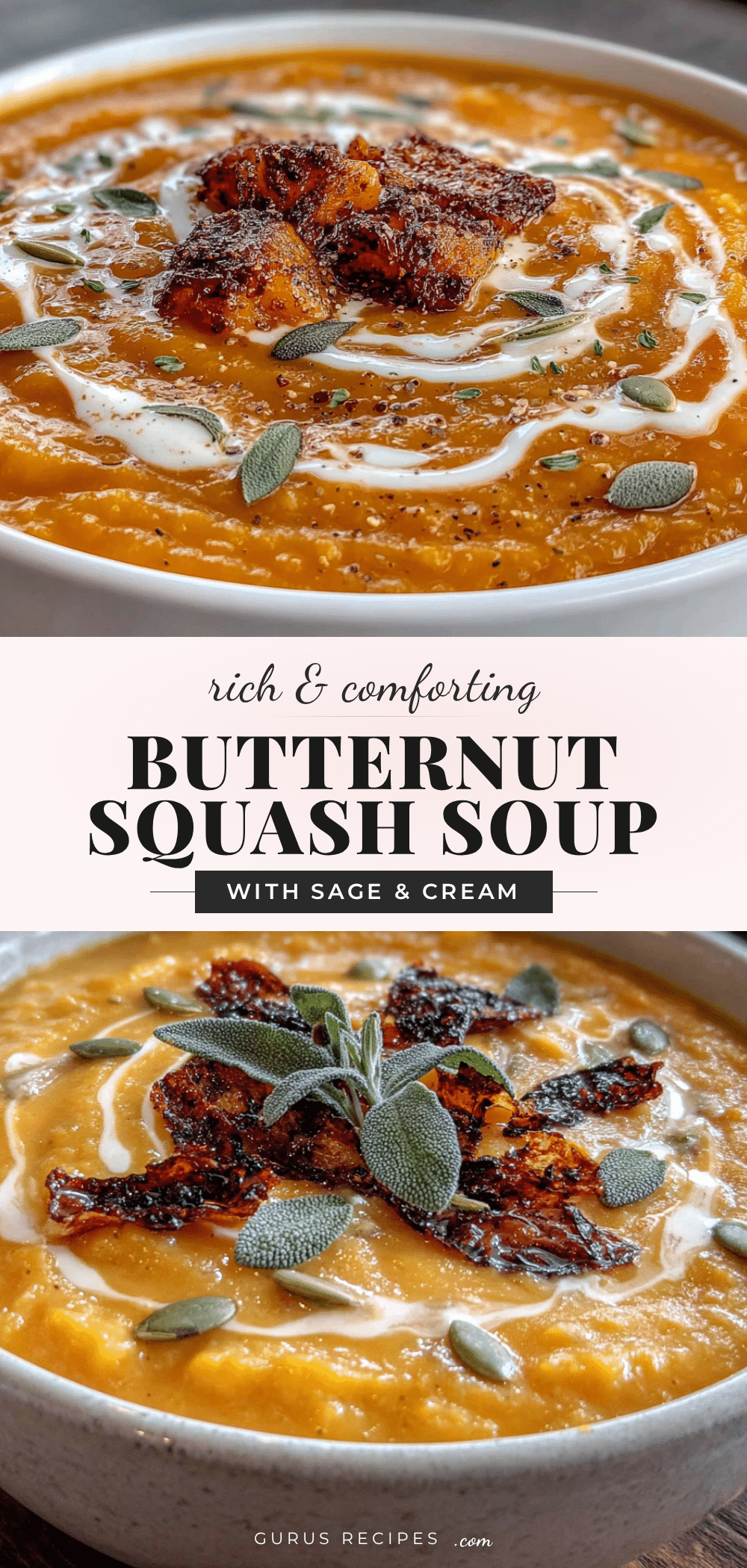

Creamy Roasted Butternut Squash Soup: Best Easy Fall Recipe
This creamy roasted butternut squash soup with browned butter and sage is the ultimate fall comfort food. It’s velvety, savory, and soul-warming, perfect for chilly evenings or holiday gatherings.
- Total Time: 45 minutes
- Yield: 6 servings 1x
Ingredients
- 1 medium butternut squash (about 2–3 pounds), peeled, seeded, and cubed into 1-inch pieces
- 2 tablespoons olive oil
- 1 medium yellow onion, roughly chopped
- 3 cloves garlic, smashed
- 4 cups vegetable broth (or chicken broth)
- 3 tablespoons unsalted butter
- 10–12 fresh sage leaves, plus extra for garnish
- 1/2 cup heavy cream (or full-fat coconut milk for dairy-free)
- 1/2 teaspoon ground nutmeg (freshly grated if possible)
- Salt and freshly ground black pepper, to taste
- Optional: 1 tablespoon maple syrup (if squash isn’t sweet enough)
Instructions
- Preheat your oven to 400°F (200°C). Line a large baking sheet with parchment paper.
- Prepare the squash: Peel the butternut squash, cut it in half lengthwise, scoop out the seeds, and cut into 1-inch cubes (about 4-5 cups).
- Roast the vegetables: Toss the cubed squash and chopped onion with 2 tablespoons olive oil, a generous pinch of salt, and black pepper. Spread in a single layer on the baking sheet. Roast for 25-30 minutes, flipping halfway, until fork-tender and caramelized. Add the smashed garlic cloves for the last 10 minutes of roasting.
- Brown the butter and sage: While the squash roasts, melt 3 tablespoons butter in a large soup pot over medium heat. Swirl occasionally until it foams and turns golden brown (about 3-4 minutes). Immediately add the fresh sage leaves and cook for 30 seconds until fragrant. Remove sage leaves with a slotted spoon and set aside for garnish. Keep the browned butter in the pot.
- Sauté the aromatics: Add the roasted onions and garlic to the pot with the browned butter. Cook for 1 minute, stirring to coat.
- Add the squash and broth: Add the roasted squash cubes, 4 cups vegetable broth, and 1/2 teaspoon nutmeg. Bring to a gentle simmer over medium heat, then reduce heat to low and cook for 10 minutes.
- Blend until smooth: Remove from heat. Use an immersion blender to puree the soup directly in the pot until smooth and velvety. If using a regular blender, work in batches, filling only halfway, and let steam escape.
- Finish with cream and season: Stir in 1/2 cup heavy cream. Taste and adjust seasoning with salt and pepper. Add optional maple syrup if needed. Thin with additional broth or water if desired.
- Serve and garnish: Ladle into bowls. Crumble the reserved crispy sage leaves on top. Add a drizzle of cream or a small pat of butter if desired. Serve hot.
Notes
Don’t skip roasting the squash—it concentrates the natural sugars for deep flavor. Watch the browned butter carefully as it can burn quickly. Season in layers (at roasting, sautéing, and end) for best flavor. The soup will thicken as it sits; thin with broth when reheating. For easier peeling, microwave the whole squash for 2-3 minutes first. If using a regular blender, never fill more than halfway and let steam escape to avoid explosions.
- Prep Time: 15 minutes
- Cook Time: 30 minutes
- Category: Soup
- Cuisine: American
Nutrition
- Serving Size: 1 serving (about 1.5
- Calories: 220
- Sugar: 6
- Sodium: 480
- Fat: 14
- Saturated Fat: 7
- Carbohydrates: 22
- Fiber: 4
- Protein: 3
Keywords: butternut squash soup, creamy soup, fall recipe, winter soup, roasted squash, sage, comfort food, easy soup, vegetarian, gluten-free