

This was supposed to be a batch of my standard deviled eggs for a Halloween potluck—the kind I’d made a hundred times before, reliable and predictable. But the power flickered halfway through boiling, my timer reset itself, and I was already running late because I’d spent twenty minutes looking for my piping bag. When the eggs finally cooled and I peeled them, the yolks were a shade too pale, the whites had these tiny cracks from the rapid temperature change, and honestly? I almost tossed the whole thing and grabbed a bag of chips on the way out.
But I didn’t. I mashed the yolks anyway, added a little extra paprika to cover the color, and then my eye caught the black olives sitting on the counter. Maybe you’ve been there—that moment when desperation meets a spark of something weird. I sliced an olive in half, laid it on top of the egg, and thought, “That looks like a spider body.” Then I sliced the other half into thin strips for legs. By the time I was done, the entire tray looked like something out of a creepy crawly nightmare—in the best possible way. The spider legs were slightly uneven, one body slid off, and I may or may not have used tweezers to fix it.
What came out of that kitchen disaster was nothing like the plan—and better. These spooky spider deviled eggs for Halloween became the hit of the party. People didn’t just eat them; they took pictures first. And I’ve been making them every October since. That’s the thing about cooking, I guess—sometimes your biggest mistakes turn into the recipes you’re most proud of.
Why You’ll Love This Recipe
Let me tell you why these spooky spider deviled eggs for Halloween are about to become your new party trick. First off, they’re ridiculously easy. I’m talking twenty minutes of active work, and you’ve got a platter that looks like you spent hours on it. The ingredients are all pantry staples—eggs, mayo, mustard, olives—so no last-minute grocery store panic.
Here’s what makes them stand out:
- Quick & Easy: Comes together in under 30 minutes, perfect for last-minute Halloween party prep or a school event where you forgot to sign up until the night before.
- Simple Ingredients: No fancy grocery trips needed. You likely already have everything in your kitchen right now—eggs, mayonnaise, mustard, paprika, and a jar of black olives.
- Perfect for Halloween: Great for costume parties, trick-or-treat gatherings, spooky movie nights, or even a creepy-themed dinner party. They fit every October occasion.
- Crowd-Pleaser: Always gets rave reviews from kids and adults alike. I’ve watched grown men squeal with delight and then eat six in a row.
- Unbelievably Delicious: The texture and flavor combo is classic deviled egg perfection—creamy, tangy, smoky—with a visual twist that makes people smile before they even take a bite.
What makes this recipe different from the rest? It’s not just another deviled egg recipe dressed up for Halloween. The technique here matters—I’ve tested the exact olive slicing angle so the legs look like real spider legs, not sad little squiggles. The filling is balanced just right so it pipes beautifully without being runny. And the spooky effect? It holds up for hours at room temperature, which is a lifesaver for parties.
This recipe is the kind that makes you close your eyes after the first bite. It’s comfort food reimagined—creamy, familiar, but with a playful edge that turns a simple appetizer into a conversation starter. Perfect for impressing guests without stress, or turning a casual gathering into something memorable.
What Ingredients You Will Need
This recipe uses simple, everyday ingredients to deliver bold flavor and satisfying texture without the fuss. Most of these are probably in your fridge and pantry right now, which is exactly how I like it.
- 12 large eggs (room temperature works best for even cooking; if you forgot to take them out, a quick soak in warm water for 5 minutes helps)
- 1/3 cup mayonnaise (I prefer Duke’s for its tangy flavor, but Hellmann’s works great too)
- 1 tablespoon yellow mustard (adds that classic tang; Dijon works for a sharper kick)
- 1 teaspoon white vinegar (brightens the filling without overpowering—don’t skip it)
- 1/2 teaspoon salt (fine sea salt dissolves better than kosher here)
- 1/4 teaspoon black pepper (freshly ground if you have it)
- 1/2 teaspoon paprika (plus extra for garnish; smoked paprika adds a lovely depth)
- 1 can (6 oz) large black olives (look for jumbo or colossal size—the bigger the olives, the easier they are to slice into spider shapes)
- Optional: Fresh chives or parsley (for garnish, but honestly, the spiders are enough visual drama)
A few notes from my kitchen to yours: For the olives, I’ve tried several brands, and the canned California black olives from Lindsay work best because they’re firm and hold their shape when sliced. Avoid the pre-sliced olives—you need whole ones for the spider bodies. If you can find jumbo olives, grab them; they make the spiders look more substantial and are easier to handle.
For the mayonnaise, full-fat is non-negotiable here. Low-fat versions make the filling too runny, and nobody wants sad, watery spiders. If you need a dairy-free option, vegan mayonnaise works surprisingly well—just make sure it’s a thick, creamy variety.
The mustard and vinegar might seem like small players, but they’re what give deviled eggs that signature tang. I’ve tried skipping the vinegar before when I was out, and the filling fell flat. Trust me on this one.
Equipment Needed
You don’t need much for this recipe, which is part of its charm. Here’s what you’ll want to have on hand:
- Medium saucepan (with a tight-fitting lid for boiling eggs)
- Large bowl (for ice water bath)
- Sharp knife (a paring knife works best for precise olive slicing)
- Cutting board
- Small mixing bowl (for the filling)
- Fork or potato masher (for mashing yolks)
- Piping bag or zip-top bag (for filling the eggs; a zip-top bag with the corner snipped works perfectly)
- Serving platter (something dark-colored makes the spiders pop)
If you don’t have a piping bag, don’t worry—I’ve used a zip-top bag for years. Just fill it, snip a small corner, and squeeze. The filling won’t be as perfectly swirled, but it’ll taste the same. A small spoon also works in a pinch, though the presentation won’t be as polished. For the olive slicing, a sharp knife is key—dull blades will squish the olives and make messy spider legs.
Preparation Method

Let’s make some spooky spiders. I’ll walk you through every step, including the little tricks I’ve learned from making these for five Halloweens straight.
- Boil the eggs: Place your 12 eggs in a single layer in your saucepan. Cover them with cold water by about an inch. Bring to a rolling boil over high heat, then immediately cover the pot, remove it from the heat, and let it sit for exactly 12 minutes. This method gives you perfectly hard-boiled yolks without the green ring. While they sit, fill your large bowl with ice water.
- Ice bath: After 12 minutes, transfer the eggs to the ice water bath using a slotted spoon. Let them chill for at least 10 minutes. This stops the cooking and makes peeling easier. I’ve learned the hard way that rushing this step means torn egg whites and frustrated cursing.
- Peel the eggs: Gently crack the shells all over, then peel under running cold water. The water helps separate the shell from the white. Start at the wide end where the air pocket is—it’s usually easier to get under the membrane there. Pat the peeled eggs dry with a paper towel.
- Slice and separate: Using your sharp knife, slice each egg in half lengthwise. Gently pop out the yolks into your small mixing bowl. Arrange the whites on your serving platter, cut side up. If any whites tear, just hide them in the back of the platter—nobody will notice.
- Make the filling: Mash the yolks with a fork until they resemble fine crumbs. Add the mayonnaise, mustard, vinegar, salt, pepper, and paprika. Mix until completely smooth and creamy. Taste it. Adjust the salt or mustard if needed. The filling should be tangy, creamy, and just a little rich.
- Fill the eggs: Spoon the filling into your piping bag or zip-top bag. Snip off a small corner—about 1/4 inch wide. Pipe the filling into each egg white, swirling slightly for a decorative effect. Fill them generously; the filling should mound slightly above the edge of the white. You should have enough filling for all 24 halves.
- Create the spiders: Open your can of olives and drain them well. Pat them dry with a paper towel—wet olives slide around. For each spider, you’ll need one olive. Slice the olive in half crosswise (not lengthwise). One half becomes the spider body. Take the other half and slice it lengthwise into thin strips—these are the legs. You want 6-8 thin strips per spider. Arrange the legs on top of the filling, then place the olive body on top, slightly overlapping the legs. Repeat for all 24 eggs.
- Finish and garnish: Lightly dust the finished eggs with a sprinkle of paprika. If you’re using chives or parsley, add them sparingly around the edges of the platter, not on the spiders themselves. Serve immediately or refrigerate until ready.
A few sensory cues: The filling should be thick enough to hold its shape when piped—if it’s runny, add another tablespoon of mayo and mix well. The olive legs should look like actual spider legs—thin, slightly curved, and a little uneven. That’s the charm. If a leg breaks, just eat it and slice another. I’ve done that more times than I care to admit.
Cooking Tips & Techniques
After making these spooky spider deviled eggs for Halloween more times than I can count, I’ve collected a few tricks that make the process smoother and the results more impressive.
The egg peeling struggle is real. I used to lose half the white with the shell, and it drove me crazy. Here’s what works: use eggs that are at least a week old. Fresh eggs are harder to peel. Also, starting the boil from cold water and then shocking them in ice water makes the membrane shrink away from the shell. If you’re still struggling, try peeling under running water—the water pressure helps separate the shell.
Olive slicing is an art. For the spider legs, slice the olive half lengthwise into thin strips—about 1/8 inch wide. Too thick, and they look like fat little worms instead of spider legs. Too thin, and they break apart. I use a paring knife and go slowly. If you mess up, just eat the evidence and try again. It happens to all of us.
Piping without the mess. When you’re filling the eggs, hold the piping bag at a 45-degree angle and squeeze from the top. Start at one end of the egg white and move to the other, creating a continuous swirl. If the filling gets stuck, don’t squeeze harder—just stop, release the pressure, and start again. A steady hand comes with practice.
Timing is everything. You can boil and peel the eggs up to two days ahead. Store them in the fridge, unpeeled, in a covered container. The filling can also be made a day ahead and stored in a piping bag in the fridge. But assemble the spiders no more than a few hours before serving—the olive legs can dry out and curl if they sit too long.
One mistake I still make. I always buy too-small olives. Jumbo olives make the spiders look substantial and creepy. Small olives look like baby spiders and get lost on the egg. Learn from my error and go big.
Variations & Adaptations
These spooky spider deviled eggs for Halloween are endlessly customizable. Here are a few ways I’ve adapted them over the years:
Dietary adaptations: For a dairy-free version, use vegan mayonnaise and skip any dairy-based garnishes. The filling stays creamy and delicious. For a low-carb or keto-friendly option, these are already perfect—eggs and mayo are naturally low in carbs. Just watch the mustard if you’re strict about sugar content.
Flavor variations: Add 1/4 teaspoon of smoked paprika or chipotle powder to the filling for a smoky, spicy kick. Or mix in 1 tablespoon of finely chopped pickled jalapeños for heat and tang. For a more savory version, add 1 teaspoon of Dijon mustard instead of yellow mustard and a pinch of garlic powder. I’ve also tried adding a dash of hot sauce to the filling, and it gives the spiders a little attitude.
Visual variations: Use red bell pepper strips instead of olive legs for a less intense olive flavor. Or use pimento-stuffed green olives for the bodies—the red pimento looks like a creepy red eye. For a truly ghoulish effect, add a tiny dollop of sriracha on top of the spider body for a “blood” effect. My kids love this version, though it’s definitely not for the faint of heart.
Seasonal adaptations: For a spring or summer party, skip the spiders and pipe the filling onto the eggs, then top with fresh dill or chives. The filling recipe works year-round. For Christmas, use red and green bell pepper strips to make little wreaths. The basic deviled egg recipe is a canvas for any holiday.
Serving & Storage Suggestions
These spooky spider deviled eggs for Halloween are best served chilled or at room temperature. I prefer them straight from the fridge—the cold filling contrasts nicely with the creamy texture, and the olive legs stay firm. Arrange them on a dark platter or a black serving tray to make the spiders pop. A sprinkle of paprika around the edges adds a dramatic, almost smoky effect.
For presentation, I like to arrange the eggs in a circular pattern with the spiders facing outward, as if they’re crawling off the platter. It’s a small touch that gets a big reaction. You can also place them on a bed of dark leafy greens like kale or arugula for a spooky “forest floor” look.
For storage, place any leftover eggs in a single layer in an airtight container. They’ll keep in the refrigerator for up to two days. The olive legs may soften slightly, but the flavor remains excellent. Do not freeze them—the texture of the filling will become watery and grainy upon thawing.
For reheating, don’t. These are served cold or at room temperature. If you’ve refrigerated them, let them sit at room temperature for about 15 minutes before serving to take the chill off. The flavors actually develop and meld overnight, so leftovers taste even better the next day.
These eggs pair beautifully with other Halloween appetizers like a warm bowl of pumpkin soup, crispy bacon-wrapped jalapeño poppers, or a platter of roasted fingerling potatoes. For drinks, a crisp apple cider or a dark stout beer complements the creamy, tangy filling perfectly.
Nutritional Information & Benefits
Here’s the estimated nutritional breakdown for one spider deviled egg (based on 24 servings):
- Calories: 65
- Protein: 5g
- Fat: 4.5g
- Carbohydrates: 1g
- Fiber: 0g
- Sugar: 0.5g
These little spiders pack a surprising nutritional punch. Eggs are a complete protein source, meaning they contain all nine essential amino acids your body needs. They’re also rich in choline, which supports brain health, and lutein, which is great for your eyes. The olives add healthy monounsaturated fats and a touch of iron.
This recipe is naturally gluten-free, low-carb, and keto-friendly. It’s also vegetarian, though not vegan due to the eggs and mayonnaise. If you’re watching your sodium, you can use low-sodium olives or reduce the added salt in the filling. For those with egg allergies, this recipe obviously isn’t suitable, but you could try making a similar spider effect on top of stuffed mushroom caps.
From a wellness perspective, I love that these are a protein-rich appetizer that keeps you full without weighing you down. They’re perfect for parties where you want something satisfying but not heavy—the kind of food you can graze on without guilt.
Conclusion
These spooky spider deviled eggs for Halloween started as a complete kitchen disaster, and honestly? That’s why I love them. They remind me that the best recipes often come from moments when things go wrong and you just go with it. The slightly cracked eggs, the too-pale yolks, the desperate olive experiment—all of it came together to create something that’s become a yearly tradition.
I hope you give these a try, whether you’re hosting a Halloween party, bringing a dish to a potluck, or just want to make something fun for your family. Don’t stress about the olive legs being perfect—mine never are, and that’s part of the charm. Imperfect spiders are scarier anyway, right?
If you make these, I’d love to hear how they turned out. Drop a comment below and tell me about your own kitchen disasters that turned into triumphs. And if you’re looking for more Halloween inspiration, check out my spooky Halloween punch recipe or these ghost-shaped mashed potatoes for a full creepy menu. Happy Halloween, and happy cooking!
Frequently Asked Questions
Can I make these spooky spider deviled eggs ahead of time?
Yes! You can boil and peel the eggs up to two days ahead and store them in the fridge. The filling can also be made a day ahead and kept in a piping bag. However, assemble the spiders no more than a few hours before serving to keep the olive legs from drying out.
What if I can’t find jumbo olives?
Regular-sized black olives work fine, but the spiders will look smaller. Just slice them carefully and arrange the legs to maximize visibility. You can also use two olive halves side by side for a larger spider body.
How do I keep the olive legs from falling off?
Make sure the filling is piped high enough to support the legs. Press the legs gently into the filling so they stick. If they’re still sliding, add a tiny dab of filling on top of the legs before placing the body. This acts like glue.
Can I use a different filling for these eggs?
Absolutely. Try adding chopped bacon, shredded cheddar, or a pinch of cayenne to the filling. You can also swap the yellow mustard for Dijon or add a teaspoon of pickle relish for extra tang. The spider decoration works with any deviled egg filling.
Are these safe to leave out at a party?
Deviled eggs can sit at room temperature for up to two hours safely. For longer parties, place the platter on a bed of ice or serve them in smaller batches, replenishing from the fridge as needed. The olives and mayonnaise make them perishable, so keep an eye on the clock.
Pin This Recipe!
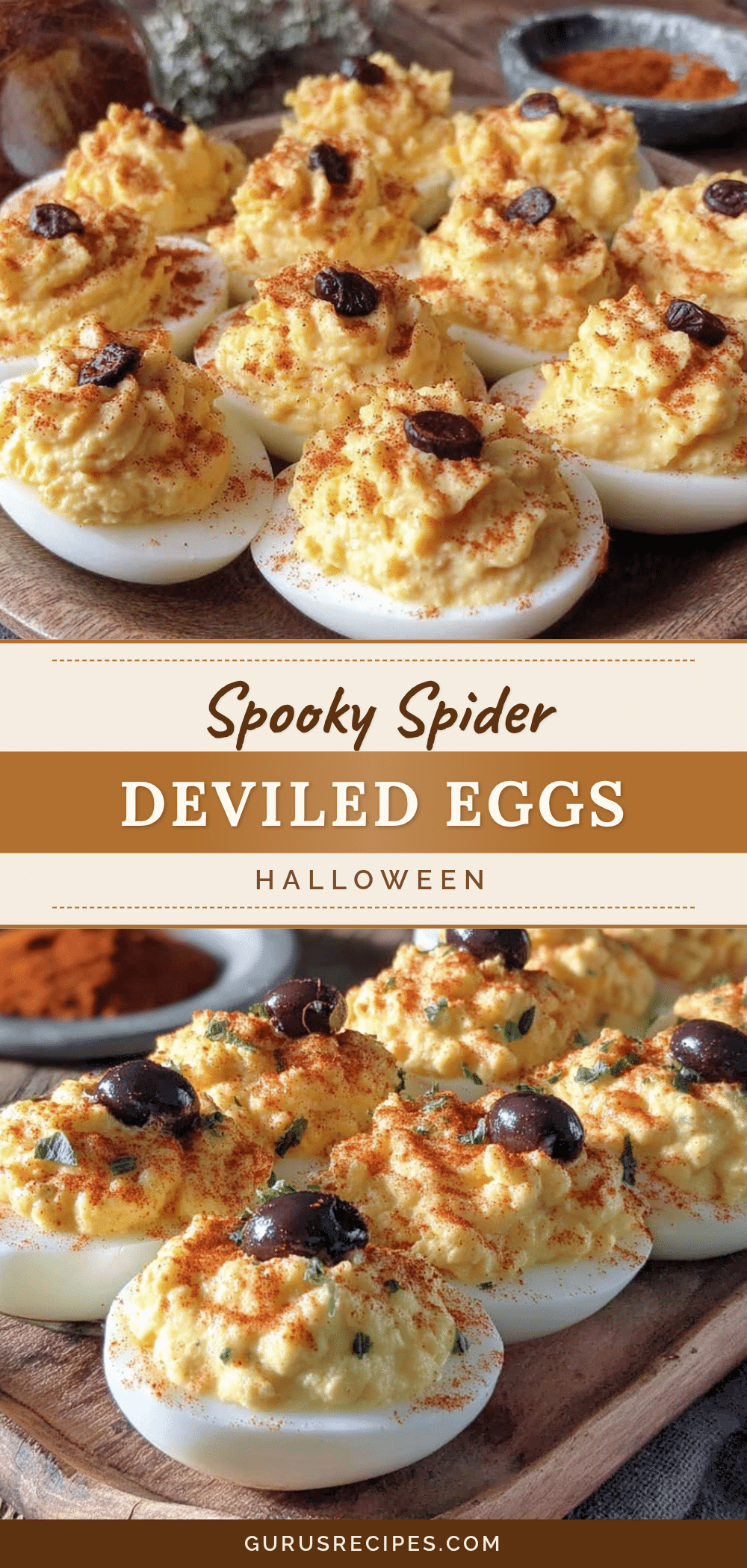

Spooky Spider Deviled Eggs: Easy Halloween Appetizer
These spooky spider deviled eggs for Halloween are a fun and easy appetizer that turns a classic deviled egg into a creepy-crawly treat. Perfect for parties, they’re made with simple ingredients and come together in under 30 minutes.
- Total Time: 32 minutes
- Yield: 24 servings 1x
Ingredients
- 12 large eggs (room temperature)
- 1/3 cup mayonnaise (preferably Duke’s or Hellmann’s)
- 1 tablespoon yellow mustard (or Dijon for a sharper kick)
- 1 teaspoon white vinegar
- 1/2 teaspoon fine sea salt
- 1/4 teaspoon freshly ground black pepper
- 1/2 teaspoon paprika (plus extra for garnish; smoked paprika adds depth)
- 1 can (6 oz) large black olives (jumbo or colossal size preferred)
- Optional: Fresh chives or parsley for garnish
Instructions
- Boil the eggs: Place 12 eggs in a single layer in a saucepan. Cover with cold water by about an inch. Bring to a rolling boil over high heat, then cover, remove from heat, and let sit for exactly 12 minutes. Meanwhile, fill a large bowl with ice water.
- Ice bath: After 12 minutes, transfer eggs to the ice water bath using a slotted spoon. Let chill for at least 10 minutes to stop cooking and make peeling easier.
- Peel the eggs: Gently crack shells all over, then peel under running cold water. Start at the wide end where the air pocket is. Pat peeled eggs dry with a paper towel.
- Slice and separate: Slice each egg in half lengthwise. Pop out yolks into a small mixing bowl. Arrange whites on a serving platter, cut side up.
- Make the filling: Mash yolks with a fork until fine crumbs. Add mayonnaise, mustard, vinegar, salt, pepper, and paprika. Mix until smooth and creamy. Taste and adjust seasoning if needed.
- Fill the eggs: Spoon filling into a piping bag or zip-top bag. Snip off a small corner (about 1/4 inch wide). Pipe filling into each egg white, swirling slightly. Fill generously so it mounds above the edge.
- Create the spiders: Drain olives and pat dry. For each spider, slice one olive in half crosswise. One half becomes the body. Slice the other half lengthwise into thin strips (6-8 per spider) for legs. Arrange legs on filling, then place body on top, slightly overlapping legs. Repeat for all 24 halves.
- Finish and garnish: Lightly dust finished eggs with paprika. If using chives or parsley, add sparingly around platter edges. Serve immediately or refrigerate until ready.
Notes
For best results, use eggs that are at least a week old for easier peeling. Jumbo olives make the spiders look more substantial. The filling can be made a day ahead and stored in a piping bag in the fridge. Assemble spiders no more than a few hours before serving to prevent olive legs from drying out. Deviled eggs can sit at room temperature for up to 2 hours safely; for longer parties, keep on ice.
- Prep Time: 20 minutes
- Cook Time: 12 minutes
- Category: Appetizer
- Cuisine: American
Nutrition
- Serving Size: 1 spider deviled egg
- Calories: 65
- Sugar: 0.5
- Sodium: 180
- Fat: 4.5
- Saturated Fat: 1.5
- Carbohydrates: 1
- Protein: 5
Keywords: Halloween deviled eggs, spider deviled eggs, spooky appetizer, easy Halloween recipe, deviled eggs with olives