

The lady at the next stall in the farmers market watched me juggle a bag of apples and a runaway bunch of kale. She didn’t say anything at first, just smiled and handed me a piece of paper torn from a notebook. “You look like you need breakfast tomorrow without the work,” she said. Her name was Margie, and she ran a tiny bakery stand next to the mushroom guy. That scrap of paper had her cinnamon roll casserole method scrawled on it—the one she made for her grandkids every Friday night. I almost lost it twice that day, once in my raincoat pocket and once under a stack of mail. But I kept it, and honestly, it changed how I do breakfast. Margie’s trick was using the canned rolls but treating them with respect, not like a shortcut. She added just enough cream and a whisper of vanilla to make it feel homemade without the whole flour-on-the-counter situation. Maybe you’ve had that moment where you want something special for breakfast but the thought of rolling dough makes you want to crawl back into bed. This is for those mornings. Or, you know, those evenings when you remember at 9 PM that you promised a big breakfast. This casserole has saved me more times than I can count, and it all started with a stranger at a market who understood that good food shouldn’t require a full night of prep.
Why You’ll Love This Recipe
Let’s be honest—most breakfast casseroles are a project. You’re chopping, whisking, layering, and hoping it all comes together before the kids start asking for cereal. This quick overnight cinnamon roll casserole flips that script completely. You toss everything together in about five minutes, let it sit overnight, and bake it in the morning. That’s it. No stress, no mess, no early morning kitchen chaos.
- Five-Minute Prep: I timed myself last week. From opening the cans to putting the dish in the fridge, it took four minutes and thirty-seven seconds. That’s less time than it takes to find a clean spatula.
- Pantry-Friendly Ingredients: You probably already have the cinnamon rolls, eggs, and cream on hand. No special trips to three different stores for obscure ingredients.
- Perfect for Busy Mornings: Whether it’s a school day, a holiday, or just a Tuesday that needs a little extra sweetness, this casserole delivers without demanding your morning energy.
- Crowd-Pleasing Magic: I’ve brought this to brunches, potlucks, and family gatherings. It disappears every single time. The texture is soft, gooey, and slightly caramelized on top—exactly what you want from a cinnamon roll experience.
- Make-Ahead Freedom: You can prep it the night before and forget about it. Your future self will thank you when you wake up and breakfast is basically ready to go.
What makes this different from every other cinnamon roll casserole out there? It’s the ratio. Most recipes drown the rolls in too much egg mixture, turning them into soggy bread pudding. Margie’s method uses just enough custard to soften the rolls without making them mushy. The edges get golden and slightly crispy while the centers stay tender and pull-apart soft. It’s not just another version—it’s the version that actually works for real weeknights and real mornings.
This recipe is the kind that makes you close your eyes after the first bite. It’s comfort food reimagined—faster, simpler, but with the same soul-soothing satisfaction. Perfect for impressing overnight guests without stress, or turning a regular breakfast into something memorable.
What Ingredients You Will Need
This recipe uses simple, everyday ingredients to deliver that bakery-style flavor without the bakery-style effort. Most of these are pantry staples or fridge basics you probably already have on hand.
For the Casserole Base
- 2 cans (12.4 oz each) refrigerated cinnamon rolls with icing (I prefer Pillsbury Grands! for the best texture and size, but store brands work fine too)
- 4 large eggs (room temperature helps them mix more evenly, but cold works in a pinch)
- 1/2 cup heavy cream (adds richness and prevents the casserole from drying out; you can substitute half-and-half in a pinch)
- 1 teaspoon vanilla extract (pure vanilla makes a difference here, but imitation works if that’s what you have)
- 1/2 teaspoon ground cinnamon (for extra warmth and depth)
- 1/4 teaspoon ground nutmeg (optional, but it adds a lovely subtle spice that complements the cinnamon)
For the Topping

- Reserved icing from the cinnamon roll cans (this is non-negotiable—it’s what makes the top glossy and sweet)
- 2 tablespoons unsalted butter (melted, for brushing on top before baking; adds golden color and richness)
A quick note on the cinnamon rolls: I’ve tested this with both the regular and the Grands! size. The Grands! hold up better because they’re thicker and don’t disintegrate as easily. If you can only find the smaller ones, reduce the baking time by about 5 minutes and keep an eye on them. Also, don’t throw away the icing packets—you’ll need them for the finish.
For the cream, I’ve used whole milk in a desperate moment, and it worked okay, but it wasn’t as luscious. The heavy cream really does make a difference in creating that soft, almost custard-like texture. If you’re dairy-free, full-fat canned coconut milk is a surprisingly good substitute. I tested it last Christmas for a friend with lactose issues, and she couldn’t tell the difference.
The eggs are the backbone here. They create the custard that soaks into the rolls and gives the casserole its structure. If you want to make this egg-free, I haven’t found a great alternative that keeps the same texture, but some readers have reported success with flax eggs (2 tablespoons ground flaxseed mixed with 6 tablespoons water, let sit for 5 minutes). I’d love to hear how that works for you if you try it.
Equipment Needed
You don’t need fancy equipment for this recipe, which is part of its beauty. Here’s what you’ll need:
- 9×13-inch baking dish (glass or ceramic works best; metal can cause the edges to brown too quickly)
- Large mixing bowl (for whisking the egg mixture)
- Whisk or fork (a fork works fine if your whisk is in the dishwasher)
- Measuring cups and spoons (for the cream, vanilla, and spices)
- Small bowl (for melting butter)
- Pastry brush or spoon (for brushing butter on top; a spoon works if you’re careful)
- Aluminum foil (for covering during the first part of baking)
I’ve made this in a round 9-inch cake pan when my 9×13 was in use, and it worked fine—just layer the rolls a little differently and check for doneness a few minutes early. A disposable aluminum pan works great for taking this to potlucks or holiday gatherings. Just place it on a baking sheet for stability in the fridge overnight.
If you don’t have a pastry brush, don’t sweat it. I’ve used the back of a spoon to spread melted butter over the top, and it worked just fine. The butter is mostly for color and flavor anyway, not for precise coverage.
Preparation Method
This is where the magic happens. The prep is ridiculously simple, but there are a few little tricks that make the difference between a good casserole and a great one. I’ve learned these through trial and error—and a few disappointing breakfasts.
- Grease your baking dish. Use butter or non-stick spray. Don’t skip this step, even if your dish is non-stick. The caramelized edges are the best part, and you want them to release easily.
- Open the cinnamon roll cans. Separate each roll and cut each one into quarters. I know, I know—it feels wrong to cut up those perfect spirals. But trust me, this is what creates those pull-apart pieces that everyone fights over. Use a sharp knife or kitchen shears. If the rolls are cold from the fridge, they cut more cleanly. (Pro tip: I learned this after squishing several rolls into sad little blobs with a dull knife.)
- Arrange the pieces in the baking dish. Scatter them evenly, trying to create a single layer with some overlapping. Don’t pack them too tightly—you want space for the custard to seep in between the pieces. Leave the icing packets aside for later.
- Make the custard mixture. In your large mixing bowl, whisk together the eggs, heavy cream, vanilla extract, ground cinnamon, and ground nutmeg. Whisk until the eggs are fully broken up and the mixture is smooth and slightly frothy. This takes about 30 seconds of steady whisking. If you see any streaks of egg white, keep whisking—you want a uniform mixture.
- Pour the custard over the rolls. Slowly and evenly drizzle the mixture over the cinnamon roll pieces. Try to cover as many pieces as possible. Then gently press down on the rolls with a spatula or your clean hands to help them absorb the liquid. Don’t mash them—just a gentle press to encourage absorption.
- Cover and refrigerate. Cover the dish tightly with plastic wrap or aluminum foil. Place it in the refrigerator for at least 4 hours, but overnight is best (8-12 hours). This is where the magic happens—the rolls absorb the custard, soften, and develop that incredible texture. If you’re in a hurry, you can bake it after just 30 minutes, but the texture won’t be as tender and the flavors won’t meld as deeply.
- Preheat the oven. When you’re ready to bake, preheat your oven to 350°F (175°C). Take the casserole out of the fridge while the oven heats up—about 15 minutes. This helps it bake more evenly.
- Brush with melted butter. Melt the 2 tablespoons of butter and brush it over the top of the casserole. This step adds golden color and a slight crispness to the top pieces.
- Bake covered. Cover the dish with aluminum foil and bake for 25 minutes. The foil traps steam and helps the center cook through without the top burning.
- Bake uncovered. Remove the foil and bake for another 15-20 minutes, until the top is golden brown and the center is set. You’ll know it’s done when a knife inserted in the center comes out clean or with just a few moist crumbs. The edges should be bubbling slightly.
- Cool slightly. Let the casserole rest for 5-10 minutes. This is important—it allows the custard to set fully. If you dig in right away, it will be too soft and runny. I learned this the hard way after serving a soupy mess to my in-laws.
- Add the icing. Microwave the reserved icing packets for 10-15 seconds to make them pourable. Drizzle evenly over the warm casserole. The heat will help the icing spread and soak into the top layer just a bit.
One more thing—if you’re making this for a holiday morning and want to save even more time, you can assemble everything the night before, including the butter brushing. Just cover and refrigerate, then pop it in the oven in the morning. The butter will have solidified, but it will melt beautifully during baking.
Cooking Tips & Techniques
I’ve made this casserole probably thirty times now, and I’ve collected a few hard-won lessons along the way. Here are the tips that actually matter:
The biggest mistake is over-soaking. I left a casserole in the fridge for 36 hours once (life got busy), and the rolls basically dissolved into a sweet, cinnamon-flavored porridge. It was still edible, but it wasn’t the pull-apart casserole I wanted. Stick to the 8-12 hour window for best results.
Don’t skip the foil cover. I got impatient one morning and baked it uncovered the whole time. The top burned while the center was still liquid. The foil creates a gentle steaming environment that cooks everything evenly. Your patience will be rewarded.
Let it rest. I cannot stress this enough. The casserole needs those 5-10 minutes after baking to set up properly. Use that time to make coffee, set the table, or wrangle the kids. The texture will be significantly better.
Room temperature eggs matter. Cold eggs don’t whisk as smoothly into the cream, and they can create a slightly uneven custard. If you forgot to take them out ahead of time, place them in a bowl of warm water for 5 minutes. It makes a real difference.
For extra crispy edges, bake it in a glass dish. Glass conducts heat more gently and evenly than metal, which can cause the edges to burn before the center is done. I’ve tested both, and glass wins every time.
Timing strategy: While the casserole bakes, you can prep other breakfast items. I usually start the bacon or sausage about 15 minutes before the casserole comes out, and I slice fruit while it rests. Everything comes together at the same time with minimal stress.
I once forgot to add the vanilla. The casserole was still good, but it was missing that warm, aromatic depth that makes it feel special. Don’t skip the vanilla—it’s a small ingredient with a big impact.
Variations & Adaptations
This recipe is wonderfully flexible. Here are some variations I’ve tried and loved:
Apple Cinnamon Version: Peel and dice one medium apple (Granny Smith or Honeycrisp work great) and scatter the pieces over the rolls before adding the custard. The apple softens during baking and adds little pockets of fruity sweetness. I tried this last fall, and it’s become my go-to for autumn mornings.
Pecan Praline Twist: After brushing the butter on top, sprinkle 1/2 cup of chopped pecans and 2 tablespoons of brown sugar over the casserole before baking. The nuts toast during baking, and the brown sugar creates a caramelized crust. My neighbor tried this version and now refuses to make it any other way.
Chocolate Lover’s Version: Sprinkle 1/2 cup of chocolate chips over the rolls before adding the custard. Use semi-sweet or dark chips to balance the sweetness of the cinnamon rolls. This one disappeared fastest at my last brunch gathering.
Dairy-Free Adaptation: Substitute the heavy cream with full-fat canned coconut milk and use a dairy-free butter alternative. The coconut flavor is subtle and actually complements the cinnamon nicely. I tested this for a friend with dairy allergies, and she couldn’t believe it wasn’t the original.
Gluten-Free Option: This one requires a swap—use gluten-free cinnamon rolls instead of regular ones. I’ve tested this with a few brands, and the texture is slightly different (a bit more dense), but the flavor is still fantastic. Just check the baking time, as gluten-free rolls may need a few extra minutes.
Individual Servings: Divide the mixture among greased muffin tins for individual portions. Reduce the baking time to about 15-18 minutes covered, then 5-8 minutes uncovered. These are perfect for meal prep or for serving a crowd where everyone wants their own piece.
Serving & Storage Suggestions
This casserole is best served warm, straight from the oven, with that glossy icing drizzled on top. The contrast between the warm, soft interior and the slightly crisp edges is what makes it so special.
Serving temperature: Aim for warm, not hot. Let it rest those 5-10 minutes after baking, and it will be perfect. If you’re serving a crowd, you can keep it warm in a 200°F oven for up to 30 minutes, but cover it loosely with foil to prevent drying out.
What to serve with it: A side of fresh fruit or a simple fruit salad balances the sweetness nicely. Scrambled eggs or bacon add protein and make it a complete meal. A dollop of Greek yogurt on the side cuts through the richness in the best way. For drinks, coffee is the obvious choice, but a cold glass of milk or a warm chai latte works beautifully too.
Storage: Leftovers keep well in the refrigerator for up to 3 days. Store them in an airtight container. The texture will soften slightly as it sits, but the flavor actually deepens overnight. I’ve been known to eat it cold straight from the fridge—don’t judge me.
Reheating: The best way to reheat is in a 350°F oven for about 10 minutes, which restores some of the crispy edges. The microwave works in a pinch (30-45 seconds per serving), but the texture will be softer. If you’re reheating a large portion, cover it with foil to prevent the top from drying out.
Freezing: You can freeze the baked casserole for up to 2 months. Let it cool completely, wrap it tightly in plastic wrap and then foil, and freeze. To serve, thaw overnight in the refrigerator and reheat in a 350°F oven for 15-20 minutes. The texture won’t be quite as perfect as fresh, but it’s still delicious and saves you on busy mornings.
Flavor development note: The flavors actually meld and deepen overnight in the fridge. I’ve found that day-old casserole tastes even more cinnamon-forward and cohesive than fresh. So don’t worry if you have leftovers—they might be even better the next day.
Nutritional Information & Benefits
Let’s be real—this is a treat, not a health food. But knowing what’s in it helps you enjoy it mindfully. Here’s the estimated nutrition per serving (based on 8 servings):
| Nutrient | Amount per Serving |
|---|---|
| Calories | 420 |
| Total Fat | 22g |
| Saturated Fat | 11g |
| Cholesterol | 145mg |
| Sodium | 580mg |
| Total Carbohydrates | 48g |
| Dietary Fiber | 1g |
| Sugars | 26g |
| Protein | 9g |
The eggs provide a good dose of protein and choline, which supports brain health. Cinnamon has anti-inflammatory properties and can help regulate blood sugar. The heavy cream adds calcium and vitamin A. That said, this is definitely a sometimes food—perfect for holidays, special occasions, or those mornings when you need a little extra comfort.
If you’re watching your sugar intake, you can reduce the icing by half or skip it altogether. The casserole is still sweet from the cinnamon rolls themselves. For a lower-calorie version, use half-and-half instead of heavy cream and reduce the butter brushing to just a teaspoon.
Potential allergens include wheat (from the cinnamon rolls), dairy (from the cream, butter, and icing), and eggs. If you’re serving a crowd with allergies, make sure to check labels and offer alternatives as needed.
Conclusion
This quick overnight cinnamon roll casserole is the kind of recipe that makes you look like a breakfast hero with almost zero effort. It’s perfect for busy weeknights when you want to prep ahead, for holiday mornings when you want to enjoy the moment instead of slaving over the stove, or for any day that deserves a little extra sweetness.
I love this recipe because it reminds me of Margie and that farmers market moment—a stranger sharing something simple that turned into a staple in my kitchen. It’s proof that good food doesn’t have to be complicated or time-consuming. Sometimes the best recipes come from a scrap of paper and a willingness to try something new.
I’d love to hear how this turns out for you. Did you try any of the variations? Did you discover a new favorite? Drop a comment below and let me know—your adaptations might inspire someone else to try it their own way. And if you loved it, share it with a friend who needs an easy breakfast win. Happy cooking, and may your mornings be warm, sweet, and stress-free!
Frequently Asked Questions
Can I make this casserole without the overnight soak?
Yes, you can bake it after just 30 minutes of soaking, but the texture won’t be as tender and the flavors won’t meld as deeply. The overnight rest is what gives this casserole its signature soft, pull-apart texture.
Can I use homemade cinnamon roll dough instead of canned?
Absolutely! If you have a favorite homemade cinnamon roll recipe, you can use that dough instead. Just prepare the rolls as usual, cut them into pieces, and proceed with the recipe. You may need to adjust the baking time slightly.
How do I know when the casserole is fully baked?
Insert a knife or toothpick into the center of the casserole. If it comes out clean or with just a few moist crumbs, it’s done. The edges should be golden brown and slightly bubbling, and the center should feel set when you gently shake the dish.
Can I double this recipe for a larger crowd?
Yes! Double all the ingredients and use a larger baking dish or two 9×13 dishes. The baking time may need to be increased by 5-10 minutes, so check for doneness with a knife test before pulling it out of the oven.
What’s the best way to reheat individual servings?
The microwave works great for single servings—just heat for 30-45 seconds. For best texture, reheat in a 350°F oven for about 10 minutes, which helps restore some of the crispy edges. Add a fresh drizzle of icing after reheating for that just-baked feel.
Pin This Recipe!
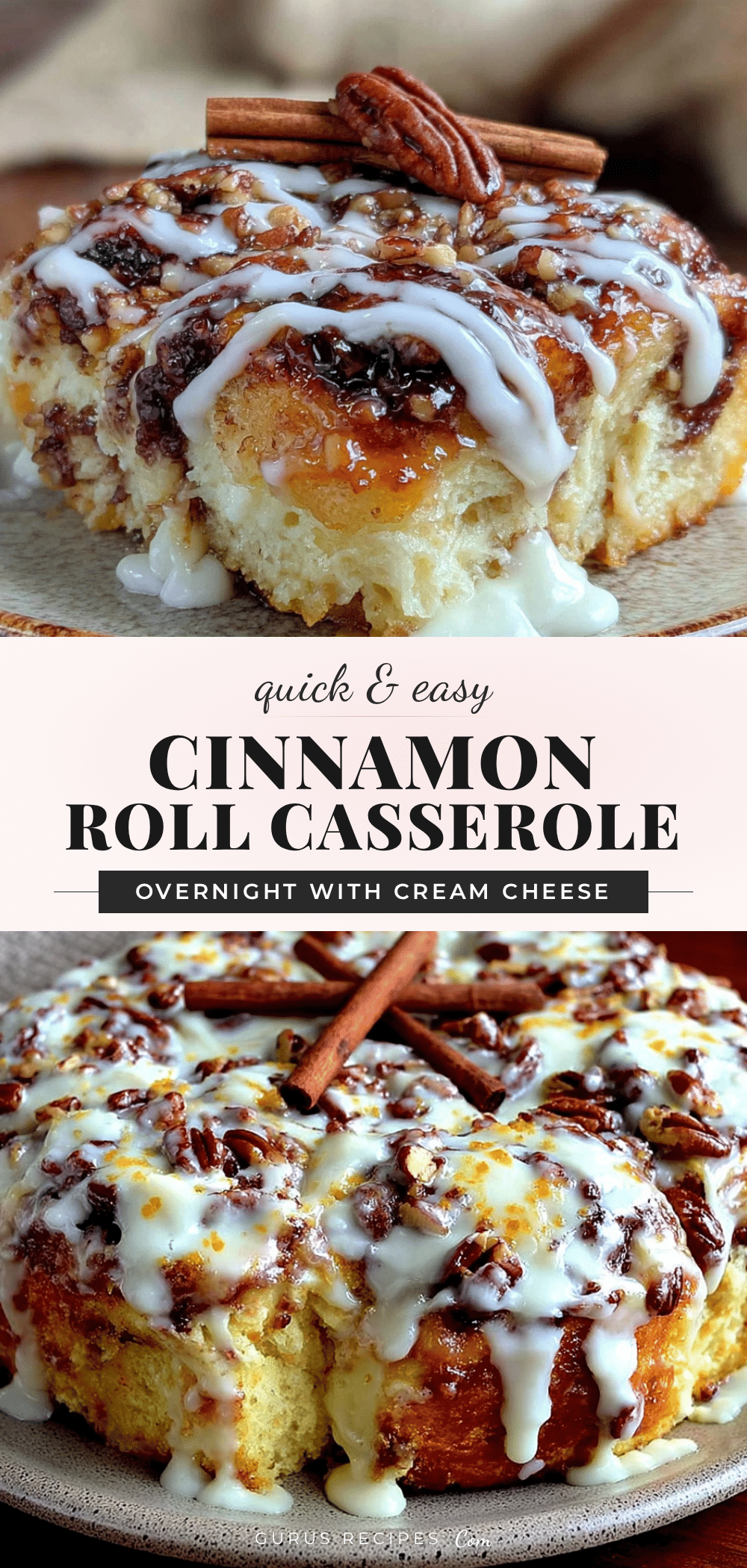

Quick Cinnamon Roll Casserole: Easy 5-Minute Prep
This quick overnight cinnamon roll casserole requires just 5 minutes of prep and delivers soft, gooey, pull-apart pieces with a slightly caramelized top. Perfect for busy mornings, holiday brunches, or any day that needs a little extra sweetness.
- Total Time: 45 minutes (plus 4-12 hours refrigeration)
- Yield: 8 servings 1x
Ingredients
- 2 cans (12.4 oz each) refrigerated cinnamon rolls with icing
- 4 large eggs, room temperature
- 1/2 cup heavy cream
- 1 teaspoon vanilla extract
- 1/2 teaspoon ground cinnamon
- 1/4 teaspoon ground nutmeg (optional)
- Reserved icing from the cinnamon roll cans
- 2 tablespoons unsalted butter, melted
Instructions
- Grease a 9×13-inch baking dish with butter or non-stick spray.
- Open the cinnamon roll cans, separate each roll, and cut each into quarters.
- Arrange the pieces evenly in the baking dish, creating a single layer with some overlapping.
- In a large mixing bowl, whisk together eggs, heavy cream, vanilla extract, ground cinnamon, and ground nutmeg until smooth and slightly frothy.
- Pour the custard mixture slowly and evenly over the cinnamon roll pieces. Gently press down on the rolls with a spatula to help them absorb the liquid.
- Cover the dish tightly with plastic wrap or aluminum foil and refrigerate for at least 4 hours, preferably overnight (8-12 hours).
- When ready to bake, preheat oven to 350°F (175°C). Remove casserole from fridge and let sit for 15 minutes.
- Brush the melted butter over the top of the casserole.
- Cover with aluminum foil and bake for 25 minutes.
- Remove foil and bake for another 15-20 minutes, until top is golden brown and center is set (knife inserted in center comes out clean or with a few moist crumbs).
- Let casserole rest for 5-10 minutes.
- Microwave reserved icing packets for 10-15 seconds to make pourable, then drizzle evenly over warm casserole.
Notes
For best texture, refrigerate overnight (8-12 hours). Do not over-soak (max 12 hours) or rolls may dissolve. Let casserole rest 5-10 minutes after baking to set properly. Room temperature eggs create a smoother custard. Glass baking dish yields more even baking and crispier edges.
- Prep Time: 5 minutes
- Cook Time: 40-45 minutes
- Category: Breakfast
- Cuisine: American
Nutrition
- Serving Size: 1 serving (1/8 of ca
- Calories: 420
- Sugar: 26
- Sodium: 580
- Fat: 22
- Saturated Fat: 11
- Carbohydrates: 48
- Fiber: 1
- Protein: 9
Keywords: cinnamon roll casserole, overnight breakfast casserole, easy breakfast, make-ahead breakfast, cinnamon roll bake