

My brother asked why I couldn’t just use regular melted butter like everyone else. I was in the middle of explaining my “signature” stuffing method—the one I’d been perfecting for years—and he just stood there, holding a stick of butter, looking at me like I was overcomplicating things. I started to explain why that wouldn’t work—then stopped. Honestly, I had no good reason. I was just being stubborn.
So I let him brown the butter. And let me tell you, the kitchen smelled like heaven. That nutty, toasty aroma filled every corner of my apartment, and I knew right then I’d been wrong this whole time. The student had taught the teacher a thing or two about Thanksgiving dinner. This cozy brown butter sage stuffing with sourdough was born from that moment—a happy accident of letting go of control.
Maybe you’ve been there, too. You have a recipe you swear by, and someone suggests a tiny tweak, and your first instinct is to say no. But sometimes the best dishes come from those little surrenders. This stuffing is proof. It’s got that rich, nutty depth from the brown butter, the earthy warmth of fresh sage, and those perfect crispy edges from the sourdough. Every bite tastes like the coziest evening you’ve ever had.
Why You’ll Love This Recipe
This isn’t just another stuffing recipe. I’ve tested this one more times than I’d like to admit, and it’s the version I keep coming back to year after year. Here’s why it works so well:
- Quick & Easy: Comes together in about 45 minutes, most of which is hands-off oven time. Perfect for busy holiday mornings or a cozy weeknight side dish.
- Simple Ingredients: No fancy grocery trips needed. Sourdough, butter, sage, onion, celery—these are pantry staples for most of us.
- Perfect for Holidays: Whether it’s Thanksgiving, Christmas, or just a chilly Sunday dinner, this stuffing fits right in.
- Crowd-Pleaser: I’ve served this to picky eaters, vegetarian relatives, and my dad who “doesn’t like stuffing.” They all went back for seconds.
- Unbelievably Delicious: The brown butter adds this deep, almost caramel-like flavor that regular butter just can’t touch. Paired with the chewy sourdough and fragrant sage, it’s next-level comfort food.
What makes this recipe different from the rest is that brown butter step. It’s not just melted fat—it’s a flavor bomb. The milk solids toast and turn golden, releasing a nutty aroma that transforms the entire dish. I’ve tried dozens of stuffing recipes over the years, and this one is the only one that makes me close my eyes after the first bite. It’s comfort food reimagined—simple, soul-soothing, and totally memorable.
What Ingredients You Will Need
This recipe uses simple, wholesome ingredients that come together to create something truly special. Most of these are pantry staples, so you probably already have them on hand.
- Unsalted butter, 1 cup (2 sticks) — I prefer using unsalted so I can control the salt level. Land O’Lakes or Kerrygold are my go-to brands for consistent results.
- Sourdough bread, 1 large loaf (about 12 cups cubed) — Day-old or slightly stale bread works best. It holds its shape better and soaks up the broth without turning mushy. Look for a loaf with a sturdy crust.
- Fresh sage leaves, 1/4 cup packed, finely chopped — Fresh is non-negotiable here. Dried sage just doesn’t have the same aromatic punch. You’ll need about 15-20 large leaves.
- Yellow onion, 1 large, diced — About 2 cups. Sweet onions like Vidalia work well too, but yellow onions give that classic savory base.
- Celery stalks, 3 large, diced — About 1.5 cups. The celery adds a subtle freshness and crunch that balances the richness.
- Chicken or vegetable broth, 2 cups — Low-sodium is best so you can adjust the salt. I’ve used both homemade and store-bought (Swanson’s is a solid choice), and both work great.
- Eggs, 2 large, lightly beaten — These help bind the stuffing together so it’s not too crumbly.
- Salt, 1 teaspoon — Fine sea salt is my preference. Adjust to taste.
- Black pepper, 1/2 teaspoon, freshly ground — Freshly ground makes a difference here.
- Fresh parsley, 1/4 cup, chopped (optional, for garnish) — Adds a pop of color and freshness at the end.
Ingredient Tips: If you can’t find sourdough, a good rustic Italian or French bread works as a substitute. For a gluten-free version, use your favorite gluten-free bread—just make sure it’s sturdy and not too soft. If you’re dairy-free, you can swap the butter for a high-quality vegan butter, though the brown butter flavor won’t be quite the same. And if fresh sage isn’t available, use 1 tablespoon of dried sage, but reduce the amount slightly since dried herbs are more concentrated.
Equipment Needed
You don’t need a fancy kitchen to make this stuffing. Here’s what you’ll need:
- Large skillet or sauté pan — A 12-inch skillet works perfectly for browning the butter and cooking the vegetables. I use my trusty cast iron skillet for this—it heats evenly and gives the butter a nice, even toast.
- Large mixing bowl — For combining the bread cubes with the broth mixture. A big stainless steel or glass bowl works well.
- 9×13-inch baking dish — This is the standard size for this recipe. A ceramic or glass dish works great. If you’re feeding a crowd, you can double the recipe and use a larger dish.
- Sharp knife and cutting board — For dicing the onion, celery, and chopping the sage.
- Wooden spoon or spatula — For stirring the butter as it browns. A wooden spoon is great because it won’t scratch your pan.
- Measuring cups and spoons — Accuracy matters, especially for the broth and butter.
Budget-Friendly Alternatives: If you don’t have a 9×13 dish, you can use a cast iron skillet or even a foil pan. If you don’t have a large mixing bowl, use a stockpot. I’ve made this in a pinch with a metal roasting pan, and it turned out just fine. The key is having enough surface area for the stuffing to crisp up evenly.
Preparation Method

Let me walk you through this step by step. I’ve made this so many times I could do it in my sleep, but I’ll share all the little tricks I’ve learned along the way.
- Preheat your oven to 375°F (190°C). While it’s heating, spread your cubed sourdough on a large baking sheet in a single layer. Toast for about 10-12 minutes, stirring halfway through, until the cubes are dry and lightly golden. This step is crucial—it prevents the bread from turning into mush when you add the broth. You want them dry but not hard. Set aside to cool.
- Brown the butter. This is the star of the show. Place the 1 cup of butter in your large skillet over medium heat. Let it melt completely, then continue cooking, swirling the pan occasionally. You’ll see it start to foam and bubble. After about 4-5 minutes, the foam will subside, and you’ll notice little golden specks forming at the bottom of the pan. The butter will smell nutty and toasty. As soon as it turns a golden amber color—think the color of a hazelnut—remove it from the heat immediately. It can go from perfect to burnt in seconds, so don’t walk away. Pour the browned butter into a heat-safe bowl, leaving the dark bits behind in the pan (those are flavor gold, but you don’t want them to burn further).
- Cook the vegetables. In the same skillet (don’t wipe it clean!), add the diced onion and celery. Cook over medium heat for about 6-7 minutes, stirring occasionally, until the onions are translucent and the celery has softened. You can add a tablespoon of the browned butter here if the pan looks dry. The vegetables will pick up all those leftover brown butter bits from the pan—pure flavor.
- Add the sage. Stir in the chopped fresh sage and cook for another minute until fragrant. Your kitchen will smell incredible at this point. I always take a second to just breathe it in.
- Combine the bread and vegetables. In your large mixing bowl, add the toasted sourdough cubes and the cooked onion-celery-sage mixture. Toss gently to combine.
- Make the broth mixture. In a separate bowl or measuring cup, whisk together the 2 cups of broth, the 2 beaten eggs, 1 teaspoon of salt, and 1/2 teaspoon of black pepper. Pour this mixture evenly over the bread mixture. Toss gently with a spatula or your hands (clean hands work best!) until all the bread cubes are evenly moistened. Don’t overmix—you want some cubes to stay a little dry so they get crispy in the oven.
- Add the browned butter. Drizzle the reserved browned butter over the stuffing mixture and fold it in gently. Make sure it’s evenly distributed. The butter will coat the bread and add that nutty richness to every bite.
- Transfer to baking dish. Pour the stuffing into your greased 9×13-inch baking dish and spread it into an even layer. Don’t press it down too firmly—you want some air pockets for crispy edges.
- Bake. Place the dish in the preheated oven and bake for 30-35 minutes, until the top is golden brown and crispy. The edges should be dark and crunchy, and the center should be set but still moist. If you like it extra crispy, broil for the last 2-3 minutes, but watch it closely so it doesn’t burn.
- Rest and serve. Let the stuffing sit for about 5 minutes before serving. This allows it to set up a bit and makes it easier to scoop. Garnish with fresh parsley if you like, and serve warm.
Sensory Cue: When it’s done, the top should be deep golden brown and crunchy to the touch. The smell is incredible—nutty butter, earthy sage, and toasty bread all mingling together. You’ll know it’s right when you take that first bite and get that perfect contrast between the crispy top and the tender, flavorful interior.
Cooking Tips & Techniques
I’ve made every mistake in the book with this recipe, so you don’t have to. Here are the biggest lessons I’ve learned:
The biggest mistake is not toasting the bread enough. I once skipped this step because I was in a hurry, and the stuffing came out soggy and dense. Dry bread soaks up the broth without falling apart, so don’t rush this step. If your bread is fresh, cut it into cubes and leave it out on the counter overnight—that works too.
Another common issue is burning the brown butter. It happens fast. I’ve had a few batches go from perfect to acrid in under a minute. The trick is to watch for the foam to subside and the color to turn amber. Once you see those golden specks, pull it off the heat. If you’re nervous, use a light-colored pan so you can see the color change clearly.
Timing and multitasking are your friends here. While the bread is toasting in the oven, you can brown the butter and cook the vegetables. By the time the bread is done, the veggies are ready, and you can combine everything in one bowl. This whole process takes about 20 minutes of active work, then the oven does the rest.
For consistency, make sure your bread cubes are roughly the same size—about 1-inch cubes. This ensures even toasting and even cooking. If you have a mix of tiny crumbs and huge chunks, some parts will be overdone while others are underdone.
One last tip: If you’re making this ahead of time, assemble the stuffing completely (without baking), cover it, and refrigerate for up to 24 hours. When you’re ready to bake, add about 10 minutes to the cooking time since it’s starting from cold. The flavors actually meld together beautifully overnight.
Variations & Adaptations
This recipe is wonderfully flexible. Here are some ways I’ve adapted it over the years:
Vegetarian/Vegan Version: Use vegetable broth instead of chicken broth, and swap the butter for a high-quality vegan butter. Miyoko’s or Earth Balance work well. The brown butter flavor won’t be quite as rich, but it’s still delicious. Add some sautéed mushrooms for extra umami.
Add Some Protein: For a heartier stuffing, add 1 cup of cooked and crumbled Italian sausage or diced bacon. Cook the meat first, then use the rendered fat to cook the vegetables. It adds a smoky, savory depth that’s incredible.
Seasonal Twists: In the fall, add 1/2 cup of dried cranberries and 1/4 cup of chopped pecans for a sweet and crunchy contrast. In the spring, swap the sage for fresh thyme and rosemary, and add some sautéed leeks instead of onion.
Extra Crispy Version: If you love those crunchy bits (I do!), spread the stuffing in a thinner layer in a larger baking dish. Bake for an extra 5-7 minutes, and broil at the end for 2 minutes. You’ll get more surface area for browning.
Gluten-Free Option: Use a good quality gluten-free sourdough or rustic bread. I’ve had great results with the Against the Grain brand. Just make sure to toast it well, as gluten-free bread tends to be more delicate and can get mushy faster.
I once tried adding a handful of chopped apples to the mix, and honestly, it was a happy accident. The sweetness paired beautifully with the sage and brown butter. If you’re feeling adventurous, give it a try—it might become your new favorite.
Serving & Storage Suggestions
This stuffing is best served warm, straight from the oven. The contrast between the crispy top and the tender interior is at its peak within the first 15 minutes. I like to scoop it into a big serving bowl and let people help themselves.
What to serve with it: This stuffing is a natural companion to roasted turkey or chicken, but it’s also fantastic alongside a simple roast chicken or even a hearty lentil loaf. For a cozy weeknight meal, I’ve served it with a side of roasted Brussels sprouts and a drizzle of balsamic glaze. It also pairs beautifully with a crisp white wine like Sauvignon Blanc or a light Pinot Noir.
Storage: Leftover stuffing keeps well in the refrigerator for up to 4 days. Store it in an airtight container. The flavors actually deepen overnight, so leftovers are often even better the next day.
Reheating: The best way to reheat is in the oven at 350°F for about 10-15 minutes, covered with foil to prevent drying out. For extra crispiness, uncover for the last 5 minutes. You can also reheat individual portions in a skillet over medium heat, stirring occasionally. The microwave works in a pinch, but the texture won’t be as good—it’ll be softer.
Freezing: You can freeze the unbaked stuffing for up to 3 months. Assemble it in the baking dish, cover tightly with foil, and freeze. When you’re ready to bake, thaw it in the refrigerator overnight, then bake as directed, adding about 10-15 minutes to the cooking time. Baked stuffing also freezes well—just portion it out and reheat as needed.
Nutritional Information & Benefits
Here’s a rough estimate per serving (based on 8 servings):
- Calories: 320
- Total Fat: 18g
- Saturated Fat: 10g
- Cholesterol: 75mg
- Sodium: 480mg
- Total Carbohydrates: 32g
- Dietary Fiber: 2g
- Sugars: 4g
- Protein: 7g
Health Benefits: Sourdough bread is easier to digest than regular bread because the fermentation process breaks down some of the gluten and phytic acid. It also has a lower glycemic index, meaning it won’t spike your blood sugar as much. Sage is packed with antioxidants and has anti-inflammatory properties—it’s been used in traditional medicine for centuries. And while butter gets a bad rap, it contains butyrate, a fatty acid that supports gut health. This stuffing is comfort food that actually has some redeeming qualities.
Dietary Considerations: This recipe contains gluten and dairy. For a gluten-free version, use gluten-free bread. For dairy-free, use vegan butter. It’s not suitable for a low-carb or keto diet due to the bread, but you can reduce the portion size if you’re watching your carbs.
Conclusion
This cozy brown butter sage stuffing with sourdough has become my go-to for every holiday and cozy dinner. It’s the recipe that taught me to listen to the people in my kitchen—even when I think I know better. That little moment of surrender led to something truly special.
I love this recipe because it’s forgiving. You can tweak it, add to it, or keep it simple, and it always turns out delicious. The brown butter gives it a depth that feels fancy, but the ingredients are humble and accessible. It’s comfort food at its finest—the kind that makes you slow down and savor every bite.
I’d love to hear how it turns out for you. Did you try any variations? Did your family fight over the crispy edges? Drop a comment below and let me know. And if you share a photo on Pinterest or Instagram, tag me—I love seeing your creations. Happy cooking, friends!
Frequently Asked Questions
Can I make this stuffing ahead of time?
Absolutely! Assemble the stuffing completely (without baking), cover it, and refrigerate for up to 24 hours. When you’re ready to bake, add about 10 minutes to the cooking time since it’s starting from cold. The flavors actually meld together beautifully overnight.
Can I use dried sage instead of fresh?
You can, but fresh sage really makes a difference here. If you must use dried, use 1 tablespoon instead of 1/4 cup fresh, since dried herbs are more concentrated. The flavor won’t be as bright, but it’ll still be tasty.
Why is my stuffing soggy?
This usually happens if the bread isn’t dried out enough before baking. Make sure to toast the sourdough cubes until they’re dry and lightly golden. Also, don’t overmix the broth into the bread—you want some cubes to stay a little dry so they absorb moisture during baking and create that perfect texture.
Can I freeze this stuffing?
Yes! You can freeze either the unbaked or baked stuffing. For unbaked, assemble in the dish, cover tightly, and freeze for up to 3 months. Thaw overnight in the fridge before baking. For baked stuffing, portion it out and freeze in airtight containers. Reheat in the oven for best results.
What can I substitute for sourdough bread?
A good rustic Italian or French bread works great as a substitute. Just make sure it has a sturdy crust and is a day or two old. For a gluten-free option, use your favorite gluten-free bread—just toast it well to prevent sogginess.
Pin This Recipe!
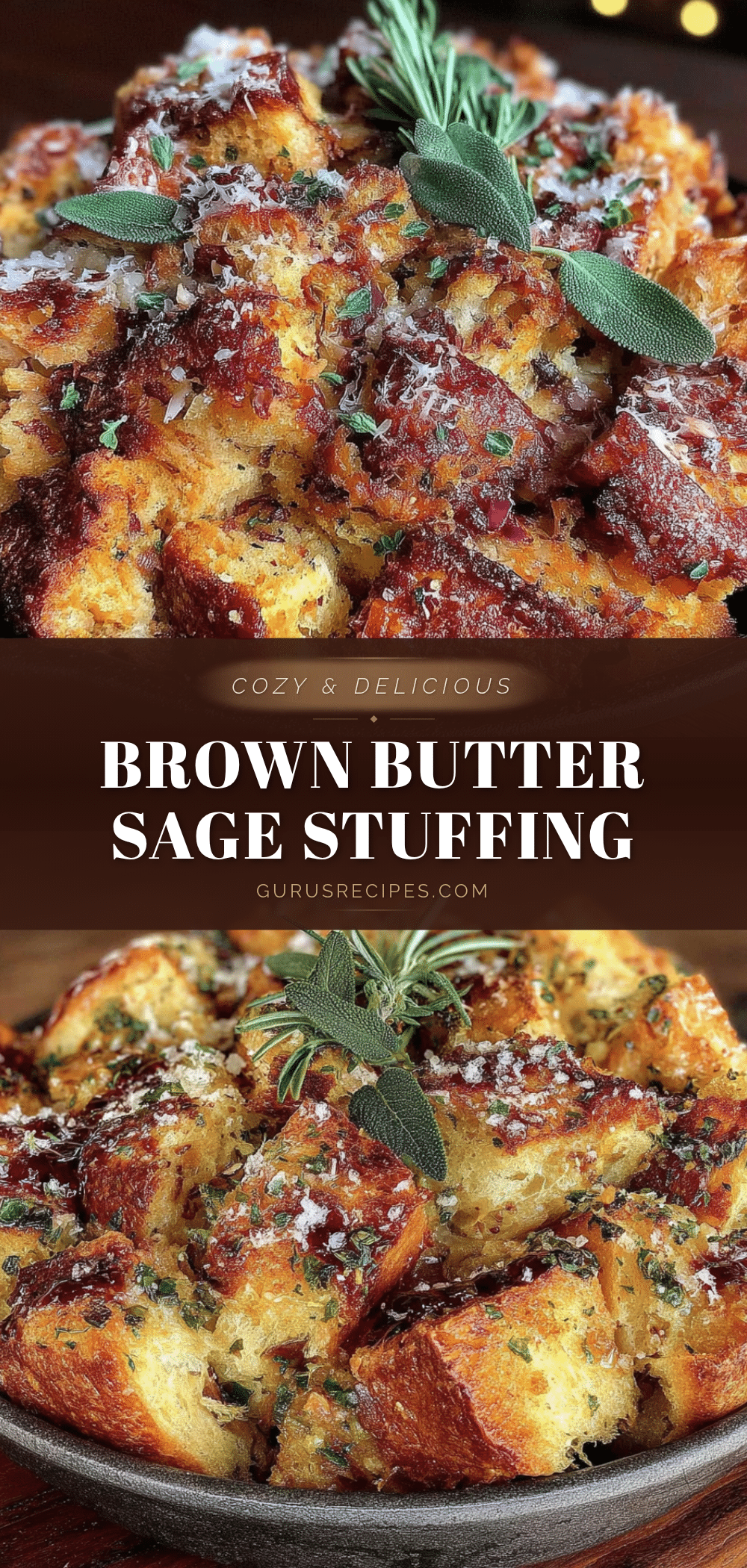

Cozy Brown Butter Sage Stuffing with Sourdough
This stuffing features rich, nutty brown butter, earthy fresh sage, and crispy sourdough edges. It’s a comforting, crowd-pleasing side dish perfect for holidays or cozy dinners.
- Total Time: 55 minutes
- Yield: 8 servings 1x
Ingredients
- 1 cup (2 sticks) unsalted butter
- 1 large loaf sourdough bread (about 12 cups cubed)
- 1/4 cup packed fresh sage leaves, finely chopped
- 1 large yellow onion, diced (about 2 cups)
- 3 large celery stalks, diced (about 1.5 cups)
- 2 cups low-sodium chicken or vegetable broth
- 2 large eggs, lightly beaten
- 1 teaspoon fine sea salt
- 1/2 teaspoon freshly ground black pepper
- 1/4 cup fresh parsley, chopped (optional, for garnish)
Instructions
- Preheat oven to 375°F (190°C). Spread cubed sourdough on a large baking sheet in a single layer. Toast for 10-12 minutes, stirring halfway, until dry and lightly golden. Set aside to cool.
- Brown the butter: Place 1 cup butter in a large skillet over medium heat. Melt completely, then continue cooking, swirling occasionally, until it foams, subsides, and turns golden amber with nutty aroma (about 4-5 minutes). Remove from heat immediately and pour into a heat-safe bowl, leaving dark bits behind.
- In the same skillet, cook diced onion and celery over medium heat for 6-7 minutes, stirring occasionally, until onions are translucent and celery softened. Add a tablespoon of browned butter if needed.
- Stir in chopped fresh sage and cook for 1 minute until fragrant.
- In a large mixing bowl, combine toasted sourdough cubes and cooked onion-celery-sage mixture. Toss gently.
- In a separate bowl, whisk together broth, beaten eggs, salt, and pepper. Pour evenly over bread mixture and toss gently until evenly moistened. Do not overmix.
- Drizzle reserved browned butter over stuffing and fold in gently until evenly distributed.
- Transfer to a greased 9×13-inch baking dish and spread into an even layer. Do not press down firmly.
- Bake for 30-35 minutes until top is golden brown and crispy. For extra crispiness, broil for 2-3 minutes at the end, watching closely.
- Let rest for 5 minutes before serving. Garnish with fresh parsley if desired.
Notes
Toast bread well to prevent sogginess. Watch brown butter closely to avoid burning. For make-ahead, assemble without baking, cover, and refrigerate up to 24 hours; add 10 minutes to bake time. For extra crispy, spread in a thinner layer and bake longer.
- Prep Time: 20 minutes
- Cook Time: 35 minutes
- Category: Side Dish
- Cuisine: American
Nutrition
- Serving Size: 1 serving (about 1 c
- Calories: 320
- Sugar: 4
- Sodium: 480
- Fat: 18
- Saturated Fat: 10
- Carbohydrates: 32
- Fiber: 2
- Protein: 7
Keywords: brown butter, sage, stuffing, sourdough, Thanksgiving, holiday, side dish, comfort food