
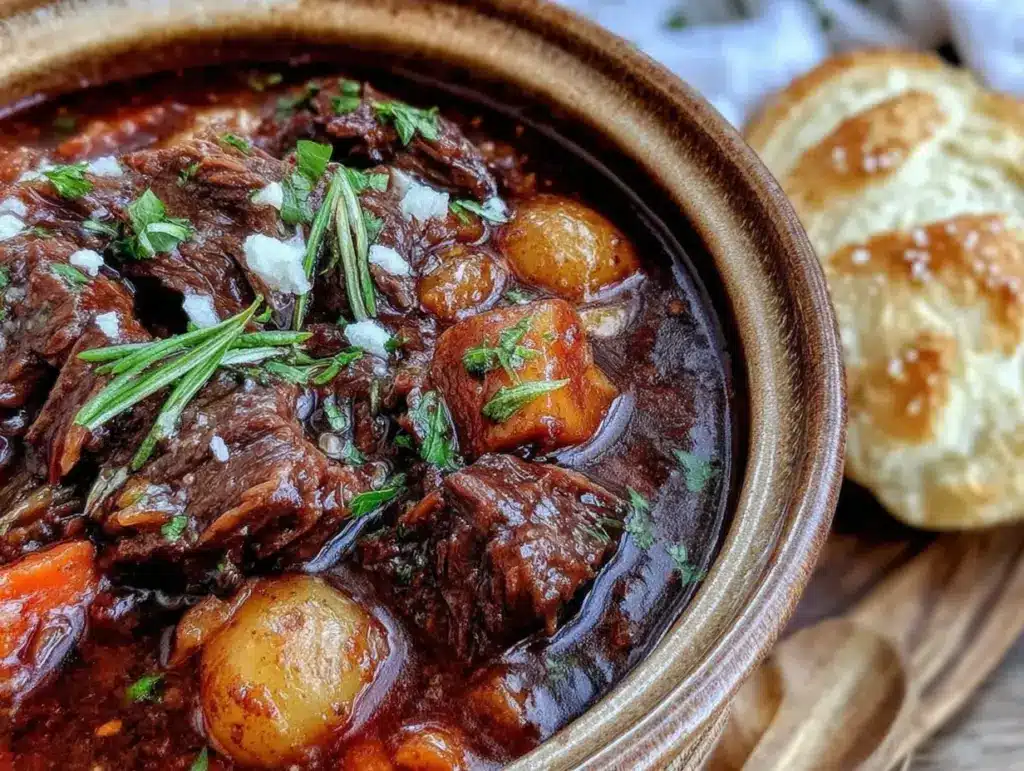
My husband had sworn off beef stew for a solid decade. “It’s always the same,” he’d say, “mushy vegetables and tough meat in a watery broth.” He’d make a face whenever I brought it up. Then, last February, after a particularly brutal day of shoveling snow, I threw this version together just for myself—a little experiment to use up the carrots and parsnips sitting in the crisper drawer. I didn’t even tell him what was for dinner. I just set the crockpot on low and let it do its thing.
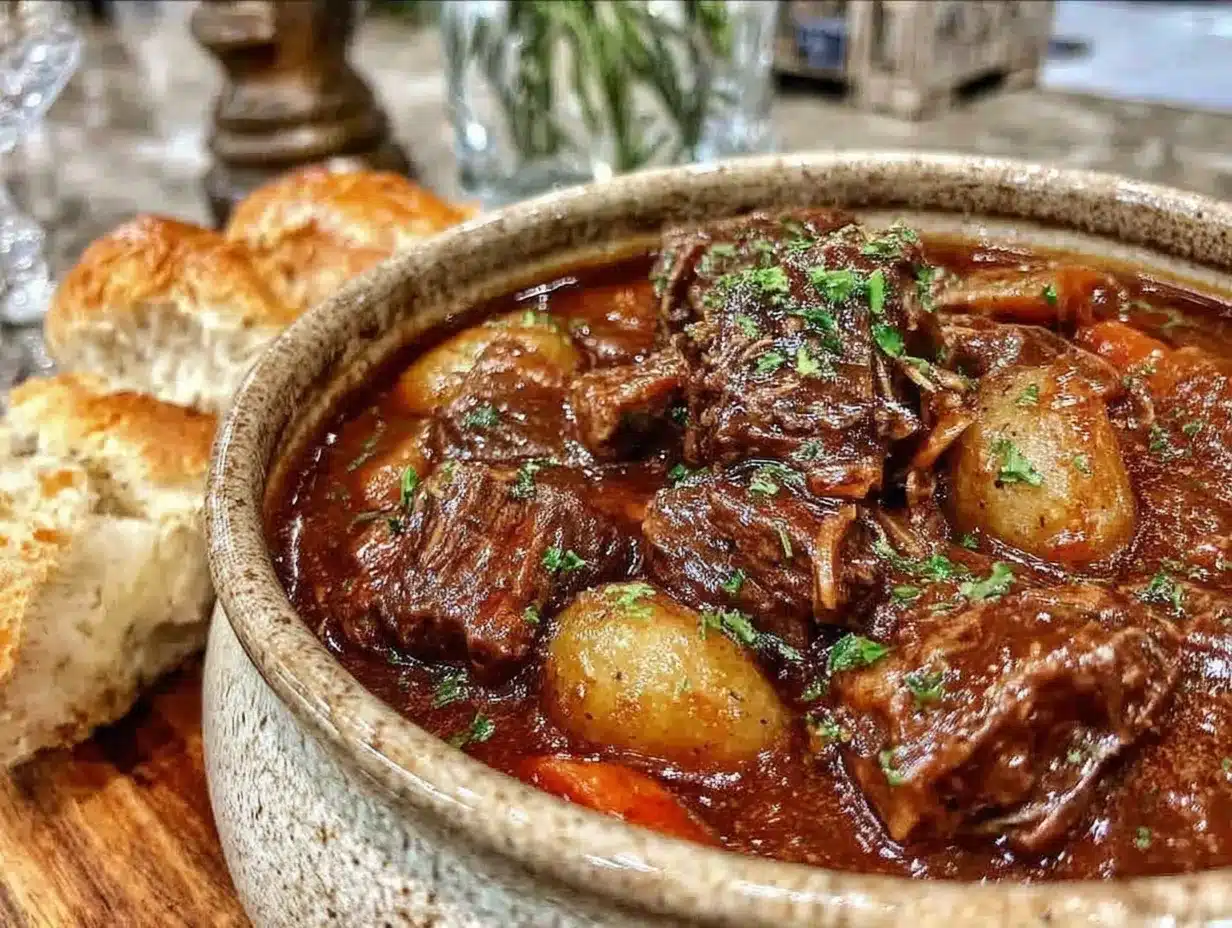
Around six o’clock, the house smelled like someone had bottled up comfort itself. I walked into the kitchen to find him standing over the crockpot, lifting the lid with a spoon. “What is this?” he asked, already dipping a piece of bread into the broth. I just smiled. That night, he ate two bowls and asked if I could make it again the following week. I mean, honestly, I wasn’t surprised—but I let him think he discovered it on his own. The secret? Letting the root vegetables get sweet and tender while the beef breaks down into fork-tight perfection. It’s the kind of meal that proves itself without any fanfare.
If you’ve ever had one of those nights where you want something hearty but don’t want to stand over a stove for hours, this is your answer. This crockpot beef stew has become our go-to for busy weeknights and lazy Sundays alike. It’s simple, it’s forgiving, and it fills your kitchen with the kind of aroma that makes everyone wander in asking, “What’s for dinner?”
Why You’ll Love This Recipe
Let’s be real—we’ve all had a bad beef stew. The kind where the meat is dry, the broth tastes like nothing, and the carrots are either raw or complete mush. This recipe is none of those things. Here’s why it works so well:
- Set It and Forget It: Fifteen minutes of prep in the morning, and dinner is ready when you are. No stirring, no fussing, no stress.
- Simple Ingredients: Everything on this list is probably already in your kitchen or at your local grocery store. No weird specialty items.
- Perfect for Meal Prep: This stew actually tastes better the next day. Make it on Sunday and eat well all week long.
- Crowd-Pleaser: I’ve served this to picky kids, vegetarian friends (they had a version with extra mushrooms), and my dad who “doesn’t like stew.” Everyone asks for seconds.
- Unbelievably Tender Meat: The low-and-slow cooking method turns an affordable cut of beef into something that melts in your mouth.
What makes this version different from the dozens of other stew recipes out there? It’s the layering of flavors. Most recipes just dump everything in the pot and call it a day. But taking an extra five minutes to sear the beef and sauté the tomato paste makes a world of difference. That browning adds a depth you just can’t get any other way. It’s still incredibly easy—just one extra step that pays off big time.
This isn’t just good stew. It’s the kind that makes you close your eyes after the first bite, lean back in your chair, and let out a little sigh. It’s comfort food that feels wholesome and nourishing, without any of the guilt. Perfect for those nights when you need a hug in a bowl.
What Ingredients You Will Need
This recipe uses simple, wholesome ingredients that work together to create a rich, satisfying stew. Most of these are pantry staples, and the fresh produce is easy to find year-round.
For the Beef and Browning
- 2 pounds beef chuck or round stew meat, cut into 1.5-inch cubes (look for well-marbled pieces for the most tenderness)
- 2 tablespoons all-purpose flour (helps thicken the stew and gives the meat a nice crust)
- 1 teaspoon salt
- 1/2 teaspoon black pepper
- 2 tablespoons olive oil, divided
For the Aromatic Base
- 1 large yellow onion, diced
- 3 cloves garlic, minced (I use a microplane for this—it melts right into the broth)
- 2 tablespoons tomato paste (adds richness and color)
- 1 cup dry red wine, like Cabernet or Merlot (or substitute with extra beef broth)
For the Vegetables
- 4 medium carrots, peeled and cut into 1-inch chunks
- 3 parsnips, peeled and cut into 1-inch chunks (they add a subtle sweetness)
- 3 celery stalks, sliced into 1/2-inch pieces
- 1.5 pounds Yukon Gold potatoes, scrubbed and cut into 1.5-inch chunks (they hold their shape better than Russets)
- 2 cups cremini mushrooms, halved (optional, but I love the earthy flavor)
For the Broth and Seasoning
- 4 cups low-sodium beef broth (I prefer Kitchen Basics or Swanson)
- 1 tablespoon Worcestershire sauce
- 2 bay leaves
- 1 teaspoon dried thyme
- 1 teaspoon dried rosemary
- 1 tablespoon balsamic vinegar (added at the end—brightens everything up)
- Fresh parsley, chopped, for garnish
Ingredient Tips: For the beef, look for chuck or round—these cuts have enough fat and connective tissue to become tender during long cooking. Avoid lean cuts like sirloin, which will dry out. For the wine, use something you’d actually drink, not “cooking wine.” The alcohol cooks off, but the flavor remains. If you want to skip the wine, just use an extra cup of broth mixed with a tablespoon of apple cider vinegar.
For the vegetables, feel free to swap based on what you have. Turnips or rutabagas work beautifully instead of parsnips. Sweet potatoes can replace some of the Yukon Golds, though they’ll get a bit softer. And if you’re not a mushroom person, just leave them out—the stew is still fantastic without them.
Equipment Needed
You don’t need a lot of fancy equipment for this recipe, which is part of its charm. Here’s what you’ll need:
- A 6-quart or larger slow cooker (crockpot). This size gives the ingredients room to cook evenly. If yours is smaller, just reduce the quantities slightly.
- A large skillet or Dutch oven for searing the meat and sautéing the aromatics. A cast-iron skillet works great here because it holds heat well.
- A sharp chef’s knife and a sturdy cutting board. You’ll be doing a fair amount of chopping, so make sure your knife is sharp.
- Measuring cups and spoons. Nothing fancy needed.
- A wooden spoon for stirring and scraping up the browned bits from the skillet.
- Tongs for turning the meat while searing.
If you don’t have a slow cooker, you can absolutely make this in a Dutch oven on the stovetop or in the oven. Just follow the same steps, then simmer on low heat (or in a 325°F oven) for about 2 to 2.5 hours, or until the meat is tender. I’ve done it both ways, and honestly, the slow cooker version is slightly more forgiving because you can’t accidentally boil it.
For a budget-friendly option, a basic slow cooker from a thrift store works just fine. Just test it with water first to make sure it heats properly. I found my current one for eight dollars at a garage sale, and it’s been going strong for five years.
Preparation Method
This recipe comes together in about 20 minutes of active prep time, then the crockpot does the rest. Here’s how to do it:
- Prep the beef. Pat the beef cubes dry with paper towels. This is important—if the meat is wet, it won’t brown properly. In a large bowl, toss the beef with the flour, salt, and pepper until evenly coated.
- Sear the meat. Heat 1 tablespoon of olive oil in a large skillet over medium-high heat. Working in batches (don’t crowd the pan), add the beef cubes in a single layer. Let them sear without moving for 3-4 minutes until deeply browned. Flip and sear the other side for another 2-3 minutes. Transfer the browned meat to the slow cooker. Your pan should have nice brown bits stuck to the bottom—that’s flavor gold.
- Sauté the aromatics. Reduce the heat to medium and add the remaining tablespoon of olive oil. Add the diced onion and cook for 4-5 minutes until softened and translucent. Add the garlic and cook for another 30 seconds until fragrant. Stir in the tomato paste and cook for 1 minute, stirring constantly. It should darken slightly and smell rich.
- Deglaze the pan. Pour in the red wine (or extra broth) and scrape up all those browned bits from the bottom of the skillet. Let it simmer for 2-3 minutes until slightly reduced. Pour this mixture over the beef in the slow cooker.
- Layer the vegetables. Add the carrots, parsnips, celery, potatoes, and mushrooms (if using) to the slow cooker. Don’t stir too much—you want the vegetables to stay somewhat separate so they cook evenly.
- Add the broth and seasonings. Pour in the beef broth and Worcestershire sauce. Add the bay leaves, thyme, and rosemary. Give everything a gentle stir to combine. The liquid should come about three-quarters of the way up the ingredients—if it doesn’t quite reach, add a little more broth or water.
- Cook low and slow. Cover and cook on LOW for 8-10 hours or on HIGH for 4-5 hours. I prefer the low setting for this recipe—the meat gets noticeably more tender. Your house will start smelling incredible around hour three.
- Finish with balsamic vinegar. About 15 minutes before serving, stir in the balsamic vinegar. This brightens the flavors and adds a subtle tang that balances the richness. Remove the bay leaves. Taste and adjust salt and pepper if needed.
- Serve and garnish. Ladle the stew into bowls and top with fresh parsley. Serve with crusty bread or over egg noodles if you want something extra hearty.
A note on timing: If you’re cooking on high, check the meat at the 4-hour mark. It should be fork-tender but not falling apart. On low, it’s pretty forgiving—even at 10 hours, the meat will be perfect and the vegetables will still hold their shape.
Cooking Tips & Techniques
After making this stew more times than I can count, I’ve learned a few things the hard way. Here are my best tips:
Don’t skip the searing step. I know it’s tempting to just throw everything in the crockpot raw, but browning the meat adds a depth of flavor that you simply cannot get any other way. That dark crust on the beef is pure umami. Plus, the browned bits in the pan become the foundation of your broth. Trust me on this one—it’s worth the extra ten minutes.
Cut your vegetables to the same size. This might seem like a small thing, but it makes a huge difference. If your potato chunks are twice the size of your carrot chunks, one will be perfect while the other is either undercooked or mush. Aim for 1-inch chunks across the board.
Watch your liquid level. A common mistake with slow cooker stews is adding too much liquid. Remember, the vegetables and meat will release their own moisture as they cook. If you fill the crockpot to the brim, you’ll end up with soup instead of stew. The liquid should come about three-quarters of the way up the ingredients—not covering them completely.
Add delicate herbs at the end. Dried thyme and rosemary can handle hours of cooking, but fresh herbs like parsley or dill should be added right before serving. Their flavor fades quickly with prolonged heat.
Thicken if needed. If your stew is thinner than you’d like, mix 2 tablespoons of cornstarch with 2 tablespoons of cold water to make a slurry. Stir it in about 30 minutes before serving, then let the stew simmer uncovered for the last 15 minutes. The flour from the initial coating on the beef usually thickens things enough for me, but it depends on how much liquid your vegetables release.
One mistake I made early on: I once used baby carrots instead of full-sized ones. They completely disintegrated after 8 hours, leaving me with orange-tinted broth and no actual carrot pieces. Use whole carrots and cut them yourself—they hold up much better.
Variations & Adaptations
One of the best things about this stew is how adaptable it is. Here are some ways to make it your own:
Dietary Variations:
- Gluten-Free: Skip the flour when coating the beef (or use a gluten-free all-purpose blend). The stew will still thicken naturally from the vegetables.
- Low-Carb/Keto: Replace the potatoes with cauliflower florets or turnips. Add them during the last 2 hours of cooking so they don’t turn to mush.
- Dairy-Free: This recipe is naturally dairy-free as written. Just double-check your Worcestershire sauce—some brands contain anchovies, which is fine for most, but there are vegan versions available.
Flavor Twists:
- Herb Swap: Try fresh rosemary sprigs instead of dried, or add a bundle of fresh thyme. Remove the stems before serving.
- Spicy Kick: Add a teaspoon of smoked paprika and a pinch of cayenne pepper along with the dried herbs. It adds warmth without being overpowering.
- Beer Instead of Wine: Swap the red wine for a dark beer like a stout or porter. It gives the stew a rich, malty flavor that’s fantastic on cold nights.
Seasonal Adaptations:
- Spring: Swap the parsnips for fresh peas and asparagus (add them in the last 30 minutes).
- Summer: Use fresh tomatoes instead of tomato paste, and add zucchini during the last hour.
- Fall: Add cubed butternut squash along with the potatoes. It gets sweet and creamy as it cooks.
I once made this with a leftover bottle of red wine that had been open for a few days. It was fine—not as bright as fresh wine, but still good. Don’t be afraid to experiment with what you have on hand.
Serving & Storage Suggestions
This stew is incredibly versatile when it comes to serving. Here’s how to make the most of it:
Serving: Ladle the stew into deep bowls while it’s piping hot. A sprinkle of fresh parsley adds color and freshness. For a complete meal, serve with crusty bread for sopping up the broth, or spoon it over buttered egg noodles, mashed potatoes, or rice. I’ve even served it in bread bowls for a fun dinner party—just hollow out round sourdough loaves and fill them with stew.
What to Drink: A full-bodied red wine like a Zinfandel or Syrah pairs beautifully. For non-alcoholic options, a dark, rich pomegranate juice or a spiced apple cider works wonderfully.
Storage: This stew is one of those rare dishes that actually tastes better the next day. Let it cool completely, then transfer to an airtight container. It will keep in the refrigerator for up to 4 days. The flavors continue to meld, and the broth thickens slightly as it sits.
Freezing: This stew freezes beautifully. Portion it into freezer-safe containers or zip-top bags, leaving about an inch of headroom for expansion. It will keep for up to 3 months. Thaw overnight in the refrigerator before reheating.
Reheating: The best way to reheat is on the stovetop over medium-low heat, stirring occasionally. Add a splash of broth or water if it’s too thick. You can also reheat individual portions in the microwave—just cover the bowl and heat in 1-minute increments, stirring in between.
One thing I’ve noticed: the potatoes absorb more liquid as the stew sits, so leftovers might be thicker than the original batch. That’s not a bad thing—it almost becomes a different dish, richer and more concentrated.
Nutritional Information & Benefits
This stew is as nourishing as it is comforting. Here’s a rough breakdown per serving (based on 8 servings):
| Nutrient | Amount per Serving |
|---|---|
| Calories | 385 |
| Protein | 32g |
| Fat | 14g |
| Carbohydrates | 32g |
| Fiber | 6g |
| Iron | 25% DV |
| Vitamin A | 80% DV |
| Vitamin C | 30% DV |
The beef provides high-quality protein and iron, which is especially important if you’re active or have higher iron needs. The root vegetables are packed with fiber, vitamins A and C, and antioxidants. Carrots are great for eye health, parsnips provide folate, and potatoes offer potassium—more than a banana, actually.
This meal is naturally dairy-free and can easily be made gluten-free. It’s also relatively low in added sugars (the balsamic vinegar adds just a trace). The only potential allergen to watch for is the Worcestershire sauce, which contains anchovies. If you’re allergic to fish, use a vegan Worcestershire or simply omit it—the stew will still be delicious.
From a wellness perspective, this is the kind of meal that makes you feel good from the inside out. It’s hearty enough to satisfy a big appetite but light enough that you don’t feel weighed down. The balance of protein, healthy carbs, and vegetables means it keeps you full for hours without that heavy, sluggish feeling.
Conclusion
If you take nothing else away from this post, let it be this: a great beef stew doesn’t have to be complicated. It just needs time, good ingredients, and a little bit of love. This crockpot version delivers everything you want from a comfort meal—tender meat, sweet vegetables, and a rich, savory broth—without requiring you to stand over a stove all afternoon.
I love this recipe because it’s forgiving. You can swap vegetables, adjust the seasonings, or even use a different cut of meat, and it still turns out beautifully. It’s the kind of dish that makes you look like a hero with very little effort. And honestly, isn’t that what we all want on a busy weeknight?
Try it this week. Let the crockpot do the work while you go about your day. Then come home to a kitchen that smells like comfort itself. And when you take that first bite, I think you’ll understand why my husband—the man who swore off beef stew for ten years—now asks for it by name.
I’d love to hear how it turns out for you! Leave a comment below and let me know what variations you tried, or share a photo of your stew. Happy cooking!
Frequently Asked Questions
Can I make this stew in an Instant Pot?
Yes, absolutely! Use the sauté function to brown the meat and cook the aromatics, then add the remaining ingredients. Pressure cook on high for 35 minutes with a natural release. The vegetables will be slightly firmer than the slow cooker version, which some people actually prefer.
Why is my beef stew meat tough?
This usually happens for one of two reasons: either the meat wasn’t cooked long enough to break down the connective tissue, or you used a lean cut like sirloin. Chuck or round needs at least 8 hours on low in a slow cooker. If it’s still tough, give it another hour or two.
Can I add frozen vegetables to this recipe?
Frozen peas and corn can be added during the last 30 minutes of cooking, but I don’t recommend frozen carrots or potatoes—they’ll turn mushy. Fresh root vegetables hold up much better to long cooking times.
How do I prevent my potatoes from turning mushy?
Use waxy potatoes like Yukon Golds or red potatoes instead of Russets. They have less starch and hold their shape better. Also, cut them into larger chunks—about 1.5 inches—so they don’t break down as quickly.
Can I double this recipe?
Yes, as long as your slow cooker is big enough. A 6-quart cooker can handle a double batch, but a 4-quart might be too full. Remember not to fill the pot more than three-quarters full, or it won’t cook evenly and might bubble over.
Pin This Recipe!
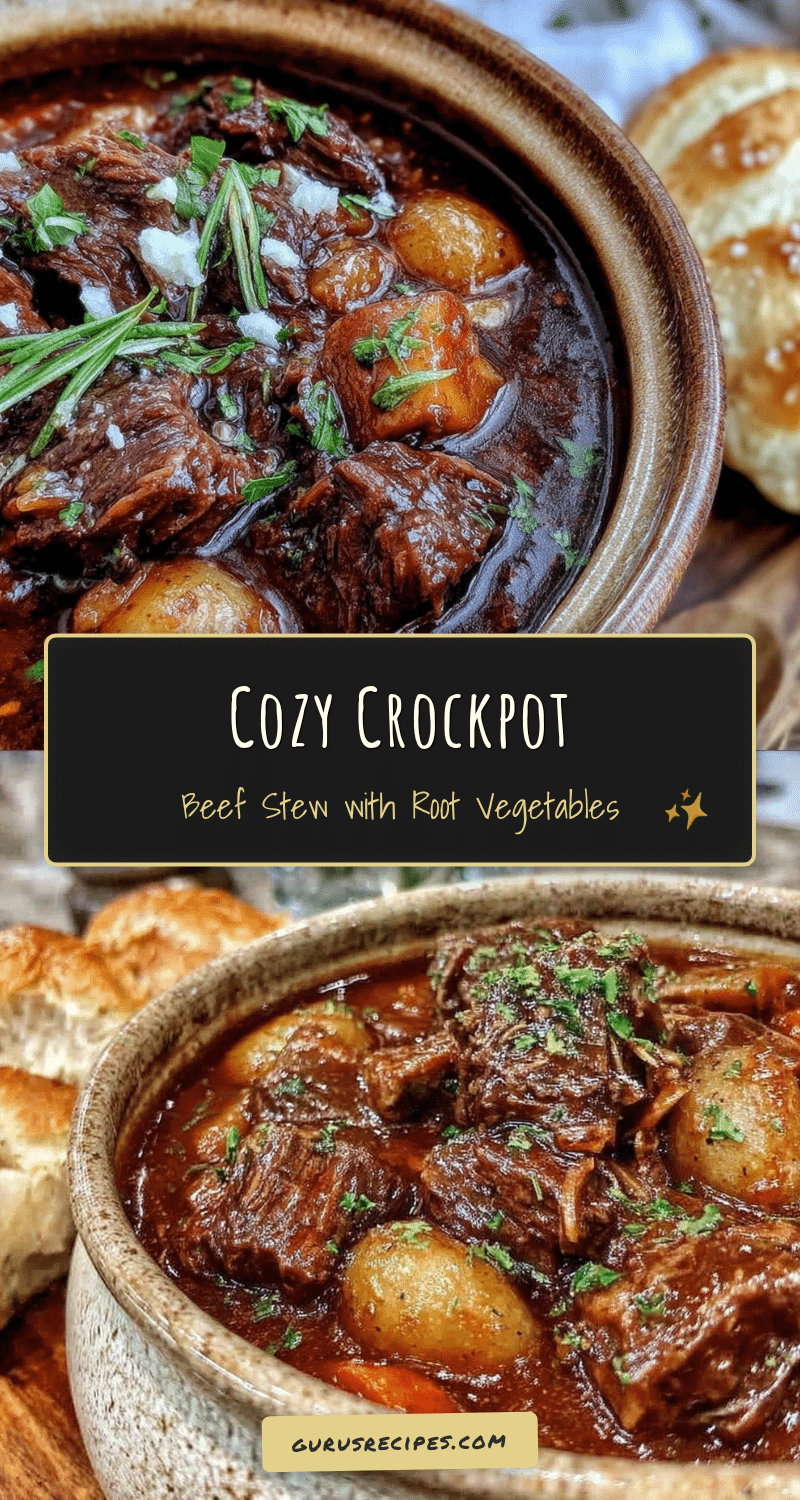

Cozy Crockpot Beef Stew with Root Vegetables – Easy Comfort Dinner
A hearty, comforting beef stew made in the slow cooker with tender beef, sweet root vegetables, and a rich, savory broth. Perfect for busy weeknights or lazy Sundays, this set-it-and-forget-it recipe delivers deep flavor with minimal effort.
- Total Time: 8 hours 20 minutes (low) or 4 hours 25 minutes (high)
- Yield: 8 servings 1x
Ingredients
- 2 pounds beef chuck or round stew meat, cut into 1.5-inch cubes
- 2 tablespoons all-purpose flour
- 1 teaspoon salt
- 1/2 teaspoon black pepper
- 2 tablespoons olive oil, divided
- 1 large yellow onion, diced
- 3 cloves garlic, minced
- 2 tablespoons tomato paste
- 1 cup dry red wine (like Cabernet or Merlot) or extra beef broth
- 4 medium carrots, peeled and cut into 1-inch chunks
- 3 parsnips, peeled and cut into 1-inch chunks
- 3 celery stalks, sliced into 1/2-inch pieces
- 1.5 pounds Yukon Gold potatoes, scrubbed and cut into 1.5-inch chunks
- 2 cups cremini mushrooms, halved (optional)
- 4 cups low-sodium beef broth
- 1 tablespoon Worcestershire sauce
- 2 bay leaves
- 1 teaspoon dried thyme
- 1 teaspoon dried rosemary
- 1 tablespoon balsamic vinegar
- Fresh parsley, chopped, for garnish
Instructions
- Pat the beef cubes dry with paper towels. In a large bowl, toss the beef with the flour, salt, and pepper until evenly coated.
- Heat 1 tablespoon of olive oil in a large skillet over medium-high heat. Working in batches, add the beef cubes in a single layer. Sear without moving for 3-4 minutes until deeply browned. Flip and sear the other side for another 2-3 minutes. Transfer the browned meat to the slow cooker.
- Reduce the heat to medium and add the remaining tablespoon of olive oil. Add the diced onion and cook for 4-5 minutes until softened and translucent. Add the garlic and cook for another 30 seconds until fragrant. Stir in the tomato paste and cook for 1 minute, stirring constantly.
- Pour in the red wine (or extra broth) and scrape up all the browned bits from the bottom of the skillet. Let it simmer for 2-3 minutes until slightly reduced. Pour this mixture over the beef in the slow cooker.
- Add the carrots, parsnips, celery, potatoes, and mushrooms (if using) to the slow cooker. Do not stir too much.
- Pour in the beef broth and Worcestershire sauce. Add the bay leaves, thyme, and rosemary. Give everything a gentle stir to combine. The liquid should come about three-quarters of the way up the ingredients.
- Cover and cook on LOW for 8-10 hours or on HIGH for 4-5 hours.
- About 15 minutes before serving, stir in the balsamic vinegar. Remove the bay leaves. Taste and adjust salt and pepper if needed.
- Ladle the stew into bowls and top with fresh parsley. Serve with crusty bread or over egg noodles.
Notes
Don’t skip the searing step—it adds deep flavor. Cut vegetables to the same size for even cooking. Watch liquid level; vegetables release moisture. Add delicate herbs at the end. To thicken, mix 2 tablespoons cornstarch with 2 tablespoons cold water and stir in 30 minutes before serving. For gluten-free, skip the flour or use a gluten-free blend. For low-carb, replace potatoes with cauliflower or turnips. This stew tastes even better the next day.
- Prep Time: 20 minutes
- Cook Time: 8 hours (low) or 4-5 hours (high)
- Category: Main Course
- Cuisine: American
Nutrition
- Serving Size: 1 bowl (about 1.5 cu
- Calories: 385
- Sugar: 8
- Sodium: 680
- Fat: 14
- Saturated Fat: 4
- Carbohydrates: 32
- Fiber: 6
- Protein: 32
Keywords: beef stew, crockpot, slow cooker, comfort food, root vegetables, easy dinner, winter recipe