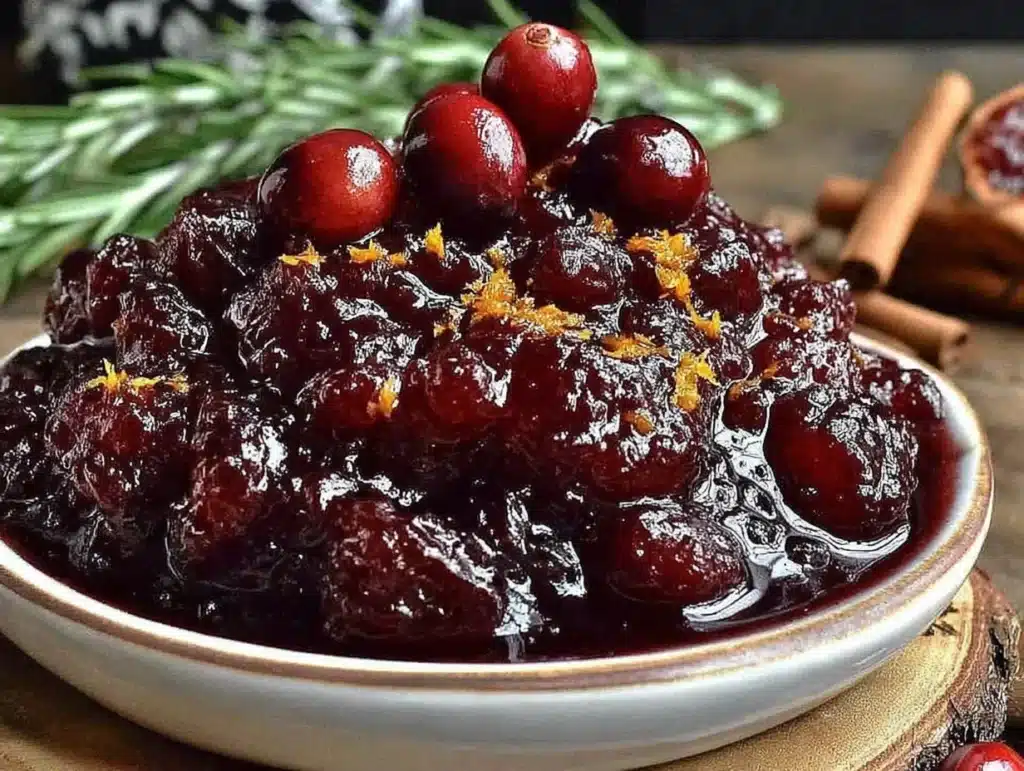
My neighbor asked why I couldn’t just cook the cranberries with the orange juice instead of adding the zest at the end. I started to explain why that wouldn’t work—something about the pectin needing a certain sugar environment to set properly, a bit of food science I’d picked up from years of making big holiday batches. Then I stopped. Honestly, I had no real reason except that I’d always done it the other way. So I shrugged, squeezed a fresh orange right into the pot, and tossed the zest in with the sugar. I braced myself for a bitter, broken mess.
What came out of that pot was, I’m not kidding, the best cranberry sauce I have ever made. It was brighter, more aromatic, and somehow tasted like it had been simmering with intention rather than just habit. The orange wasn’t just a background note—it was woven through every single berry. I stood there stirring it, feeling a little sheepish that a casual suggestion from a neighbor had cracked open a recipe I thought I had perfected. Maybe you’ve been there, where a small, almost accidental change completely shifts how you make something forever.
This cozy small-batch cranberry sauce with orange zest is now my go-to. It’s not for a crowd of twenty. It’s for a quiet Thanksgiving for two, a lazy Sunday roast chicken, or even just spooning over a bowl of yogurt on a cold Tuesday. It’s proof that sometimes the best cooking advice comes from someone who just asks a simple question. And it’s a reminder that being wrong in the kitchen can taste absolutely wonderful.
Why You’ll Love This Recipe
This isn’t just another cranberry sauce recipe. It’s the one I tested six times last November, tweaking the sugar ratio and the simmer time until every spoonful felt balanced. I even brought a batch to a friend who’s a pastry chef, and she asked for the recipe before I could finish my coffee. It has that kind of effect on people.
- Quick & Easy: From start to finish, this comes together in under 20 minutes. No complicated steps, no special techniques—just a pot, a spoon, and a little patience.
- Simple Ingredients: You likely have everything in your kitchen right now. Cranberries, sugar, an orange, and a cinnamon stick. That’s it. No need for a special trip to the store.
- Perfect for Cozy Evenings: Whether it’s a small holiday gathering or a quiet weeknight dinner, this sauce adds a touch of warmth and brightness to any meal. It’s comfort in a bowl.
- Crowd-Pleaser: Even people who claim they don’t like cranberry sauce love this version. The orange zest cuts through the sweetness, and the texture is just right—not too runny, not too thick.
- Unbelievably Delicious: The combination of tart cranberries, sweet orange, and warm cinnamon creates a flavor that feels both familiar and surprising. It’s the kind of sauce you’ll want to eat by the spoonful.
What makes this recipe different is the timing. Most recipes add the orange zest at the beginning, but adding it after the cranberries have popped and the sauce has thickened keeps the citrus flavor bright and fresh. It’s a small shift, but it changes everything. This isn’t just another version—it’s my best version, and I’m pretty sure it will become yours too.
What Ingredients You Will Need
This recipe uses a handful of simple, wholesome ingredients to deliver bold flavor and satisfying texture without any fuss. Every ingredient plays a role, and they all work together to create something truly special.
- Fresh or frozen cranberries (12 ounces / 340 grams): Fresh cranberries are ideal when they’re in season, but frozen work just as well—no need to thaw them first. Look for firm, bright red berries without any soft spots. I personally prefer Ocean Spray brand for consistent quality, but any brand works fine.
- Granulated sugar (3/4 cup / 150 grams): This provides the sweetness to balance the tartness of the cranberries. You can adjust the amount slightly depending on your preference, but I wouldn’t go below 1/2 cup or the sauce will be too tart. For a deeper flavor, you can substitute half the sugar with brown sugar.
- Fresh orange juice (1/4 cup / 60 ml): Freshly squeezed is non-negotiable here. Bottled juice just doesn’t have the same brightness. One large orange usually yields enough juice. The acidity helps balance the sweetness and enhances the cranberry flavor.
- Orange zest (1 tablespoon, from about 1 orange): This is where the magic happens. The zest contains the essential oils that give the sauce its aromatic, citrusy punch. Make sure to zest only the orange part—the white pith is bitter. I recommend using a microplane for the finest zest.
- Cinnamon stick (1): A whole cinnamon stick infuses the sauce with a warm, cozy spice without making it gritty. If you don’t have a cinnamon stick, you can use 1/4 teaspoon of ground cinnamon, but add it at the very end to avoid bitterness.
- Water (1/4 cup / 60 ml): This helps the cranberries start cooking and prevents the sugar from burning before the berries release their own juices. Tap water is fine.
- Pinch of salt (about 1/8 teaspoon): Salt might seem odd in a sweet sauce, but it enhances all the other flavors and balances the sweetness. Don’t skip it.
That’s it. Seven ingredients, most of which you probably already have in your pantry and fridge. The beauty of this recipe is its simplicity—no complicated additions, just pure, honest flavor.
Equipment Needed
You don’t need a fancy kitchen to make this recipe. Here’s what you’ll need:
- Medium saucepan (2 to 3 quarts): A heavy-bottomed saucepan works best for even heat distribution. I use my trusty All-Clad, but any sturdy pan will do. Avoid non-stick if possible, as you want the cranberries to be able to stick slightly and caramelize.
- Wooden spoon or silicone spatula: For stirring. A wooden spoon is gentle on the pan and gives you good control. A silicone spatula is great for scraping every last bit of sauce out of the pan.
- Microplane or fine grater: For zesting the orange. A microplane is my favorite tool for this—it creates fine, fluffy zest that blends seamlessly into the sauce. A box grater works in a pinch, but the zest will be coarser.
- Citrus juicer or reamer: To extract the most juice from your orange. A simple handheld reamer is inexpensive and effective. If you don’t have one, just roll the orange firmly on the counter before cutting it in half and squeezing by hand.
- Measuring cups and spoons: For accuracy. I recommend using dry measuring cups for the sugar and liquid measuring cups for the water and juice.
- Fine-mesh strainer (optional): If you prefer a smoother sauce, you can strain out the cranberry skins after cooking. I personally love the texture of the whole berries, but it’s nice to have the option.
Most of these tools are probably already in your kitchen. If you don’t have a microplane, a fine grater works well—just be careful not to grate your knuckles. I learned that one the hard way.
Preparation Method
Follow these steps carefully, and you’ll have a beautiful, flavorful cranberry sauce in no time. I’ve included sensory cues at each stage so you know exactly what to look for.
- Prepare the orange (5 minutes): Wash your orange thoroughly under warm water to remove any wax or residue. Pat it dry. Using your microplane, zest the orange, being careful to only remove the orange part—stop when you see white. You should have about 1 tablespoon of zest. Set the zest aside. Cut the orange in half and juice it until you have 1/4 cup of juice. Set the juice aside.
- Combine ingredients in the saucepan (2 minutes): Add the cranberries, sugar, orange juice, water, cinnamon stick, and salt to your medium saucepan. Give everything a quick stir to combine. The sugar will look like it’s sitting on top of the berries—that’s normal. Don’t worry, it will dissolve as the mixture heats.
- Bring to a boil (3-4 minutes): Place the saucepan over medium-high heat. Stir occasionally as the mixture heats up. You’ll start to hear the cranberries popping—that’s the sound of success. When the mixture reaches a full, rolling boil (bubbles breaking across the entire surface), reduce the heat to medium-low.
- Simmer and let the berries pop (8-10 minutes): Let the sauce simmer gently. You should see small bubbles rising to the surface, not a vigorous boil. Stir occasionally to prevent sticking. As the cranberries heat, they will begin to burst open. You’ll hear soft pops and see the skins splitting. This is where the pectin is released, which will thicken the sauce. The mixture will go from looking like separate berries in liquid to a cohesive, slightly chunky sauce. If you prefer a smoother sauce, you can gently mash some of the berries with the back of your spoon.
- Check for doneness (1 minute): After about 8 minutes, the sauce should have thickened noticeably. To test, dip a cold spoon into the sauce—it should coat the back of the spoon. If it runs off immediately, it needs more time. The sauce will continue to thicken as it cools, so don’t overcook it. You want it to be slightly looser than your desired final consistency.
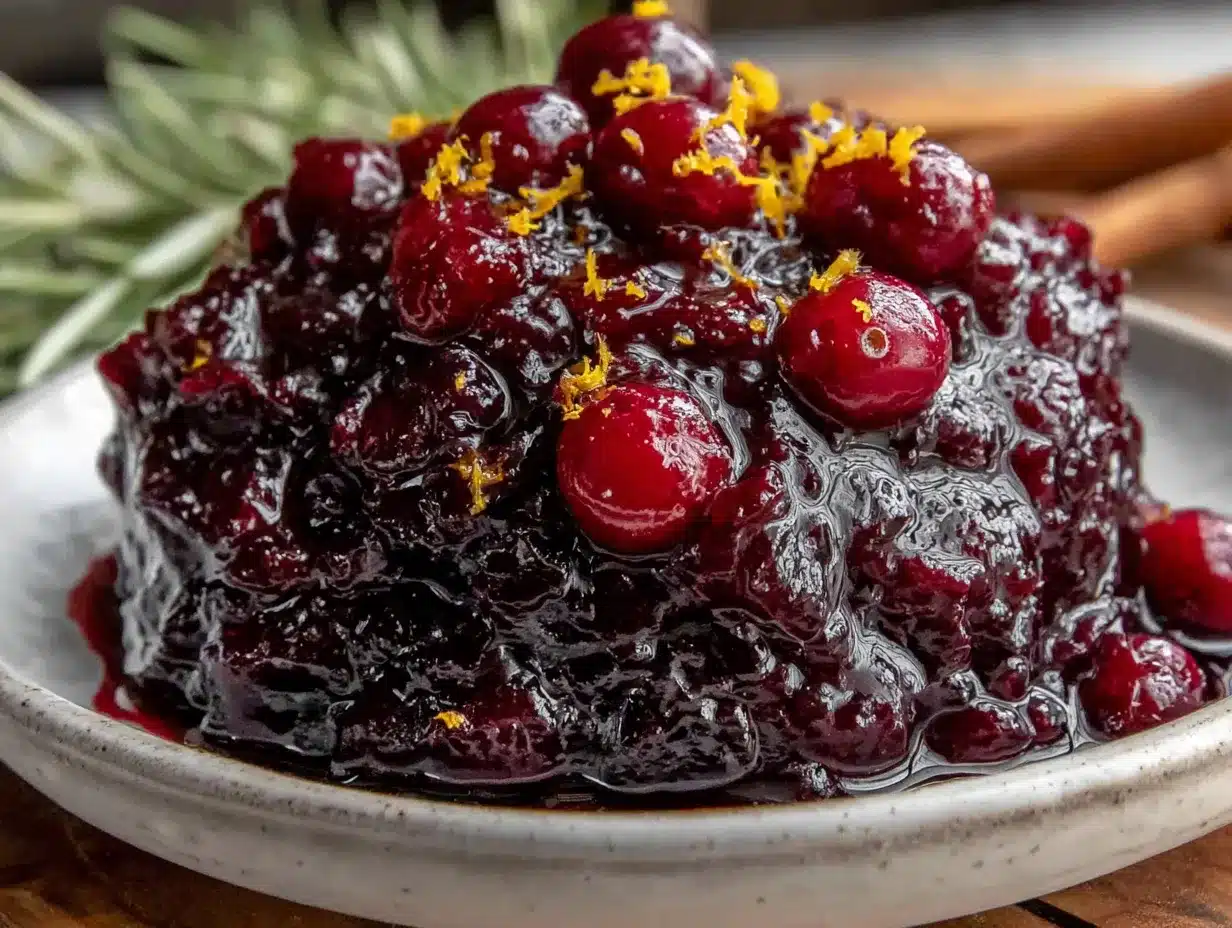
- Remove from heat and add the zest (1 minute): Take the saucepan off the heat. Remove the cinnamon stick (you can rinse it, dry it, and reuse it once more). Stir in the fresh orange zest. This is the crucial step—adding the zest at the end preserves its bright, aromatic oils. If you added it earlier, those oils would have cooked off, leaving you with a dull, flat flavor.
- Cool and serve (30 minutes to cool, or overnight): Let the sauce cool in the saucepan for about 15 minutes, then transfer it to a serving bowl. You can serve it warm, at room temperature, or chilled. The flavors will continue to meld as it sits, so making it a day ahead is actually a great idea. The sauce will thicken considerably once chilled.
One tip I learned from a mistake: don’t walk away from the pot during the simmering stage. Cranberries have a tendency to foam up and can easily boil over, leaving a sticky, purple mess on your stovetop. Trust me on this one.
Cooking Tips & Techniques
Over the years, I’ve made my fair share of mistakes with cranberry sauce. Here’s what I’ve learned so you don’t have to repeat my errors.
Don’t rush the simmer. I once tried to speed things up by keeping the heat high the whole time. The result was a burnt, bitter sauce with undercooked berries. Low and slow is the way to go. The gentle simmer allows the cranberries to release their natural pectin gradually, creating that perfect, jelly-like consistency without any added thickeners.
Watch for the foam. As the cranberries cook, a pink foam will rise to the surface. This is completely normal—it’s just air and pectin. You can skim it off with a spoon if you want a clearer sauce, but I usually leave it. It adds a bit of texture and rustic charm.
Trust the pop. The sound of cranberries popping is your best indicator of doneness. When the popping slows down significantly, the berries have released their pectin and the sauce is close to ready. If you don’t hear any pops after a few minutes, your heat might be too low.
Use a heavy-bottomed pan. I learned this lesson after scorching three batches in a thin, cheap saucepan. A heavy-bottomed pan distributes heat evenly and prevents hot spots that can burn the sugar. If you only have a thin pan, stir more frequently and keep the heat on the lower side.
Make it ahead. Cranberry sauce actually improves after a day in the refrigerator. The flavors meld and mellow, and the texture sets up beautifully. I always make mine the day before I need it. Just let it cool completely, then cover and refrigerate. Bring it to room temperature before serving, or serve it cold—both are delicious.
Don’t skip the salt. I know it seems weird, but that tiny pinch of salt makes a world of difference. It doesn’t make the sauce salty—it just makes everything taste more like itself. The cranberries taste more cranberry-ish, the orange more orange-y. It’s a small addition with a big payoff.
Variations & Adaptations
This recipe is wonderfully adaptable. Here are a few variations I’ve tried and loved:
Spiced Cranberry Sauce: Add 1/4 teaspoon of ground ginger and 1/8 teaspoon of ground cloves along with the cinnamon stick. The ginger adds a gentle warmth, and the cloves bring a deep, almost mysterious complexity. I made this version for a Christmas dinner, and my aunt asked if I’d added “a secret ingredient.” I just smiled.
Maple-Orange Cranberry Sauce: Replace the granulated sugar with 1/2 cup of pure maple syrup. Reduce the water to 2 tablespoons since maple syrup adds liquid. The maple flavor pairs beautifully with the orange and gives the sauce a richer, more autumnal taste. This is my favorite variation for serving with roasted pork or butternut squash soup.
Bourbon-Infused Cranberry Sauce: After removing the sauce from the heat, stir in 2 tablespoons of good-quality bourbon. The alcohol will cook off, leaving behind a warm, smoky flavor that’s incredible with roasted turkey or grilled chicken. I tried this on a whim one Thanksgiving, and it was a hit. Just make sure to use a bourbon you actually like drinking—the flavor will come through.
Low-Sugar Version: Reduce the sugar to 1/2 cup and add 1/4 cup of unsweetened applesauce. The applesauce adds natural sweetness and helps with the texture. The sauce will be slightly less firm, but it will still be delicious. This is a great option if you’re watching your sugar intake.
Spicy Cranberry Sauce: Add a small, seeded jalapeño or a pinch of red pepper flakes along with the other ingredients. The heat is subtle but present, and it cuts through the sweetness beautifully. This version is fantastic with grilled meats or on a cheese board.
Feel free to experiment and make this recipe your own. The base is so simple that it welcomes creativity. Just keep the core ratios the same, and you can’t go wrong.
Serving & Storage Suggestions
This cranberry sauce is incredibly versatile. Here are some of my favorite ways to serve and store it.
Serving Temperature: I love this sauce served at room temperature. The flavors are most vibrant when it’s not too cold. If you’ve refrigerated it, let it sit out for about 30 minutes before serving. If you prefer it warm, gently reheat it in a saucepan over low heat, stirring occasionally. Add a splash of water or orange juice if it’s too thick.
Classic Pairings: Obviously, it’s perfect with roasted turkey or chicken. But don’t stop there. Spoon it over pork chops, spread it on a turkey sandwich, or serve it alongside a sharp cheddar cheese plate. It’s also wonderful with roasted vegetables like Brussels sprouts or butternut squash.
Breakfast Treat: This might be my favorite way to use leftovers. Swirl a spoonful into Greek yogurt or oatmeal, spread it on toast with some almond butter, or dollop it on pancakes or waffles. The tart-sweet flavor is a fantastic way to start the day.
Storage: Store any leftover cranberry sauce in an airtight container in the refrigerator for up to 2 weeks. The flavor actually improves after a day or two as the ingredients meld. Make sure the sauce has cooled completely before refrigerating to prevent condensation from forming.
Freezing: This sauce freezes beautifully. Let it cool completely, then transfer it to a freezer-safe container or a zip-top bag. It will keep for up to 3 months. Thaw it overnight in the refrigerator, then reheat gently or serve cold. I like to freeze it in small portions so I can pull out just what I need.
Reheating: To reheat, place the desired amount in a small saucepan over low heat. Stir occasionally and add a teaspoon of water or orange juice if the sauce seems too thick. You can also microwave it in 30-second bursts, stirring between each. Just be careful not to overheat it, or the texture can become gummy.
Nutritional Information & Benefits
Here’s the approximate nutritional information for a serving of this cranberry sauce (about 1/4 cup, based on 6 servings):
- Calories: 110
- Total Fat: 0g
- Sodium: 50mg
- Total Carbohydrates: 28g
- Dietary Fiber: 2g
- Sugars: 24g
- Protein: 0g
Please note that these values are estimates and can vary based on the specific ingredients you use. If you’re following a specific diet, you can adjust the sugar to suit your needs.
Health Benefits: Cranberries are packed with antioxidants and vitamin C, which support immune health. They also contain compounds that may help prevent urinary tract infections. The orange zest adds additional vitamin C and flavonoids, which have anti-inflammatory properties. Cinnamon is known for its ability to help regulate blood sugar levels. So while this is certainly a treat, it’s not without its nutritional perks.
Dietary Considerations: This recipe is naturally gluten-free, dairy-free, and vegan. It’s also nut-free and egg-free, making it suitable for most common dietary restrictions. If you need a low-sugar version, see the variation I mentioned earlier.
Conclusion
There’s something deeply satisfying about making your own cranberry sauce. It’s one of those recipes that feels both simple and special, like a little bit of kitchen magic. This cozy small-batch version with orange zest has become my go-to, not just for holidays but for any meal that needs a touch of brightness and warmth.
I love that it comes together in under 20 minutes with ingredients I almost always have on hand. I love that it’s flexible enough to adapt to whatever I’m craving—spiced, boozy, or maple-sweetened. But most of all, I love that it reminds me to stay open in the kitchen. That neighbor who suggested adding the juice early? She was right. And I’m so glad I listened.
Try this recipe and make it your own. Adjust the sugar, add a pinch of something unexpected, or leave it exactly as written. However you make it, I think you’ll find it becomes a staple in your kitchen too. And when you do, I’d love to hear about it. Leave a comment below and tell me how you served it, or share a photo of your creation. Your version might just inspire someone else—or even teach an old cook a new trick.
Happy cooking, and here’s to cozy, comforting food that brings a little joy to the table.
Frequently Asked Questions
Can I use frozen cranberries instead of fresh?
Absolutely. Frozen cranberries work perfectly in this recipe. You don’t even need to thaw them first—just add them directly to the pot. They may take a minute or two longer to come to a boil, but the result will be just as delicious. I often keep a bag of frozen cranberries in my freezer just for this purpose.
Can I reduce the sugar in this recipe?
Yes, you can reduce the sugar to 1/2 cup, but the sauce will be noticeably more tart. Cranberries are naturally very sour, and the sugar balances that acidity. If you reduce the sugar, I recommend adding a bit more orange juice or a splash of apple juice to help with the sweetness and texture. You can also try the low-sugar variation I mentioned above.
Why did my cranberry sauce turn out runny?
Runny cranberry sauce usually means it wasn’t cooked long enough. The pectin in the cranberries needs time to activate and thicken the sauce. Make sure you simmer it for at least 8 minutes after it comes to a boil, and listen for the cranberries to pop. If it’s still runny after that, let it simmer for another 2-3 minutes. Remember, it will also thicken as it cools.
Can I make this recipe without a cinnamon stick?
Definitely. If you don’t have a cinnamon stick, you can use 1/4 teaspoon of ground cinnamon. Add it at the very end, after removing the sauce from the heat, to avoid any bitterness. Alternatively, you can simply leave the cinnamon out altogether. The sauce will still be delicious—just more purely cranberry-orange flavored.
How long does homemade cranberry sauce last in the fridge?
Homemade cranberry sauce will keep in the refrigerator for up to 2 weeks when stored in an airtight container. The flavors actually meld and improve over the first day or two, so making it ahead is a great idea. Just make sure it’s completely cool before refrigerating, and give it a good stir before serving.
Pin This Recipe!
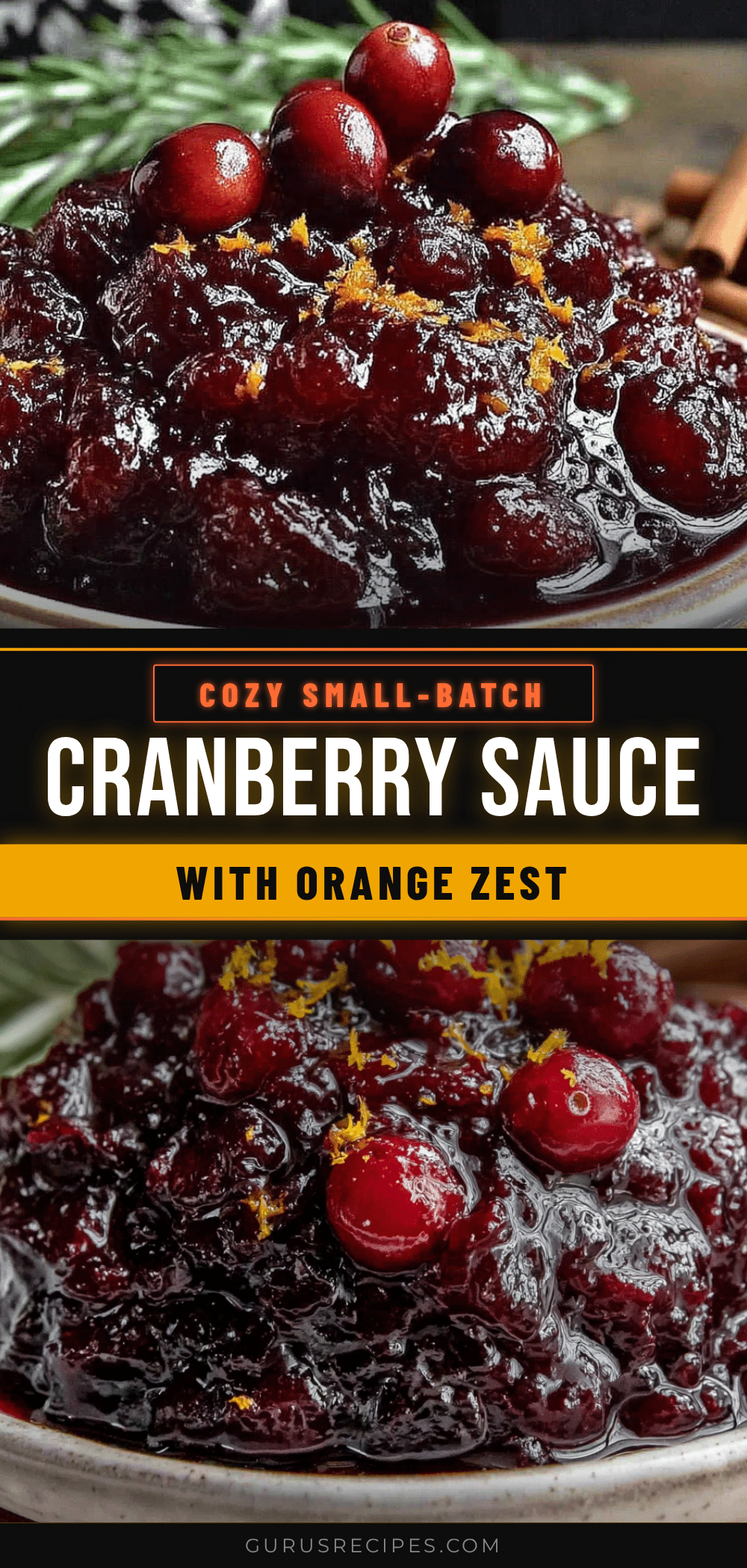

Cozy Small-Batch Cranberry Sauce with Orange Zest: Best Easy Homemade Recipe
This cozy small-batch cranberry sauce with orange zest is quick, easy, and perfect for a quiet Thanksgiving for two or a lazy Sunday roast chicken. The orange zest added at the end keeps the citrus flavor bright and fresh, making it the best version you’ll ever try.
- Total Time: 20 minutes
- Yield: 6 servings 1x
Ingredients
- 12 ounces (340 grams) fresh or frozen cranberries
- 3/4 cup (150 grams) granulated sugar
- 1/4 cup (60 ml) fresh orange juice
- 1 tablespoon orange zest (from about 1 orange)
- 1 cinnamon stick
- 1/4 cup (60 ml) water
- 1/8 teaspoon salt
Instructions
- Prepare the orange: Wash and dry the orange. Zest it to get 1 tablespoon of zest, then juice it to get 1/4 cup of juice. Set both aside.
- Combine ingredients: In a medium saucepan, add cranberries, sugar, orange juice, water, cinnamon stick, and salt. Stir to combine.
- Bring to a boil: Place over medium-high heat and stir occasionally until the mixture reaches a full rolling boil (about 3-4 minutes).
- Simmer: Reduce heat to medium-low and let simmer for 8-10 minutes, stirring occasionally, until the cranberries have popped and the sauce has thickened.
- Check doneness: Dip a cold spoon into the sauce; it should coat the back of the spoon. The sauce will continue to thicken as it cools.
- Remove from heat: Take the saucepan off the heat. Remove the cinnamon stick. Stir in the fresh orange zest.
- Cool and serve: Let cool in the saucepan for 15 minutes, then transfer to a serving bowl. Serve warm, at room temperature, or chilled.
Notes
Don’t rush the simmer; low and slow allows the pectin to release gradually. Watch for foam and popping sounds as indicators. The sauce improves after a day in the refrigerator. For a smoother sauce, mash some berries or strain. Add the orange zest at the end to preserve its bright flavor.
- Prep Time: 5 minutes
- Cook Time: 15 minutes
- Category: Side Dish
- Cuisine: American
Nutrition
- Serving Size: 1/4 cup
- Calories: 110
- Sugar: 24
- Sodium: 50
- Carbohydrates: 28
- Fiber: 2
Keywords: cranberry sauce, small-batch, orange zest, easy, homemade, Thanksgiving, holiday, quick