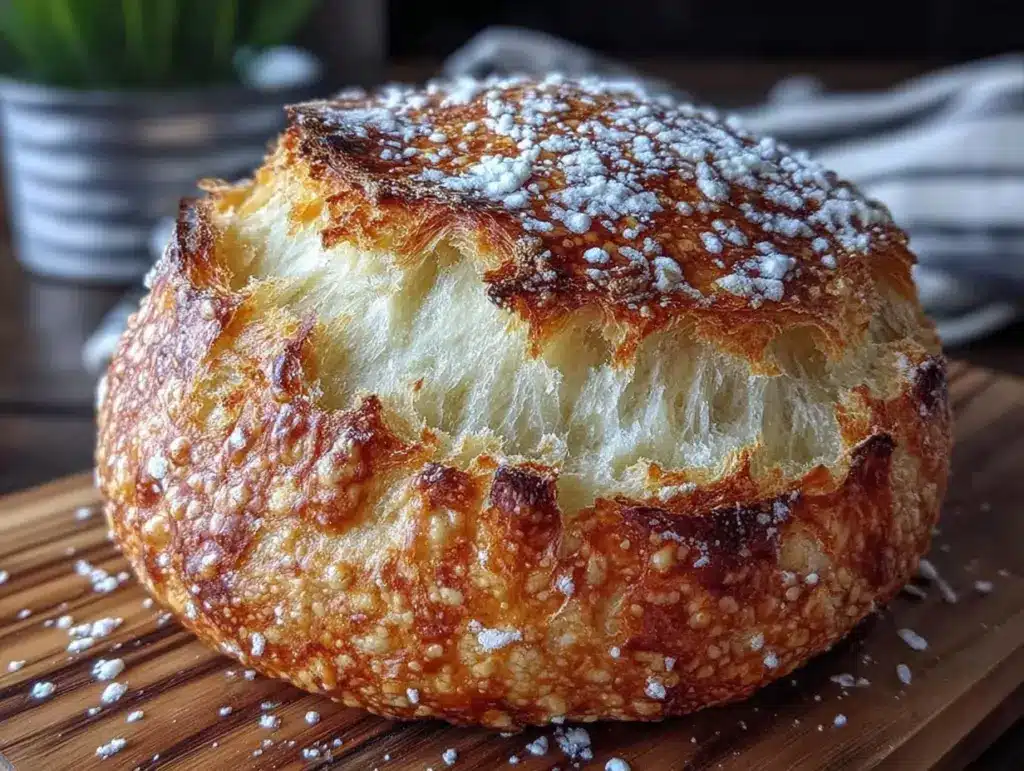
There’s something quietly satisfying about the crackle of a freshly baked loaf of Italian bread—the kind with a golden, crispy crust that snaps under your fingers and an airy, artisan crumb inside that feels almost too good to tear apart. I stumbled upon this crispy crusty Italian bread recipe one sleepy Sunday morning when I was craving something simple yet comforting. Honestly, I wasn’t aiming to become a bread baker that day. I just wanted a loaf that could hold its own next to a bowl of homemade minestrone.
At first, I was skeptical about making such a textured bread at home. The idea of artisan bread always seemed like it belonged in old-world bakeries, with bakers tossing dough around and pulling it from hearth ovens. But there I was, with nothing but flour, water, yeast, and a bit of patience. The first batch came out crackly, chewy, and wonderfully rustic—totally unexpected from my little kitchen. Over the next week, I found myself making it again and again, tweaking the hydration and proofing time to get that perfect balance of crust and softness. It became my quiet weekend ritual, a small joy amid the usual chaos.
What’s stuck with me most is how this crispy crusty Italian bread recipe brings a little artisan magic into an ordinary day. It’s not just bread; it’s a moment to pause and enjoy something handcrafted, honest, and deeply satisfying. And trust me, once you get the hang of it, you’ll see why this recipe became my go-to for that unmistakable Italian bakery vibe right at home.
Why You’ll Love This Recipe
- Quick & Easy: Comes together in about 3 hours, including rising time—perfect when you want fresh bread without the all-day wait.
- Simple Ingredients: No fancy or hard-to-find components; just pantry staples like flour, yeast, salt, and water.
- Perfect for Any Occasion: Whether you’re hosting a casual dinner or just need a comforting sandwich base, this bread fits right in.
- Crowd-Pleaser: The crunchy crust and soft interior always get compliments, even from the pickiest eaters.
- Unbelievably Delicious: The artisan texture—think big, irregular air pockets and a crackly exterior—makes every bite feel special.
- Unique Touch: This recipe uses a high-hydration dough and a cold ferment technique that creates that signature crust and open crumb, setting it apart from your average loaf.
- This bread isn’t just good; it’s the kind that makes you want to tear off another piece before you’ve finished the first.
What Ingredients You Will Need
This crispy crusty Italian bread recipe uses simple, wholesome ingredients to deliver bold flavor and satisfying texture without the fuss. Most of these are pantry staples, and you’ll find a few little tips sprinkled throughout to help you pick the best options.
- All-purpose flour: 3 ½ cups (440g) – I like using King Arthur brand for consistent texture, but any good-quality all-purpose flour works well.
- Warm water: 1 ½ cups (355 ml), around 110°F (43°C) – This activates the yeast without killing it.
- Active dry yeast: 2 teaspoons (7g) – Check the expiration date for best rise.
- Salt: 2 teaspoons (12g) – Fine sea salt is my pick for balanced flavor, but kosher salt is fine too.
- Olive oil: 1 tablespoon (15 ml), optional – Adds subtle richness and helps with crust color.
- Semolina flour or cornmeal: for dusting the baking surface – Helps prevent sticking and gives a rustic finish.
If you want a gluten-free twist, try swapping the all-purpose flour for a high-quality gluten-free blend designed for bread baking. Also, in summer, adding a tablespoon of fresh rosemary or dried Italian herbs can add a lovely aroma without overpowering the bread’s natural flavor.
Equipment Needed
- Mixing bowl: A large one, preferably glass or stainless steel, to hold your dough comfortably.
- Dutch oven or heavy oven-safe pot: This is key for creating steam to get that crispy crust. Don’t worry if you don’t have one; a baking stone with a pan of water works too.
- Dough scraper or spatula: For handling sticky dough easily.
- Kitchen scale: Helpful but not mandatory; measuring cups work fine if you don’t have one.
- Clean kitchen towel or plastic wrap: To cover the dough during rising.
- Cooling rack: To allow the bread to cool evenly and keep its crust crispy.
Budget-friendly tip: If you don’t have a Dutch oven, try using a deep baking dish covered tightly with aluminum foil—just be careful of the steam. For upkeep, seasoning your Dutch oven occasionally with a light coat of oil helps prevent sticking and rust.
Preparation Method
- Activate the yeast (10 minutes): In your mixing bowl, combine the warm water and active dry yeast. Give it a gentle stir and let it sit until it becomes foamy, about 5-10 minutes. This shows the yeast is alive and ready to work.
- Mix the dough (5 minutes): Add the all-purpose flour and salt to the yeast mixture. If you’re using olive oil, add it here. Stir with a wooden spoon or dough scraper until a shaggy dough forms. It will be sticky and rough-looking—that’s perfect!
- First rise (1 to 1.5 hours): Cover the bowl with a damp towel or plastic wrap and leave it in a warm spot. The dough should roughly double in size and feel airy when poked. If your kitchen is cold, try placing the bowl near a radiator or inside an oven warmed to 80°F (27°C) then turned off.
- Shape the dough (10 minutes): Lightly flour your work surface with semolina or all-purpose flour. Gently tip the dough out and fold it over itself a few times to form a loose round loaf. Avoid pressing too hard—keep those lovely air bubbles intact.
- Second rise (30-45 minutes): Place the shaped loaf on parchment paper dusted with semolina. Cover lightly with a kitchen towel and let it rise until puffy but not quite doubled.
- Preheat the oven (30 minutes): Place your Dutch oven with the lid on in the oven and preheat to 450°F (230°C). This step mimics the intense heat of a bakery oven for a crunchy crust.
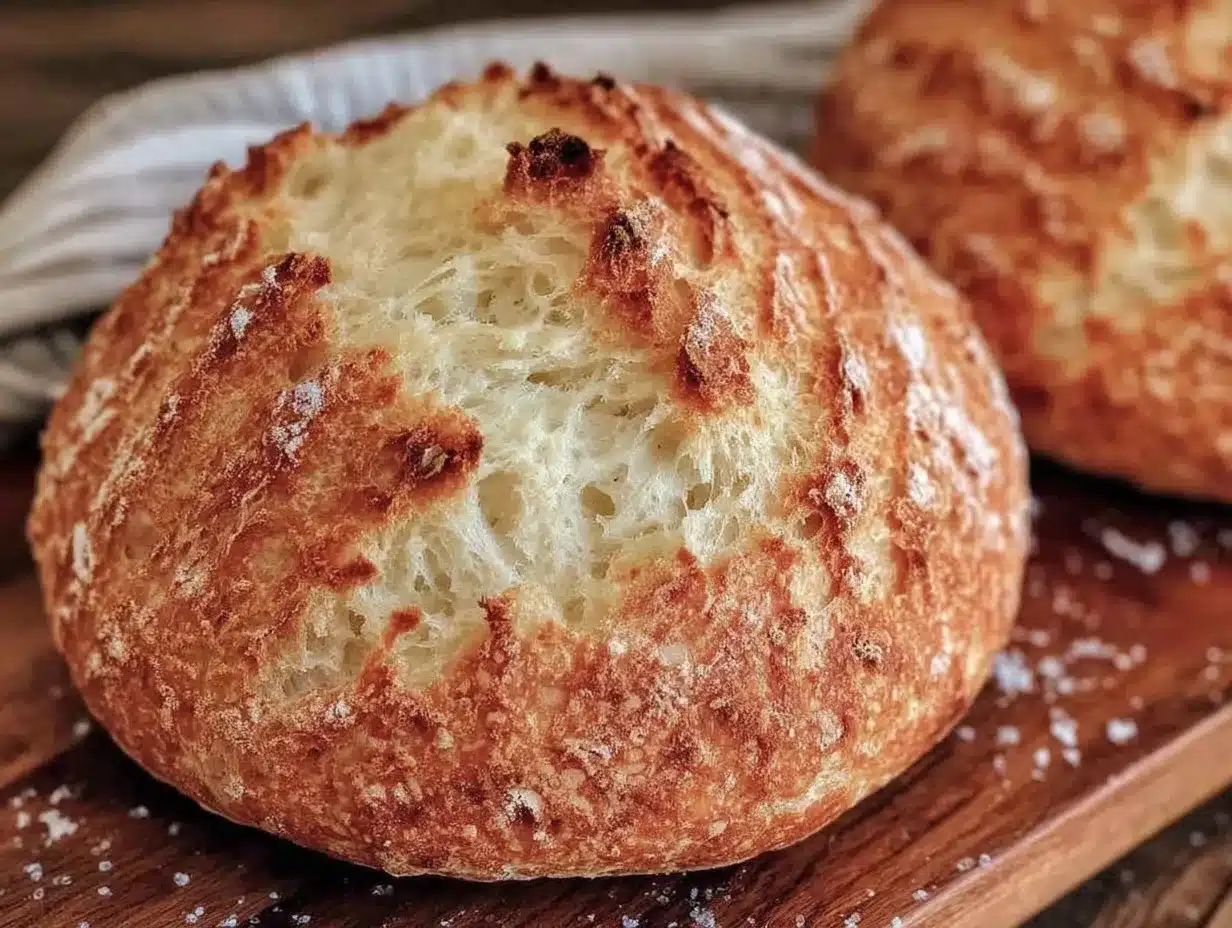
- Bake the bread (40 minutes): Carefully remove the Dutch oven, lift the dough with the parchment, and place it inside. Cover with the lid and bake for 20 minutes. Then remove the lid and bake for another 20 minutes until the crust is deep golden brown and crackly.
- Cool completely (at least 1 hour): Transfer the bread to a cooling rack. This helps the crust stay crisp while the crumb finishes setting. Resist the urge to slice immediately—this is a tough lesson I learned the hard way!
Cooking Tips & Techniques
Getting that crispy crust and artisan texture isn’t magic—it’s about timing, temperature, and a little patience. Here’s what I’ve learned after more than a dozen batches:
- Don’t skip the steam: Baking the bread in a covered pot traps moisture, allowing the crust to form that irresistible crackle. If you don’t have a Dutch oven, adding a pan of water on the oven floor helps too.
- Handle the dough gently: This dough is wetter than your usual bread. Tossing it around too much deflates those precious air pockets that give the crumb its artisan look.
- Watch your oven temperature: Even a slight drop can affect crust development. Preheat your oven well and avoid opening the door during baking.
- Use a kitchen scale if possible: I swear by it for consistency—flour varies a lot by brand and humidity, so weighing keeps things predictable.
- Patience is key: I’ve burned a few loafs by rushing the second rise or slicing too soon. Waiting for the bread to cool fully is frustrating but worth it!
Variations & Adaptations
- Herb-Infused Bread: Add 1-2 tablespoons of fresh chopped rosemary, thyme, or oregano into the dough during mixing for an aromatic twist.
- Whole Wheat Blend: Replace up to half the all-purpose flour with whole wheat flour for a nuttier flavor and denser crumb. You might need to add a bit more water.
- Gluten-Free Version: Use a gluten-free baking mix designed for yeast breads and increase the hydration slightly; add xanthan gum if your blend doesn’t have it.
- Overnight Cold Ferment: After the first rise, refrigerate the dough overnight. This deepens flavor and can improve texture—you’ll love the slight tang it adds.
- Personal Experiment: I once tried swapping olive oil for melted butter for a richer crust. It’s not traditional Italian, but it brought a nice buttery note.
Serving & Storage Suggestions
This crispy crusty Italian bread is best served at room temperature or slightly warm—think sliced thick with a slather of good butter or alongside pasta dishes. It pairs beautifully with olive oil and balsamic vinegar for dipping, or as the base for a rustic sandwich.
To store, wrap the cooled loaf loosely in a clean kitchen towel and keep it at room temperature for up to two days. For longer storage, slice and freeze in an airtight bag. Toast slices straight from the freezer for an easy snack that tastes fresh.
Reheating in the oven at 350°F (175°C) for 5-10 minutes revives the crust nicely. Just avoid the microwave—it turns that glorious crust into a chewy mess.
Interestingly, the flavors mellow and the crumb becomes chewier the day after baking, so sometimes I purposely wait to eat it. It’s a little ritual that feels like savoring the bread’s journey.
Nutritional Information & Benefits
Each slice (about 60g) of this Italian bread contains roughly 160 calories, 5g protein, 33g carbohydrates, 1g fat, and 2g fiber. The simplicity of the ingredients means no hidden additives or preservatives—just honest, wholesome bread.
The flour provides complex carbs for sustained energy, and the fermentation process helps improve digestibility. If you incorporate whole wheat flour, you’ll get an extra boost of fiber and nutrients.
This recipe is naturally dairy-free and vegan, making it accessible for many dietary preferences. Just watch out if you add oil or herb variations for allergens.
From a wellness perspective, homemade bread like this can be a comforting staple that feels nourishing without the overload of commercial additives. It’s a reminder that simple food, prepared with care, can be both satisfying and good for you.
Conclusion
This crispy crusty Italian bread recipe isn’t just a loaf; it’s a small celebration of patience and simple ingredients coming together in a way that feels both rustic and special. Whether you’re new to bread baking or a casual home cook, this recipe offers a reliable way to make bakery-quality bread without the fuss.
Feel free to tweak the hydration, add your favorite herbs, or try the cold ferment method to make it truly yours. I love this bread because it’s honest—no frills, just pure, crackly comfort that fills the kitchen with warmth and promise.
Give it a go, and if you end up making it your own, I’d love to hear all about your variations and experiences. There’s something magical in sharing bread stories, don’t you think?
FAQs
How do I know if my yeast is still good?
Mix yeast with warm water and a pinch of sugar. If it bubbles and foams within 10 minutes, it’s active and good to use.
Can I use bread flour instead of all-purpose flour?
Yes! Bread flour has higher protein, which gives more chew and structure. You might need a bit more water as it absorbs more liquid.
Why is my bread dense instead of airy?
Common causes are under-proofing, over-handling the dough, or using too little water. Let the dough rise fully and handle gently to keep the crumb open.
Can I make this bread without a Dutch oven?
Absolutely. Place a pan of hot water on the oven floor during baking to create steam. A baking stone or heavy pan helps with heat retention.
How long does this bread keep fresh?
At room temperature, it stays fresh for 2 days wrapped in a towel. For longer storage, slice and freeze; toast directly from frozen for best results.
Pin This Recipe!
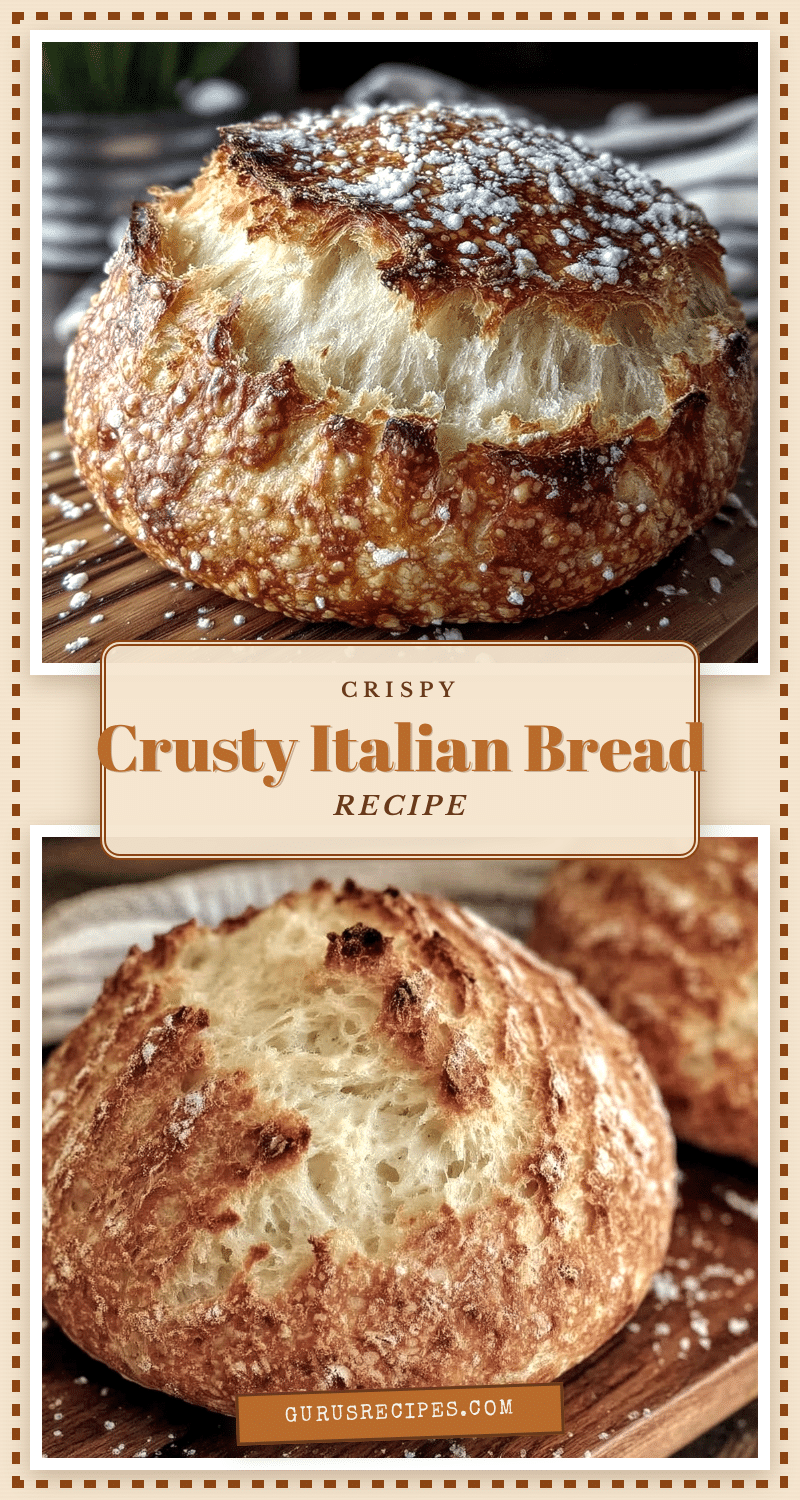

Crispy Crusty Italian Bread Recipe Easy Artisan Texture at Home
A simple and satisfying Italian bread recipe with a golden, crispy crust and airy artisan crumb, perfect for homemade comfort and versatile for any occasion.
- Total Time: 3 hours
- Yield: 1 loaf (about 8 servings) 1x
Ingredients
- 3 ½ cups (440g) all-purpose flour
- 1 ½ cups (355 ml) warm water, around 110°F (43°C)
- 2 teaspoons (7g) active dry yeast
- 2 teaspoons (12g) salt
- 1 tablespoon (15 ml) olive oil (optional)
- Semolina flour or cornmeal for dusting the baking surface
Instructions
- Activate the yeast: In a mixing bowl, combine warm water and active dry yeast. Stir gently and let sit until foamy, about 5-10 minutes.
- Mix the dough: Add all-purpose flour and salt to the yeast mixture. Add olive oil if using. Stir until a shaggy, sticky dough forms.
- First rise: Cover the bowl with a damp towel or plastic wrap and leave in a warm spot until dough doubles in size, about 1 to 1.5 hours.
- Shape the dough: Lightly flour work surface with semolina or all-purpose flour. Gently fold dough over itself to form a loose round loaf.
- Second rise: Place shaped loaf on parchment paper dusted with semolina. Cover lightly and let rise until puffy but not doubled, about 30-45 minutes.
- Preheat oven: Place Dutch oven with lid inside oven and preheat to 450°F (230°C) for 30 minutes.
- Bake the bread: Remove Dutch oven carefully, lift dough with parchment, place inside. Cover with lid and bake 20 minutes. Remove lid and bake another 20 minutes until crust is deep golden and crackly.
- Cool completely: Transfer bread to a cooling rack and let cool at least 1 hour before slicing.
Notes
[‘Use a Dutch oven or add a pan of water in the oven to create steam for a crispy crust.’, ‘Handle the dough gently to preserve air pockets for an airy crumb.’, ‘Preheat oven and Dutch oven thoroughly to ensure proper crust development.’, ‘Allow bread to cool completely before slicing to avoid a gummy texture.’, ‘If no Dutch oven, cover baking dish tightly with aluminum foil and be cautious of steam.’, ‘For gluten-free version, use a gluten-free bread mix and add xanthan gum if needed.’, ‘Try overnight cold ferment after first rise for deeper flavor.’, ‘Add herbs like rosemary or Italian herbs for aromatic variations.’]
- Prep Time: 20 minutes
- Cook Time: 40 minutes
- Category: Bread
- Cuisine: Italian
Nutrition
- Serving Size: 1 slice (about 60g)
- Calories: 160
- Sodium: 480
- Fat: 1
- Carbohydrates: 33
- Fiber: 2
- Protein: 5
Keywords: Italian bread, crispy crust bread, artisan bread, homemade bread, easy bread recipe, crusty bread, no-knead bread