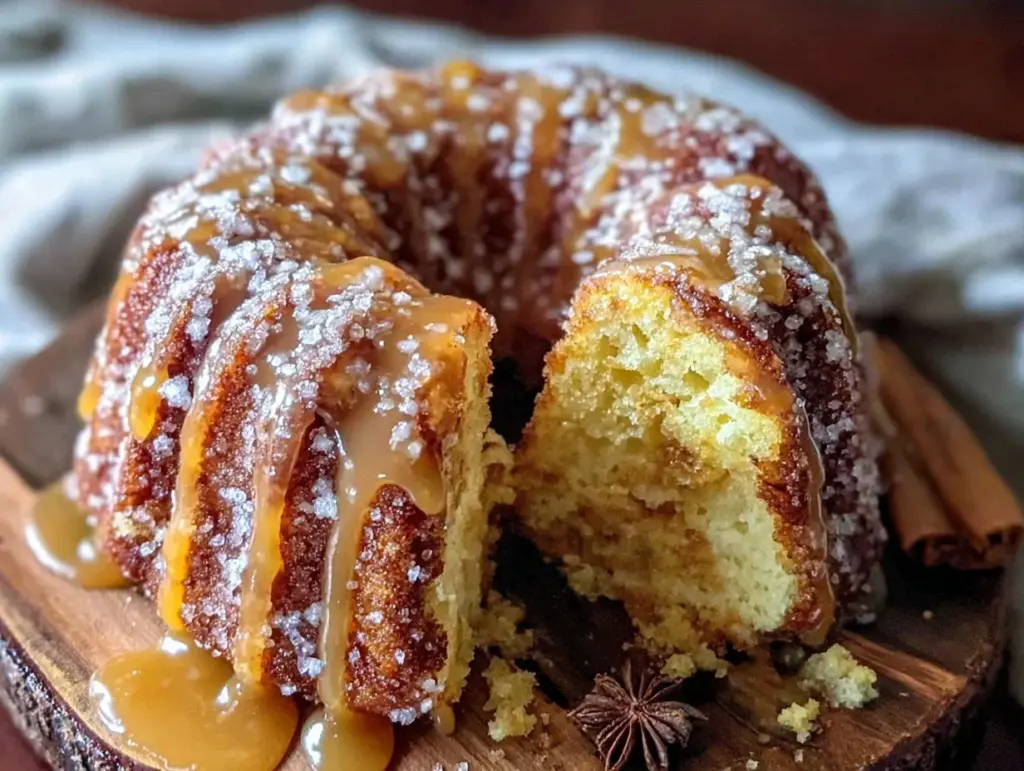
My husband took one bite, stopped mid-chew, and just looked at me. Not a word, just that look—the one that says, “You really did it this time.” He reached for a second slice before he even swallowed the first, and I knew this apple cider donut bundt cake was going to be a problem. A delicious, wonderful problem.
I had been chasing that classic apple cider donut flavor for weeks. You know the one—that perfect balance of tangy apple, warm cinnamon, and that unmistakable soft-yet-crumbly texture you only get from a fresh fall donut. But I didn’t want to deal with deep frying or standing over a pot of hot oil. Honestly, who has the patience for that on a Tuesday?
So I started messing around in the kitchen (as I often do) and landed on this bundt cake version. It has all the cozy spice, all the apple cider tang, and that signature cinnamon-sugar coating that makes apple cider donuts so addictive. But it bakes up in one pan with zero fuss. No rolling, no cutting, no frying. Just stir, pour, bake, and watch it disappear.
The first time I made it, I actually burned my finger testing the doneness because I was too impatient to wait for a toothpick. Worth it, honestly. The cake came out golden, tender, and smelled like a cider mill had exploded in my kitchen. That was the moment I knew this recipe was sticking around.
Why You’ll Love This Recipe
All the flavor, none of the work. This easy apple cider donut bundt cake gives you everything you love about those classic fall donuts without standing over a fryer. It comes together in about 15 minutes of active prep time, and the oven does the rest.
- Simple Ingredients – You probably have most of these in your pantry right now. No weird specialty stuff, no trips to three different stores.
- Perfect for Fall Gatherings – Bring this to a potluck, Thanksgiving, or Sunday brunch and watch people hover around the cake stand. It feeds a crowd with zero stress.
- Crowd-Pleaser – Kids love the cinnamon-sugar coating. Adults love the warm apple cider flavor. Everyone loves that it isn’t overly sweet.
- Unbelievably Moist – The apple cider reduction does something magical here. It concentrates all that apple flavor while keeping the crumb incredibly tender. I’ve tested this recipe six times (tough job, I know) and it comes out perfect every single time.
What makes this different from every other apple cider cake out there? It’s the texture. Most bundt cakes lean dense or dry. This one has that soft, almost donut-like crumb that practically melts on your tongue. The secret is reducing the cider first and using a specific fat-to-flour ratio I landed on after way too many late-night baking experiments. Trust me, your kitchen is about to smell incredible.
What Ingredients You Will Need
This recipe uses simple, everyday ingredients to create something truly special. The magic happens when the apple cider reduces down and concentrates all that fruity, tangy flavor into something intense and wonderful.
- 2 cups apple cider – Not apple juice, not apple-flavored drink. Real apple cider. You’ll reduce this on the stove to ½ cup, which is where all that deep apple flavor comes from. I like using local orchard cider when I can find it.
- 2 ½ cups all-purpose flour – Spoon and level it into your measuring cup. Scooping directly from the bag packs too much flour in and makes the cake dry.
- 1 ½ teaspoons baking powder – Make sure it’s fresh. Old baking powder is the number one reason cakes don’t rise properly.
- 1 teaspoon baking soda – Helps with browning and lift.
- 1 teaspoon ground cinnamon – The backbone of that classic donut shop flavor.
- ½ teaspoon ground nutmeg – Freshly grated if you have it. It makes a noticeable difference.
- ¼ teaspoon ground cloves – Just a hint. Cloves are powerful and can overpower everything if you use too much.
- ½ teaspoon salt – Don’t skip this. Salt balances the sweetness and brings out the apple flavor.
- ½ cup unsalted butter, softened – Room temperature is crucial here. Cold butter won’t cream properly and your cake will be dense.
- 1 cup granulated sugar – Adds sweetness and helps create that tender crumb.
- ½ cup light brown sugar, packed – Adds moisture and a subtle molasses note that pairs beautifully with the apple cider.
- 3 large eggs, room temperature – Cold eggs can seize up your butter mixture. Let them sit on the counter for 30 minutes before starting.
- 1 teaspoon vanilla extract – Pure vanilla, not imitation. It rounds out all the warm spices.
- ½ cup buttermilk, room temperature – The acid in buttermilk tenderizes the gluten and makes the cake extra soft. No buttermilk? Add 1 tablespoon lemon juice to regular milk and let it sit for 5 minutes.
For the Cinnamon-Sugar Coating:
- ¼ cup unsalted butter, melted – You’ll brush this onto the warm cake so the sugar mixture sticks.
- ⅓ cup granulated sugar
- 1 tablespoon ground cinnamon
Equipment Needed
You don’t need a fancy bakery setup for this one. Here’s what you’ll want handy:
- 10 to 12-cup bundt pan – This is non-negotiable. A smaller pan will overflow. I use a classic Nordic Ware pan and it releases beautifully every time.
- Small saucepan – For reducing the apple cider. A 1 to 2-quart size works perfectly.
- Large mixing bowl – For the dry ingredients.
- Stand mixer or hand mixer – You can do this by hand with a whisk, but a mixer makes creaming the butter and sugar much easier.
- Whisk and rubber spatula – For combining and scraping down the bowl.
- Cooling rack – Essential for even cooling and that perfect cinnamon-sugar coating application.
- Pastry brush – For brushing the melted butter onto the warm cake.
If you don’t have a pastry brush, just use a spoon to drizzle the melted butter over the cake. It works fine, just looks a little rustic.
Preparation Method
- Reduce the apple cider. Pour the 2 cups of apple cider into your small saucepan. Bring it to a boil over medium-high heat, then reduce the heat to medium-low and let it simmer. Stir occasionally and watch it reduce down to ½ cup. This takes about 15 to 20 minutes. You’ll know it’s ready when it’s dark, syrupy, and smells intensely of apples. Set it aside to cool while you prep everything else. Don’t skip this step—it’s where all the flavor lives.
- Preheat and prep your pan. Set your oven to 350°F. Grease your bundt pan thoroughly with butter or baking spray. Make sure you get into all those nooks and crannies. I use a pastry brush to work the butter into every crevice, then dust it lightly with flour. Tap out the excess. This extra step guarantees your cake releases cleanly.
- Whisk the dry ingredients. In your large mixing bowl, whisk together the flour, baking powder, baking soda, cinnamon, nutmeg, cloves, and salt. Set this aside. Whisking aerates the flour and distributes the leaveners evenly, which means a more consistent rise.
- Cream the butter and sugars. In your stand mixer fitted with the paddle attachment (or using a hand mixer), beat the softened butter, granulated sugar, and brown sugar together on medium speed until light and fluffy. This takes about 3 to 4 minutes. Scrape down the sides and bottom of the bowl halfway through. You want the mixture to look pale and airy.
- Add the eggs and vanilla. Add the eggs one at a time, beating well after each addition. Scrape down the bowl after the second egg. Add the vanilla extract and beat until combined. The mixture should look smooth and glossy at this point.
- Alternate the dry ingredients and buttermilk. With the mixer on low speed, add about one-third of the dry ingredients. Mix until just combined. Add half of the buttermilk and mix again. Repeat with another third of the dry ingredients, the remaining buttermilk, and finally the last of the dry ingredients. Stop mixing as soon as the flour disappears. Overmixing at this stage develops too much gluten and makes the cake tough.
- Add the reduced cider. Pour the cooled reduced apple cider into the batter. Fold it in gently with a rubber spatula until it’s fully incorporated. The batter will look thick and smell absolutely incredible.
- Pour and bake. Spoon the batter into your prepared bundt pan and spread it evenly. Tap the pan on the counter a few times to release any air bubbles. Bake for 45 to 55 minutes, or until a toothpick inserted into the center comes out clean or with just a few moist crumbs. The top should be golden brown and spring back when you touch it lightly.
- Cool in the pan. Let the cake cool in the pan on a wire rack for exactly 15 minutes. This is important—too short and it might stick, too long and it might get soggy. After 15 minutes, invert the cake onto the cooling rack and let it cool for another 10 minutes.
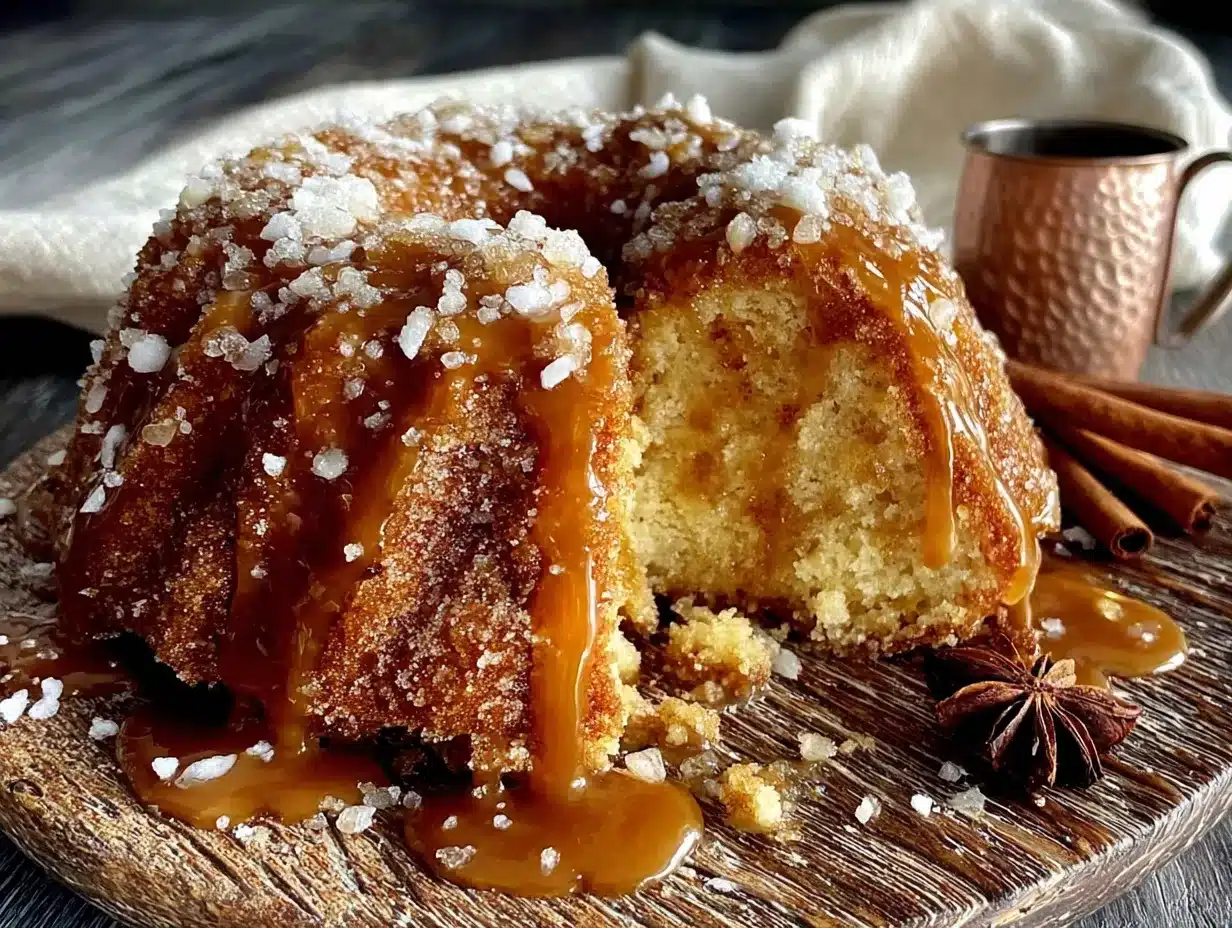
- Apply the coating while warm. While the cake is still warm (but not hot), brush the entire surface with the melted butter. Mix the granulated sugar and cinnamon together in a small bowl, then sprinkle it generously over the buttered cake. Use your hands to press the sugar mixture gently into the sides if needed. The warmth helps the coating stick and creates that classic donut-like crust.
Cooking Tips & Techniques
Don’t rush the cider reduction. I learned this the hard way. The first time I made this, I tried to speed up the process by cranking the heat. The cider burned, and my kitchen smelled like a campfire for two days. Keep it at a gentle simmer and watch it closely toward the end. The reduction happens faster than you think once it gets down to the last quarter cup.
Room temperature ingredients matter here. Cold eggs and cold buttermilk will seize up your creamed butter mixture, leaving you with a lumpy batter that bakes unevenly. Take everything out of the fridge 30 to 45 minutes before you start. If you forget (I do all the time), place the eggs in a bowl of warm water for 5 minutes and microwave the buttermilk for 10 seconds.
Grease that pan like you mean it. Bundt pans are notorious for holding onto cake. I use a pastry brush to get melted butter into every single ridge and crevice, then dust with flour. If you’re nervous, use a baking spray that contains flour—it works like a charm.
Let it cool properly. That 15-minute rest in the pan is non-negotiable. If you try to flip it too early, the cake will fall apart. Wait too long, and condensation will make it stick. Set a timer, I promise you’ll forget otherwise.
Apply the coating at the right temperature. The cake should be warm but not hot when you brush on the butter. If it’s too hot, the butter runs right off. Too cold, and the sugar won’t stick. Aim for that sweet spot where the cake is still radiating warmth but you can handle it comfortably.
Variations & Adaptations
Gluten-Free Version: Substitute the all-purpose flour with a good 1:1 gluten-free baking flour blend. I’ve tested this with Bob’s Red Mill and King Arthur Measure for Measure, and both work beautifully. Add an extra tablespoon of buttermilk since gluten-free flours tend to absorb more liquid.
Dairy-Free Adaptation: Use vegan butter sticks (not tub margarine) and substitute the buttermilk with ½ cup unsweetened almond or oat milk mixed with 1 tablespoon lemon juice. Let it sit for 5 minutes before using. The texture is slightly less tender but still delicious.
Spiced Maple Variation: Replace the brown sugar with maple sugar and add ¼ teaspoon of cardamom to the spice mix. Drizzle a maple glaze over the top instead of the cinnamon-sugar coating. This version feels a little more grown-up and pairs beautifully with coffee.
Apple Cider Donut Muffins: If you don’t have a bundt pan, this batter makes about 18 standard muffins. Bake at 350°F for 18 to 20 minutes. Brush with melted butter and roll in cinnamon-sugar while warm. They’re perfect for lunchboxes or grab-and-go breakfasts.
I once made a batch of these muffins for a fall bake sale and they sold out in twenty minutes. The woman who bought the last six asked me to cater her daughter’s birthday party. I politely declined—I’m not that organized—but it was a nice ego boost.
Serving & Storage Suggestions
This cake is best served slightly warm, when the cinnamon-sugar coating is still a little crackly and the crumb is at its softest. A slice with a cup of hot coffee or a mug of spiced apple cider is basically fall perfection on a plate.
For a more decadent presentation, serve each slice with a dollop of lightly sweetened whipped cream and a drizzle of warm caramel sauce. The combination of the tender cake, the crunchy sugar coating, and the creamy topping is absolutely next-level.
Storage: Keep the cake at room temperature under a cake dome or loosely wrapped in foil for up to 3 days. The coating will soften slightly over time, but that’s not necessarily a bad thing—it starts to taste even more like a real apple cider donut.
Freezing: This cake freezes beautifully. Wrap it tightly in plastic wrap, then a layer of foil, and freeze for up to 3 months. Thaw at room temperature for about 4 hours before serving. If you want to refresh the coating, brush with a little melted butter and sprinkle fresh cinnamon-sugar right before serving.
The flavors actually deepen after the first day. I honestly prefer this cake on day two, when the apple cider flavor has had time to meld with the spices and the texture settles into something even more tender.
Nutritional Information & Benefits
Per slice (based on 12 servings):
- Calories: 345
- Total Fat: 14g
- Saturated Fat: 8g
- Cholesterol: 72mg
- Sodium: 280mg
- Total Carbohydrates: 52g
- Dietary Fiber: 1g
- Sugars: 33g
- Protein: 5g
While this is definitely a treat (and I’m not here to pretend otherwise), there are a few bright spots worth mentioning. Apple cider contains antioxidants called polyphenols, which help fight inflammation. Cinnamon has been shown to help regulate blood sugar levels, and nutmeg contains compounds that may support digestive health.
This recipe is vegetarian-friendly and can be adapted to be dairy-free or gluten-free with the substitutions listed above. It does contain wheat, dairy, and eggs, so it’s not suitable for those with related allergies without modifications.
Look, I’m not saying this cake is health food. But if you’re going to have dessert—and I firmly believe you should—it might as well be something made from real ingredients that brings you joy. This one does exactly that.
Conclusion
This easy apple cider donut bundt cake is everything I love about fall baking. It captures that nostalgic cider mill flavor without any of the hassle. No deep frying, no rolling out dough, no standing over a hot stove. Just one bowl, one pan, and a cake that makes your kitchen smell like autumn heaven.
I’ve made this for family gatherings, neighbor gifts, and lazy Sunday mornings when I wanted something special without spending all day in the kitchen. Every single time, people ask for the recipe. Every single time, someone says, “This tastes just like an apple cider donut!” And that’s exactly the point.
I’d love to hear how yours turns out. Did you try one of the variations? Did you add your own twist? Drop a comment below and let me know. And if you snap a photo, tag me—I love seeing these cakes in all their cinnamon-sugar glory.
Happy baking, friends. Your kitchen is about to smell incredible.
Frequently Asked Questions
Can I use apple juice instead of apple cider?
Technically yes, but the flavor won’t be as rich. Apple juice is thinner and less tangy than cider, so the reduced syrup won’t have that same concentrated apple punch. If you’re in a pinch, go ahead and use juice, but add an extra ¼ teaspoon of cinnamon to compensate for the milder flavor.
Why did my bundt cake stick to the pan?
This usually happens for one of three reasons: the pan wasn’t greased thoroughly enough, you didn’t let it cool the full 15 minutes before flipping, or your pan has scratches that grab onto the cake. Next time, use a pastry brush to get butter into every crevice, then dust with flour. And set that timer for exactly 15 minutes—no peeking.
Can I make this cake ahead of time?
Absolutely. This cake actually tastes better the next day. Bake it, cool it completely, and store it tightly wrapped at room temperature. Wait to apply the cinnamon-sugar coating until just before serving for the best texture. If you’ve already coated it, that’s fine too—the coating will soften slightly but still taste wonderful.
Can I skip reducing the apple cider?
I really don’t recommend it. The reduction concentrates the apple flavor and removes excess liquid that would make your batter too thin. If you skip this step, you’ll end up with a flat-tasting, dense cake that doesn’t have that signature apple cider donut flavor. The reduction takes 15 minutes and makes all the difference.
How do I know when the cake is done baking?
Insert a long wooden toothpick or a thin skewer into the deepest part of the cake. If it comes out clean or with just a few moist crumbs attached, it’s done. The top should also be golden brown and spring back when you press it gently with your finger. Start checking at 45 minutes, but don’t open the oven door too often or the temperature will fluctuate.
Pin This Recipe!
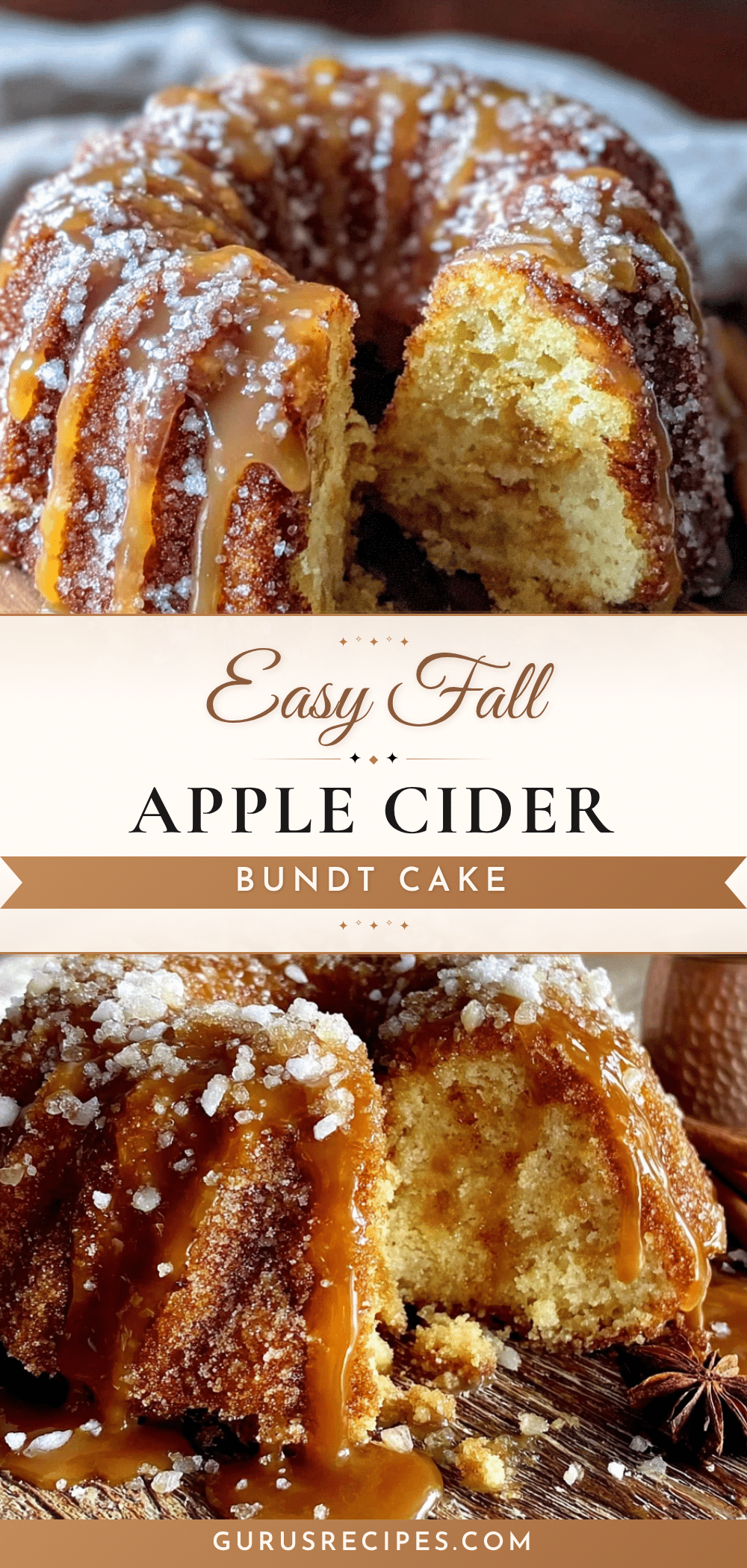

Easy Apple Cider Donut Bundt Cake: Best Homemade Recipe
This easy apple cider donut bundt cake captures all the cozy spice and tangy apple flavor of classic fall donuts without any deep frying. It bakes up in one pan with a tender, donut-like crumb and a signature cinnamon-sugar coating.
- Total Time: 1 hour 10 minutes
- Yield: 12 servings 1x
Ingredients
- 2 cups apple cider
- 2 ½ cups all-purpose flour
- 1 ½ teaspoons baking powder
- 1 teaspoon baking soda
- 1 teaspoon ground cinnamon
- ½ teaspoon ground nutmeg
- ¼ teaspoon ground cloves
- ½ teaspoon salt
- ½ cup unsalted butter, softened
- 1 cup granulated sugar
- ½ cup light brown sugar, packed
- 3 large eggs, room temperature
- 1 teaspoon vanilla extract
- ½ cup buttermilk, room temperature
- ¼ cup unsalted butter, melted (for coating)
- ⅓ cup granulated sugar (for coating)
- 1 tablespoon ground cinnamon (for coating)
Instructions
- Reduce the apple cider: Pour 2 cups apple cider into a small saucepan. Bring to a boil over medium-high heat, then reduce to medium-low and simmer until reduced to ½ cup, about 15-20 minutes. Set aside to cool.
- Preheat oven to 350°F. Grease a 10 to 12-cup bundt pan thoroughly with butter or baking spray, then dust with flour and tap out excess.
- In a large mixing bowl, whisk together flour, baking powder, baking soda, cinnamon, nutmeg, cloves, and salt. Set aside.
- In a stand mixer with paddle attachment (or using a hand mixer), beat softened butter, granulated sugar, and brown sugar on medium speed until light and fluffy, about 3-4 minutes. Scrape down bowl halfway through.
- Add eggs one at a time, beating well after each addition. Scrape down bowl after second egg. Add vanilla extract and beat until combined.
- With mixer on low speed, add about one-third of the dry ingredients, mixing until just combined. Add half of the buttermilk and mix. Repeat with another third of dry ingredients, remaining buttermilk, and final third of dry ingredients. Stop mixing as soon as flour disappears.
- Pour cooled reduced apple cider into batter. Fold gently with a rubber spatula until fully incorporated.
- Spoon batter into prepared bundt pan and spread evenly. Tap pan on counter a few times to release air bubbles. Bake for 45-55 minutes, until a toothpick inserted into center comes out clean or with a few moist crumbs.
- Let cake cool in pan on a wire rack for exactly 15 minutes. Invert onto cooling rack and let cool for another 10 minutes.
- While cake is still warm (but not hot), brush entire surface with melted butter. Mix ⅓ cup granulated sugar and 1 tablespoon cinnamon in a small bowl, then sprinkle generously over buttered cake. Press gently into sides if needed.
Notes
Don’t rush the cider reduction; keep at a gentle simmer. Room temperature ingredients are crucial for proper creaming. Grease the bundt pan thoroughly to prevent sticking. Let cake cool exactly 15 minutes in pan before inverting. Apply cinnamon-sugar coating while cake is warm but not hot. Cake tastes even better the next day.
- Prep Time: 15 minutes
- Cook Time: 45-55 minutes
- Category: Dessert
- Cuisine: American
Nutrition
- Serving Size: 1 slice
- Calories: 345
- Sugar: 33
- Sodium: 280
- Fat: 14
- Saturated Fat: 8
- Carbohydrates: 52
- Fiber: 1
- Protein: 5
Keywords: apple cider donut bundt cake, easy apple cider cake, fall bundt cake, cinnamon sugar bundt cake, apple cider recipe