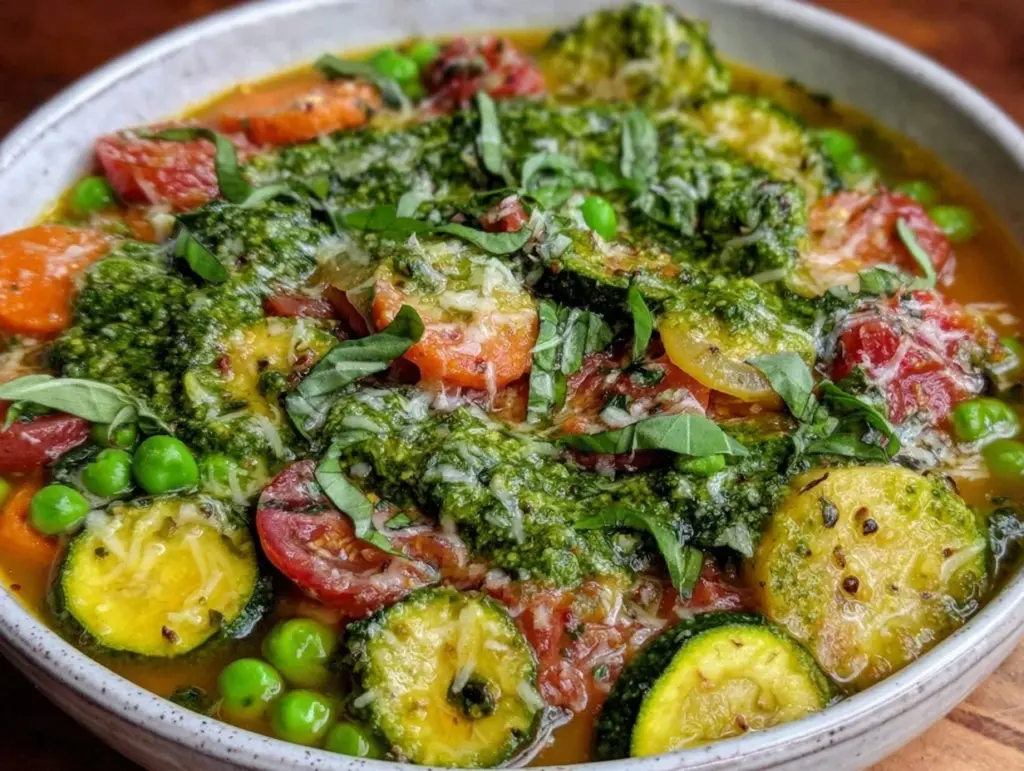
“You have to try this soup,” my neighbor called over the fence one afternoon, holding a steaming bowl in her hands. I was skeptical—spring and soup? Isn’t soup for chilly nights only? But the smell of fresh herbs and the vibrant colors tempted me enough to take a spoonful. Honestly, that first bite was like a fresh breeze on a drizzly day—a bright, comforting hug that didn’t weigh me down. That’s how this fresh light spring minestrone with herbaceous pesto drizzle found its way into my kitchen and heart.
It wasn’t the usual heavy minestrone loaded with beans and thick broth. No, this one was different. The vegetables were crisp, the broth delicate but flavorful, and that pesto drizzle? Game-changer. It added this grassy, garlicky punch that lifted every spoonful. I found myself making it again and again, sometimes on lazy weekends, sometimes on rushed weeknights. It’s the kind of recipe that feels like a reset—comfort without the heaviness, freshness without the fuss.
Now, whenever the first green shoots of spring peek through or when I crave something light yet satisfying, I reach for this recipe. It reminds me that good food doesn’t have to be complicated or rich to feel nourishing. Plus, it pairs beautifully with a slice of fresh bread like the easy crispy no-knead rosemary sea salt bread I baked last weekend—crisp crust and all.
It’s not just a soup; it’s a quiet moment in a bowl, with just enough zest to make you pause and savor the season. And that’s why, even after countless tries, this fresh light spring minestrone with herbaceous pesto drizzle sticks around my recipe box—and my table.
Why You’ll Love This Fresh Light Spring Minestrone with Herbaceous Pesto Drizzle
This fresh light spring minestrone recipe isn’t your typical slow-cooked stew. It’s a thoughtful balance of vibrant veggies and herbs that come together quickly and effortlessly. I’ve tested and tweaked this recipe over several seasons, making sure it’s as bright and fresh as spring itself.
- Quick & Easy: Ready in about 30 minutes, perfect for busy days when you want something wholesome without hours in the kitchen.
- Simple Ingredients: Packed with spring’s bounty—think fresh peas, baby spinach, and tender carrots—mostly pantry staples and seasonal finds.
- Perfect for Entertaining: Whether it’s a casual lunch or a light dinner, this minestrone feels special enough to share with friends.
- Crowd-Pleaser: The gentle broth and herby pesto drizzle get thumbs up from kids and adults alike—no one feels left out.
- Unbelievably Delicious: The pesto drizzle isn’t just a garnish; it’s a flavor bomb that ties everything together with freshness and a hint of nuttiness.
What sets this recipe apart is the layering of flavors without heaviness. The pesto is herbaceous but not overpowering—it’s made with parsley and basil, which I find more delicate than the usual pine nut basil pesto. Plus, the soup uses vegetable broth and fresh veggies, making it lighter but still deeply satisfying. It’s the kind of dish that makes you close your eyes and appreciate the simplicity of fresh ingredients doing their thing.
Honestly, it’s comfort food rethought for spring—lighter, brighter, but still soul-soothing. And if you want a perfect side, pairing it with some crusty bread like the crispy asiago cheese bread can’t be beat.
What Ingredients You Will Need
This fresh light spring minestrone uses simple, wholesome ingredients to deliver bold flavor and satisfying texture without the fuss. Most are pantry staples or easy to find in the produce aisle during springtime.
- Olive oil: For sautéing, use a good quality extra virgin olive oil (I prefer Colavita for its peppery notes).
- Yellow onion: Finely chopped, it forms the flavor base.
- Garlic cloves: Minced, fresh and pungent for aromatic depth.
- Carrots: Peeled and diced, adding sweetness and crunch.
- Celery stalks: Diced, classic soup base component.
- Fresh peas: Shelled or frozen—fresh is best in spring, but frozen works well too.
- Baby spinach: Washed and roughly chopped, for vibrant color and mild earthiness.
- Small zucchini: Diced, tender and slightly sweet.
- Vegetable broth: About 4 cups (950 ml), homemade or store-bought (look for low sodium).
- Cannellini beans: Drained and rinsed, adds creaminess and protein.
- Small pasta shells or ditalini: About ¾ cup (90 g), cooks quickly and adds bite.
- Salt & black pepper: To taste, adjust seasoning as you go.
- Fresh herbs for pesto:
- 1 cup fresh parsley leaves
- ½ cup fresh basil leaves
- 2 tablespoons toasted walnuts (a milder, less oily alternative to pine nuts)
- 1 garlic clove
- ¼ cup grated Parmesan cheese (optional)
- ¼ cup olive oil
- Salt and pepper to taste
If you want to switch things up, you can swap the cannellini beans for chickpeas or the pasta for gluten-free options like quinoa or rice pasta. For a vegan pesto, simply skip the Parmesan or use a nutritional yeast substitute.
Equipment Needed
- Large soup pot or Dutch oven: Essential for even heat and enough room to stir comfortably.
- Cutting board and sharp chef’s knife: For chopping all the fresh vegetables precisely.
- Blender or food processor: To make the herbaceous pesto drizzle smooth and emulsified.
- Wooden spoon or heatproof spatula: For stirring the soup without scratching your cookware.
- Measuring cups and spoons: For accurate ingredient amounts, especially pasta and broth.
- Colander or fine mesh strainer: To rinse beans and drain pasta.
If you don’t have a food processor, a blender works just fine—just pulse carefully to avoid overprocessing. For the soup pot, I find that a 5-quart Dutch oven works perfectly, but a large heavy-bottomed pan will do just as well. Keeping your knives sharp makes chopping faster and safer, trust me on that one.
Preparation Method
- Prep the veggies: Wash and chop the onion, carrots, celery, zucchini, and spinach. Shell your peas if fresh. This should take about 10 minutes.
- Sauté the base: Heat 2 tablespoons of olive oil over medium heat in your pot. Add the onion, carrots, and celery. Stir occasionally for 5-7 minutes until softened and fragrant. You want the onion translucent, not browned.
- Add garlic: Toss in the minced garlic and cook for 30 seconds until aromatic, careful not to burn it.
- Add broth and beans: Pour in the vegetable broth and add the drained cannellini beans. Bring to a gentle boil.
- Cook pasta: Add the small pasta shells (¾ cup / 90 g) to the boiling broth. Stir occasionally to prevent sticking. Cook for about 8 minutes or until al dente.
- Add fresh vegetables: Stir in peas, diced zucchini, and baby spinach during the last 3 minutes of cooking. They should be tender but still vibrant and slightly crisp.
- Season: Salt and pepper to taste. Remember, the broth may already have salt, so taste before adding more.
- Make the pesto drizzle: While the soup simmers, combine parsley, basil, toasted walnuts, garlic clove, Parmesan (if using), and olive oil in a food processor or blender. Pulse until smooth but still slightly textured. Season with salt and pepper. This takes about 5 minutes.
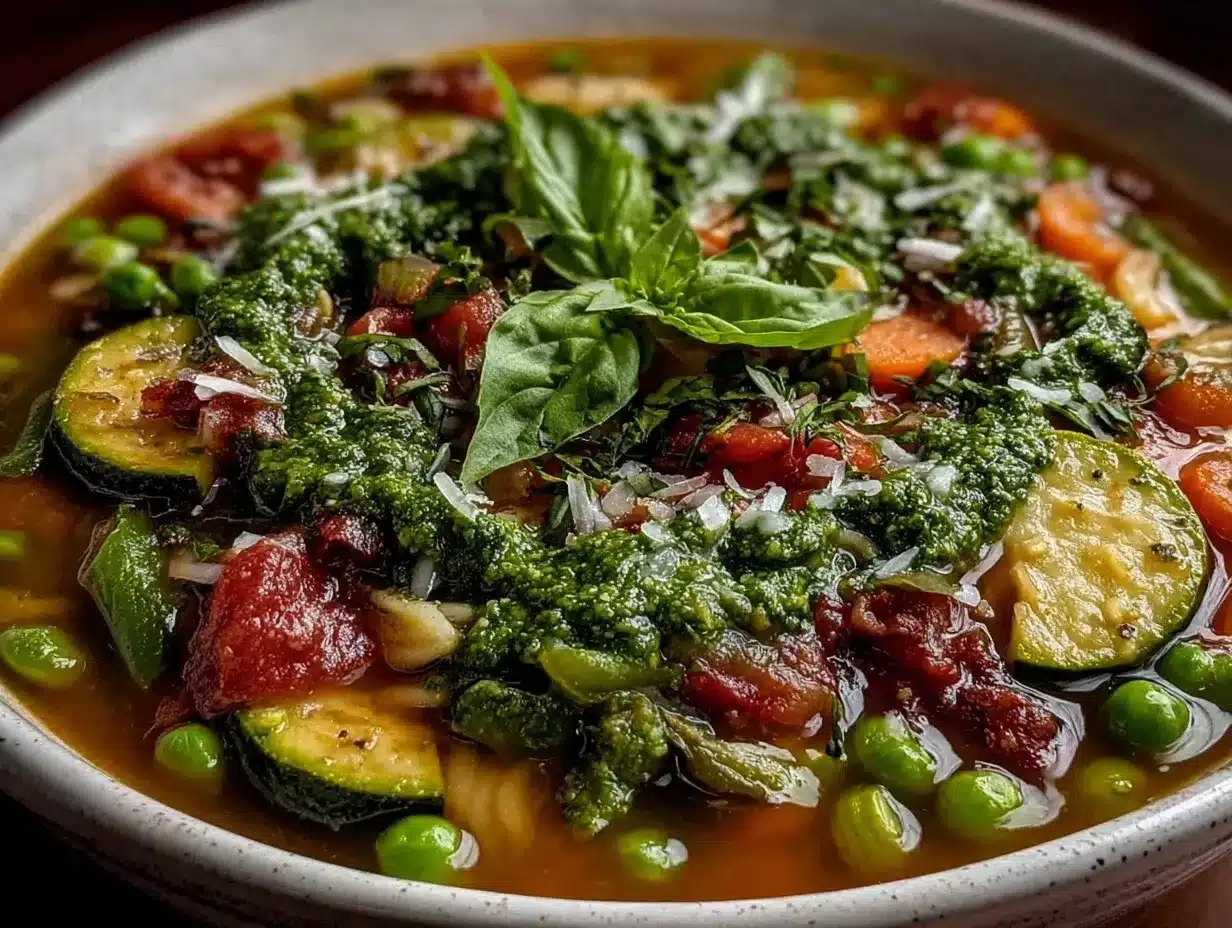
- Serve: Ladle soup into bowls and generously drizzle with the herbaceous pesto. It’s best enjoyed hot but not scalding—let the flavors meld for a moment before digging in.
One quick note: if the soup feels too thick after the pasta cooks, add a splash of broth or water to loosen it. The texture should be brothy but with enough body to feel hearty.
Cooking Tips & Techniques
When making this fresh light spring minestrone, timing is key. Add the delicate veggies like peas and spinach last so they keep their color and texture. Overcooked greens turn dull and mushy, and that’s just sad.
For the pesto, toasting the walnuts lightly before blending brings out a nuttier flavor without overpowering the herbs. I’ve learned not to overblend the pesto—it should still have a little texture so it feels fresh and homemade, not paste-like.
One mistake I made early on was boiling the pasta separately. It’s easier and more flavorful to cook it right in the broth; the pasta releases starch that thickens the soup slightly and adds body.
If you’re short on time, prepping the pesto ahead and storing it in the fridge means you can just warm the soup whenever you want a quick meal. Just add the drizzle fresh before serving for the best effect.
Also, stirring gently but often during pasta cooking prevents clumping and ensures everything cooks evenly. I usually keep a close eye during those last 5 minutes—that’s when the magic happens.
Variations & Adaptations
This fresh light spring minestrone is pretty flexible. Here are a few ways to customize it:
- Protein Boost: Add cooked shredded chicken or turkey for a meatier version without losing the light feel.
- Vegan Version: Skip the Parmesan in the pesto and use nutritional yeast or omit it entirely. Use vegetable broth to keep it plant-based.
- Seasonal Variations: Swap peas and zucchini for asparagus tips or baby fennel in late spring. In summer, fresh tomatoes diced add a juicy twist.
- Grain Swap: Use quinoa or barley instead of pasta for a gluten-free or nuttier alternative.
- Spice It Up: Add a pinch of red pepper flakes to the pesto or sprinkle freshly cracked black pepper on top for a little heat.
One variation I love is stirring in a handful of arugula just before serving for a peppery bite. It’s unexpected but delicious. If you want a richer pesto, swapping walnuts for pecans gives a buttery flavor that’s quite memorable.
Serving & Storage Suggestions
Serve this fresh light spring minestrone hot, with the pesto drizzle freshly spooned on top. A scattering of extra Parmesan cheese or a squeeze of lemon juice can add brightness right before eating.
This soup pairs beautifully with crusty breads like the crispy garlic parmesan focaccia bread or a simple green salad for a light lunch or dinner.
Store leftovers in an airtight container in the refrigerator for up to 3 days. The flavors meld nicely, but the pesto drizzle is best added fresh each time to keep its vibrant flavor. You can reheat the soup gently on the stove or in the microwave—if it’s too thick, stir in a splash of broth or water.
For longer storage, freeze the soup (without pesto) in portion-sized containers for up to 2 months. Thaw overnight in the fridge before reheating. Add fresh pesto after warming up to keep that herbaceous punch.
Nutritional Information & Benefits
This fresh light spring minestrone is a nutrient-packed bowl of goodness. Thanks to the variety of fresh vegetables and beans, it provides fiber, vitamins A and C, and plant-based protein. The pesto adds healthy fats from olive oil and walnuts, plus antioxidants from fresh herbs.
Estimated nutrition per serving (serves 4): about 250 calories, 10g protein, 7g fiber, and 8g fat (mostly heart-healthy fats). It’s naturally low in saturated fat and can be made gluten-free by swapping the pasta.
It’s a great choice if you’re aiming for a balanced meal that nourishes without feeling heavy. The fresh herbs in the pesto also support digestion and add a burst of flavor without extra sodium.
Conclusion
This fresh light spring minestrone with herbaceous pesto drizzle has earned a permanent spot in my springtime cooking rotation. It’s simple, fresh, and filled with flavors that celebrate the season without weighing you down. I love how easy it is to customize, whether for a quick solo lunch or a relaxed dinner with friends.
Give it a try and feel free to make it your own—add your favorite veggies or swap in your preferred herbs for the pesto. Cooking should be joyful and flexible, and this recipe is proof that simple ingredients can create something truly satisfying.
If you make it, I’d love to hear how you tweaked it or what you paired it with. And maybe next time you’re craving something fresh and comforting, you’ll find yourself reaching for this bowl of spring sunshine.
Frequently Asked Questions about Fresh Light Spring Minestrone
Can I make the pesto ahead of time?
Absolutely! Pesto can be made up to 3 days in advance and stored in an airtight container in the fridge. Just give it a good stir before drizzling over your soup.
What can I use instead of cannellini beans?
Chickpeas or great northern beans work well as substitutes. Canned beans should be rinsed and drained before adding.
Is this soup suitable for vegans?
Yes, just omit the Parmesan cheese from the pesto or replace it with nutritional yeast for a cheesy flavor.
Can I freeze this minestrone?
You can freeze the soup without the pesto for up to 2 months. Add fresh pesto after reheating for best flavor.
What if I don’t have fresh peas?
Frozen peas are a great alternative and can be added directly without thawing. They’ll keep that sweet, fresh taste.
Pin This Recipe!
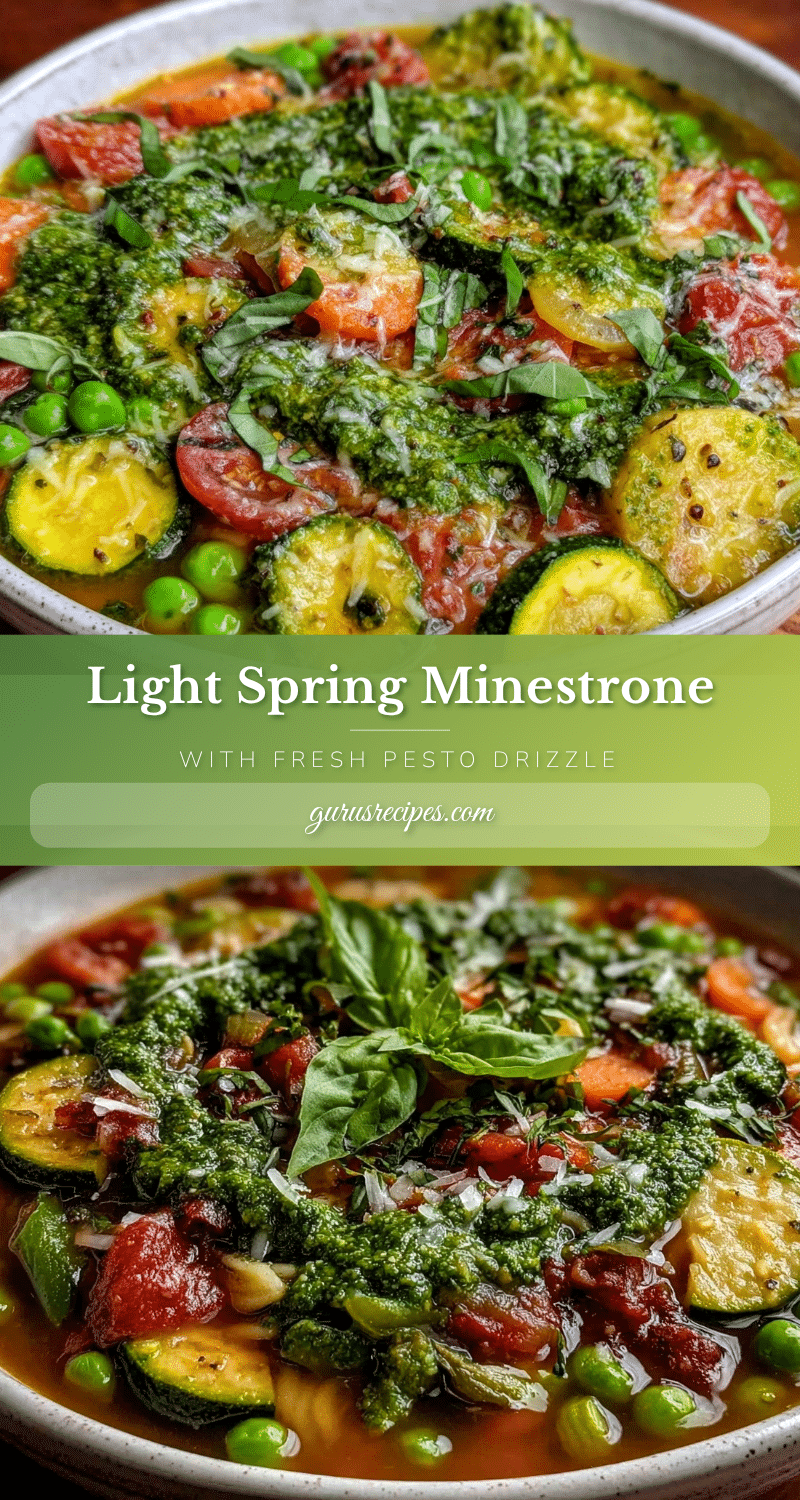

Fresh Light Spring Minestrone Recipe with Easy Herbaceous Pesto Drizzle
A bright, comforting, and light spring minestrone soup featuring crisp vegetables and a flavorful herbaceous pesto drizzle. Perfect for a quick, wholesome meal that celebrates fresh seasonal ingredients.
- Total Time: 30 minutes
- Yield: 4 servings 1x
Ingredients
- 2 tablespoons extra virgin olive oil
- 1 yellow onion, finely chopped
- 3 garlic cloves, minced (1 for soup, 1 for pesto, plus extra)
- 2 carrots, peeled and diced
- 2 celery stalks, diced
- 1 cup fresh peas (or frozen)
- 2 cups baby spinach, roughly chopped
- 1 small zucchini, diced
- 4 cups vegetable broth (low sodium preferred)
- 1 cup cannellini beans, drained and rinsed
- 3/4 cup small pasta shells or ditalini (about 3 ounces)
- Salt and black pepper to taste
- For the pesto drizzle:
- 1 cup fresh parsley leaves
- 1/2 cup fresh basil leaves
- 2 tablespoons toasted walnuts
- 1 garlic clove
- 1/4 cup grated Parmesan cheese (optional)
- 1/4 cup olive oil
- Salt and pepper to taste
Instructions
- Wash and chop the onion, carrots, celery, zucchini, and spinach. Shell peas if fresh.
- Heat 2 tablespoons olive oil over medium heat in a large soup pot or Dutch oven.
- Add onion, carrots, and celery; sauté for 5-7 minutes until softened and onion is translucent.
- Add minced garlic and cook for 30 seconds until aromatic, avoiding burning.
- Pour in vegetable broth and add drained cannellini beans; bring to a gentle boil.
- Add pasta shells and cook for about 8 minutes until al dente, stirring occasionally.
- During the last 3 minutes, stir in peas, diced zucchini, and baby spinach; cook until tender but still vibrant.
- Season soup with salt and black pepper to taste.
- Meanwhile, prepare pesto by combining parsley, basil, toasted walnuts, garlic clove, Parmesan (if using), olive oil, salt, and pepper in a blender or food processor. Pulse until smooth but slightly textured.
- Ladle soup into bowls and drizzle generously with the herbaceous pesto.
- If soup is too thick, add a splash of broth or water to loosen before serving.
Notes
Add delicate vegetables like peas and spinach last to keep their color and texture. Toast walnuts lightly before blending pesto for nuttier flavor. Cook pasta directly in broth for better flavor and texture. Pesto can be made ahead and stored refrigerated for up to 3 days. Soup can be frozen without pesto for up to 2 months.
- Prep Time: 10 minutes
- Cook Time: 20 minutes
- Category: Main Course
- Cuisine: Italian
Nutrition
- Serving Size: 1 bowl (about 1.5 cu
- Calories: 250
- Sugar: 6
- Sodium: 400
- Fat: 8
- Saturated Fat: 1
- Carbohydrates: 35
- Fiber: 7
- Protein: 10
Keywords: spring minestrone, light soup, herbaceous pesto, fresh vegetables, easy minestrone, healthy soup, vegetarian soup, quick soup