

This was supposed to be one of those throw-everything-in-a-pot pasta dishes. You know the ones—the kind where you dump orzo, broth, and chicken in a skillet and hope for the best. I had a rough week behind me, a fridge full of half-used ingredients, and zero patience for complicated recipes. The plan was simple: brown some chicken, toss in the orzo, pour in the broth, and walk away. But somewhere between grabbing the lemon from the fruit bowl and reaching for the cream, things got… weird.
I grabbed the wrong measuring cup. The one I thought held heavy cream actually held half-and-half from a recipe two days ago. I didn’t realize until after I’d poured it in. And honestly? I was too tired to care. I stirred it anyway, squeezed in way more lemon than the original recipe called for (because, again, distracted), and let it bubble away while I cleaned up the disaster zone that was my counter.
The smell that filled my kitchen was not what I expected. It was bright, fresh, and rich all at once. I peeked under the lid and saw this gorgeous, creamy sauce clinging to every piece of orzo. The chicken was impossibly tender. I took a bite right from the pan—burned my tongue, didn’t care—and just stood there, holding the spoon, honestly confused. How did this mistake turn into the best thing I’d made in months? Maybe you’ve been there. That moment where a kitchen blunder becomes a new favorite. This is that recipe for me now. I keep making it on purpose.
Why You’ll Love This Recipe
Let me tell you why this one-pan lemon garlic chicken and orzo has earned a permanent spot in my weekly rotation. It’s not just good—it’s the kind of meal that makes you close your eyes after that first bite. And it does it without turning your kitchen into a war zone.
- Quick & Easy: From start to finish, this comes together in about 40 minutes. That’s less time than it takes to decide what to order for delivery.
- Simple Ingredients: No trips to a specialty store. You likely have most of this in your pantry right now—orzo, garlic, lemons, chicken, and a little cream.
- Perfect for Busy Weeknights: It’s a complete meal in one pan. Protein, carbs, and a silky sauce all in one dish. Less cleanup, more eating.
- Crowd-Pleaser: I’ve served this to picky kids, skeptical in-laws, and hungry neighbors. Everyone goes back for seconds.
- Unbelievably Delicious: The texture is what gets me. The orzo soaks up all that lemony, garlicky broth and turns into something between risotto and pasta. It’s creamy without being heavy.
What makes this different from other lemon chicken recipes? It’s the technique. Instead of adding cream at the end, I let the orzo cook in a mixture of broth and half-and-half (or heavy cream, you do you). The starch from the pasta naturally thickens the sauce as it cooks. No roux, no extra steps. It’s a lighter, brighter take on comfort food that still feels indulgent. I’ve tested this with whole wheat orzo, gluten-free orzo, and even cauliflower rice for a low-carb version. The classic version is still my favorite, but it’s forgiving enough to adapt.
What Ingredients You Will Need
This recipe relies on a handful of fresh, flavorful ingredients that work together to create something truly special. Most of these are pantry staples, which makes this dish perfect for those nights when you need dinner on the table without a trip to the grocery store.
- Chicken Thighs (1.5 lbs, boneless skinless): I prefer thighs here because they stay juicy and tender, even after simmering. Chicken breasts work too, but watch the cooking time—they can dry out faster. Look for thighs that are roughly the same size for even cooking.
- Orzo (1 cup, 200g): This tiny pasta is the heart of the dish. It cooks right in the sauce and absorbs all that lemony flavor. I like De Cecco or Barilla brands for best texture. If you’re gluten-free, use a lentil or chickpea orzo—it holds up well.
- Chicken Broth (2 cups, 480ml): Use low-sodium so you can control the salt level. A good quality broth makes a difference here since it’s the main liquid. I’ve used Better Than Bouillon in a pinch and it works great.
- Half-and-Half or Heavy Cream (½ cup, 120ml): This is where the creaminess comes from. Half-and-half keeps it lighter, while heavy cream makes it richer. Both work—just depends on your mood. For a dairy-free option, full-fat canned coconut milk is surprisingly good.
- Lemons (2 large): You’ll need both the zest and the juice. Zest the lemons before juicing—trust me, it’s easier. Fresh lemon is non-negotiable here. Bottled lemon juice has a flat, metallic taste that just won’t work.
- Garlic (5-6 cloves, minced): Fresh garlic is a must. Pre-minced garlic from a jar tends to burn faster and lacks that punchy flavor. I use a microplane to grate mine—it melts right into the sauce.
- Onion (1 medium, diced): Yellow or white onion works best. It adds a savory base that balances the bright lemon. Shallots are a nice substitute if you have them.
- Butter (2 tablespoons): For searing the chicken and sautéing the aromatics. It adds a richness that oil alone can’t match.
- Dried Oregano (1 teaspoon): This herb pairs beautifully with lemon and garlic. Italian seasoning works too in a pinch.
- Red Pepper Flakes (¼ teaspoon, optional): Just a pinch for warmth. It doesn’t make the dish spicy, just adds a little depth.
- Fresh Parsley (¼ cup, chopped): For garnish and a pop of freshness at the end. Flat-leaf parsley is best.
- Salt and Black Pepper (to taste): Season as you go. Don’t be shy with the pepper—it plays well with the lemon.
Equipment Needed
One of the best things about this recipe is how little equipment it requires. You don’t need a dozen pots and pans cluttering up your sink. Here’s what you’ll actually use:
- Large Skillet or Dutch Oven (12-inch, with a lid): This is your main vessel. A deep skillet with straight sides works best because it holds all the liquid without splattering. I use my trusty 12-inch cast iron skillet for this—it retains heat beautifully and gives the chicken a gorgeous sear. A stainless steel pan works great too. Avoid nonstick if you can, since you want those browned bits on the bottom for flavor.
- Wooden Spoon or Heatproof Spatula: For stirring the orzo and scraping up the fond (those delicious browned bits) from the bottom of the pan.
- Microplane or Zester: For getting all that fragrant lemon zest without the bitter white pith. A box grater works too, just be careful.
- Measuring Cups and Spoons: Accurate measurements matter here, especially for the broth and cream. Eyeballing it can lead to a soupy or dry dish.
- Chef’s Knife and Cutting Board: For dicing the onion and mincing the garlic. A sharp knife makes this step so much faster.
- Tongs: For flipping the chicken and serving. They give you better control than a fork.
If you don’t have a lid for your skillet, a sheet pan placed on top works as a makeshift cover. I’ve done it more times than I care to admit.
Preparation Method
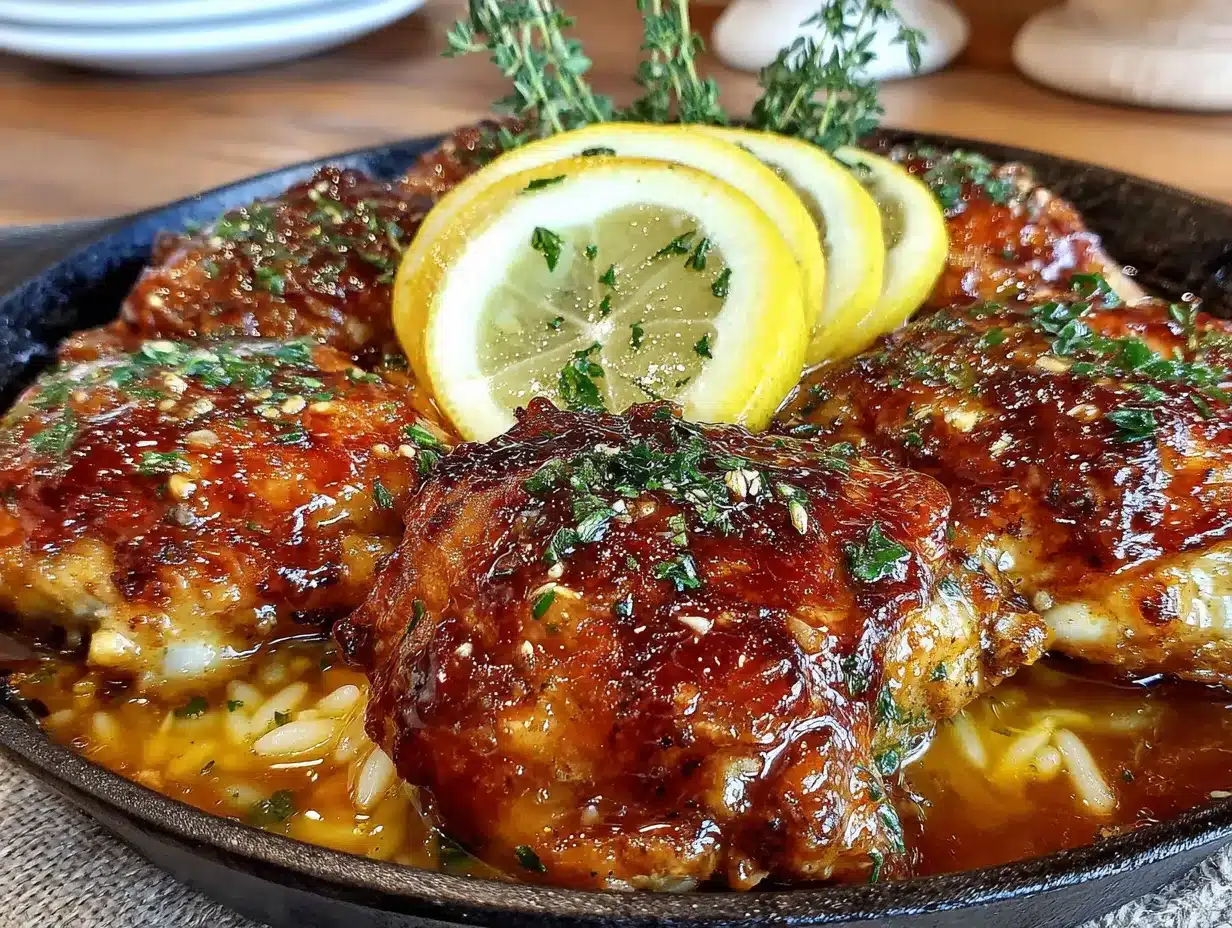
Alright, let’s get cooking. This comes together in one pan, but there are a few key moments where paying attention makes all the difference. Take your time with the searing step—it’s where the flavor starts building.
- Prep your ingredients first. Dice the onion, mince the garlic, zest and juice the lemons, and chop the parsley. This moves fast once you start cooking, so having everything ready is a lifesaver. Pat the chicken thighs dry with paper towels and season both sides generously with salt, pepper, and dried oregano.
- Heat the pan. Place your large skillet over medium-high heat and add 1 tablespoon of butter. Let it melt and foam, but don’t let it brown. Swirl the pan to coat the bottom evenly.
- Sear the chicken. Place the seasoned chicken thighs in the pan in a single layer. Don’t crowd them—work in batches if needed. Let them cook undisturbed for 4-5 minutes until the underside is golden brown and releases easily from the pan. Flip and cook for another 3-4 minutes. The chicken won’t be fully cooked through yet, and that’s okay. Transfer the thighs to a plate and set aside.
- Sauté the aromatics. Reduce the heat to medium. Add the remaining 1 tablespoon of butter to the pan. Toss in the diced onion and cook for 3-4 minutes, stirring occasionally, until it’s soft and translucent. The browned bits on the bottom of the pan (the fond) are flavor gold—don’t worry, they’ll get incorporated later. Add the minced garlic and red pepper flakes (if using) and cook for just 30 seconds until fragrant. Garlic burns fast, so keep it moving.
- Toast the orzo. Pour the dry orzo into the pan and stir it around for about 1-2 minutes. It should look slightly golden and smell nutty. This step is easy to skip, but don’t—toasting the pasta gives it a deeper flavor and helps it hold its shape better during cooking.
- Add the liquids. Pour in the chicken broth and half-and-half (or heavy cream). Add the lemon zest and lemon juice. Stir everything together, scraping up those browned bits from the bottom of the pan. The mixture will look thin and soupy—that’s exactly right.
- Return the chicken. Nestle the seared chicken thighs back into the pan, along with any juices that collected on the plate. The chicken should be partially submerged in the liquid. Bring the mixture to a gentle simmer, then reduce the heat to medium-low. Cover the pan with the lid.
- Cook the orzo. Let it simmer gently for 15-18 minutes, stirring once halfway through to prevent the orzo from sticking to the bottom. The orzo should be tender and most of the liquid should be absorbed. The sauce will thicken as it sits, so don’t cook it until it’s completely dry—you want it slightly saucy.
- Check the chicken. Use an instant-read thermometer to check the thickest part of a thigh. It should read 165°F (74°C). If it’s not there yet, let it cook for another 2-3 minutes with the lid on.
- Rest and serve. Remove the pan from the heat and let it sit, covered, for 5 minutes. This allows the orzo to absorb any remaining liquid and the flavors to meld. Sprinkle with fresh parsley and an extra squeeze of lemon if you like. Serve hot, right from the pan.
A quick note: if the orzo looks dry before it’s fully cooked, add a splash of warm broth or water. If it looks too soupy at the end, let it sit uncovered for a few minutes to thicken.
Cooking Tips & Techniques
I’ve made this recipe probably a dozen times now, and I’ve learned a few things the hard way. Here are the tips that make the biggest difference:
Don’t rush the sear. Getting a good golden crust on the chicken is non-negotiable. That browning creates flavor compounds that the sauce needs. If the chicken sticks to the pan when you try to flip it, it’s not ready yet. Give it another 30 seconds and try again. Patience here pays off big time.
Toast the orzo properly. I forgot to do this once—I was distracted by a phone call—and the orzo turned out mushy and bland. That quick toasting step locks in the pasta’s structure so it stays al dente even after simmering in liquid. It also adds a subtle nuttiness that makes the dish taste more complex.
Use room temperature dairy. Cold half-and-half can seize up when it hits the hot pan. Let it sit on the counter for 10-15 minutes before you add it. Same goes for the chicken—take it out of the fridge 15 minutes before cooking for more even searing.
Season in layers. This is something I learned from watching professional chefs. Season the chicken before searing, season the onion as it cooks, and taste the sauce before serving and adjust. Each layer of salt builds on the last. Under-seasoned food is the most common mistake home cooks make, and it’s so easy to fix.
Watch the heat. Medium-low is your friend here. If the liquid is boiling vigorously, the orzo will cook unevenly and the sauce might break. A gentle simmer with small, lazy bubbles is what you’re after. I’ve definitely cranked the heat to speed things up, and ended up with dry orzo and a separated sauce. Learn from my mistakes.
Variations & Adaptations
This recipe is a great base for experimentation. Here are a few ways I’ve adapted it depending on what I have in the fridge or who I’m feeding:
Vegetable-Packed Version: Add a cup of chopped spinach or kale during the last 5 minutes of cooking. It wilts right into the sauce and adds color and nutrients. You can also toss in a cup of frozen peas when you add the broth—they thaw quickly and add a pop of sweetness.
Herb Lover’s Twist: Swap the dried oregano for fresh thyme or rosemary. Add a couple of sprigs to the pan when you add the broth, then remove them before serving. Fresh dill also works surprisingly well with the lemon—try it if you’re feeling adventurous.
Dairy-Free Adaptation: Use full-fat canned coconut milk instead of half-and-half. It adds a subtle sweetness that pairs nicely with the lemon. Just make sure to shake the can well before opening. I’ve also used cashew cream with good results—just blend soaked cashews with water until smooth.
Spicy Kick: Double the red pepper flakes, or add a finely chopped serrano pepper along with the garlic. The heat cuts through the richness beautifully. My husband loves this version, though I keep it mild for myself.
One-Pan Lemon Garlic Chicken and Orzo with Vegetables: Add sliced zucchini or bell peppers along with the onion. They soften as the orzo cooks and become part of the sauce. It’s an easy way to bulk up the meal without extra effort.
Serving & Storage Suggestions
This dish is best served hot, straight from the pan. The orzo continues to absorb liquid as it sits, so the texture is most perfect right after that 5-minute rest. I like to serve it in shallow bowls with a generous sprinkle of fresh parsley and a lemon wedge on the side for an extra squeeze.
For sides, a simple green salad with a lemony vinaigrette is my go-to. The acidity complements the dish without competing with it. Crusty bread is also great for sopping up any extra sauce—because there will be sauce, and you won’t want to waste it. Roasted asparagus or steamed green beans make nice vegetable sides too.
Storage: Leftovers keep well in an airtight container in the refrigerator for up to 3 days. The orzo will absorb more liquid overnight, so the dish will be thicker the next day. That’s not a bad thing—it almost turns into a risotto-like texture that I secretly love.
Reheating: The best way to reheat is on the stovetop over medium-low heat with a splash of broth or water to loosen the sauce. Stir gently until heated through. The microwave works in a pinch, but it can make the chicken rubbery. If you’re using the microwave, cover the bowl and heat in 30-second bursts, stirring in between.
Freezing: I don’t recommend freezing this dish. The dairy-based sauce can separate when thawed, and the orzo turns mushy. If you want to meal prep, cook the chicken and sauce separately, then cook fresh orzo when you’re ready to serve.
Nutritional Information & Benefits
This dish strikes a nice balance between comfort and nourishment. Here’s an approximate breakdown per serving (based on 4 servings):
- Calories: 485
- Protein: 34g
- Fat: 18g
- Carbohydrates: 42g
- Fiber: 3g
- Sugar: 4g
- Sodium: 580mg (varies with broth)
Chicken thighs provide a good dose of protein, iron, and B vitamins. Lemon juice offers vitamin C and antioxidants, while garlic has been linked to immune support and heart health. Using half-and-half instead of heavy cream keeps the saturated fat content lower without sacrificing creaminess.
For a lighter version, use chicken breast instead of thighs and swap the half-and-half for unsweetened almond milk mixed with a tablespoon of cornstarch. The texture won’t be quite as luxurious, but it’s still satisfying.
This recipe is naturally gluten-free if you use gluten-free orzo. It’s also nut-free and egg-free, making it a safe option for many common allergies.
Conclusion
This light and creamy one-pan lemon garlic chicken and orzo started as a happy accident, but it’s become one of those recipes I genuinely look forward to making. It’s the kind of meal that feels special enough for a Sunday dinner but simple enough for a Tuesday night when you’re exhausted and just want something good. The bright lemon, the tender chicken, the creamy orzo—it all comes together in a way that’s comforting without being heavy.
I’d love for you to try it and make it your own. Maybe you’ll add more garlic, or throw in some spinach, or give it a spicy kick. That’s the beauty of a one-pan meal—it’s forgiving and flexible. If you make it, drop a comment below and let me know how it turned out. Did you change anything? Did your family love it? I read every comment, and honestly, your stories and tweaks inspire me to keep experimenting.
Here’s to happy accidents in the kitchen. And to meals that remind us why we love cooking in the first place.
Frequently Asked Questions
Can I use chicken breasts instead of thighs?
Yes, absolutely. Chicken breasts work well, but they cook faster and can dry out more easily. Use boneless, skinless breasts and check for doneness at the 12-minute mark. You want an internal temperature of 160°F (71°C) before resting, as they’ll continue cooking.
Can I make this recipe ahead of time?
You can, but the orzo will continue to absorb liquid as it sits. If you’re making it ahead, undercook the orzo by about 2 minutes and add an extra ¼ cup of broth. Reheat gently with a splash of broth to loosen the sauce.
What can I substitute for orzo?
Small pasta shapes like ditalini, stelline, or even broken spaghetti work well. Rice (especially arborio) is also a good option, though cooking times will vary. For a low-carb version, try cauliflower rice—add it in the last 5 minutes of cooking.
How do I prevent the orzo from sticking to the pan?
Stir the orzo once about halfway through cooking. Make sure your heat is at a gentle simmer, not a rolling boil. Using a heavy-bottomed pan also helps distribute heat evenly and prevents hot spots where sticking can occur.
Can I add vegetables to this dish?
Definitely. Spinach, kale, frozen peas, or chopped zucchini are all great additions. Add heartier vegetables like zucchini or bell peppers along with the onion. Add delicate greens like spinach in the last 5 minutes of cooking so they wilt without turning mushy.
Pin This Recipe!


Light and Creamy One-Pan Lemon Garlic Chicken and Orzo
A bright, creamy one-pan meal featuring tender chicken and orzo in a lemony garlic sauce. This happy accident turned weeknight favorite comes together in about 40 minutes with simple ingredients.
- Total Time: 40 minutes
- Yield: 4 servings 1x
Ingredients
- 1.5 lbs boneless skinless chicken thighs
- 1 cup (200g) orzo
- 2 cups (480ml) low-sodium chicken broth
- ½ cup (120ml) half-and-half or heavy cream
- 2 large lemons (zested and juiced)
- 5–6 cloves garlic, minced
- 1 medium onion, diced
- 2 tablespoons butter
- 1 teaspoon dried oregano
- ¼ teaspoon red pepper flakes (optional)
- ¼ cup fresh parsley, chopped
- Salt and black pepper to taste
Instructions
- Prep your ingredients first. Dice the onion, mince the garlic, zest and juice the lemons, and chop the parsley. Pat the chicken thighs dry with paper towels and season both sides generously with salt, pepper, and dried oregano.
- Heat the pan. Place your large skillet over medium-high heat and add 1 tablespoon of butter. Let it melt and foam, but don’t let it brown. Swirl the pan to coat the bottom evenly.
- Sear the chicken. Place the seasoned chicken thighs in the pan in a single layer. Don’t crowd them—work in batches if needed. Let them cook undisturbed for 4-5 minutes until the underside is golden brown and releases easily from the pan. Flip and cook for another 3-4 minutes. The chicken won’t be fully cooked through yet, and that’s okay. Transfer the thighs to a plate and set aside.
- Sauté the aromatics. Reduce the heat to medium. Add the remaining 1 tablespoon of butter to the pan. Toss in the diced onion and cook for 3-4 minutes, stirring occasionally, until it’s soft and translucent. Add the minced garlic and red pepper flakes (if using) and cook for just 30 seconds until fragrant.
- Toast the orzo. Pour the dry orzo into the pan and stir it around for about 1-2 minutes. It should look slightly golden and smell nutty.
- Add the liquids. Pour in the chicken broth and half-and-half (or heavy cream). Add the lemon zest and lemon juice. Stir everything together, scraping up those browned bits from the bottom of the pan.
- Return the chicken. Nestle the seared chicken thighs back into the pan, along with any juices that collected on the plate. Bring the mixture to a gentle simmer, then reduce the heat to medium-low. Cover the pan with the lid.
- Cook the orzo. Let it simmer gently for 15-18 minutes, stirring once halfway through to prevent the orzo from sticking to the bottom. The orzo should be tender and most of the liquid should be absorbed.
- Check the chicken. Use an instant-read thermometer to check the thickest part of a thigh. It should read 165°F (74°C). If it’s not there yet, let it cook for another 2-3 minutes with the lid on.
- Rest and serve. Remove the pan from the heat and let it sit, covered, for 5 minutes. Sprinkle with fresh parsley and an extra squeeze of lemon if you like. Serve hot, right from the pan.
Notes
Don’t rush the sear—a good golden crust on the chicken creates flavor. Toast the orzo properly to keep it al dente. Use room temperature dairy to prevent seizing. Season in layers for best flavor. Keep heat at medium-low for a gentle simmer. If orzo looks dry before fully cooked, add a splash of warm broth. If too soupy at the end, let sit uncovered to thicken.
- Prep Time: 10 minutes
- Cook Time: 30 minutes
- Category: Main Course
- Cuisine: American
Nutrition
- Serving Size: 1 serving (about 1.5
- Calories: 485
- Sugar: 4
- Sodium: 580
- Fat: 18
- Saturated Fat: 8
- Carbohydrates: 42
- Fiber: 3
- Protein: 34
Keywords: one-pan chicken, lemon garlic chicken, orzo, creamy chicken, weeknight dinner, easy chicken recipe