“You’ve got to try these little pavlovas,” my neighbor said, waving a tiny plate across the fence one bright spring afternoon. It was one of those spontaneous moments when the sun hits just right, and the neighborhood buzz feels like a gentle hum of promise. Honestly, I was skeptical. Mini lemon curd pavlovas? I’d had pavlova before, but the idea of light, bite-sized versions with lemon curd felt almost too delicate for my usual dessert expectations.
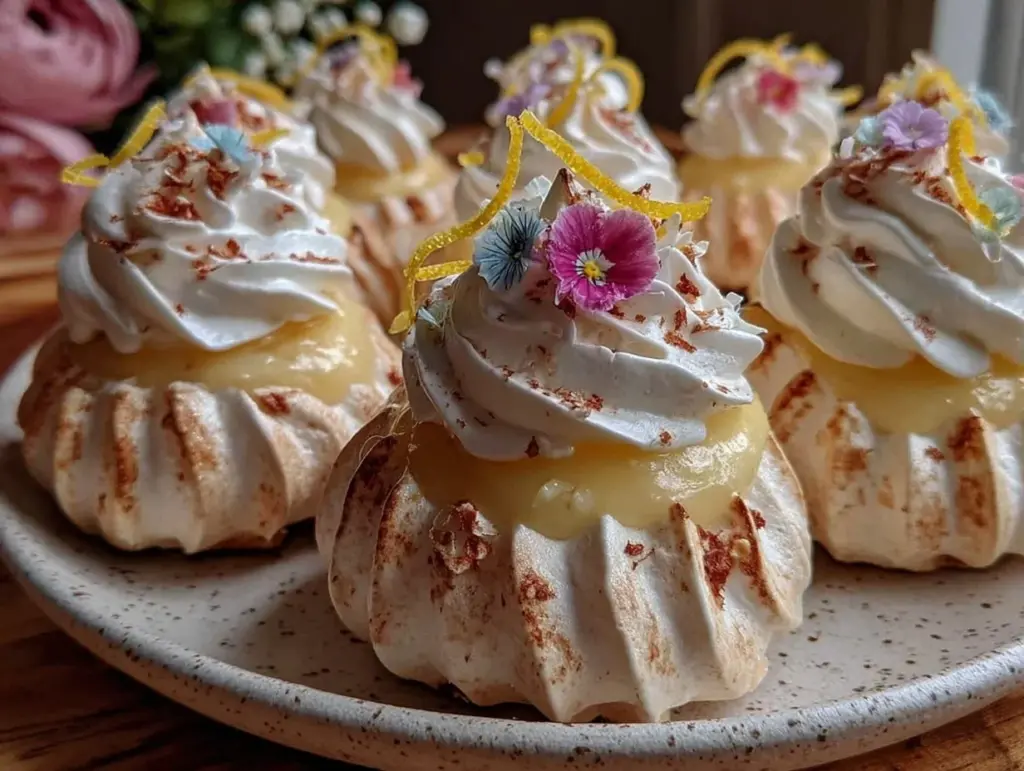
But that first bite changed everything. The crisp shell melted instantly, giving way to airy sweetness with a bright, zingy lemon punch that tasted like a whisper of spring itself. They weren’t just pretty, they were the kind of treat that makes you pause — and maybe even close your eyes for a second. Easter was just around the corner, and suddenly, these little clouds of lemony joy felt like the perfect dessert to share after a day of laughter and family chaos.
It stuck with me, this recipe. I found myself making mini lemon curd pavlovas multiple times in a week, tweaking the lemon curd just slightly, trying to get that balance just right. It’s not every day you find a dessert that’s light enough to not weigh you down but still feels like a celebration on your tongue. And for Easter? Well, it’s a quiet kind of magic in a little meringue shell.
There’s something about the way these pavlovas come together that feels a bit like a secret handshake between seasons — the brightness of lemon, the airy crispness, the soft marshmallow center. It’s a recipe that’s as much about the moments around the table as it is about the dessert itself. That’s why it’s stayed in my rotation, quietly becoming a favorite for Easter celebrations and sunny spring afternoons alike.
Why You’ll Love This Recipe
After testing this recipe several times (and trust me, I’ve counted), I’m confident it’s one of those desserts that brings a little lightness and joy to the table without any fuss. What makes these Light Mini Lemon Curd Pavlovas stand out isn’t just their delicate texture — it’s the way everything works together, from the crisp meringue shell to the tangy lemon curd filling.
- Quick & Easy: The pavlova shells take just about 20 minutes to prep and around an hour to bake, but the hands-on time is surprisingly short. Perfect for those last-minute Easter dessert plans.
- Simple Ingredients: You likely have everything already — egg whites, sugar, lemons — no hunting for obscure items.
- Perfect for Easter & Spring Gatherings: These mini pavlovas feel festive, fresh, and elegant without being fussy.
- Crowd-Pleaser: Kids love the sweet lemon curd surprise, and adults appreciate the light, airy texture that’s not too sweet.
- Unbelievably Delicious: The lemon curd is just the right balance of tart and sweet, complementing the meringue’s crisp exterior and soft center perfectly.
This recipe is a little different from others you might find because the lemon curd is homemade — no store-bought shortcuts here. It’s thick, creamy, and spreadable, with just enough zest to make you smile. Also, making mini pavlovas instead of one big one means everyone gets a personal serving that looks as good as it tastes. Honestly, I’ve found this form factor ideal for Easter brunch or even a light finish to a hearty dinner.
If you want to bring a bit of sunshine to your Easter table, these mini lemon curd pavlovas are an easy way to do it without feeling weighed down by dessert. Plus, if you’re into other light, fruity treats, you might enjoy pairing them with something like the fresh strawberry galette with vanilla glaze for a lovely contrast of textures and flavors.
What Ingredients You Will Need
This recipe uses simple, wholesome ingredients to deliver bold flavor and a satisfying texture without the fuss. Most are pantry staples, and the fresh lemon really makes it pop. Here’s what you’ll need:
- For the Meringue Shells:
- 4 large egg whites, room temperature (room temp helps create stable peaks)
- 1 cup (200g) granulated sugar (superfine or caster sugar works best for smooth meringue)
- 1 tsp white vinegar (helps stabilize the meringue)
- 1 tsp cornstarch (adds that signature marshmallowy center)
- Pinch of salt
- For the Lemon Curd Filling:
- 3 large egg yolks
- ½ cup (100g) granulated sugar
- ¾ cup (180ml) fresh lemon juice (about 3-4 lemons; freshly squeezed is key for brightness)
- 1 tbsp lemon zest (adds a punch of citrus aroma)
- 4 tbsp (60g) unsalted butter, cut into cubes (adds richness and smoothness)
- For Garnish (optional):
- Fresh berries like strawberries or blueberries (adds a fresh contrast)
- Mint leaves (for a pop of color and subtle herbaceous note)
- Powdered sugar for dusting
I personally prefer using large, farm-fresh eggs for the best meringue texture, and I recommend a trusted brand like Domino for the sugar to ensure it dissolves properly. If you want a dairy-free version of the lemon curd, swapping butter for coconut oil works surprisingly well, though the flavor will shift slightly. For a spring twist, swapping in fresh raspberries instead of berries for garnish adds a lovely tart contrast.
Equipment Needed
- Electric mixer or stand mixer with whisk attachment (essential for whipping stiff meringue)
- Baking sheet lined with parchment paper (a non-stick surface is crucial for easy removal)
- Spatula (preferably silicone, for gentle folding)
- Medium saucepan (for cooking lemon curd)
- Fine mesh sieve (optional, for straining lemon curd to remove zest and lumps)
- Measuring cups and spoons (precision is key with meringue)
- Juicer or citrus reamer (makes juicing lemons less messy)
- Cooling rack (to let pavlovas cool evenly)
If you don’t have a stand mixer, a good hand mixer works fine but be prepared for a bit more arm work. When making lemon curd, a heavy-bottomed saucepan helps prevent scorching. I once tried using a thin pan and ended up with scrambled eggs instead of curd — not fun! For budget-friendly options, parchment paper can be substituted with a silicone baking mat, which also makes cleanup easier and is reusable.
Preparation Method
- Preheat your oven to 250°F (120°C) and line a baking sheet with parchment paper. This low temperature is key to drying out the meringue without browning.
- Prepare the meringue base: In a clean, dry bowl, start whipping the 4 egg whites on medium speed until they become frothy and soft peaks begin to form (about 2-3 minutes).
- Gradually add the sugar: Increase mixer speed to high and add sugar one tablespoon at a time, giving each a moment to dissolve fully. This process should take about 5-6 minutes. The meringue should become glossy and form stiff peaks.
- Stabilize the meringue: Gently fold in the vinegar, cornstarch, and a pinch of salt using a spatula. This adds that tender marshmallow texture inside and helps prevent cracking.
- Shape the mini pavlovas: Using a spoon or piping bag, dollop or pipe 12-14 even-sized rounds (about 2-3 inches / 5-7 cm diameter) onto the baking sheet. Create a slight well in the center of each for the lemon curd.
- Bake the meringues: Place the tray in the oven and bake for 1 hour until the shells are crisp on the outside but still soft and marshmallowy inside. Turn off the oven, prop the door open slightly, and let them cool completely inside (about 1 hour). This prevents cracking from sudden temperature changes.
- Make the lemon curd: While meringues bake, whisk together egg yolks, sugar, lemon juice, and zest in a medium saucepan. Cook over low-medium heat, stirring constantly, until thickened — about 8-10 minutes. Remove from heat, strain if desired, and whisk in butter until smooth. Let cool to room temperature.
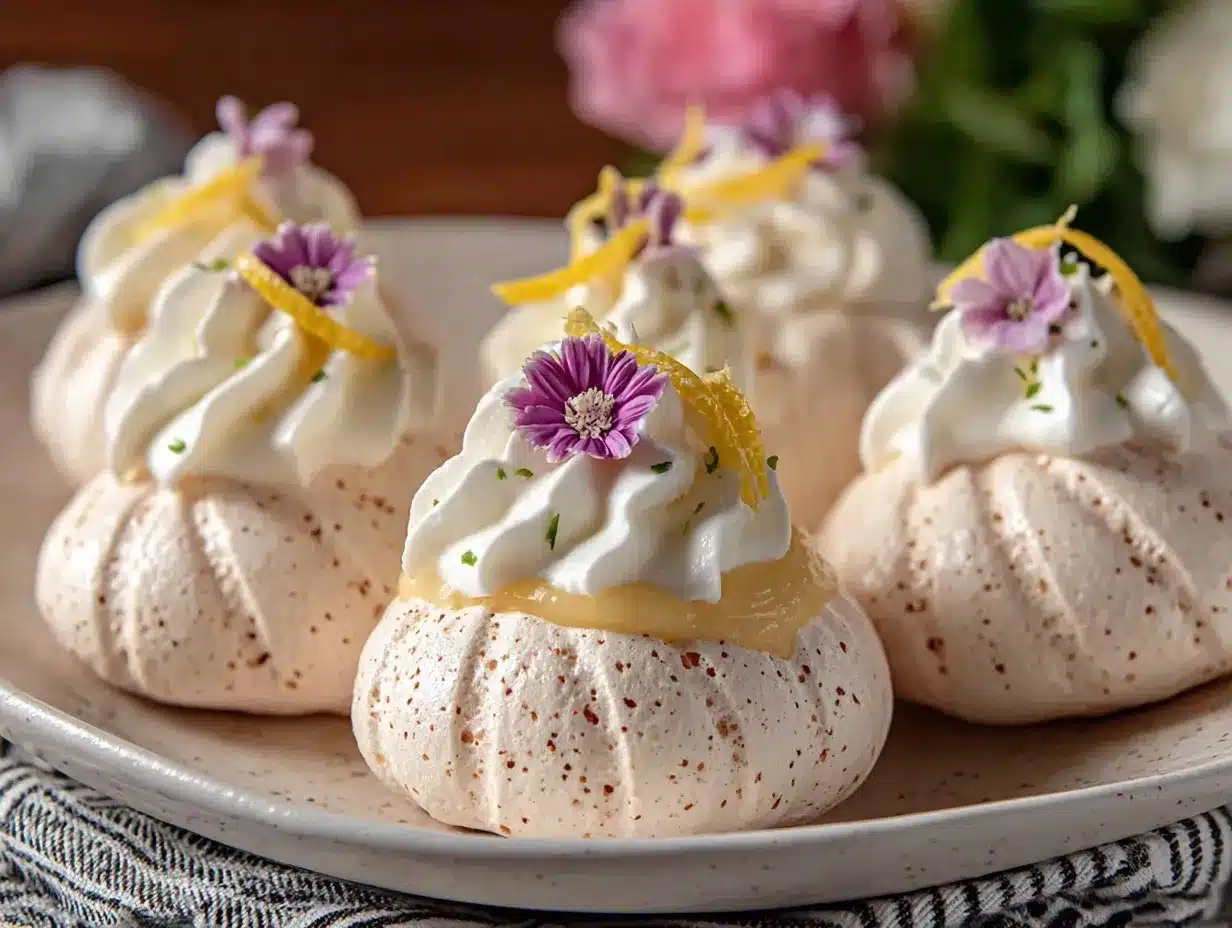
- Assemble the pavlovas: Once meringues are cool, spoon or pipe lemon curd into the centers. Garnish with fresh berries and mint leaves if using. Dust with powdered sugar for an extra touch.
Quick tip: If your meringue looks dull or grainy after adding sugar, it usually means the sugar hasn’t dissolved completely. Keep beating until glossy! Also, avoid any yolk traces in your whites — even a tiny bit will prevent stiff peaks.
Cooking Tips & Techniques
When it comes to making perfect pavlova shells, timing and technique are everything. I’ve learned the hard way that a clean bowl and fresh egg whites are non-negotiable. Even a bit of grease can ruin the fluffiness. Using room temperature egg whites helps them whip up faster and hold volume better.
Adding sugar slowly is crucial — don’t rush it or you’ll end up with gritty meringue. I use superfine sugar because it dissolves more easily, but if you only have granulated, just be patient. The vinegar and cornstarch are little tricks you might not find everywhere but really make a difference in texture and stability.
Baking low and slow is the secret to those crisp shells with soft centers. Resist the urge to open the oven door during baking; it can cause cracking. After baking, leaving the pavlovas in the cooling oven with the door slightly ajar helps them dry out perfectly without shock. I once pulled mine out too early and had sad cracks all over — not cute for Easter guests!
Making lemon curd requires gentle, constant stirring. If you rush the heat, you risk curdling. I find a heavy-bottom pan helps prevent hot spots. If you want extra smooth curd, straining out zest and lumps is a nice touch but optional.
Multitasking tip: While the lemon curd cooks, you can wash your meringue bowl and prep garnishes. This keeps things moving efficiently without feeling rushed.
Variations & Adaptations
These light mini lemon curd pavlovas are versatile, so feel free to customize for your Easter table or dietary needs.
- Berry Twist: Swap lemon curd for a homemade strawberry or raspberry curd for a sweeter, fruitier version. It pairs beautifully with a dollop of whipped cream and fresh berries. This variation complements the no-churn strawberry ice cream for an indulgent combo.
- Gluten-Free & Vegan: The pavlova itself is naturally gluten-free. For a vegan twist, aquafaba (chickpea water) can replace egg whites, but results vary, so expect a slightly different texture. Use dairy-free butter or coconut oil in the lemon curd.
- Herbal Infusion: Add a teaspoon of finely chopped fresh thyme or basil to the lemon curd for a subtle herbaceous note. It’s unexpected but refreshing.
- Mini Pavlova Nests: Shape the meringue into small nests and fill with lemon curd and whipped cream. Great for a more elegant Easter dessert platter.
- Chocolate Drizzle: For a richer twist, drizzle melted dark chocolate over the assembled pavlovas. The bitterness balances the tart lemon beautifully.
I once made a batch with lavender-infused lemon curd, and it was surprisingly delightful — a real crowd-pleaser for a spring brunch. Don’t hesitate to experiment a bit; pavlovas are forgiving and fun!
Serving & Storage Suggestions
Serve these mini lemon curd pavlovas chilled or at room temperature. They look lovely arranged on a pastel-colored platter or vintage cake stand for Easter. Garnish with fresh berries and mint for a pop of color that screams spring.
Pair with a light sparkling wine, herbal tea, or even a fresh lemonade to complement the citrus notes. They’re a perfect light finish after something hearty like a comforting shepherd’s pie, especially when you want something sweet but not heavy.
For storage, keep pavlova shells in an airtight container at room temperature for up to 2 days. Once filled with lemon curd, refrigerate and consume within 24 hours to prevent sogginess. If you want to prepare ahead, bake the shells up to 3 days in advance and store separately.
Reheating is generally not recommended, but you can let refrigerated pavlovas sit at room temperature for 15 minutes before serving to soften slightly. The flavors tend to develop nicely overnight when stored properly, especially the lemon curd, which becomes more mellow but still bright.
Nutritional Information & Benefits
This recipe is a lighter take on dessert but still feels indulgent. Each mini pavlova contains approximately:
| Nutrient | Per Serving (1 pavlova) |
|---|---|
| Calories | 120 kcal |
| Carbohydrates | 25 g |
| Fat | 3 g |
| Protein | 1.5 g |
| Sugar | 22 g |
Key ingredients like fresh lemon juice provide vitamin C, which supports immunity and adds refreshing brightness without added calories. The recipe is naturally gluten-free, suitable for those avoiding wheat. It does contain eggs and butter, so note potential allergens for guests.
From a wellness perspective, this dessert strikes a nice balance — it’s sweet enough to satisfy cravings but light enough to enjoy without feeling heavy. Plus, homemade lemon curd avoids preservatives and artificial flavors common in store-bought versions.
Conclusion
Light mini lemon curd pavlovas are a little spring secret I’m happy to share for your Easter celebrations. They’re simple enough to make at home, yet special enough to bring a smile to anyone’s face. What I love most is how customizable they are — you can keep them classic or add your own twist and still have a dessert that feels like a gift.
Whether you’re serving a crowd or just treating yourself, these pavlovas offer a fresh, light finish that’s a welcome break from heavy sweets. And if you enjoy bright, fruit-forward desserts, you might want to try pairing them with the balsamic roasted strawberry shortcake for a layered celebration of spring flavors.
I’d love to hear how you make them your own — whether you add a twist or stick with the classic lemon curd. Drop a comment or share your Easter dessert stories. Here’s to light, joyful moments around the table!
FAQs about Light Mini Lemon Curd Pavlovas
Can I make the meringue shells ahead of time?
Yes! You can bake the shells up to 3 days in advance and store them in an airtight container at room temperature. Just fill with lemon curd right before serving to keep them crisp.
How do I prevent my meringue from cracking?
Bake at a low temperature (250°F/120°C) and let the pavlovas cool slowly inside the oven with the door slightly open. Avoid sudden temperature changes to minimize cracks.
Can I use store-bought lemon curd?
While homemade lemon curd tastes best for this recipe, store-bought can be used in a pinch. Just choose a quality brand without too many additives for the best flavor.
What if I don’t have cornstarch for the meringue?
Cornstarch helps create that soft marshmallow center. If you don’t have it, you can skip it, but the texture might be a little less tender inside.
Is this recipe gluten-free?
Yes, pavlova is naturally gluten-free since it’s made from egg whites and sugar. Just check your lemon curd ingredients to be sure if using store-bought.
Pin This Recipe!
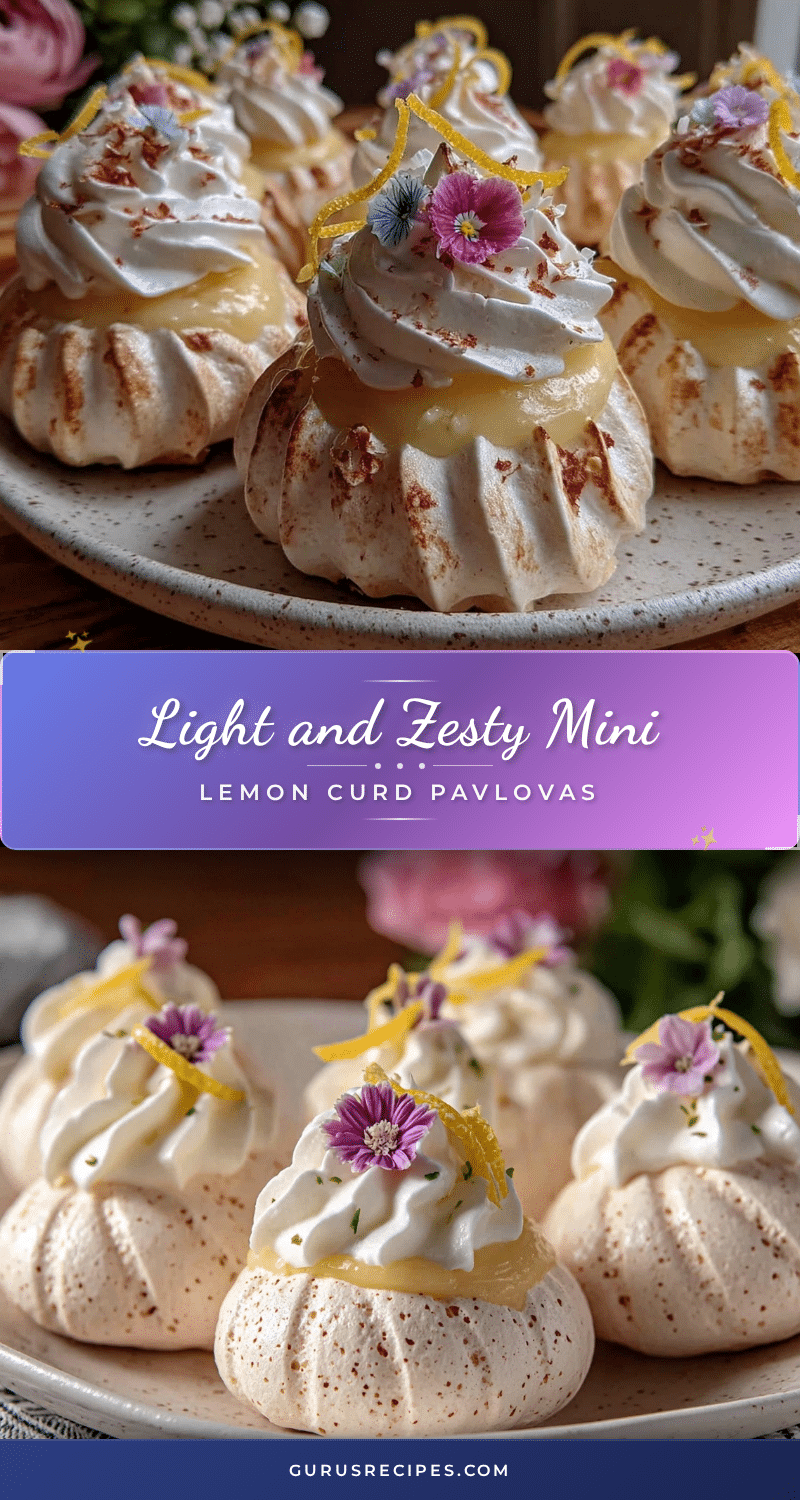

Light Mini Lemon Curd Pavlovas Easy Homemade Easter Dessert Recipe
These light mini lemon curd pavlovas feature crisp meringue shells with a soft marshmallow center filled with tangy homemade lemon curd, perfect for Easter and spring gatherings.
- Total Time: 1 hour 20 minutes
- Yield: 12-14 mini pavlovas 1x
Ingredients
- 4 large egg whites, room temperature
- 1 cup (200g) granulated sugar (superfine or caster sugar preferred)
- 1 tsp white vinegar
- 1 tsp cornstarch
- Pinch of salt
- 3 large egg yolks
- ½ cup (100g) granulated sugar
- ¾ cup (180ml) fresh lemon juice (about 3–4 lemons)
- 1 tbsp lemon zest
- 4 tbsp (60g) unsalted butter, cut into cubes
- Fresh berries like strawberries or blueberries (optional)
- Mint leaves (optional)
- Powdered sugar for dusting (optional)
Instructions
- Preheat your oven to 250°F (120°C) and line a baking sheet with parchment paper.
- In a clean, dry bowl, whip the 4 egg whites on medium speed until frothy and soft peaks form (about 2-3 minutes).
- Increase mixer speed to high and add sugar one tablespoon at a time, beating until glossy and stiff peaks form (about 5-6 minutes).
- Gently fold in the vinegar, cornstarch, and a pinch of salt using a spatula.
- Using a spoon or piping bag, dollop or pipe 12-14 even-sized rounds (2-3 inches diameter) onto the baking sheet, creating a slight well in the center of each.
- Bake for 1 hour until shells are crisp outside but soft inside. Turn off oven, prop door open slightly, and let pavlovas cool completely inside (about 1 hour).
- While pavlovas bake, whisk together egg yolks, sugar, lemon juice, and zest in a medium saucepan. Cook over low-medium heat, stirring constantly, until thickened (8-10 minutes).
- Remove from heat, strain if desired, and whisk in butter until smooth. Let lemon curd cool to room temperature.
- Once pavlovas are cool, spoon or pipe lemon curd into the centers.
- Garnish with fresh berries, mint leaves, and dust with powdered sugar if desired.
Notes
Use room temperature egg whites for stable peaks. Add sugar slowly to avoid gritty meringue. Bake low and slow to prevent cracking. Let pavlovas cool inside oven with door ajar to avoid sudden temperature changes. For dairy-free lemon curd, substitute butter with coconut oil. Store baked shells in airtight container up to 3 days; fill with lemon curd just before serving to keep crisp.
- Prep Time: 20 minutes
- Cook Time: 1 hour
- Category: Dessert
- Cuisine: Australian/New Zealand
Nutrition
- Serving Size: 1 mini pavlova
- Calories: 120
- Sugar: 22
- Fat: 3
- Carbohydrates: 25
- Protein: 1.5
Keywords: mini pavlova, lemon curd, Easter dessert, light dessert, meringue, spring dessert, homemade lemon curd, gluten-free dessert