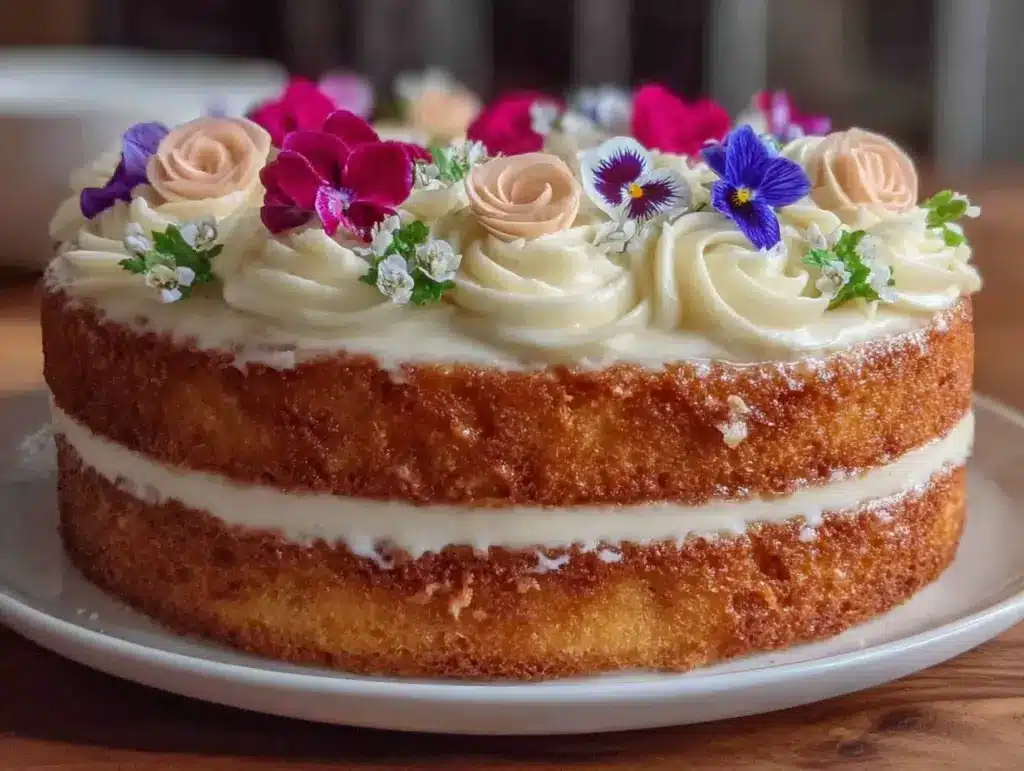
“Are you sure that’s edible?” my friend asked, eyeing the cake I just brought to our little garden party. Honestly, I had my doubts too. The idea of decorating a buttercream layer cake with delicate edible flowers sprouted from a half-baked impulse one afternoon when I was trying to salvage a batch of frosting that turned out a bit too sweet. I’d been craving something light, floral, and a little bit whimsical — something that felt like spring had been folded right into the batter.
That first cake was less than perfect — the layers weren’t quite even, and some flowers wilted too fast — but the effect was magical in its own clumsy way. Since then, I’ve found myself making this Perfect Floral Buttercream Layer Cake with Edible Flowers over and over, tweaking the buttercream’s texture and mastering the art of flower placement. It’s become my go-to when I want to impress without stressing, especially for casual gatherings or a quiet weekend treat.
There’s something calming about frosting each layer slowly, smoothing over the buttercream, then gently pressing fresh petals onto the surface. It reminds me of those early morning moments when the kitchen feels hushed and time slows down just enough to savor the small details. If you’re someone who loves a bit of beauty baked right in, this recipe might just become your quiet favorite too.
Why You’ll Love This Recipe
After baking this floral buttercream layer cake several times, I can honestly say it’s the kind of recipe that feels both special and surprisingly doable. Here’s why you might want to keep it handy:
- Quick & Easy: You can whip this up in about 1.5 hours, making it perfect for last-minute celebrations or a creative weekend project.
- Simple Ingredients: No need to run to specialty stores — the base cake uses pantry staples, and edible flowers can be picked up from local farmers’ markets or even your garden.
- Perfect for Celebrations: Whether it’s a birthday, bridal shower, or just a sunny afternoon, this cake adds a fresh, elegant touch.
- Crowd-Pleaser: The balance of a tender vanilla sponge with lightly sweetened buttercream wins over both kids and adults every time.
- Unbelievably Delicious: The floral notes aren’t just for looks — they subtly brighten the buttercream, making each bite feel fresh and delightful.
What sets this recipe apart? It’s the little details — like folding in a touch of floral essence into the buttercream for that authentic taste, or chilling the cake layers just right for easy stacking. And the edible flowers aren’t just decoration; they’re chosen to complement the flavors and textures.
This isn’t just another layer cake. It’s the kind that makes you pause, take a deep breath, and appreciate the moment — whether you’re sharing it with friends or sneaking a slice when no one’s looking.
What Ingredients You Will Need
This recipe relies on straightforward ingredients that come together to create a moist, tender cake with smooth, flavorful buttercream. Most are pantry staples, and the edible flowers add that signature charm.
- For the Cake Layers:
- All-purpose flour, 2 ½ cups (320 g) — for a sturdy yet tender crumb
- Baking powder, 2 ½ teaspoons — helps the cake rise evenly
- Salt, ½ teaspoon — balances sweetness
- Unsalted butter, 1 cup (225 g), softened — I prefer Kerrygold for its rich flavor
- Granulated sugar, 1 ¾ cups (350 g) — standard white sugar works best here
- Large eggs, 4, room temperature — they add structure and richness
- Pure vanilla extract, 2 teaspoons — quality matters here; Nielsen-Massey is my go-to
- Whole milk, 1 cup (240 ml), room temperature — for moistness; you can swap with almond milk for dairy-free
- For the Floral Buttercream:
- Unsalted butter, 1 cup (225 g), softened — again, use good quality for smooth texture
- Powdered sugar, 4 cups (480 g), sifted — to avoid lumps
- Heavy cream, 2-3 tablespoons (30-45 ml) — adjusts consistency
- Pure vanilla extract, 1 teaspoon
- Edible floral essence or rose water, 1 teaspoon — this is the secret to that subtle floral note
- Pinch of salt — enhances flavor complexity
- For Decoration:
- Fresh edible flowers — nasturtiums, pansies, violets, and calendula are some of my favorites
- Fresh herbs like mint or lavender sprigs (optional) — for extra freshness
When selecting edible flowers, make sure they’re organic and pesticide-free. Specialty markets or farmer’s markets often carry beautiful, safe options. If fresh flowers aren’t available, dried edible petals can work too, but they’re more delicate to handle.
Equipment Needed
Before you start, gather these kitchen essentials to make the process smooth and stress-free:
- Two 8-inch (20 cm) round cake pans — I’ve found metal pans give more even baking than glass.
- Mixing bowls — one large for batter, one for buttercream.
- Electric mixer — stand or hand mixer works fine; beats folding by hand every time.
- Rubber spatula — for scraping bowls and folding ingredients gently.
- Wire cooling racks — essential to cool your cakes evenly to avoid sogginess.
- Offset spatula — for smooth buttercream application (a flat knife can do in a pinch, but this tool makes a big difference).
- Parchment paper — to line your pans for easy cake release.
- Flower scissors or small kitchen scissors — to trim edible flowers gently.
If you don’t have two pans, you can bake layers one at a time, but double pans speed things up. Also, a cake turntable can help with frosting, but it’s not necessary.
Preparation Method
-
Prep Your Pans and Preheat the Oven (10 minutes)
Line the bottoms of your two 8-inch pans with parchment paper and lightly butter the sides. Preheat your oven to 350°F (175°C). This simple step helps the cakes release easily and bake evenly. -
Mix Dry Ingredients (5 minutes)
In a medium bowl, sift together 2 ½ cups (320 g) all-purpose flour, 2 ½ teaspoons baking powder, and ½ teaspoon salt. Sifting not only combines but aerates the flour, helping your cake stay light. -
Cream Butter and Sugar (7 minutes)
Using your mixer, beat 1 cup (225 g) softened unsalted butter with 1 ¾ cups (350 g) granulated sugar on medium-high speed until pale and fluffy — about 4-5 minutes. This step is crucial for a tender crumb. -
Add Eggs and Vanilla (3 minutes)
Beat in 4 large eggs, one at a time, making sure each is fully incorporated before adding the next. Then mix in 2 teaspoons pure vanilla extract. The batter will look smooth and glossy. -
Combine Wet and Dry Ingredients (5 minutes)
Add the dry ingredients in three parts, alternating with 1 cup (240 ml) whole milk, starting and ending with the flour mixture. Mix gently on low speed after each addition until just combined. Avoid overmixing — you want the batter smooth but not tough. -
Bake the Cake Layers (30-35 minutes)
Divide the batter evenly between the pans. Bake in the preheated oven for 30 to 35 minutes, or until a toothpick inserted in the center comes out clean. The edges should pull slightly away from the sides. -
Cool Completely (at least 1 hour)
Let the cakes cool in the pans on wire racks for 15 minutes, then run a knife around the edges and invert onto racks to cool fully. This step prevents your buttercream from melting later. -
Prepare the Floral Buttercream (10 minutes)
Beat 1 cup (225 g) softened butter on medium speed until creamy. Gradually add 4 cups (480 g) powdered sugar, beating on low to avoid a sugar cloud. Add 2-3 tablespoons (30-45 ml) heavy cream, 1 teaspoon vanilla extract, 1 teaspoon edible floral essence or rose water, and a pinch of salt. Beat on medium-high until fluffy and spreadable. Adjust cream for desired consistency. -
Assemble the Cake (15 minutes)
Place one cake layer on your serving plate. Spread an even layer of buttercream (about ¾ cup). Top with the second cake layer and frost the top and sides smoothly. Chill for 20 minutes to set the buttercream. -
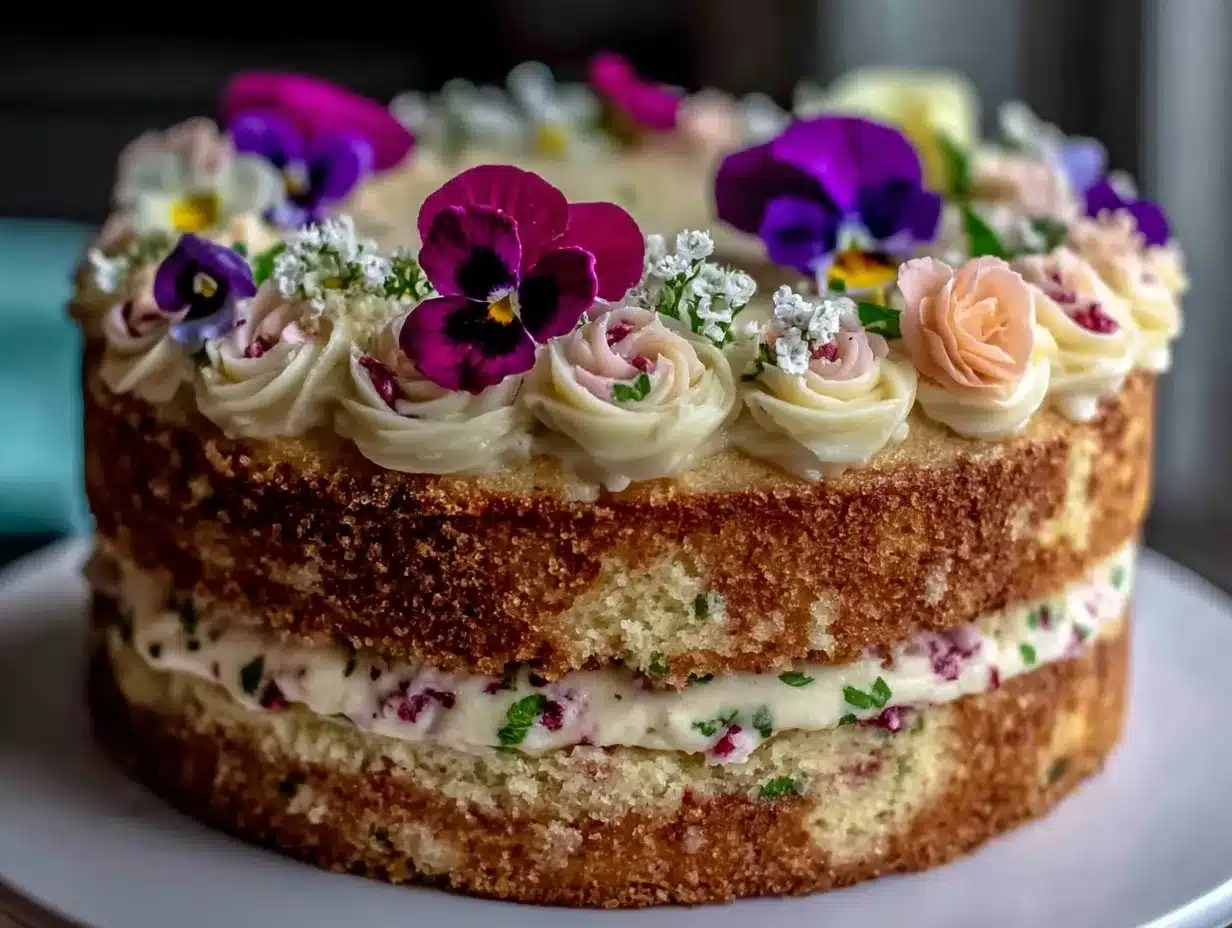
Decorate with Edible Flowers (10 minutes)
Gently arrange fresh edible flowers on top and around the sides. Trim stems close to the petals to make placement easier. If you want to add a subtle herbal note, tuck in small sprigs of mint or lavender.
Pro tip: If your buttercream feels too soft when frosting, pop it in the fridge for 10 minutes to firm up, then continue. Patience here pays off beautifully.
Cooking Tips & Techniques
From my many attempts, these tips make all the difference for a stunning and tasty floral buttercream layer cake:
- Room Temperature Ingredients: Butter and eggs should be at room temp to mix smoothly. Cold eggs can cause the batter to curdle, which affects texture.
- Don’t Overmix: Once you add flour, mix just until combined. Overworking develops gluten, making the cake dense and chewy.
- Level Your Layers: Use a serrated knife or cake leveler to trim domed cakes flat before frosting. It gives a professional finish and prevents wobbling.
- Chill Buttercream: After frosting, chilling the cake firms the buttercream, making flower placement easier and cleaner.
- Choose Fresh Flowers Wisely: Pick flowers in the morning when they’re freshest. Avoid flowers with a strong bitter taste or heavy pesticides.
I once rushed the frosting step and ended up with a melting mess — lesson learned: slow and steady wins the perfect buttercream. Also, multitasking by prepping flowers while the cake cools saves time and keeps everything fresh.
Variations & Adaptations
Don’t be afraid to make this cake your own! Here are a few ways to switch things up:
- Dietary: Swap all-purpose flour with gluten-free flour blend to make it gluten-free. Use dairy-free butter and coconut milk for a vegan-friendly version.
- Flavor Twists: Add lemon zest to the batter for a citrusy lift or fold in lavender buds (dried and finely ground) into the buttercream for an herbal note.
- Seasonal Flowers: Use seasonal edible flowers like violets in spring, marigolds in summer, or pansies in fall to match the mood and colors.
- Alternative Frosting: Try a cream cheese buttercream for tang or whipped coconut cream for a lighter finish.
- Different Shapes: Use square pans or mini cake pans for single servings, perfect for intimate gatherings.
I once swapped rose water with orange blossom water for a subtle, unexpected twist, and it was a hit at a brunch party. If you love flavors that pop, pairing this cake with a fresh strawberry galette or creamy no-churn strawberry ice cream from the site adds a lovely complement.
Serving & Storage Suggestions
This cake is best served at room temperature to let the buttercream soften slightly, releasing its floral aroma. Slice carefully with a sharp knife wiped clean between cuts for neat pieces.
For gatherings, pair it with light beverages like chamomile tea or sparkling elderflower water to keep flavors balanced.
- Storage: Keep the cake covered in the refrigerator for up to 3 days. Buttercream protects the cake’s moisture well.
- Freezing: Wrap tightly in plastic wrap and freeze for up to 2 weeks. Thaw overnight in the fridge before serving.
- Reheating: Let frozen cake come to room temp for about 2 hours. Avoid microwaving, which can melt the buttercream.
Interestingly, the floral flavors become more pronounced after a day, so if you can wait, the next-day slice is always a treat.
Nutritional Information & Benefits
Each slice of this buttercream layer cake (about 1/12th of the cake) contains approximately:
| Calories | 380 kcal |
|---|---|
| Fat | 22 g |
| Carbohydrates | 40 g |
| Protein | 4 g |
Key ingredients like eggs provide protein and essential nutrients, while butter adds richness. The edible flowers bring antioxidants and vitamins, adding a subtle health benefit beyond their beauty.
This cake isn’t low in calories, but it’s a perfect occasional indulgence. Using floral essences instead of heavy flavorings reduces extra sugars and chemicals, making it a somewhat cleaner treat. Just be mindful of any potential allergens like dairy or gluten, and substitute accordingly if needed.
Conclusion
There’s something truly satisfying about creating a cake that looks as fresh and delicate as a spring garden. The Perfect Floral Buttercream Layer Cake with Edible Flowers brings together simple ingredients and a bit of patience to make something genuinely special.
Whether you’re celebrating a milestone, hosting friends, or just craving a slice of beauty with your afternoon tea, this recipe adapts well and always impresses. I love how it invites creativity — picking flowers, adjusting flavors, and finding new ways to make each cake uniquely mine.
Give it a try and see how the gentle floral notes and creamy buttercream transform your baking experience. And if you experiment with it, I’d love to hear your twists and tips!
FAQs About the Perfect Floral Buttercream Layer Cake
Can I use dried edible flowers instead of fresh?
Yes, dried edible flowers can work, but handle them gently as they’re more fragile. They won’t last as long on the cake and may have a more muted flavor.
How do I know which flowers are safe to eat?
Only use flowers labeled as edible and pesticide-free. Common safe options include pansies, violets, nasturtiums, and calendula. Avoid flowers from florists unless confirmed safe.
Can I make this cake ahead of time?
Absolutely! Bake the layers a day ahead and store wrapped in plastic. Assemble and decorate the day you plan to serve for best freshness.
What if my buttercream is too soft or runny?
Chill it in the fridge for 10-15 minutes, then beat again before frosting. Using cold cream or adding a bit more powdered sugar helps firm it up.
Is it possible to color the buttercream naturally?
Yes, you can add natural colors like beet juice for pink or matcha powder for green. Just add a little at a time to avoid changing the texture.
For those who adore seasonal fruit desserts, pairing this floral cake with a fresh strawberry galette with vanilla glaze or a scoop of creamy no-churn strawberry ice cream from the site adds a delightful contrast in texture and taste.
Pin This Recipe!
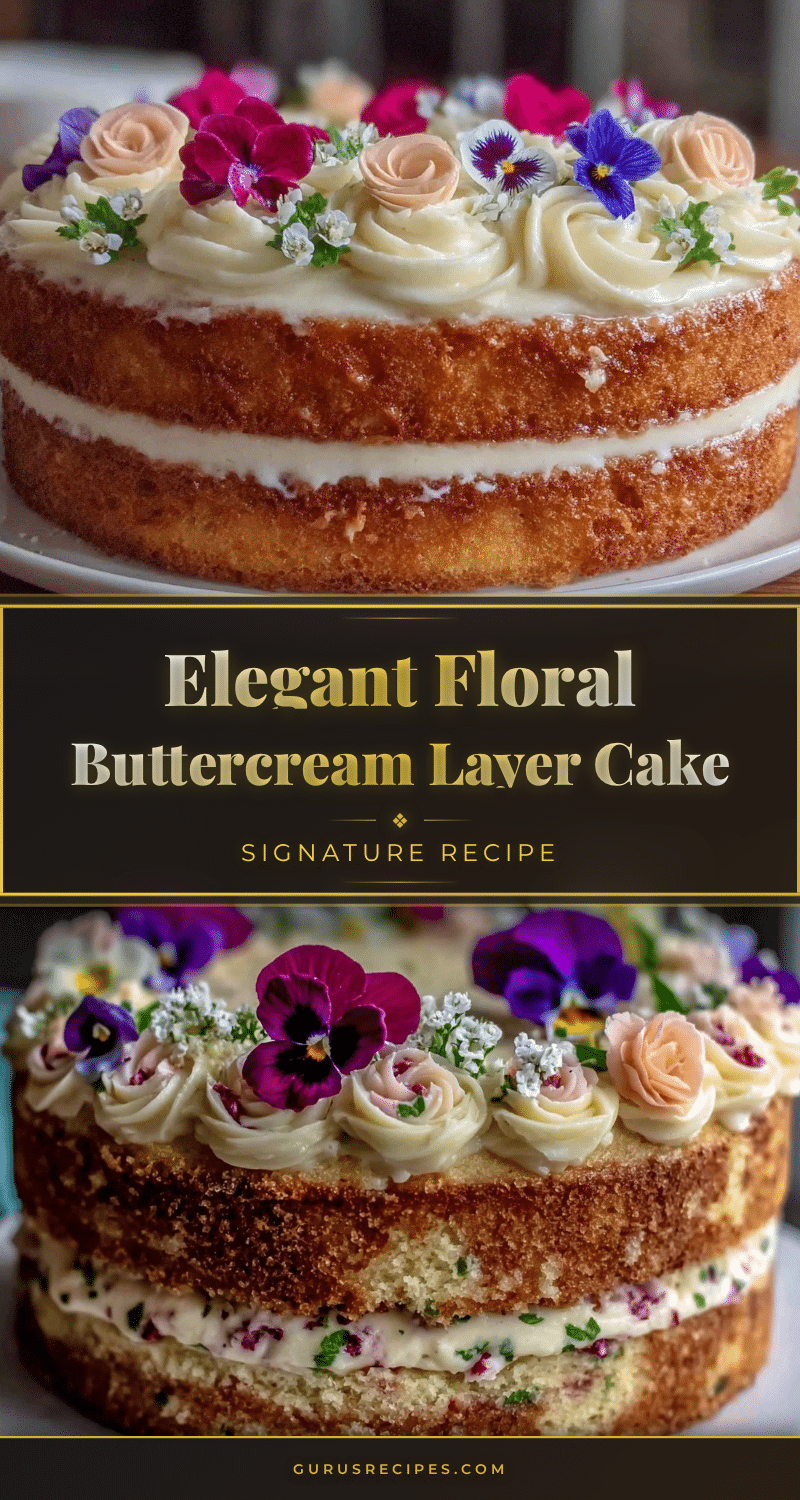

Perfect Floral Buttercream Layer Cake with Edible Flowers
A tender vanilla sponge cake layered with lightly sweetened floral buttercream and decorated with fresh edible flowers, perfect for celebrations or a whimsical weekend treat.
- Total Time: 1 hour 45 minutes
- Yield: 12 servings 1x
Ingredients
- 2 ½ cups (320 g) all-purpose flour
- 2 ½ teaspoons baking powder
- ½ teaspoon salt
- 1 cup (225 g) unsalted butter, softened
- 1 ¾ cups (350 g) granulated sugar
- 4 large eggs, room temperature
- 2 teaspoons pure vanilla extract
- 1 cup (240 ml) whole milk, room temperature
- 1 cup (225 g) unsalted butter, softened (for buttercream)
- 4 cups (480 g) powdered sugar, sifted
- 2–3 tablespoons (30–45 ml) heavy cream
- 1 teaspoon pure vanilla extract (for buttercream)
- 1 teaspoon edible floral essence or rose water
- Pinch of salt (for buttercream)
- Fresh edible flowers (nasturtiums, pansies, violets, calendula)
- Fresh herbs like mint or lavender sprigs (optional)
Instructions
- Line the bottoms of two 8-inch round cake pans with parchment paper and lightly butter the sides. Preheat oven to 350°F (175°C).
- Sift together flour, baking powder, and salt in a medium bowl.
- Beat softened butter and granulated sugar on medium-high speed until pale and fluffy, about 4-5 minutes.
- Beat in eggs one at a time, fully incorporating each before adding the next, then mix in vanilla extract.
- Add dry ingredients in three parts, alternating with milk, starting and ending with flour mixture. Mix gently on low speed until just combined.
- Divide batter evenly between pans and bake for 30-35 minutes or until a toothpick inserted in the center comes out clean.
- Cool cakes in pans on wire racks for 15 minutes, then invert onto racks to cool completely (at least 1 hour).
- Beat softened butter for buttercream until creamy. Gradually add powdered sugar, beating on low to avoid sugar cloud.
- Add heavy cream, vanilla extract, floral essence or rose water, and pinch of salt. Beat on medium-high until fluffy and spreadable. Adjust cream for consistency.
- Place one cake layer on serving plate. Spread about ¾ cup buttercream evenly over it. Top with second layer and frost top and sides smoothly.
- Chill cake for 20 minutes to set buttercream.
- Gently arrange fresh edible flowers and optional herbs on top and sides, trimming stems close to petals.
Notes
Use room temperature ingredients for best mixing results. Avoid overmixing after adding flour to keep cake tender. Chill buttercream if too soft before frosting. Choose fresh, organic, pesticide-free edible flowers. Cake layers can be baked a day ahead and stored wrapped. Buttercream firms better when chilled before decorating.
- Prep Time: 30 minutes
- Cook Time: 35 minutes
- Category: Dessert
- Cuisine: American
Nutrition
- Serving Size: 1 slice (1/12th of c
- Calories: 380
- Fat: 22
- Carbohydrates: 40
- Protein: 4
Keywords: floral buttercream cake, edible flowers cake, vanilla layer cake, spring cake, garden party dessert, easy buttercream cake