
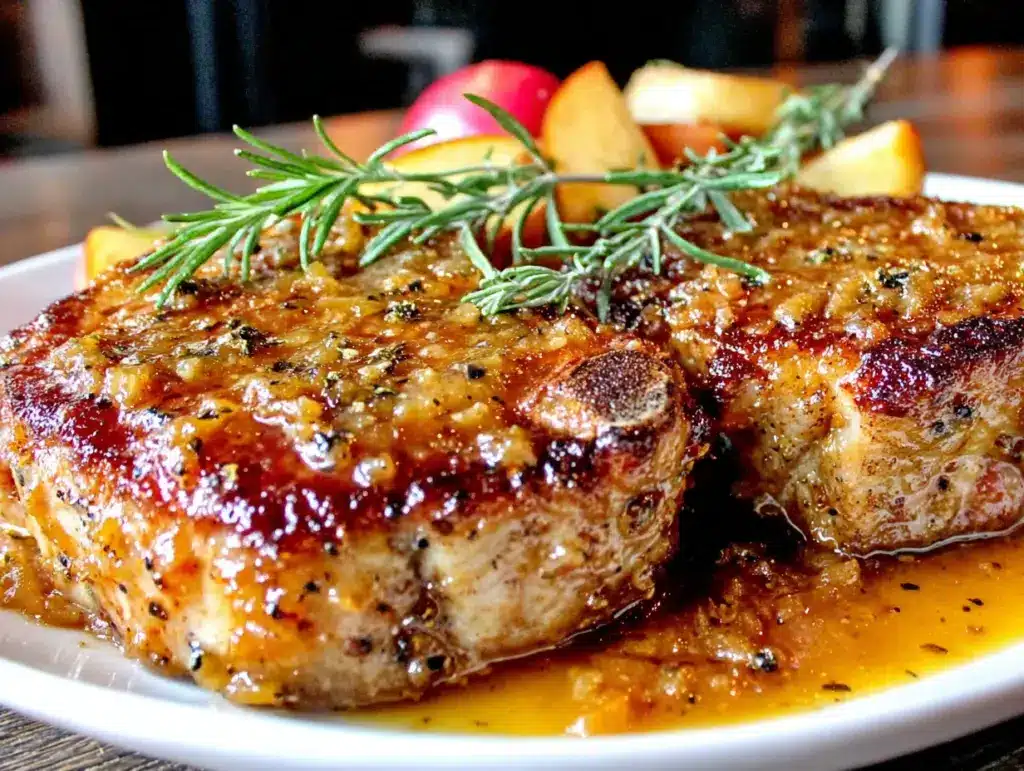
My neighbor showed up at my door with a brown paper bag overflowing with apples. “We picked too many,” she said, practically shoving them into my arms. I stood there holding maybe twelve pounds of fruit, already planning a pie in my head. But the thing I hadn’t planned on was the pork chops thawing in my fridge.
So there I was, staring at apples on the counter and pork on the cutting board, wondering if they could be friends. Honestly, I wasn’t sure. Pork and apples pair together, sure, but I’d never braised them together. The cider was sitting right there in the fridge too—half a bottle from a weekend trip to the orchard. It felt like the universe was nudging me toward something.
I browned the chops in my heaviest pot, and the smell alone told me I was onto something. The apple cider went in with a splash of broth, some garlic, and a sprig of thyme I found hiding in the crisper drawer. Then I let it all bubble away on low heat while I cleaned up the kitchen. An hour later, the pork was so tender it nearly fell apart when I touched it with a fork.
That first bite was quiet. Not dramatic, just good. The kind of good that makes you chew slowly and think about nothing else. The cider had turned into this silky, slightly sweet sauce that clung to the meat just right. I ate it with some crusty bread to soak up every last drop. And honestly? That accidental dinner became my favorite fall recipe, hands down.
Why You’ll Love This Recipe
These tender apple cider braised pork chops are the kind of meal that feels fancy but comes together with almost no effort. You don’t need to be a chef to pull this off, and the results taste like you spent hours in the kitchen.
- Incredibly Tender Meat: Braising transforms tough pork chops into fork-tender pieces that practically melt. No dry, chewy pork here.
- Simple Pantry Ingredients: You probably have most of these items already. Apples, cider, broth, garlic—nothing weird or hard to find.
- Perfect for Fall Evenings: This dish screams autumn. The sweet and savory aroma will fill your whole house and make everyone hungry.
- One-Pot Wonder: Less cleanup means more time to relax. Everything cooks in a single Dutch oven or heavy pot.
- Crowd-Pleasing Flavors: Even picky eaters go back for seconds. The apple cider adds a gentle sweetness that balances the savory pork beautifully.
- Make-Ahead Friendly: The flavors actually get better the next day. This is perfect for meal prep or Sunday dinners.
What makes this recipe different from other pork chop recipes is the braising method. Instead of pan-searing and hoping for the best, you slowly cook the pork in apple cider until it becomes ridiculously tender. The liquid reduces into a natural sauce that coats each chop perfectly. No heavy cream, no complicated reductions—just pure, honest flavor.
This is the kind of meal that makes you close your eyes after the first bite. It’s comfort food at its finest, but it doesn’t weigh you down. The sweetness from the apples feels wholesome, and the savory notes keep it grounded. Perfect for a cozy dinner with people you love, or just yourself on a quiet Tuesday night.
What Ingredients You Will Need
This recipe uses simple, wholesome ingredients to create something truly special. Most of these are pantry staples or easy to find at any grocery store. The magic happens when they all come together in the pot.
- Pork Chops (4 pieces, about 1 inch thick): Bone-in or boneless both work, but bone-in adds more flavor. Look for chops with some marbling for the best texture. I prefer thicker cuts because they stay juicier during the long braise.
- Apple Cider (2 cups, unsweetened): This is the star of the show. Use fresh cider if you can find it—the flavor is brighter and more authentic. Avoid apple juice, which is too sweet and thin.
- Chicken Broth (1 cup, low sodium): Adds depth without overpowering the apple flavor. You can use vegetable broth if that’s what you have.
- Apples (2 medium, firm varieties like Honeycrisp or Granny Smith): These cook down and add texture to the sauce. Leave the skin on for color and fiber. Honeycrisp adds sweetness, while Granny Smith gives a nice tart contrast.
- Yellow Onion (1 large, sliced): Forms the base of the braising liquid. Onions become sweet and silky as they cook, blending into the sauce beautifully.
- Garlic (4 cloves, minced): Adds that savory punch that balances the sweetness. Fresh garlic is non-negotiable here—skip the jarred stuff.
- Fresh Thyme (4 sprigs): Earthy and aromatic, thyme pairs perfectly with apples and pork. Dried thyme works in a pinch, but fresh is better.
- Bay Leaves (2): Adds a subtle herbal note that rounds out the sauce. Remove before serving.
- Unsalted Butter (2 tablespoons): Used for browning the pork and sautéing the aromatics. Adds richness to the final sauce.
- Olive Oil (1 tablespoon): Helps prevent the butter from burning during searing. Use a good quality oil for better flavor.
- Salt and Black Pepper (to taste): Season generously. The pork and sauce need enough salt to bring out all the flavors.
- All-Purpose Flour (2 tablespoons, optional): If you want a thicker sauce, whisk this into the liquid after braising. Skip it if you prefer a thinner consistency.
- Fresh Parsley (for garnish, chopped): Adds a pop of color and freshness right before serving. Optional but nice.
Equipment Needed
You don’t need a fancy kitchen to make this recipe. A few basic tools will get the job done perfectly.
- Dutch Oven or Heavy-Bottomed Pot: This is your best friend for braising. It holds heat evenly and has a tight-fitting lid. If you don’t have one, a large skillet with a lid works too.
- Sharp Chef’s Knife: For slicing onions and apples cleanly. A dull knife makes prep frustrating and dangerous.
- Cutting Board: A sturdy board for all your chopping. Wood or plastic both work.
- Tongs: For flipping the pork chops without piercing the meat. Piercing releases juices and dries out the pork.
- Measuring Cups and Spoons: Accurate measurements matter for the liquid ratios. Eyeballing can lead to too much or too little sauce.
- Wooden Spoon or Spatula: For stirring the onions and scraping up the browned bits from the bottom of the pot. Those bits are pure flavor.
- Small Bowl (optional): For mixing the flour slurry if you choose to thicken the sauce.
I use my Le Creuset Dutch oven for this recipe, but any heavy pot works. If you’re on a budget, a Lodge enameled cast iron pot is affordable and performs beautifully. Just make sure whatever you use has a lid that fits snugly.
Preparation Method
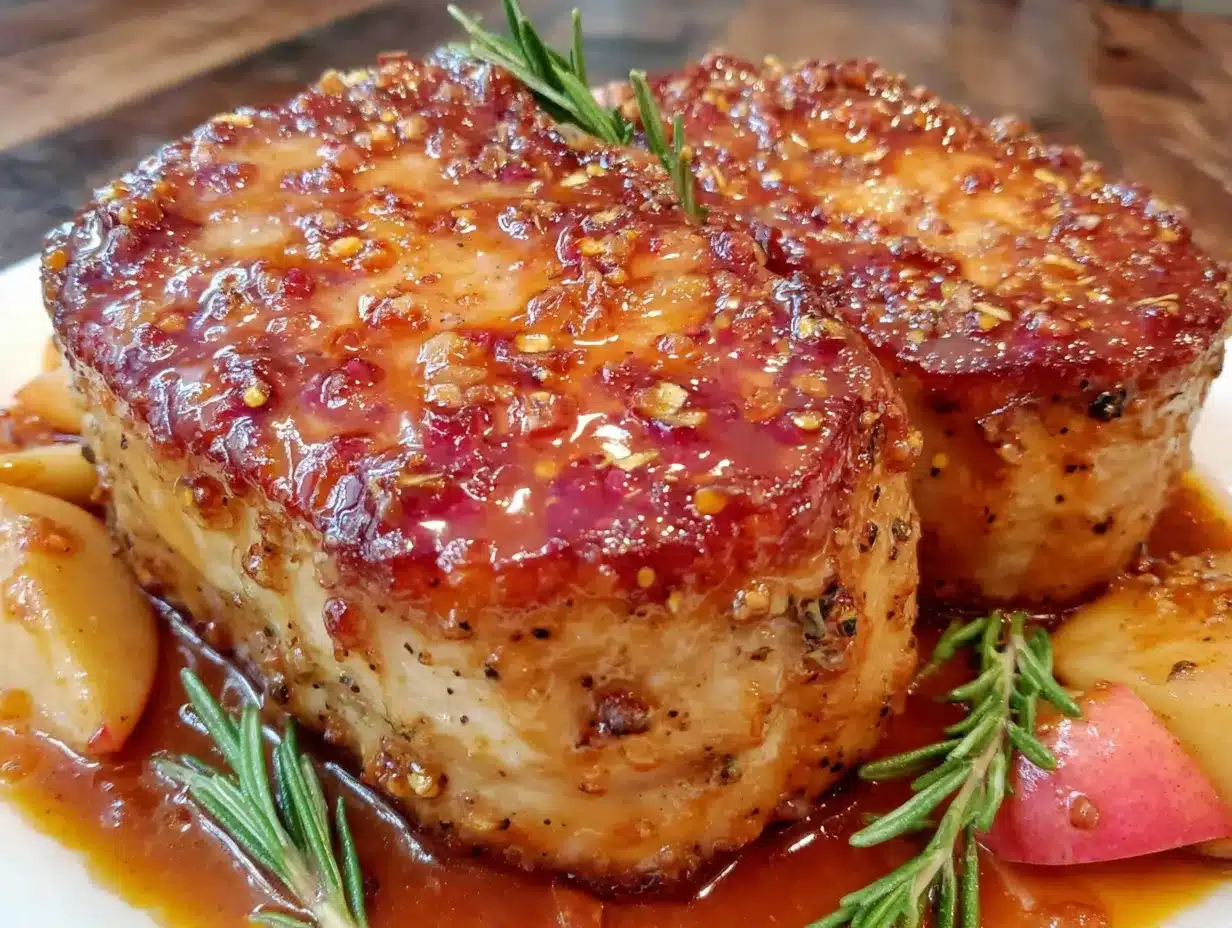
Take your time with this one. The actual hands-on work is minimal, but letting everything cook low and slow is where the magic happens.
- Prep the Pork Chops (5 minutes): Pat the pork chops dry with paper towels. This step is crucial for getting a good sear. Season both sides generously with salt and black pepper. Let them sit at room temperature for 10 minutes while you prep the vegetables.
- Sear the Pork (8-10 minutes): Heat the butter and olive oil in your Dutch oven over medium-high heat. When the butter stops foaming, add the pork chops in a single layer. Don’t crowd the pot—work in batches if needed. Cook for 3-4 minutes per side until deeply golden brown. The crust should be dark and crispy. Transfer the chops to a plate and set aside.
- Sauté the Aromatics (5 minutes): Reduce the heat to medium. Add the sliced onions to the pot and cook for 3-4 minutes, stirring occasionally, until they soften and start to brown. Add the minced garlic and cook for 30 seconds until fragrant. Scrape up any browned bits from the bottom of the pot—that’s flavor you want in the sauce.
- Build the Braising Liquid (2 minutes): Pour in the apple cider and chicken broth. Stir everything together, making sure to release any remaining browned bits. Add the fresh thyme sprigs and bay leaves. Bring the liquid to a gentle simmer.
- Add the Apples and Pork (2 minutes): Slice the apples into wedges (about 8 per apple) and add them to the pot. Nestle the seared pork chops back into the liquid, along with any juices that accumulated on the plate. The liquid should come about halfway up the sides of the chops. If it doesn’t, add a splash more broth.
- Braise Low and Slow (60-75 minutes): Cover the pot with the lid and reduce the heat to low. You want a gentle simmer—small bubbles, not a rolling boil. Let it cook undisturbed for 60 minutes. Check the pork at 60 minutes by piercing it with a fork. If it shreds easily, it’s done. If not, cook for another 15 minutes.
- Finish the Sauce (5 minutes): Remove the pork chops and apples to a serving platter using tongs. Discard the thyme sprigs and bay leaves. If you want a thicker sauce, whisk the flour with 2 tablespoons of cold water until smooth, then stir it into the simmering liquid. Cook for 2-3 minutes until thickened. Taste and adjust seasoning with salt and pepper.
- Serve and Enjoy (2 minutes): Spoon the sauce over the pork chops and apples. Garnish with fresh parsley if you like. Serve immediately with your favorite sides.
Cooking Tips & Techniques
I’ve made this recipe more times than I can count, and I’ve learned a few things the hard way. Here’s what I wish someone had told me from the start.
Don’t skip the searing step. I know it’s tempting to just dump everything in the pot and walk away, but that golden crust is where the deep flavor comes from. It adds a layer of richness that braising alone can’t create. Make sure your pot is hot enough before adding the pork—you should hear a satisfying sizzle.
Watch your heat during braising. The first time I made this, I got distracted and let the pot boil instead of simmer. The pork came out tough and dry. A gentle simmer is key. If you see big bubbles, turn the heat down. Low and slow is the mantra here.
Season in layers. Don’t just salt the pork at the beginning. Taste the sauce before serving and adjust. Sometimes the apples add more sweetness than expected, and a pinch of salt balances it perfectly. I’ve also added a splash of apple cider vinegar at the end when the sauce felt too sweet—it brightens everything up.
Let the pork rest before serving. After braising, let the chops sit in the sauce for 5 minutes off the heat. This allows the juices to redistribute throughout the meat. Cutting into them immediately will release all that goodness onto the plate instead of keeping it in the meat.
Use thick pork chops. Thin chops cook too quickly and can dry out during the long braise. Look for chops that are at least 1 inch thick. If all you have are thin ones, reduce the braising time to 30-40 minutes and check for tenderness earlier.
Variations & Adaptations
This recipe is flexible, and I’ve tried several variations over the years. Here are some of my favorites.
Apple Cider Braised Pork Shoulder: Swap the pork chops for a 3-pound pork shoulder. Increase the braising time to 2.5-3 hours, until the meat shreds easily. This version is perfect for feeding a crowd or meal prep for the week.
Low-Carb Version: Skip the apples and use a low-carb sweetener like monk fruit in the cider. Add extra onions and celery for volume. The sauce will still be delicious, just without the fruit chunks.
Herb Variations: Try rosemary instead of thyme for a more piney, aromatic flavor. Sage also works beautifully with pork and apples. Use 2 sprigs of rosemary or 4 fresh sage leaves.
Spicy Kick: Add a pinch of red pepper flakes or a sliced jalapeño to the onions while they sauté. The heat cuts through the sweetness and adds complexity. I did this once on a whim and loved the result.
Dairy-Free Option: Use olive oil instead of butter for searing. The sauce won’t be quite as rich, but it still tastes fantastic. Coconut oil also works if you don’t mind a subtle coconut note.
If you enjoy cozy, one-pot meals like this, you might also love our cozy Guinness beef stew or the comforting shepherd’s pie with lamb and Guinness gravy. Both are perfect for chilly evenings.
Serving & Storage Suggestions
These tender apple cider braised pork chops are versatile enough to pair with almost any side. Here’s how I like to serve and store them.
Serving Temperature: Serve the pork chops hot, right out of the pot. The sauce should be warm and silky. If it’s cooled down, reheat it gently on the stove before spooning over the meat.
Perfect Pairings: Mashed potatoes are my go-to side—they soak up the sauce beautifully. Roasted vegetables like Brussels sprouts or carrots also work well. For something lighter, try a simple green salad with a tangy vinaigrette to cut through the richness. A slice of crusty bread is essential for sopping up every drop of sauce.
Storage Instructions: Store leftovers in an airtight container in the refrigerator for up to 4 days. The flavors actually meld and deepen overnight, so this dish is even better the next day. Reheat gently on the stove over low heat, adding a splash of broth or water if the sauce has thickened too much.
Freezer Tips: This recipe freezes beautifully. Place the cooled pork chops and sauce in a freezer-safe container and freeze for up to 3 months. Thaw overnight in the refrigerator before reheating. I’ve done this multiple times for busy weeks, and it’s always a lifesaver.
Reheating Method: The best way to reheat is on the stovetop over low heat. Cover the pot to keep the moisture in. Microwave works in a pinch, but the pork can dry out. If using the microwave, cover the plate with a damp paper towel and heat in 30-second intervals.
Nutritional Information & Benefits
This recipe is not just delicious—it also offers some nutritional benefits worth noting.
Estimated Nutritional Values (per serving, based on 4 servings):
- Calories: 420
- Protein: 35g
- Fat: 22g
- Carbohydrates: 18g
- Fiber: 3g
- Sugar: 12g
- Sodium: 480mg
Health Benefits: Pork chops are an excellent source of high-quality protein, which supports muscle health and keeps you full. Apples provide fiber and vitamin C, while the apple cider offers antioxidants. The onions and garlic add prebiotics that support gut health. This meal is balanced and satisfying without being overly heavy.
Dietary Considerations: This recipe is naturally gluten-free if you skip the flour slurry. It’s also dairy-free if you use olive oil instead of butter. For a lower-sodium version, use low-sodium broth and reduce the added salt. The sugar content comes mostly from the apples and cider, so it’s relatively low compared to many comfort food recipes.
Potential Allergens: This recipe contains dairy (butter) and gluten (flour, if used). Both can be easily substituted as mentioned above. Always check your broth and cider labels for hidden ingredients if you have specific allergies.
Conclusion
These tender apple cider braised pork chops are proof that simple ingredients can create something extraordinary. The sweetness of the apples, the savory depth of the pork, and the rich sauce all come together in a way that feels both comforting and special. It’s the kind of meal that makes a regular Tuesday feel like a Sunday dinner.
I love this recipe because it’s forgiving. You don’t have to be precise or perfect. A little extra apple, a different herb, a thicker or thinner sauce—it all works. That’s the beauty of braising. The technique does the heavy lifting, and you get to enjoy the results.
I’d love to hear how yours turn out! Did you try a variation? Pair it with something unexpected? Leave a comment below and share your experience. And if you loved this recipe, share it with a friend who needs a cozy dinner idea. Happy cooking, friends.
Frequently Asked Questions
Can I use apple juice instead of apple cider?
You can, but the flavor will be different. Apple juice is thinner and sweeter, so the sauce won’t have the same richness. If using juice, reduce the amount by a quarter cup and add a splash of vinegar to balance the sweetness.
How do I know when the pork chops are done?
The pork is done when it shreds easily with a fork. For bone-in chops, the internal temperature should reach 145°F (63°C) at the thickest part. But with braising, tenderness is a better indicator than temperature.
Can I make this in a slow cooker?
Absolutely. Sear the pork and sauté the onions on the stove first, then transfer everything to the slow cooker. Cook on low for 6-8 hours or on high for 3-4 hours. The sauce may be thinner, so you can thicken it with a cornstarch slurry at the end.
What if my sauce is too thin?
Remove the pork and apples, then simmer the sauce uncovered for 5-10 minutes to reduce it. Alternatively, whisk in a flour slurry (1 tablespoon flour mixed with 2 tablespoons cold water) and cook for 2 minutes until thickened.
Can I use boneless pork chops?
Yes, boneless chops work fine. Just keep an eye on the cooking time—they may cook slightly faster than bone-in chops. Check for tenderness at 50 minutes instead of 60.
Pin This Recipe!
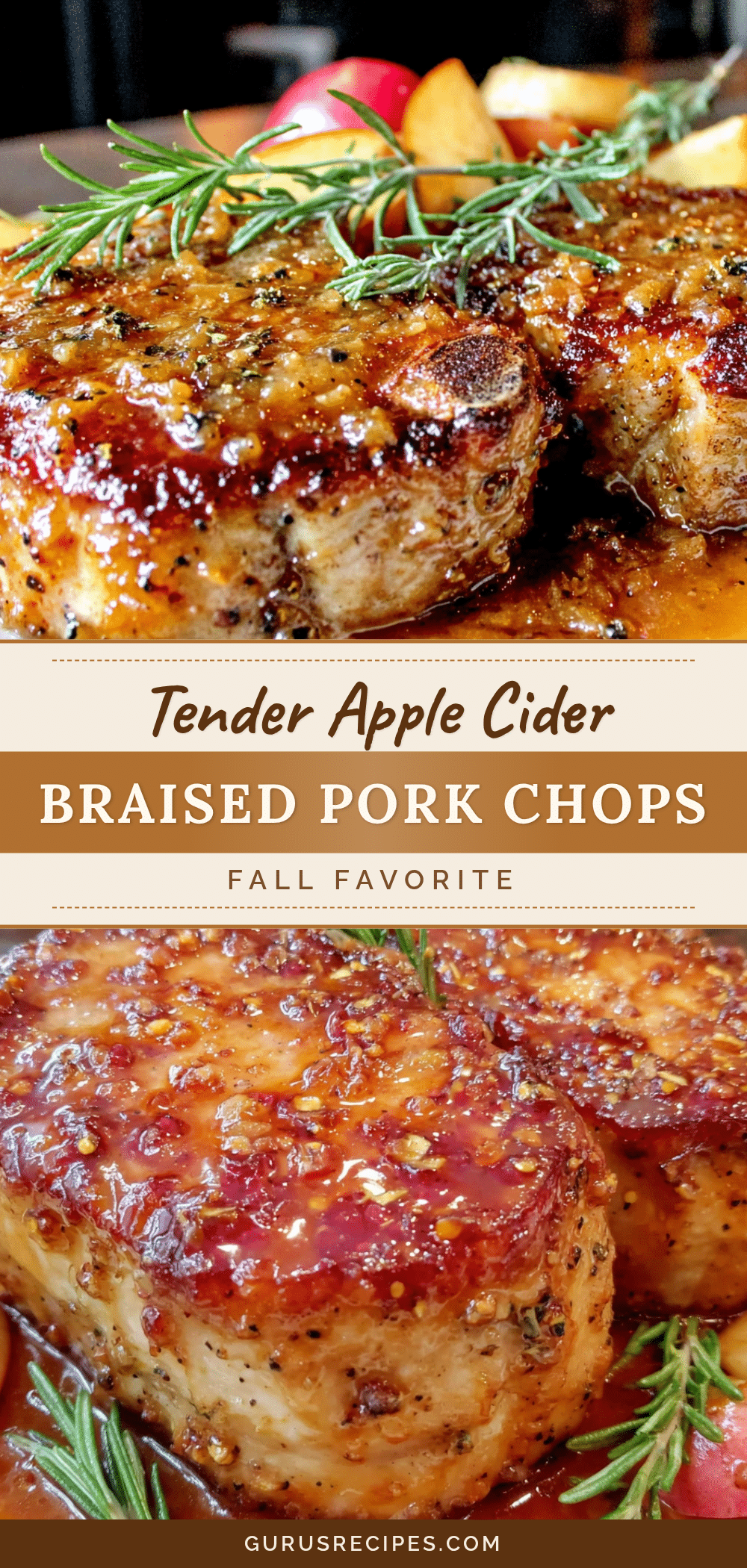

Tender Apple Cider Braised Pork Chops – Easy Fall Dinner Recipe
These tender apple cider braised pork chops are the kind of meal that feels fancy but comes together with almost no effort. You don’t need to be a chef to pull this off, and the results taste like you spent hours in the kitchen.
- Total Time: 90 minutes
- Yield: 4 servings 1x
Ingredients
- 4 pork chops, about 1 inch thick (bone-in or boneless)
- 2 cups unsweetened apple cider
- 1 cup low sodium chicken broth
- 2 medium firm apples (Honeycrisp or Granny Smith), sliced into wedges
- 1 large yellow onion, sliced
- 4 cloves garlic, minced
- 4 sprigs fresh thyme
- 2 bay leaves
- 2 tablespoons unsalted butter
- 1 tablespoon olive oil
- Salt and black pepper to taste
- 2 tablespoons all-purpose flour (optional, for thickening)
- Fresh parsley for garnish (optional)
Instructions
- Pat the pork chops dry with paper towels. Season both sides generously with salt and black pepper. Let them sit at room temperature for 10 minutes.
- Heat the butter and olive oil in a Dutch oven over medium-high heat. When the butter stops foaming, add the pork chops in a single layer. Cook for 3-4 minutes per side until deeply golden brown. Transfer to a plate and set aside.
- Reduce heat to medium. Add sliced onions to the pot and cook for 3-4 minutes until softened and starting to brown. Add minced garlic and cook for 30 seconds until fragrant. Scrape up any browned bits from the bottom.
- Pour in the apple cider and chicken broth. Stir to release remaining browned bits. Add fresh thyme sprigs and bay leaves. Bring to a gentle simmer.
- Slice apples into wedges (about 8 per apple) and add to the pot. Nestle the seared pork chops back into the liquid along with any accumulated juices. The liquid should come about halfway up the sides of the chops.
- Cover the pot with a lid and reduce heat to low. Simmer gently for 60-75 minutes, until the pork shreds easily with a fork.
- Remove pork chops and apples to a serving platter using tongs. Discard thyme sprigs and bay leaves. For a thicker sauce, whisk flour with 2 tablespoons cold water until smooth, then stir into simmering liquid. Cook for 2-3 minutes until thickened. Taste and adjust seasoning with salt and pepper.
- Spoon sauce over pork chops and apples. Garnish with fresh parsley if desired. Serve immediately.
Notes
Don’t skip the searing step—it adds deep flavor. Watch your heat during braising; a gentle simmer is key. Season in layers and let the pork rest before serving. Use thick pork chops (at least 1 inch) for best results.
- Prep Time: 15 minutes
- Cook Time: 75 minutes
- Category: Main Course
- Cuisine: American
Nutrition
- Serving Size: 1 pork chop with sau
- Calories: 420
- Sugar: 12
- Sodium: 480
- Fat: 22
- Saturated Fat: 8
- Carbohydrates: 18
- Fiber: 3
- Protein: 35
Keywords: apple cider braised pork chops, fall dinner recipe, one-pot pork chops, tender pork chops, easy pork chop recipe