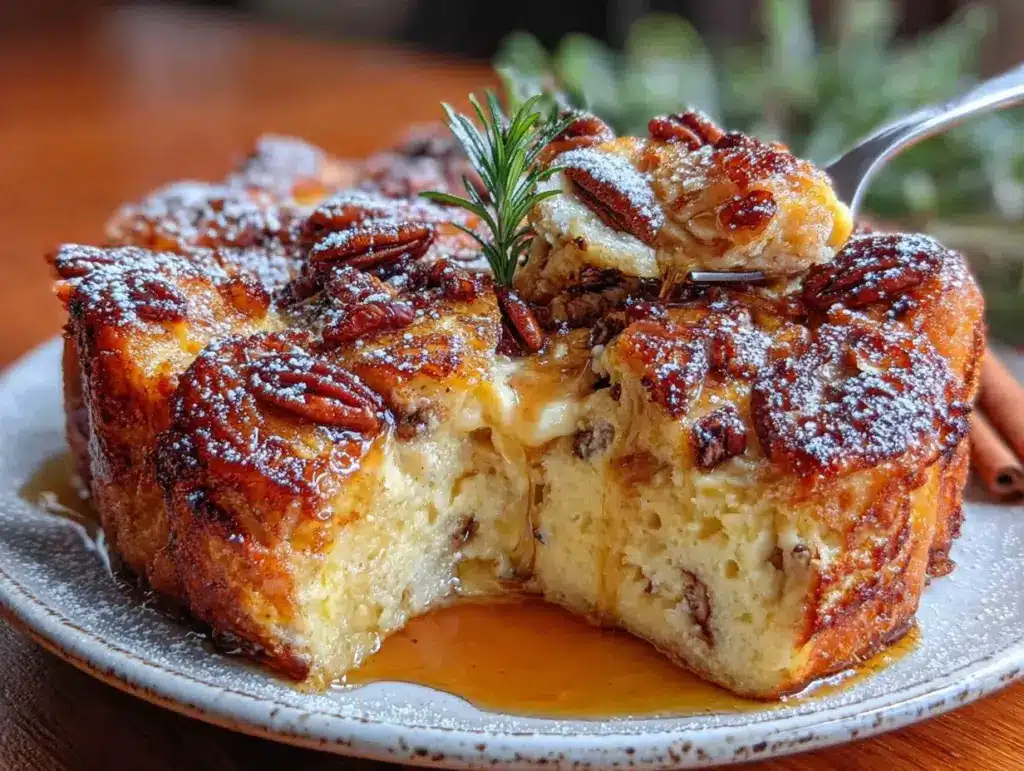
I ruined Christmas brunch three years in a row before I figured out this eggnog French toast casserole. The first year, I used cheap store-brand eggnog and ended up with a soggy, bland mess that my mother-in-law politely described as “interesting.” The second year, I got cocky with the spices and created something that tasted more like a pumpkin patch exploded in a bread pan. The third year, I forgot to let it rest overnight and served what was essentially sweet scrambled eggs on bread. My family started joking that my holiday specialty was disappointment.
But here’s the thing about failure in the kitchen—it teaches you exactly what not to do. I learned that good eggnog (the full-fat, real-cream kind) makes all the difference. I learned that day-old brioche isn’t a suggestion, it’s a requirement. And I learned that patience with that overnight soak transforms good ingredients into something genuinely magical. This casserole isn’t just a breakfast dish anymore. It’s the recipe that finally got my mother-in-law to ask for seconds instead of just politely pushing food around her plate.
Why You’ll Love This Recipe
Let me tell you why this eggnog French toast casserole has become the most-requested breakfast at my holiday table. First, it practically makes itself. You mix everything the night before, pop it in the fridge, and wake up to a breakfast that tastes like you’ve been slaving away for hours. That’s my kind of holiday morning.
- Make-Ahead Magic: Assemble it the night before and bake it fresh in the morning. No early morning scrambling or stressed-out host moments.
- Simple Ingredients: You probably already have most of these in your kitchen—bread, eggs, eggnog, butter, and a few spices. Nothing fancy required.
- Perfect for Holiday Mornings: Christmas, New Year’s Day, or any cozy winter weekend when you want something special without the fuss.
- Crowd-Pleaser: Kids love the sweet, custardy texture, and adults appreciate the sophisticated eggnog flavor. It disappears fast at every brunch I’ve brought it to.
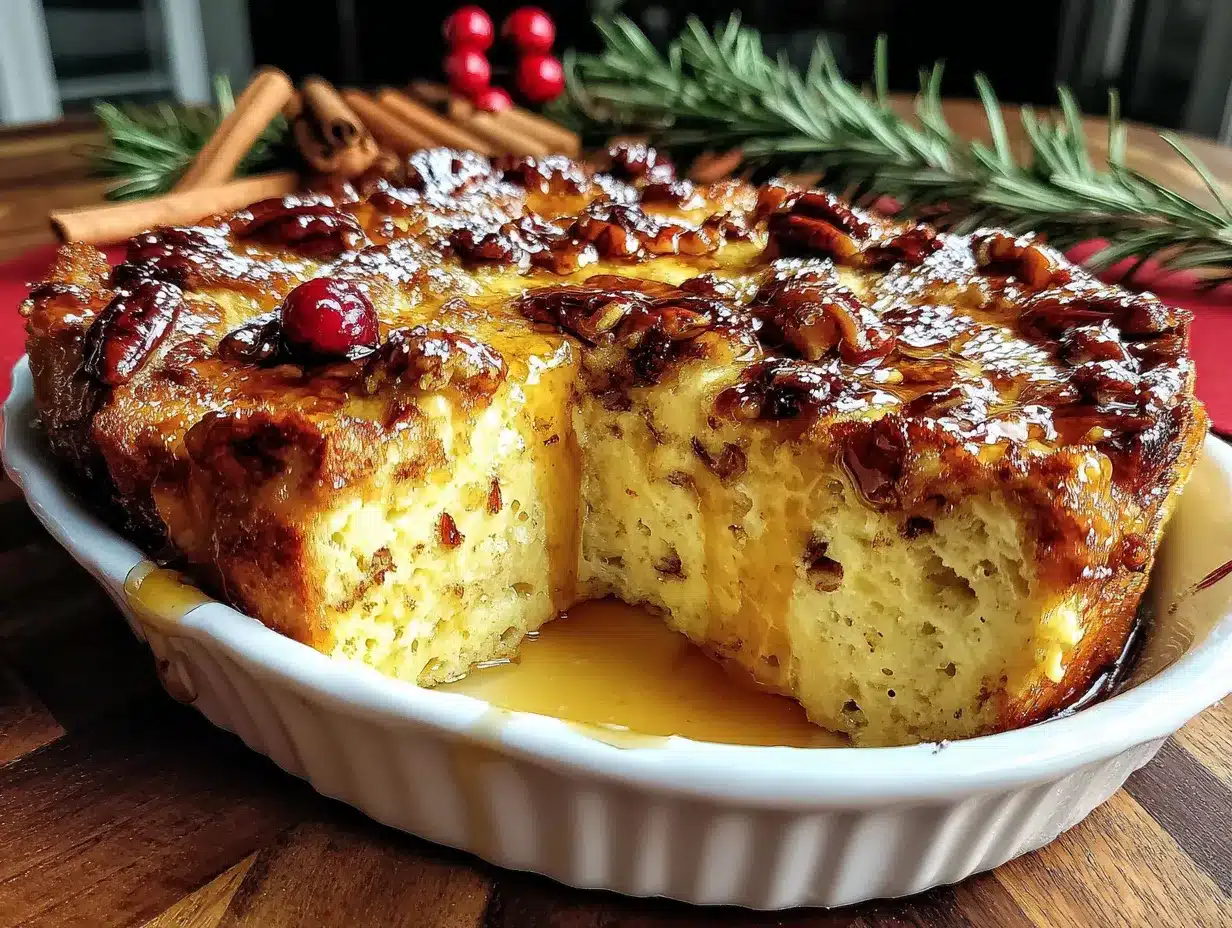
- Unbelievably Delicious: The contrast between the soft, custard-soaked center and the crispy, caramelized top edges is pure breakfast perfection.
What makes this version different from all the other eggnog French toast casseroles out there? It’s the ratio. I spent three failed Christmases tweaking the egg-to-eggnog ratio until I found that sweet spot where the custard sets perfectly without turning into scrambled eggs. Plus, I add a secret ingredient—a splash of bourbon or rum extract—that deepens the holiday flavor without overwhelming the dish. This isn’t just another recipe. It’s the one I’d serve to anyone who thinks they don’t like eggnog.
This casserole is the kind of breakfast that makes everyone at the table go quiet for a minute after that first bite. It’s comfort food dressed up in its holiday best—rich, warm, and full of those cozy winter spices that make December mornings feel special.
What Ingredients You Will Need
This recipe uses simple, wholesome ingredients that come together to create something truly special. The key is choosing quality ingredients, especially the eggnog and bread, since they’re the stars of the show. Here’s everything you’ll need:
For the Casserole
- 1 loaf (about 14-16 ounces) day-old brioche or challah bread – Stale bread is non-negotiable here. Fresh bread will turn into mush. I prefer brioche for its rich, buttery flavor, but challah works beautifully too. Cut it into 1-inch cubes for best results.
- 2 cups high-quality eggnog – Please don’t use the cheap stuff. Look for full-fat eggnog with real cream and eggs listed in the ingredients. I’m partial to Southern Comfort or Hood brand, but any good-quality brand will work. The richness of the eggnog determines the final texture.
- 4 large eggs – Room temperature eggs blend more smoothly into the custard. Set them out on the counter about 30 minutes before you start.
- 1/2 cup granulated sugar – Regular white sugar works perfectly. It dissolves easily into the custard and helps create that caramelized top.
- 1/4 cup unsalted butter, melted – I use unsalted so I can control the salt level. The melted butter gets drizzled over the bread cubes before baking, creating those irresistible crispy edges.
- 1 teaspoon vanilla extract – Pure vanilla extract makes a difference here. Skip the imitation stuff for this recipe.
- 1/2 teaspoon ground nutmeg – Freshly grated nutmeg is worth the extra effort if you have it. The flavor is brighter and more aromatic than pre-ground.
- 1/2 teaspoon ground cinnamon – I like Vietnamese cinnamon for its stronger, sweeter flavor profile.
- 1/4 teaspoon ground cloves – Just a pinch—cloves are potent and can easily overpower the dish.
- 1/4 teaspoon salt – A little salt balances the sweetness and enhances all the other flavors.
- 1 tablespoon bourbon or 1 teaspoon rum extract (optional) – This is my secret weapon. The alcohol cooks off during baking, leaving behind a warm, complex flavor that complements the eggnog beautifully. If you’re serving kids or prefer non-alcoholic, just skip it.
For the Streusel Topping
- 1/2 cup all-purpose flour – Regular AP flour works great. No need for anything fancy.
- 1/2 cup packed brown sugar – Light or dark brown sugar both work. Dark brown sugar gives a deeper, molasses-like flavor.
- 1/4 cup cold unsalted butter, cut into small cubes – The butter needs to be cold for that crumbly streusel texture. Pop it in the freezer for 10 minutes before cutting if your kitchen is warm.
- 1/2 teaspoon ground cinnamon – This ties the topping back to the casserole flavors.
- Pinch of salt – Don’t skip this—it keeps the topping from tasting one-dimensionally sweet.
For Serving
- Maple syrup – Real maple syrup, not pancake syrup. The pure stuff has a complexity that stands up to the rich eggnog flavor.
- Powdered sugar for dusting – Optional, but it makes the final dish look gorgeous.
- Fresh berries or sliced bananas – A pop of freshness cuts through the richness perfectly.
Equipment Needed
You don’t need a professional kitchen to make this eggnog French toast casserole. Here’s what you’ll need:
- 9×13-inch baking dish – Glass or ceramic works best. Metal can sometimes react with the eggs and give a metallic taste. I’ve used the same Pyrex dish for years, and it’s never let me down.
- Large mixing bowl – For whisking together the custard base. Any large bowl will do.
- Whisk – A good whisk makes incorporating the eggs into the eggnog much easier. No electric mixer needed here.
- Measuring cups and spoons – Accuracy matters for the custard ratio. I recommend using dry measuring cups for the sugar and liquid measuring cups for the eggnog.
- Sharp knife and cutting board – For cubing the bread. A serrated bread knife works best for brioche or challah.
- Plastic wrap or aluminum foil – For covering the dish while it soaks overnight. Press it directly onto the surface to prevent a skin from forming.
- Small bowl – For mixing the streusel topping. A fork or pastry cutter works great for cutting the butter into the flour mixture.
If you don’t have a 9×13 dish, you can use two 8×8 square dishes or even a large cast-iron skillet. Just adjust the baking time slightly since the custard will be deeper or shallower depending on the pan shape.
Preparation Method
This eggnog French toast casserole comes together in two phases—the overnight soak and the morning bake. Trust me, that overnight rest is where the magic happens. Here’s exactly how to do it:
Night Before: Assemble the Casserole
- Prepare the bread: Cut your day-old brioche or challah into 1-inch cubes. Don’t stress about making them perfect—irregular pieces create nice texture variation. You should end up with about 8-9 cups of bread cubes. Spread them evenly in your greased 9×13 baking dish.
- Make the custard: In your large mixing bowl, whisk together the eggs and granulated sugar until smooth and slightly pale, about 1 minute. This step is important—whisking the sugar into the eggs first helps dissolve the sugar and creates a smoother custard.
- Add the wet ingredients: Pour in the eggnog, melted butter, vanilla extract, and bourbon (if using). Whisk until everything is fully combined. The mixture should look smooth and creamy, not separated.
- Add the spices: Sprinkle in the nutmeg, cinnamon, cloves, and salt. Whisk again until the spices are evenly distributed. Give it a quick taste—the custard should taste pleasantly spiced but not overwhelming. Remember, the bread will absorb some of that flavor.
- Pour over the bread: Slowly pour the custard mixture evenly over the bread cubes. Use a spatula to gently press down on the bread, making sure every piece gets coated. Don’t stir too vigorously—you want the bread to stay intact.
- Cover and refrigerate: Press a piece of plastic wrap directly onto the surface of the casserole. This prevents a skin from forming and keeps the bread from drying out. Refrigerate for at least 6 hours, but 8-12 hours is ideal. The longer it sits, the more the bread absorbs that luscious custard.
Morning Of: Bake the Casserole
- Preheat and rest: About 30 minutes before you want to bake, remove the casserole from the fridge and let it sit on the counter. This takes the chill off and helps it bake more evenly. Preheat your oven to 350°F (175°C).
- Make the streusel: While the oven heats, combine the flour, brown sugar, cinnamon, and salt in a small bowl. Add the cold butter cubes and use your fingers or a pastry cutter to work the butter into the dry ingredients until the mixture resembles coarse sand with some pea-sized butter bits remaining. Don’t overwork it—those little butter chunks create crispy, caramelized pockets in the topping.
- Top the casserole: Remove the plastic wrap from the casserole. Sprinkle the streusel topping evenly over the surface. Don’t press it in—just let it sit on top where it will crisp up beautifully.
- Bake: Place the dish on the middle rack of your preheated oven. Bake for 45-55 minutes, until the casserole is golden brown on top and puffed up slightly. The center should be set but still slightly jiggly—it will continue to set as it cools. If the top is browning too quickly (around the 30-minute mark), tent loosely with foil.
- Rest before serving: Let the casserole rest for 10-15 minutes after it comes out of the oven. This allows the custard to finish setting and makes it easier to cut clean squares. I know it’s tempting to dig right in, but patience here pays off.
Sensory cues to watch for: When it’s done, the edges should be deep golden brown and slightly crispy. The center will look puffed and set but should still have a slight wobble when you gently shake the dish. Your kitchen will smell like Christmas morning—warm spices, toasted bread, and something sweet and rich in the air.
Cooking Tips & Techniques
I’ve made this eggnog French toast casserole at least twenty times, and I’ve learned a few things the hard way. Here are my best tips:
Use stale bread: This is the most important tip I can give you. Fresh bread absorbs custard too quickly and turns into a soggy mess. Cut your bread and leave it out on the counter uncovered for a day. If you’re short on time, spread the cubes on a baking sheet and toast them in a 300°F oven for 10 minutes. They should be dry but not browned.
Don’t skip the overnight soak: I know some recipes claim you can bake it right away, but they’re lying. That overnight rest allows the custard to fully penetrate every bread cube. The result is a casserole that’s uniformly creamy and custard-like throughout, not dry in the middle.
Watch your oven temperature: Every oven runs differently. I learned this the hard way when I burned the top of my casserole while the inside was still raw. Use an oven thermometer if you have one. If your oven runs hot, reduce the temperature to 325°F and bake a little longer.
Test for doneness correctly: Insert a knife into the center of the casserole. If it comes out clean or with just a few moist crumbs, it’s done. If it’s wet and custardy, give it another 5-10 minutes. The casserole will continue to set as it cools, so don’t overbake it trying to get it completely firm.
Make extra streusel: I always double the streusel topping because it’s the best part. The crispy, buttery crumble contrasts perfectly with the soft custard underneath. If you have leftover streusel, store it in the freezer and sprinkle it over oatmeal or yogurt later.
Let it rest: I know I said this already, but it bears repeating. Letting the casserole rest after baking is crucial. Cutting into it too early releases all the steam and leaves you with a watery mess. Ten minutes of patience makes all the difference.
Variations & Adaptations
This eggnog French toast casserole is incredibly versatile. Here are some of my favorite variations:
Gluten-Free Version: Swap the brioche for a good-quality gluten-free bread. Look for one that’s sturdy and slightly sweet—I’ve had good luck with Against the Grain or Schar brands. The rest of the ingredients are naturally gluten-free, so just make sure your spices and vanilla are certified gluten-free if needed.
Dairy-Free Adaptation: Use a high-quality dairy-free eggnog (Califia Farms makes a great one) and substitute the butter with melted coconut oil or a plant-based butter. The texture will be slightly less rich, but the flavor is still fantastic. I’ve served this to dairy-free guests and they couldn’t tell the difference.
Bourbon-Pecan Praline Version: This is my personal favorite indulgence. Add an extra tablespoon of bourbon to the custard and top the casserole with 1/2 cup chopped pecans mixed into the streusel. The nuts toast during baking and add a wonderful crunch. Drizzle with a simple caramel sauce before serving for maximum decadence.
Slow Cooker Method: Yes, you can make this in a slow cooker! Assemble the casserole in a greased slow cooker insert instead of a baking dish. Cook on low for 4-5 hours or high for 2-3 hours. The top won’t get as crispy, but the texture is incredibly soft and pudding-like. I love this method for potlucks and holiday buffets.
Individual Servings: Grease a muffin tin and divide the bread and custard among the cups. Bake at 350°F for 20-25 minutes. These individual eggnog French toast casseroles are perfect for brunch parties or when you want to control portion sizes. Plus, they look adorable on a serving platter.
Serving & Storage Suggestions
This eggnog French toast casserole is best served warm, straight from the oven. Let it rest for 10 minutes, then cut into squares and serve with a drizzle of warm maple syrup. A dusting of powdered sugar makes it look extra special for holiday brunches.
What to serve with it: A side of crispy bacon or breakfast sausage balances the sweetness perfectly. Fresh fruit salad or a simple arugula salad with lemon vinaigrette cuts through the richness. For drinks, it pairs beautifully with mimosas, coffee, or a hot cup of spiced tea. If you’re feeling extra festive, try it alongside a creamy Baileys Irish cream cheesecake for a dessert-style brunch spread.
Storage instructions: Leftover casserole keeps well in the refrigerator for up to 4 days. Cover the dish tightly with plastic wrap or transfer individual portions to airtight containers. The texture softens slightly over time, but the flavor actually gets better as the spices meld together.
Freezing instructions: This casserole freezes beautifully. Bake it completely, let it cool, then wrap the entire dish (or individual portions) in plastic wrap followed by aluminum foil. Freeze for up to 3 months. To reheat, thaw overnight in the refrigerator, then warm in a 350°F oven for 15-20 minutes, or microwave individual portions for 1-2 minutes.
Reheating tips: For best results, reheat in the oven rather than the microwave. The oven restores some of that crispy top texture that the microwave destroys. If you’re short on time, microwave individual portions on 50% power to avoid turning the custard rubbery.
How flavors develop: Honestly, this casserole tastes even better on day two. The spices meld together overnight, and the texture becomes more uniform. If you’re planning ahead, make it a day early, refrigerate it, and reheat individual portions as needed. Your future self will thank you.
Nutritional Information & Benefits
Let’s be real—this is a holiday indulgence, not a health food. But that doesn’t mean it’s completely devoid of nutritional value. Here’s what you should know:
| Nutrient | Per Serving (1/8 of recipe) |
|---|---|
| Calories | 385 |
| Total Fat | 18g |
| Saturated Fat | 10g |
| Cholesterol | 185mg |
| Sodium | 320mg |
| Total Carbohydrates | 45g |
| Dietary Fiber | 1g |
| Sugars | 28g |
| Protein | 10g |
Health benefits: Eggs provide high-quality protein and important nutrients like choline, which supports brain health. Eggnog contains calcium and vitamin D from the dairy. The cinnamon and nutmeg have anti-inflammatory properties, though you’d need to eat a lot more than this recipe provides to get any real benefit. This casserole also contains crusty artisan bread that offers some B vitamins from the enriched flour.
Dietary considerations: This recipe contains gluten, dairy, and eggs. For a gluten-free version, use gluten-free bread as mentioned in the variations section. For dairy-free, use plant-based eggnog and butter substitutes. The recipe is naturally nut-free unless you add the pecan variation.
My personal take: I believe in balance. This casserole is a special-occasion treat meant to be enjoyed without guilt. One serving won’t derail anyone’s healthy eating habits, and the joy it brings to a holiday table is worth every calorie. That said, if you’re watching your sugar intake, you can reduce the sugar in the custard to 1/3 cup without affecting the texture too much.
Conclusion
This eggnog French toast casserole has become my holiday signature dish, and I think it deserves a spot at your table too. It’s the kind of recipe that looks impressive but requires minimal effort—my favorite combination. The make-ahead aspect means you can actually enjoy Christmas morning instead of stressing in the kitchen. And the flavor? Well, let’s just say this is the recipe that finally made my mother-in-law stop asking where I bought breakfast.
I encourage you to make this your own. Play with the spices, try different breads, experiment with toppings. That’s the beauty of a good base recipe—it’s a starting point, not a rigid set of rules. If you discover a variation you love, I’d genuinely love to hear about it. Drop a comment below and tell me how it turned out. Did you add chocolate chips? Use a different spirit? Make it for a crowd? Share your wins (and your failures—I’ve had plenty of those too).
Go ahead, give yourself the gift of a stress-free, delicious holiday breakfast. Your family will thank you, and honestly? You deserve it. Happy cooking, friends.
Frequently Asked Questions
Can I use regular milk instead of eggnog?
Technically yes, but it won’t taste like eggnog French toast casserole. You’d be making regular French toast casserole. If you want a similar flavor without actual eggnog, use whole milk and add an extra teaspoon of vanilla, an extra egg yolk, and increase the nutmeg and cinnamon slightly. It won’t be quite as rich, but it’ll still be delicious.
How far ahead can I assemble this casserole?
You can assemble this casserole up to 24 hours ahead of baking. Any longer than that and the bread starts to break down too much, resulting in a mushy texture. I usually assemble it the night before I plan to serve it, which gives it 8-12 hours to soak—perfect timing.
Can I use frozen bread for this recipe?
Frozen bread works fine as long as you thaw it completely and let it dry out a bit first. The key is that the bread needs to be stale and dry so it absorbs the custard properly without falling apart. If you’re using frozen bread, thaw it on the counter for a few hours, then spread the cubes on a baking sheet and let them air dry for another hour or two.
Why did my casserole turn out watery?
This usually happens for one of three reasons: you used fresh bread instead of stale bread, you didn’t let it soak long enough, or you cut into it too soon after baking. The bread needs time to absorb the custard, and the casserole needs time to set after baking. If you’re consistently getting watery results, try reducing the amount of eggnog by 1/4 cup and increasing the resting time.
Can I make this without eggs?
Eggs are pretty essential to the custard structure of this casserole. Without them, you’d end up with soggy bread rather than a firm, sliceable casserole. If you need an egg-free version, I’d recommend looking for a vegan French toast casserole recipe that uses ingredients like silken tofu or flax eggs as a base.
If you enjoyed this holiday breakfast, you might also love my creamy strawberry cheesecake stuffed French toast for a fruity twist, or the cozy Guinness beef stew with rustic soda bread for a savory holiday option. And if you’re planning a full holiday brunch spread, don’t miss the decadent Irish cream chocolate mousse for a show-stopping dessert finale.
Pin This Recipe!
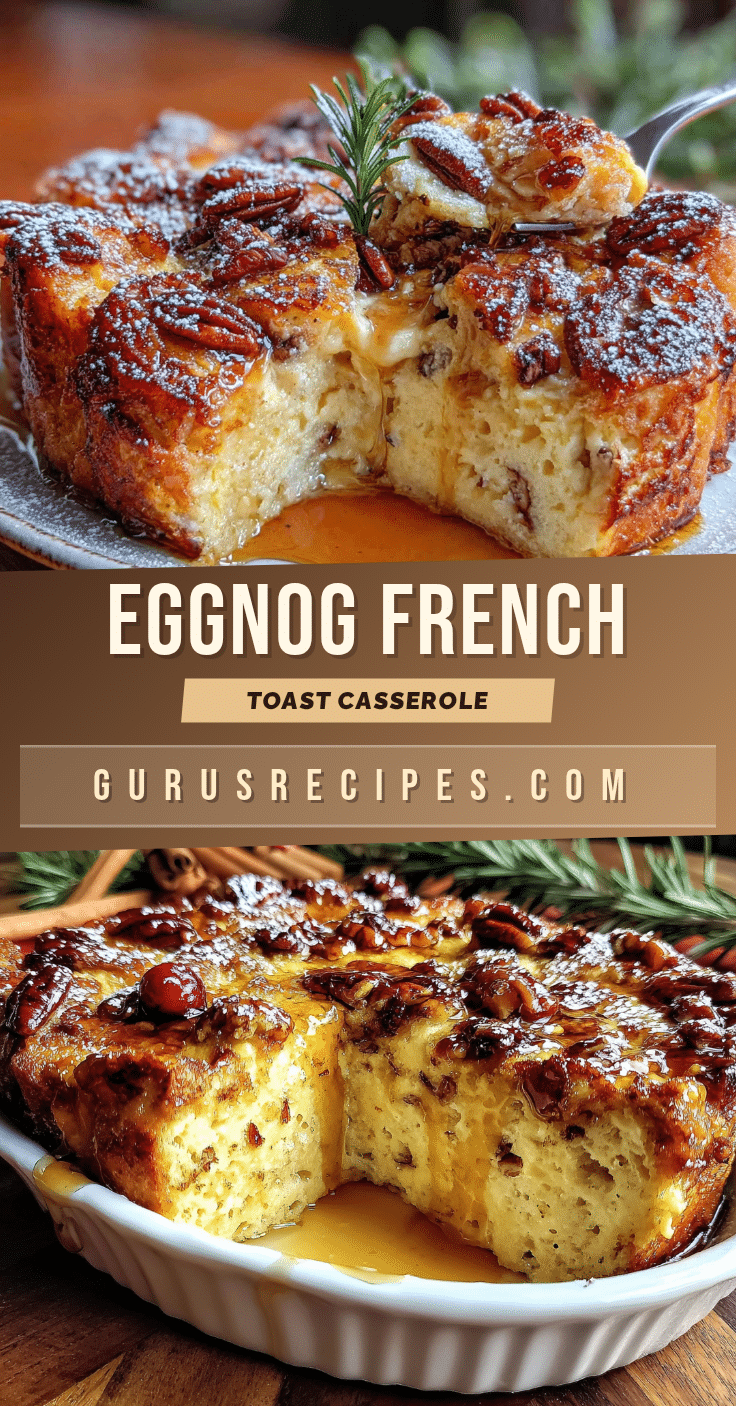

Best Eggnog French Toast Casserole (Make-Ahead)
A rich, make-ahead eggnog French toast casserole with a crispy streusel topping, perfect for holiday brunches. This recipe uses day-old brioche and high-quality eggnog for a custardy, flavorful dish that can be assembled the night before.
- Total Time: 8 hours 10 minutes (includes overnight soak)
- Yield: 8 servings 1x
Ingredients
- 1 loaf (14-16 ounces) day-old brioche or challah bread, cut into 1-inch cubes
- 2 cups high-quality eggnog
- 4 large eggs, room temperature
- 1/2 cup granulated sugar
- 1/4 cup unsalted butter, melted
- 1 teaspoon vanilla extract
- 1/2 teaspoon ground nutmeg
- 1/2 teaspoon ground cinnamon
- 1/4 teaspoon ground cloves
- 1/4 teaspoon salt
- 1 tablespoon bourbon or 1 teaspoon rum extract (optional)
- 1/2 cup all-purpose flour
- 1/2 cup packed brown sugar
- 1/4 cup cold unsalted butter, cut into small cubes
- 1/2 teaspoon ground cinnamon (for streusel)
- Pinch of salt (for streusel)
- Maple syrup, for serving
- Powdered sugar, for dusting (optional)
- Fresh berries or sliced bananas, for serving (optional)
Instructions
- Night before: Cut day-old brioche or challah into 1-inch cubes (about 8-9 cups). Spread evenly in a greased 9×13-inch baking dish.
- In a large mixing bowl, whisk together eggs and granulated sugar until smooth and slightly pale, about 1 minute.
- Add eggnog, melted butter, vanilla extract, and bourbon (if using). Whisk until fully combined.
- Sprinkle in nutmeg, cinnamon, cloves, and salt. Whisk until evenly distributed.
- Slowly pour custard mixture over bread cubes. Gently press down with a spatula to coat all pieces. Cover with plastic wrap pressed directly onto the surface. Refrigerate for at least 6 hours, ideally 8-12 hours.
- Morning of: Remove casserole from fridge 30 minutes before baking. Preheat oven to 350°F (175°C).
- Make streusel: In a small bowl, combine flour, brown sugar, cinnamon, and salt. Add cold butter cubes and work with fingers or pastry cutter until mixture resembles coarse sand with some pea-sized butter bits.
- Remove plastic wrap from casserole. Sprinkle streusel topping evenly over the surface.
- Bake on middle rack for 45-55 minutes, until golden brown and puffed. Center should be set but slightly jiggly. Tent with foil if browning too quickly.
- Let rest for 10-15 minutes before serving. Cut into squares and serve warm with maple syrup, powdered sugar, and fresh fruit if desired.
Notes
Use stale bread for best texture; fresh bread will become soggy. The overnight soak is essential for custard absorption. Let casserole rest after baking to set properly. For gluten-free, use gluten-free bread. For dairy-free, use plant-based eggnog and butter substitutes. Streusel can be doubled for extra topping.
- Prep Time: 20 minutes
- Cook Time: 50 minutes
- Category: Breakfast
- Cuisine: American
Nutrition
- Serving Size: 1/8 of recipe
- Calories: 385
- Sugar: 28
- Sodium: 320
- Fat: 18
- Saturated Fat: 10
- Carbohydrates: 45
- Fiber: 1
- Protein: 10
Keywords: eggnog French toast casserole, make-ahead breakfast, holiday brunch, brioche casserole, Christmas breakfast