
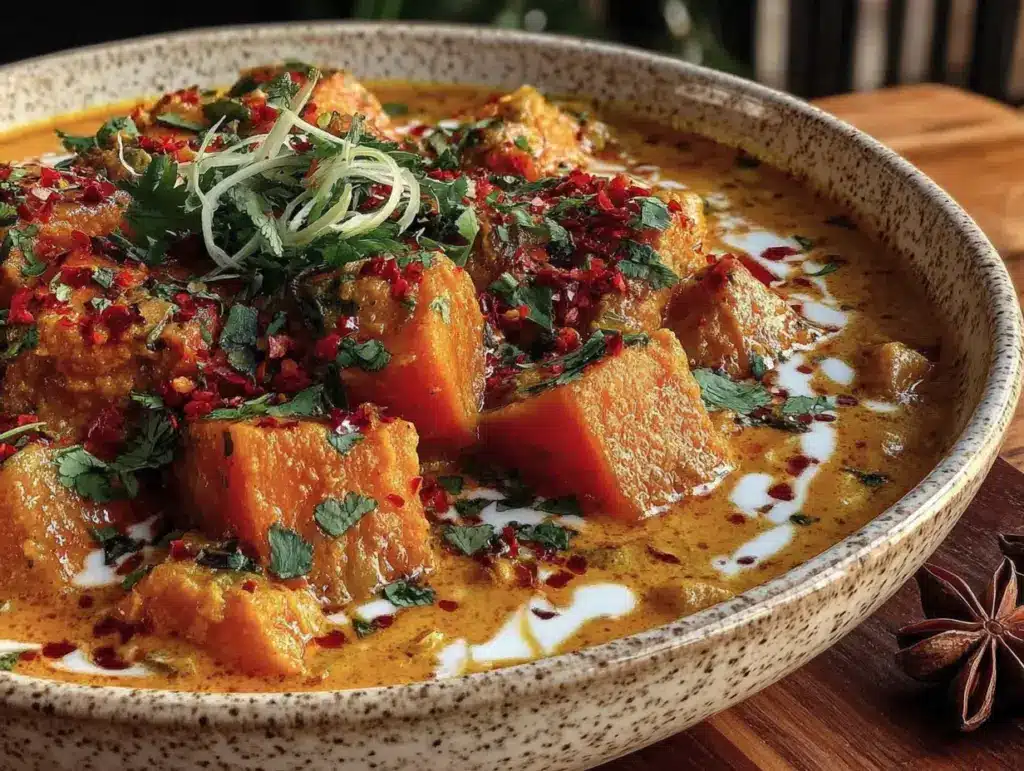
My friend Maya did not trust squash in curry. “It gets mushy and sweet in a way that fights the spices,” she said, pushing her chair back from my kitchen island. I had just told her I was testing a creamy coconut kabocha squash curry for the blog, and her skepticism was loud enough to fill the room. Honestly, I had felt the same way for years. Kabocha squash, with its dense, chestnut-like flesh and intense sweetness, always seemed like it belonged in a roasted side dish or a Japanese simmered vegetable situation—not swimming in a coconut-based curry broth. But then I found myself staring at a beautiful, deeply green-streaked kabocha at the farmer’s market, and something clicked. I bought it, brought it home, and decided to prove myself wrong. That first batch of creamy coconut kabocha squash curry was the quietest, most satisfying victory I’ve had in the kitchen. The squash didn’t disintegrate. It held its shape, absorbing the coconut milk and spices in a way that felt intentional, not accidental. The sweetness didn’t fight the curry—it rounded it out.
The thing about kabocha squash is that it plays by different rules than butternut or acorn. Its flesh is drier, starchier, almost like a cross between a sweet potato and a chestnut. When you cook it low and slow in a rich coconut broth, it releases just enough of its natural sugar to balance the heat from ginger and chili, without turning into baby food. That first spoonful was a revelation—the squash had softened, yes, but it still had a tender bite, and the creamy sauce clung to every edge. I called Maya the next day and made her try it. She took a bite, chewed slowly, and said, “Okay. I get it now.” That’s really the kind of recipe this is. It doesn’t need to convince you loudly. It just needs you to take that first bite.
Why You’ll Love This Recipe
This creamy coconut kabocha squash curry has become one of those recipes I make on repeat, and for good reason. It checks every box I look for in a weeknight meal—it’s satisfying without being heavy, impressive without being complicated, and forgiving enough that you can adjust it to whatever you have on hand.
- Quick & Easy : This curry comes together in about 40 minutes, most of which is hands-off simmering time. Perfect for those evenings when you want something deeply flavorful but don’t have the energy for a multi-step production.
- Simple Ingredients : You likely already have coconut milk, onions, garlic, and ginger in your kitchen. The kabocha squash is the star, and it’s becoming easier to find at regular grocery stores these days. No specialty trips required.
- Perfect for Meal Prep : This is one of those dishes that tastes even better the next day. The flavors meld together overnight, and the squash continues to soak up the creamy coconut broth. Make a big batch on Sunday and enjoy it all week.
- Crowd-Pleaser : I’ve served this to friends who claim they don’t like squash and to others who are devoted carnivores. Everyone goes back for seconds. The creamy, savory-sweet balance is just that good.
- Unbelievably Delicious : The texture here is what gets people. The kabocha squash stays tender but intact, and the coconut milk, infused with ginger, garlic, and warm spices, creates a sauce that’s rich without being greasy. It’s comfort food that feels a little bit special.
What makes this version different from other squash curries is the technique. Instead of roasting the squash first (which can make it too dry), I simmer it directly in the coconut milk broth. This allows the squash to slowly absorb the liquid, becoming creamy from the inside out while the broth thickens naturally around it. It’s not just another curry—it’s the one that made my skeptic friend a believer.
What Ingredients You Will Need
This creamy coconut kabocha squash curry relies on a handful of pantry-friendly ingredients that work together to build layers of flavor. The beauty of it is that each component has a specific job, and together they create something that tastes much more complex than the ingredient list suggests.
- Kabocha Squash (1 medium, about 2-3 pounds) : The star of the show. Look for a squash that feels heavy for its size with a deep green, matte skin. You don’t need to peel it—the skin is edible and becomes tender as it cooks. Just scrub it well and remove the seeds. If you can’t find kabocha, you can substitute butternut squash, but the texture will be slightly softer.
- Coconut Milk (1 can, 13.5 oz, full-fat) : This is non-negotiable for the creamy texture. Full-fat coconut milk gives the curry its rich, velvety body. Light coconut milk will work in a pinch, but the sauce won’t be as luscious. I prefer Chaokoh or Aroy-D for their thickness and clean coconut flavor.
- Yellow Onion (1 medium, diced) : Forms the savory base of the curry. Cook it until it’s soft and translucent before adding the aromatics.
- Garlic (4 cloves, minced) : Adds warmth and depth. Fresh garlic makes a difference here—don’t use the pre-minced stuff.
- Fresh Ginger (1-inch piece, peeled and grated) : Provides a bright, slightly spicy kick that cuts through the richness of the coconut milk. Grate it on a microplane for the best texture.
- Red Curry Paste (2-3 tablespoons) : The shortcut to deep, complex flavor. I use Thai Kitchen or Mae Ploy brand. Adjust the amount based on your heat preference. If you’re sensitive to spice, start with 1 tablespoon and add more at the end.
- Vegetable Broth (1 cup) : Helps thin the curry to the perfect consistency. Use low-sodium so you can control the salt level.
- Coconut Aminos or Soy Sauce (1 tablespoon) : Adds umami and a touch of saltiness. Coconut aminos are a great soy-free option, but regular soy sauce or tamari works beautifully too.
- Maple Syrup or Brown Sugar (1 tablespoon) : Just a touch to enhance the natural sweetness of the squash. Don’t skip it—it balances the heat and acidity.
- Lime Juice (from 1 lime) : Added at the very end to brighten everything up. The acidity lifts the curry and keeps it from feeling too heavy.
- Coconut Oil or Avocado Oil (1 tablespoon) : For sautéing the aromatics. Coconut oil reinforces the coconut flavor, but avocado oil works well too.
- Salt and Pepper : To taste. I use sea salt and freshly ground black pepper.
- Optional Garnishes : Fresh cilantro, sliced red chili, toasted coconut flakes, and a squeeze of extra lime. These add color and freshness right before serving.
Equipment Needed
You don’t need a lot of fancy equipment to make this creamy coconut kabocha squash curry. A few basic kitchen tools will get the job done beautifully.
- Large Pot or Dutch Oven : A heavy-bottomed pot (like a 5-6 quart Dutch oven) is ideal for even heat distribution. A regular large saucepan will work too, just keep an eye on the heat to prevent sticking.
- Sharp Chef’s Knife : Kabocha squash is dense and can be tough to cut through. A sharp, sturdy knife makes the job safer and easier. I use a 8-inch chef’s knife.
- Cutting Board : A large, stable cutting board is essential. Place a damp paper towel under it to keep it from sliding.
- Wooden Spoon or Silicone Spatula : For stirring the curry as it simmers. A wooden spoon won’t scratch your pot and is great for scraping up any browned bits.
- Microplane or Fine Grater : For grating the ginger. A microplane gives you a fine, fluffy texture that melts into the curry. A box grater works too.
- Measuring Spoons and Cups : For accurate measurements. I know some cooks prefer to eyeball it, but measuring helps with consistency, especially when you’re making a recipe for the first time.
- Ladle : For serving the curry over rice or noodles.
If you don’t have a Dutch oven, don’t worry. I’ve made this curry in a stainless steel stockpot and even in a large non-stick skillet with deep sides. The key is to use a pot that can hold all the liquid without overflowing and that distributes heat evenly to prevent the coconut milk from scorching.
Preparation Method
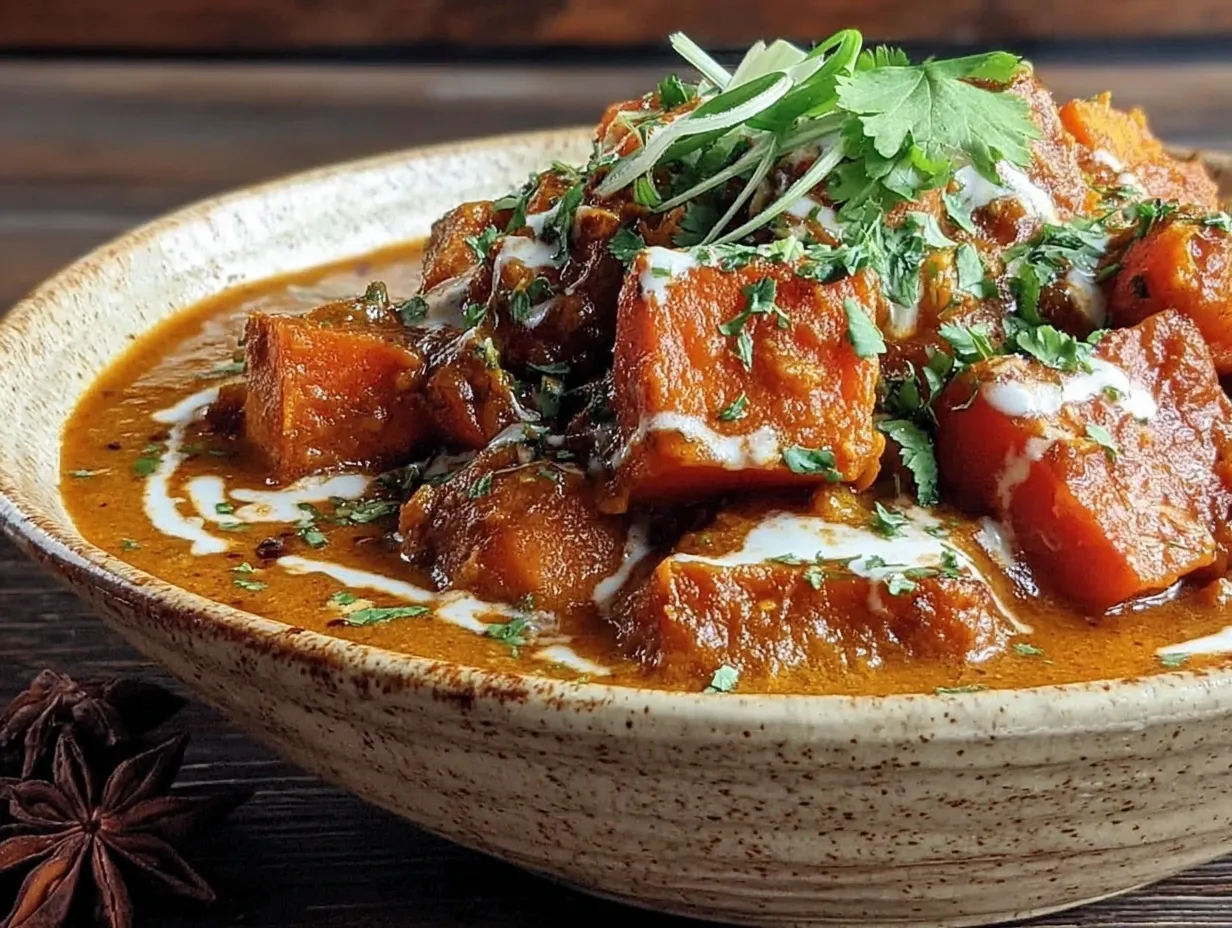
Making this creamy coconut kabocha squash curry is straightforward, but a few key steps make all the difference. Follow along, and you’ll have a pot of deeply flavorful, comforting curry ready in no time.
- Prepare the Kabocha Squash : Wash the squash thoroughly under running water to remove any dirt. Using a sharp chef’s knife, carefully cut the squash in half from stem to base. Scoop out the seeds and stringy pulp with a spoon. Cut each half into 1-inch thick wedges, then cut the wedges into 1-inch cubes. Leave the skin on—it will soften during cooking and adds a nice texture. (Pro tip: If the squash is too hard to cut, microwave it whole for 2-3 minutes to soften it slightly. Let it cool before handling.)
- Sauté the Aromatics : Heat 1 tablespoon of coconut oil in your large pot over medium heat. Add the diced onion and cook, stirring occasionally, for 5-6 minutes until it becomes soft and translucent. Add the minced garlic and grated ginger, and cook for another minute until fragrant. Be careful not to let the garlic burn—it can turn bitter quickly.
- Bloom the Curry Paste : Add 2-3 tablespoons of red curry paste to the pot. Stir it into the onion mixture and cook for 1-2 minutes. This step is crucial—blooming the paste in oil helps release its flavors and deepens the overall taste of the curry. You’ll notice the kitchen filling with an incredible aroma at this point.
- Build the Broth : Pour in the can of full-fat coconut milk and 1 cup of vegetable broth. Stir well to combine, scraping up any browned bits from the bottom of the pot. Add 1 tablespoon of coconut aminos (or soy sauce) and 1 tablespoon of maple syrup. Bring the mixture to a gentle simmer—don’t let it boil vigorously, as high heat can cause the coconut milk to separate.
- Add the Squash : Gently add the cubed kabocha squash to the pot. Stir to make sure all the pieces are submerged in the liquid. If needed, add a little more broth or water to just cover the squash. Bring the curry back to a simmer, then reduce the heat to low. Cover the pot and let it cook for 20-25 minutes.
- Check for Doneness : After 20 minutes, test the squash by piercing a piece with a fork. It should be tender but still hold its shape—not mushy. If it’s still firm, continue cooking for another 5-10 minutes. The cooking time will depend on the size of your cubes and the freshness of the squash.
- Finish with Lime : Once the squash is tender, remove the pot from the heat. Squeeze the juice of one lime over the curry and stir gently. Taste and adjust seasoning—add more salt, a pinch of sugar, or extra lime juice as needed. The lime brightens the curry and balances the richness of the coconut milk beautifully.
- Rest and Serve : Let the curry sit for 5 minutes before serving. This allows the flavors to settle and the sauce to thicken slightly. Serve over steamed jasmine rice, basmati rice, or with warm naan bread for soaking up every last drop of that creamy sauce.
Cooking Tips & Techniques
Over the many times I’ve made this creamy coconut kabocha squash curry, I’ve learned a few things that make the process smoother and the results more consistent. Here are my best tips:
- Don’t Overcrowd the Pot : If you’re doubling the recipe, use a larger pot or cook it in two batches. Overcrowding can cause the squash to steam instead of simmer, leading to uneven cooking and a watery sauce.
- Toast the Curry Paste : This is a game-changer. Cooking the curry paste in oil for a minute or two before adding liquid intensifies its flavor. You’ll notice a deeper, more aromatic taste compared to just stirring it into the broth.
- Use Full-Fat Coconut Milk : I know it’s tempting to reach for the light version, but full-fat coconut milk is what gives this curry its signature creaminess. The fat helps carry the flavors and creates a luxurious texture that light coconut milk simply can’t replicate.
- Cut Squash into Uniform Pieces : Try to cut the kabocha into similar-sized cubes so they cook at the same rate. If some pieces are much larger than others, you’ll end up with a mix of undercooked and mushy squash.
- Simmer, Don’t Boil : Keep the curry at a gentle simmer once you add the coconut milk. Boiling can cause the milk to separate and curdle, resulting in a grainy sauce. If you see bubbles getting too vigorous, turn the heat down.
- Let It Rest : This is a tip I learned from making stews and braises. Letting the curry sit for 5-10 minutes after cooking allows the flavors to meld and the sauce to thicken naturally. It’s worth the wait.
One mistake I made early on was adding the lime juice at the beginning of cooking. The acidity can react with the coconut milk and cause it to separate. Always add lime juice at the very end, after you’ve turned off the heat. It preserves the bright, fresh flavor and keeps the sauce silky smooth.
Variations & Adaptations
This creamy coconut kabocha squash curry is wonderfully adaptable. Here are a few variations I’ve tried and loved:
- Add Protein : For a heartier meal, add cooked chickpeas, cubed tofu, or shredded chicken during the last 10 minutes of cooking. The curry is already packed with flavor, so any protein you add will soak it up beautifully.
- Make It Spicier : If you like heat, add a finely chopped fresh Thai chili or serrano pepper along with the garlic and ginger. You can also stir in a teaspoon of sriracha or chili garlic sauce at the end for an extra kick.
- Vegan and Gluten-Free : This recipe is naturally vegan and gluten-free as written. Just make sure your curry paste and coconut aminos are certified gluten-free if that’s a concern.
- Swap the Squash : No kabocha? No problem. Butternut squash, acorn squash, or even sweet potatoes work well in this recipe. Keep in mind that butternut squash is softer and may cook faster, so check for doneness a few minutes earlier.
- Add Greens : Stir in a handful of fresh spinach or kale during the last 5 minutes of cooking. The greens will wilt into the sauce and add a boost of nutrients and color.
- Change the Curry Base : Try using green curry paste or yellow curry paste instead of red for a completely different flavor profile. Green curry will be brighter and more herbaceous, while yellow curry is milder and more turmeric-forward.
I once made this curry with a mix of kabocha and chickpeas, and it was so good I’ve been doing it ever since. The chickpeas add a little protein and a nice textural contrast to the tender squash. It’s become my go-to version for busy weeknights.
Serving & Storage Suggestions
This creamy coconut kabocha squash curry is incredibly versatile when it comes to serving. Here’s how I like to enjoy it:
- Serving Temperature : Serve the curry hot, straight from the pot. It’s also delicious at room temperature, especially on a warm day.
- Presentation : Spoon the curry over a bed of steamed jasmine rice or basmati rice. Garnish with fresh cilantro, a sprinkle of toasted coconut flakes, and a few slices of red chili for color. A lime wedge on the side is always a nice touch.
- Complementary Dishes : This curry pairs beautifully with warm naan bread or roti for dipping. For a complete meal, serve it alongside a simple cucumber salad or a side of crispy no-knead rosemary sea salt bread for soaking up the sauce. If you’re in the mood for something hearty, a bowl of cozy hearty lentil stew makes a great companion on a cold night.
- Beverage Pairing : A cold glass of crisp white wine like Sauvignon Blanc or a light lager beer complements the creamy, spicy flavors beautifully. For a non-alcoholic option, try iced tea with a splash of lime.
- Storage : Store leftover curry in an airtight container in the refrigerator for up to 4 days. The flavors actually improve after a day or two as the squash continues to absorb the sauce.
- Freezing : This curry freezes well for up to 3 months. Let it cool completely, then transfer to a freezer-safe container. Thaw overnight in the refrigerator before reheating.
- Reheating : Reheat the curry gently on the stovetop over low heat, stirring occasionally. Add a splash of water or coconut milk if the sauce has thickened too much. Avoid microwaving on high heat, as it can cause the coconut milk to separate.
One thing I love about this curry is how the flavors develop over time. The squash continues to absorb the coconut broth, making each serving even more flavorful than the last. It’s one of those rare dishes that tastes better on day two.
Nutritional Information & Benefits
This creamy coconut kabocha squash curry is not only delicious but also packed with nutrients. Here’s a rough estimate per serving (based on 4 servings):
| Nutrient | Amount per Serving |
|---|---|
| Calories | 320 |
| Total Fat | 22g |
| Saturated Fat | 16g |
| Carbohydrates | 28g |
| Fiber | 6g |
| Sugar | 10g |
| Protein | 5g |
| Vitamin A | 280% DV |
| Vitamin C | 30% DV |
| Iron | 15% DV |
| Potassium | 15% DV |
Kabocha squash is a nutritional powerhouse. It’s incredibly high in beta-carotene (which the body converts to vitamin A), supporting eye health and immune function. It’s also a good source of fiber, which aids digestion and helps you feel full longer. Coconut milk provides healthy medium-chain triglycerides (MCTs) that can support energy metabolism. Ginger and garlic are known for their anti-inflammatory and immune-boosting properties. This curry is naturally gluten-free, dairy-free, and vegan, making it suitable for a wide range of dietary preferences.
Conclusion
This creamy coconut kabocha squash curry is the kind of recipe that quietly becomes a staple. It’s not flashy or complicated, but it delivers every single time. The combination of tender, naturally sweet kabocha squash and rich, aromatic coconut broth is deeply satisfying without being heavy. It’s the kind of meal that makes you feel good—both while you’re eating it and after.
I love that this recipe is flexible enough to adapt to whatever you have on hand, yet sturdy enough to stand on its own. Whether you’re cooking for a busy weeknight, meal prepping for the week, or impressing friends at a dinner party, this curry delivers. It’s also a great way to use up that kabocha squash sitting on your counter, waiting for its moment to shine.
I’d love to hear how this curry turns out for you. Did you add any variations? What did you serve it with? Drop a comment below and let me know. And if you’re looking for more cozy, comforting recipes, be sure to check out this cozy Guinness beef stew or this creamy loaded baked potato soup for more one-pot comfort food inspiration. Happy cooking, friends!
Frequently Asked Questions
Can I use butternut squash instead of kabocha?
Yes, absolutely. Butternut squash is a great substitute, though it has a higher water content and softer texture. Cut it into slightly larger cubes and check for doneness a few minutes earlier to avoid mushiness.
Is kabocha squash skin edible?
Yes, the skin of kabocha squash is completely edible and becomes tender when cooked. It’s also packed with fiber and nutrients. Just make sure to scrub it well before cutting.
How do I make this curry less spicy?
Start with just 1 tablespoon of red curry paste instead of 2-3. You can also add a splash of extra coconut milk at the end to mellow the heat. If you’re sensitive to spice, look for a mild curry paste.
Can I make this curry in a slow cooker?
Yes, you can. Sauté the aromatics and bloom the curry paste on the stovetop first, then transfer everything to the slow cooker. Cook on low for 4-5 hours or on high for 2-3 hours. Add the lime juice at the end.
How do I store and reheat leftovers?
Store leftovers in an airtight container in the refrigerator for up to 4 days. Reheat gently on the stovetop over low heat, adding a splash of water or coconut milk if needed. You can also freeze the curry for up to 3 months.
Pin This Recipe!
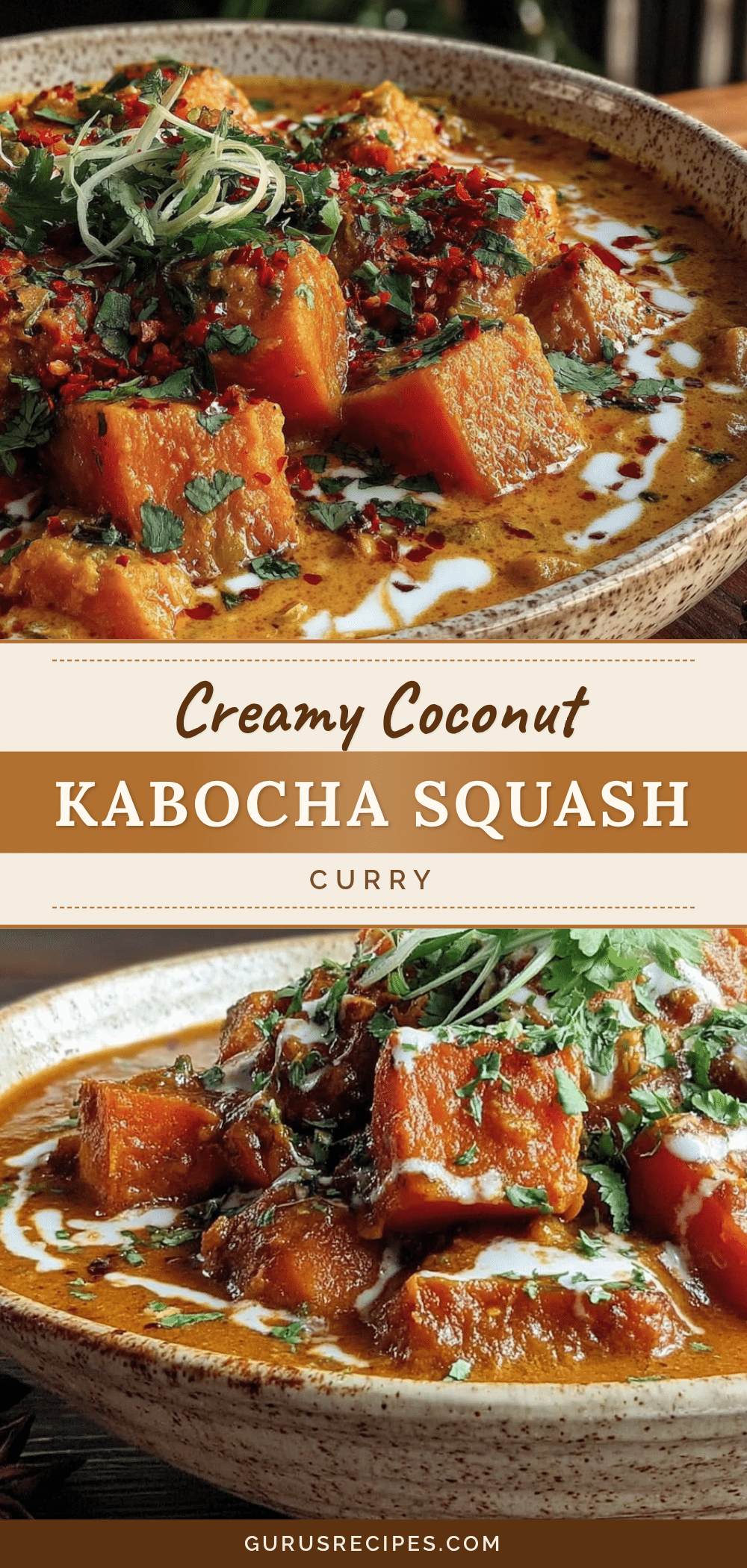

Easy Creamy Coconut Kabocha Squash Curry
A creamy, aromatic curry featuring tender kabocha squash simmered in a rich coconut milk broth with ginger, garlic, and red curry paste. This quick and easy weeknight meal is naturally vegan and gluten-free, and it’s perfect for meal prep.
- Total Time: 40 minutes
- Yield: 4 servings 1x
Ingredients
- 1 medium kabocha squash (about 2–3 pounds), scrubbed, seeded, and cut into 1-inch cubes (skin on)
- 1 can (13.5 oz) full-fat coconut milk
- 1 medium yellow onion, diced
- 4 cloves garlic, minced
- 1-inch piece fresh ginger, peeled and grated
- 2–3 tablespoons red curry paste
- 1 cup vegetable broth (low-sodium)
- 1 tablespoon coconut aminos or soy sauce
- 1 tablespoon maple syrup or brown sugar
- Juice of 1 lime
- 1 tablespoon coconut oil or avocado oil
- Salt and pepper to taste
- Optional garnishes: fresh cilantro, sliced red chili, toasted coconut flakes, extra lime wedges
Instructions
- Prepare the kabocha squash: Wash the squash thoroughly. Using a sharp chef’s knife, cut the squash in half from stem to base. Scoop out the seeds and stringy pulp. Cut each half into 1-inch thick wedges, then cut the wedges into 1-inch cubes. Leave the skin on. (If the squash is too hard to cut, microwave it whole for 2-3 minutes to soften slightly.)
- Sauté the aromatics: Heat 1 tablespoon of coconut oil in a large pot or Dutch oven over medium heat. Add the diced onion and cook, stirring occasionally, for 5-6 minutes until soft and translucent. Add the minced garlic and grated ginger, and cook for another minute until fragrant.
- Bloom the curry paste: Add 2-3 tablespoons of red curry paste to the pot. Stir into the onion mixture and cook for 1-2 minutes until fragrant.
- Build the broth: Pour in the can of full-fat coconut milk and 1 cup of vegetable broth. Stir well, scraping up any browned bits from the bottom. Add 1 tablespoon of coconut aminos (or soy sauce) and 1 tablespoon of maple syrup. Bring to a gentle simmer.
- Add the squash: Gently add the cubed kabocha squash to the pot. Stir to ensure all pieces are submerged. If needed, add a little more broth or water to just cover the squash. Bring back to a simmer, then reduce heat to low. Cover and cook for 20-25 minutes.
- Check for doneness: After 20 minutes, test the squash with a fork. It should be tender but still hold its shape. If still firm, continue cooking for another 5-10 minutes.
- Finish with lime: Remove the pot from the heat. Squeeze the juice of one lime over the curry and stir gently. Taste and adjust seasoning with salt, pepper, or extra lime juice as needed.
- Rest and serve: Let the curry sit for 5 minutes before serving. Serve over steamed jasmine rice or basmati rice, garnished with fresh cilantro, toasted coconut flakes, and lime wedges if desired.
Notes
For best results, use full-fat coconut milk and bloom the curry paste in oil before adding liquid. Add lime juice at the end to prevent the coconut milk from separating. The curry tastes even better the next day as flavors meld.
- Prep Time: 10 minutes
- Cook Time: 30 minutes
- Category: Main Course
- Cuisine: Thai-inspired
Nutrition
- Serving Size: 1 serving (about 1.5
- Calories: 320
- Sugar: 10
- Sodium: 480
- Fat: 22
- Saturated Fat: 16
- Carbohydrates: 28
- Fiber: 6
- Protein: 5
Keywords: kabocha squash curry, coconut curry, vegan curry, gluten-free curry, easy weeknight dinner, creamy curry, squash recipe