I was standing in the frozen foods aisle last December, staring at a box of pre-seasoned roast, when the smell of garlic and rosemary hit me. Not from the box—from my memory. And suddenly I was ten years old at my Aunt Carol’s tiny kitchen table, watching her rub butter all over a massive hunk of beef like she was giving it a spa treatment. She had this way of cooking that made everything feel special, even on a random Tuesday. That woman could make a roast that made you forget your own name, I swear. She passed away a few years back, and honestly, I’ve been chasing that exact flavor ever since.
I grabbed my cart, abandoned the frozen box, and went home to figure it out. Maybe you’ve been there—standing in the grocery store, hoping for a shortcut, but knowing deep down that the real thing is worth the effort. Let me tell you, this Perfect Prime Rib Roast with Garlic Herb Butter (Reverse Sear) is it. It’s the recipe I keep coming back to, the one that finally made me stop missing Aunt Carol’s version because I found my own.
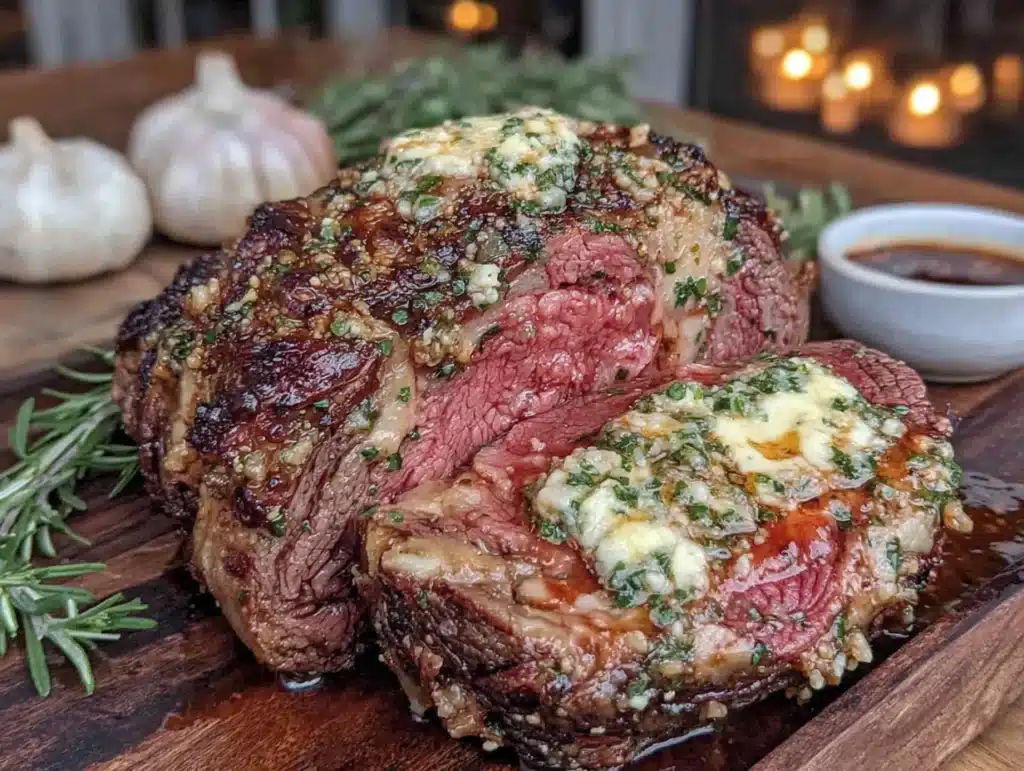
The reverse sear method changed everything for me. It sounds fancy, but it’s really just cooking low and slow first, then searing at the end. The result? A roast that’s perfectly pink from edge to center, with a crust that shatters when you cut into it. No gray bands, no dry spots—just pure, buttery, garlicky perfection. I mean, who wouldn’t want that on their holiday table?
Why You’ll Love This Recipe
This isn’t just another prime rib recipe. After testing this method at least a dozen times—burning one, undercooking another, and once forgetting the garlic entirely—I can tell you this version works every single time. It’s the one I bring to family gatherings, and the one my friends beg me to make for New Year’s Eve.
- Foolproof Reverse Sear Method : No more guessing. Cooking at a low temp first means the internal temperature stays even, so you get that gorgeous medium-rare from edge to edge.
- Simple, High-Impact Ingredients : Butter, garlic, fresh herbs, salt, and pepper. That’s it. No fancy marinades or complicated rubs.
- Perfect for Special Occasions : Christmas dinner, anniversary celebrations, or just because you want to feel like a fancy chef for a day.
- Crowd-Pleasing Results : Even people who swear they don’t like roast beef ask for seconds. The garlic herb butter makes it that good.
- Unbelievably Tender : The slow cooking breaks down the connective tissue without drying out the meat. You’ll close your eyes after the first bite—I promise.
What makes this different from every other prime rib recipe out there? The garlic herb butter gets rubbed under the fat cap and all over the surface, so every single bite is infused with flavor. Plus, the reverse sear gives you that perfect crust without overcooking the inside. It’s comfort food at its finest—impressive enough for guests, but simple enough that you won’t stress yourself out.
What Ingredients You Will Need
This recipe uses simple, high-quality ingredients to create something truly special. Most of these are pantry staples or easy to find at any grocery store. The key is using fresh herbs and good butter—it makes all the difference.
For the Prime Rib Roast
- 1 (4-5 pound) bone-in prime rib roast (ask your butcher for a first-cut or standing rib roast; the bones add flavor and help with even cooking)
- 2 tablespoons kosher salt (I prefer Diamond Crystal—it’s less salty by volume, so you have more control)
- 1 tablespoon freshly ground black pepper (don’t use pre-ground; it just doesn’t taste the same)
For the Garlic Herb Butter
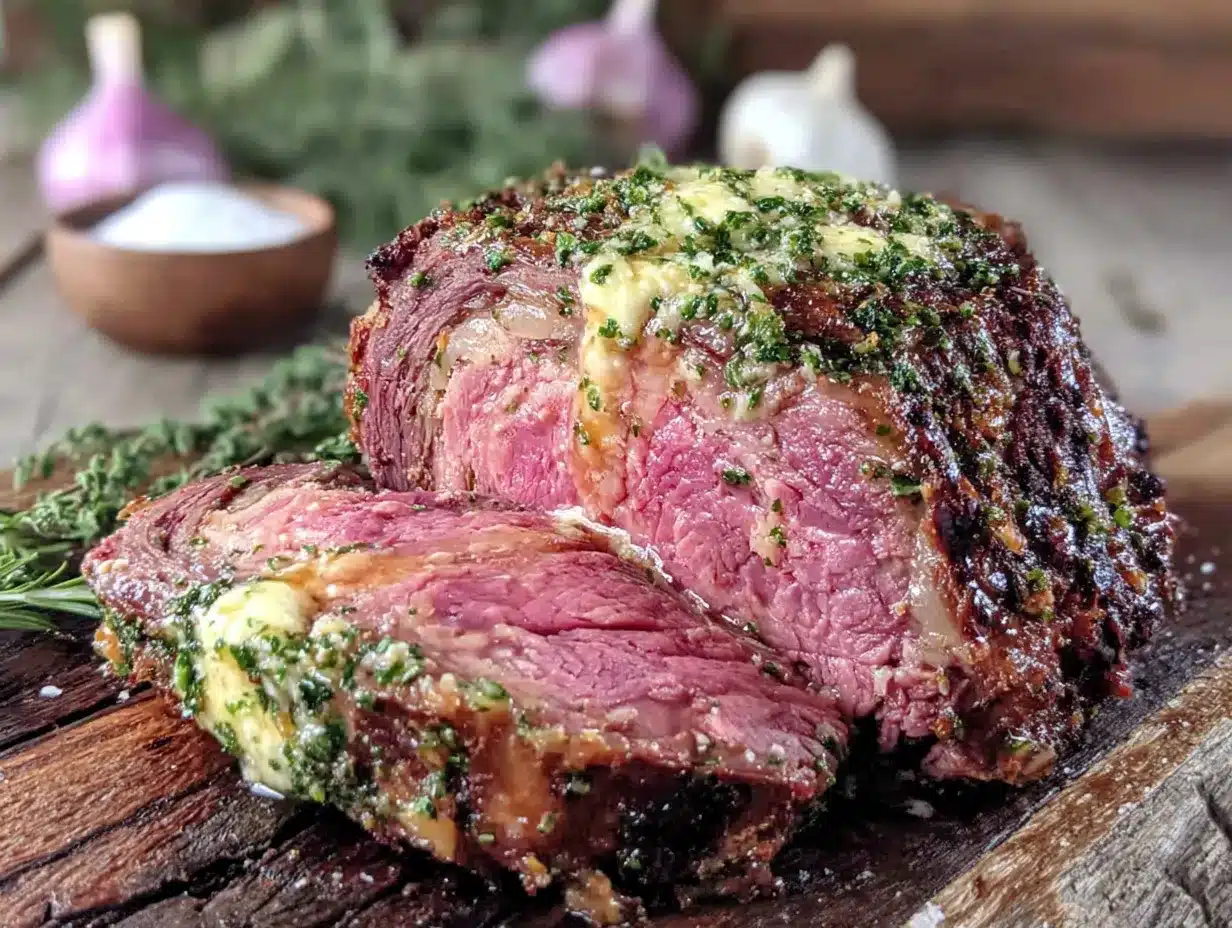
- 1/2 cup unsalted butter, softened (salted butter works, but adjust the added salt accordingly)
- 6 cloves garlic, minced (use a microplane for a paste-like texture that melts right into the butter)
- 2 tablespoons fresh rosemary, finely chopped (dried works in a pinch, but fresh is so much better here)
- 2 tablespoons fresh thyme leaves (strip the leaves off the stems—no one wants to eat a twig)
- 1 tablespoon fresh parsley, finely chopped (optional, but adds a nice color and freshness)
- 1 teaspoon kosher salt
- 1/2 teaspoon black pepper
For the Au Jus (Optional but Recommended)
- 2 cups beef broth (low-sodium so you can control the salt)
- 1/4 cup dry red wine (optional; use whatever you’re drinking)
- 1 tablespoon Worcestershire sauce
- 2 sprigs fresh thyme
- 1 sprig fresh rosemary
I recommend using a good-quality butter like Kerrygold for the richest flavor. And if you can find a prime-grade roast instead of choice, go for it—it’s more marbled and incredibly tender. That said, choice-grade works beautifully too, especially with this cooking method.
Equipment Needed
You don’t need a ton of fancy equipment for this recipe, but a few key tools make the process much smoother.
- Digital meat thermometer (this is non-negotiable; an instant-read or leave-in probe thermometer ensures perfect doneness every time)
- Roasting pan with a rack (the rack keeps the roast elevated so air circulates evenly; if you don’t have one, place the roast on top of thick carrot or onion slices)
- Small bowl for mixing the garlic herb butter
- Chef’s knife for trimming and carving
- Cutting board (a large one with a groove for catching juices is ideal)
- Aluminum foil for resting the roast
- Large skillet if you’re searing on the stovetop instead of using the oven
I’ve made this roast using a cast-iron skillet for the sear step, and it works great. But honestly, the oven method is easier and less messy—just crank the heat at the end. If you’re on a budget, skip the fancy roasting rack and use vegetables as a base. I’ve done that plenty of times, and it adds extra flavor to the drippings for the au jus.
Preparation Method
This method takes some time, but most of it is hands-off. Plan for about 4 hours total, including resting time. Trust me, it’s worth every minute.
- Take the roast out of the fridge 2 hours before cooking. This is crucial—a cold roast won’t cook evenly. Pat it dry with paper towels, then season all over with the kosher salt and pepper. Let it sit at room temperature. I usually do this while I’m making the garlic herb butter.
- Make the garlic herb butter. In a small bowl, combine the softened butter, minced garlic, rosemary, thyme, parsley, salt, and pepper. Mix until everything is evenly distributed. The butter should be spreadable but not melted. If it’s too hard, let it sit out a bit longer.
- Preheat your oven to 225°F (107°C). Yes, this is low—that’s the point. Place the oven rack in the center position.
- Rub the garlic herb butter all over the roast. Use your hands—it’s messy but worth it. Make sure to get the butter under the fat cap if possible, and into any crevices. The fat cap should be facing up on the roasting rack.
- Insert the probe of your meat thermometer into the thickest part of the roast, avoiding the bone. Place the roast in the roasting pan on the rack.
- Roast at 225°F (107°C) for about 2.5 to 3 hours, or until the internal temperature reaches 120°F (49°C) for medium-rare. Start checking at the 2-hour mark. Every oven is different, and thicker roasts take longer. The temperature will rise about 5-10 degrees during resting and searing, so pull it out at 120°F.
- Remove the roast from the oven and tent it loosely with foil. Let it rest for 30-45 minutes. Don’t skip this—the rest is when the juices redistribute. I know it’s tempting to skip ahead, but patience pays off here.
- Crank the oven to 500°F (260°C) while the roast rests. Make sure the oven is fully preheated before the next step.
- Sear the roast. Remove the foil and place the roast back in the oven (still on the rack) for 5-10 minutes, until the crust is deep brown and sizzling. Watch it closely—it can go from perfect to burnt fast. Alternatively, you can sear it in a hot skillet with a bit of oil for 2-3 minutes per side.
- Rest again for 5-10 minutes before carving. This second rest keeps the juices from running all over your cutting board.
- Carve against the grain. Remove the bones first (they make great snacks), then slice the meat into 1/2-inch to 3/4-inch thick slices. Serve immediately with au jus on the side.
One time I forgot to rest the roast before searing, and the butter just slid right off. Learn from my mistake—let it rest, then sear, then rest again. Your taste buds will thank you.
Cooking Tips & Techniques
I’ve made this recipe enough times to know exactly where things can go wrong. Here’s what I’ve learned the hard way so you don’t have to.
Don’t skip the dry brine. Salting the roast a few hours ahead (or even overnight) helps the salt penetrate the meat, seasoning it from the inside out. If you’re short on time, even 30 minutes makes a difference.
Use a leave-in thermometer. I used to rely on instant-read thermometers, and I’d open the oven door constantly to check. That lets out heat and extends cooking time. A probe thermometer with an alarm lets you monitor without opening the door.
The fat cap is your friend. Don’t trim it off. It bastes the meat as it renders, keeping everything moist and flavorful. Plus, it helps protect the meat during the low-and-slow cooking phase.
If the butter starts to brown too early during the low-temp cooking, don’t panic. Just tent the roast loosely with foil to protect it. The butter will still flavor the meat beautifully.
For the best crust, pat the roast dry before the searing step. Any moisture on the surface will steam instead of brown. I learned this after a few lackluster crusts—now I always pat it dry with paper towels.
One of my biggest failures? I once forgot to take the roast out of the fridge early. It went into the oven cold, and the outside was overcooked while the inside was still raw. Lesson learned: room temperature is non-negotiable.
Variations & Adaptations
This recipe is flexible, so don’t be afraid to make it your own. Here are some ways I’ve adapted it over the years.
- Herb Swap : Not a fan of rosemary? Use sage or oregano instead. Tarragon adds a lovely anise-like flavor that pairs beautifully with beef.
- Spicy Kick : Add 1/2 teaspoon of red pepper flakes to the butter for a subtle heat. I did this for a Super Bowl party, and it was a hit.
- Dairy-Free Option : Use vegan butter or olive oil instead of butter. The texture will be slightly different, but the flavor is still amazing.
- Different Doneness : For medium, pull the roast at 130°F (54°C); for medium-well, pull at 140°F (60°C). Just be careful—the higher the temp, the less forgiving the meat.
- Smoked Version : Cook the roast on a smoker at 225°F (107°C) for 2-3 hours, then sear on a hot grill or in a cast-iron skillet. The smoky flavor is incredible.
I once made this with a coffee rub instead of the garlic herb butter, and it was surprisingly good. The coffee’s bitterness balanced the richness of the beef. But honestly, the original garlic herb version is still my favorite—it’s what Aunt Carol would have made.
Serving & Storage Suggestions
This roast is the star of the show, so keep the sides simple. I love serving it with creamy mashed potatoes, roasted asparagus, and a big green salad. The au jus is essential—pour it over the meat or use it for dipping.
For leftovers (if you’re lucky enough to have any), store the sliced meat in an airtight container in the fridge for up to 4 days. The au jus can be stored separately for up to a week. To reheat, place slices in a skillet with a splash of broth or au jus, and warm gently over low heat. Don’t use the microwave—it’ll turn the meat tough and rubbery.
You can also freeze the cooked roast for up to 3 months. Wrap it tightly in plastic wrap, then foil, and place it in a freezer bag. Thaw overnight in the fridge before reheating. The texture won’t be quite as perfect as fresh, but it’s still delicious for sandwiches or salads.
One thing I love about this recipe is that the flavors actually deepen overnight. Leftover prime rib sandwiches with horseradish cream are practically a holiday tradition in my house now.
Nutritional Information & Benefits
Prime rib is definitely a treat, but it does have some nutritional benefits. A 6-ounce serving (about two slices) contains roughly:
- Calories : 450-500
- Protein : 40-45 grams
- Fat : 30-35 grams
- Iron : 15% of the daily value
- Vitamin B12 : 80% of the daily value
- Zinc : 30% of the daily value
Beef is one of the best sources of heme iron, which is easily absorbed by the body. It’s also rich in B vitamins that support energy metabolism. That said, this is a rich dish, so I recommend balancing it with lighter sides and not overdoing the portions. For me, this is a once-or-twice-a-year indulgence, and I savor every bite.
If you’re watching your sodium, use unsalted butter and low-sodium broth, and go easy on the added salt. The garlic and herbs provide plenty of flavor without relying on salt alone.
Conclusion
This Perfect Prime Rib Roast with Garlic Herb Butter (Reverse Sear) is more than just a recipe—it’s a way to bring people together around the table. It’s the kind of meal that makes everyone stop talking and just focus on the food for a minute. And honestly, that’s what cooking is all about, isn’t it?
I’ve made this for Christmas, New Year’s, birthdays, and even a random Tuesday when I needed a pick-me-up. Each time, it delivers. The garlic herb butter, the perfect crust, the tender, juicy meat—it’s everything you want in a special occasion meal.
So go ahead and give it a try. Make it your own—swap the herbs, adjust the doneness, serve it with your favorite sides. And when you do, come back and let me know how it turned out. Did you add something unexpected? Did your family fight over the last slice? I’d love to hear your story. Share your photos and tag me, or drop a comment below. Happy cooking!
Frequently Asked Questions
Can I use a boneless prime rib roast?
Yes, but adjust the cooking time. Boneless roasts cook faster because there’s no bone to conduct heat. Start checking the temperature about 30 minutes earlier than the recipe suggests.
Do I need to tie the roast?
If your roast is unevenly shaped, tying it with kitchen twine helps it cook more evenly. Most butchers will tie it for you if you ask. If it’s already a uniform shape, you can skip this step.
Can I prepare the garlic herb butter ahead of time?
Absolutely. Make the butter up to 3 days in advance and keep it in the fridge. Let it come to room temperature for about 30 minutes before rubbing it on the roast so it spreads easily.
What if I don’t have a meat thermometer?
Get one. Seriously, it’s the most important tool for this recipe. Without it, you’re guessing, and prime rib is too expensive to guess on. A basic instant-read thermometer costs less than $15 and will save your dinner.
Can I cook this in a convection oven?
Yes, but reduce the temperature by 25°F (about 15°C) for the low-temp cooking phase. Convection ovens circulate hot air, which can cook the outside faster. Keep the searing temperature the same.
Pin This Recipe!
Perfect Prime Rib Roast with Garlic Herb Butter Recipe
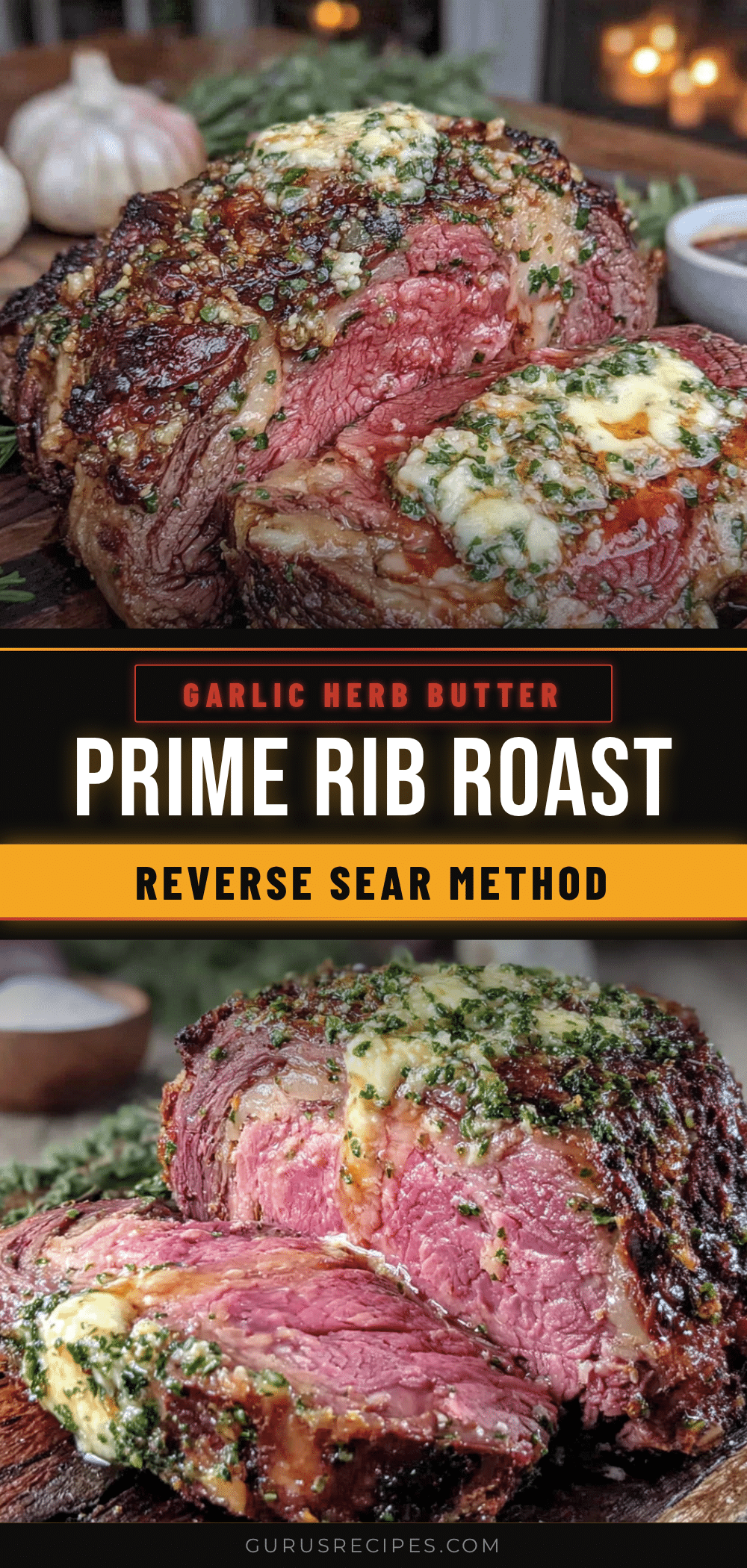
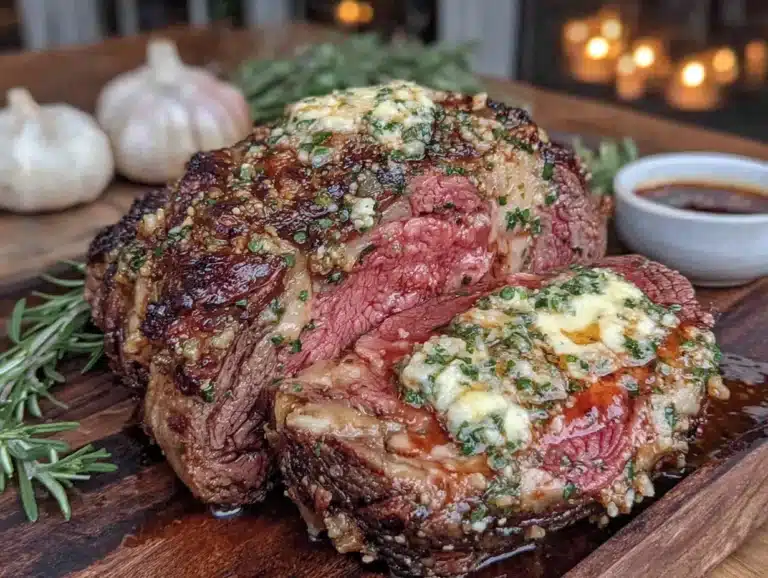
This foolproof reverse sear prime rib roast is coated in a rich garlic herb butter, resulting in a perfectly pink, tender, and flavorful center with a crispy crust. Ideal for special occasions, it’s a crowd-pleaser that’s surprisingly simple to make.
- Total Time: 4 hours (including resting time)
- Yield: 8 servings 1x
Ingredients
- 1 (4-5 pound) bone-in prime rib roast
- 2 tablespoons kosher salt
- 1 tablespoon freshly ground black pepper
- 1/2 cup unsalted butter, softened
- 6 cloves garlic, minced
- 2 tablespoons fresh rosemary, finely chopped
- 2 tablespoons fresh thyme leaves
- 1 tablespoon fresh parsley, finely chopped (optional)
- 1 teaspoon kosher salt
- 1/2 teaspoon black pepper
- 2 cups beef broth (low-sodium)
- 1/4 cup dry red wine (optional)
- 1 tablespoon Worcestershire sauce
- 2 sprigs fresh thyme
- 1 sprig fresh rosemary
Instructions
- Take the roast out of the fridge 2 hours before cooking. Pat it dry with paper towels, then season all over with the kosher salt and pepper. Let it sit at room temperature.
- Make the garlic herb butter. In a small bowl, combine the softened butter, minced garlic, rosemary, thyme, parsley, salt, and pepper. Mix until evenly distributed.
- Preheat your oven to 225°F (107°C). Place the oven rack in the center position.
- Rub the garlic herb butter all over the roast, including under the fat cap and into any crevices. Place the roast on a rack in a roasting pan with the fat cap facing up.
- Insert the probe of a meat thermometer into the thickest part of the roast, avoiding the bone.
- Roast at 225°F (107°C) for about 2.5 to 3 hours, or until the internal temperature reaches 120°F (49°C) for medium-rare. Start checking at the 2-hour mark.
- Remove the roast from the oven and tent it loosely with foil. Let it rest for 30-45 minutes.
- Crank the oven to 500°F (260°C) while the roast rests.
- Sear the roast: Remove the foil and place the roast back in the oven for 5-10 minutes, until the crust is deep brown and sizzling. Alternatively, sear in a hot skillet with oil for 2-3 minutes per side.
- Rest again for 5-10 minutes before carving.
- Carve against the grain. Remove the bones first, then slice the meat into 1/2-inch to 3/4-inch thick slices. Serve immediately with au jus on the side.
Notes
For best results, let the roast come to room temperature before cooking. Use a leave-in thermometer to avoid opening the oven door. Pat the roast dry before searing for a better crust. Leftovers can be stored in the fridge for up to 4 days or frozen for up to 3 months.
- Prep Time: 20 minutes
- Cook Time: 3 hours
- Category: Main Course
- Cuisine: American
Nutrition
- Serving Size: 6 ounces (about 2 sl
- Calories: 475
- Sugar: 1
- Sodium: 800
- Fat: 32.5
- Saturated Fat: 15
- Carbohydrates: 2
- Protein: 42.5
Keywords: prime rib, reverse sear, garlic herb butter, roast beef, holiday dinner, Christmas dinner, special occasion