
My husband did not trust sausage in stuffing. That is the honest truth. For the first five Thanksgivings we spent together, he would eye the bowl suspiciously, scooping around the browned crumbles like they were landmines. He’d whisper, “It just feels… heavy,” and I’d nod, because honestly? I kind of agreed. Most sausage stuffings I’d tried were greasy, one-note, and left a slick feeling on the roof of your mouth. So for years, I stuck with a simple herb-and-bread situation. It was fine. It was safe. But it wasn’t memorable.
Then one November, I had a half-pound of sweet Italian sausage sitting in the fridge and no plan. I was already browning butter for a batch of roasted squash (a happy accident I still make on purpose) when the nutty, toasty smell hit me. I thought—what if the butter did the heavy lifting? What if the sausage was just a whisper, not a shout? I cooked the sausage, let it drain well, and stirred it into my brown butter with fresh sage leaves that crackled and crisped up in the hot fat. The bread soaked up all of that—the richness, the herbaceous bite, the faint sweetness from the meat—without turning into a soggy brick. I brought it to the table with zero fanfare. He went back for thirds.
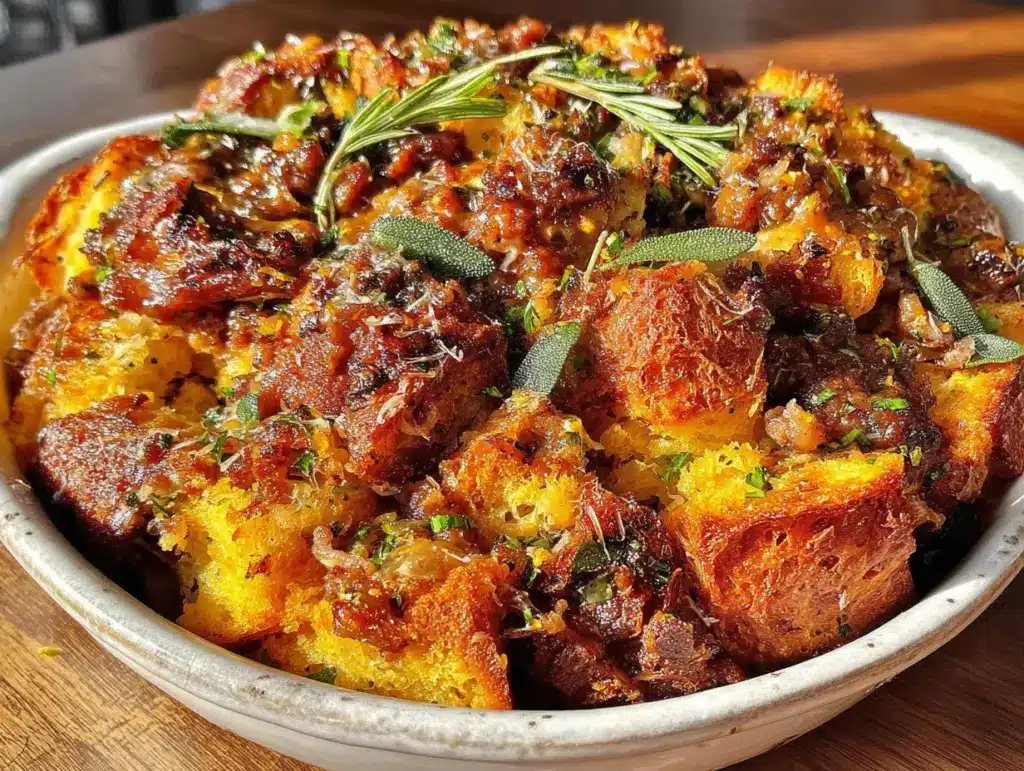
That first bite is still the one I measure all others against. The edges of the bread were golden and chewy, the center tender but not wet. The sage was crispy, almost like a chip, and the brown butter gave everything this deep, almost caramelized warmth. The sausage was there, for sure, but it played backup—adding texture and a gentle savory punch without overwhelming the dish. It was the stuffing that finally made him a believer. And honestly? It made me one too. This is the recipe that proved a little skepticism can lead to something pretty unforgettable.
Why You’ll Love This Recipe
This isn’t just another stuffing recipe you’ll forget by the time the turkey comes out. It’s the kind that earns a permanent spot on your holiday menu, and here is why it stands apart from the rest:
- Unforgettable Flavor: The combination of nutty brown butter, crispy fried sage, and savory sausage creates layers of flavor that taste complex but come together with surprising ease.
- Perfect Texture Every Time: This stuffing achieves that elusive ideal—crispy, golden-brown edges with a soft, tender center. No mush, no dry crumbly bits, just perfectly balanced texture in every spoonful.
- Make-Ahead Friendly: You can assemble this stuffing a day in advance and bake it right before serving, freeing up valuable oven space and reducing stress on the big day.
- Simple, Honest Ingredients: Nothing fancy or hard to find. Quality bread, fresh sage, good sausage, and butter. That is the whole list of stars.
- Crowd-Pleaser Approved: Even the stuffing skeptics in your life (yes, you know who I mean) will be asking for the recipe. It has converted more than a few at my table.
- Versatile for Any Occasion: While it shines on Thanksgiving, this stuffing is just as welcome alongside a Sunday roast chicken or a cozy winter pot roast.
This recipe isn’t just good—it is the kind that makes you close your eyes after the first bite. It is comfort food reimagined, richer and more satisfying, but still familiar enough to feel like home. Perfect for impressing guests without stress, or turning a simple meal into something memorable.
What Ingredients You Will Need
This recipe uses simple, wholesome ingredients to deliver bold flavor and satisfying texture without the fuss. Most of these are pantry staples, especially during the holiday season, and each one plays a specific role in building that unforgettable taste.
- 1 loaf (about 1 pound) good-quality bread, cut into 1-inch cubes: A sturdy artisan loaf or sourdough works best. Day-old bread is ideal—it holds its shape and soaks up the brown butter without turning to mush. I prefer a crusty loaf from the bakery section; avoid soft sandwich bread, which can become gummy. For a gluten-free option, use a sturdy gluten-free artisan loaf.
- 1/2 cup (1 stick) unsalted butter: This is the star of the show. Use high-quality unsalted butter so you can control the salt level. I love using a European-style butter like Plugrà for an even richer brown butter flavor.
- 1 pound sweet Italian sausage, casings removed: The sweetness of the sausage balances the nutty, savory brown butter beautifully. If you prefer a spicier kick, use hot Italian sausage instead. For a milder option, breakfast sausage works in a pinch, though the flavor profile will shift.
- 1 large yellow onion, diced: Yellow onion provides a mellow, sweet base. Dice it evenly so it cooks at the same rate.
- 3 celery stalks, diced: Celery adds that essential crunch and aromatic freshness that defines classic stuffing. Do not skip it—it provides necessary texture.
- 1/2 cup fresh sage leaves, roughly chopped, plus extra whole leaves for garnish: Fresh sage is non-negotiable here. Dried sage will not give you the same aromatic punch or the lovely crispy texture when fried in the brown butter. Look for leaves that are vibrant green and fragrant.
- 2 cups low-sodium chicken or turkey broth: Low-sodium is key so you can adjust the seasoning. Homemade broth is wonderful, but a good store-bought brand like Swanson works perfectly.
- 2 large eggs, lightly beaten: Eggs act as a binder, helping the stuffing hold together without being gluey. Make sure they are at room temperature so they incorporate smoothly.
- 1 teaspoon kosher salt, plus more to taste: I use Diamond Crystal kosher salt. If using table salt, reduce the amount by half.
- 1/2 teaspoon freshly ground black pepper: Freshly ground makes a difference in the final flavor.
- Optional: 1/2 cup chopped fresh parsley for garnish: Adds a pop of color and fresh flavor right before serving.
Equipment Needed
You do not need a fully stocked professional kitchen to make this stuffing. Here is what you will need, along with a few tips from my own trials:
- Large skillet or Dutch oven: A 12-inch skillet or a 5-quart Dutch oven works perfectly for browning the sausage and cooking the aromatics. I prefer a heavy-bottomed pan for even heat distribution, especially when browning the butter.
- 9×13-inch baking dish: This is the standard size for this recipe. A ceramic or glass dish works well. If you want extra-crispy edges, use a metal baking pan.
- Large mixing bowl: You will need a big bowl to toss the bread cubes with the sausage mixture and broth. A stainless steel or glass bowl is ideal.
- Whisk: For beating the eggs and combining them with the broth.
- Wooden spoon or silicone spatula: For stirring the sausage and aromatics without scratching your pan.
- Sharp knife and cutting board: For dicing the onion, celery, and chopping the sage.
- Measuring cups and spoons: Accuracy matters, especially with the broth and butter.
If you do not have a 9×13-inch dish, you can use a 10-inch cast iron skillet or a 2.5-quart casserole dish. Just adjust the baking time slightly—a wider pan will cook faster and give you more crispy surface area.
Preparation Method
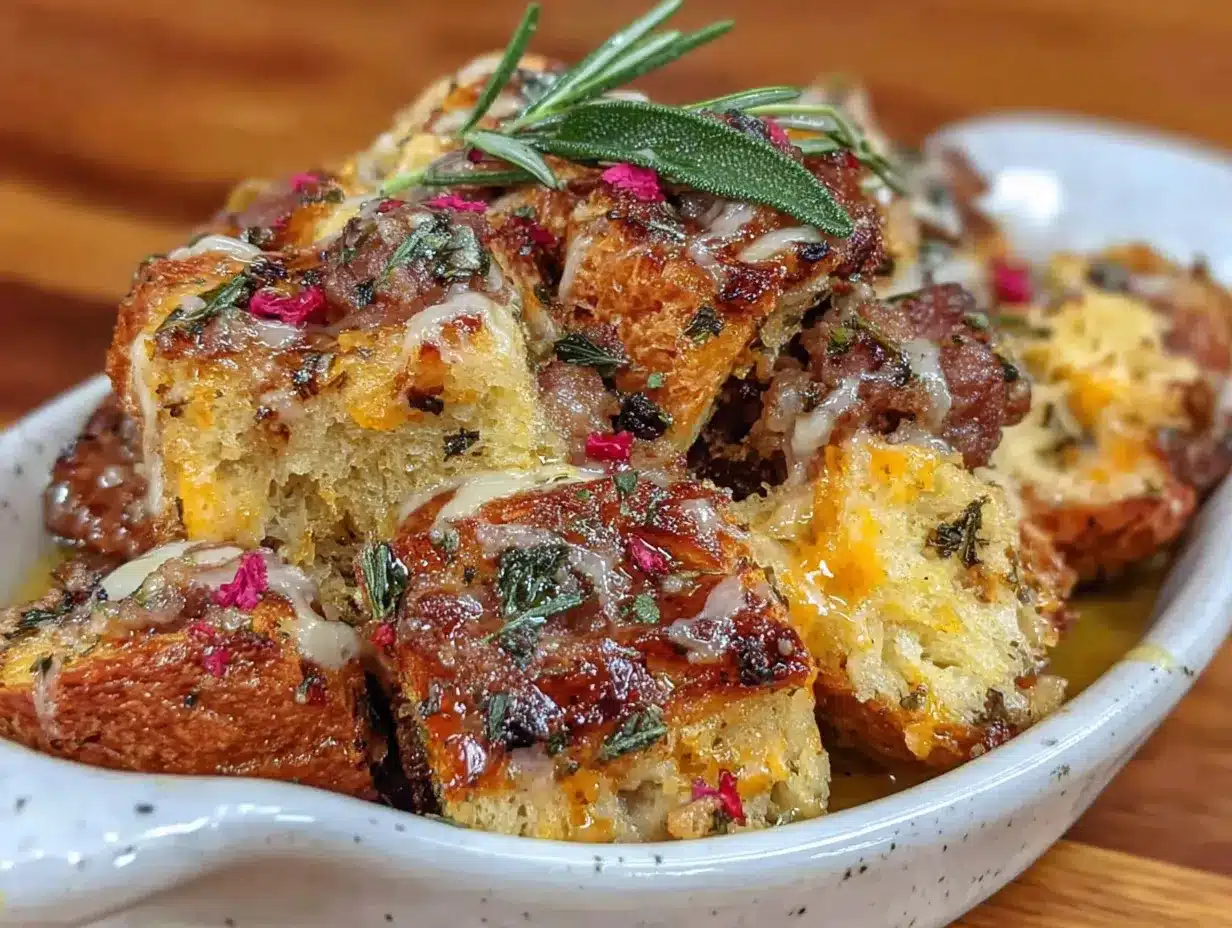
This stuffing comes together in a few straightforward steps, but each one matters. Follow along, and do not rush the browning—that is where all the flavor lives.
- Preheat your oven to 350°F (175°C). Spread the bread cubes in a single layer on a large baking sheet. Toast them for 10-12 minutes, stirring halfway through, until they are dry and lightly golden around the edges. This step is crucial—it prevents the bread from turning into a soggy mess later. Let the cubes cool completely while you prepare the rest. You can do this a day ahead and store the cubes in an airtight container.
- In a large skillet or Dutch oven, cook the sausage over medium-high heat. Break it up with a wooden spoon into small crumbles. Cook for 6-8 minutes, until it is browned and cooked through. Use a slotted spoon to transfer the sausage to a plate, leaving about 1 tablespoon of rendered fat in the pan. Do not wipe the pan clean—that fat is flavor.
- Reduce the heat to medium and add the butter to the same pan. Let it melt completely, swirling the pan occasionally. The butter will foam up, then subside, and you will start to see brown specks forming at the bottom. This takes about 4-5 minutes. Watch it carefully—brown butter can go from perfect to burnt in seconds. When it smells nutty and the specks are a deep golden brown, it is ready.
- Immediately add the fresh sage leaves to the brown butter. They will sizzle and crisp up in about 30 seconds. Use a slotted spoon to transfer the crispy sage to a paper towel-lined plate. Set them aside for garnish. They will get even crispier as they cool.
- Add the diced onion and celery to the brown butter remaining in the pan. Cook over medium heat, stirring occasionally, for 6-8 minutes, until the vegetables are softened and translucent. They should not be browned—just tender. Season with a pinch of salt and pepper.
- In a large mixing bowl, combine the toasted bread cubes, cooked sausage, and the softened onion-celery mixture. Toss gently to distribute everything evenly. Do not overmix or the bread will start to break apart.
- In a separate small bowl, whisk together the chicken broth, beaten eggs, 1 teaspoon kosher salt, and 1/2 teaspoon black pepper. Pour this mixture evenly over the bread mixture. Use a large spatula to gently fold everything together until the liquid is mostly absorbed. The bread should be moist but not swimming in liquid. Let it sit for 5 minutes so the bread can soak up the broth.
- Transfer the stuffing to a greased 9×13-inch baking dish. Spread it into an even layer. If you like a softer stuffing, cover the dish with foil. If you crave crispy edges and a golden top (like I do), leave it uncovered.
- Bake for 35-40 minutes, until the top is golden brown and the edges are crisp. If you covered it with foil, remove the foil for the last 10-15 minutes to let the top brown. The internal temperature should reach 165°F (74°C).
- Let the stuffing rest for 5-10 minutes before serving. This allows the structure to set, making it easier to scoop without falling apart. Garnish with the reserved crispy sage leaves and fresh parsley if using.
Cooking Tips & Techniques
Over the years, I have made this stuffing more times than I can count, and I have learned a few things the hard way. Here are my best tips to help you nail it on the first try:
- Do not skip toasting the bread. This is the single most important step for texture. Fresh, soft bread will absorb the liquid and turn into a dense, gluey mass. Toasted bread holds its shape and soaks up just enough moisture to be tender without falling apart. I once tried to skip this step when I was short on time, and the result was a sad, soggy casserole that no amount of browning could save.
- Watch the brown butter like a hawk. It goes from perfectly nutty to acrid and burnt in about 15 seconds. The moment you see golden-brown specks and smell that toasty aroma, pull the pan off the heat immediately. If you are nervous, err on the side of taking it off a little early—you can always cook it a bit more, but you cannot undo burnt butter.
- Use a light hand when mixing. Overmixing the stuffing will break down the bread cubes into crumbs. Gently fold the ingredients together until just combined. It is okay if it looks a little uneven—that is part of the charm.
- Let the stuffing rest after baking. I know it is tempting to dig in right away, but that resting period allows the eggs to finish setting and the bread to firm up. You will get cleaner, more beautiful servings.
- For extra crispy edges, use a metal baking pan instead of glass or ceramic. Metal conducts heat more efficiently and will give you that deep golden crust that everyone fights over.
- If you are making this ahead of time, prepare the stuffing completely, cover it, and refrigerate it for up to 24 hours. Add about 10-15 minutes to the baking time, and check the internal temperature before serving.
Variations & Adaptations
One of the best things about this stuffing is how easy it is to adapt to different tastes and dietary needs. Here are some variations I have tried and loved:
- Vegetarian Version: Skip the sausage entirely and add 8 ounces of cremini mushrooms, roughly chopped. Sauté them in the brown butter with the onion and celery until they release their liquid and start to brown. The mushrooms add a meaty, umami richness that fills the gap beautifully. I have served this version to vegetarians and meat-eaters alike, and it always disappears.
- Gluten-Free Adaptation: Use a good-quality gluten-free artisan bread. I have had the best luck with loaves that are sturdy and crusty, not the soft, squishy kind. Toast the cubes a little longer to ensure they are dry enough to hold up to the liquid. Everything else in the recipe is naturally gluten-free.
- Spicy Sausage Twist: Swap the sweet Italian sausage for hot Italian sausage or even chorizo. The spicy, smoky flavors pair wonderfully with the rich brown butter and sage. If you go this route, you might want to reduce the black pepper slightly so the heat does not overwhelm the dish.
- Apple and Walnut Addition: For a touch of sweetness and crunch, add 1 peeled and diced Granny Smith apple and 1/2 cup toasted walnuts to the bread mixture before adding the broth. The apple adds a subtle tartness that cuts through the richness, and the walnuts add a lovely textural contrast. This is my favorite variation for a fall dinner party.
- Herb Swap: If you cannot find fresh sage, or you just want to mix things up, use a combination of fresh thyme and rosemary instead. Use about 2 tablespoons of fresh thyme leaves and 1 tablespoon of finely chopped rosemary. The flavor will be more piney and earthy, but it is still absolutely delicious.
Serving & Storage Suggestions
This stuffing is best served warm, straight from the oven, with the top still crispy and the inside tender and steamy. Here is how to make the most of it:
- Serving Temperature: Let it rest for 5-10 minutes after baking, then serve it hot. It pairs perfectly with roasted turkey, of course, but do not limit it to Thanksgiving. It is incredible alongside a simple roast chicken, a pork tenderloin, or even a cozy Guinness beef stew on a cold winter night.
- Presentation: Scoop generous portions onto plates and garnish with the reserved crispy sage leaves and a sprinkle of fresh parsley. The contrast of the dark green sage against the golden stuffing is beautiful.
- Complementary Dishes: A bright, tangy cranberry sauce is a must to cut through the richness. A simple green salad with a lemon vinaigrette also works wonders. For a full holiday spread, serve it alongside creamy colcannon mashed potatoes for a truly comforting meal.
- Storage: Leftover stuffing can be stored in an airtight container in the refrigerator for up to 4 days. The flavors actually meld together beautifully overnight, making the leftovers even better.
- Reheating: The best way to reheat stuffing is in the oven. Spread it in a baking dish, add a splash of broth or water to prevent it from drying out, cover with foil, and bake at 350°F (175°C) for 15-20 minutes. Remove the foil for the last 5 minutes to re-crisp the top. You can also reheat individual portions in a skillet over medium heat, stirring occasionally, until warmed through.
- Freezing: This stuffing freezes very well. Let it cool completely, then transfer it to a freezer-safe container or zip-top bag. It will keep for up to 3 months. Thaw it overnight in the refrigerator before reheating in the oven.
Nutritional Information & Benefits
While this is certainly a rich, indulgent dish, it does offer some nutritional benefits worth noting. Here is the estimated nutritional breakdown per serving (based on 8 servings):
| Nutrient | Amount Per Serving |
|---|---|
| Calories | 385 |
| Total Fat | 22g |
| Saturated Fat | 10g |
| Cholesterol | 85mg |
| Sodium | 720mg |
| Total Carbohydrates | 32g |
| Dietary Fiber | 2g |
| Sugars | 4g |
| Protein | 14g |
- Protein from Sausage: The sausage provides a solid amount of protein, which helps make this stuffing more satisfying as a side dish or even a main course.
- Healthy Fats: Butter, when consumed in moderation, contains butyrate, a fatty acid that supports gut health. The brown butter also adds a richness that allows you to use less overall fat than some other recipes.
- Herbs and Vegetables: Fresh sage is packed with antioxidants and anti-inflammatory compounds. The onion and celery add fiber, vitamins, and minerals without many calories.
- Dietary Considerations: This recipe can be made gluten-free by using a sturdy gluten-free bread. It can also be made vegetarian by omitting the sausage and adding mushrooms. It is not suitable for a dairy-free or vegan diet due to the butter and eggs.
- Potential Allergens: This recipe contains wheat (bread), dairy (butter), and eggs. Always check your sausage for any additional fillers or allergens.
I personally love that this stuffing feels indulgent but is made with real, whole ingredients. It is the kind of dish you can feel good about serving to your family, even if it is not something you eat every day.
Conclusion
This brown butter sage sausage stuffing is more than just a side dish—it is the recipe that converted a skeptic, and I have a feeling it will win over your table too. The nutty richness of the brown butter, the crispy sage, the savory sausage, and the perfectly tender bread all come together in a way that feels both special and deeply comforting. It is the kind of dish that makes you pause after the first bite, just to appreciate how good it really is.
I hope you give this recipe a try, whether it is for a holiday feast or a simple Sunday dinner. Feel free to make it your own—swap in your favorite sausage, add some mushrooms, or throw in a handful of walnuts. Cooking is about making things taste good to you. And if you do make it, I would love to hear how it turned out. Drop a comment below, share a photo, or tell me about the variations you tried. Your feedback makes this community so much better.
Thank you for stopping by, and happy cooking. I have a feeling this stuffing is about to become a new tradition in your kitchen.
Frequently Asked Questions
Can I make this stuffing ahead of time?
Absolutely. You can assemble the stuffing completely, cover it, and refrigerate it for up to 24 hours before baking. When you are ready to bake, add about 10-15 minutes to the cooking time and check that the internal temperature reaches 165°F (74°C). This is a huge time-saver on a busy holiday morning.
Can I use dried sage instead of fresh?
You can, but the flavor will be different. Fresh sage has a bright, slightly peppery flavor that is irreplaceable in this recipe, especially when fried in the brown butter. If you must use dried, use about 2 tablespoons and add it to the onion and celery while they cook, rather than frying it in the butter. The texture will not be the same, but the flavor will still be pleasant.
How do I keep my stuffing from getting soggy?
The key is toasting the bread cubes until they are dry and lightly golden. This creates a structure that can absorb the broth without disintegrating. Also, be careful not to add too much liquid at once—add it gradually and let the bread absorb it before adding more. The mixture should be moist but not swimming in liquid.
Can I use a different type of bread?
Yes, but choose wisely. A sturdy, crusty artisan bread, sourdough, or even a good-quality French loaf works best. Avoid soft, squishy sandwich bread, which will turn into paste. If you want a whole wheat or multigrain option, look for a dense loaf that can hold its shape.
What can I serve with this stuffing besides turkey?
This stuffing is incredibly versatile. It pairs beautifully with roast chicken, pork chops, grilled sausages, or even a hearty shepherd’s pie. It also makes a fantastic side for a cozy crockpot beef stew on a cold evening. Honestly, you could eat it as a main dish with a side of greens and be perfectly happy.
Pin This Recipe!
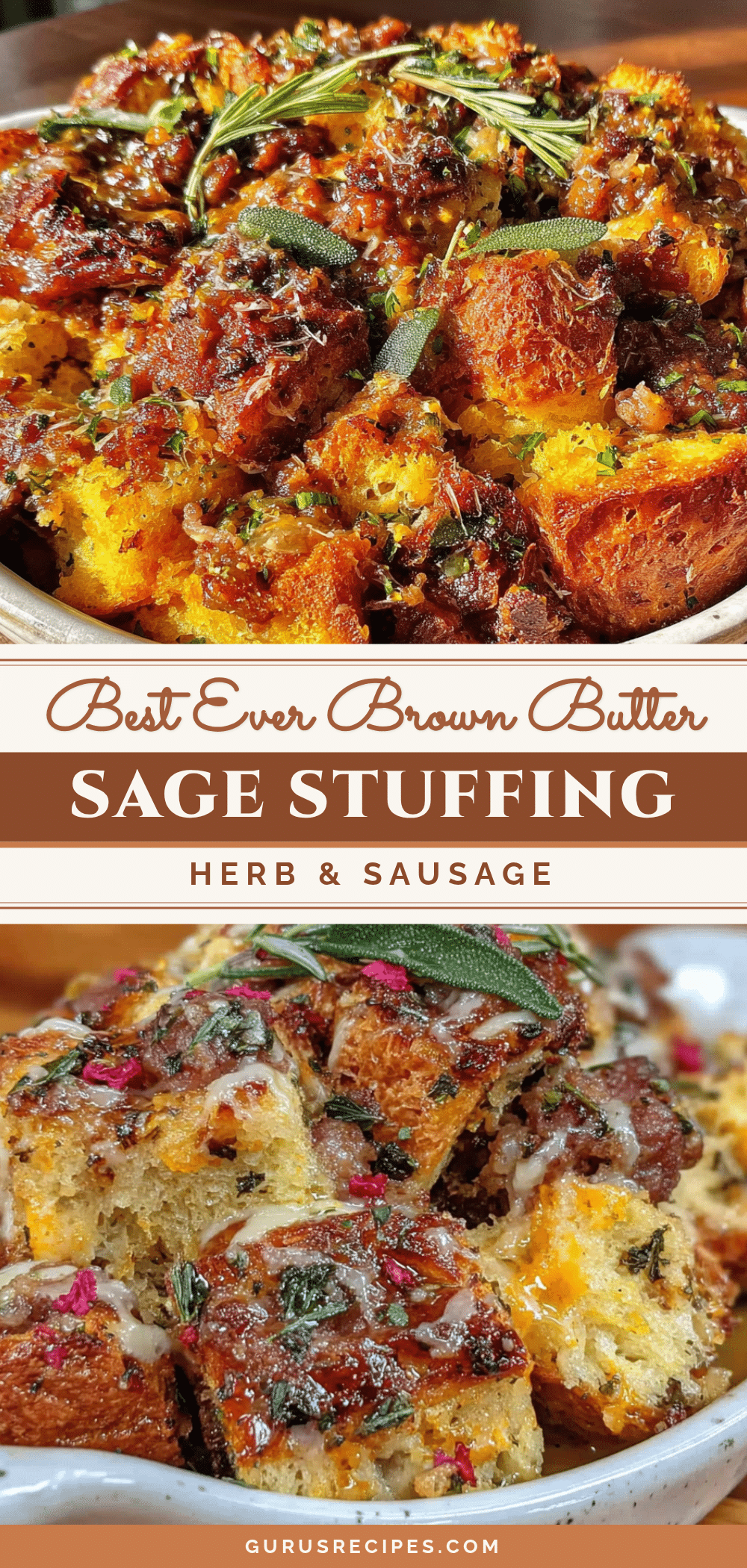

Best Brown Butter Sage Sausage Stuffing Recipe
This brown butter sage sausage stuffing is the recipe that converted a skeptic. Nutty brown butter, crispy fried sage, and savory sausage create layers of flavor with perfectly textured bread—crispy edges and a tender center.
- Total Time: 1 hour
- Yield: 8 servings 1x
Ingredients
- 1 loaf (about 1 pound) good-quality bread, cut into 1-inch cubes
- 1/2 cup (1 stick) unsalted butter
- 1 pound sweet Italian sausage, casings removed
- 1 large yellow onion, diced
- 3 celery stalks, diced
- 1/2 cup fresh sage leaves, roughly chopped, plus extra whole leaves for garnish
- 2 cups low-sodium chicken or turkey broth
- 2 large eggs, lightly beaten
- 1 teaspoon kosher salt, plus more to taste
- 1/2 teaspoon freshly ground black pepper
- Optional: 1/2 cup chopped fresh parsley for garnish
Instructions
- Preheat your oven to 350°F (175°C). Spread the bread cubes in a single layer on a large baking sheet. Toast them for 10-12 minutes, stirring halfway through, until they are dry and lightly golden around the edges. Let the cubes cool completely.
- In a large skillet or Dutch oven, cook the sausage over medium-high heat. Break it up into small crumbles. Cook for 6-8 minutes, until browned and cooked through. Use a slotted spoon to transfer the sausage to a plate, leaving about 1 tablespoon of rendered fat in the pan.
- Reduce the heat to medium and add the butter to the same pan. Let it melt completely, swirling occasionally. The butter will foam, then subside, and brown specks will form at the bottom. This takes about 4-5 minutes. When it smells nutty and the specks are deep golden brown, it is ready.
- Immediately add the fresh sage leaves to the brown butter. They will sizzle and crisp up in about 30 seconds. Use a slotted spoon to transfer the crispy sage to a paper towel-lined plate. Set aside for garnish.
- Add the diced onion and celery to the brown butter remaining in the pan. Cook over medium heat, stirring occasionally, for 6-8 minutes, until softened and translucent. Season with a pinch of salt and pepper.
- In a large mixing bowl, combine the toasted bread cubes, cooked sausage, and the softened onion-celery mixture. Toss gently to distribute evenly.
- In a separate small bowl, whisk together the chicken broth, beaten eggs, 1 teaspoon kosher salt, and 1/2 teaspoon black pepper. Pour this mixture evenly over the bread mixture. Gently fold together until the liquid is mostly absorbed. Let it sit for 5 minutes.
- Transfer the stuffing to a greased 9×13-inch baking dish. Spread into an even layer. For a softer stuffing, cover with foil; for crispy edges and a golden top, leave uncovered.
- Bake for 35-40 minutes, until the top is golden brown and the edges are crisp. If covered, remove foil for the last 10-15 minutes. Internal temperature should reach 165°F (74°C).
- Let the stuffing rest for 5-10 minutes before serving. Garnish with reserved crispy sage leaves and fresh parsley if using.
Notes
Do not skip toasting the bread—it prevents sogginess. Watch the brown butter carefully; it can burn quickly. For extra crispy edges, use a metal baking pan. This stuffing can be assembled a day ahead and refrigerated; add 10-15 minutes to baking time.
- Prep Time: 20 minutes
- Cook Time: 40 minutes
- Category: Side Dish
- Cuisine: American
Nutrition
- Serving Size: 1 serving (about 1 c
- Calories: 385
- Sugar: 4
- Sodium: 720
- Fat: 22
- Saturated Fat: 10
- Carbohydrates: 32
- Fiber: 2
- Protein: 14
Keywords: stuffing, brown butter, sage, sausage, Thanksgiving, holiday, side dish, bread stuffing