
Introduction
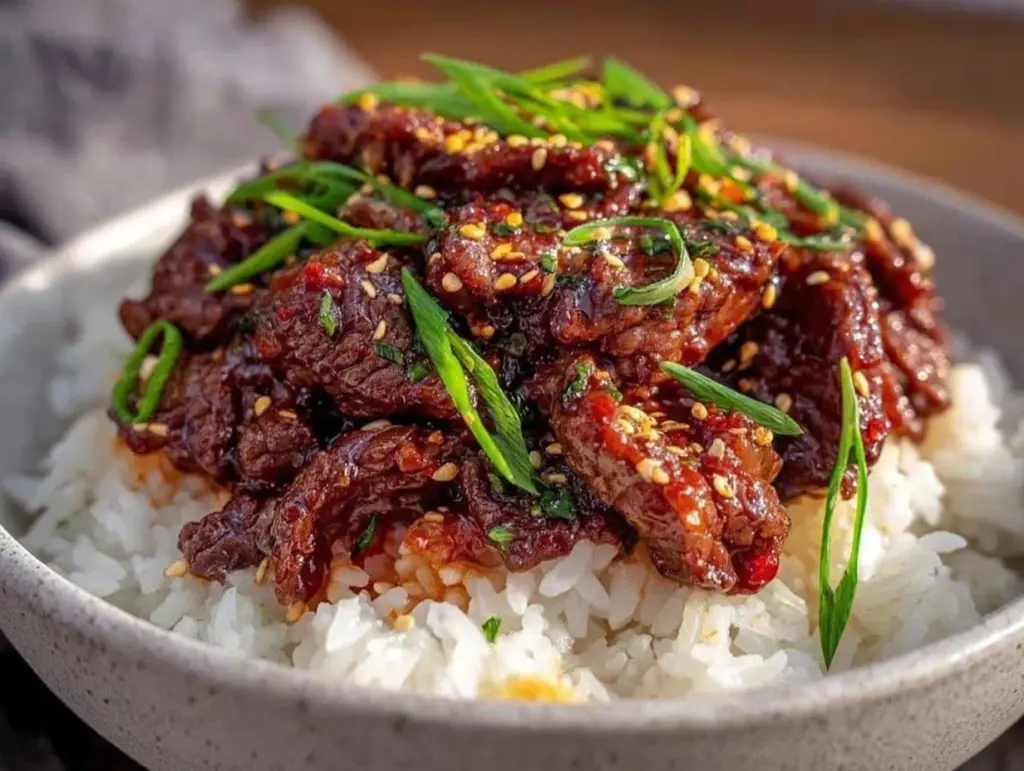
“You have to try this Korean beef bowl,” my coworker said one afternoon, sliding a container across the table. I was skeptical at first — spicy sauces and Korean flavors weren’t exactly my everyday go-to. But honestly, that first bite was a total surprise. The beef was tender and savory, with just the right kick from the gochujang sauce that lingered without overpowering. It wasn’t some complicated, hours-long recipe either—more like a quick fix after a long day, but somehow it felt special enough to share with guests. That quiet moment of realizing this simple dish could pack such a flavorful punch is what got me hooked.
I started making it multiple times a week, tweaking the sauce balance here and there, trying it over rice, noodles, even in a wrap. Each time, it hit the spot perfectly. It’s that kind of recipe that sits comfortably between quick weeknight dinners and something you proudly bring to a casual get-together. Plus, it’s endlessly customizable, which means it fits whatever you have on hand or your mood that day. This Flavorful Korean Beef Bowl with Spicy Gochujang Sauce became a quiet staple in my kitchen, and I think you’ll feel the same once you give it a go.
Why You’ll Love This Recipe
After testing this recipe dozens of times, I’ve come to appreciate what makes it stand out in the crowded world of Korean-inspired dishes. It’s straightforward but doesn’t sacrifice flavor for speed, which is honestly refreshing.
- Quick & Easy: Ready in under 30 minutes, which is perfect for those busy evenings when you want something satisfying without a ton of fuss.
- Simple Ingredients: Uses pantry staples and fresh basics you likely already have, with no need for a special trip to the Asian market.
- Perfect for Weeknight Dinners or Casual Entertaining: It’s filling and flavorful enough to impress without stress.
- Crowd-Pleaser: The spicy-sweet gochujang sauce gets raves from both spice lovers and those just warming up to Korean flavors.
- Unbelievably Delicious: The tender beef combined with the punchy sauce and fresh garnishes hits all the right notes — savory, sweet, spicy, and umami.
What makes this recipe different? It’s the careful balance of the gochujang sauce—spicy but not overwhelming—and the quick stir-fry method that keeps the beef juicy and tender. I’ve also found that using a little sesame oil at the end really brings the flavors together in a way that feels authentic yet approachable. This isn’t just another Korean beef bowl; it’s the one I trust to deliver every time, whether I’m feeding myself on a solo night or a small gathering.
What Ingredients You Will Need
This recipe uses simple, wholesome ingredients to deliver bold flavor and satisfying texture without the fuss. Most are pantry staples, with a few fresh touches that make a big impact.
- For the Beef and Marinade:
- 1 lb (450 g) ground beef (80/20 blend recommended for juiciness)
- 3 cloves garlic, minced
- 1 tbsp fresh ginger, grated (adds warmth and depth)
- 2 tbsp soy sauce (I like Kikkoman for its balance)
- 1 tbsp brown sugar (balances the spice)
- 1 tsp sesame oil (to finish for nutty aroma)
- For the Spicy Gochujang Sauce:
- 2 tbsp gochujang (Korean chili paste; adjust to taste)
- 1 tbsp rice vinegar (brightens the sauce)
- 1 tbsp honey or maple syrup (adds subtle sweetness)
- 1 tbsp water (to thin the sauce slightly)
- For Serving and Garnishes:
- Cooked white or brown rice (about 3 cups cooked)
- 1 cup shredded carrots (for crunch)
- 2 green onions, thinly sliced
- 1 tsp toasted sesame seeds
- Optional: Kimchi or pickled radish for extra zing
If you want a gluten-free version, swap soy sauce with tamari. Also, feel free to swap ground beef for ground turkey or chicken if you prefer leaner meat. For a vegetarian spin, lentils or sautéed mushrooms can be delicious substitutes.
Equipment Needed
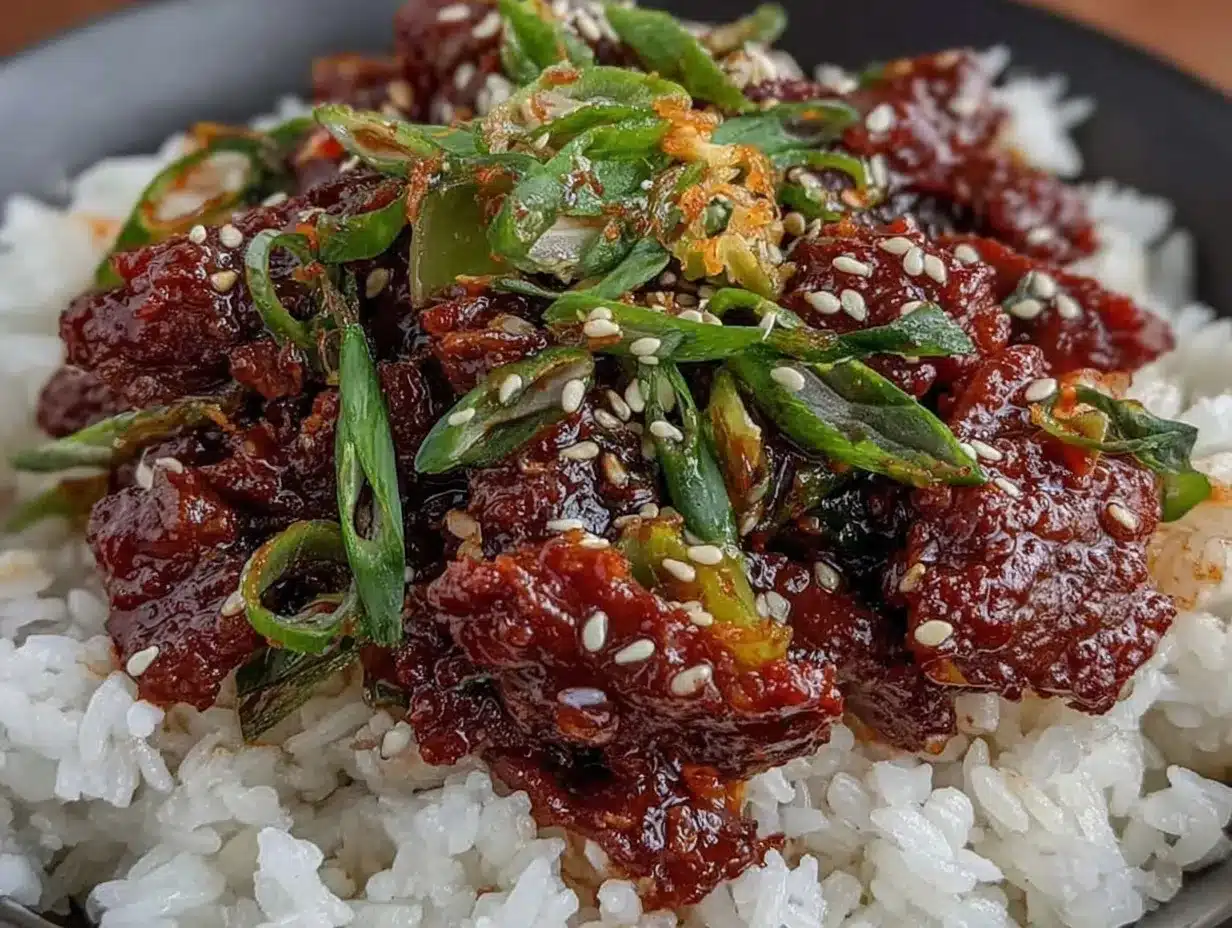
- Large skillet or non-stick frying pan – A 12-inch pan works well for even cooking and browning the beef.
- Mixing bowl – For combining the marinade and sauce ingredients.
- Measuring spoons and cups – To keep the seasoning balanced.
- Rice cooker or pot – For perfectly cooked rice every time. I personally rely on a rice cooker for convenience, but a heavy-bottomed pot with a tight lid also works fine.
- Spatula or wooden spoon – For breaking up the beef and stirring.
Don’t have a skillet? A wok or sauté pan is a great alternative for quick stir-frying. If you’re budget-conscious, any sturdy frying pan can get the job done; just make sure it’s hot enough before adding the beef to avoid steaming.
Preparation Method
- Prepare the sauce: In a small bowl, whisk together 2 tablespoons gochujang, 1 tablespoon rice vinegar, 1 tablespoon honey, and 1 tablespoon water until smooth. Set aside. (This mixture is the heart of the dish so taste and adjust sweetness or spice here.)
Estimated time: 3 minutes. - Mix the marinade: In a medium bowl, combine the ground beef with minced garlic, grated ginger, soy sauce, and brown sugar. Stir well to coat the beef evenly. (If you have time, let it sit for 10 minutes to deepen flavors.)
Estimated time: 5 minutes. - Cook the beef: Heat your skillet over medium-high heat. Once hot, add the marinated beef, breaking it up with your spatula. Cook until browned and cooked through, about 7-8 minutes. (You’ll know it’s done when no pink remains and it smells fragrant.) Drain excess fat if needed.
Estimated time: 8 minutes. - Add the sauce: Pour the prepared gochujang sauce over the cooked beef. Stir to combine and cook for another 2 minutes so the flavors meld and the sauce thickens slightly. Finish by drizzling the teaspoon of sesame oil and giving it a final stir.
Estimated time: 3 minutes. - Prepare the bowls: Scoop cooked rice into serving bowls. Top with the Korean beef mixture, shredded carrots, sliced green onions, and a sprinkle of toasted sesame seeds. Add kimchi or pickled radish if you like an extra kick.
Estimated time: 5 minutes.
Pro tip: If the sauce seems too thick, add a splash of water or broth to loosen it. Also, letting the beef rest for a minute off the heat helps the juices redistribute, making each bite juicy.
Cooking Tips & Techniques
When you’re cooking ground beef for a dish like this, keeping it juicy and flavorful is key. I’ve learned that adding the marinade right at the start helps the flavors seep in. Also, don’t overcrowd the pan—cook the beef in batches if needed to get a nice sear rather than steaming.
Another trick is to toast your sesame seeds in a dry pan before garnishing. It brings out the nutty aroma that really complements the gochujang’s heat. When working with gochujang, start small—this chili paste can be potent, and you want that balance of spicy and sweet, not just heat.
Timing matters too. While the beef simmers in the sauce, multitask by prepping your garnishes or warming your rice. That way, everything comes together hot and fresh. And honestly, a quick stir now and then while the sauce thickens makes all the difference—nothing worse than burnt bits in the pan!
Variations & Adaptations
This Korean beef bowl is pretty flexible, so you can easily tailor it to your taste or dietary needs.
- Spicy Level: Adjust the gochujang amount or add a pinch of red pepper flakes if you want more heat. For a milder version, reduce the chili paste and add a splash of soy sauce for depth.
- Protein Swaps: Try ground turkey, chicken, or even thinly sliced steak strips instead of ground beef. For a vegetarian option, sautéed mushrooms or lentils make great hearty fillers.
- Cooking Methods: If you prefer, you can cook the beef mixture in a slow cooker on low for 3-4 hours to develop rich flavors without constant attention.
- Flavor Twists: Add a splash of orange juice or zest to the sauce for a bright citrus note. Or toss in some sautéed spinach or bok choy for greens.
One of my personal favorites is adding a fried egg on top for that luscious yolk to mix in—makes it feel like a proper Korean bibimbap without the fuss. For a side, homemade crusty rosemary bread pairs surprisingly well here, soaking up any extra sauce.
Serving & Storage Suggestions
Serve this Korean beef bowl warm, straight from the pan onto rice for the best taste and texture. Present with fresh garnishes like sliced green onions and sesame seeds to add that pop of color and crunch. A side of kimchi or some quick pickled vegetables also complements the spicy-sweet flavors beautifully.
Leftovers store well in an airtight container in the fridge for up to 3 days. To reheat, microwave gently or warm in a skillet over medium-low heat with a splash of water to keep the beef moist. Over time, the flavors meld even more, so it’s perfect for meal prep.
For longer storage, freeze the cooked beef mixture separately from the rice in freezer-safe containers for up to 2 months. Thaw overnight in the fridge before reheating.
Nutritional Information & Benefits
This bowl is a balanced mix of protein, carbs, and a bit of healthy fat. Ground beef provides iron and zinc, essential for energy and immunity. Gochujang, made from fermented chili peppers, adds probiotics and antioxidants, supporting gut health and metabolism.
Using brown rice boosts fiber and keeps you fuller longer, which is great if you want a wholesome meal. You can easily make this gluten-free by swapping soy sauce for tamari. Just be mindful of gochujang brands, as some contain wheat.
Overall, it’s a satisfying dish that feeds both body and soul without tipping into heavy or greasy territory. A realistic, flavorful choice when you want something nourishing but not complicated.
Conclusion
This Flavorful Korean Beef Bowl with Spicy Gochujang Sauce has quietly become my go-to for quick dinners that don’t feel rushed or boring. I love how it strikes a balance between bold flavors and simple prep, making it a recipe you can trust on any night. The spicy kick paired with the tender beef and fresh garnishes feels like a small celebration on a busy weekday.
Feel free to tweak it to your liking—whether you like it hotter, sweeter, or with a different protein, it’s forgiving and adaptable. It’s become a dish I’m happy to share with friends, especially when paired with a loaf of Italian herb and cheese bread or a simple side salad.
Give it a try, and I’d love to hear how you make it your own!
FAQs
Can I use sliced beef instead of ground beef for this Korean beef bowl?
Absolutely! Thinly sliced ribeye or sirloin works great. Just cook it quickly over high heat until browned, then toss with the sauce as usual.
How spicy is gochujang, and can I substitute it?
Gochujang has a moderate heat with a sweet and savory depth. If you can’t find it, a mix of chili paste and a bit of miso can mimic the flavor, but the authentic taste is hard to beat.
Is this recipe gluten-free?
It can be! Use tamari instead of soy sauce and double-check your gochujang brand for gluten content. Many brands offer gluten-free options.
Can I make this recipe ahead of time?
Yes, the beef mixture keeps well refrigerated for up to 3 days and freezes nicely. Just reheat gently and serve with freshly cooked rice.
What are good side dishes to serve with this Korean beef bowl?
Try simple steamed vegetables, kimchi, or a fresh cucumber salad. For bread lovers, pairing it with something like garlic parmesan focaccia adds a nice contrast.
Pin This Recipe!
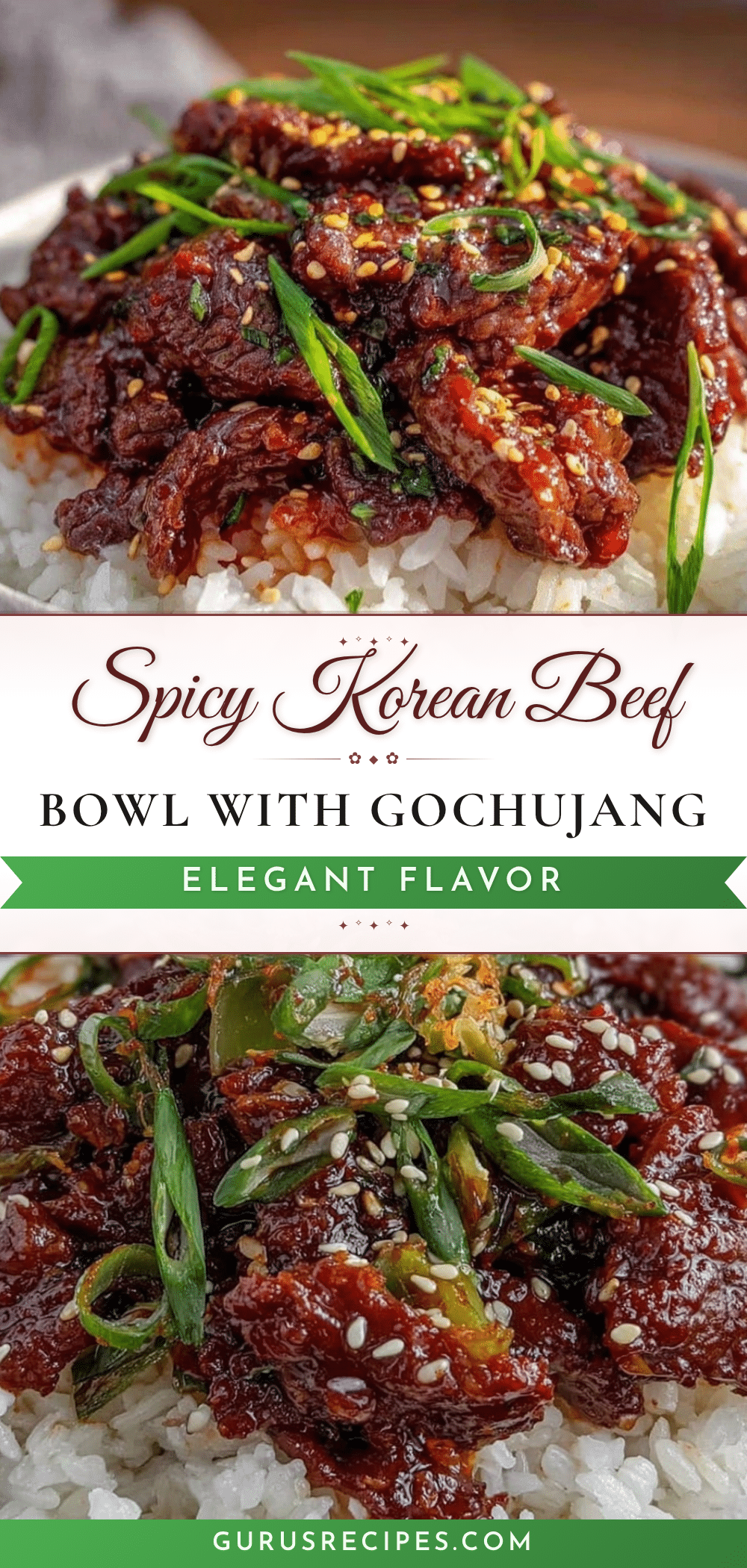

Flavorful Korean Beef Bowl Recipe with Spicy Gochujang Sauce
A quick and easy Korean beef bowl featuring tender ground beef in a spicy-sweet gochujang sauce, served over rice with fresh garnishes. Perfect for weeknight dinners or casual entertaining.
- Total Time: 21 minutes
- Yield: 4 servings 1x
Ingredients
- 1 lb (450 g) ground beef (80/20 blend recommended for juiciness)
- 3 cloves garlic, minced
- 1 tbsp fresh ginger, grated
- 2 tbsp soy sauce (or tamari for gluten-free)
- 1 tbsp brown sugar
- 1 tsp sesame oil (to finish)
- 2 tbsp gochujang (Korean chili paste; adjust to taste)
- 1 tbsp rice vinegar
- 1 tbsp honey or maple syrup
- 1 tbsp water
- Cooked white or brown rice (about 3 cups cooked)
- 1 cup shredded carrots
- 2 green onions, thinly sliced
- 1 tsp toasted sesame seeds
- Optional: Kimchi or pickled radish for extra zing
Instructions
- Prepare the sauce: In a small bowl, whisk together 2 tablespoons gochujang, 1 tablespoon rice vinegar, 1 tablespoon honey, and 1 tablespoon water until smooth. Set aside.
- Mix the marinade: In a medium bowl, combine the ground beef with minced garlic, grated ginger, soy sauce, and brown sugar. Stir well to coat the beef evenly. Let sit for 10 minutes if time allows.
- Cook the beef: Heat a skillet over medium-high heat. Add the marinated beef, breaking it up with a spatula. Cook until browned and cooked through, about 7-8 minutes. Drain excess fat if needed.
- Add the sauce: Pour the prepared gochujang sauce over the cooked beef. Stir to combine and cook for another 2 minutes until the sauce thickens slightly. Drizzle with sesame oil and stir again.
- Prepare the bowls: Scoop cooked rice into serving bowls. Top with the Korean beef mixture, shredded carrots, sliced green onions, and toasted sesame seeds. Add kimchi or pickled radish if desired.
Notes
If the sauce is too thick, add a splash of water or broth to loosen it. Let the beef rest for a minute off the heat to redistribute juices. Toast sesame seeds before garnishing for enhanced flavor. Adjust gochujang amount to control spiciness. For gluten-free, use tamari instead of soy sauce and check gochujang brand for gluten content.
- Prep Time: 8 minutes
- Cook Time: 13 minutes
- Category: Main Course
- Cuisine: Korean
Nutrition
- Serving Size: 1 bowl (approximatel
- Calories: 450
- Sugar: 8
- Sodium: 700
- Fat: 28
- Saturated Fat: 10
- Carbohydrates: 25
- Fiber: 2
- Protein: 28
Keywords: Korean beef bowl, gochujang sauce, spicy beef, quick dinner, weeknight meal, Korean recipe, ground beef, easy Korean food