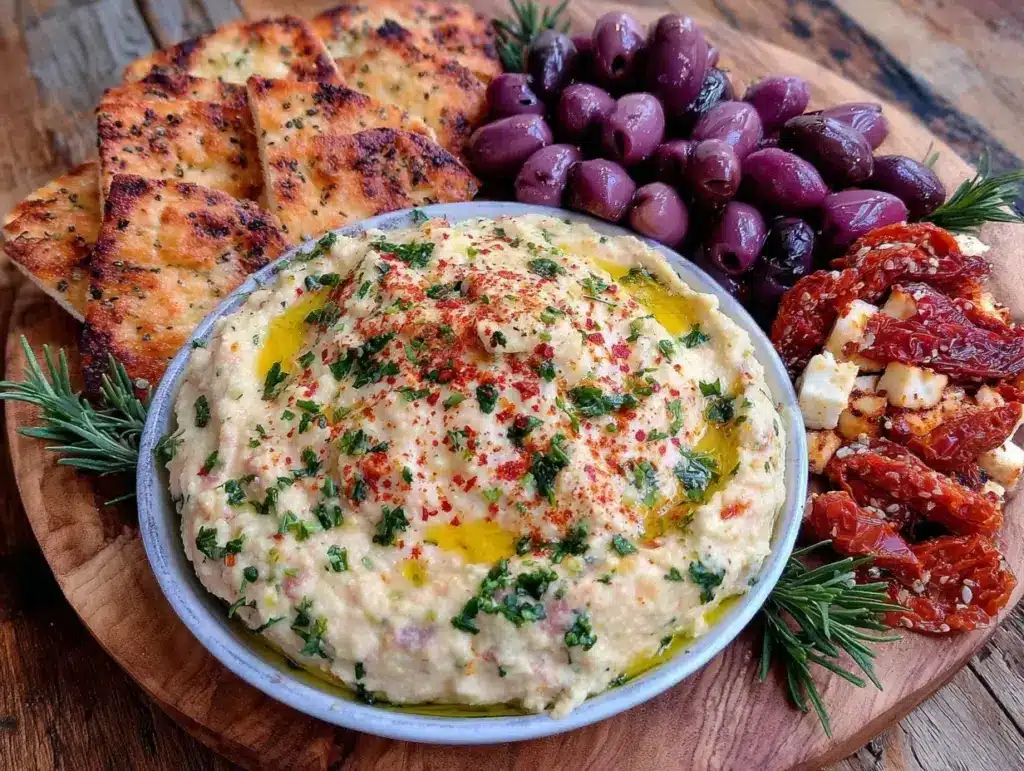
“You won’t believe how simple this turned out,” my friend said between bites as we sat around my cluttered kitchen table, laughter filling the air. That night, the idea of a Mediterranean charcuterie board with homemade hummus wasn’t some fancy, planned affair. It was born from a last-minute craving and an empty fridge that begged for creativity rather than a grocery run. Honestly, I was skeptical at first—charcuterie boards always seemed like those intricate, high-effort spreads reserved for special occasions or foodies with endless time. But this? This was different.
Gathering a handful of olives, some crisp cucumbers, a few wedges of tangy feta, and that creamy, garlicky hummus I whipped up in under 10 minutes, I arranged everything on a wooden board with zero fuss. The flavors just clicked. The salty, the fresh, the creamy, and the crunchy all mingled perfectly, and the best part was how easy it was to pull together. Since then, this Mediterranean charcuterie board has become my go-to for casual get-togethers, quiet nights in, and when I want to impress without breaking a sweat.
There’s something comforting about the mix of vibrant colors and bold flavors that feels like a small escape to the coast, even in a busy city kitchen. This recipe stuck with me because it’s proof that delicious and impressive don’t have to mean complicated. It’s a taste of something soulful and fresh, built with simple ingredients and a little bit of love.
Why You’ll Love This Recipe
After making this Mediterranean charcuterie board with homemade hummus several times, I can honestly say it’s one of those recipes that checks all the boxes for effortless entertaining and everyday enjoyment. Here’s why it’s become a staple in my kitchen:
- Quick & Easy: From start to finish, you can have this ready in under 30 minutes—perfect for last-minute plans or busy evenings.
- Simple Ingredients: Most of the items are pantry staples or easily found at your local market, no specialty shopping required.
- Perfect for Any Occasion: Whether you’re hosting a small brunch, a casual wine night, or just craving a cozy dinner, it fits the bill.
- Crowd-Pleaser: The combination of fresh veggies, savory cheeses, and that homemade hummus always gets rave reviews from friends and family alike.
- Unbelievably Delicious: The creamy texture of the hummus paired with the tangy olives and crunchy pita chips creates a flavor harmony that’s honestly addictive.
What sets this apart from other boards is the homemade hummus—no bland store-bought stuff here. I blend fresh garlic, lemon, and tahini to get a silky, zesty dip that lifts every bite. Plus, the balance of colors and textures is just right; it’s not overwhelming but still feels special. This recipe makes you pause and savor each mouthful, closing your eyes for a second because, well, it’s just that good.
It’s the kind of recipe that proves you don’t need hours or fancy tools to create something memorable and satisfying. Honestly, it’s comfort food that feels light and fresh but still hits all the right notes. And if you want to pair it with some homemade bread, you might want to try my easy no-knead rosemary sea salt bread—it’s a perfect match.
What Ingredients You Will Need
This Mediterranean charcuterie board thrives on simple, wholesome ingredients that come together to deliver bold flavor and satisfying textures without any fuss. Most are pantry staples, and you can easily swap or add based on what you have on hand.
- For the Homemade Hummus:
- 1 can (15 oz / 425 g) chickpeas, drained and rinsed
- 3 tablespoons tahini (I recommend a well-blended brand like Soom for smoothness)
- 2 cloves garlic, minced (fresh is best for that punch!)
- Juice of 1 lemon (about 3 tablespoons, adds bright acidity)
- 3 tablespoons extra virgin olive oil (plus more for drizzling)
- 1/2 teaspoon ground cumin (adds warmth, but optional)
- Salt to taste
- 2-4 tablespoons cold water (for perfect creamy texture)
- For the Board:
- 1 cup mixed olives (green and Kalamata work great, pitted for convenience)
- 1 cucumber, sliced into rounds or sticks (refreshing crunch)
- 1 cup cherry tomatoes, halved (seasonal and juicy)
- 1/2 cup roasted red peppers, sliced (jarred is fine)
- 4-6 ounces feta cheese, cut into cubes or crumbled (creamy and tangy)
- Handful of toasted pine nuts or walnuts (adds a lovely nutty crunch)
- Pita bread or pita chips (warm pita is heavenly alongside hummus)
- Fresh herbs like parsley or mint for garnish (optional but freshens things up)
If you want to keep it gluten-free, swap pita for gluten-free crackers or crisp veggies. For a vegan board, just skip the feta or use a plant-based alternative. And if you’re feeling adventurous, adding some marinated artichokes or sun-dried tomatoes amps up the Mediterranean vibe.
Equipment Needed
Making this Mediterranean charcuterie board with homemade hummus doesn’t demand much in the way of fancy gadgets, which is honestly part of the charm.
- Food Processor or High-Speed Blender: Essential for getting that hummus ultra-smooth and creamy. I use a basic food processor, but a blender works too—just add a bit more water.
- Cutting Board and Sharp Knife: For prepping vegetables, cheese, and slicing pita bread.
- Serving Board or Platter: A wooden board adds rustic charm and makes presentation a breeze, but any large plate works.
- Small Bowls: For serving olives, nuts, and hummus separately on the board to keep things tidy.
If you don’t have a food processor, you can mash chickpeas with a fork or potato masher—it’ll be chunkier but still tasty. Investing in a good quality sharp knife makes prepping faster and safer. I once tried assembling this board with dull knives and let’s just say it slowed me down more than I expected!
Preparation Method
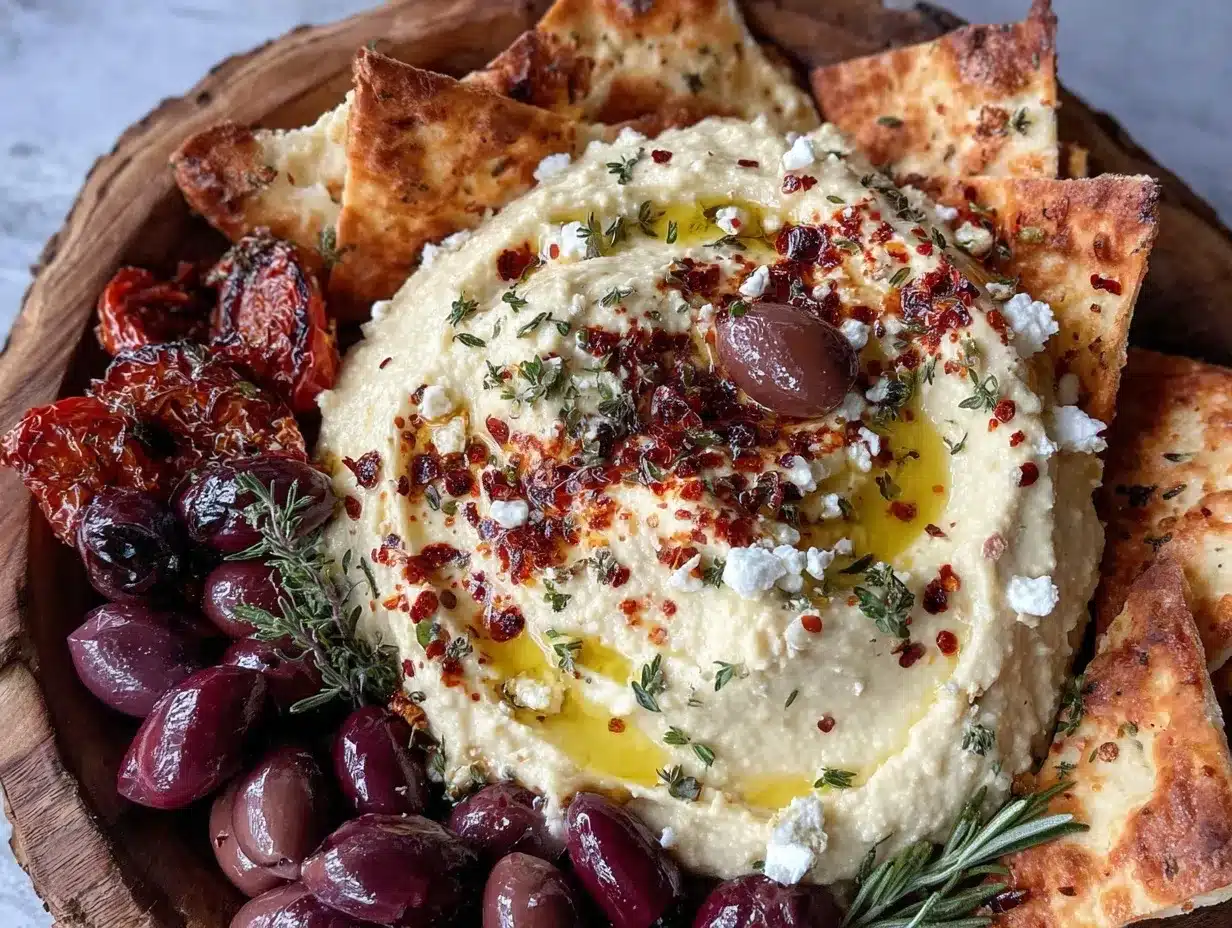
- Prepare the Hummus (10–15 minutes): In your food processor, combine the drained chickpeas, tahini, minced garlic, lemon juice, olive oil, cumin, and a pinch of salt. Pulse until the mixture starts to come together.
- Add cold water, a tablespoon at a time, while blending until you reach a smooth, creamy consistency. This usually takes 2–3 tablespoons. Taste and adjust salt or lemon juice if needed. The hummus should be velvety with a mild lemon-garlic kick.
- Prep the Vegetables and Cheese (10 minutes): Rinse and slice the cucumber into rounds or sticks. Halve the cherry tomatoes and cut the feta into bite-sized cubes or crumble it. Drain and slice the roasted red peppers if using.
- Toast the Nuts (optional, 5 minutes): In a dry skillet over medium heat, toast pine nuts or walnuts until fragrant and lightly golden, about 3–4 minutes, shaking the pan frequently to avoid burning.
- Warm the Pita: If using pita bread, warm it in a dry pan or oven for 3–5 minutes until soft and slightly toasted. Cut into triangles for easy dipping.
- Assemble the Board (5–10 minutes): On a large wooden board or platter, arrange small bowls of hummus and olives. Artfully place the cucumber slices, cherry tomatoes, roasted peppers, and feta around the bowls. Scatter toasted nuts and fresh herbs on top. Add pita triangles or chips along the edges.
- Final Touch: Drizzle a little olive oil over the hummus and sprinkle some smoked paprika or sumac for color and subtle smokiness (optional but adds a nice touch).
If your hummus feels too thick at any point, a splash of water or olive oil helps loosen it up. And don’t rush the assembly—it’s where the board really comes alive visually, which makes it even more inviting.
Cooking Tips & Techniques
Getting this Mediterranean charcuterie board just right means paying attention to a few little details I’ve learned the hard way. For example, when making hummus, don’t skip the cold water addition—it’s the secret to that silky texture instead of gritty paste.
Also, I once tried using canned chickpeas straight from the can without rinsing, and the hummus turned out too salty and a bit metallic. Always rinse and drain well.
When assembling the board, think about balance: aim for a mix of colors, textures, and flavors in every bite. Crunchy cucumbers next to creamy feta, salty olives with sweet roasted peppers—it’s the contrasts that make this so tasty.
If you’re short on time, prepping vegetables a day ahead and storing them in airtight containers helps speed things up. Just wait to assemble until right before serving to keep everything fresh.
Multitasking tip: while your hummus blends, toast nuts on the stove and prep veggies to maximize efficiency. And don’t forget to warm the pita last so it stays soft and inviting.
Lastly, using fresh lemon juice instead of bottled really brightens the hummus, and fresh garlic packs a punch. But if you’re wary of raw garlic, start with one small clove and adjust to taste.
Variations & Adaptations
This Mediterranean charcuterie board is super flexible, so you can tweak it to suit your mood, diet, or what’s in season.
- Vegan Version: Omit the feta or swap it for a vegan cheese alternative. Add extra veggies like grilled zucchini or marinated eggplant slices for more variety.
- Gluten-Free Option: Replace pita with gluten-free crackers or crisp veggie sticks like carrot and celery for dipping.
- Spicy Twist: Add a pinch of cayenne or smoked paprika to the hummus or serve with spicy harissa on the side for those who like a little heat.
- Seasonal Additions: In warmer months, toss in fresh figs or grapes. In cooler seasons, roasted beets or carrots add earthiness and color.
Personally, I once swapped chickpeas for white beans in the hummus and added roasted garlic instead of raw—it was smooth and mellow, a nice change when I wanted something less sharp.
If you’re feeling adventurous, try replacing the pine nuts with toasted almonds or pistachios for a different nutty note.
Serving & Storage Suggestions
This board is best enjoyed fresh at room temperature, so set it out about 20 minutes before serving. The flavors open up nicely when the hummus isn’t cold straight from the fridge.
Pair it with a crisp white wine or sparkling water with lemon for a refreshing combo. It also makes a great starter alongside hearty mains or as the centerpiece of a casual gathering.
Store leftover hummus in an airtight container in the fridge for up to 4 days. Veggies can be prepped in advance but keep them separate to avoid sogginess. Pita is best warmed fresh but can be wrapped in foil and reheated in the oven.
Reheating hummus isn’t usually recommended, but if you want to serve it warm, gently heat it in a microwave-safe bowl for 20-second intervals, stirring in between to keep it creamy.
Flavors meld beautifully if you prepare the hummus a day ahead, making it a perfect make-ahead component for busy hosts.
Nutritional Information & Benefits
This Mediterranean charcuterie board with homemade hummus is not just tasty but packs a nutritional punch. Chickpeas are high in protein and fiber, helping you feel fuller longer. Olive oil provides heart-healthy monounsaturated fats, while fresh veggies add vitamins, minerals, and antioxidants.
Feta cheese brings calcium and a tangy flavor, though if you’re watching sodium, you can opt for a lower-salt cheese or reduce the amount.
This recipe is naturally gluten-free if you skip the pita or use gluten-free options, and can be made vegan by omitting dairy. It’s a balanced mix of carbs, fats, and proteins that works well for a light meal or snack.
Personally, I appreciate how this board feels indulgent yet fresh—perfect when I want something nourishing without feeling weighed down.
Conclusion
This Mediterranean charcuterie board with homemade hummus is one of those recipes that feels like a little celebration every time you make it. It’s simple enough to pull off on a weeknight but pretty enough to impress guests without a ton of stress. I love how it brings together fresh, bold flavors and textures that keep you coming back for more.
Feel free to customize it with your favorite olives, cheeses, or veggies to make it your own. And if you want to add a sweet finish to your gathering, pairing this with a homemade fresh strawberry galette is pure magic.
Give this recipe a try and let me know how you like to build your boards. Sharing these simple joys of food is what makes cooking so rewarding.
FAQs
Can I make the hummus ahead of time?
Absolutely! Hummus tastes even better after resting for a few hours or overnight in the fridge. Just bring it to room temperature before serving.
What can I use if I don’t have tahini?
You can substitute tahini with smooth peanut butter or almond butter in a pinch, though the flavor will be different. Some also skip it entirely and add extra olive oil.
How do I keep pita bread soft for serving?
Warm pita in a dry skillet or oven just before serving. Wrap in a clean kitchen towel to keep it soft and warm.
Is this recipe suitable for a vegan diet?
Yes! Simply omit the feta cheese or use a vegan cheese alternative, and double-check your pita is vegan-friendly.
What’s the best way to store leftovers?
Store hummus in an airtight container in the fridge for up to 4 days. Keep veggies and pita separate in containers to maintain freshness.
Pin This Recipe!
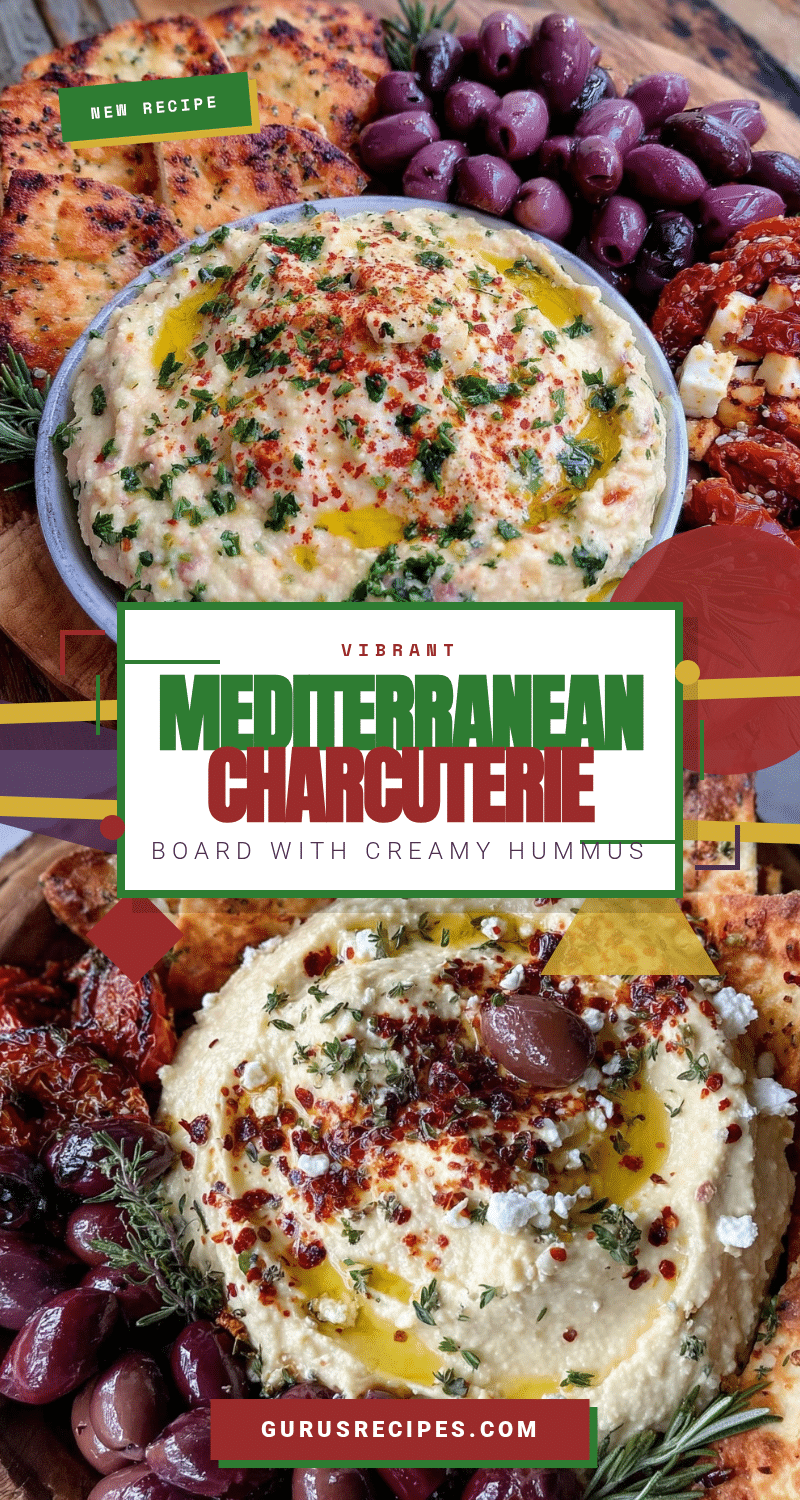

Mediterranean Charcuterie Board with Homemade Hummus
A quick and easy Mediterranean charcuterie board featuring homemade creamy hummus, fresh veggies, savory cheeses, and crunchy nuts, perfect for casual gatherings or impressing guests.
- Total Time: 25 minutes
- Yield: 4 servings 1x
Ingredients
- 1 can (15 oz / 425 g) chickpeas, drained and rinsed
- 3 tablespoons tahini
- 2 cloves garlic, minced
- Juice of 1 lemon (about 3 tablespoons)
- 3 tablespoons extra virgin olive oil (plus more for drizzling)
- 1/2 teaspoon ground cumin (optional)
- Salt to taste
- 2–4 tablespoons cold water
- 1 cup mixed olives (green and Kalamata, pitted)
- 1 cucumber, sliced into rounds or sticks
- 1 cup cherry tomatoes, halved
- 1/2 cup roasted red peppers, sliced
- 4–6 ounces feta cheese, cubed or crumbled
- Handful of toasted pine nuts or walnuts
- Pita bread or pita chips
- Fresh herbs like parsley or mint for garnish (optional)
Instructions
- Prepare the hummus: In a food processor, combine drained chickpeas, tahini, minced garlic, lemon juice, olive oil, cumin, and salt. Pulse until mixture starts to come together.
- Add cold water, one tablespoon at a time, blending until smooth and creamy (2-3 tablespoons). Taste and adjust salt or lemon juice as needed.
- Prep the vegetables and cheese: Rinse and slice cucumber, halve cherry tomatoes, cut feta into cubes or crumble, and slice roasted red peppers.
- Toast nuts (optional): In a dry skillet over medium heat, toast pine nuts or walnuts for 3-4 minutes until fragrant and lightly golden.
- Warm the pita bread in a dry pan or oven for 3-5 minutes until soft and slightly toasted. Cut into triangles.
- Assemble the board: Arrange small bowls of hummus and olives on a large wooden board or platter. Place cucumber slices, cherry tomatoes, roasted peppers, and feta around the bowls. Scatter toasted nuts and fresh herbs on top. Add pita triangles or chips along the edges.
- Drizzle olive oil over the hummus and sprinkle smoked paprika or sumac for color and subtle smokiness (optional).
Notes
If you don’t have a food processor, mash chickpeas with a fork or potato masher for a chunkier hummus. Use fresh lemon juice and garlic for best flavor. Toast nuts carefully to avoid burning. Warm pita just before serving to keep it soft. Hummus can be made ahead and tastes better after resting. For gluten-free, substitute pita with gluten-free crackers or veggies. For vegan, omit feta or use plant-based cheese.
- Prep Time: 15 minutes
- Cook Time: 10 minutes
- Category: Appetizer
- Cuisine: Mediterranean
Nutrition
- Serving Size: Approximately 1/4 of
- Calories: 320
- Sugar: 4
- Sodium: 420
- Fat: 22
- Saturated Fat: 4
- Carbohydrates: 24
- Fiber: 7
- Protein: 9
Keywords: Mediterranean charcuterie board, homemade hummus, easy appetizer, healthy snack, vegetarian, gluten-free option, vegan option