The butcher at the Saturday farmers’ market watched me circle his stall for the third time. I kept picking up prime ribs, checking the price, and putting them back like they might bite. He didn’t say anything at first. Then he reached under the counter, pulled out a three-bone roast wrapped in brown paper, and slid it across the counter. “This one’s been waiting for someone who’s nervous,” he said, tapping the package. “You look like you need a win.”
I laughed, honestly, because he wasn’t wrong. I’d been cooking for years, but a prime rib roast felt different. It felt like the kind of dish you only get right if you’ve done it a hundred times. But that roast came home with me anyway, wrapped in butcher paper and a little bit of pressure. I spent the next two days reading, testing, and texting my old chef friend Maria, who finally sent me a voice note that just said, “Reverse sear. Trust me. Low heat, then blast it.”
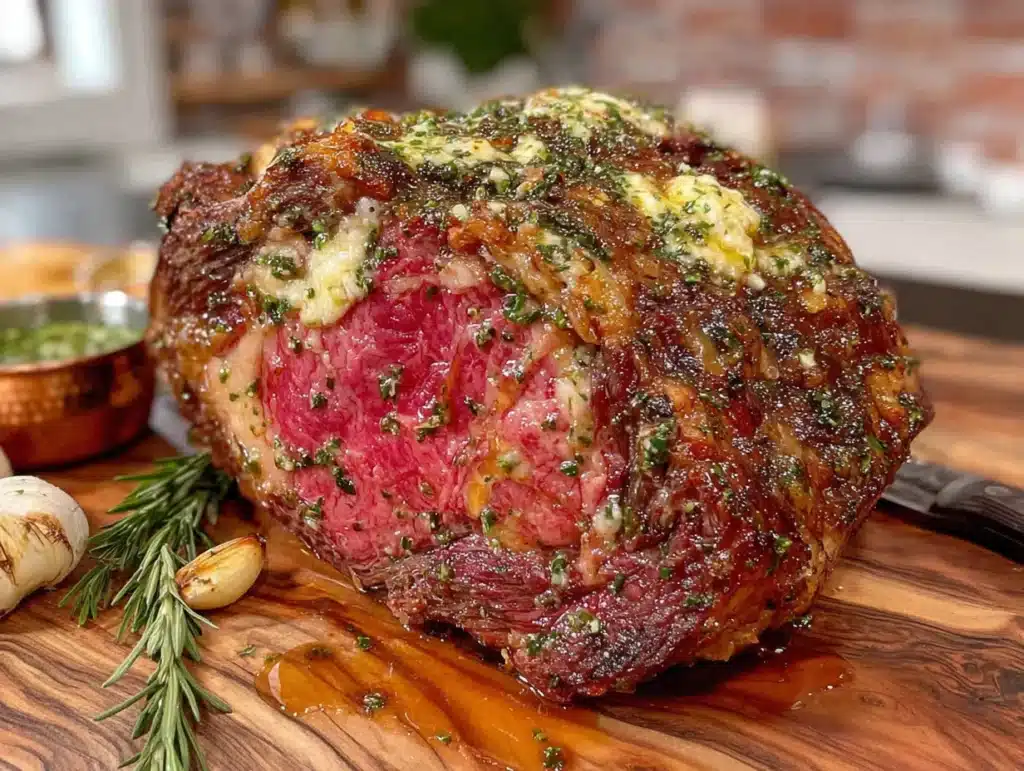
That first bite—cooked medium-rare edge to edge, with a garlic herb butter crust that shattered when I cut into it—was the moment I stopped being scared of expensive meat. The butcher was right. I needed a win. And this perfect garlic herb butter prime rib roast reverse sear recipe became exactly that. Let me tell you, there’s something about pulling a perfectly cooked roast out of the oven that makes you feel like you’ve got this whole cooking thing figured out. Maybe you’ve been there—staring at a beautiful piece of meat, wondering if today’s the day you finally nail it.
Why You’ll Love This Recipe
This isn’t just another prime rib recipe. I’ve tested this method at least a dozen times, tweaking temperatures and butter ratios until I got it exactly right. The reverse sear technique is chef-tested and family-approved, which means it works for Christmas dinner or a random Tuesday when you’re feeling ambitious.
- Foolproof Results: The reverse sear method cooks the roast low and slow first, then sears it at high heat. No more gray bands of overcooked meat around a tiny pink center.
- Simple Ingredients: You don’t need a dozen exotic spices. Butter, garlic, fresh herbs, salt, and pepper do all the heavy lifting.
- Perfect for Special Occasions: Whether it’s a holiday dinner, anniversary, or Sunday supper, this roast steals the show.
- Crowd-Pleaser: Even folks who claim they don’t like red meat ask for seconds. The herb butter adds richness without being overwhelming.
- Unbelievably Delicious: The crust is buttery and crisp, the inside is tender enough to cut with a fork, and every bite tastes like you spent hours in the kitchen.
What makes this recipe different is the garlic herb butter. Most recipes just rub the outside with oil or salt. I make a compound butter that gets slathered all over the roast before it goes into the oven, and then again right before the sear. It creates a crust that’s almost caramelized, with little pockets of roasted garlic and herbs in every slice. This isn’t just good—it’s the kind of roast that makes you close your eyes after the first bite.
What Ingredients You Will Need
This recipe uses simple, high-quality ingredients to deliver bold flavor and that perfect texture. Most of these are pantry staples or easy to find at any grocery store. Here’s what you need and why each one matters.
For the Garlic Herb Butter
- Unsalted butter, softened (1 cup / 2 sticks) – Unsalted lets you control the salt level. I prefer Kerrygold for its rich flavor, but any good-quality butter works.
- Garlic cloves, minced (6 to 8 cloves) – Fresh garlic is non-negotiable here. Pre-minced jarred garlic has a sharp, almost bitter taste that doesn’t mellow the same way.
- Fresh rosemary, finely chopped (2 tablespoons) – Go for the fresh stuff. Dried rosemary can be woody and overpowering.
- Fresh thyme leaves (1 tablespoon) – Strip the leaves off the stems. No one wants a twig in their butter.
- Fresh parsley, finely chopped (2 tablespoons) – Adds color and a fresh note that cuts through the richness.
- Kosher salt (1 teaspoon) – I use Diamond Crystal. It’s less salty by volume than Morton’s, so adjust if you’re using a different brand.
- Freshly ground black pepper (½ teaspoon) – Always fresh. Pre-ground pepper doesn’t have the same punch.
For the Prime Rib Roast
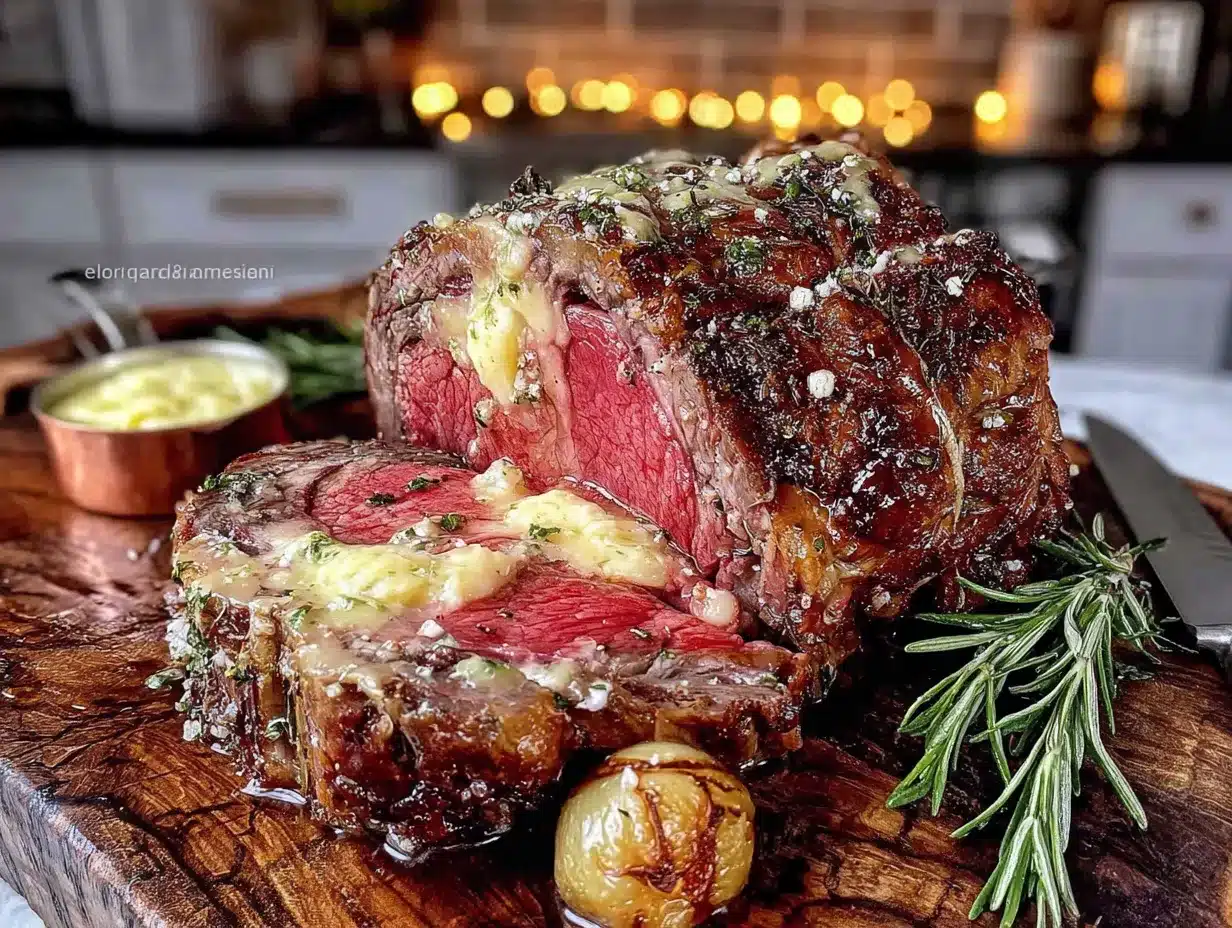
- Bone-in prime rib roast (4 to 5 pounds, 3 to 4 ribs) – Bone-in adds flavor and helps the meat cook more evenly. Look for one with good marbling—those white flecks of fat running through the meat.
- Kosher salt (2 teaspoons per pound of meat) – This is your dry brine. Don’t skip it.
- Freshly ground black pepper (1 teaspoon per pound of meat) – Be generous. The crust needs it.
- Olive oil (1 tablespoon) – Just enough to help the butter stick and to coat the pan for searing.
Ingredient Selection Tip: If you can, buy your prime rib from a butcher you trust. They’ll often trim and tie it for you, which saves time. Look for a roast with a thick fat cap—that fat renders during cooking and keeps the meat moist. For the herbs, I’ve used dried in a pinch, but fresh really does make a difference. The butter becomes more fragrant, and the herbs crisp up beautifully during the sear.
Substitution Guidance: If you’re dairy-free, you can use a high-quality vegan butter, but the crust won’t be quite as rich. No fresh herbs? Use 1 teaspoon each of dried rosemary and thyme, but add them to the butter at the beginning so they have time to rehydrate. For a smaller roast, scale the butter down proportionally—½ cup butter for a 2 to 3-pound roast.
Equipment Needed
You don’t need a professional kitchen to nail this recipe. Here’s what you’ll need, plus a few alternatives if you’re working with what you’ve got.
- Roasting pan with a rack – The rack lifts the roast so air circulates underneath, cooking it evenly. No rack? Roll up some aluminum foil into coils and place the roast on top.
- Instant-read thermometer – This is crucial. I’ve ruined more roasts than I’d like to admit by guessing. A digital one gives you an accurate reading in seconds. The Thermapen is my go-to, but any reliable digital thermometer works.
- Cast iron skillet or heavy-bottomed pan – For the final sear. Cast iron holds heat beautifully. If you don’t have one, a stainless steel skillet works, just make sure it’s preheated well.
- Mixing bowl – For the compound butter.
- Chef’s knife and cutting board – For mincing garlic and herbs.
- Kitchen twine – If your roast isn’t already tied, you’ll want to tie it between the bones to keep it compact and cook evenly.
- Aluminum foil – For tenting the roast while it rests.
Budget-Friendly Tip: You don’t need a fancy roasting pan. A rimmed baking sheet with a wire cooling rack works perfectly. I used that setup for years before I invested in a proper roasting pan. Also, if you don’t have a cast iron skillet, you can crank your oven to 500°F and sear the roast in the oven instead of on the stovetop.
Preparation Method
This method has two phases: the low-and-slow cook and the high-heat sear. Take your time with the first part—it’s where the magic happens.
Step 1: Dry Brine the Roast (Do This the Night Before)
Pat the prime rib roast dry with paper towels. Generously season all over with kosher salt—use about 2 teaspoons per pound. Don’t be shy. Place the roast on a wire rack set over a baking sheet, uncovered, and refrigerate for 12 to 24 hours. This dries out the surface, which helps create that incredible crust later. If you’re short on time, even 4 hours makes a difference.
Step 2: Make the Garlic Herb Butter
In a mixing bowl, combine the softened butter, minced garlic, rosemary, thyme, parsley, salt, and pepper. Mix until everything is evenly distributed. The butter should be spreadable but not melted. If it’s too soft, pop it in the fridge for 10 minutes. Set aside at room temperature while the roast comes to temperature.
Step 3: Bring the Roast to Room Temperature
About 2 hours before cooking, remove the roast from the fridge. Let it sit at room temperature, still on the rack. This step is non-negotiable—a cold roast cooks unevenly and takes longer. You want the internal temperature to come up slightly before it hits the oven.
Step 4: Preheat and Apply the Butter
Preheat your oven to 250°F (120°C). While it heats, rub the garlic herb butter all over the roast. Use your hands—get it into every crevice, under the fat cap, and over the bones. Don’t worry about being neat. The butter will melt and baste the meat as it cooks.
Step 5: Low and Slow Roast
Place the roast on the rack in the roasting pan. Insert your instant-read thermometer into the thickest part of the meat, avoiding the bone. Roast at 250°F until the internal temperature reaches 120°F (49°C) for medium-rare. This usually takes about 25 to 30 minutes per pound, so for a 4-pound roast, expect about 1 hour and 40 minutes. Check the temperature after 1 hour and adjust if needed.
Sensory Cue: The butter will melt and pool in the pan. You’ll smell garlic and herbs filling your kitchen. The fat cap will start looking translucent. When you poke the meat, it should feel soft but not squishy.
Step 6: Rest and Prepare for Searing
Once the roast hits 120°F, remove it from the oven. Tent loosely with foil and let it rest for 20 to 30 minutes. The internal temperature will rise another 5 to 10 degrees during this time—that’s called carryover cooking. Don’t skip this rest. It lets the juices redistribute so every slice is tender.
Step 7: The Reverse Sear
While the roast rests, preheat your cast iron skillet over high heat for about 5 minutes. Add a drizzle of olive oil. Unwrap the roast and pat it dry again—moisture is the enemy of a good sear. Sear the roast for 60 to 90 seconds per side, using tongs to hold it steady. You want a deep, golden-brown crust on all sides, including the ends. If the butter in the pan starts smoking, that’s normal—just keep moving.
Step 8: Slice and Serve
Transfer the seared roast to a cutting board. Let it rest for another 5 minutes (I know, more resting, but trust me). Slice between the bones to separate the ribs, then cut the meat into ½-inch thick slices. Serve immediately with any pan juices spooned over the top.
Cooking Tips & Techniques
I’ve made this roast more times than I can count, and I’ve definitely made mistakes along the way. Here’s what I learned so you don’t have to repeat my failures.
- Don’t skip the dry brine. The first time I made this, I skipped it because I was in a hurry. The crust was okay, but the meat was less flavorful. Salt needs time to penetrate. Give it at least 4 hours, ideally overnight.
- Use a thermometer, not a timer. I once pulled a roast out based on “feel” and ended up with medium-well meat. A thermometer is your best friend. Trust the numbers, not the clock.
- Pat dry before searing. After the low-and-slow roast, the surface can be moist from butter and juices. Pat it dry with paper towels before the sear. Wet meat steams instead of sears, and you’ll end up with a pale, sad crust.
- Let it rest twice. I know it’s tempting to slice right into it, but resting is crucial. The first rest after the low roast lets the juices settle. The second rest after searing keeps those juices from running all over your cutting board.
- Multitask wisely. While the roast is doing its low-and-slow thing, you can prep sides, set the table, or just relax. The oven does most of the work. Don’t hover—peeking lets heat escape and extends cooking time.
Variations & Adaptations
This recipe is flexible, and I’ve tried a few twists that turned out surprisingly well.
- Herb Swap: Not a fan of rosemary? Use tarragon or sage instead. I made a version with tarragon and lemon zest for a spring dinner, and it was bright and unexpected.
- Spicy Kick: Add ½ teaspoon of red pepper flakes to the butter for a subtle heat. My brother-in-law requested this version, and now it’s his go-to for game day.
- Dairy-Free Option: Use a high-quality vegan butter or olive oil in place of the butter. The crust won’t be as rich, but it’s still delicious. I tested this for a friend with a dairy allergy, and she said it was the best prime rib she’d ever had.
- Smoked Version: If you have a smoker, smoke the roast at 225°F for about 2 hours (or until it hits 120°F), then sear in a hot skillet. The smoky flavor pairs beautifully with the herb butter.
- Lower-Carb Adaptation: Serve the roast with roasted vegetables instead of potatoes. The butter and herbs are already low-carb friendly, so you’re just swapping the side.
Serving & Storage Suggestions
Prime rib is a showstopper, so present it whole on a large platter with fresh herbs scattered around. Slice it at the table for maximum drama. Serve at room temperature—the flavors are more pronounced than when it’s piping hot.
Complementary Sides: Creamy mashed potatoes, roasted asparagus, a simple arugula salad with lemon vinaigrette, or Yorkshire pudding. The richness of the roast calls for something bright or starchy to balance it out. A full-bodied red wine, like a Cabernet Sauvignon or Malbec, is a classic pairing.
Storage: Leftover prime rib keeps beautifully. Wrap slices tightly in foil or plastic wrap and refrigerate for up to 4 days. The flavors actually deepen overnight. For longer storage, freeze slices in a freezer-safe bag for up to 3 months. Thaw in the fridge overnight before reheating.
Reheating: The best way to reheat is low and slow. Place slices in a baking dish with a splash of beef broth, cover with foil, and warm in a 300°F oven for about 10 minutes. Avoid the microwave—it toughens the meat and ruins the texture. For a quick lunch, I sometimes slice it cold and add it to a sandwich with horseradish and arugula.
Nutritional Information & Benefits
Prime rib is a treat, but it also has some nutritional perks. A 4-ounce serving (about two slices) provides roughly 350 calories, 25 grams of protein, and 28 grams of fat. It’s rich in iron, zinc, and B vitamins, which support energy and immune function.
The herbs in the butter—rosemary, thyme, and parsley—add antioxidants and anti-inflammatory compounds. Garlic is known for its immune-boosting properties. While this isn’t a daily meal, it’s a satisfying choice for a special occasion when you want something nourishing and indulgent.
Dietary Considerations: This recipe is naturally gluten-free and low-carb. If you’re watching sodium, reduce the salt in the dry brine and use unsalted butter. For a lighter option, trim some of the fat cap before cooking, though you’ll lose some flavor.
Conclusion
This perfect garlic herb butter prime rib roast reverse sear recipe is the one I keep coming back to, whether it’s for Christmas dinner or a quiet Sunday when I want to feel like a culinary hero. The reverse sear method takes the stress out of cooking expensive meat, and the garlic herb butter turns it into something truly special. I love how forgiving it is—even if you’re nervous, the technique does the heavy lifting.
I hope you give this recipe a try and make it your own. Maybe you’ll add a different herb, or serve it with your family’s favorite side dish. That’s the beauty of cooking—it’s never exactly the same twice. When you make it, I’d love to hear how it turned out. Drop a comment below, share a photo, or tell me about your own prime rib adventures. Happy cooking, and don’t forget to save room for seconds.
Frequently Asked Questions
Can I use a boneless prime rib roast?
Yes, but the cooking time will be slightly shorter since there’s no bone to slow down heat transfer. Use the same method, but start checking the temperature about 10 minutes earlier per pound. The bone adds flavor, so if you go boneless, consider adding a few beef bones to the pan while roasting.
What if I don’t have an instant-read thermometer?
Honestly, I’d recommend buying one—they’re inexpensive and make a huge difference. But if you’re in a pinch, you can use the hand test: for medium-rare, the meat should feel like the fleshy part of your palm when you touch your thumb to your pinky. It’s not exact, but it works in a bind.
Can I prepare the garlic herb butter in advance?
Absolutely. Make the butter up to 3 days ahead and keep it wrapped in plastic in the fridge. Let it come to room temperature before spreading so it’s soft enough to work with. You can also freeze it for up to 3 months—just thaw overnight in the fridge.
Why did my roast turn out medium instead of medium-rare?
Most likely, the internal temperature got too high during the low roast or the carryover cooking was longer than expected. Pull the roast out of the oven at 115°F to 118°F if you prefer a rarer center. Remember, it will continue cooking while resting and during the sear.
How do I reheat leftover prime rib without drying it out?
The key is gentle heat. Place slices in a baking dish with a splash of beef broth or au jus, cover tightly with foil, and warm in a 300°F oven for 8 to 10 minutes. For individual slices, you can also sear them quickly in a hot skillet for about 30 seconds per side.
Pin This Recipe!
Perfect Garlic Herb Butter Prime Rib Roast Reverse Sear Recipe
This foolproof reverse sear method delivers a perfectly medium-rare prime rib with a garlic herb butter crust that shatters when you cut into it. Ideal for special occasions, this recipe uses simple ingredients and chef-tested techniques to ensure tender, flavorful results every time.
- Total Time: 2 hours (plus overnight dry brine and resting time)
- Yield: 8 servings 1x
Ingredients
- 1 cup (2 sticks) unsalted butter, softened
- 6 to 8 garlic cloves, minced
- 2 tablespoons fresh rosemary, finely chopped
- 1 tablespoon fresh thyme leaves
- 2 tablespoons fresh parsley, finely chopped
- 1 teaspoon kosher salt
- ½ teaspoon freshly ground black pepper
- 4 to 5 pounds bone-in prime rib roast (3 to 4 ribs)
- 2 teaspoons kosher salt per pound of meat
- 1 teaspoon freshly ground black pepper per pound of meat
- 1 tablespoon olive oil
Instructions
- Dry brine the roast: Pat the prime rib roast dry with paper towels. Generously season all over with kosher salt (about 2 teaspoons per pound). Place on a wire rack set over a baking sheet, uncovered, and refrigerate for 12 to 24 hours (minimum 4 hours).
- Make the garlic herb butter: In a mixing bowl, combine softened butter, minced garlic, rosemary, thyme, parsley, 1 teaspoon salt, and ½ teaspoon pepper. Mix until evenly distributed. Set aside at room temperature.
- Bring the roast to room temperature: About 2 hours before cooking, remove the roast from the fridge and let it sit at room temperature on the rack.
- Preheat oven to 250°F (120°C). Rub the garlic herb butter all over the roast, covering every crevice.
- Place the roast on the rack in a roasting pan. Insert an instant-read thermometer into the thickest part, avoiding the bone. Roast at 250°F until internal temperature reaches 120°F (49°C) for medium-rare, about 25 to 30 minutes per pound (approximately 1 hour 40 minutes for a 4-pound roast).
- Remove the roast from the oven, tent loosely with foil, and let rest for 20 to 30 minutes. The temperature will rise another 5 to 10 degrees.
- While the roast rests, preheat a cast iron skillet over high heat for 5 minutes. Add a drizzle of olive oil. Pat the roast dry with paper towels. Sear for 60 to 90 seconds per side until a deep golden-brown crust forms on all sides.
- Transfer the seared roast to a cutting board and let rest for another 5 minutes. Slice between the bones to separate the ribs, then cut the meat into ½-inch thick slices. Serve immediately with pan juices.
Notes
Don’t skip the dry brine—it enhances flavor and helps create a better crust. Use a thermometer for accuracy. Pat the roast dry before searing to ensure a good crust. Let the roast rest twice: after the low roast and after searing. For a dairy-free option, use vegan butter or olive oil. For a smoky twist, smoke the roast at 225°F until it reaches 120°F, then sear.
- Prep Time: 20 minutes
- Cook Time: 1 hour 40 minutes
- Category: Main Course
- Cuisine: American
Nutrition
- Serving Size: 4 ounces (about 2 sl
- Calories: 350
- Sodium: 600
- Fat: 28
- Saturated Fat: 12
- Carbohydrates: 1
- Protein: 25
Keywords: prime rib, reverse sear, garlic herb butter, roast beef, holiday dinner, special occasion, medium-rare