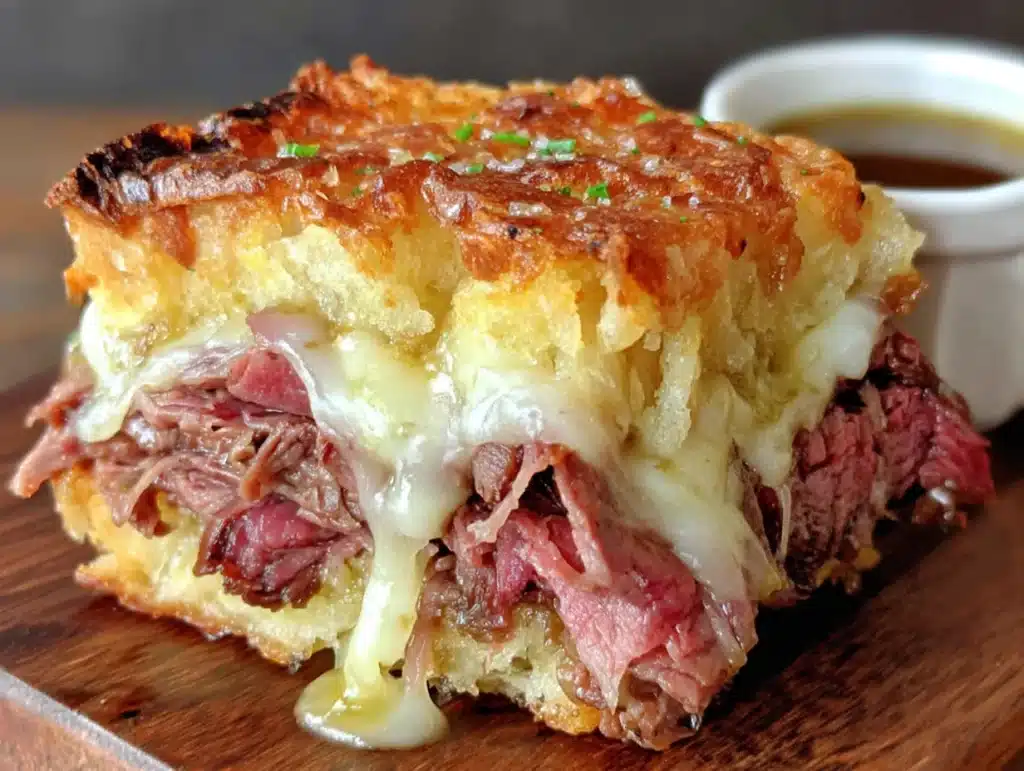
There used to be a dimly lit sports bar on the corner of 18th and Walnut in my old neighborhood that made the most ridiculous French dip sandwiches. When they closed during the pandemic—just vanished overnight with a “For Lease” sign in the window—I honestly felt a little lost. That salty, beefy, au jus-soaked roll haunted me for months. After twelve tries—twelve, let me tell you, including one truly tragic attempt where I used the wrong kind of bread and it basically turned into soup—I finally got it. The secret, as it turns out, wasn’t the beef itself, but what you do with the leftovers. This recipe for Leftover Prime Rib French Dip Sliders is my tribute to that bar and the solution to that post-holiday block of prime rib sitting in your fridge, you know, the one you’re staring at wondering what to do with.
I mean, honestly, who wants a cold prime rib sandwich the next day? Not me. I wanted that warm, toasty, dripping-with-juice experience again. The first time I made these sliders, I forgot to toast the rolls and they went soggy in about thirty seconds. My husband still ate three of them and said they were the best thing I’d made all year. That’s when I knew I had something. These sliders aren’t just a way to use up leftovers—they’re a whole new reason to cook a prime rib in the first place. Maybe you’ve been there, standing in front of the open fridge at 8 PM on a Tuesday with half a roast and no plan. This is your plan.
Why You’ll Love This Recipe
Let me be real with you for a second. I’ve tested this recipe on tired Tuesday nights, after soccer practice, and even on a night when I was so exhausted I almost ordered pizza instead. These sliders won every single time. Here is why they are going to become your new weeknight hero:
- Quick & Easy: From fridge to table in under 20 minutes. No joke. The oven does most of the work while you pour yourself a glass of wine or help with homework.
- Simple Ingredients: You already have most of this stuff. Butter, garlic, rolls, cheese, and that leftover prime rib. No fancy grocery store run required.
- Perfect for Weeknights: When you are tired, hungry, and the kids are asking what’s for dinner for the fifth time, this is the answer. It feels special but takes almost no effort.
- Crowd-Pleaser: My kids, who usually pick apart anything with “fancy” meat, devour these. My husband, who is a self-proclaimed sandwich snob, asks for them even when we don’t have leftovers.
- Unbelievably Delicious: The combination of buttery, toasted rolls, melty provolone, and thinly sliced prime rib dipped in rich, savory au jus is honestly next-level comfort food.
What makes these sliders different from every other leftover prime rib recipe? It is the double-butter technique and the way you build the au jus from the pan drippings mixed with a store-bought shortcut. I spent three versions trying to make the jus from scratch every time, and honestly, it wasn’t better. This version is faster, just as flavorful, and respects the fact that you have better things to do than simmer bones for two hours on a weeknight. It is comfort food reimagined—faster, easier, but with the same soul-soothing satisfaction that makes you close your eyes after the first bite.
What Ingredients You Will Need
This recipe uses simple, mostly pantry-staple ingredients to turn your leftover prime rib into something you will actually crave. The magic is in the combination of textures and that salty, beefy jus. Here is everything you need:
- Leftover Prime Rib: About 1 to 1.5 pounds, thinly sliced or shredded. Cold leftovers slice much easier than warm meat, so take it straight from the fridge. If you have a mix of lean and fatty pieces, that is perfect—the fat adds flavor.
- Hawaiian Sweet Rolls: One 12-pack package. These are non-negotiable for me. The slight sweetness balances the savory beef and salty jus perfectly. King’s Hawaiian is my go-to brand, but any brand works.
- Unsalted Butter: 4 tablespoons, melted. You will use half for the pan and half for brushing the tops. I prefer unsalted so I can control the salt level, but salted works in a pinch—just skip the flaky salt on top.
- Garlic: 2 cloves, minced. Fresh garlic makes a big difference here. The jarred stuff works in an emergency, but the flavor is not as bright.
- Provolone Cheese: 6 slices, cut in half. Provolone melts beautifully and has a mild, slightly tangy flavor that does not overpower the beef. You can also use provolone, mozzarella, or even havarti.
- Beef Broth: 2 cups. Use a good quality brand like Swanson or Kitchen Basics. The broth is the base of your au jus, so do not use the watery stuff.
- Worcestershire Sauce: 1 tablespoon. This adds that deep, umami richness that makes the jus taste like it simmered for hours.
- Dried Thyme: 1/2 teaspoon. A tiny amount, but it adds a subtle earthiness that ties everything together.
- Dried Rosemary: 1/4 teaspoon. Optional, but if you have it, it adds a lovely aromatic note.
- Salt and Black Pepper: To taste. Go easy on the salt—the cheese and broth both have salt.
- Optional Garnishes: Fresh parsley, chopped (for color), and flaky sea salt (for sprinkling on top before baking).
For the au jus, I recommend using a brand of beef broth you actually like drinking on its own. I once used a generic store brand and the jus came out tasting flat and metallic. Swanson or Kitchen Basics are my tried-and-true picks. If you have leftover pan drippings from your prime rib, you can add a tablespoon or two to the broth for extra depth—but it is not required.
Equipment Needed
You do not need anything fancy for this recipe, which is part of the beauty. Here is what you will need:
- 9×13-inch Baking Dish: A standard casserole dish works perfectly. Glass or ceramic is ideal because it heats evenly.
- Small Saucepan: For making the au jus. Any small pot works.
- Sharp Knife: A good chef’s knife or carving knife makes slicing the cold prime rib so much easier. A dull knife will shred the meat.
- Cutting Board: Preferably one with a groove to catch any juices.
- Pastry Brush: For brushing the butter mixture on the rolls. A silicone brush is easy to clean.
- Small Bowl: For mixing the melted butter and garlic.
- Aluminum Foil: To cover the sliders while they bake, so the tops do not burn.
- Measuring Cups and Spoons: Standard set.
If you do not have a pastry brush, you can use a spoon to drizzle the butter over the rolls. It is not as even, but it works. I have done it plenty of times when my brush was in the dishwasher. As for the baking dish, any size that fits the 12 rolls in a single layer works. A 9×13 is perfect, but an 8×11 will also work—the rolls will just be a little snug.
Preparation Method
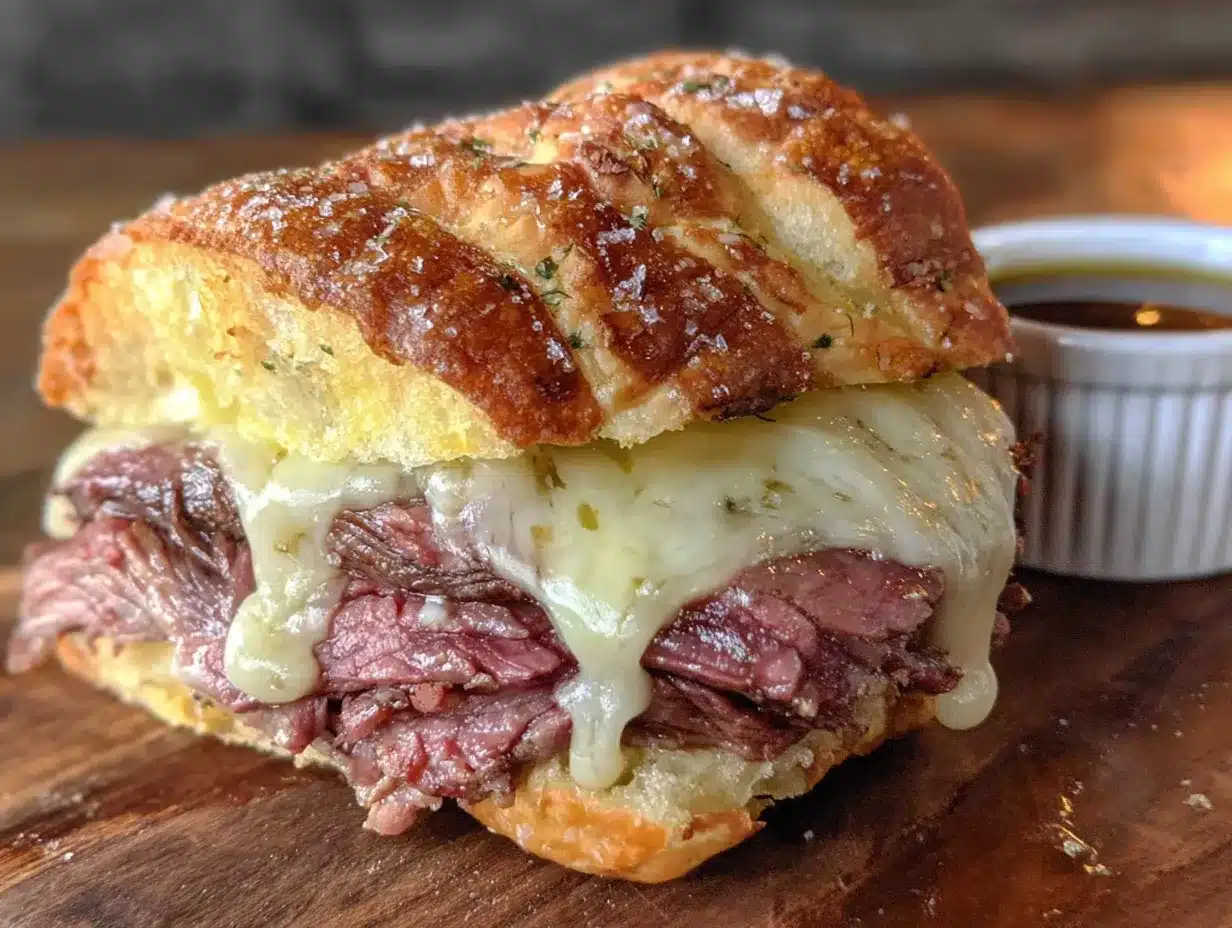
Alright, let’s get cooking. This whole process takes about 20 minutes from start to finish, including baking time. Here is how to do it:
- Preheat your oven to 350°F (175°C). While it is heating, take your leftover prime rib out of the fridge and slice it as thinly as you can. Cold meat slices much cleaner than warm meat. Aim for slices about 1/8-inch thick. If you have a deli slicer, now is the time to use it. Otherwise, a sharp knife and a steady hand work great.
- Make the garlic butter. In a small bowl, melt 4 tablespoons of unsalted butter. Add 2 minced garlic cloves and stir. Set aside half of this mixture—you will use it to brush the tops of the rolls later.
- Prepare the rolls. Without separating the individual rolls, slice the entire 12-pack of Hawaiian sweet rolls in half horizontally. You want one big top half and one big bottom half. Place the bottom half in your 9×13-inch baking dish.
- Layer the beef. Arrange the thinly sliced prime rib evenly over the bottom layer of rolls. Do not pile it too high—you want about 1/4 to 1/2 inch of meat. If you have a lot of leftover meat, you can add a second layer, but keep it even.
- Add the cheese. Lay the provolone slices over the beef, overlapping slightly if needed. You want every bite to have cheese, so do not skimp here.
- Top with the other half of the rolls. Place the top half of the rolls over the cheese, cut side down.
- Brush with garlic butter. Use a pastry brush to coat the tops of the rolls with the remaining garlic butter. Try to get it into the crevices between the rolls too—that is where the magic happens.
- Cover and bake. Cover the dish tightly with aluminum foil and bake for 10 minutes. The foil traps steam and helps the cheese melt without burning the tops.
- While the sliders bake, make the au jus. In a small saucepan, combine 2 cups of beef broth, 1 tablespoon of Worcestershire sauce, 1/2 teaspoon of dried thyme, and 1/4 teaspoon of dried rosemary. Bring to a simmer over medium heat, then reduce to low and keep warm. Taste and add salt and pepper as needed—remember, the cheese and beef are already seasoned.
- Uncover and finish. After 10 minutes, remove the foil and bake for another 5-7 minutes, until the tops are golden brown and the cheese is bubbly. Watch them closely—Hawaiian rolls go from golden to burnt fast.
- Rest and serve. Let the sliders rest in the pan for 2-3 minutes before slicing. Use a sharp knife to cut between the rolls. Serve immediately with the warm au jus on the side for dipping.
A few sensory cues for you: when you pull the foil off, you should see the cheese stretching and bubbling around the edges. The rolls should be golden on top but still soft in the middle. The au jus should smell deeply savory and slightly herby. If it smells flat, add a pinch more salt or a dash more Worcestershire.
Cooking Tips & Techniques
I have made this recipe about fifteen times now, and I have learned a few things the hard way. Here are my best tips:
Slice the meat cold. This is the number one tip I give everyone. Warm prime rib shreds and tears. Cold prime rib slices like a dream. If you forgot to take it out of the fridge, no worries—just slice it straight from the fridge. It will warm up in the oven.
Do not skip the foil. The first time I made these, I thought, “I will just bake them uncovered to save a step.” Big mistake. The tops burned, the cheese was not fully melted, and the bottoms got soggy. The foil creates a steamy environment that melts the cheese evenly and keeps the rolls soft. Trust the foil.
Double the au jus. Seriously. Everyone wants more jus than they think. I always make a double batch now because people end up drinking the leftover jus from their bowls. It is that good.
Warm the jus before serving. Cold or lukewarm jus does not do the sliders justice. You want that hot, salty liquid to hit the bread and soften it slightly. Keep the jus simmering on the stove while the sliders bake, then pour it into small ramekins for serving.
Use a serrated knife to slice. When cutting the finished sliders, a serrated knife (like a bread knife) cuts through the rolls cleanly without squishing them. A chef’s knife will crush the soft tops.
Watch the salt. Between the cheese, the broth, and the Worcestershire, there is plenty of salt in this dish. I learned this after making a batch that was so salty I had to drink a gallon of water. Taste the jus before adding any extra salt, and go easy on the flaky salt topping.
Variations & Adaptations
One of the best things about this recipe is how flexible it is. Here are some ways to change it up:
Cheese Swap: Not a provolone fan? Use mozzarella for extra stretch, Swiss for a nuttier flavor, or even pepper jack for a little heat. I have used all three at different times and each one works beautifully. My personal favorite is a mix of provolone and mozzarella—the provolone adds flavor, the mozzarella adds that Instagram-worthy pull.
Add Some Heat: If you like a little spice, add a thin layer of pickled jalapeños or a drizzle of sriracha before adding the cheese. I did this one night when I had a cold and wanted something to clear my sinuses, and it was surprisingly good.
Horseradish Cream: Mix 1/4 cup of sour cream with 2 tablespoons of prepared horseradish and a squeeze of lemon. Spread it on the bottom rolls before adding the beef. This is my husband’s favorite variation—he says it tastes like a fancy steakhouse sandwich.
Gluten-Free Option: Use gluten-free Hawaiian rolls or any soft gluten-free slider buns. The baking time might be slightly shorter, so check them at 8 minutes. The au jus is naturally gluten-free as long as your broth is certified gluten-free.
Vegetarian Version: Swap the prime rib for thick slices of portobello mushrooms that have been sautéed in soy sauce and garlic. It is not the same, obviously, but it is surprisingly delicious and my vegetarian friend requests it regularly.
Make It a Meal: Serve these sliders with a simple arugula salad tossed in lemon juice and olive oil. The peppery greens cut through the richness of the beef and cheese beautifully.
Serving & Storage Suggestions
These sliders are best served hot, straight from the oven, with the au jus on the side. I like to set out small bowls of jus for each person—it feels more special than one big bowl. The temperature contrast between the warm, melty slider and the hot, salty jus is the whole point.
For presentation, arrange the sliders on a wooden board or a large white platter. Sprinkle a little fresh parsley over the top for color, and maybe add some pickled peppers or cornichons on the side for a tangy contrast. They look gorgeous on a party platter, but honestly, I have eaten them straight from the baking dish standing at the counter more times than I care to admit.
Storage: Leftover sliders (if you have any) can be stored in an airtight container in the refrigerator for up to 3 days. The rolls will soften over time, so they are best reheated rather than eaten cold.
Reheating: The best way to reheat these is in a 350°F oven for about 5-7 minutes, covered with foil. This restores some of the crispness to the tops without drying out the meat. You can also use an air fryer at 350°F for 3-4 minutes, but watch them closely. The microwave works in a pinch, but the rolls will be soft and the cheese might get rubbery. The jus can be reheated in a saucepan or microwave.
Freezing: You can freeze the assembled but unbaked sliders for up to 2 months. Wrap the dish tightly in plastic wrap and then foil. To bake, thaw overnight in the refrigerator, then follow the baking instructions as written. The jus can be frozen separately in a freezer bag.
One thing I have noticed: the flavors actually get better after a day in the fridge. The beef soaks into the bread a little, and the garlic butter permeates everything. If you can resist eating them all, the leftovers the next day are almost better than the fresh ones.
Nutritional Information & Benefits
Here is the approximate nutritional breakdown for one slider (based on 12 sliders total):
- Calories: 320
- Protein: 22g
- Fat: 18g
- Carbohydrates: 18g
- Fiber: 1g
- Sugar: 6g
- Sodium: 680mg
Prime rib is a good source of high-quality protein, iron, and B vitamins, particularly B12, which supports energy and brain function. The provolone adds calcium and a little more protein. The Hawaiian rolls are not exactly health food, but they are what make this recipe feel like a treat.
For those watching their intake, you can lighten this up by using low-sodium beef broth, reducing the butter to 2 tablespoons, and using part-skim mozzarella instead of provolone. It will not be quite as indulgent, but it will still be pretty darn good.
This recipe contains gluten (from the rolls), dairy (from the butter and cheese), and is not suitable for vegans or vegetarians in its original form. For a dairy-free version, use vegan butter and dairy-free cheese—the texture will be slightly different, but the flavor still works.
Conclusion
Look, I know leftover prime rib can feel like a burden sometimes. You spent all that time and money on a beautiful roast, and now you are staring at a block of cold meat wondering what to do. These Leftover Prime Rib French Dip Sliders are the answer. They are fast, they are forgiving, and they turn something that feels like “leftovers” into something you will actually look forward to eating.
I have made these for tired weeknights, for game day gatherings, and for quiet dinners when I just wanted something warm and satisfying. They have never let me down. The best part? You can tweak them to your heart’s content—add horseradish, swap the cheese, throw in some peppers. They are your sliders now.
So go ahead, pull that prime rib out of the fridge, and give these a try. And when you do, come back and tell me how they turned out. Did you add something unexpected? Did your kids eat three of them? I want to hear about it. Drop a comment below or tag me in your photos—I am always looking for new ideas to try myself.
Happy cooking, and here is to making leftovers feel like a celebration.
Frequently Asked Questions
Can I use a different type of roll?
Absolutely. While Hawaiian sweet rolls are my favorite for their slight sweetness, you can use any soft slider bun. Brioche buns, potato rolls, or even small ciabatta rolls work. Just keep in mind that denser breads will need a little more baking time to warm through.
How thin should I slice the prime rib?
As thin as you can manage—about 1/8-inch thick is ideal. Thin slices warm through faster and make the sliders easier to eat. If you have a deli slicer, use it. Otherwise, a sharp knife and cold meat will get you there.
Can I make these ahead of time?
Yes! You can assemble the sliders up to 24 hours in advance, cover them, and keep them in the refrigerator. When you are ready to bake, add about 5 minutes to the covered baking time since they will be cold from the fridge.
What if I don’t have leftover prime rib?
No problem. You can use thinly sliced deli roast beef instead. It will not be quite as rich, but it still makes a delicious slider. Look for roast beef that is not too processed—the kind from the deli counter, not the prepackaged stuff.
How do I keep the sliders from getting soggy?
The key is to not oversaturate the bread. The garlic butter helps create a barrier, and baking them covered then uncovered allows the tops to crisp up while the inside stays soft. Also, serve the au jus on the side for dipping rather than pouring it over the sliders—that way, each bite stays as crispy or as soft as you like it.
Pin This Recipe!
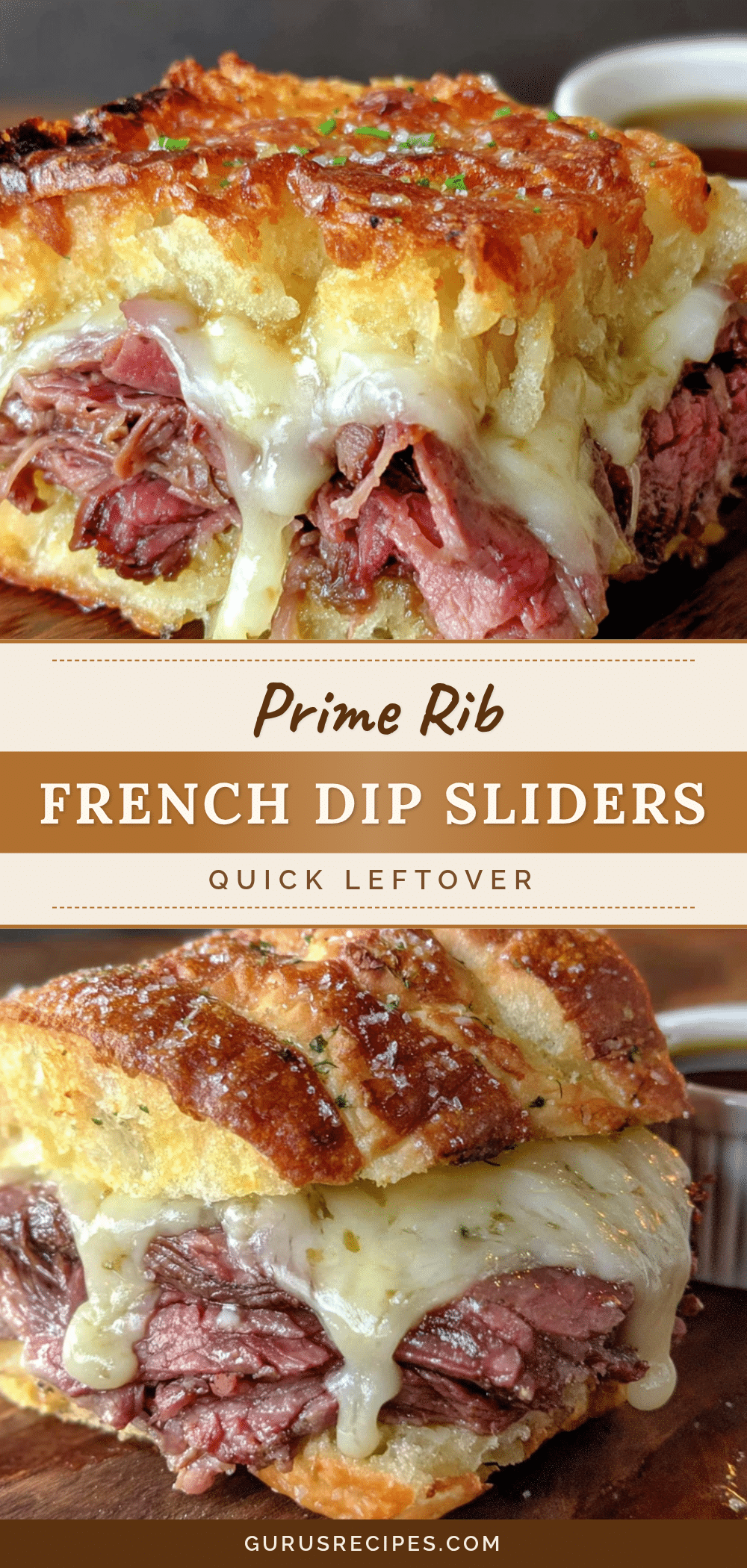

Best Leftover Prime Rib French Dip Sliders Recipe
Transform your leftover prime rib into warm, toasty, and dripping-with-juice French dip sliders. This quick and easy recipe uses simple ingredients and a double-butter technique for the ultimate comfort food.
- Total Time: 25 minutes
- Yield: 12 sliders 1x
Ingredients
- 1 to 1.5 pounds leftover prime rib, thinly sliced or shredded
- 1 (12-pack) package Hawaiian sweet rolls
- 4 tablespoons unsalted butter, melted
- 2 cloves garlic, minced
- 6 slices provolone cheese, cut in half
- 2 cups beef broth
- 1 tablespoon Worcestershire sauce
- 1/2 teaspoon dried thyme
- 1/4 teaspoon dried rosemary (optional)
- Salt and black pepper to taste
- Fresh parsley, chopped (for garnish, optional)
- Flaky sea salt (for sprinkling, optional)
Instructions
- Preheat your oven to 350°F (175°C). Slice the cold leftover prime rib as thinly as possible, about 1/8-inch thick.
- In a small bowl, melt 4 tablespoons of unsalted butter. Add 2 minced garlic cloves and stir. Set aside half of this mixture for brushing the tops of the rolls later.
- Without separating the individual rolls, slice the entire 12-pack of Hawaiian sweet rolls in half horizontally. Place the bottom half in a 9×13-inch baking dish.
- Arrange the thinly sliced prime rib evenly over the bottom layer of rolls.
- Lay the provolone slices over the beef, overlapping slightly if needed.
- Place the top half of the rolls over the cheese, cut side down.
- Brush the tops of the rolls with the remaining garlic butter, getting it into the crevices between the rolls.
- Cover the dish tightly with aluminum foil and bake for 10 minutes.
- While the sliders bake, make the au jus: In a small saucepan, combine 2 cups of beef broth, 1 tablespoon of Worcestershire sauce, 1/2 teaspoon of dried thyme, and 1/4 teaspoon of dried rosemary. Bring to a simmer over medium heat, then reduce to low and keep warm. Taste and add salt and pepper as needed.
- After 10 minutes, remove the foil and bake for another 5-7 minutes, until the tops are golden brown and the cheese is bubbly.
- Let the sliders rest in the pan for 2-3 minutes before slicing. Use a sharp knife to cut between the rolls. Serve immediately with the warm au jus on the side for dipping.
Notes
Slice the meat cold for easier slicing. Do not skip the foil covering to prevent burning and ensure even melting. Double the au jus if desired. Warm the jus before serving. Use a serrated knife to slice the finished sliders. Watch the salt level as cheese, broth, and Worcestershire all contain salt.
- Prep Time: 10 minutes
- Cook Time: 15 minutes
- Category: Main Course
- Cuisine: American
Nutrition
- Serving Size: 1 slider
- Calories: 320
- Sugar: 6
- Sodium: 680
- Fat: 18
- Saturated Fat: 9
- Carbohydrates: 18
- Fiber: 1
- Protein: 22
Keywords: leftover prime rib, french dip sliders, prime rib sliders, leftover prime rib recipe, easy slider recipe, game day food, weeknight dinner