
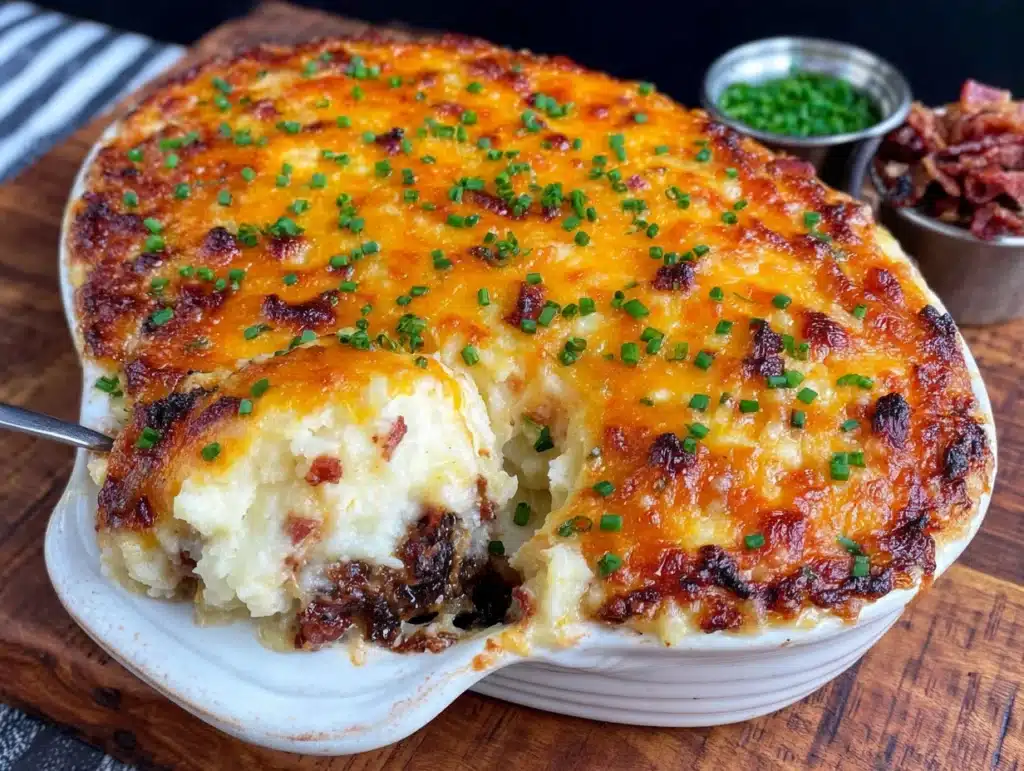
I was supposed to be making twice-baked potatoes for a friend’s potluck. You know the ones—the classic boats where you scoop out the insides, mash them up with cheese and bacon, pipe them back into the skins, and bake until golden. I had it all planned out. The potatoes were scrubbed, the oven was preheating, and I was feeling pretty good about myself.
Then I realized I only had six potatoes for eight people. And one of them had a suspicious soft spot. I grabbed the wrong bag at the store—I mean, honestly, who knew russets came in so many sizes? So there I was, staring at my sad little pile of spuds, already running late, and the clock was ticking. I couldn’t just make fewer potatoes. That would look cheap. And I definitely didn’t have time to run back to the store.
So I did something slightly desperate. I chopped all the potatoes into chunks, boiled them until tender, and mashed them right in the pot. I stirred in everything I would have used for the filling—sour cream, butter, sharp cheddar, crispy bacon bits, green onions—and dumped the whole glorious mess into a baking dish. I topped it with more cheese, threw it in the oven, and crossed my fingers.
What came out of that oven was nothing like the plan. It was better. Way better. The edges got all crispy and golden while the middle stayed creamy and luscious. Everyone at that potluck asked for the recipe, and I had to admit it was born from a potato shortage and a moment of panic. Maybe you’ve been there—staring at a half-baked idea that somehow turns into your new signature dish. That’s this casserole. It’s the happy accident that became a permanent fixture on my holiday table, and honestly, I never went back to the boats.
Why You’ll Love This Recipe
Let me tell you why this Creamy Make-Ahead Twice Baked Potato Casserole has earned a permanent spot in my recipe rotation. It checks every single box I look for in a side dish, and then some.
- Make-Ahead Magic: This is the ultimate stress-saver. You can assemble it a day or two ahead, pop it in the fridge, and bake it right before serving. No last-minute mashing, no frantic scooping of potato skins. It’s like having a sous chef in your fridge.
- Simple Ingredients: You probably have most of these in your kitchen right now. Potatoes, butter, sour cream, cheese, bacon—nothing fancy, nothing hard to find. No trips to a specialty store required.
- Perfect for Holidays and Potlucks: This dish is a crowd magnet. It serves a crowd easily, travels well, and disappears fast. I’ve brought it to Thanksgiving, Christmas, Easter, and random Sunday dinners, and it always gets the same reaction: silence, followed by “who made this?”
- Crowd-Pleaser Across Generations: Kids love the creamy, cheesy texture. Adults love the familiar twice-baked potato flavor without the fuss. Even picky eaters go back for seconds. It’s one of those rare dishes that unites the whole table.
- Unbelievably Delicious Texture: The contrast between the crispy, golden-brown top and the velvety, smooth interior is pure comfort food perfection. Every spoonful has that rich, tangy, cheesy flavor that makes you close your eyes after the first bite.
What makes this recipe different from all the other potato casseroles out there? It’s the technique. By boiling the potatoes instead of baking them, you get an ultra-creamy texture without the dry, mealy feel that can happen with baked potatoes. And because we’re mixing everything while the potatoes are still warm, the butter and cheese melt in perfectly, creating a homogenous, luscious base that you just can’t get from the traditional method.
This isn’t just another potato side dish. It’s the one that will make your guests ask for the recipe, the one that will become your go-to for every gathering, and the one that proves sometimes the best recipes come from happy accidents.
What Ingredients You Will Need
This recipe uses simple, wholesome ingredients that come together to create something truly special. Most of these are pantry staples, and the few that aren’t are easy to find at any grocery store. Here’s what you’ll need and why each one matters.
For the Potato Base
- 3 pounds russet potatoes (about 6 medium-large potatoes) — Russets are the star here. They have a high starch content and low moisture, which gives you that fluffy, creamy texture when mashed. Yukon Golds work too, but the texture will be slightly denser and more buttery. Avoid waxy potatoes like reds or fingerlings—they’ll turn gummy.
- 4 tablespoons unsalted butter (½ stick), softened — Butter adds richness and helps create that velvety smooth texture. I prefer unsalted so I can control the salt level, but salted works fine—just reduce the added salt slightly.
- ½ cup sour cream — This is the secret to the tangy, creamy base. Full-fat sour cream gives the best results, but light sour cream works in a pinch. Greek yogurt can be substituted for a slightly tangier, higher-protein option.
- ½ cup whole milk — Adds just enough liquid to loosen the mash without making it soupy. You can use 2% or even half-and-half for extra richness. For a dairy-free version, unsweetened oat milk or canned coconut milk (the creamy part) works beautifully.
- 1 teaspoon salt — Essential for seasoning. I use fine sea salt. Adjust to taste, especially if you’re using salted butter or salty bacon.
- ½ teaspoon black pepper — Freshly ground is best. It adds a subtle warmth that balances the richness.
For the Cheesy, Bacony Goodness
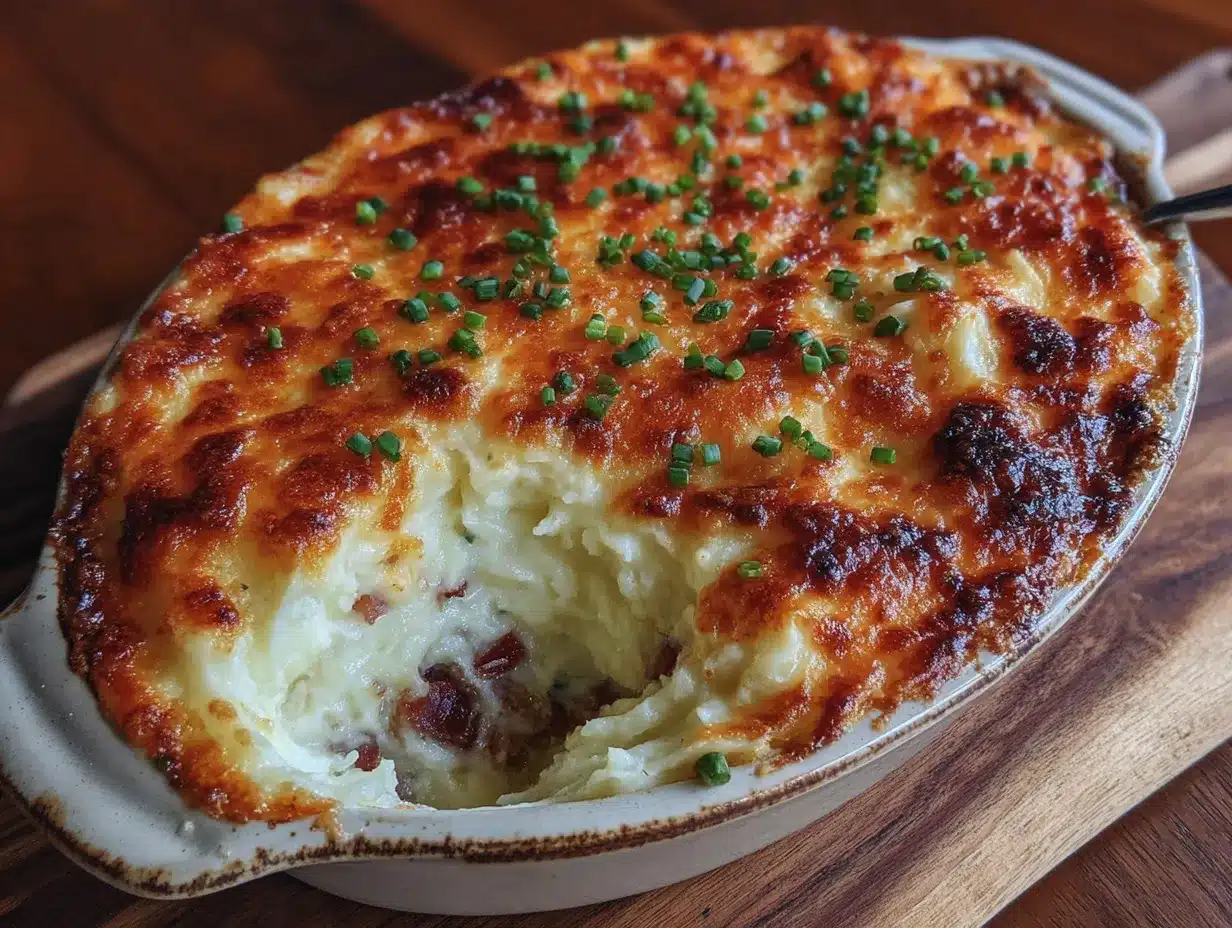
- 2 cups sharp cheddar cheese, shredded (about 8 ounces) — Sharp cheddar provides that bold, unmistakable flavor. I recommend shredding your own from a block—pre-shredded cheese has anti-caking agents that prevent it from melting as smoothly. Extra-sharp cheddar works great for an even bolder flavor.
- 8 slices bacon (about 8 ounces), cooked and crumbled — Bacon adds smoky, salty crunch. Thick-cut bacon is my preference for more substantial pieces. You can also use turkey bacon or skip it entirely for a vegetarian version. I like to cook the bacon until extra crispy so it holds up in the casserole.
- 4 green onions, thinly sliced — These add a mild oniony bite and a pop of color. Reserve some of the green tops for garnish. Chives are a great substitute if you have them on hand.
For the Topping
- 1 cup sharp cheddar cheese, shredded (about 4 ounces) — This goes on top for that irresistible golden-brown crust. You can use a mix of cheddar and Monterey Jack for a milder, meltier topping.
- Optional: 2 tablespoons panko breadcrumbs — Mixed with a little melted butter, these add extra crunch on top. Completely optional, but highly recommended if you love texture.
- Optional garnish: extra green onions or fresh parsley — For a fresh finish right before serving.
Equipment Needed
You don’t need a fancy kitchen to make this casserole. Here’s what you’ll need:
- Large pot (5-6 quart) — For boiling the potatoes. Make sure it’s big enough to hold them in a single layer without crowding.
- Colander — For draining the cooked potatoes.
- Potato masher or hand mixer — A classic potato masher gives you a rustic, slightly chunky texture. For an ultra-smooth, creamy result, use a hand mixer on low speed. I’ve used both, and honestly, I prefer the hand mixer for this casserole—it makes the texture impossibly smooth.
- Large mixing bowl — For combining all the ingredients. If you’re using a hand mixer, make sure the bowl is deep enough to prevent splatters.
- 9×13-inch baking dish — This is the standard size for this recipe. An 8×8 dish will work if you want a thicker casserole, but you’ll need to increase the baking time by about 10 minutes.
- Cheese grater — For shredding your own cheese. Trust me on this one. The pre-shredded stuff just doesn’t melt the same way.
- Frying pan or skillet — For cooking the bacon. A cast-iron skillet gives the crispiest results.
- Cutting board and knife — For chopping green onions and any other prep.
- Aluminum foil — For covering the casserole if it’s browning too quickly, or for reheating leftovers.
Budget-friendly tip: If you don’t have a hand mixer, a good old-fashioned masher works perfectly. You’ll just end up with a slightly chunkier texture, which some people actually prefer. And if you don’t have a 9×13 dish, use a large oven-safe skillet or even a disposable aluminum pan—it works great for potlucks.
Preparation Method
Alright, let’s get cooking. This recipe comes together in about an hour total, with about 20 minutes of active prep time. The rest is hands-off baking time.
- Preheat your oven to 375°F (190°C). While it’s heating, get your potatoes going. Scrub the russets clean—no need to peel them yet. Cut them into roughly 1½-inch chunks. Don’t stress about perfect uniformity, but try to keep them similar in size so they cook evenly.
- Place the potato chunks in a large pot and cover them with cold water by about an inch. Add a generous pinch of salt to the water. Bring to a boil over high heat, then reduce to a simmer. Cook for 15-20 minutes, until the potatoes are fork-tender. You should be able to easily pierce a chunk with a knife, and it should almost fall apart. Don’t undercook them—undercooked potatoes won’t mash smoothly and will leave lumps in your casserole.
- While the potatoes are boiling, cook your bacon. I like to do this in a cold skillet—place the bacon strips in a single layer, then turn the heat to medium. This renders the fat slowly and gives you perfectly crispy bacon. Cook for 6-8 minutes, flipping once, until deeply golden and crisp. Transfer to a paper towel-lined plate to drain. Once cool, crumble or chop into small pieces. Reserve about 2 tablespoons of the bacon fat if you want to add extra flavor to the mash (more on that in the tips section).
- Drain the potatoes well in a colander. Let them sit for a minute or two to steam off excess moisture. You want them as dry as possible—excess water will make the casserole watery. Return the potatoes to the pot or transfer them to a large mixing bowl.
- Add the butter to the hot potatoes. Let it sit for 30 seconds to start melting, then mash or mix on low speed until the butter is incorporated and the potatoes are mostly smooth. A few small lumps are fine—they add character.
- Add the sour cream, milk, salt, and pepper. Mix again until everything is combined and the texture is creamy and smooth. If you’re using a hand mixer, don’t overmix—overworking potatoes can make them gummy. Stop as soon as it looks uniform.
- Fold in 2 cups of shredded cheddar cheese, the crumbled bacon, and most of the sliced green onions (reserve a handful for garnish). Stir gently with a spatula until everything is evenly distributed. The cheese will start to melt from the residual heat of the potatoes—this is exactly what you want.
- Transfer the mixture to your greased 9×13-inch baking dish. Spread it into an even layer using the spatula. Top with the remaining 1 cup of shredded cheddar cheese. If you’re using panko breadcrumbs, sprinkle them over the cheese and dot with a little extra butter.
- Bake uncovered for 25-30 minutes, until the casserole is heated through and the top is bubbly and golden brown. If the top is browning too quickly, tent loosely with foil for the last 10 minutes. For an extra-crispy top, switch to broil for the last 1-2 minutes—but watch it carefully, it can go from golden to burnt in seconds.
- Let the casserole rest for 5-10 minutes before serving. This allows it to set slightly, making it easier to scoop and serve. Garnish with the reserved green onions or fresh parsley, and watch it disappear.
Cooking Tips & Techniques
I’ve made this casserole more times than I can count, and I’ve learned a few things along the way. Here are my best tips for guaranteed success.
Don’t skip the cold water start. When you start potatoes in cold water and bring them to a boil, they cook more evenly from the outside in. Dropping them into boiling water can cook the outside too fast while leaving the inside raw. Trust me, I learned this the hard way after serving lumpy mashed potatoes at a family dinner.
Dry your potatoes thoroughly. After draining, let them sit in the colander for a good minute or two. You can even return them to the pot and shake them over low heat for 30 seconds to evaporate any remaining moisture. Excess water is the enemy of creamy mashed potatoes—it makes them watery and dilutes the flavor.
Use room temperature dairy. Cold sour cream and milk can seize up the butter and make the mash grainy. Let them sit on the counter for 15-20 minutes before adding them. If you forgot to take them out, microwave the milk for 15 seconds and let the sour cream sit in warm water for a few minutes.
That reserved bacon fat I mentioned? Stirring a tablespoon or two into the mashed potatoes before adding the cheese adds an incredible smoky depth. It’s not necessary, but it’s one of those little touches that makes people ask “what’s in this?” It’s my secret weapon for holiday dinners.
Make it ahead like a pro. Assemble the casserole completely, but don’t bake it. Cover tightly with foil and refrigerate for up to 2 days. When you’re ready to bake, add about 10-15 minutes to the baking time since you’re starting from cold. You can also let it sit on the counter for 30 minutes before baking to take the chill off.
The texture check. Before baking, taste a small spoonful of the potato mixture. This is your chance to adjust seasoning. Add more salt, pepper, or even a splash of hot sauce if you want a little kick. Once it’s baked, the flavors will be slightly muted, so season a touch more than you think you need.
Variations & Adaptations
This recipe is incredibly versatile. Here are some of my favorite ways to change it up.
Loaded Baked Potato Style: Add ½ cup of cooked, crumbled sausage or diced ham along with the bacon. Top with a dollop of sour cream and extra chives before serving. It becomes a meal on its own, perfect for a cozy weeknight dinner when you don’t feel like making a main dish.
Vegetarian Version: Skip the bacon and add 1 cup of sautéed mushrooms and ½ cup of caramelized onions. The umami from the mushrooms and the sweetness from the onions create a depth of flavor that even meat-lovers will appreciate. Use smoked paprika (1 teaspoon) to mimic that smoky bacon flavor.
Spicy Southwestern Twist: Add 1 can of drained and rinsed black beans, ½ cup of corn kernels (frozen or canned), and 1 diced jalapeño (seeds removed for less heat). Use pepper jack cheese instead of cheddar for a spicy kick. Garnish with fresh cilantro instead of green onions.
Low-Carb Adaptation: Substitute the russet potatoes with cauliflower florets. Steam the cauliflower until very tender, then mash and proceed with the recipe. The texture won’t be identical, but it’s surprisingly close and delicious. You’ll need about 2 medium heads of cauliflower to equal the volume.
Dairy-Free Version: Use vegan butter, dairy-free sour cream (I like the one from Kite Hill), unsweetened oat milk, and your favorite shredded vegan cheddar. The texture will be slightly less creamy, but it’s still incredibly satisfying. I’ve made this for a friend with a dairy allergy and she couldn’t stop eating it.
Extra-Crunchy Top: Mix ½ cup of crushed potato chips or French fried onions with 2 tablespoons of melted butter and sprinkle over the cheese before baking. It adds an addictive, salty crunch that takes this casserole over the top. Perfect for when you want to impress.
Serving & Storage Suggestions
Serving: This casserole is best served hot, straight from the oven. Let it rest for 5-10 minutes after baking so it holds its shape when scooped. It pairs beautifully with roasted meats like turkey, ham, or prime rib. For a vegetarian meal, serve alongside a crisp green salad with a tangy vinaigrette to cut through the richness.
What to serve with it: This casserole is the ultimate side dish for holiday feasts, but it’s also wonderful with simple weeknight meals. Try it with grilled steak, pan-seared chicken, or even a veggie burger. A dollop of sour cream and a sprinkle of fresh chives on top adds a nice finishing touch.
Storage: Leftovers keep well in the refrigerator for up to 4 days. Store in an airtight container. The flavors actually meld and deepen overnight—some people (including me) think it’s even better the next day.
Reheating: The best way to reheat is in the oven at 350°F for 15-20 minutes, covered with foil to prevent drying. For individual portions, the microwave works in a pinch—just microwave on medium power for 1-2 minutes, stirring halfway through. The top won’t be as crispy, but it’ll still be delicious.
Freezing: This casserole freezes beautifully, either baked or unbaked. To freeze unbaked, assemble the casserole in a freezer-safe dish, cover tightly with foil and plastic wrap, and freeze for up to 3 months. Thaw overnight in the refrigerator before baking. To freeze baked, let it cool completely, then wrap tightly and freeze. Reheat directly from frozen at 350°F for 30-40 minutes, covered.
Flavor development: Like many comfort food casseroles, this one tastes even better after a day or two in the fridge. The flavors meld together, and the texture becomes even creamier. If you’re making it for a special occasion, consider making it a day ahead—you’ll thank yourself later.
Nutritional Information & Benefits
Here’s the nutritional breakdown for one serving (based on 8 servings). Please note these are estimates and will vary based on specific ingredients and portion sizes.
| Nutrient | Amount Per Serving |
|---|---|
| Calories | 385 |
| Total Fat | 24g |
| Saturated Fat | 14g |
| Cholesterol | 65mg |
| Sodium | 680mg |
| Total Carbohydrates | 32g |
| Dietary Fiber | 3g |
| Sugars | 2g |
| Protein | 14g |
| Calcium | 280mg |
| Iron | 1.5mg |
| Potassium | 780mg |
Health Benefits: Potatoes often get a bad rap, but they’re actually quite nutritious. They’re an excellent source of vitamin C, potassium (more than a banana!), and vitamin B6. The skin contains most of the fiber, so leaving the skin on (if you choose to) boosts the nutritional value. The calcium from the cheese and sour cream supports bone health, and the protein from the cheese and bacon helps keep you full.
Dietary Considerations: This recipe is naturally gluten-free (check your bacon to be sure). For a lower-calorie version, use reduced-fat cheese and sour cream, and reduce the butter to 2 tablespoons. For a lower-sodium option, use low-sodium bacon and unsalted butter, and reduce the added salt.
Allergens: This recipe contains dairy (butter, sour cream, milk, cheese). It does not contain nuts, eggs, or soy, but always check your ingredient labels for potential cross-contamination.
Conclusion
This Creamy Make-Ahead Twice Baked Potato Casserole is more than just a side dish—it’s a lifesaver. It’s the recipe you turn to when you want to impress without the stress, when you need comfort food that feels like a hug, and when you want to spend more time with your guests and less time in the kitchen.
I love this recipe because it reminds me that sometimes the best things in life come from unexpected detours. That potluck disaster turned into my most-requested dish, and now I make it for every holiday, every gathering, and sometimes just because it’s Tuesday and I need a little comfort. It’s forgiving, flexible, and always, always delicious.
Now I want to hear from you. Have you ever had a kitchen accident that turned into a favorite recipe? Or maybe you’ve tried this casserole and put your own spin on it? Drop a comment below and tell me about it—I read every single one, and I love hearing your stories. And if you make this recipe, tag me in your photos. Nothing makes my day like seeing your beautiful, bubbly casseroles.
Go ahead, give this one a try. Your future self—the one who’s hosting a dinner party or just needs a little comfort—will thank you.
Frequently Asked Questions
Can I use sweet potatoes instead of russet potatoes?
Absolutely! Sweet potatoes work beautifully in this recipe. They’ll give the casserole a slightly sweeter, earthier flavor and a beautiful orange color. Just be aware that sweet potatoes have more moisture than russets, so you may need to reduce the milk slightly to avoid a runny texture. I’d start with ¼ cup of milk and add more if needed.
How far ahead can I make this casserole?
You can assemble the casserole up to 2 days in advance. Just cover it tightly with foil and store it in the refrigerator. When you’re ready to bake, add about 10-15 minutes to the baking time since you’re starting from cold. If you want to freeze it, you can store it unbaked for up to 3 months—just thaw overnight in the fridge before baking.
Can I make this without bacon?
Yes, this recipe is very adaptable without bacon. For a vegetarian version, try adding sautéed mushrooms and caramelized onions for umami depth. You can also add a teaspoon of smoked paprika to mimic that smoky flavor. If you’re just out of bacon, try adding crispy fried onions or even chopped ham as a substitute.
Why did my casserole turn out watery?
Watery casserole usually means the potatoes weren’t drained and dried thoroughly enough, or the dairy was too cold. Make sure to let the potatoes steam in the colander for a minute or two after draining. You can also return them to the pot and shake over low heat to evaporate excess moisture. Using room temperature sour cream and milk also helps prevent separation.
Can I double this recipe for a crowd?
Absolutely! This recipe doubles beautifully. Use a larger baking dish (like a 12×18-inch roasting pan) or divide it between two 9×13-inch dishes. You may need to increase the baking time by 5-10 minutes since the casserole will be deeper. Just keep an eye on it and test for doneness by checking if the center is hot and bubbly.
Pin This Recipe!
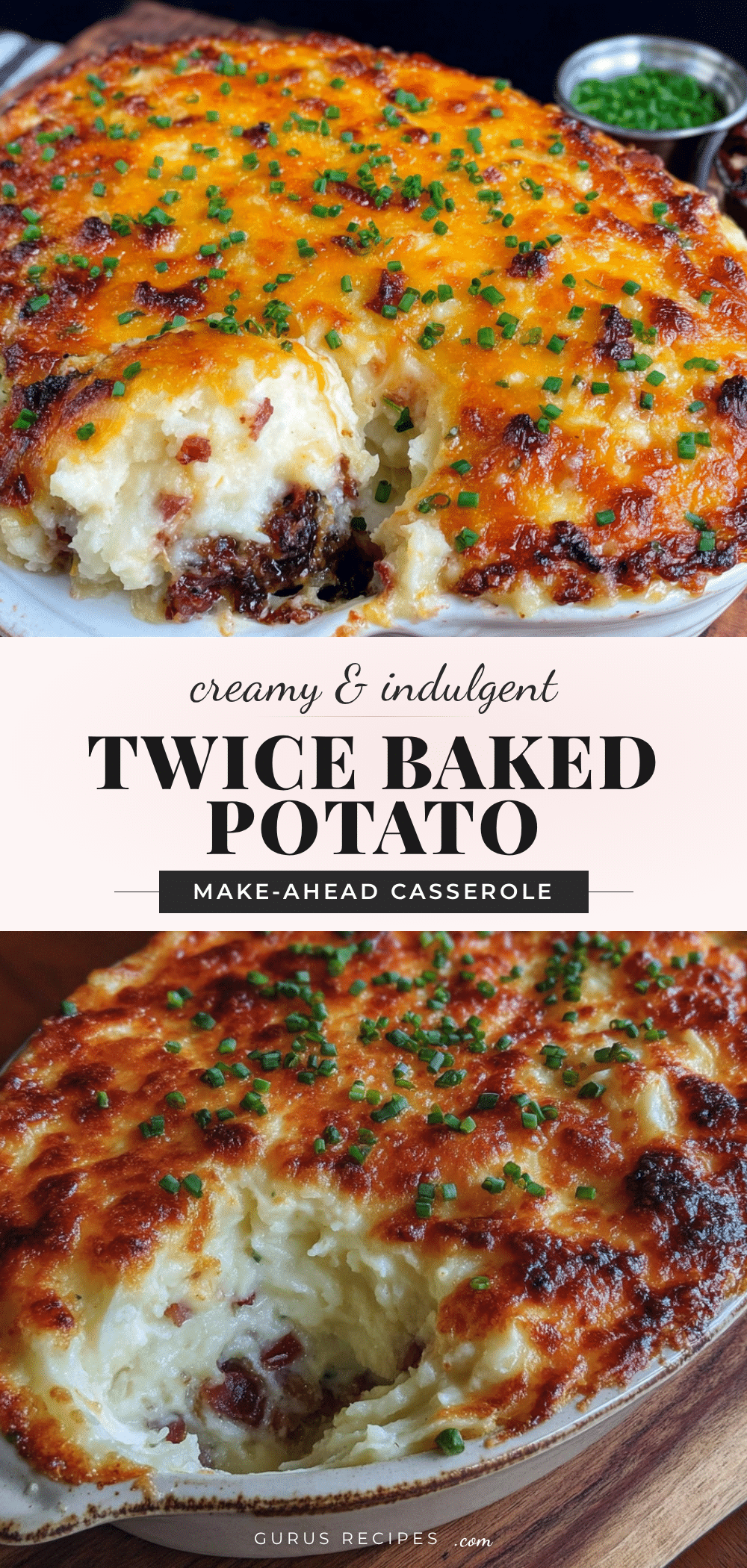

Creamy Make-Ahead Twice Baked Potato Casserole: Easy & Best Side Dish
This creamy, cheesy potato casserole is a happy accident turned signature dish. It’s make-ahead, crowd-pleasing, and perfect for holidays and potlucks.
- Total Time: 50 minutes
- Yield: 8 servings 1x
Ingredients
- 3 pounds russet potatoes (about 6 medium-large potatoes)
- 4 tablespoons unsalted butter (½ stick), softened
- ½ cup sour cream
- ½ cup whole milk
- 1 teaspoon salt
- ½ teaspoon black pepper
- 2 cups sharp cheddar cheese, shredded (about 8 ounces)
- 8 slices bacon (about 8 ounces), cooked and crumbled
- 4 green onions, thinly sliced
- 1 cup sharp cheddar cheese, shredded (about 4 ounces) for topping
- Optional: 2 tablespoons panko breadcrumbs
- Optional garnish: extra green onions or fresh parsley
Instructions
- Preheat your oven to 375°F (190°C). Scrub the russets clean and cut them into roughly 1½-inch chunks.
- Place the potato chunks in a large pot and cover them with cold water by about an inch. Add a generous pinch of salt. Bring to a boil over high heat, then reduce to a simmer. Cook for 15-20 minutes, until fork-tender.
- While the potatoes boil, cook the bacon in a cold skillet over medium heat for 6-8 minutes, flipping once, until crispy. Transfer to a paper towel-lined plate to drain. Once cool, crumble or chop into small pieces.
- Drain the potatoes well in a colander and let them steam for a minute or two. Return to the pot or transfer to a large mixing bowl.
- Add the butter to the hot potatoes. Let it sit for 30 seconds, then mash or mix on low speed until the butter is incorporated and the potatoes are mostly smooth.
- Add the sour cream, milk, salt, and pepper. Mix until creamy and smooth. Do not overmix.
- Fold in 2 cups of shredded cheddar cheese, the crumbled bacon, and most of the sliced green onions (reserve some for garnish). Stir gently until evenly distributed.
- Transfer the mixture to a greased 9×13-inch baking dish and spread into an even layer. Top with the remaining 1 cup of shredded cheddar cheese. If using panko breadcrumbs, sprinkle them over the cheese and dot with a little extra butter.
- Bake uncovered for 25-30 minutes, until heated through and the top is bubbly and golden brown. If browning too quickly, tent loosely with foil for the last 10 minutes. For an extra-crispy top, broil for the last 1-2 minutes.
- Let the casserole rest for 5-10 minutes before serving. Garnish with reserved green onions or fresh parsley.
Notes
For extra flavor, stir in 1-2 tablespoons of reserved bacon fat into the mashed potatoes. To make ahead, assemble the casserole completely, cover tightly with foil, and refrigerate for up to 2 days. Add 10-15 minutes to the baking time if starting from cold. For a vegetarian version, skip the bacon and add sautéed mushrooms and caramelized onions.
- Prep Time: 20 minutes
- Cook Time: 30 minutes
- Category: Side Dish
- Cuisine: American
Nutrition
- Serving Size: 1 serving
- Calories: 385
- Sugar: 2
- Sodium: 680
- Fat: 24
- Saturated Fat: 14
- Carbohydrates: 32
- Fiber: 3
- Protein: 14
Keywords: twice baked potato casserole, make ahead, creamy, cheesy, bacon, holiday side dish, potluck