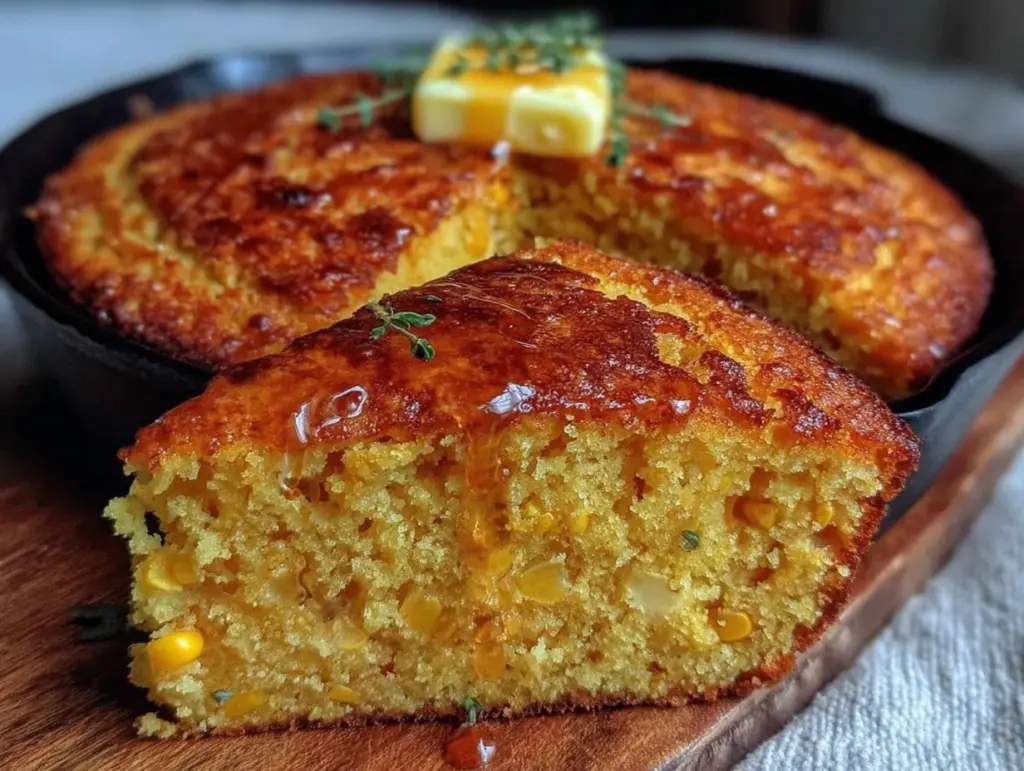
I burned cornbread seven times before I figured out what I was doing wrong. Not exaggerating—seven times. The first few, I blamed the oven. Then the pan. Then I realized the problem was me, rushing the process, using the wrong skillet, and treating cornbread like it was just another quick bread. It took a cast-iron skillet, a stick of good butter, and a quiet Sunday afternoon to finally get it right. And honestly? The batch I burned on attempt number four actually tasted better than any “perfect” cornbread I’d made before. That’s when I knew this recipe had potential.
This easy honey butter skillet cornbread is the result of all those failures. It’s not fancy or fussy. It’s the kind of cornbread that comes together in one bowl, bakes up with a crispy golden crust, and tastes like something your grandmother would have made if she’d had a little more honey on hand. The butter sizzles when it hits the hot skillet, the honey caramelizes on the edges, and the inside stays so tender it practically melts. I stopped trying to make it perfect and started making it right—and that made all the difference.
What I love most about this recipe is that it doesn’t pretend to be something it’s not. It’s simple, honest, and forgiving. You don’t need a stand mixer or a pastry degree. You just need a hot skillet, a little patience, and the willingness to let the butter do its thing. That first bite—warm, buttery, with that slight crunch from the crust—is the kind of moment that makes you forget about all the burnt batches. Trust me on this one.
Why You’ll Love This Recipe
This isn’t just another cornbread recipe. It’s the one I’ve tested more times than I care to admit, tweaking the butter-to-honey ratio, adjusting the bake time, and even swapping flours just to see what would happen. Here’s why I think it’ll become your go-to:
- Quick & Easy: From mixing to table in under 30 minutes. No complicated steps, no waiting for dough to rise. Perfect for those nights when you need something warm and satisfying fast.
- Simple Ingredients: You probably have everything in your pantry right now. Cornmeal, flour, buttermilk, eggs, butter, and honey. That’s it. No specialty stores required.
- Perfect for Any Occasion: Works as a side for chili, a base for breakfast with a fried egg on top, or just eaten plain with a little extra honey drizzled over it. It’s versatile without trying too hard.
- Crowd-Pleaser: I’ve served this at potlucks, family dinners, and casual get-togethers. It disappears every single time. Even people who “don’t like cornbread” ask for seconds.
- Unbelievably Delicious: The contrast between the crispy, buttery crust and the soft, honey-sweetened interior is next-level. It’s comfort food that actually delivers.
What makes this recipe different from the rest is the technique. Most recipes dump the butter into the batter, but I melt it in the skillet first so it gets hot and bubbly before the batter hits it. That sizzle creates a deep, golden crust that you just can’t get any other way. Combined with the honey that caramelizes on the edges, every bite has a little bit of crunch and a little bit of sweetness. It’s not just good—it’s the kind of cornbread that makes you close your eyes after the first bite.
This is comfort food reimagined. Faster than traditional recipes, but with the same soul-soothing satisfaction. Perfect for impressing guests without the stress, or turning a simple weeknight meal into something memorable.
What Ingredients You Will Need
This recipe keeps things simple with pantry staples that work together to create that perfect balance of sweet, savory, and buttery. Here’s what you’ll need:
For the Cornbread Batter
- 1 cup yellow cornmeal — I prefer medium-grind for a little texture, but fine-grind works too. Stone-ground adds a nice rustic feel.
- 1 cup all-purpose flour — Gives the cornbread structure so it doesn’t crumble apart. You can swap in whole wheat pastry flour for a nuttier flavor.
- 1/4 cup granulated sugar — Balances the cornmeal’s earthiness. Not enough to make it cakey, just enough to round out the flavor.
- 1 tablespoon baking powder — For lift and a tender crumb. Make sure it’s fresh—test it by dropping a little in hot water; if it fizzes, it’s good.
- 1/2 teaspoon baking soda — Reacts with the buttermilk for extra tenderness.
- 1/2 teaspoon salt — Don’t skip this. Salt makes the sweetness pop.
- 1 cup buttermilk — Adds tanginess and keeps the cornbread moist. No buttermilk? Add 1 tablespoon lemon juice or vinegar to regular milk and let it sit for 5 minutes.
- 2 large eggs, room temperature — Helps the batter emulsify and creates a lighter texture.
- 1/4 cup honey — Use a good-quality honey here. The flavor comes through. I like a mild wildflower honey for this.
- 1/4 cup unsalted butter, melted (for the batter) — Adds richness and keeps the crumb tender.
For the Skillet
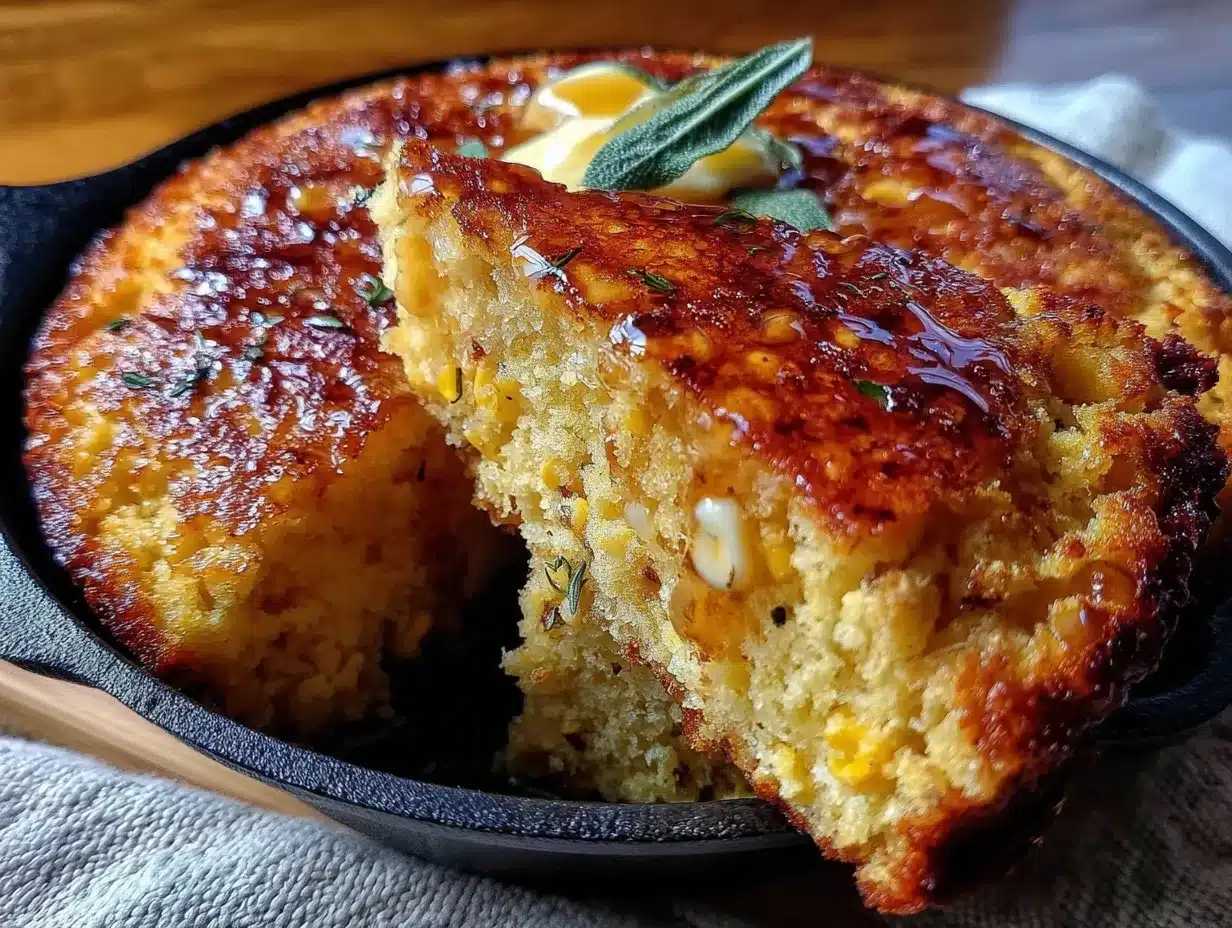
- 2 tablespoons unsalted butter — Melted in the skillet before adding the batter. This is non-negotiable for that crispy crust.
For the Honey Butter Topping
- 4 tablespoons unsalted butter, softened — Use good butter here. It makes a difference.
- 2 tablespoons honey — Whipped right into the butter for spreading.
- Pinch of flaky sea salt — Optional but highly recommended. That salty-sweet combo is magic.
Ingredient Tips: Look for cornmeal that feels fresh—it should smell slightly sweet and corny, not stale. I’ve tried a few brands, but Bob’s Red Mill medium-grind cornmeal gives the best texture for this recipe. For the honey, avoid anything labeled “honey blend” or with added corn syrup. Pure honey makes a noticeable difference in flavor. And if you’re out of buttermilk, the milk-and-vinegar trick works perfectly—just don’t skip the 5-minute rest.
Equipment Needed
You don’t need much for this recipe, which is part of its charm. Here’s what I use:
- 10-inch cast-iron skillet — This is the star of the show. Cast iron holds heat evenly and creates that signature crispy crust. If you don’t have one, a 9-inch square baking pan or an 8-inch cake pan will work, but you won’t get quite the same crust. Lodge makes a solid, affordable 10-inch skillet that will last forever.
- Large mixing bowl — For whisking dry ingredients together.
- Medium bowl or large liquid measuring cup — For mixing wet ingredients.
- Whisk — For combining everything smoothly. A fork works in a pinch.
- Rubber spatula — For scraping the batter into the skillet. Don’t waste a drop of that buttery goodness.
- Oven mitts — The skillet handle gets dangerously hot. Trust me on this one.
- Cooling rack — Optional but helpful for even cooling if you’re not serving immediately.
Budget-Friendly Tip: If you’re new to cast iron, check thrift stores or garage sales. Old, well-seasoned skillets are often better than new ones and cost a fraction of the price. Just give them a good scrub and reseason before using.
Preparation Method
Ready to make the best cornbread of your life? Let’s walk through it step by step. The key here is timing—getting the skillet hot while the batter comes together so everything aligns perfectly.
- Preheat your oven to 400°F (200°C). Place your 10-inch cast-iron skillet inside the oven while it preheats. This step is crucial—you want the skillet screaming hot when the butter hits it. Give it at least 15 minutes to heat up.
- Mix the dry ingredients. In a large bowl, whisk together 1 cup cornmeal, 1 cup all-purpose flour, 1/4 cup sugar, 1 tablespoon baking powder, 1/2 teaspoon baking soda, and 1/2 teaspoon salt. Make sure everything is evenly distributed—baking powder clumps can leave bitter spots.
- Combine the wet ingredients. In a separate bowl or large liquid measuring cup, whisk together 1 cup buttermilk, 2 large eggs, 1/4 cup honey, and 1/4 cup melted butter (cooled slightly so it doesn’t cook the eggs). Whisk until the honey is fully incorporated—it should look smooth and golden.
- Make the batter. Pour the wet ingredients into the dry ingredients. Stir gently with a spatula or wooden spoon until just combined. A few lumps are fine—overmixing will make the cornbread tough. The batter should be thick but pourable, like a thick pancake batter.
- Heat the skillet butter. Carefully remove the hot skillet from the oven (use those oven mitts!). Drop in 2 tablespoons of butter. Swirl the skillet as the butter melts and foams. It should sizzle immediately—that’s exactly what you want. Let it melt completely, tilting the skillet to coat the bottom and about an inch up the sides.
- Pour in the batter. Immediately pour the batter into the hot, buttery skillet. It will sizzle and sputter a bit—don’t panic, that’s the sound of a crispy crust forming. Use your spatula to spread the batter evenly if needed.
- Bake. Return the skillet to the oven and bake for 18-22 minutes. Start checking at 18 minutes. The cornbread is done when the top is golden brown, the edges have pulled away from the skillet slightly, and a toothpick inserted in the center comes out clean or with a few moist crumbs. The top should spring back when lightly pressed.
- Make the honey butter. While the cornbread bakes, combine 4 tablespoons softened butter and 2 tablespoons honey in a small bowl. Mash with a fork until smooth and creamy. If you want it extra spreadable, whip it with a small whisk for a minute. Sprinkle with a pinch of flaky sea salt if using.
- Cool slightly. Let the cornbread cool in the skillet for 5-10 minutes. This allows it to set so it doesn’t crumble when you cut it. Serve warm with a generous dollop of honey butter.
Sensory Cues: When you pour the batter into the hot skillet, you should hear a satisfying sizzle. The edges will start cooking immediately, creating that coveted crust. As it bakes, your kitchen will fill with the smell of toasted corn and honey—that’s how you know it’s working. The top should be a deep golden brown with slightly darker edges when it’s ready.
Personal Tip: I always set a timer for 18 minutes and then check every 2 minutes after that. Ovens vary, and the difference between perfect and overdone can be just 60 seconds. The first time I made this, I walked away and came back to a cornbread that was too dark on the bottom. Learn from my mistake—stay close.
Cooking Tips & Techniques
After burning more cornbread than I’d like to admit, I’ve learned a few things the hard way. Here are the tips that actually made a difference:
Don’t skip preheating the skillet. I know it seems like an extra step, but it’s the single most important thing for that crispy crust. A cold skillet won’t create the same sizzle, and you’ll end up with a pale, soggy bottom. Give it the full 15 minutes in the oven while it preheats.
Room temperature ingredients matter. Cold eggs and cold buttermilk will make the batter lumpy and prevent it from mixing evenly. Take them out of the fridge 30 minutes before you start. If you forget, place the eggs in a bowl of warm water for 5 minutes and microwave the buttermilk for 15 seconds—not hot, just no longer cold.
Don’t overmix the batter. This is the most common mistake I see. Stir until the flour is just incorporated, then stop. Overmixing develops gluten, which makes cornbread tough and rubbery. A few streaks of flour are okay—they’ll disappear during baking.
Use the right cornmeal. Medium-grind gives the best texture. Fine-grind works but can make the cornbread a bit dense. Coarse-grind is too gritty for this recipe. If you only have coarse, pulse it in a food processor a few times to break it down.
Test for doneness properly. A toothpick test is reliable, but also look for the edges pulling away from the skillet and a golden-brown top. If the top is browning too fast but the center isn’t done, tent the skillet loosely with foil for the last 5 minutes.
Let it rest before cutting. I know it’s tempting to dig in right away, but giving it 5-10 minutes allows the structure to set. Cut too soon and you’ll end up with crumbs everywhere. The honey butter will melt beautifully into the warm cornbread anyway.
My biggest failure: I once tried to double the recipe in a larger skillet without adjusting the bake time. The center was raw while the edges were burnt. Lesson learned—stick to the single batch in a 10-inch skillet, or use two skillets if you need more.
Variations & Adaptations
This recipe is flexible, and I’ve tried a few twists over the years. Here are some of my favorites:
Jalapeño Cheddar Cornbread: Fold in 1/2 cup shredded sharp cheddar cheese and 1 diced jalapeño (seeds removed for less heat) into the batter just before pouring. The cheese gets melty and the jalapeño adds a nice kick. This version pairs perfectly with chili or Guinness beef stew.
Gluten-Free Version: Swap the all-purpose flour with a 1:1 gluten-free baking blend (I like King Arthur Measure for Measure). Add an extra tablespoon of buttermilk since gluten-free flours tend to absorb more liquid. The texture will be slightly more delicate, but still delicious.
Savory Herb Cornbread: Add 1 teaspoon dried thyme, 1/2 teaspoon black pepper, and 2 tablespoons chopped fresh chives to the dry ingredients. Omit the honey butter topping and serve with regular butter instead. Great alongside hearty lentil stew or roasted chicken.
Sweet Maple Variation: Replace the honey with maple syrup for a slightly different sweetness. Top with maple butter (just mix softened butter with maple syrup instead of honey). The flavor is warmer and more autumnal—perfect for fall.
Dairy-Free Option: Use melted coconut oil or vegan butter instead of regular butter. Replace buttermilk with 1 cup unsweetened almond milk mixed with 1 tablespoon lemon juice. The texture will be a bit less tender, but it still works well.
Personal Favorite: I once added 1/2 cup fresh corn kernels (cut straight off the cob) to the batter in late summer. The little bursts of sweetness were incredible. If you try this, pat the kernels dry first so they don’t add extra moisture to the batter.
Serving & Storage Suggestions
This cornbread is best served warm, straight from the skillet, with a generous smear of honey butter. The butter melts into the crevices and pools on top—that’s the moment you’ve been waiting for. Here’s how to make the most of it:
Serving Temperature: Warm is non-negotiable. If it’s cooled down, pop the skillet back in a 300°F oven for 5-7 minutes to reheat. The crust will crisp up again, and the interior will soften.
Presentation: Serve it right in the cast-iron skillet for that rustic, farmhouse look. Place the skillet on a wooden board or trivet, and set the honey butter in a small dish on the side. Let everyone cut their own piece—it feels more communal and forgiving than pre-cut slices.
What to Serve With It: This cornbread is a natural side for chili, soups, and stews. I especially love it with chicken and dumplings or a big bowl of loaded baked potato soup. For breakfast, split a piece in half, toast it in butter, and top with a fried egg. For dessert, drizzle with extra honey and a sprinkle of cinnamon.
Storage: Leftover cornbread keeps well at room temperature for up to 2 days, wrapped tightly in foil or stored in an airtight container. The crust will soften slightly, but it’s still delicious. For longer storage, wrap individual pieces in plastic wrap, then place in a freezer bag. Freeze for up to 3 months.
Reheating: The best way to reheat is in a 350°F oven for 5-7 minutes. The microwave works in a pinch (30 seconds), but the texture will be softer and less crispy. If reheating from frozen, let it thaw at room temperature first, then warm in the oven.
Flavor Development: Honestly, day-old cornbread is still really good. The flavors meld together and the honey sweetness becomes more pronounced. It’s perfect for crumbling over a bowl of chili or using as a base for cornbread stuffing.
Nutritional Information & Benefits
While this cornbread is definitely a treat, it does have some redeeming qualities. Here’s a rough estimate per serving (1/8 of the recipe, with honey butter):
- Calories: ~320
- Fat: 16g
- Carbohydrates: 42g
- Protein: 6g
- Fiber: 2g
- Sugar: 18g
Health Benefits: Cornmeal is a whole grain, providing fiber and essential minerals like iron and magnesium. It’s also naturally gluten-free (though this recipe uses wheat flour). The buttermilk adds calcium and probiotics, especially if you use cultured buttermilk. Honey is a natural sweetener with antioxidants and antibacterial properties—though let’s be honest, it’s still sugar.
Dietary Considerations: This recipe contains gluten, dairy, and eggs. For gluten-free, see the variations section. For dairy-free, use the substitutions listed above. It’s not low-carb or keto-friendly due to the cornmeal and honey, but it is vegetarian.
Personal Note: I don’t make this every week, but when I do, I savor it. It’s comfort food, not health food, and that’s okay. A little butter and honey now and then is part of a balanced life. If you’re watching your sugar intake, you can reduce the honey to 2 tablespoons and skip the honey butter—it’ll still be tasty, just less sweet.
Conclusion
This easy honey butter skillet cornbread is the recipe I wish I’d had years ago, before all those burnt batches and failed attempts. It’s simple enough for a Tuesday night, special enough for a holiday table, and forgiving enough to handle a few mistakes along the way. The crispy, buttery crust, the soft honey-sweetened interior, and that dollop of honey butter on top—it’s comfort food at its finest.
I’d love to hear how yours turns out. Did you add jalapeño? Drizzle extra honey? Serve it with chili or eat it plain? Drop a comment below and let me know. And if you try a variation I haven’t thought of, definitely share it—I’m always looking for new ways to make this recipe even better.
Go ahead, preheat that skillet, and give it a try. You might burn the first batch—I certainly did—but when you get it right, it’s worth every single attempt. Happy baking, friend.
Frequently Asked Questions
Can I make this cornbread without a cast-iron skillet?
Yes, absolutely. A 9-inch square baking pan or an 8-inch cake pan works well. Just grease it with butter and preheat it in the oven for a few minutes before adding the batter. You won’t get quite the same crispy crust, but it’ll still be delicious. Avoid glass or ceramic pans—they don’t conduct heat as evenly.
Why is my cornbread dry?
Dry cornbread usually means overbaking or too much flour. Check your oven temperature with an oven thermometer—it might be running hot. Also, measure your flour by spooning it into the measuring cup and leveling it off, not scooping directly from the bag (that packs it down). And remember, a few lumps in the batter are fine—overmixing can also lead to dryness.
Can I use buttermilk substitutes?
Definitely. The easiest substitute is 1 cup of regular milk mixed with 1 tablespoon of lemon juice or white vinegar. Let it sit for 5 minutes until it thickens slightly. You can also use plain yogurt thinned with a little milk, or even sour cream mixed with water. The tanginess might be slightly different, but the texture will still be great.
How do I prevent cornbread from sticking to the skillet?
Preheating the skillet with butter is key. Make sure the butter is fully melted and coats the entire bottom and sides before adding the batter. A well-seasoned cast-iron skillet also helps—if yours is new, give it a few rounds of seasoning before using. And let the cornbread cool for 5-10 minutes before cutting—it releases more easily when it’s set.
Can I freeze this cornbread?
Yes, and it freezes surprisingly well. Let it cool completely, then wrap individual pieces tightly in plastic wrap and place them in a freezer bag. Freeze for up to 3 months. To reheat, thaw at room temperature, then warm in a 350°F oven for 5-7 minutes. The crust won’t be quite as crispy as fresh, but it’s still really good.
Pin This Recipe!
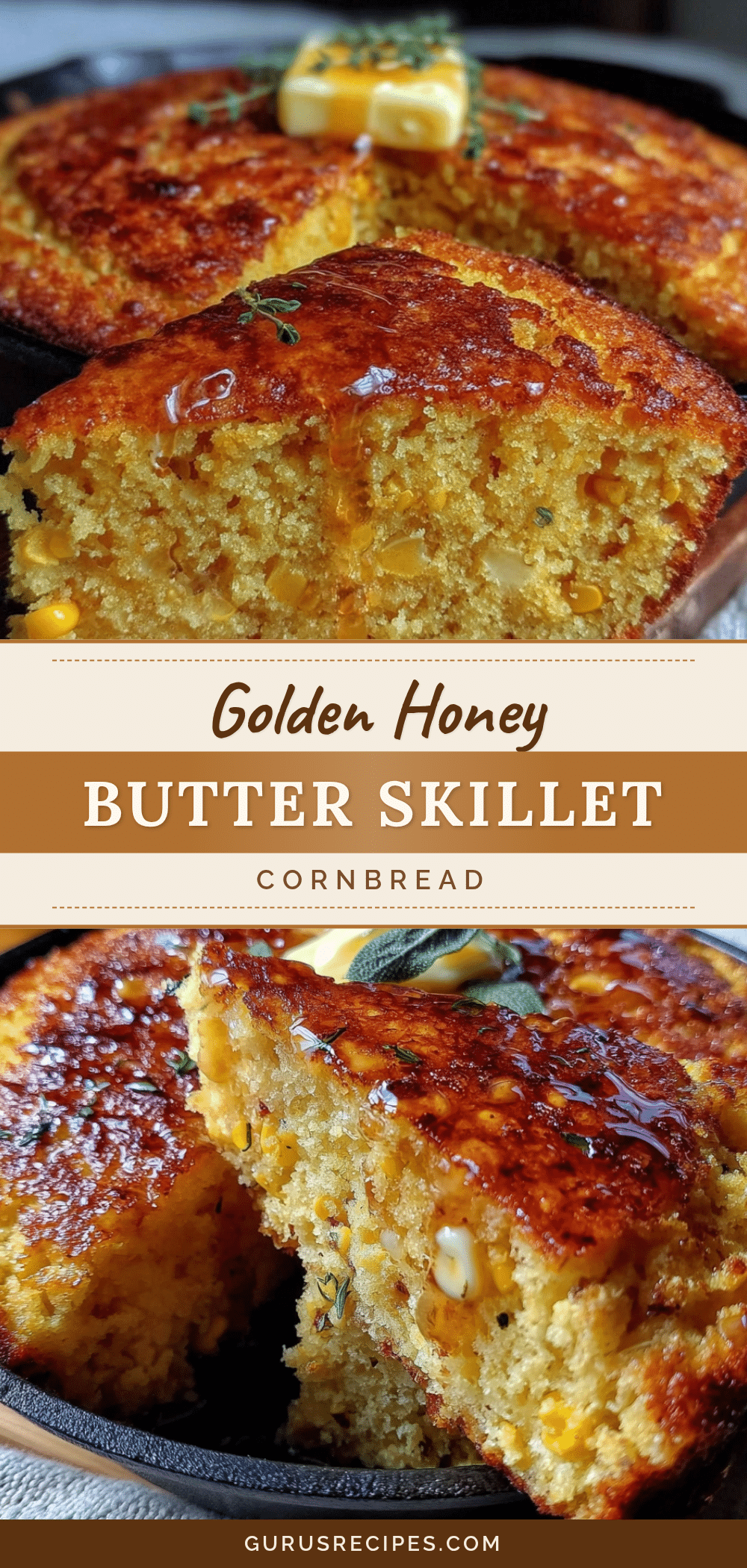

Easy Honey Butter Skillet Cornbread: Perfect 30-Minute Recipe
This easy honey butter skillet cornbread comes together in one bowl, bakes up with a crispy golden crust, and tastes like something your grandmother would have made if she’d had a little more honey on hand. The butter sizzles when it hits the hot skillet, the honey caramelizes on the edges, and the inside stays so tender it practically melts.
- Total Time: 30 minutes
- Yield: 8 servings 1x
Ingredients
- 1 cup yellow cornmeal
- 1 cup all-purpose flour
- 1/4 cup granulated sugar
- 1 tablespoon baking powder
- 1/2 teaspoon baking soda
- 1/2 teaspoon salt
- 1 cup buttermilk
- 2 large eggs, room temperature
- 1/4 cup honey
- 1/4 cup unsalted butter, melted (for the batter)
- 2 tablespoons unsalted butter (for the skillet)
- 4 tablespoons unsalted butter, softened (for honey butter topping)
- 2 tablespoons honey (for honey butter topping)
- Pinch of flaky sea salt (optional)
Instructions
- Preheat your oven to 400°F (200°C). Place your 10-inch cast-iron skillet inside the oven while it preheats. Give it at least 15 minutes to heat up.
- Mix the dry ingredients. In a large bowl, whisk together 1 cup cornmeal, 1 cup all-purpose flour, 1/4 cup sugar, 1 tablespoon baking powder, 1/2 teaspoon baking soda, and 1/2 teaspoon salt.
- Combine the wet ingredients. In a separate bowl or large liquid measuring cup, whisk together 1 cup buttermilk, 2 large eggs, 1/4 cup honey, and 1/4 cup melted butter (cooled slightly). Whisk until the honey is fully incorporated.
- Make the batter. Pour the wet ingredients into the dry ingredients. Stir gently with a spatula or wooden spoon until just combined. A few lumps are fine.
- Heat the skillet butter. Carefully remove the hot skillet from the oven. Drop in 2 tablespoons of butter. Swirl the skillet as the butter melts and foams. Let it melt completely, tilting the skillet to coat the bottom and about an inch up the sides.
- Pour in the batter. Immediately pour the batter into the hot, buttery skillet. It will sizzle and sputter. Use your spatula to spread the batter evenly if needed.
- Bake. Return the skillet to the oven and bake for 18-22 minutes. Start checking at 18 minutes. The cornbread is done when the top is golden brown, the edges have pulled away from the skillet slightly, and a toothpick inserted in the center comes out clean or with a few moist crumbs.
- Make the honey butter. While the cornbread bakes, combine 4 tablespoons softened butter and 2 tablespoons honey in a small bowl. Mash with a fork until smooth and creamy. Sprinkle with a pinch of flaky sea salt if using.
- Cool slightly. Let the cornbread cool in the skillet for 5-10 minutes. Serve warm with a generous dollop of honey butter.
Notes
Don’t skip preheating the skillet. Room temperature ingredients matter. Don’t overmix the batter. Use the right cornmeal (medium-grind). Test for doneness properly. Let it rest before cutting.
- Prep Time: 10 minutes
- Cook Time: 20 minutes
- Category: Side Dish
- Cuisine: American
Nutrition
- Serving Size: 1/8 of recipe
- Calories: 320
- Sugar: 18
- Sodium: 380
- Fat: 16
- Saturated Fat: 9
- Carbohydrates: 42
- Fiber: 2
- Protein: 6
Keywords: cornbread, honey butter, skillet cornbread, easy cornbread, 30-minute recipe, cast iron cornbread